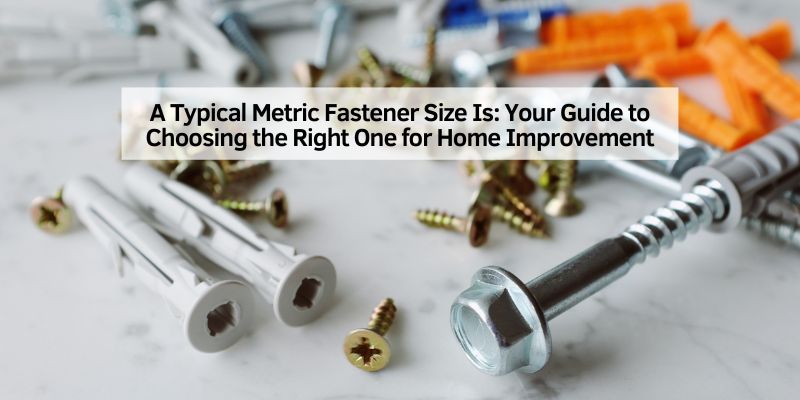
A Typical Metric Fastener Size Is: Your Guide to Choosing the Right One for Home Improvement
Hey there! If you’ve ever stood in the hardware aisle, staring at rows of screws, bolts, and nuts, wondering what “a typical metric fastener size is,” you’re not alone. I’ve been there, scratching my head, trying to figure out which fastener is the right fit for my latest home improvement project. It’s overwhelming, right? But don’t worry—I’ve spent years tinkering with furniture builds, deck repairs, and even some DIY shelving, so I’m here to break it all down for you.
Metric fasteners are everywhere in home improvement, and understanding their sizes can make your projects smoother, safer, and way more professional. Let’s dive into this topic together, exploring what metric fastener sizes mean, how to choose them, and why they matter for your next big DIY idea.
What Are Metric Fasteners, Anyway?
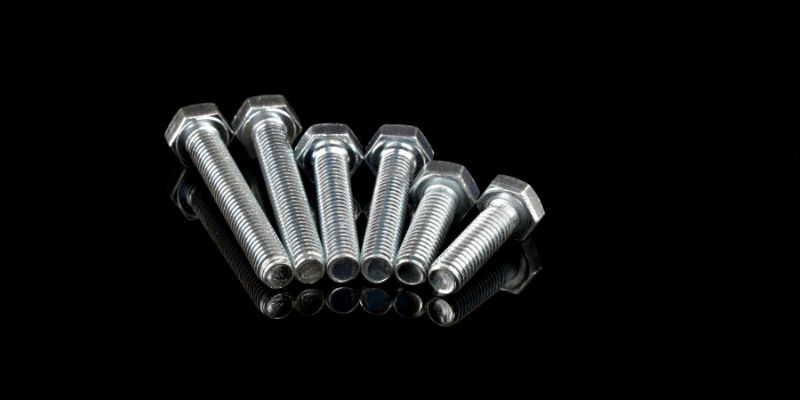
Let’s start with the basics. Metric fasteners are screws, bolts, nuts, or other hardware measured using the metric system. That means their sizes are in millimeters (mm) for diameter and length, and their threads are defined by pitch (the distance between threads). If you’ve ever seen a screw labeled “M6 x 20mm,” that’s a metric fastener. The “M” stands for metric, the “6” is the diameter in millimeters, and the “20mm” is the length. Simple enough, right?
I remember my first time working on a bookshelf project. I grabbed a handful of screws, assuming they’d all work, only to find out some were metric, others were imperial (inches), and nothing fit right. That’s when I learned metric fasteners are standard in many modern tools, furniture kits, and even car repairs. They’re precise, widely used, and often stronger because of their standardized threading. But the key is picking the right size for your project, so let’s talk about what “typical” means here.
Why Metric Fastener Sizes Matter for Home Improvement
You might be wondering, “Why can’t I just grab any screw and make it work?” I’ve tried that, and trust me, it’s a recipe for wobbly furniture or stripped threads. Metric fastener sizes are critical because they ensure your project is secure, durable, and safe. Using the wrong size can lead to weak joints, damaged materials, or even safety hazards. For example, when I built a pergola last summer, I used M8 bolts for the main supports. If I’d gone smaller, like M5, the structure might not have held up under wind or weight.
Metric fasteners are also universal. If you’re assembling furniture from a global brand like IKEA or working on a car imported from Europe or Asia, you’re likely dealing with metric sizes. Knowing the typical sizes helps you avoid guesswork, save time, and get that professional finish we all want. So, what are these typical sizes? Let’s break them down.
Common Metric Fastener Sizes You’ll Encounter
When I talk about “typical metric fastener sizes,” I’m referring to the ones you’ll see most often in home improvement. These sizes are based on the diameter (the “M” number) and length, with thread pitch playing a role too. Here’s a rundown of the most common ones I’ve used in my projects:
- M3 (3mm diameter): These are small screws, perfect for lightweight tasks like securing hinges on cabinet doors or assembling small electronics. I’ve used M3 screws for mounting light fixtures. They’re tiny but mighty for delicate work.
- M4 (4mm diameter): A step up, M4 screws are great for furniture assembly, like attaching drawer slides or small brackets. I used M4 bolts when building a custom TV stand, and they held everything snug.
- M5 (5mm diameter): These are versatile for medium-duty projects like shelving or bed frames. I’ve found M5 screws to be a go-to for indoor furniture repairs.
- M6 (6mm diameter): This is one of the most common sizes for home improvement. M6 bolts are perfect for outdoor furniture, deck railings, or even securing heavy mirrors. I used M6 bolts for a pergola project, and they were rock-solid.
- M8 (8mm diameter): For heavy-duty tasks like building pergolas, attaching deck posts, or securing machinery, M8 is your friend. These are strong and reliable for structural work.
- M10 and above (10mm+ diameter): These are for serious projects—think anchoring beams or heavy equipment. I’ve used M10 bolts for a shed foundation, and they didn’t budge.
Here’s a handy table to visualize these typical sizes and their uses:
| Fastener Size | Diameter (mm) | Typical Uses | Thread Pitch (mm) |
|---|---|---|---|
| M3 | 3 | Cabinet hinges, light fixtures | 0.5 (fine), 0.35 (extra fine) |
| M4 | 4 | Furniture assembly, drawer slides | 0.7 (coarse), 0.5 (fine) |
| M5 | 5 | Shelving, bed frames | 0.8 (coarse), 0.5 (fine) |
| M6 | 6 | Deck railings, outdoor furniture | 1.0 (coarse), 0.75 (fine) |
| M8 | 8 | Pergolas, heavy brackets | 1.25 (coarse), 1.0 (fine) |
| M10 | 10 | Structural beams, heavy anchoring | 1.5 (coarse), 1.25 (fine) |
Thread pitch matters too—it’s the distance between threads. Coarse threads (bigger pitch) are stronger for softer materials like wood, while fine threads (smaller pitch) are better for metal or precision work. I learned this the hard way when I stripped an M6 fine-thread screw in a wooden chair. Oops!
How to Choose the Right Metric Fastener Size
Choosing the right fastener size feels like a puzzle sometimes, but I’ve got a system that works. First, think about your project’s needs. Are you working with wood, metal, or drywall? Is it a heavy load, like a deck, or something lighter, like a picture frame? Here’s how I approach it:
- Material Type: For wood, I use coarse-thread screws like M6 or M8 for better grip. For metal, I go for fine-thread screws to avoid stripping. Drywall needs anchors paired with M4 or M5 screws for a secure hold.
- Load-Bearing Needs: If it’s holding weight (like a shelf), I go bigger—M6 or M8. For non-load-bearing tasks (like a decorative bracket), M3 or M4 works fine.
- Length Matters: The fastener should be long enough to go through your material and into the anchor or base by at least 1.5 times the diameter. For example, an M6 screw (6mm diameter) should have at least 9mm of thread engagement for strength. I learned this when a short M5 screw pulled out of my drywall—lesson learned!
- Check the Manual: If you’re assembling furniture or equipment, check the instructions. They’ll often list the exact metric size, like “M6 x 40mm.” I keep a caliper handy to measure existing holes or fasteners if I’m replacing them.
Pro tip: Always have a variety of sizes on hand. I keep a fastener organizer in my garage with M3 to M10 screws and bolts, so I’m ready for anything. It’s saved me countless trips to the hardware store.
Tools You’ll Need for Working with Metric Fasteners
You can’t work with metric fasteners without the right tools. I’ve made the mistake of using an imperial Allen wrench on a metric bolt, and let’s just say it wasn’t pretty. Here’s what I keep in my toolbox:
- Metric Allen Wrenches (Hex Keys): For bolts with hexagonal sockets, like those in furniture kits. Sizes like 3mm, 4mm, and 5mm are common.
- Metric Wrenches or Spanners: For nuts and bolts, especially M6 to M10. An adjustable wrench works in a pinch, but dedicated metric sizes are better.
- Screwdrivers: A Phillips or flathead screwdriver that matches your screw head. Check the screw for markings like “PH2” (Phillips size 2).
- Drill Bits and Taps: If you’re threading holes for metric screws, use metric drill bits. For example, an M6 coarse thread needs a 5mm pilot hole in wood.
- Caliper or Ruler: To measure fastener diameter and length accurately. I got a digital caliper for $20, and it’s been a game-changer.
Having the right tools makes all the difference. I once spent an hour trying to force a mismatched wrench onto an M8 bolt before realizing my mistake. Save yourself the headache—double-check your tools!
Common Mistakes to Avoid with Metric Fasteners
I’ve made plenty of mistakes with metric fasteners, so let me share some pitfalls to avoid:
- Mixing Metric and Imperial: They look similar, but a ¼-inch screw is not the same as an M6. Always check the label or measure with a caliper.
- Using the Wrong Thread Pitch: Coarse and fine threads aren’t interchangeable. I ruined a metal bracket by forcing a coarse M5 screw into a fine-threaded hole.
- Over-Tightening: This strips threads or cracks wood. Use a torque wrench if you’re working on something critical, like a car part.
- Ignoring Material Strength: Don’t use a tiny M3 screw for a heavy load. I did this once with a wall-mounted TV bracket, and it nearly ended in disaster.
Take your time and double-check everything. It’s better to spend an extra minute measuring than to redo a project.
Where to Buy Metric Fasteners
Finding metric fasteners is easier than you might think. I usually head to:
- Hardware Stores: Home Depot, Lowe’s, or Ace Hardware have metric sections. Look for bins labeled with “M” sizes.
- Online Retailers: Amazon, McMaster-Carr, or Bolt Depot have huge selections. I’ve ordered M6 x 50mm bolts online when my local store was out.
- Specialty Fastener Stores: These have every size and type, including stainless steel or zinc-coated options for outdoor use.
I always buy a few extra fasteners. You never know when you’ll drop one under the workbench (it happens to me all the time!).
Metric Fasteners for Outdoor Projects
Outdoor projects like decks or pergolas need special attention. I learned this when my first outdoor bench rusted after a year. For outdoor use, choose:
- Stainless Steel or Coated Fasteners: These resist rust. I use stainless M6 or M8 bolts for deck railings.
- Longer Lengths: Outdoor structures often need thicker materials, so go for longer screws, like M6 x 60mm.
- Coarse Threads: They grip wood better, especially pressure-treated lumber.
Last summer, I built a pergola using M8 x 100mm stainless bolts. It’s held up through storms and sun, no problem. Just make sure to pre-drill holes to avoid splitting the wood.
Metric Fasteners in Furniture Assembly
If you’ve ever assembled flat-pack furniture, you’ve probably met metric fasteners. Most furniture kits use M4, M5, or M6 screws and dowels. Here’s what I’ve learned:
- Follow the Instructions: They’ll list the exact size, like “M6 x 30mm.” Don’t swap sizes—it won’t fit.
- Use the Right Tools: A 4mm or 5mm Allen key is usually included, but a power drill with a matching bit speeds things up.
- Check for Extras: Kits often include spare fasteners. I keep these in my organizer for future repairs.
I once assembled a dresser with M5 screws, but one was missing. Luckily, I had spares from a previous project. Always keep a stash!
Conclusion
So, there you have it—everything I’ve learned about typical metric fastener sizes through years of home improvement projects. Whether you’re building a deck, assembling furniture, or hanging a shelf, understanding sizes like M3, M6, or M8 can make or break your project. It’s not just about picking a screw; it’s about choosing the right size, thread, and material to ensure your work is strong and lasts for years. I’ve had my share of mistakes—stripped screws, wobbly joints, and even a near-disaster with a TV mount—but each one taught me something new. Now, I approach every project with confidence, and I hope you do too.
Next time you’re at the hardware store, grab a few metric fasteners in common sizes like M4, M6, and M8. Keep a caliper and the right tools handy, and always double-check your measurements. With a little practice, you’ll be a pro at picking the perfect fastener for any job. Got a project in mind? Let me know in the comments—I’d love to hear about it!
FAQs
What does the “M” in metric fastener sizes mean?
The “M” stands for metric, indicating the fastener is measured in millimeters. For example, an M6 screw has a 6mm diameter. I always look for the “M” to confirm I’m dealing with metric sizes.
Can I use imperial fasteners instead of metric ones?
It’s risky. Imperial (inch-based) and metric fasteners aren’t interchangeable because their threads and sizes differ. I tried this once and ended up with a loose joint. Stick to the system your project calls for.
How do I know which thread pitch to use?
Coarse threads (bigger pitch) work best for wood or soft materials, while fine threads are better for metal. For example, an M6 coarse thread (1.0mm pitch) is great for decking, but I’d use a fine thread (0.75mm) for a metal bracket.
Where can I find metric fasteners for my project?
Check hardware stores like Home Depot or online retailers like Amazon or McMaster-Carr. I always buy a few extra in case I lose one during a project.
What tools do I need for metric fasteners?
You’ll need metric Allen keys, wrenches, screwdrivers, and drill bits. A caliper for measuring is super helpful too. I keep a dedicated metric toolbox to avoid mix-ups with imperial tools.