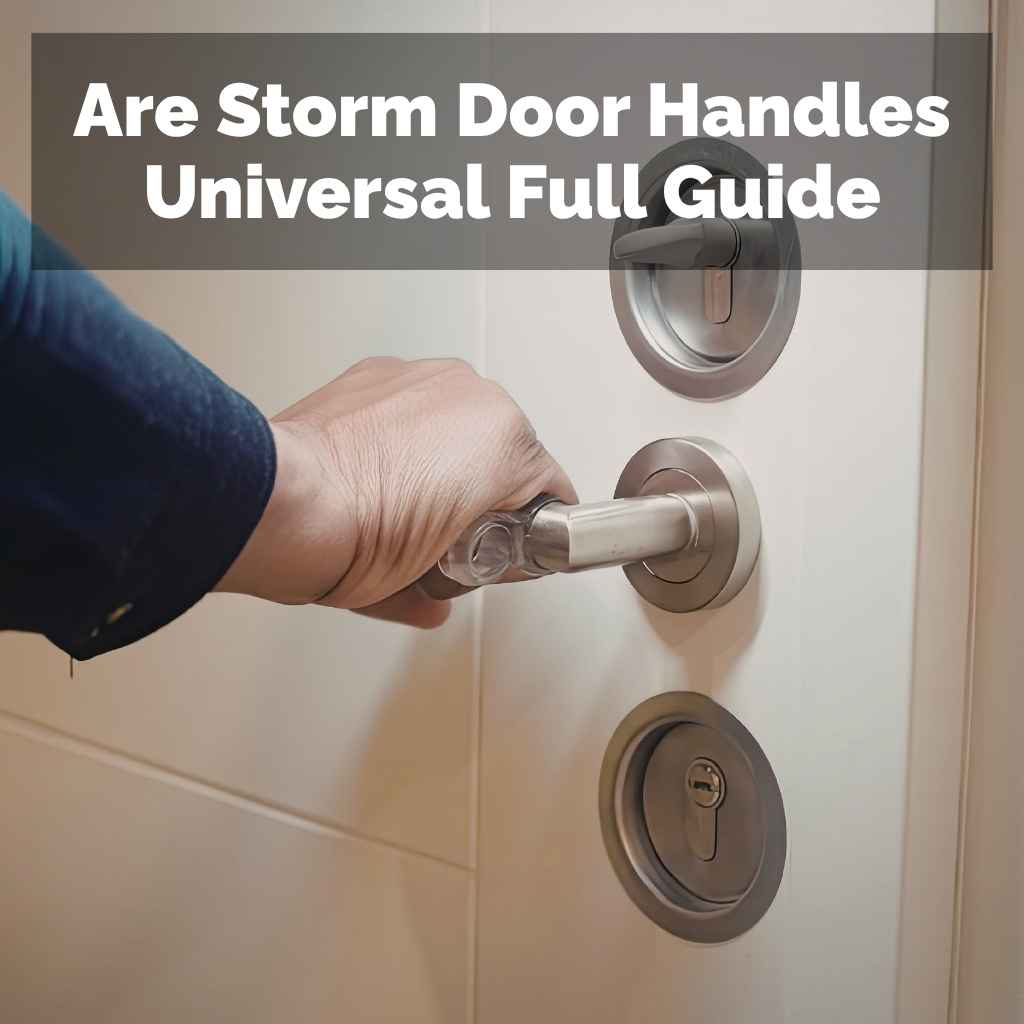
Are Storm Door Handles Universal: Full Guide
Ever found yourself staring at a broken storm door handle, wondering if any old handle will fit? It’s a common question for many homeowners, and the answer can seem a bit tricky at first glance. You might worry about complicated measurements or needing special tools.
But don’t fret! This guide breaks down exactly what you need to know, making it super simple to figure out if storm door handles are universal and how to find the right one for your door. We’ll walk you through it step-by-step.
Understanding Storm Door Handle Types
Storm door handles are not always universal, which can surprise many people. The design and mechanism of a storm door handle depend heavily on the type of storm door it’s attached to. There are several main categories of storm doors, and each often uses a distinct style of handle.
This variety means that a handle designed for one type of door might not work on another, leading to confusion for those looking for replacements.
The primary function of a storm door handle is to provide a simple way to open and close the storm door. This usually involves a latching mechanism that engages with a strike plate on the main door frame. The aesthetic design also plays a role, as handles come in various finishes like brass, black, or brushed nickel to match the home’s exterior.
Understanding these basic types is the first step in figuring out compatibility.
Surface-Mount Handles
Surface-mount handles are among the most common types found on older storm doors. These handles attach directly to the surface of the door, typically with screws that go through the door panel. The mechanism is usually a simple lever or knob that pulls or pushes a rod or cable inside the door to operate the latch.
These handles are often easier to replace because their installation doesn’t require drilling new holes deep into the door. The key consideration here is the spacing of the mounting screws and the length of the connecting rod. If you’re replacing a surface-mount handle, measuring the distance between the screw holes and the reach of the internal mechanism is crucial.
For example, a vintage storm door might have a decorative brass surface-mount handle with a pull chain. Newer models might feature a more streamlined lever. The compatibility challenge arises when the internal mechanism is unique or if the screw hole pattern doesn’t match standard replacement parts.
Mortise Handles
Mortise handles are often found on more robust, higher-end storm doors. The term “mortise” refers to a pocket or cutout that is precisely made into the edge of the door where the lock mechanism is installed. This creates a cleaner, more integrated look compared to surface-mount options.
The handle itself is usually connected to a complex lock case that is recessed into the door. These systems often include deadbolts and more secure locking mechanisms. Because the entire lock assembly is housed within the door, replacing a mortise handle typically involves replacing the entire lock case, not just the external handle.
This means that if your mortise handle is broken, you’ll need to find a replacement lock case that fits the existing cutout in your door. The dimensions of the mortise pocket and the screw hole locations for the lock case are critical. Unlike surface-mount handles, where a simple handle swap might suffice, mortise systems often require a more involved replacement process.
Push-Button and Pull-Knob Combinations
Many modern storm doors use a combination of a push-button on the exterior and a pull-knob or lever on the interior. The push-button allows for easy operation from the outside, while the interior knob or lever is used to retract the latch and open the door.
These systems are designed for convenience and often come as a complete unit. The compatibility here depends on the specific design of the storm door manufacturer. While some brands may offer universal kits for this style, many are proprietary.
You’ll often need to identify the brand of your storm door to find a matching replacement.
A common scenario is a handle that has a button that pops out and a separate handle to pull the door. The internal rod connects these two. If this rod breaks or the button mechanism seizes, the whole unit might need replacing.
Measuring the distance between the holes where the internal rod passes through the door is key for finding a compatible replacement.
Screen Door Handles (Related but Different)
It’s important to distinguish storm door handles from those found on traditional screen doors. Screen doors are generally lighter and have simpler latching mechanisms. While some basic pull knobs might seem similar, the internal workings and mounting systems are often different.
Storm doors are designed to withstand weather elements, which means their hardware, including handles, is often more durable and complex. Using a screen door handle on a storm door can lead to premature wear and tear or functional failure. Always ensure you are purchasing a handle specifically designed for storm doors.
Key Factors for Determining Handle Compatibility
Since storm door handles aren’t always universal, understanding the key factors for compatibility is essential. When you’re faced with a broken handle, you need to know what to measure and what to look for. This will save you time, money, and frustration in the long run.
The most crucial elements are the physical dimensions and the internal mechanism. Ignoring these can lead to buying a handle that simply won’t fit or function correctly. Even if a handle looks similar, slight differences can make it incompatible.
Measuring Your Existing Handle
The first and most important step is to accurately measure your current handle and its mounting. You’ll typically need a tape measure or ruler.
- Mounting Screw Spacing: This is the distance between the centers of the mounting screws that secure the handle to the door. Measure this on the exterior side of the storm door. This is often the most critical measurement.
- Handle Length: Measure the overall length of the handle assembly, from the furthest point on one end to the furthest point on the other. This is important for ensuring the new handle doesn’t interfere with the door frame or other hardware.
- Depth or Thickness: For surface-mount handles, measure the depth of the handle assembly from the door surface to its furthest protruding point. For mortise handles, you’ll need to measure the dimensions of the lock case that is recessed into the door.
- Spindle/Rod Diameter and Length: This refers to the bar or rod that passes through the door and connects the exterior handle to the interior mechanism. Measure its diameter and its approximate length. If it’s a push-button type, measure the distance between the holes where the rod passes.
Understanding the Latch Mechanism
The latch mechanism is what keeps your storm door closed. It’s usually operated by the handle and connects to a strike plate on the main door frame.
The type of latch mechanism is often tied to the handle type. For instance, a simple lever might operate a basic spring latch, while a push-button might activate a more complex deadbolt. If your latch mechanism is also damaged, you’ll need to ensure the new handle is compatible with the existing or a new latch system.
Some storm doors use a simple hook-and-eye latch, while others have a more sophisticated deadbolt. The handle you choose needs to operate this mechanism smoothly. If you are unsure about your latch type, it’s best to take a picture or consult a hardware professional.
Identifying the Storm Door Brand and Model
If possible, identifying the brand and model of your storm door can significantly simplify the process of finding a compatible handle. Many manufacturers use proprietary hardware that is designed to work exclusively with their doors.
Look for a manufacturer’s label or stamp on the door frame, the door panel itself, or even on the existing handle hardware. This information is usually found on the top or side edges of the door. Once you have the brand name, you can visit the manufacturer’s website or contact their customer support for replacement parts.
For example, if you have a Pella storm door, you’d look for Pella-specific replacement handles. These are often designed to fit perfectly and maintain the door’s original functionality and appearance. Many manufacturers offer universal replacement kits, but these are usually designed to fit a range of their own door models, not necessarily all brands.
Material and Finish
While not directly related to functionality, the material and finish of the handle are important for matching the existing aesthetic of your home and storm door. Common materials include aluminum, brass, steel, and various plastics.
Finishes vary widely, from polished brass and brushed nickel to matte black and oil-rubbed bronze. Choosing a handle with the same or a similar finish will ensure a cohesive look. Consider the durability of the material as well; exterior hardware should be resistant to rust and corrosion.
Common Storm Door Handle Replacement Scenarios
Replacing a storm door handle can seem daunting, but it often falls into a few predictable scenarios. Understanding these common situations can help you anticipate the process and the potential challenges.
Most replacements involve either a simple swap of an identical handle or a slightly more involved process if the original part is no longer available. We’ll look at a few common examples.
Scenario 1: Replacing a Broken Lever Handle
You have a storm door with a lever handle on the outside and a pull knob on the inside. The lever mechanism has snapped.
- Measure the distance between the two mounting screws on the exterior lever.
- Note the type of latch mechanism – is it a simple spring latch or a deadbolt?
- Look for a
- Unscrew the old handle. You might need to remove a small set screw on the underside of the lever.
- Disengage the rod connecting the lever to the latch.
- Install the new handle, ensuring the rod connects properly to the latch mechanism.
- Tighten all screws securely.
This is a very common situation, and thankfully, many manufacturers offer
Scenario 2: Replacing a Lost or Damaged Push-Button Assembly
The push-button on your storm door handle has stopped retracting, or the entire assembly has broken off.
- Measure the distance between the two mounting screw holes on the door where the push-button assembly was attached.
- Determine if the original assembly had a separate interior handle or if it was a single unit.
- Search for replacement push-button handle kits online or at hardware stores, specifying the screw hole spacing.
- Remove the old assembly, which may involve unscrewing it from the door and disconnecting the internal rod.
- Install the new assembly, ensuring the rod is properly connected and the button operates smoothly.
- Secure the new assembly with screws.
Many push-button handle sets are designed as a single unit. The compatibility is primarily determined by the screw hole pattern and the length of the connecting rod. If the rod is too long or too short, it can prevent the latch from engaging or retracting properly.
Scenario 3: Upgrading an Old Surface-Mount Handle
You have an old, worn-out surface-mount handle and want to update it to something more modern or secure.
- Carefully measure the existing screw hole pattern. Note any existing holes.
- Look for new surface-mount handle sets. Consider a set that uses the same screw hole pattern to avoid drilling new holes.
- If the new set has a different pattern, you may need to fill old holes and drill new ones, or choose a cover plate if available.
- Assess the existing latch mechanism. If it’s functional, you’ll need a handle compatible with it. If not, you might need to replace the latch as well.
- Install the new handle and any accompanying hardware.
Upgrading can involve more than just a handle. Sometimes, an old latch mechanism becomes unreliable. If this is the case, it’s often best to purchase a complete handle and latch set.
This ensures everything is designed to work together harmoniously.
Are Storm Door Handles Universal? The Verdict
So, the big question: Are storm door handles universal? The short answer is no, not completely. While there are some common standards and universal replacement kits available, it’s not a one-size-fits-all situation.
The compatibility of storm door handles depends on several factors, including the type of storm door, the mounting system, and the internal latch mechanism. For instance, a simple surface-mount handle might have more interchangeability than a specialized mortise lock system.
However, many manufacturers do offer “universal” replacement kits. These kits are typically designed to fit a range of common door configurations and screw hole patterns. They often include various rods and adapters to accommodate different door thicknesses and latch types.
Universal Replacement Kits
These kits are designed to be adaptable. They usually contain a new handle, an interior pull, a connecting rod that can be cut to size, and various screws and adapters. The goal is to allow homeowners to
When purchasing a universal kit, you still need to check the specifications. Look for details about the compatible screw spacing and the types of latches it can work with. If your storm door has a unique or older mechanism, even a universal kit might not be a perfect match.
One advantage of universal kits is that they often come with detailed instructions and diagrams, making the installation process easier for DIYers. They aim to cover the most common storm door handle configurations.
When a Truly Universal Fit Isn’t Possible
In cases where the storm door is very old, custom-made, or uses a proprietary locking system, a truly universal handle may not work. This is particularly true for doors with integrated deadbolts or unique handle shapes.
If you cannot find a universal replacement that fits, your best bet is to contact the manufacturer of the storm door. They may be able to provide a direct replacement part or guide you to a compatible option. If the door is no longer supported, you might need to consider replacing the entire storm door.
The challenge often lies in the internal mechanisms. For example, if the rod that connects the exterior handle to the interior latch is a non-standard size or shape, a universal kit might not accommodate it without modification, which can be difficult for a novice.
Importance of Measurement and Identification
This reinforces why accurate measurements and identifying your door’s brand are so crucial. Even with universal kits, knowing your existing dimensions helps you select the kit most likely to work. If you measure carefully and find that no universal kit seems suitable, it’s a strong indicator that you might need a specific part.
Hardware stores and online retailers often have compatibility charts or guides to help you match your measurements to available products. Don’t hesitate to use these resources. They are designed to help you make an informed decision.
Statistics on DIY Home Repairs
According to a survey by HomeAdvisor, 75% of homeowners have undertaken a DIY home improvement project. Of those, about 60% reported successfully completing their project. Storm door handle replacement is a common DIY task that falls into this category.
A significant portion of these repairs involves replacing parts that have broken over time due to weather exposure and frequent use. The success rate for handle replacements is generally high, provided the correct measurements are taken.
Visualizing Compatibility
Imagine two storm doors side-by-side. One has a simple lever and knob set with standard screw holes. A universal kit with a cut-to-size rod and common screw adapters would likely fit perfectly.
The other door has a unique, almost decorative, integrated handle mechanism with a proprietary internal lock. A standard universal kit would probably not even attach correctly, let alone operate the lock. This visual difference highlights why universality is limited.
Where to Buy Replacement Storm Door Handles
Finding the right place to buy replacement storm door handles can make all the difference. You want a reliable source that offers a good selection and helpful information.
From local hardware stores to large online retailers, there are many options available. The key is to know what you’re looking for before you start shopping.
Local Hardware Stores
Local hardware stores are excellent resources for storm door hardware. Staff are often knowledgeable and can help you identify the right type of handle or suggest alternatives if your original part is unavailable.
They usually carry a range of common
Many independent hardware stores pride themselves on their customer service and expertise. They can offer personalized advice that you might not find online.
Online Retailers
Online retailers offer a vast selection of storm door handles, often with more competitive pricing than brick-and-mortar stores. Websites like Amazon, Home Depot’s online store, Lowe’s online store, and specialized hardware sites are good places to search.
When shopping online, pay close attention to product descriptions, specifications, and customer reviews. Look for detailed measurements and compatibility information. Many online listings will specify if a handle is “universal” or compatible with certain brands.
The advantage of online shopping is the sheer variety. You can often find obscure or specialized handles that might be hard to locate locally. Ensure you check the return policy in case the part doesn’t fit.
Manufacturer Websites
If you’ve identified the brand of your storm door, visiting the manufacturer’s official website is a direct route to finding replacement parts. This guarantees that you’re getting an OEM (Original Equipment Manufacturer) part, which is designed specifically for your door.
Many manufacturer websites have a “parts” or “support” section where you can search for replacement handles by model number or door series. This is often the best option for ensuring a perfect fit and maintaining the integrity of your storm door.
While these parts might sometimes be more expensive, they offer the highest chance of compatibility and often come with manufacturer support.
Specialty Door Hardware Suppliers
There are also specialized suppliers online that focus solely on door hardware, including storm door components. These suppliers often have a deep inventory and expertise in a wide range of products.
If you have a unique or older storm door, these specialty stores might be your best resource for finding replacement parts that are no longer widely available. They often cater to restoration projects or specific architectural styles.
Installation Tips for Storm Door Handles
Once you have your new storm door handle, the installation process itself is usually quite straightforward. With a few basic tools and some patience, most homeowners can complete this task successfully.
Remember to work carefully and take your time. Double-checking measurements and connections can prevent common mistakes.
Tools You’ll Need
The tools required are generally basic and commonly found in most household toolkits.
- Screwdriver set (Phillips and flathead)
- Measuring tape or ruler
- Pliers (optional, for removing old parts or adjusting rods)
- Drill with appropriate bits (if new holes are needed, which is less common with universal kits)
- Safety glasses
Step-by-Step Installation Guide
Follow these steps for a smooth installation:
- Remove the Old Handle: Unscrew any visible screws holding the old handle assembly in place. If there’s a small set screw on the underside of a lever, remove that as well. Gently pull the handle components away from the door.
- Disconnect the Connecting Rod: Identify the rod that connects the exterior handle to the interior latch mechanism. You may need to unhook or unscrew it from both ends.
- Prepare the New Handle: If you purchased a universal kit, you may need to cut the connecting rod to the correct length. Measure the distance between the mounting holes and compare it to the rod. Always cut a little longer than you think you need, as you can always trim more.
- Attach the New Exterior Handle: Position the new exterior handle on the door. Ensure any mounting screws align with existing holes if possible. If using a universal kit, you might need to attach adapter plates or ensure the rod passes through the correct aperture.
- Connect the Interior Component: Attach the interior handle or knob. Make sure the connecting rod from the exterior handle engages properly with the interior mechanism or the latch itself.
- Secure Everything: Insert and tighten all screws. Ensure the handle operates smoothly and the latch engages and retracts fully. Test it multiple times.
- Final Check: Close the storm door and test the latch. Ensure it catches securely on the strike plate and that the handle operates easily to release it.
Common Installation Pitfalls to Avoid
Even with simple tasks, there are a few common mistakes that can cause frustration.
- Incorrect Measurements: Failing to accurately measure screw spacing or rod length is the most common error. Always double-check your measurements before cutting or ordering.
- Forcing Parts: If a part doesn’t seem to fit easily, don’t force it. This can damage the new hardware or the door. Re-examine your measurements and the installation instructions.
- Ignoring the Latch: Ensure the new handle correctly operates the storm door’s latch mechanism. A handle might look good but not function properly if it doesn’t engage the latch.
- Not Reading Instructions: Universal kits, in particular, come with instructions for a reason. Take the time to read and understand them before you begin.
A scenario many DIYers face is when the new handle’s rod is too long. If you don’t cut it down, it can prevent the latch from fully retracting, making it impossible to open the door, or prevent it from latching securely when closed. The solution is always to measure twice and cut once, and be prepared to trim if necessary.
Frequently Asked Questions
Question: Can I use a screen door handle on a storm door?
Answer: It is generally not recommended. Storm door handles are built to be more durable and often have more complex latching mechanisms than screen door handles. Using a screen door handle on a storm door can lead to premature wear, breakage, or improper latching.
Question: What if my storm door handle is an unusual shape?
Answer: If your handle is unusually shaped or custom, finding a direct replacement might be difficult. You may need to look for the storm door manufacturer’s specific replacement parts or consider a universal kit that offers adapters to fit different styles. In some cases, you might need to replace the entire handle assembly.
Question: How do I know if a universal storm door handle will fit my door?
Answer: Universal kits are designed to fit common configurations. You’ll need to measure the spacing of your mounting screws and the length of the connecting rod. Check the specifications of the universal kit to ensure your measurements fall within its compatible range.
Always refer to the kit’s instructions.
Question: Do all storm doors use the same type of latch mechanism?
Answer: No, storm doors use various latch mechanisms, ranging from simple spring latches to more complex deadbolts. The type of latch mechanism will influence the type of handle required. It’s important to identify your existing latch mechanism to ensure the new handle is compatible.
Question: Where can I find replacement parts if I know the brand of my storm door?
Answer: If you know the brand of your storm door, the best place to start is the manufacturer’s official website. They usually have a dedicated section for replacement parts or customer support that can help you find the exact part you need. Local hardware stores or specialized online retailers may also carry branded parts.
Summary
So, Are Storm Door Handles Universal? Full Guide shows they often are not. However, many universal replacement kits exist.
Key factors like screw spacing and latch type matter most. Accurate measurements and identifying your door’s brand will help you find a fit. With basic tools and this guide, replacing your storm door handle is an achievable DIY task.