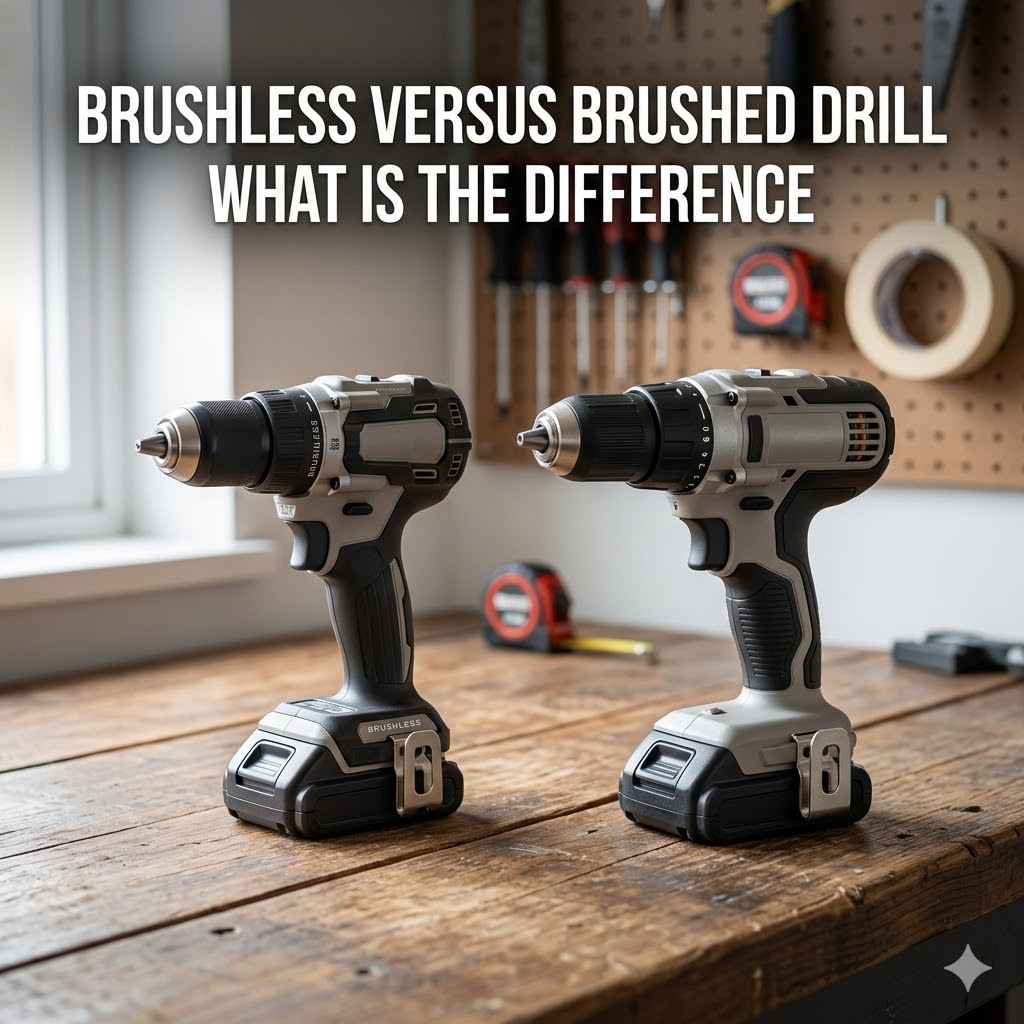
Brushless Versus Brushed Drill What is the Difference
When you’re looking to buy a new drill, you might see two main types: brushless and brushed. It’s easy to get confused about what these terms mean and why they matter. This article makes it simple.
We’ll walk you through the Brushless vs Brushed Drill: What’s the Difference? so you can pick the right tool for your projects. Get ready to understand your drills better, step by step.
Brushless Versus Brushed Drill What’s the Difference
Deciding between a brushless and a brushed drill can feel like a big choice, especially if you’re new to power tools. The terms “brushless” and “brushed” refer to the motor type inside the drill. This difference affects how the drill performs, how long it lasts, and how much power it has.
For beginners, these technical terms can be a bit unclear, leading to confusion about which drill is best for their needs. We’ll break down these differences clearly so you can make an informed decision.
Understanding Brushed Motors
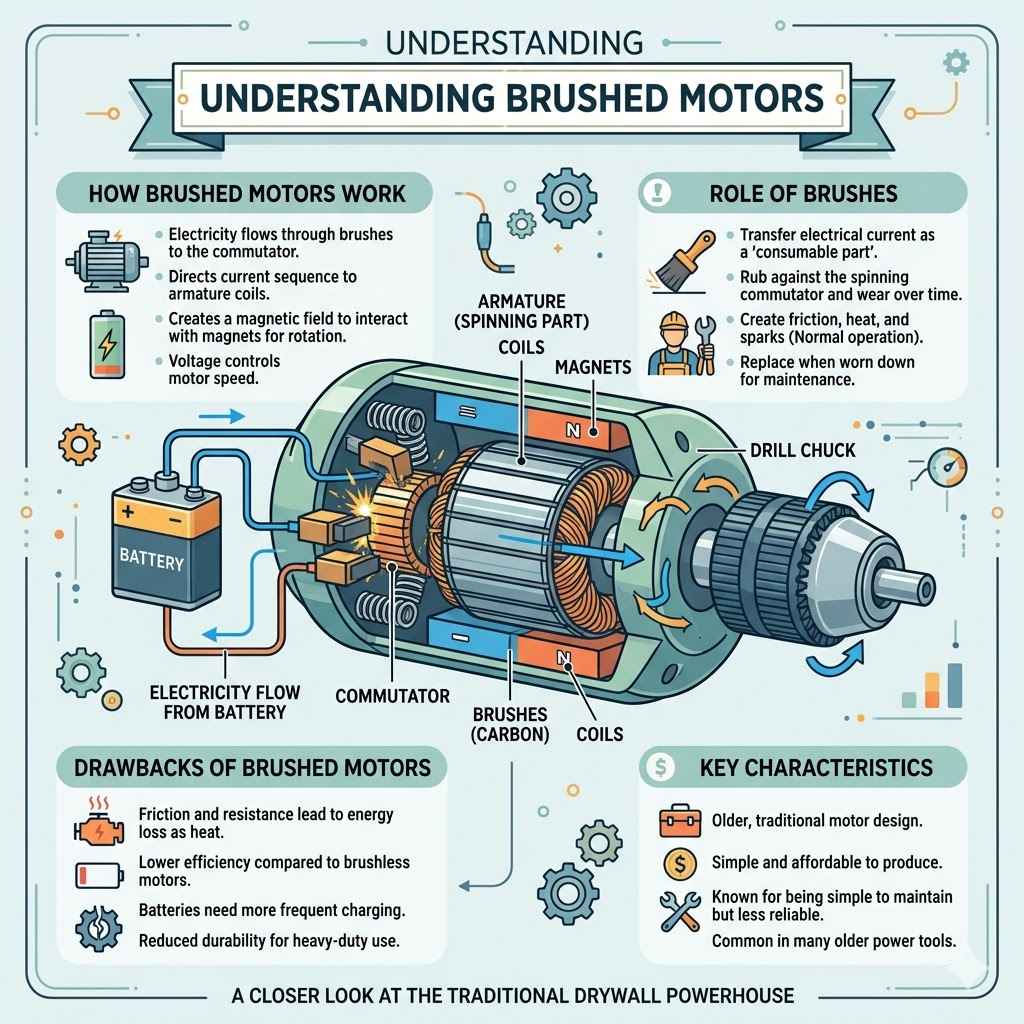
A brushed motor is the older, more traditional type of motor found in many power tools. It works using a system of brushes that make contact with a spinning part called the armature. These brushes transfer electrical current to the armature, causing it to rotate and power the drill.
Think of them like little electrical wipers that keep the motor running.
This design has been around for a long time and is known for being simple and affordable to produce. However, the constant friction between the brushes and the armature creates heat and wear over time. This means brushed motors tend to wear out faster and require maintenance, like replacing the brushes themselves when they get too worn down.
They also tend to be less efficient, meaning they use more battery power to produce the same amount of work compared to brushless motors.
How Brushed Motors Work
In a brushed motor, electricity flows from the battery through the brushes. These brushes are usually made of carbon. They sit against a commutator, which is a series of metal segments on the armature.
As the armature spins, the commutator turns, and the brushes make contact with different segments. This switching of contact points directs the electrical current to different coils on the armature in a specific sequence.
This timed electrical pulsing creates a magnetic field that interacts with magnets around the motor’s casing. This magnetic interaction generates the rotational force needed to spin the drill’s chuck. The speed of the drill is controlled by how much voltage is sent to the motor, usually managed by a trigger that varies the electrical flow.
The brushes are the key components that enable this electrical transfer and the resulting motion.
The Role of Brushes
The brushes in a brushed motor are consumable parts. They are designed to wear down over time as they rub against the commutator. This wear is normal for brushed motors.
When the brushes become too short, they can no longer make proper contact, and the motor will stop working or perform poorly. Replacing them is a common maintenance task for tools with brushed motors.
This constant physical contact also creates friction and heat. This heat can limit the motor’s performance and lifespan. Sparks can also be seen coming from the brushes as they make contact, which is a normal characteristic of this motor type.
While effective, this wear-and-tear mechanism is a primary reason why brushed motors are generally considered less durable and efficient than their brushless counterparts.
Drawbacks of Brushed Motors
One of the main downsides of brushed motors is their efficiency. Because of the friction and electrical resistance from the brushes, a portion of the battery’s energy is lost as heat. This means you get less work done for the same amount of battery charge compared to a brushless motor.
You might find yourself needing to recharge batteries more often when using a brushed drill for demanding tasks.
Another drawback is durability. The brushes wear down and eventually need replacing. This adds to the ongoing cost of owning and maintaining the tool.
Over time, the commutator can also become worn or damaged, requiring more extensive repairs or even a full motor replacement. This makes brushed drills generally less suitable for very heavy-duty or professional use where tools are used for long periods.
Exploring Brushless Motors
Brushless motors are a more modern technology. Instead of physical brushes, they use electronic controls to manage the motor’s operation. This electronic switching makes them more efficient, more powerful, and longer-lasting than brushed motors.
They are becoming the standard in many high-quality power tools.
The absence of physical brushes means less friction, less heat, and no wear-and-tear on these parts. This translates to a drill that runs cooler, lasts longer, and can often deliver more consistent power. Brushless drills also tend to be lighter and more compact for the same power output, making them easier to handle for extended periods.
How Brushless Motors Work
In a brushless motor, the electrical components that would normally be brushes are replaced by a sophisticated electronic controller. This controller is like the “brain” of the motor. It precisely manages the flow of electricity to magnets located in the motor’s housing.
These magnets create the rotating magnetic field that drives the armature, which is now simpler and doesn’t need a commutator.
The electronic controller monitors the motor’s speed and position in real-time. It then sends electrical pulses to the stator magnets in a very controlled sequence. This sequence creates a smooth, powerful rotation.
Because there are no physical parts rubbing together to switch the current, there’s no friction from brushes. This makes the motor much more efficient and durable. The controller also allows for finer adjustments to power and speed.
The Electronic Controller Explained
The electronic controller in a brushless motor is a piece of complex circuitry. It communicates directly with sensors inside the motor. These sensors tell the controller exactly where the rotor (the spinning part) is at any given moment.
Based on this information, the controller decides which electromagnets in the motor’s housing should be energized and when.
This precise timing ensures that the magnetic fields are always in the optimal position to create maximum rotational force. It’s like having a conductor for an orchestra, ensuring every instrument plays at the perfect moment. This advanced control is what gives brushless motors their superior efficiency and performance.
It also allows for features like variable speed control that are more responsive.
Advantages of Brushless Motors
One of the biggest advantages of brushless motors is their efficiency. Because there are no brushes to create friction and heat, more of the battery’s power is converted into usable work. This means you can get more holes drilled or screws driven on a single battery charge.
For DIYers and professionals alike, this means less downtime and more productivity.
Brushless motors are also much more durable. With no brushes to wear out, the motor itself can last significantly longer. This reduces maintenance costs and the need for frequent
Key Differences Side By Side
Comparing brushless and brushed drills directly highlights why one might be better than the other for different users and tasks. The fundamental difference lies in their motor design, which impacts performance, longevity, and cost.
| Feature | Brushed Drill | Brushless Drill |
|---|---|---|
| Motor Type | Uses physical brushes to conduct electricity | Uses electronic controller instead of brushes |
| Efficiency | Lower; energy lost as heat due to friction | Higher; less energy lost, more battery life |
| Durability | Lower; brushes wear out, require replacement | Higher; no brush wear, longer motor life |
| Power Output | Good for general tasks, can be less consistent | More consistent, often higher torque and speed |
| Heat Generation | Higher due to brush friction | Lower, runs cooler |
| Maintenance | Requires brush replacement | Minimal; no brush maintenance needed |
| Cost | Generally lower initial cost | Generally higher initial cost |
| Size/Weight | Can be bulkier for equivalent power | Often more compact and lighter for equivalent power |
Performance and Power
When it comes to raw performance, brushless drills usually have an edge. They can deliver more consistent torque, meaning they can power through tough materials without slowing down as much. The electronic control allows for more precise speed regulation, which is beneficial for tasks requiring different levels of power, like drilling into wood versus metal.
For example, if you’re driving a lot of long screws into hardwood, a brushless drill will maintain its power better and prevent the screw head from stripping. Brushed drills might struggle more, requiring more effort from the user to keep the screw going in smoothly. This consistent power delivery is a hallmark of brushless technology.
Battery Life and Runtime
The efficiency of brushless motors directly translates to better battery life. Since less energy is wasted as heat, the battery can power the drill for longer on a single charge. This means you can complete more work before needing to swap out or recharge a battery.
A common scenario is working on a large deck project. With a brushed drill, you might find yourself swapping batteries multiple times throughout the day. A brushless drill, however, could potentially get you through the entire project with fewer battery changes, saving you time and frustration.
This longer runtime is especially valuable for professionals who work on job sites all day.
Longevity and Maintenance
Brushless drills are built to last. The absence of wearing parts like brushes means the motor itself has a longer operational life. This makes them a more sustainable investment over time, especially for frequent users.
Maintenance is significantly reduced with brushless drills. You don’t have to worry about checking or replacing brushes. The motor is essentially a sealed unit that requires very little user intervention.
This means less time spent on tool upkeep and more time spent on actual projects. Brushed drills, on the other hand, will eventually need new brushes, which is a simple but necessary maintenance task.
When to Choose Which Drill
The best drill for you depends on your specific needs and how you plan to use it. Both brushed and brushless drills have their place, and understanding your priorities will guide your decision.
For the Occasional DIYer
If you’re a homeowner who only uses a drill for occasional tasks around the house, like hanging shelves, assembling furniture, or minor repairs, a brushed drill might be perfectly sufficient. They are generally less expensive upfront, making them a budget-friendly option. For light-duty work, the difference in performance might not be noticeable enough to justify the higher cost of a brushless model.
A brushed drill can handle most common household tasks with ease. You’ll likely get years of use out of one if you’re not putting it under heavy strain. The simpler technology also means that if something does go wrong, repairs might be more straightforward, although less likely to be needed for infrequent use.
The key is matching the tool to the task and usage frequency.
For the Enthusiastic Hobbyist or Prosumer
If you’re a hobbyist who enjoys DIY projects, woodworking, or frequent home improvements, investing in a brushless drill is often a wise choice. The increased power, efficiency, and durability will make your projects easier and more enjoyable. You’ll experience less fatigue due to lighter weight and better ergonomics, and you’ll be able to tackle more challenging tasks.
The extended battery life is a significant benefit for those who spend longer periods working on projects. The consistent power delivery means you’ll get cleaner cuts and more precise screw insertions. While the initial cost is higher, the improved performance and longevity often make it a better value in the long run for serious hobbyists.
It’s an investment in better tools for better results.
For the Professional Contractor
For professionals who use their drills daily on job sites, a brushless drill is almost always the superior choice. The demands of professional work require tools that are powerful, reliable, and can withstand constant use. The efficiency of brushless motors means less downtime due to battery changes, and their durability ensures they can handle the rigors of construction environments.
The consistent torque and speed control are critical for a wide range of applications, from drilling into concrete to driving large lag bolts. Brushless drills are designed for maximum productivity and minimum fuss. They represent the cutting edge of power tool technology and are essential for anyone whose livelihood depends on their tools performing at their best, day in and day out.
Real-World Scenarios and Examples
Let’s look at a couple of everyday situations where the difference between brushless and brushed drills becomes clear.
Scenario 1 Driving Screws into Hardwood
Imagine you’re building a sturdy bookshelf out of dense oak. You need to drive in dozens of 3-inch screws. With a brushed drill, you might notice the drill’s speed dropping as the screw bites deeper into the wood.
You might even have to back out the screw and try again if the motor bogs down too much. The heat generated by the motor could also become noticeable after a while.
Now, consider using a brushless drill for the same task. You’ll likely find that it drives those screws in smoothly and consistently, maintaining its speed even at the point of maximum resistance. The electronic controller ensures that the motor delivers optimal torque throughout the process.
You’ll also notice the drill stays cooler to the touch, allowing you to work for longer without interruption. The overall experience is less demanding and more efficient.
Scenario 2 Drilling Multiple Holes for a Fence
Suppose you’re installing fence posts and need to drill pilot holes for lag screws. This often involves drilling 20 or more holes, one after another. A brushed drill might start strong, but as you work through the holes, you might notice a decline in power or a need to let the tool cool down between sets of holes to prevent overheating.
Battery life could also become a concern.
A brushless drill, however, will likely power through this task with remarkable consistency. Its higher efficiency means you’ll get more holes drilled per battery charge. The reduced heat generation allows you to maintain a steady pace without worrying about the tool overheating.
This translates to finishing the job faster and with less effort. The consistent performance ensures each hole is drilled cleanly and to the same depth.
Statistics on Brushless Technology
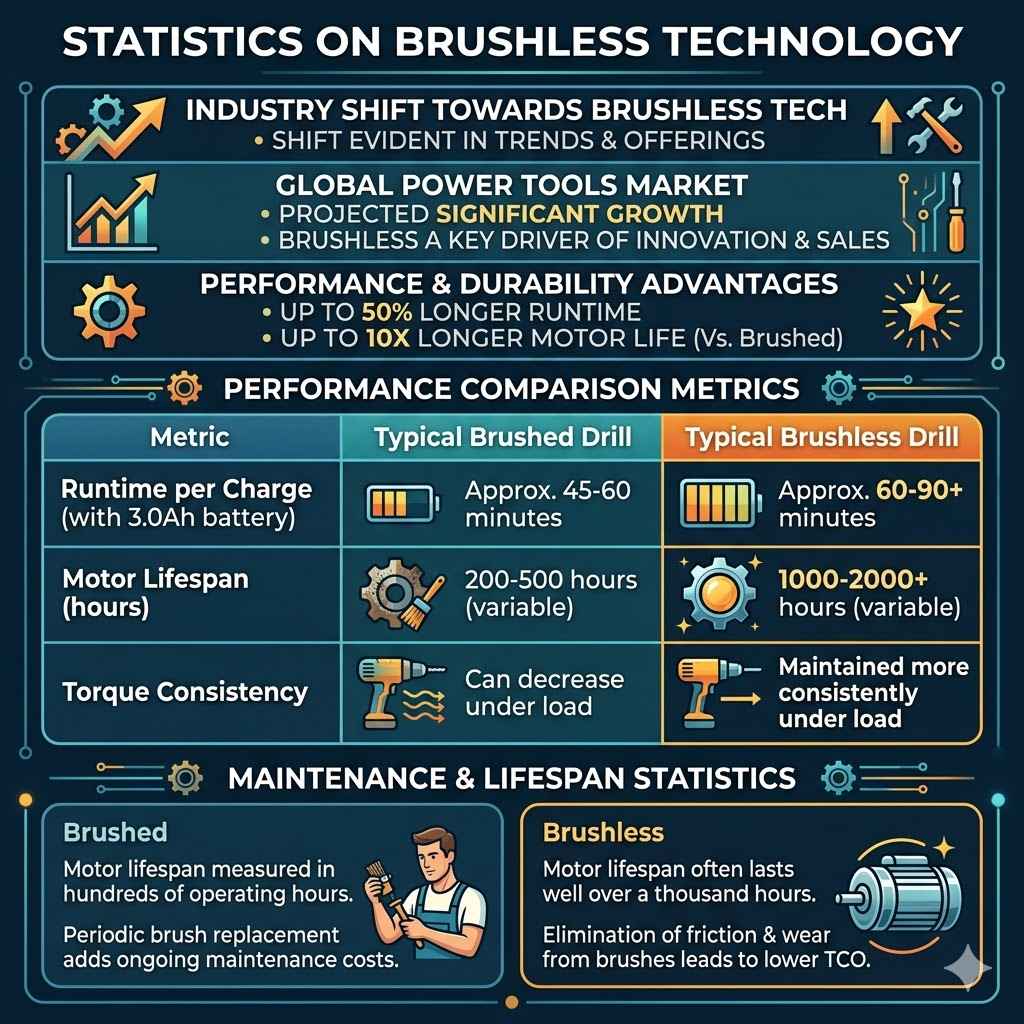
The shift towards brushless technology is evident in industry trends and manufacturer offerings.
According to a market research report, the global power tools market, which heavily features drills, is projected to grow significantly. Within this market, the adoption of brushless motors has been a key driver of innovation and increased sales, particularly in the premium tool segments.
Another study indicated that brushless motors can offer up to 50% longer runtime and up to 10 times longer motor life compared to brushed counterparts. This statistic underscores the performance and durability advantages that users can expect from modern brushless power tools.
Here’s a brief look at some performance comparisons often cited:
| Metric | Typical Brushed Drill | Typical Brushless Drill |
|---|---|---|
| Runtime per Charge | Approx. 45-60 minutes (with 3.0Ah battery) | Approx. 60-90+ minutes (with 3.0Ah battery) |
| Motor Lifespan | 200-500 hours (variable) | 1000-2000+ hours (variable) |
| Torque Consistency | Can decrease under load | Maintained more consistently under load |
Maintenance and Lifespan Statistics
Data from tool manufacturers and independent testing often shows a dramatic difference in motor lifespan. While brushed motors might have a lifespan measured in hundreds of hours of operation, brushless motors can often last well over a thousand hours. This is a testament to the elimination of friction and wear from brushes.
The cost of maintenance also differs. For a brushed drill, the cost of replacing brushes periodically can add up. While not expensive individually, over the tool’s life, it’s an ongoing expense.
Brushless drills essentially eliminate this specific maintenance cost, contributing to a lower total cost of ownership for frequent users.
Frequently Asked Questions
Question: Is a brushless drill worth the extra money
Answer: For most people who use their drill often or for demanding tasks, yes, a brushless drill is usually worth the extra cost. They last longer, have more power, and their batteries last more charges. If you only use a drill for very light tasks now and then, a brushed one might be fine.
Question: Can I upgrade a brushed drill to brushless
Answer: No, you cannot directly upgrade a brushed drill to a brushless motor. The entire motor system and the electronics controlling it are different. You would need to buy a new drill that is designed with a brushless motor.
Question: Do brushless drills get hot
Answer: Brushless drills still get warm during use, especially under heavy load. However, they generally run much cooler than brushed drills because they don’t have the friction and electrical resistance caused by brushes. This cooler operation contributes to their longer lifespan.
Question: How long do brushless drill motors last
Answer: Brushless drill motors are designed for much longer life. While it varies by brand and usage, they can often last two to four times longer than brushed motors, sometimes even more. This means they can handle thousands of hours of demanding work.
Question: Can I use my old batteries with a new brushless drill
Answer: It depends on the brand. Many tool manufacturers use the same battery platform across their tool lines, including both brushed and brushless models. However, some newer, higher-capacity batteries might be required for optimal performance with the most powerful brushless tools.
Always check the tool’s specifications or the manufacturer’s recommendations.
Conclusion
The main difference between brushless and brushed drills lies in their motor technology. Brushless motors offer greater efficiency, longer runtime, more consistent power, and a longer lifespan because they use electronic controls instead of physical brushes that wear out. While brushed drills are less expensive upfront, brushless drills provide better performance and durability, making them a worthwhile investment for serious DIYers and professionals.