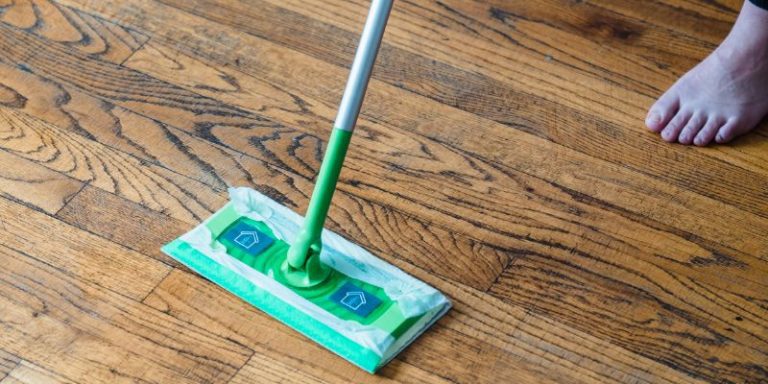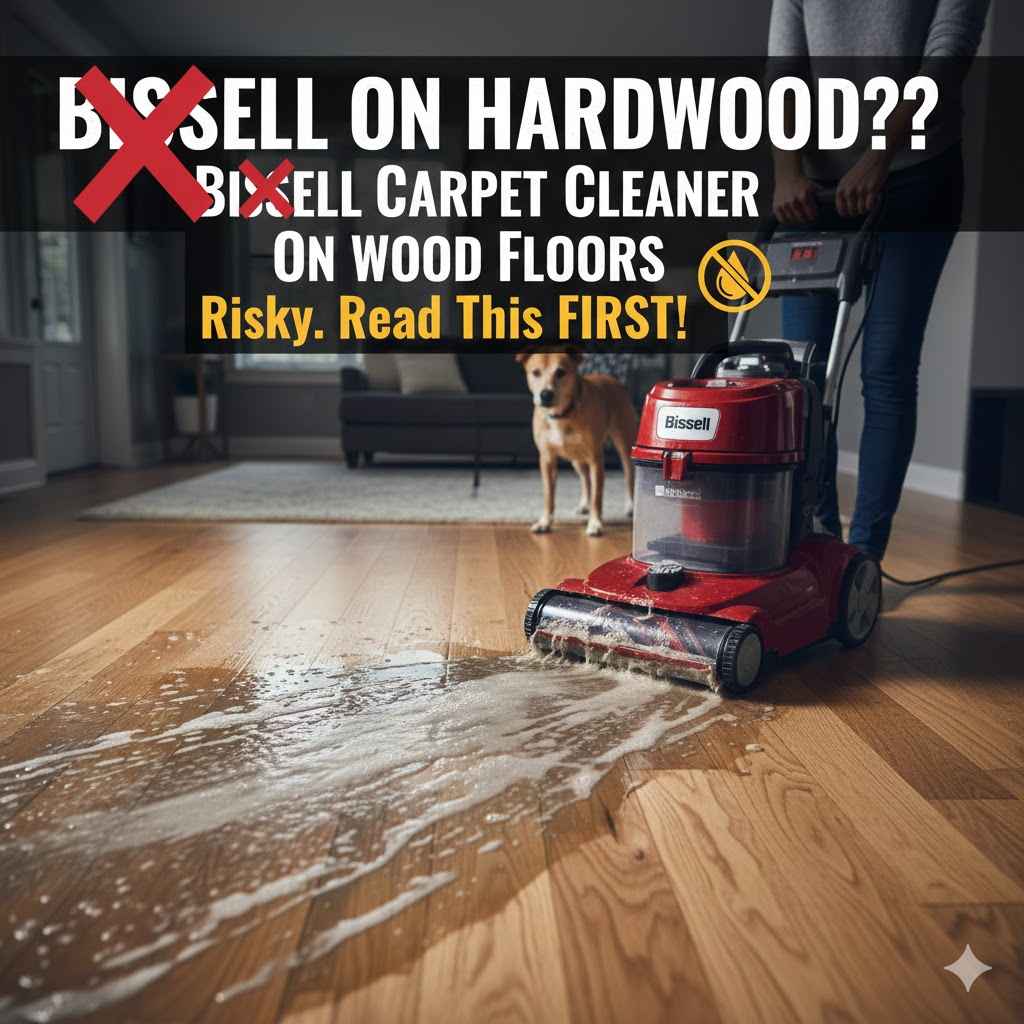
Can I Use My Bissell Carpet Cleaner On Wood Floors? Risky
Using a standard Bissell carpet cleaner on wood floors is very risky and not recommended. The machine uses too much water, heat, and stiff brushes, which can cause permanent damage like warping, discoloration, and stripping the floor’s protective finish. Only use Bissell models specifically made for sealed hard floors to avoid expensive repairs.
Hello, I’m Md Meraj! It’s great to have you here. You’ve got beautiful wood floors and a powerful Bissell carpet cleaner sitting in the closet. The thought crosses your mind: “Can I use this machine to get my wood floors sparkling clean?” It seems like a brilliant shortcut, right? Well, before you fill that tank, let’s take a moment together. Wood and water can be a tricky combination, and I want to help you avoid a costly mistake. Don’t worry, I’m here to walk you through the risks and show you the safest, most effective ways to make your wood floors shine. Let’s get started and give your floors the care they deserve!
Why a Standard Bissell Carpet Cleaner and Wood Floors Don’t Mix
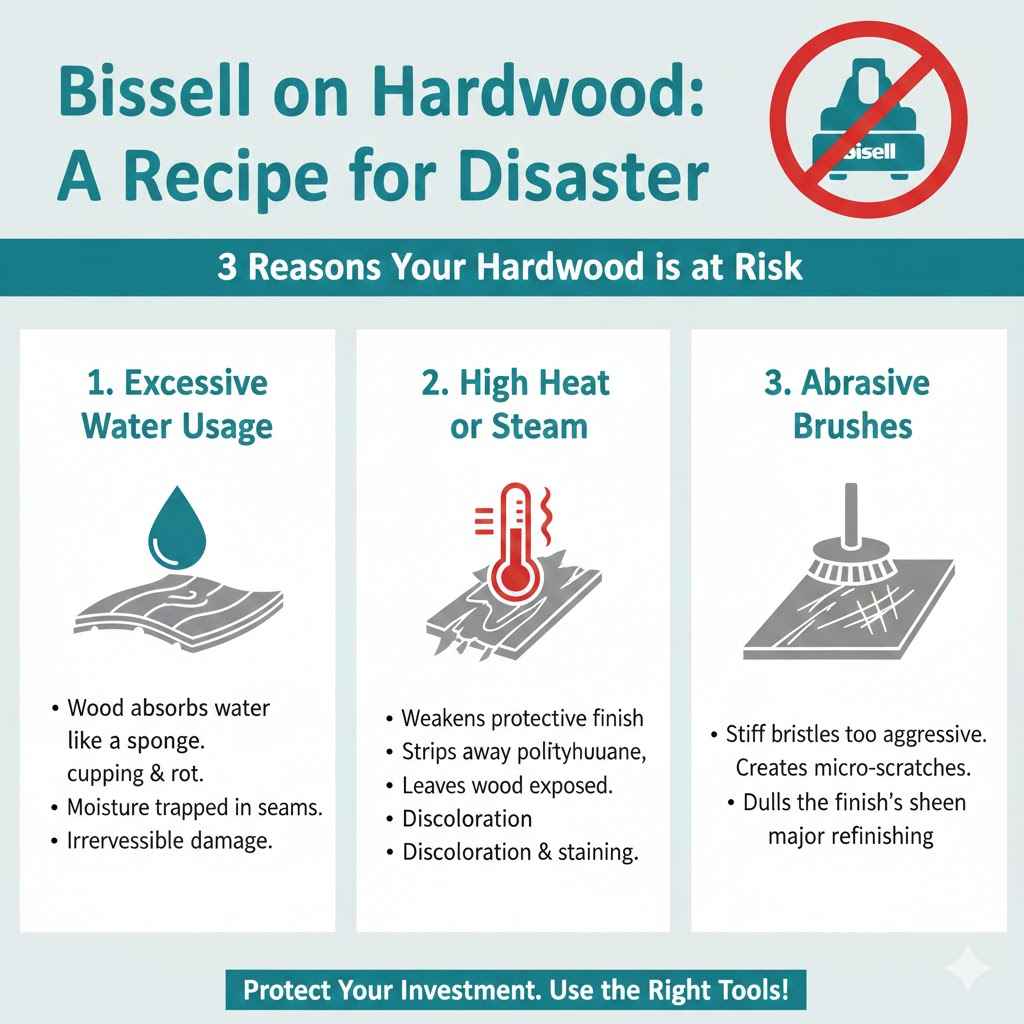
Your Bissell carpet cleaner is a fantastic tool for its intended job: deep cleaning carpet fibers. It works by injecting a mixture of hot water and cleaning solution deep into the carpet pile and then using powerful suction to pull the dirt and moisture back out. This process is perfect for synthetic carpet fibers, but it’s the exact opposite of what your delicate wood floors need. Let’s break down the three main reasons why this is a bad idea.
1. Excessive Water Usage
The number one enemy of hardwood floors is excessive moisture. Wood is a natural, porous material. Think of it like a sponge. When it’s exposed to large amounts of water, the wood cells absorb the moisture and swell. A carpet cleaner saturates the surface, forcing water into the seams between floorboards and into the wood grain itself. Even with strong suction, the machine can’t remove all of this moisture. This trapped water can lead to severe and often irreversible damage, including warping, cupping (where the edges of the board are higher than the center), and even rot over time.
2. High Heat or Steam
Many Bissell carpet cleaner models use heated water or even steam to help break down tough stains in carpets. While this is great for sanitation and stain removal on fabric, it’s disastrous for wood floors. The protective finish on your hardwood—usually polyurethane—acts as a shield against scratches and spills. High heat can soften, weaken, and even strip this finish away, leaving your wood exposed and vulnerable. Once the finish is compromised, the wood is defenseless against dirt, grime, and moisture, leading to discoloration and staining that can only be fixed by sanding and refinishing the entire floor.
3. Abrasive Brushes
Carpet cleaners are equipped with stiff, rotating brushes designed to agitate carpet fibers and lift out embedded dirt. These bristles are far too aggressive for a wood floor’s surface. Using them on your hardwood will create countless micro-scratches, dulling the finish and giving it a worn, hazy appearance. Over time, these fine scratches will accumulate, ruining the beautiful sheen of your floors. Restoring a scratched and dulled floor is a major project, and it all can be avoided by using the right tools from the start.
The Real Damage: A Closer Look at the Risks
Understanding the “why” is important, but seeing the potential outcomes can really drive the point home. Using a carpet cleaner on your wood floors isn’t just a small risk; it can lead to problems that require professional intervention and a significant budget to fix.
- Warping and Cupping: As wood absorbs water and then dries unevenly, the floorboards can twist and bend. This creates an uneven, unattractive, and potentially unsafe surface.
- Finish Stripping: The heat and harsh chemicals can eat away at the floor’s protective layer, leaving it looking dull and feeling rough. This also makes the floor much harder to keep clean.
- Discoloration and Staining: Once the finish is damaged, water can seep into the wood itself, causing dark, ugly stains that are nearly impossible to remove without sanding.
- Mold and Mildew Growth: Moisture trapped between and underneath floorboards creates a perfect breeding ground for mold and mildew. This is not only bad for your floors but also for your home’s air quality and your family’s health.
- Weakening the Boards: Prolonged exposure to moisture can cause the wood fibers to break down, weakening the structural integrity of your flooring over time.
The Exception: Bissell Models Made for Hard Floors
Now, it’s important to be clear: while a carpet cleaner is a no-go, Bissell does make excellent machines specifically designed for hard surfaces. Models like the Bissell CrossWave and SpinWave are all-in-one multi-surface cleaners that are safe for sealed hardwood floors. The key difference lies in their design.
These machines use a minimal amount of water, special soft-touch microfiber brush rolls that gently scrub the floor, and a cleaning solution formulated to be safe for wood finishes. Their powerful suction immediately pulls up the dirty water, ensuring the floor is virtually dry in minutes. If you own one of these models, you can absolutely use it on your sealed hardwood floors by following the manufacturer’s instructions.
This table highlights the crucial differences between the two types of machines:
| Feature | Standard Carpet Cleaner | Hard Floor Cleaner (e.g., Bissell CrossWave) |
|---|---|---|
| Water Usage | High volume, saturates the surface | Low volume, lightly mists the surface |
| Brush Type | Stiff, aggressive bristles for agitation | Soft microfiber or gentle bristles for scrubbing |
| Cleaning Solution | Formulated for carpet fibers | pH-neutral, formulated for sealed hard floors |
| Heat Application | Often uses hot water or steam | Uses cool or room temperature water |
| Intended Purpose | Deep cleaning porous carpets and upholstery | Safely cleaning and drying sealed surfaces |
The Safe and Simple Way to Clean Your Wood Floors
So, how should you clean your wood floors to make them gleam without causing harm? It’s much easier than you might think! All you need are a few simple tools and a gentle technique. This method is safe, effective, and will keep your floors looking their best for decades.
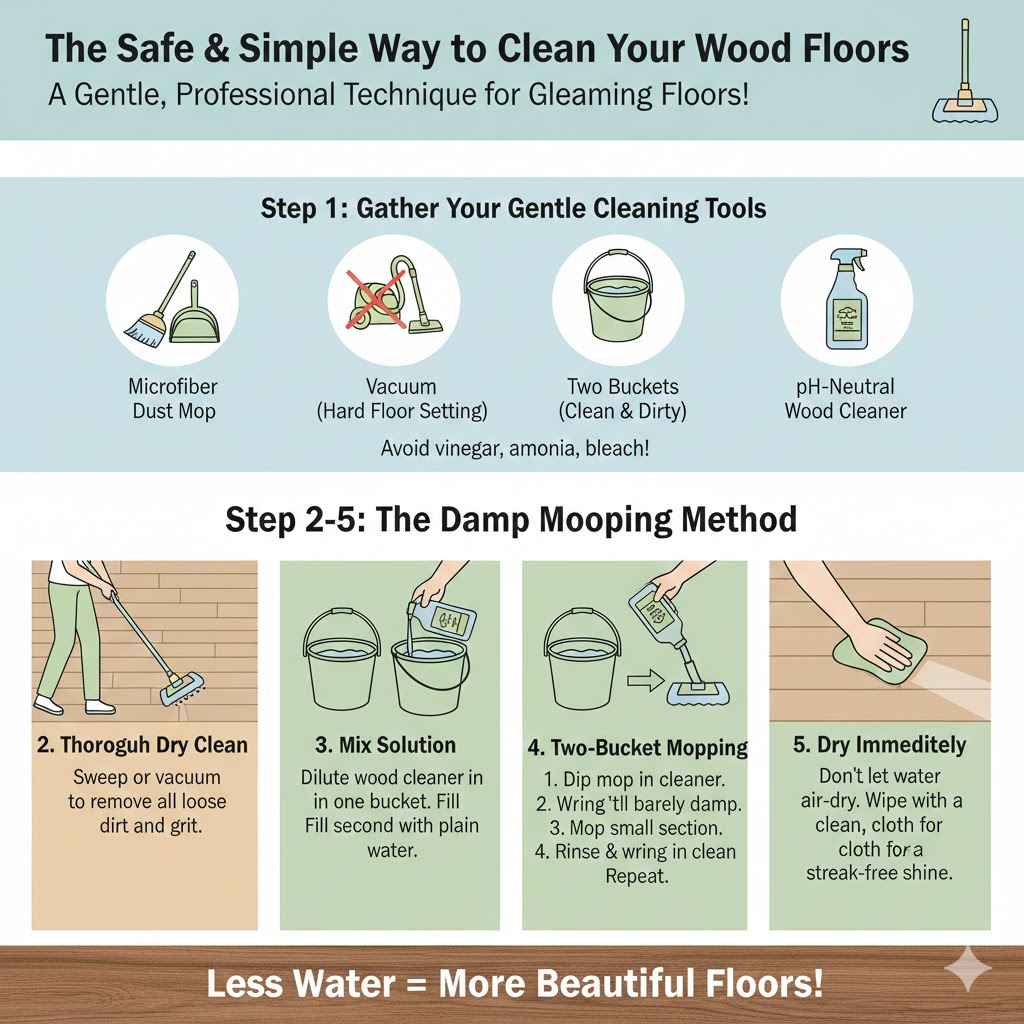
Step 1: Gather Your Gentle Cleaning Tools
Before you start, make sure you have the right equipment. Using the wrong products can be just as damaging as using the wrong machine. Here’s your shopping list:
- A Microfiber Dust Mop or Soft-Bristle Broom: For daily sweeping and dusting.
- A Vacuum with a Hard Floor Setting: Make sure the beater bar (the rotating brush) is turned off to prevent scratches.
- A Microfiber Spin Mop or Flat Mop: Microfiber is excellent at trapping dirt without being abrasive.
- Two Buckets: One for your cleaning solution and one for clean rinse water. This is the secret to not spreading dirty water around.
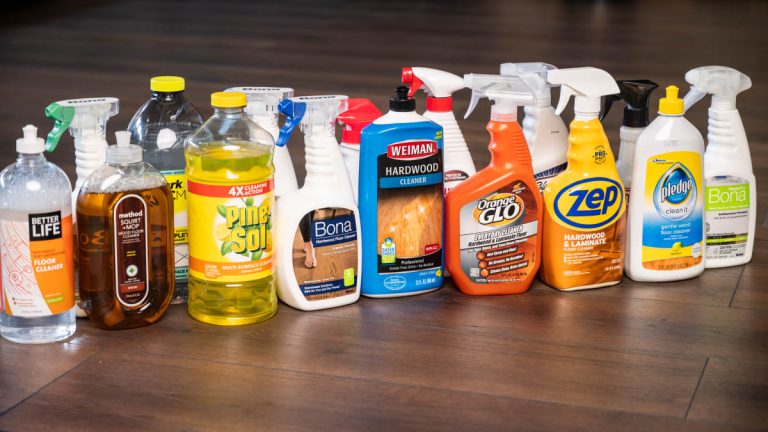
- A pH-Neutral Wood Floor Cleaner: Avoid products with vinegar, ammonia, or bleach. Always choose a cleaner specifically made for wood floors. You can find excellent recommendations from the National Wood Flooring Association (NWFA).
- Soft, Clean Cloths: For drying the floor and wiping up spills.
Step 2: Start with a Thorough Dry Clean
Never mop a dirty floor. Small particles of dirt, dust, and grit can act like sandpaper under your mop, scratching the finish. Begin by thoroughly sweeping with your soft-bristle broom or, even better, using a microfiber dust mop to trap fine dust. You can also use your vacuum on the hard floor setting. This step removes all the loose debris, preparing the surface for a safe wet clean.
Step 3: Mix Your Cleaning Solution
Read the instructions on your wood floor cleaner carefully. Most cleaners are concentrated and need to be diluted with water. Use one of your buckets to mix the solution according to the label’s directions. Using too much cleaner can leave a sticky residue that attracts more dirt, so precision is key. Fill your second bucket with clean, plain water for rinsing your mop.
Step 4: The Two-Bucket Damp Mopping Method
This is the professional’s technique for a streak-free clean. Here’s how it works:
- Dip your microfiber mop into the bucket with the cleaning solution.
- Wring the mop out completely. It should be barely damp to the touch, not dripping wet. Remember, less water is better!
- Mop a small section of your floor, always moving in the direction of the wood grain.
- Before dipping your mop back into the cleaning solution, rinse it thoroughly in the second bucket filled with clean water. Wring it out completely.
- Now, your clean mop is ready to be dipped back into the cleaning solution for the next section.
This method ensures you are always using a clean mop and fresh solution on your floor, rather than just pushing dirty water around.
Step 5: Dry the Floor Immediately
Even with damp mopping, it’s a good practice not to let water air-dry on your wood floors. Standing water can leave spots or slowly seep into the seams. After mopping a section, go over it with a clean, dry microfiber cloth to buff it dry. This will enhance the shine and provide an extra layer of protection. Your floor should be completely dry within a minute or two.
Wood Floor Care: The Ultimate Do’s and Don’ts
Maintaining beautiful wood floors is about consistent, gentle care. Here’s a quick reference table to help you keep your floors in top condition.
| What to Do (The “Do’s”) | What to Avoid (The “Don’ts”) |
|---|---|
| DO use doormats at every entrance to trap dirt and grit before it gets on your floor. | DON’T use a steam cleaner. The high heat and moisture can destroy the finish and damage the wood. |
| DO clean up spills immediately with a soft cloth to prevent moisture damage. | DON’T use vinegar, ammonia, or all-purpose cleaners. They are too acidic or alkaline and can dull the finish. |
| DO place felt pads under all furniture legs to prevent scratches and dents. | DON’T let water pool or stand on the floor for any length of time. |
| DO sweep, dust mop, or vacuum regularly to remove abrasive particles. | DON’T use abrasive tools like steel wool, scouring pads, or stiff-bristled brushes. |
| DO trim your pets’ nails to minimize scratches. | DON’T wear high heels or athletic cleats on your wood floors. |
Frequently Asked Questions About Cleaning Wood Floors
Can I use a Bissell CrossWave on unsealed or oiled wood floors?
No. The Bissell CrossWave and similar hard floor cleaners are designed only for sealed hard floors. An unsealed, oiled, or waxed floor is highly absorbent. Using any water-based cleaning machine on these surfaces can cause deep staining and damage. Always test in a small, hidden area if you’re unsure about your floor’s finish.
How can I tell if my wood floors are sealed?
Here’s a simple test. Find an inconspicuous spot on your floor and place a single drop of water on it. If the water beads up and sits on the surface, your floor is sealed. If the water soaks in and creates a dark spot, your floor is unsealed and should only be cleaned by sweeping and very light spot-cleaning.
Is it okay to use vinegar and water to clean wood floors?
This is a common “DIY” tip, but I strongly advise against it. Vinegar is an acid. Over time, it can break down the polyurethane finish on your floors, leaving them looking dull and more susceptible to damage. It’s always safer to use a pH-neutral cleaner specifically formulated for hardwood.
How often should I deep clean my wood floors?
This depends on the amount of traffic your floors get. As a general rule, you should dry mop or vacuum 1-2 times a week. A deeper clean with the damp mopping method should be done every 1-2 months. For high-traffic areas like kitchens and entryways, you might need to damp mop more frequently.
Will using my Bissell carpet cleaner on wood floors void the warranty?
Almost certainly, yes. Using a product on a surface it was not designed for is considered improper use by most manufacturers. If the machine causes damage to your floor, it won’t be covered. If the machine itself breaks while being used improperly, that repair likely won’t be covered either.
What is the absolute safest tool for daily wood floor cleaning?
A high-quality microfiber dust mop is your best friend. It effectively traps dust, pet hair, and other small allergens without any risk of scratching your floor. It’s fast, easy, and the perfect tool for daily maintenance to keep your floors looking great between deeper cleanings.
Can I use any Bissell cleaning formula on my wood floors with my CrossWave?
No, you must use a formula specifically designed for hard floors or multi-surfaces. Using a carpet cleaning formula in a CrossWave on your wood floors could leave a sticky residue and may not be safe for the wood’s finish. Always check the bottle to ensure it says it’s safe for sealed hardwood floors.
Final Thoughts: Protect Your Beautiful Wood Floors
Taking care of your hardwood floors doesn’t have to be complicated. It’s all about understanding what they need and treating them with a gentle touch. While your powerful Bissell carpet cleaner is a hero on rugs, it’s best to keep it far away from your wood floors. The risk of water damage, stripped finish, and deep scratches is simply too high.
Instead, by embracing a simple routine of regular dusting and occasional damp mopping with the right tools, you can easily maintain the warmth and beauty of your floors. You are more than capable of giving your floors the care they deserve, ensuring they remain a stunning feature of your home for many years to come. You’ve got this!