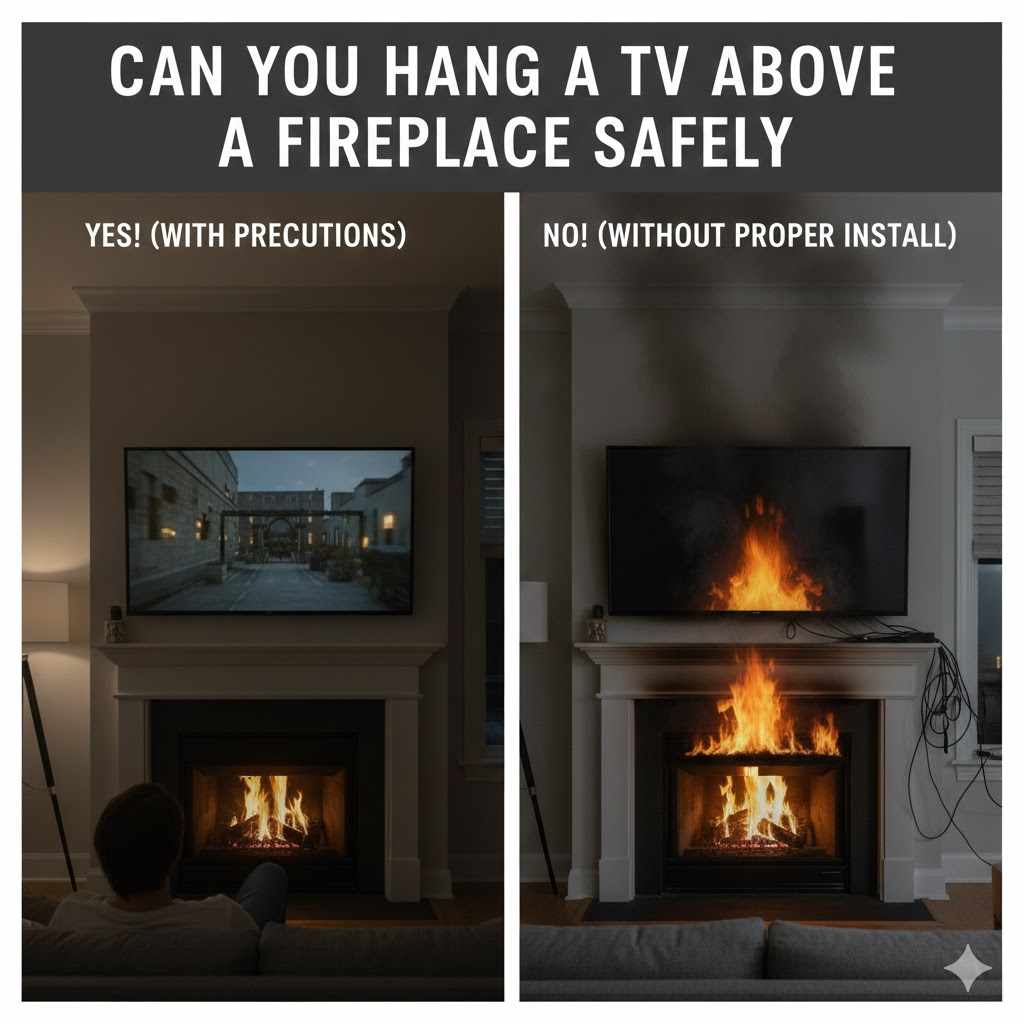
Can You Hang a TV Above a Fireplace Safely
Many people love the cozy feel of a wood-burning fireplace. They also enjoy watching TV. So, the question often comes up Can You Hang a TV Above a Wood Burning Fireplace?
This can seem tricky because fireplaces get hot. Beginners might worry about damaging their TV. Don’t worry, we’ll guide you through this step by step.
We will show you how to do it safely.
Safety First Considerations For Your TV
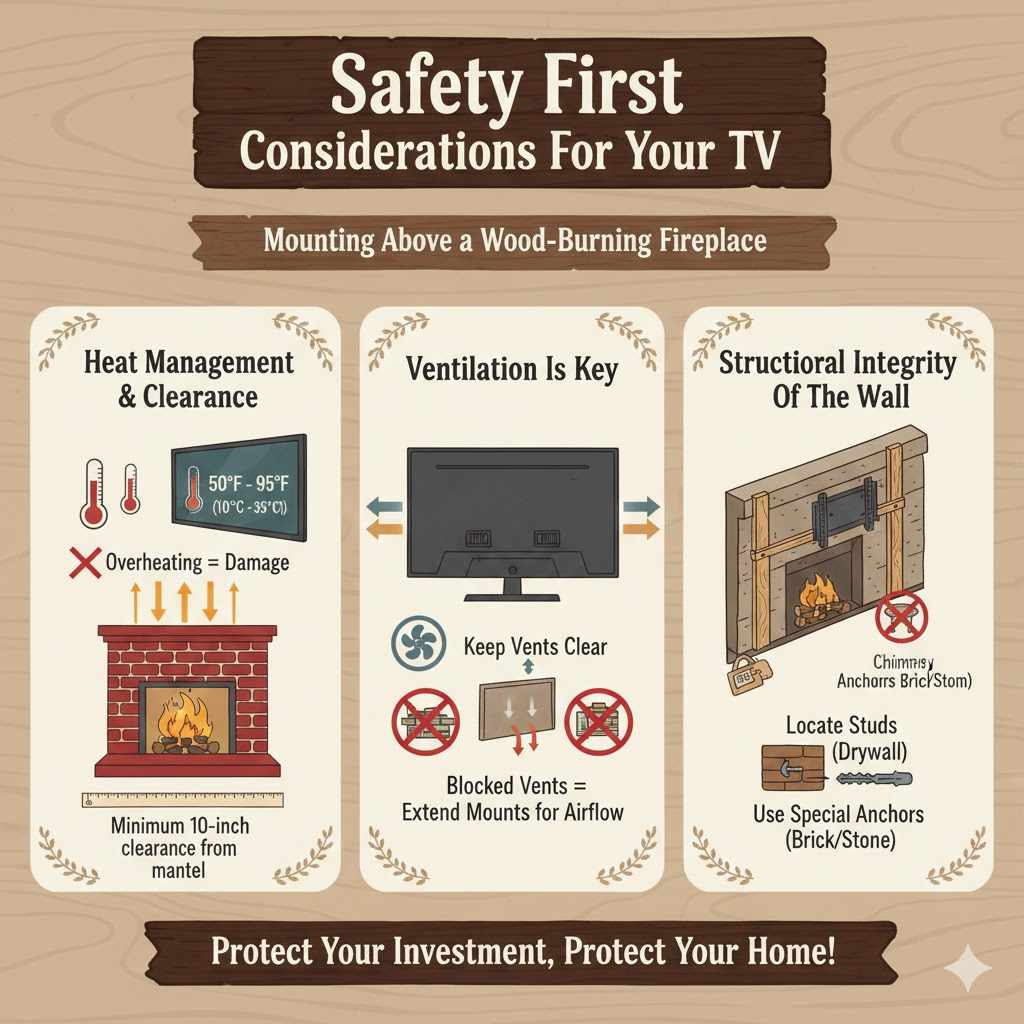
Before you even think about drilling holes, safety must be your top priority. Hanging a TV above a wood-burning fireplace presents unique challenges mainly due to the intense heat and smoke produced. These elements can significantly damage electronic components, shorten the lifespan of your television, and even pose a fire hazard if not handled correctly.
Understanding the risks is the first step to a successful installation. This section will cover the essential safety checks and precautions you need to take to protect your investment and your home. We’ll break down what makes this situation different from a standard TV mount.
Heat Management And Clearance Distances
The primary concern when mounting a TV above a wood-burning fi
Manufacturers of televisions typically specify maximum operating temperatures, which are usually well below fireplace output. For instance, many TVs perform best in environments between 50°F and 95°F (10°C and 35°C). Exceeding these limits can lead to pixel damage, warping of the screen, and accelerated degradation of internal parts.
Always check your TV’s manual for its specific temperature tolerance.
A common recommendation for safe clearance between a heat source like a fi
Ventilation Is Key
Good ventilation is essential for keeping your TV cool. Hot air rises, and a fi
Modern TVs, especially newer models, have vents designed to allow cool air in and hot air out. When these vents are blocked or constantly exposed to rising heat, the cooling system cannot function effectively. This can lead to the TV overheating and shutting down as a safety measure, or worse, suffering permanent damage.
Ensure that the area around the TV and its vents remains as clear as possible.
Consider the design of your fireplace surround. If it’s very enclosed or has a deep mantel, it might be harder to achieve adequate ventilation. In such cases, you might need to explore mounting solutions that extend the TV further from the fireplace opening or incorporate features that actively draw cooler air towards the TV.
Structural Integrity Of The Wall
Mounting a TV, especially a large one, requires a secure and strong mounting point. The wall above a fi
You need to confirm that the wall material can support the weight of the TV and the mount. Drywall alone is often not enough. You’ll likely need to locate studs within the wall for a secure attachment.
If mounting into brick or stone, you will need specialized anchors designed for those materials, which can be more complex to install.
The presence of a chimney structure within the wall can also affect where you can drill. You don’t want to drill into a flue or compromise the structural integrity of the chimney. It is vital to understand what is behind the wall before you start drilling.
A stud finder, and possibly consulting with a professional if you are unsure, can help you determine the best and safest place to attach your mount.
Mounting Solutions For Above Fireplaces
Once you understand the safety requirements, you can explore the different ways to mount your TV. There are several types of mounts available, and some are better suited for the unique environment above a fireplace. Choosing the right mount can make all the difference in ensuring your TV is both secure and protected from excessive heat.
This section will detail the common options, highlighting their pros and cons for this specific application.
Fixed TV Mounts
A fixed TV mount is the simplest type. It holds the TV flat against the wall, offering no adjustability. For mounting above a fireplace, a fixed mount might seem like a good option if you’re prioritizing a clean look.
However, it offers the least flexibility in terms of positioning the TV away from heat or improving viewing angles.
The main advantage of a fixed mount is its low profile. It keeps the TV as close to the wall as possible, which can be aesthetically pleasing. They are also generally less expensive than other types of mounts.
If your fireplace does not produce a lot of direct heat and you have ample clearance, a fixed mount could work.
However, the lack of adjustability is a significant drawback in this scenario. You cannot easily pull the TV out to improve ventilation or tilt it to reduce glare. Furthermore, if the fireplace is very tall, a fixed mount might position the TV too high for comfortable viewing.
You must ensure the heat is well managed and the viewing angle is suitable before opting for this type of mount.
Tilting TV Mounts
Tilting TV mounts allow you to angle the TV downwards. This is a much better option for mounting above a fireplace than a fixed mount. The ability to tilt the TV can help direct heat away from the screen and improve the viewing angle, especially if the TV ends up higher than ideal.
When you tilt the TV downwards, you can create a small gap between the top of the TV and the wall, which aids in air circulation. This gap is crucial for allowing hot air to rise and dissipate rather than accumulating around the television. A tilt mount also allows you to adjust the TV so you can watch it comfortably from your seating area.
You can usually tilt these mounts by a certain degree, often between 5 and 15 degrees. This might be enough to make a significant difference in heat management and viewing comfort. When choosing a tilting mount for a fireplace, look for one that offers a generous tilt range and robust construction.
Always check the weight capacity to ensure it can safely support your TV.
Full-Motion Or Articulating TV Mounts
Full-motion mounts, also known as articulating mounts, offer the most flexibility. They have arms that allow you to extend the TV away from the wall, tilt it up or down, and swivel it left or right. This type of mount is often the best choice for mounting a TV above a wood-burning fireplace because it provides the most control over positioning.
With a full-motion mount, you can pull the TV out from the wall during use to create maximum space for heat to escape. This is invaluable for protecting your TV. You can also adjust the angle to compensate for viewing angles and to further direct heat away from the unit.
When not in use, you can push the TV back against the wall for a cleaner look.
The downside to full-motion mounts is that they are typically more expensive and can be more complex to install. They also have a larger profile when extended. However, for the added safety and flexibility they provide, many people find them to be worth the investment when mounting above a heat source.
Always ensure the mount is rated for the size and weight of your TV and is designed for sturdy wall installation.
Recessed Fireplace Mounts And Mantel Shelves
Some specialized mounts are designed specifically for installation above fi
Recessed mounts can offer a very clean, built-in look. They are designed to position the TV within a framed opening, which can help with heat deflection and aesthetics. However, installation can be more involved, sometimes requiring modifications to the fireplace structure itself.
Mantel shelves can provide a stable surface. If your fireplace has a sturdy mantel, you might consider placing the TV on top of it. However, this still requires careful consideration of heat and viewing angles.
Some decorative mantel shelves are also designed to act as heat shields.
Another option is a mounting bracket that attaches to the wall above the mantel. This bracket might have a built-in shelf or a way to attach the TV directly. These solutions often come with built-in features to help manage heat and improve airflow.
Always check the manufacturer’s specifications to ensure these products are suitable for use above a wood-burning fireplace.
Step-By-Step Installation Process
Installing a TV mount above a fireplace requires careful planning and execution. This process involves more than just finding studs; it demands consideration of heat, viewing angles, and structural support. Follow these steps to ensure a safe and successful installation.
This guide is designed to be clear and actionable, helping you through each stage of the process.
Step 1 Gather Your Tools And Materials
Before you begin, make sure you have everything you need. This includes the TV mount itself, a drill with appropriate drill bits, a stud finder, a level, a measuring tape, a pencil, and any necessary hardware such as lag bolts or anchors.
Ensure your TV mount is rated for the size and weight of your television. It’s also important to confirm that the mount is suitable for installation on the type of wall you have (e.g., drywall, brick, stone). If you are unsure about the wall’s composition or strength, it’s wise to consult a professional.
Having all your tools and materials ready will make the installation process smoother and reduce the risk of errors. It’s better to have a few extra tools than to be halfway through the job and realize you’re missing something critical.
Step 2 Determine The Ideal TV Placement
This is a critical step for safety and viewing comfort. Measure the heat output of your fireplace. A simple way is to use an infrared thermometer.
Heat rises, so the closer the TV is to the firebox, the hotter it will be.
Consider your seating arrangement. You don’t want to be craning your neck to watch the TV. Use your measuring tape and pencil to mark potential mounting points on the wall.
A common mistake is placing the TV too high. If the top of the TV is significantly above eye level when you’re seated, it can be uncomfortable to watch for extended periods. Aim for the center of the screen to be roughly at eye level from your main viewing position.
Remember to factor in the height of the mount and the TV itself when making these measurements.
Step 3 Locate Wall Studs Or Secure Anchors
Using a stud finder, locate the wall studs behind the drywall. Mark the center of each stud where you plan to install the mount. If you are mounting into brick or stone, you will need to use specialized masonry anchors.
For drywall installations, it is crucial to attach the mount directly to the studs. Drywall alone cannot support the weight of a TV and mount, especially with the added stress from a tilting or articulating arm. If studs are not ideally positioned, you might need to use heavy-duty toggle bolts or other appropriate anchors, but stud mounting is always preferred for safety.
If you are uncertain about the wall’s construction or how to properly use anchors, seek professional assistance. A poorly secured mount can lead to the TV falling, causing damage and potential injury.
Step 4 Install The Wall Mount Bracket
Hold the wall bracket against the wall at your marked location. Use a level to ensure it is perfectly straight. Mark the drill holes.
If mounting into studs, pre-drill pilot holes that are slightly smaller than your lag bolts. Then, use your drill to drive the lag bolts through the mount’s holes and into the studs. Ensure they are tightened securely.
If using masonry anchors, follow the anchor manufacturer’s instructions carefully. This usually involves drilling a hole of a specific size and then inserting the anchor before attaching the mount.
Step 5 Attach The TV To The Mount
Most TV mounts come with VESA mounting brackets that attach to the back of your TV. Carefully align these brackets with the VESA mounting holes on your television. Use the screws provided with the mount to attach them securely.
It’s often helpful to have another person assist you with this step, as TVs can be heavy and unwieldy. Once the brackets are attached to the TV, carefully lift the TV and hook it onto the wall bracket. Many mounts have a locking mechanism to secure the TV in place.
Double-check that the TV is securely attached to the mount. Gently try to wiggle the TV to ensure there’s no looseness.
Step 6 Connect Cables And Test
Connect all your cables, including power, HDMI, and any other necessary cords. If your mount allows, consider using cable management accessories to keep the wires tidy and out of sight.
Turn on your TV and test all its functions. Check the viewing angle and make any necessary adjustments using the mount’s tilt or swivel features. Observe the TV for any signs of overheating after it has been on for a while.
This is also a good time to test the fi
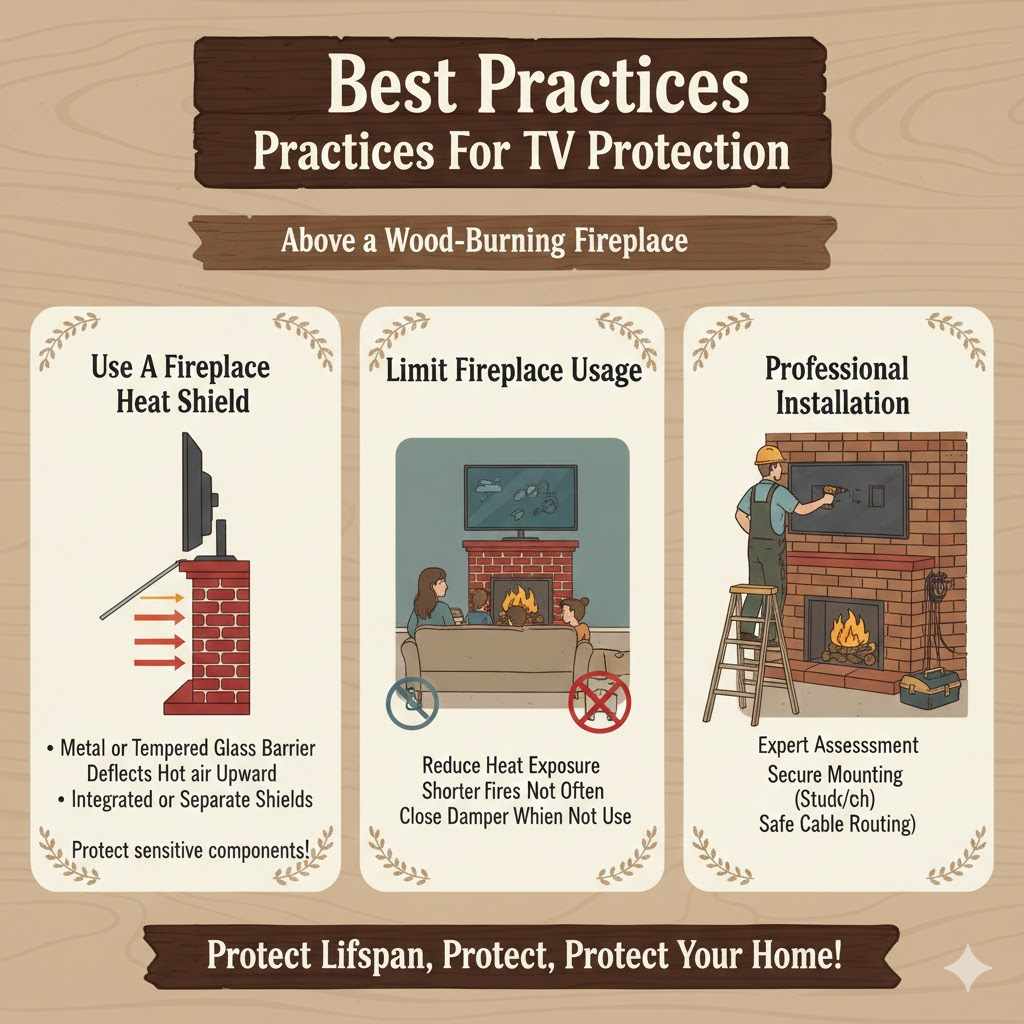
Best Practices For TV Protection
Even with a proper mount, protecting your TV from fireplace heat is an ongoing concern. Implementing a few extra measures can significantly extend your TV’s lifespan and prevent damage. These practices are simple but effective ways to ensure your entertainment system remains in good working order.
Use A Fireplace Heat Shield
A heat shield is a barrier designed to deflect the rising heat away from the TV. These can be made of various materials, including metal or tempered glass. Some specialized TV mounts come with integrated heat shields, while others can be purchased separately.
A well-designed heat shield will create a buffer zone between the TV and the heat source. It should be positioned so that it redirects the hot air upwards and away from the television’s sensitive components. When choosing a heat shield, ensure it complements your fireplace decor and does not obstruct the TV’s viewing angle excessively.
Some DIY solutions can also work, such as installing a sturdy, non-combustible shelf above the fireplace that acts as a deflector. However, it’s essential to ensure that any DIY solution is securely fastened and doesn’t pose its own safety risks. Always prioritize products specifically designed for fireplace heat management.
Limit Fireplace Usage During TV Viewing
The most effective way to protect your TV from heat is to reduce the amount of heat it is exposed to. This means limiting the use of your wood-burning fireplace, especially when you plan to watch TV for extended periods.
If you enjoy having a fire going, consider having it on for shorter durations or using it when you are not actively watching TV. Alternatively, if your fireplace has a damper, ensure it is fully closed when the fireplace is not in use to prevent drafts of hot air from rising.
This might seem like a simple or even obvious solution, but it’s often overlooked. Making conscious decisions about when to use the fireplace can significantly contribute to the longevity of your TV. It’s a trade-off between ambiance and electronic protection.
Consider Alternative TV Locations
If, after evaluating the risks and available solutions, you still feel uncomfortable mounting a TV above your wood-burning fireplace, consider other locations in your room. Sometimes, the safest and most practical solution is to find an alternative spot.
A nearby wall, a stand, or even a corner of the room might offer a much safer and more optimal viewing experience without the risk of heat damage. Think about the overall layout of your room and where the TV would naturally fit without compromising its safety or your comfort.
This option is especially relevant if your fireplace produces a significant amount of heat or if your room’s layout makes achieving adequate clearance very difficult. Prioritizing the longevity of your electronics and the safety of your home should always be the guiding principle.
Professional Installation Can Be Worth It
If you have any doubts about your ability to safely install a TV mount above a fireplace, hiring a professional installer is highly recommended. Professionals have the experience and tools to assess your wall structure, ensure proper mounting, and manage cable routing.
They can also advise on the best type of mount for your specific setup and identify potential issues you might not have considered. The cost of professional installation is often less than the cost of repairing or replacing a damaged TV or home.
A qualified installer will understand the nuances of mounting heavy objects on various wall types and can ensure the mount is securely fastened, preventing accidents. They can also help manage the aesthetic aspects, ensuring cables are hidden neatly.
Frequently Asked Questions
Question: What is the main danger of hanging a TV above a wood burning fireplace?
Answer: The main danger is the extreme heat produced by the fireplace, which can damage the TV’s sensitive electronic components, leading to malfunctions or complete failure.
Question: How far should a TV be from a wood burning fireplace?
Answer: A general guideline is to maintain at least 36 inches (91 cm) of clearance, but this can vary. Always check your TV’s manual and consider the fireplace’s heat output.
Question: Can I use a fixed TV mount above a fireplace?
Answer: A fixed mount offers the least flexibility and ventilation. It’s only recommended if your fireplace produces very little heat and you have ample clearance, as you cannot tilt it away from heat.
Question: What type of mount is best for above a fireplace?
Answer: Full-motion or articulating mounts are often the best choice because they allow you to pull the TV out from the wall for better ventilation and adjust the viewing angle.
Question: Should I use a heat shield for a TV above a fireplace?
Answer: Yes, using a fireplace heat shield is highly recommended to deflect heat away from the TV and protect its electronic components from damage.
Summary
Yes, you can hang a TV above a wood burning fireplace, but it requires careful planning and the right approach. Prioritize heat management, proper ventilation, and secure wall mounting. Choose a mount that allows adjustability, consider heat shields, and always assess the risks involved.
Following these steps ensures a safe and enjoyable viewing experience.