Can You Use Regular Wood Screws for Structural Support? Essential Safety Guide
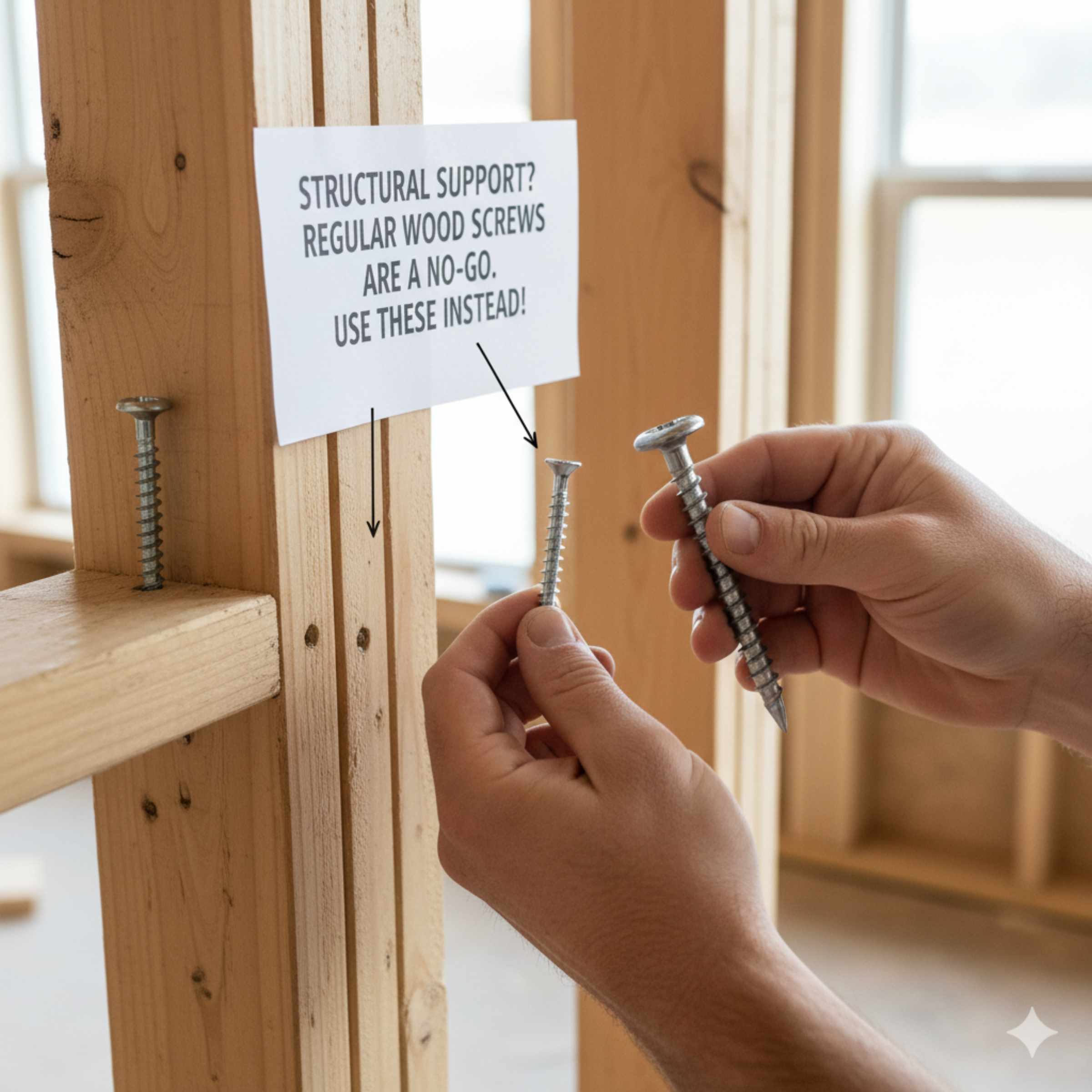
Generally, no, you should not rely on standard, small wood screws for primary structural support in major building projects. While they work great for fastening trim or cabinets, structural applications require specialized, stronger fasteners like lag screws or structural screws designed to handle heavy loads and prevent failure. Always choose the right screw for the job’s demands.
Welcome! If you’ve ever looked at a handful of shiny wood screws and wondered if they are strong enough to hold up your new deck ledger board or frame a shed wall, you are asking a very smart question. It’s easy to think, “If it holds wood together, it must be strong, right?” Unfortunately, building safety isn’t just about holding things together; it’s about holding them together reliably under stress.
Using the wrong fastener for a big job can lead to frustrating—and sometimes dangerous—failures down the road. Don’t worry! We are going to clear up the confusion right now. We’ll show you the difference between common screws and real structural fasteners, making your next project safe and strong. Let’s dive into what makes a screw truly structural!
Why Fastener Choice Matters in Construction
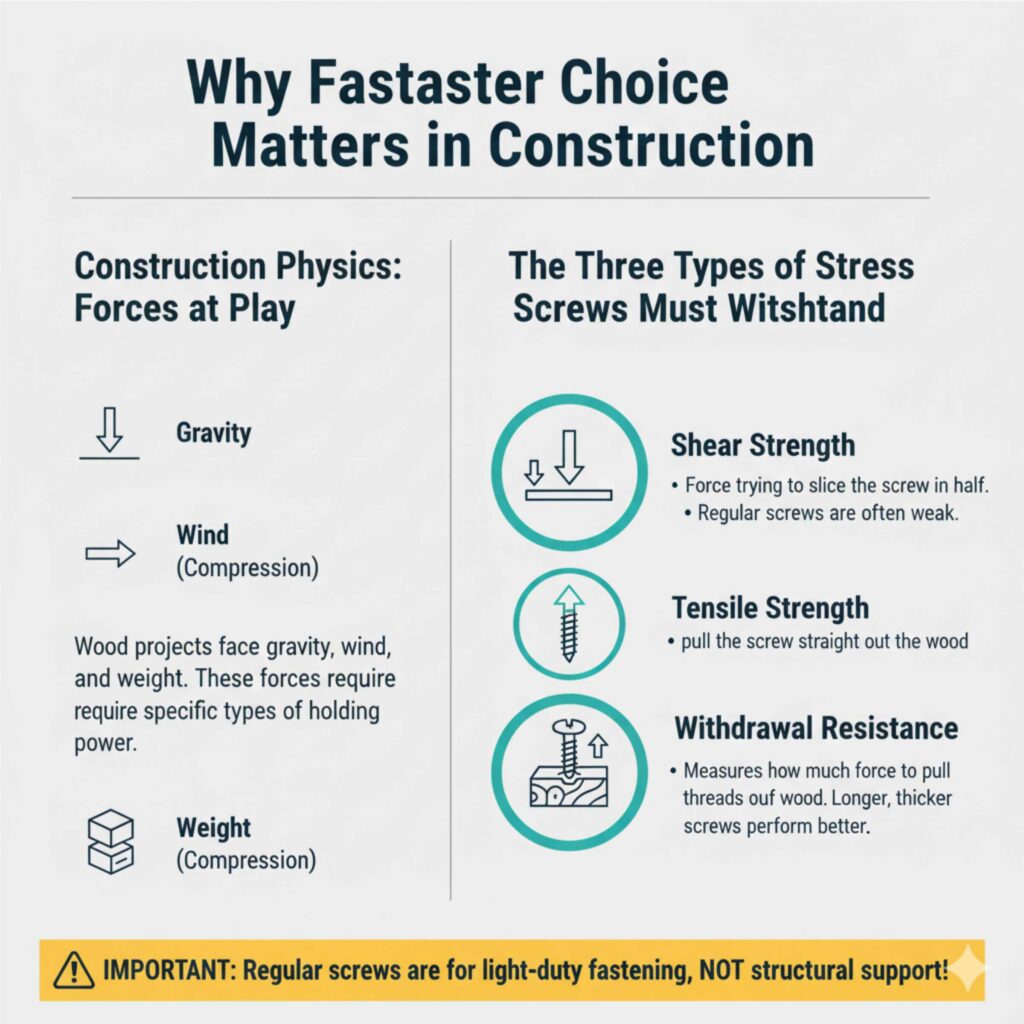
When we talk about construction, we aren’t just talking about aesthetics; we are talking about physics. Every piece of wood in your project—a deck, a shelf, a wall frame—is subject to forces like gravity (pulling down), wind (pushing sideways), and sheer weight (compression). These forces require specific types of holding power.
The Three Types of Stress Screws Must Withstand
To understand why a regular screw might fail, we need to know what forces it might face. Think of these as the main ways a connection can break:
- Shear Strength: This is the force trying to slice the screw in half, like when a heavy beam pushes down on the screw connecting it to a post. Regular screws are often weak in shear.
- Tensile Strength: This is the force trying to pull the screw straight out of the wood. If you hang something heavy from a shelf fastened with the wrong screws, you test the tensile strength.
- Withdrawal Resistance: This is related to tension, but it specifically measures how much force it takes to pull the threads out of the wood fibers. Longer, thicker screws with aggressive threads do much better here.
Regular wood screws are designed primarily for light-duty fastening where loads are minimal and vibration is low. They are the perfect choice for attaching molding, hanging pictures, or assembling small furniture.
Regular Wood Screws vs Structural Screws: A Head-to-Head Look
The biggest mistake beginners make is assuming all screws are interchangeable. They are not! The difference between a standard #8 wood screw and a genuine structural screw is massive, even if they look somewhat similar in the bin at the hardware store.
What Defines a “Regular” Wood Screw?
When most of us say “regular wood screw,” we are talking about general-purpose fasteners, often made from standard steel, maybe coated in yellow zinc or bright brass. They are inexpensive and readily available.
Characteristics of Standard Wood Screws:
- Material: Often softer steel alloys.
- Shank/Diameter: Usually smaller diameters (e.g., #6, #8, #10).
- Head Type: Often flat head (countersunk) or pan head.
- Purpose: Best for low-load applications like assembling cabinets, fastening hinges, or joining trim pieces where the connection won’t bear significant weight.
What Makes a Screw “Structural”?
Structural screws are engineered specifically to replace traditional methods like bolts or lag screws in load-bearing situations. They must meet strict engineering standards because building codes demand it. They are built to handle much higher shear and tensile forces.
Key Features of Structural Screws:
- Superior Material: Made from hardened, high-strength steel alloys that are heat-treated to achieve maximum durability.
- Aggressive Threading: Often have deeper, sharper threads that grip wood fibers more aggressively, boosting withdrawal resistance.
- Larger Diameter: Typically thicker screws (e.g., 1/4 inch or larger) to increase shear strength significantly.
- Code Compliance: Reputable structural fasteners will often list load ratings or be tested to recognized standards, sometimes referencing requirements set by organizations like the International Code Council (ICC). For more information on general building fastener requirements, you can check out resources from organizations like the National Association of Home Builders (NAHB).
Comparing Fastener Strength
To show you just how different they are, here is a simplified comparison. Keep in mind that exact ratings vary widely by manufacturer and size, but this illustrates the concept:
| Fastener Type | Typical Application | Shear Strength (Relative) | Primary Limitation |
|---|---|---|---|
| Standard Wood Screw (#8 x 2″) | Attaching trim, small fixtures | Low | Easy to shear or snap under bending/load |
| Deck Screw (Coated) | Attaching deck boards to joists | Medium-Low | Not rated for ledger attachment or major framing |
| Lag Screw (Heavy Duty Bolt) | Attaching beams, heavy ledger boards | High | Requires pre-drilling, slower installation |
| Structural Screw (e.g., TimberLOK style) | Framing connections, structural repairs | High | Designed for high load, faster install than lags |
As you can see, the difference in strength is often several times greater when moving from a general-purpose screw to a purpose-built structural fastener.
When Can You Not Use Regular Wood Screws for Structure? (The Danger Zone)
If you are building anything that could cause injury or significant property damage if it fails, regular wood screws are off the table. This is where relying on the wrong fastener moves from being a bad idea to a major safety risk.
Critical Areas Where Structural Fasteners Are Required:
- Deck Ledgers: The board that attaches your deck frame directly to the house. If this fails, the entire deck collapses. Building codes strictly mandate heavy-duty fasteners here (usually lag screws or structural screws, often 1/2″ diameter or greater).
- Wall Framing (Load-Bearing): Attaching top plates, sill plates, or studs in load-bearing walls. These connections hold up the roof and upper floors.
- Rafter/Truss Connections: Where roof members meet the wall top plate. Wind uplift can pull these apart.
- Pergolas and Gazebos: Large, freestanding structures that must resist high winds.
- Heavy Shelving: Very deep shelves or those intended to hold significant weight (like library shelving) must use robust fasteners driven into wall studs.
For these applications, you need screws that are explicitly rated for structural use, often called structural timber fasteners or wood-to-wood connectors. These are designed to handle forces far beyond what a standard screw can manage.
When Are Regular Wood Screws Acceptable for Light “Support”?
There are situations where screws hold wood together, and the failure of that connection won’t endanger anyone or cause a major repair bill. In these “light-duty support” roles, standard wood screws are perfectly fine, affordable, and easy to use.
Acceptable Uses for Standard Wood Screws:
-
- Attaching Cabinet Boxes: When connecting the sides of a cabinet box together, assuming the finished cabinet is securely attached to the wall studs.
- Face Framing of Cabinets: Attaching the face frame (the visible front pieces) to the cabinet box.
- Attaching Non-Load-Bearing Walls: Such as interior partition walls in a basement remodel that aren’t supporting anything above them.
- Assembling Furniture or DIY Projects: For items like coffee tables, simple benches, or decorative shelving that carry light, manageable loads.
- Attaching Plywood Sheathing: Securing plywood or OSB to wall studs (though specialized construction screws are often faster and stronger, standard screws work for sheer attachment).
The golden rule here is: If you have to ask, “Is this strong enough?” it probably isn’t. When in doubt, always oversize your fastener choice for safety.
Choosing the Right Structural Fastener: The Essential Guide
If your project demands structural integrity, you need to step up your hardware game. Don’t just look for “strong” screws; look for screws with specifications that match the job. For beginners, this often means using common, purpose-built structural screws that have become popular replacements for older methods.
Understanding Modern Structural Screw Types
Today, many structural connections that once required drilling a large pilot hole and driving a hex-head lag screw can be accomplished with modern, self-drilling structural screws. These are a DIY favorite because they are easier to install.
1. Lag Screws (The Traditional Heavy-Hitter)
Lag screws look like giant wood screws with a hexagonal head. They offer incredible shear strength. The drawback? You usually have to drill a pilot hole first (a process called “pre-drilling”) that matches the shank size, and then drive them in with a wrench or impact driver. This is slower work.
2. Structural Timber Screws (The Modern Favorite)
These screws (often featuring names like LedgerLOK, SPAX PowerLags, or similar brands) are designed to be driven directly into the wood without pre-drilling (though some large ones still recommend it). They often have features like cutting ribs near the tip to reduce driving torque.
-
-
- Advantage: Much faster installation than lags, excellent holding power that often meets or exceeds code requirements for certain applications.
- Key Check: Always confirm the manufacturer’s specifications regarding load ratings and approved applications (e.g., “Approved for structural wood-to-wood connections”).
-
Table: Key Differences in Installation for Structural Fasteners
Understanding how these fasteners go in helps you choose based on your tools and comfort level:
| Fastener Type | Required Pre-Drilling? | Driving ToolTypical Load Capacity | |
|---|---|---|---|
| Standard Wood Screw | Often recommended to prevent splitting | Drill/Driver | Low to Medium-Low |
| Structural Timber Screw | Often “self-drilling” (no pilot hole needed) | High-Torque Impact Driver | Medium to High |
| Lag Screw | Required for full depth (two diameters: pilot hole for shank, smaller hole for threads) | Wrench or Heavy-Duty Impact | Very High |
The Importance of Material and Coating
Even the strongest screw design will fail prematurely if the material is wrong for the environment. This is critical, especially for outdoor projects.
Exterior vs. Interior Use
If you are building a deck, pergola, or anything exposed to weather, you cannot use standard zinc-plated wood screws. The moisture will cause them to rust quickly, weakening the connection until the screw snaps.
For outdoor structural work, you need:
-
-
- Hot-Dip Galvanized (HDG): A thick zinc coating offering excellent corrosion resistance for general outdoor use.
- Stainless Steel: The best protection against rust and corrosion, essential near saltwater or highly corrosive treated lumber.
- Specialized Coatings: Many modern structural screws (like those approved for use with ACQ treated lumber) have advanced polymer coatings that resist chemical corrosion. Always check compatibility if using modern pressure-treated wood.
-
Using a standard, zinc-plated screw on an outdoor deck ledger is a recipe for disaster, as the corrosion weakens the screw within a few years, leading to potential collapse long before the wood itself rots.
Step-by-Step: Ensuring Structural Connections are Strong
If you are taking on a structural task, follow these essential steps to build with confidence. This process applies whether you are using heavy lag screws or modern structural timber screws.
Step 1: Check Local Building Codes
This is the most important step! Local codes dictate exactly what type of fastener must be used for structural components like decks or framing. If a code specifies 1/2-inch diameter lag bolts, you cannot substitute them with 3/8-inch structural screws, even if the screw claims to be strong. Check with your local building department or consult their online resources.
Step 2: Determine Load Requirements
Consulting an engineer is best for complex structures, but for standard DIY framing (like attaching a pergola post base), you need to know the required tension and shear values. Reputable structural fastener manufacturers publish technical data sheets showing the approved load ratings for their screws.
Step 3: Select the Correct Fastener Type and Size
Based on the code and load needs, select a genuine structural screw or lag bolt. For instance, if a connection needs to resist 2,000 lbs of shear force, you must use a screw certified to handle that load. Never guess the size!
Step 4: Ensure Proper Installation Depth
The holding power of a screw comes from the threads gripping the wood fibers. If the screw isn’t driven deep enough, the threads won’t engage fully, and the connection will be weak. For structural connections, you must achieve full thread embedment, usually meaning the entire length of the threaded portion must be buried in the structural wood member.
Step 5: Maintain Proper Spacing and Edge Distance
Driving two structural screws too close together, or too close to the edge of a board, can cause the wood to split, which drastically reduces the fastener’s holding power. Structural screw manufacturers provide charts specifying minimum edge distances and spacing requirements. Adhere to these religiously!
Step 6: Drive Straight and Flush
The screw must be driven perfectly straight into the wood. A crooked screw introduces bending stress that it may not be designed to handle. For screws with countersinking heads, ensure the head is seated flush with the surface, but do not overdrive them, which can strip the threads or shear the screw head off.
Tips for Beginners Driving Heavy Fasteners
Driving a long, thick structural screw or lag bolt can feel intimidating. Here are a few simple tips to make the process easier and safer:
-
-
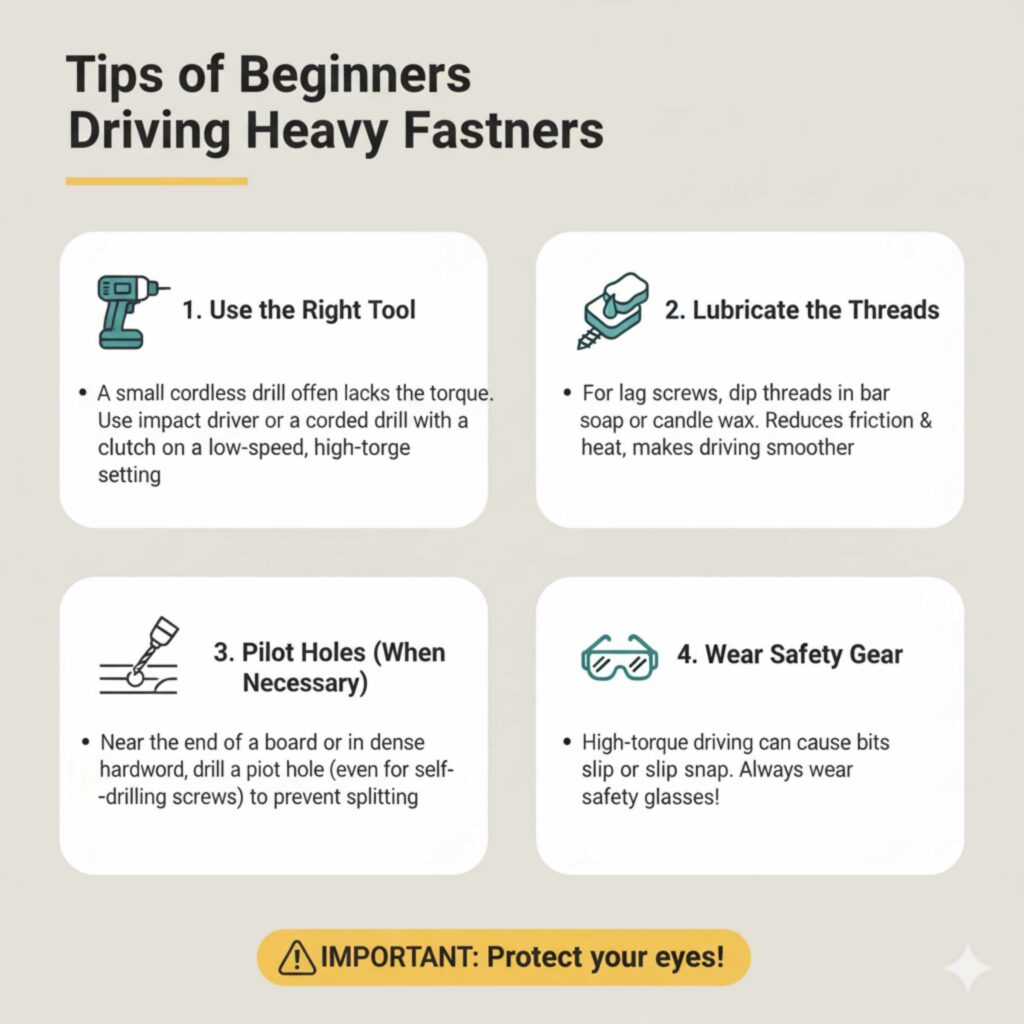
- Use the Right Tool: A small cordless drill often lacks the torque needed for large structural screws. Use a powerful impact driver or a corded drill/driver with a clutch set to its lowest speed/highest torque setting.
- Lubricate the Threads: For lag screws or very long structural screws, dip the threads in bar soap or candle wax. This acts as a lubricant, significantly reducing the friction and heat generated during driving, making the process smoother and reducing strain on your tool.
- Pilot Holes (When Necessary): If you are working near the end of a board or in very dense hardwood, drilling a proper pilot hole (even for a self-drilling screw) prevents ugly splitting and ensures a straighter drive.
- Wear Safety Gear: High-torque driving can sometimes cause bits to slip or snap. Always wear safety glasses!
-
FAQ Section: Quick Answers for DIY Confidence
Q1: Can I use standard deck screws for attaching a ledger board to my house?
No—never. Deck screws are not rated for the heavy shear and tensile loads a ledger board must handle. Ledger boards require code-approved lag screws or structural screws specifically rated for ledger attachment. Using deck screws here is a serious safety risk and a common cause of deck failures.
Q2: Are structural screws stronger than lag screws?
In many cases, yes—but it depends on the application. Modern structural screws are engineered to meet or exceed the load capacity of traditional lag screws while being easier to install. However, some building codes still require lag bolts or through-bolts for certain connections, so always check local code requirements before substituting.
Q3: What happens if I use regular wood screws for a load-bearing project?
Regular wood screws can snap, bend, or pull out under sustained load or sudden stress (like wind or shifting weight). This can lead to structural failure, property damage, or injury. Even if the project seems “fine” at first, failure often happens months or years later.
Q4: Can I use regular wood screws for heavy shelves or garage storage?
Only in limited situations. If the shelf is light-duty and fastened securely into wall studs, standard screws may be acceptable. For heavy shelving, garage racks, or storage holding tools or equipment, structural screws or lag screws are the safer choice.
Q5: Are nails ever better than screws for structural framing?
Yes. In some framing applications, approved structural nails perform better in shear than screws and are required by code (such as certain shear walls). Structural integrity isn’t about screws vs. nails—it’s about using the correct fastener for the engineered purpose.
Conclusion: Use the Right Fastener, Build with Confidence
When it comes to construction and DIY projects, not all screws are created equal—and your safety depends on knowing the difference. While regular wood screws are excellent for light-duty tasks like trim, cabinets, and small furniture, they simply are not engineered to handle the heavy loads, shear forces, and long-term stress found in structural applications.
Throughout this guide, we’ve seen why structural fasteners exist for a reason. Deck ledgers, load-bearing walls, roof connections, pergolas, and heavy shelving demand screws or bolts that are specifically designed, tested, and rated for those forces. Using standard screws in these situations may look fine at first, but over time, failure becomes a real and dangerous possibility.
The smart approach is always preparation: understand the forces involved, follow local building codes, choose fasteners with published load ratings, and install them correctly with the right tools and spacing. Modern structural screws make this process easier than ever, but only when they’re used where they’re intended!