Could a Soft Mattress Cause Back Pain? What to Check
Yes—a soft mattress can contribute to back pain if your hips or waist sink too deeply, your spine curves overnight, or the pain improves after a firmer surface for a few nights. Leave it alone, and you can stack up sore mornings, broken sleep, and an ache that feels like your back is “going bad.” This guide gives a mattress-failure checklist, tied to sleep position and when the pain shows up.
Could a soft mattress cause back pain?
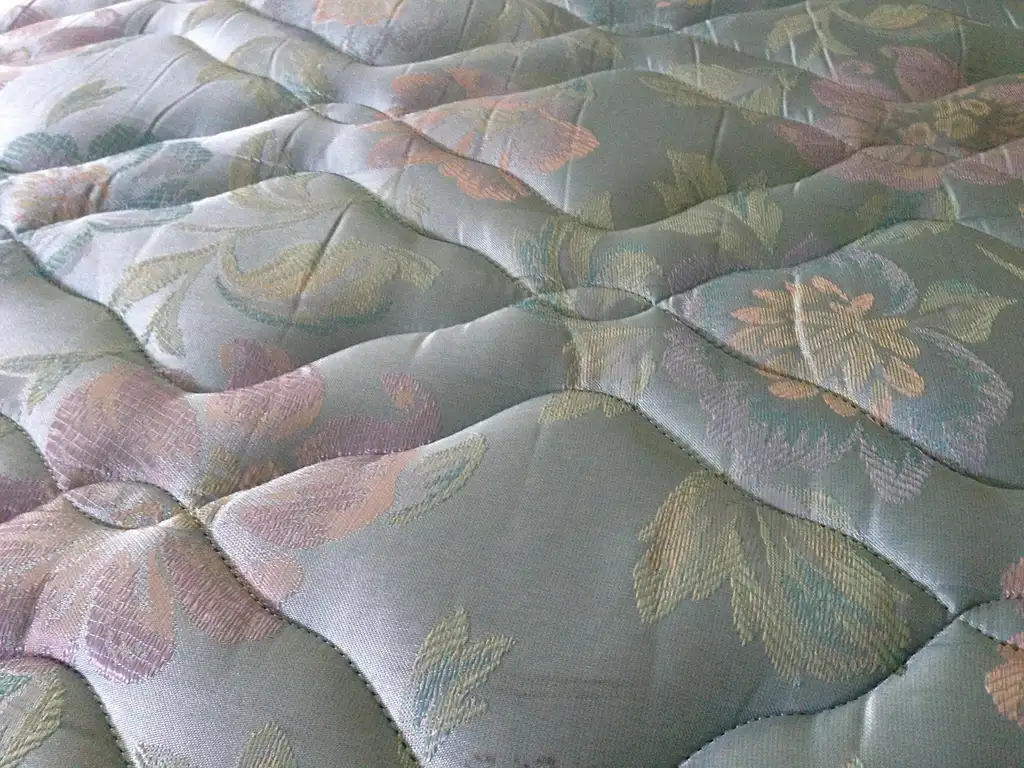


Yes. A soft mattress can trigger back pain when the surface lets the spine drift out of neutral alignment, especially around the hips and lower back. Softness alone is not the problem; the real issue is loss of support. CNET quotes a doctor saying mattresses that are too soft or too hard are not good for your back.
Tom’s Guide defines a soft mattress as roughly 4 or 5 out of 10. At the very soft end, 2 or 3 out of 10 is usually described as marshmallow soft. That feel can work for some sleepers, but it becomes a problem when the bed contours too deeply and the middle of the body sinks faster than the shoulders and legs.
Why support loss matters more than the feel label
A bed can feel plush and still hold alignment well. Another can feel only mildly soft and still let the hips drop too far. That is why “soft” and “bad for your back” are not the same thing.
When support is failing, the mattress no longer resists the heavier parts of the body. The spine bends into a hammock shape. That is where soreness starts.
📊 CNET says it tested 100+ mattresses from nearly every brand. Source: CNET.
How do I know if my mattress is too soft for my back?
A mattress is probably too soft if the pain is worst on waking, fades after you get moving, and returns after another night on the same bed. Add in deep sinkage, weak edge support, or a “stuck in the middle” feel, and the mattress becomes a strong suspect rather than a background factor.
Morning-only pain versus pain that lasts all day
Morning-only pain points more strongly to sleep setup, because the body has spent hours under one load. Pain that stays present through the day, spreads beyond the low back, or grows with walking, bending, or sitting needs medical evaluation. The mattress may be part of it, but it may not be the whole story.
Sinkage depth, edge support, and the hammock feel
Excessive sink often shows up at the hips first. If the body dips enough that the lumbar area feels unsupported, the bed is no longer keeping the spine level. Weak edge support can be another clue, especially if sitting or lying near the edge makes the mattress collapse outward.
Look for the hammock effect and the taco effect. In a hammock, the middle drops. In a taco effect, the sides curl up while the center caves. Either one can load the low back in an awkward position.
Clues that point to worn support, not just plush comfort
- The bed has visible dips where the torso rests.
- You roll toward the middle during the night.
- The surface feels softer in one zone than another.
- Turning over takes effort because the foam or quilted layers swallow motion.
- Edge sitting feels unstable or compressed.
What firmness works best for back pain?

There is no single firmness that fits everyone, but medium-firm is often a practical starting point for back pain because it aims to balance pressure-point relief with alignment. Soft beds can work for some lighter sleepers and side sleepers. Firm beds can work for stomach sleepers or heavier bodies, as long as they do not create new pressure points.
Soft, medium-firm, and firm on a simple rating scale
| Firmness | Typical feel | Who it often fits | Back-pain risk if support is poor |
|---|---|---|---|
| Soft | About 4 or 5 out of 10 | Side sleepers, lighter sleepers | Higher if hips sink too far |
| Medium-firm | Balanced, less contouring | Back sleepers, combination sleepers | Often lower for mixed positions |
| Firm | Little give, stronger pushback | Stomach sleepers, sleepers over 230 pounds | Higher if pressure points build |
Why the best feel changes with body weight and sleep position
Body weight changes sink depth. A mattress that feels soft but manageable to a lighter sleeper may behave very differently under someone over 230 pounds. The heavier body loads the comfort layers more deeply, which can expose weak coil support or thin foam faster.
Sleep position matters just as much. Side sleepers need enough contouring to ease pressure on the shoulder and hip. Back sleepers need lumbar support. Stomach sleepers usually need a much flatter surface to keep the pelvis from dropping.
When a medium-firm bed is the safer starting point
If the pain pattern is unclear, medium-firm is usually the better test surface. It gives enough give for pressure relief while reducing the chance that the torso sinks out of line. It is not a cure-all, but it is often the most practical baseline for a trial period.
How sleep position changes the answer
The same mattress can help one sleeper and strain another. Side sleepers usually tolerate more softness than back or stomach sleepers because the shoulder and hip need room to sink. Back sleepers need balanced lumbar support. Stomach sleepers are the least forgiving of soft beds because the pelvis can drop and twist the lower back.
Side sleepers and pressure relief versus spinal line
Side sleepers often need a plusher surface to reduce pressure on the shoulder and hip. But if the mattress is too soft, the waist may dip and the spine curves sideways. That is when “comfortable” turns into sore.
Back sleepers and lumbar support
Back sleepers need the lumbar area held up while the shoulders and hips settle just enough. A soft mattress can work if the support core is strong and the body does not sink deeply. If the low back feels suspended in a curve by morning, the bed is too soft for that sleeper.
Stomach sleepers and why softness often fails here
Stomach sleeping and softness usually clash. The pelvis tends to sink first, which increases arching through the low back. For this position, a firmer feel is usually safer because it keeps the spine closer to neutral.
Combination sleepers and why one position can hide the problem
Combination sleepers can miss the issue because one position may feel fine while another creates strain. A mattress that works on the side may fail on the back. The bed should be judged by the worst position, not the easiest one.
When mattress age and construction start to matter
Age changes the answer because materials wear out. Casper says mattresses are typically replaced every 7-10 years, and that waking up with back pain is one of the first signs the mattress may be the issue. If the bed is old and soft, wear may be the reason it suddenly hurts.
The 7-10 year window and what wear looks like
A mattress near or beyond that window deserves a closer look, especially if it has dips, lumps, or a soft center spot. Casper says a saggy mattress can cause spine misalignment and contribute to back pain. If the shape no longer springs back, support is already fading.
Memory foam, hybrid, coil support, and zoned support
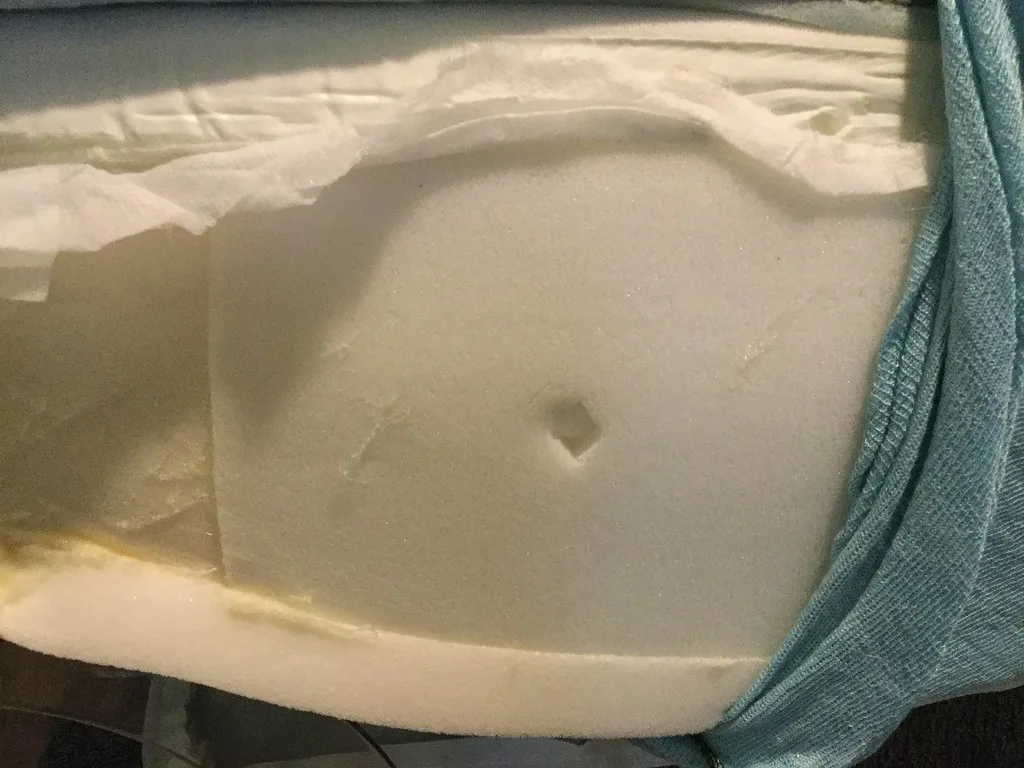
Memory foam can contour well, but older foam often softens unevenly. Hybrid beds add coil support under foam, which can help keep the body from sinking too far. Zoned support can hold the pelvis firmer while allowing gentler give at the shoulders. That design can help some back and side sleepers, but only if the base still has life.
Lumps, dips, and edge breakdown as failure signs
Lumps change pressure in odd spots. Dips tilt the spine. Edge breakdown makes the usable sleep area feel smaller and less stable. When those signs show up together, the mattress has likely moved past simple softness and into support failure.
Use the back-pain decision checklist

This checklist separates harmless softness from a mattress that is probably causing trouble. Score each item honestly. A low score suggests the bed may be okay for now. A higher score means the mattress is more likely part of the problem, and a topper or position change may not be enough.
- Rate your pain: morning-only = 0, morning plus some daytime stiffness = 1, pain that lasts all day = 2.
- Check sinkage: less than 1 inch = 0, about 1–2 inches = 1, more than 2 inches = 2.
- Test the edge: stable = 0, a little collapse = 1, obvious roll-off or sag = 2.
- Match sleep position: side sleeper = 0, back sleeper = 1, stomach sleeper = 2, combination sleeper with frequent rolling = 1.
- Consider body weight: lighter sleeper = 0, average build = 1, over 230 pounds = 2.
- Check age: under 7 years = 0, 7-10 years = 1, over 10 years or visibly worn = 2.
| Total score | What it suggests | Best next step |
|---|---|---|
| 0-2 | Softness may be fine | Try a few nights with position changes |
| 3-5 | Borderline support | Test a topper or firmer placement for a short trial |
| 6-8 | Likely support loss | Plan a replacement or a firm trial swap |
| 9-12 | Strong failure signal | A topper is unlikely to solve the problem |
Topper likely to help or likely to fail
A topper can help when the mattress is only slightly too soft and the base still feels even. A firmer latex or dense foam topper may reduce surface sink and buy time. But if the bed already has deep dips, weak edges, or a soft center, the topper only masks the problem. The base still sags.
When repositioning or a trial-period swap is worth trying
If the pain is mainly morning-only and the mattress is newer, try repositioning first. Side sleepers can add a pillow between the knees. Back sleepers can place a thin pillow under the knees. If the mattress is within a trial period and the score is high, a swap to a firmer model is often smarter than waiting.
When should I replace a mattress that hurts my back?
Replace it when the bed is old, visibly sagging, or no longer holds neutral alignment after short tests. A mattress that hurts the back after multiple position changes, a firmer topper, or a brief trial on a different surface is past the stage of minor adjustment. At that point, replacement is the better move.
Signs replacement is overdue
- Persistent dips where the hips rest.
- Lumps or body impressions that do not recover.
- Edge collapse that makes the usable area feel narrow.
- Morning pain that improves only after leaving the bed.
- Visible wear in a mattress older than 7-10 years.
When is back pain likely caused by something other than the mattress?
Back pain is more likely coming from another cause when it lasts all day, comes with numbness or weakness, or does not change after a few nights on a different surface. If the pain is persistent, severe, or tied to injury, it needs medical evaluation rather than a mattress guess.
Waking sore can still be a clue, but it is not proof. The mattress is only one part of the picture. Hip or shoulder issues, inflammation, poor daytime posture, or an old injury can all overlap with sleep discomfort.
Frequently asked questions
Could a soft mattress cause back pain?
Yes. A soft mattress can cause back pain when it lets the hips or waist sink too far and pulls the spine out of neutral alignment. Softness alone is not the issue; the problem is losing support where the body needs it most.
How do I know if my mattress is too soft for my back?
If you wake sore, feel better after getting up, and notice deep sinkage, weak edges, or a hammock-like dip, the mattress may be too soft. Add your sleep position and body weight to the test, since both change how much support you need.
What firmness is best for back pain?
Medium-firm is often the safest starting point because it balances pressure relief and alignment. Side sleepers may need a softer surface, while stomach sleepers and sleepers over 230 pounds often need firmer pushback to keep the pelvis from dropping.
Is a soft mattress ever good for back pain?
Yes, for some side sleepers and lighter bodies, a soft mattress can reduce pressure without hurting alignment. It works only if the comfort layers still hold the spine level. If the hips sink deeply or the lumbar area caves, softness has gone too far.
How much sinkage is too much in a mattress?
As a practical test, sinkage around 1–2 inches may be acceptable for some sleepers, but more than that often starts to bend the spine out of line. If you feel trapped, tilt toward the center, or struggle to turn, the sink is probably excessive.
When should I replace a mattress that hurts my back?
Replace it when the bed is in the 7-10 year range, shows dips or lumps, and still leaves you sore after a few nights of testing. If a topper and position changes do not help, the mattress is likely past repair and no longer supporting neutral alignment.
Sponsored / affiliate links. As an Amazon Associate I earn from qualifying purchases. I may earn additional commission from eligible campaigns.