Did Thomas Crapper Invent the Toilet? Essential Truths
Quick Summary:
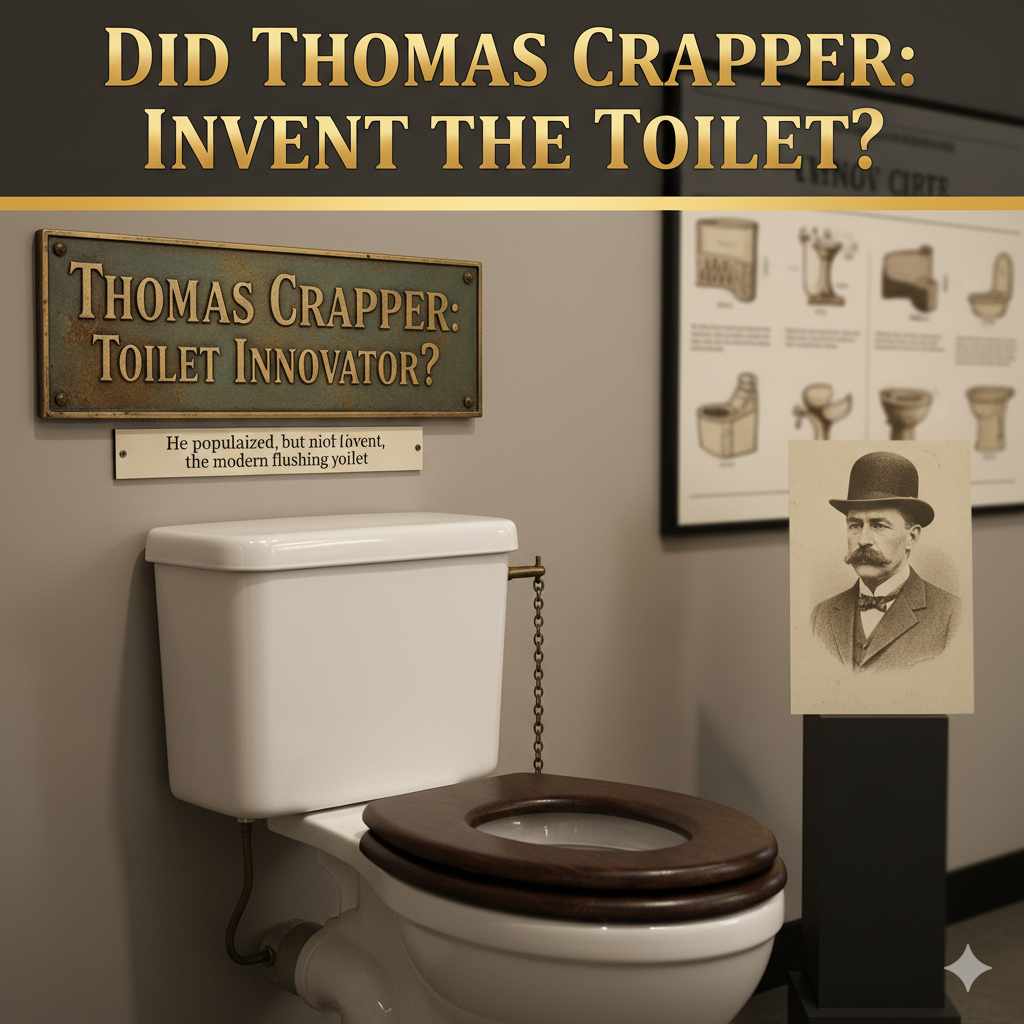
No, Thomas Crapper did not invent the toilet. While he was a prominent plumber and sanitary engineer who significantly improved toilet design and popularized flushing toilets in Victorian England, the basic concept of a flushing toilet existed centuries before him. He was a key figure in making this essential fixture accessible and efficient.
Ever heard the name Thomas Crapper and wondered if he’s the guy who gave us the modern toilet? It’s a common thought, and the name does sound a bit… well, you know. But the truth is a little more complex and a lot more interesting! Plumbing and sanitation have a long, fascinating history, and while Mr. Crapper played a huge role in making toilets better and more widespread, he wasn’t the original inventor. We’re going to dive into the real story, separating fact from the funnier-sounding fiction, so you’ll know the essential truths about this everyday fixture.
Understanding the history of the toilet helps us appreciate the innovations that led to the sanitary systems we rely on today. It’s a journey that involves ancient civilizations, clever inventors, and, yes, a very important Victorian plumber. Let’s get to the bottom of it!
The Myth vs. The Man: Did Thomas Crapper Actually Invent the Toilet?
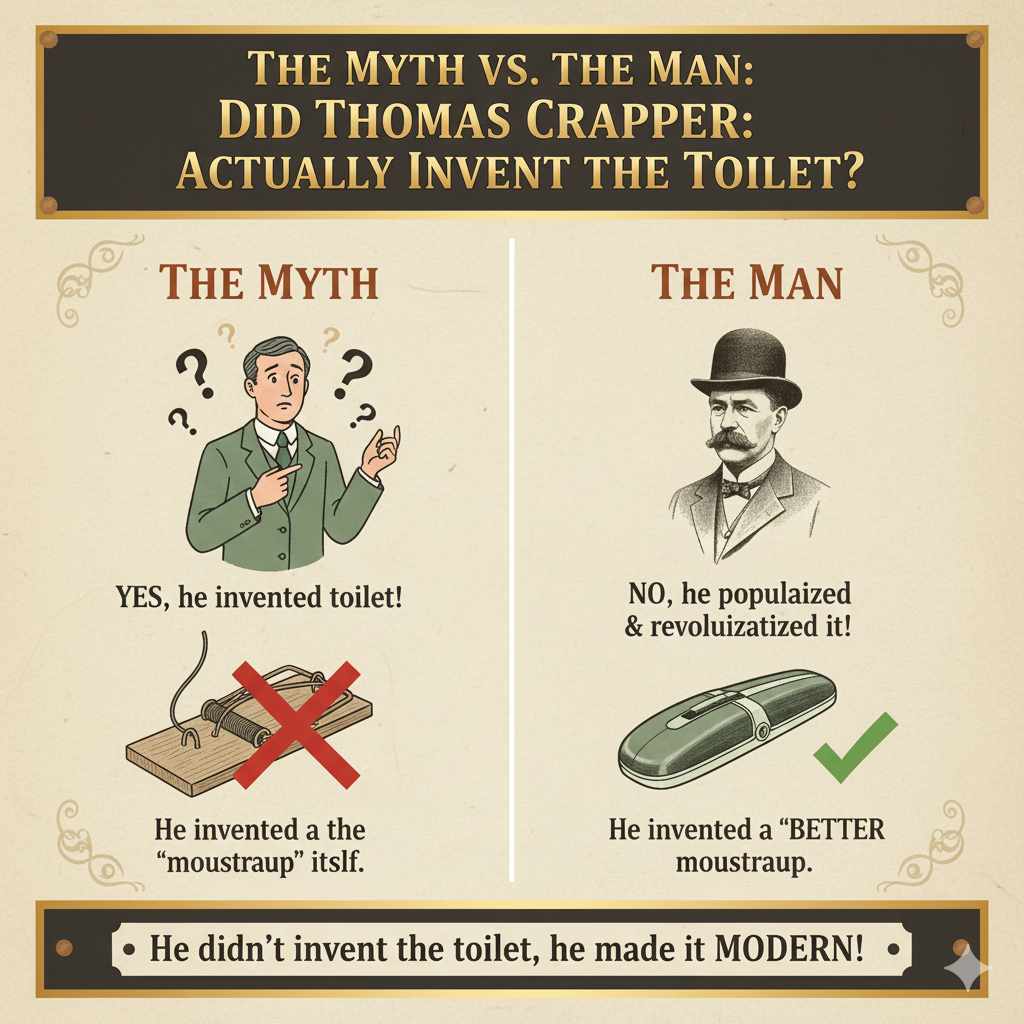
This is the big question, isn’t it? The short answer is no, Thomas Crapper did not invent the toilet. However, his name is so closely associated with toilets that it’s easy to see why the myth persists. He was a very successful and influential figure in the plumbing industry during the late 19th and early 20th centuries.
Think of it this way: if you invented a better mousetrap, but the mouse trap itself had been around for ages, you wouldn’t be credited with inventing the mouse trap. You’d be credited with inventing a better mouse trap. That’s a bit like Thomas Crapper’s story. He didn’t invent the idea of a toilet, but he certainly revolutionized its design, manufacture, and installation, making it a standard in homes and businesses.
A Whirlwind Tour of Toilet History: Before Crapper
To truly understand Thomas Crapper’s role, we need to rewind the clock. The concept of a device for waste disposal isn’t new. Humans have been devising ways to manage waste since, well, forever. But the flushing toilet, the kind we recognize today, has a history that predates Thomas Crapper by a significant margin.
Ancient Beginnings: Early Sanitation Systems
Believe it or not, the earliest forms of sanitation systems can be traced back to ancient civilizations. These weren’t the porcelain wonders of today, but they were ingenious for their time.
- Indus Valley Civilization (around 2500 BCE): Excavations have revealed homes with rudimentary drainage systems and what appear to be water-flushed latrines. This shows an early understanding of hygiene and waste management.
- Minoan Civilization (Crete, around 1700 BCE): The Palace of Knossos had a sophisticated water system that included flushing toilets. Water was channeled from a cistern to flush waste into a sewer.
- Ancient Rome: The Romans were famous for their public baths and latrines, which often featured communal seating over channels of running water that carried waste away. While not private flushing toilets, they were advanced public sanitation facilities.
The First Flushing Toilet Patent: Sir John Harington
The first documented flushing toilet in England was invented by Sir John Harington in 1596. He designed a contraption for his godmother, Queen Elizabeth I. It involved a cistern, a valve to release water, and a flushing mechanism. He even wrote a satirical pamphlet about his invention, called “A New Discourse of a Stale Subject, Called the Metamorphosis of Ajax.” However, his design was complex, required a lot of water, and wasn’t widely adopted. It was more of a novelty than a practical solution for the masses.
The Plumbing Pioneers: Alexander Cumming and Joseph Bramah
The real progress towards the modern flushing toilet came in the 18th century. Two key figures stand out:
- Alexander Cumming (1775): A Scottish watchmaker, Cumming patented the S-trap. This simple yet brilliant design introduced a curved pipe that held water, creating a seal to prevent sewer gases from entering the home. This was a massive step forward for hygiene and odor control, forming the basis of modern toilet plumbing.
- Joseph Bramah (1778): Bramah improved upon Cumming’s design with a more robust flushing mechanism and a better valve system. His toilets were more reliable and efficient, paving the way for commercial production.
These inventions laid the groundwork. The toilets were functional, but they were still expensive and not something every home possessed. This is where the Victorian era and its sanitation reformers come into play.
Enter Thomas Crapper: The Man Who Made Toilets Popular
Thomas Crapper (born in 1836, died in 1910) was a plumber by trade. He wasn’t an inventor in the sense of creating entirely new mechanisms, but he was a brilliant entrepreneur, engineer, and marketer. His company, Thomas Crapper & Co., became one of the most well-known plumbing firms in Victorian and Edwardian England.
Crapper’s Contributions: What Did He Actually Do?
So, what was so special about Thomas Crapper and his company?
- Showroom and Innovation: Crapper opened showrooms that displayed the latest sanitary ware. This was novel at the time; plumbing fixtures were often hidden away. He made toilets and bathrooms visible and desirable.
- Improved Designs: While he didn’t invent the flushing mechanism, he and his company patented several improvements, including the ballcock mechanism (which controlled water refilling in the cistern) and improvements to the flushing valve itself. He was a master of refinement and practical application.
- High-Quality Manufacturing: His company was known for producing high-quality, reliable plumbing fixtures. They manufactured cisterns, WCs (water closets), and pipes.
- Promoting Sanitation: Crapper was a strong advocate for proper sanitation and hygiene. He understood the public health implications of his work and helped to educate people about the benefits of modern plumbing. He was instrumental in supplying sanitary fittings for many of the public conveniences and large buildings of his day, including hospitals and royal residences.
- Brand Recognition: His name, though a bit unfortunate by modern standards, was highly visible. He had multiple shops and a distinctive logo. He was also known for installing his patented “U-bend” in toilets, which further improved the water seal and reduced odors.
His company’s name was prominently displayed on the cisterns they produced. This led to many soldiers during World War I seeing the name on the flushing mechanisms of the toilets in training camps and abroad. When they returned home, they often referred to the toilet simply as “the crapper,” which is believed to be one of the reasons the slang term became so popular.
The Evolution of the Toilet: A Timeline of Key Inventions
Let’s put some key milestones in perspective. This table shows that the journey to the modern toilet was a long one, with many contributors.
| Year | Inventor/Event | Significance |
|---|---|---|
| c. 2500 BCE | Indus Valley Civilization | Early drainage and possible water-flushed latrines. |
| c. 1700 BCE | Minoan Civilization (Palace of Knossos) | Sophisticated water system with flushing toilets. |
| c. 500 BCE – 400 CE | Ancient Rome | Public latrines with running water channels. |
| 1596 | Sir John Harington | First documented flushing toilet patent in England. |
| 1775 | Alexander Cumming | Patented the S-trap, crucial for preventing sewer gas. |
| 1778 | Joseph Bramah | Improved flushing mechanism and valve system. |
| 1861 | Thomas Twyford | Developed the first one-piece ceramic toilet, a significant manufacturing advance. |
| Late 19th Century | Thomas Crapper & Co. | Popularized and refined flushing toilets, improved manufacturing, and promoted sanitation. |
| 1906 | William Heath (American) | Patented a modern flushometer system for commercial use. |
| 1917 | Dr. John Harvey Kellogg (yes, of cereal fame!) | Patented an improved flushing toilet design that used less water. |
As you can see, the toilet evolved through centuries of innovation. Thomas Crapper was a vital part of its later stages, focusing on making existing designs better, more reliable, and more accessible.
The Legacy of Thomas Crapper: More Than Just a Name
Thomas Crapper’s impact on plumbing and public health is undeniable. He was a key figure in the late Victorian era’s drive for improved sanitation. This was a time when cities were growing rapidly, and public health was a major concern. Diseases like cholera were often linked to poor sanitation and contaminated water.
Sanitation Reforms in Victorian England
The Victorian era saw significant advancements in public health and sanitation, largely driven by a growing understanding of germ theory and the need for clean water and waste disposal. Figures like Edwin Chadwick championed sanitary reforms, leading to the development of modern sewage systems and building regulations. Thomas Crapper’s business thrived within this environment, providing the essential fixtures that made these reforms a reality in homes and public spaces.
His company’s commitment to quality and innovation meant that more people could access safe and hygienic toilet facilities. He didn’t just sell toilets; he sold a healthier way of living. He also played a role in supplying sanitary fittings for major projects, including the royal residences, which certainly boosted his company’s prestige.
For more on the history of sanitation, you can explore resources from organizations like the World Health Organization (WHO), which highlights the ongoing global importance of sanitation.
Crapper’s Innovations and Patents
While he didn’t invent the toilet itself, Thomas Crapper did hold patents for various improvements. His most notable patents often related to:
- The Ballcock: A device that regulates the water level in the cistern, preventing overflow and ensuring the cistern refills correctly after each flush.
- Flush Valve Improvements: Refinements to the mechanism that releases water from the cistern into the bowl.
- The U-Bend: Although not invented by him, he was a strong proponent and installer of the U-bend pipe, which creates the water seal essential for preventing foul odors from the sewer entering the bathroom.
These were practical, functional improvements that made toilets more reliable and user-friendly. His showrooms also helped to demystify plumbing for the public, making these essential items more accessible and understood.
Debunking the “Crapper” Surname Myth
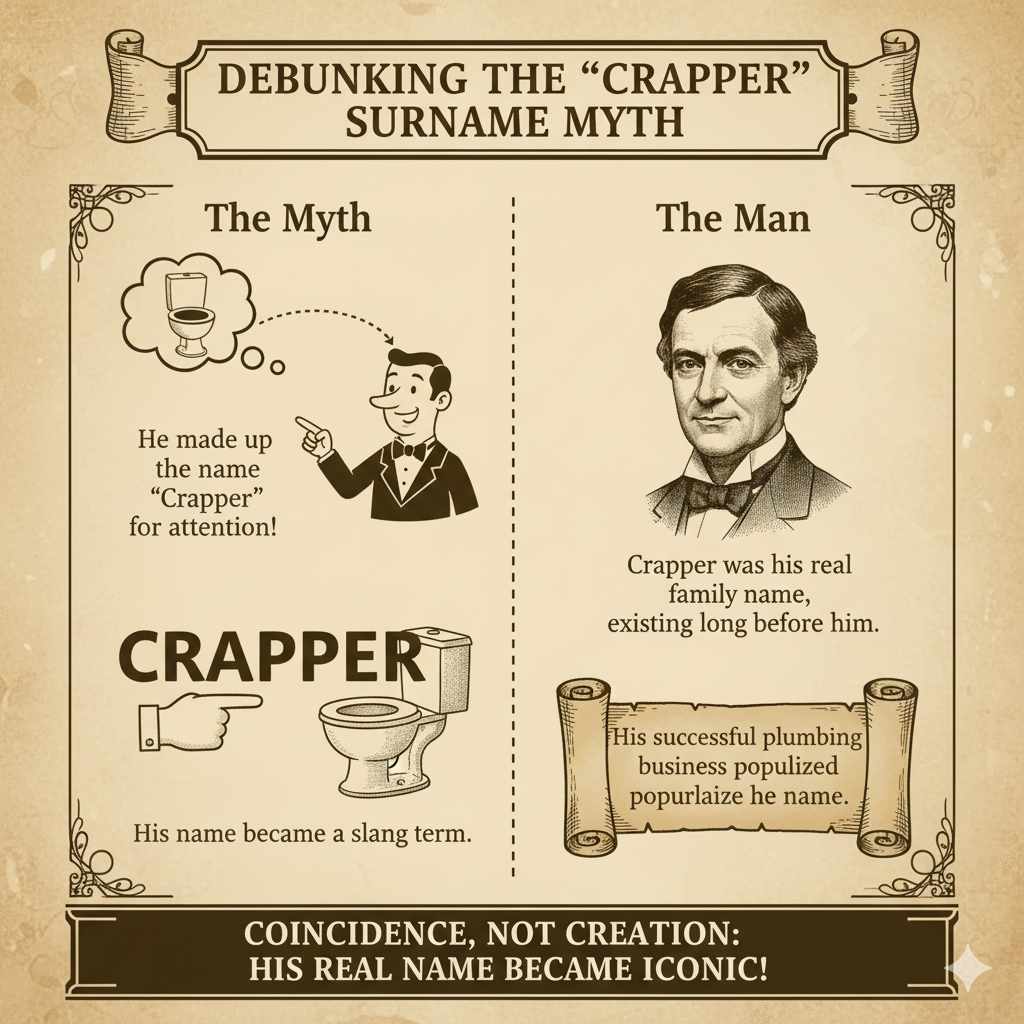
It’s tempting to believe that the name “Crapper” was somehow invented or adopted by Thomas to be humorous or attention-grabbing. However, historical records show that “Crapper” was his actual family surname. It’s a common misconception that he changed his name or that the name itself is a euphemism. The reality is, the surname existed long before him, and his business success simply made the name very prominent.
The association of his name with the toilet, while coincidental in origin, became so strong that it eventually led to the slang term for the fixture itself. It’s a fascinating linguistic quirk, but it doesn’t change the fact that he was a real person with a real surname who made significant contributions to the plumbing industry.
The Modern Toilet: A Blend of History and Innovation
Today’s toilets are the culmination of centuries of development. From the simple holes in the ground of ancient civilizations to the sophisticated, water-saving, and even smart toilets of the 21st century, the journey has been remarkable.
Key Components of a Modern Toilet
Let’s break down the basic parts of a modern flushing toilet:
| Component | Function |
|---|---|
| Toilet Bowl | The main basin where waste collects and is flushed away. |
| Cistern (Tank) | Holds the water for flushing. It contains the fill valve, flush valve, and overflow pipe. |
| Flush Mechanism | The handle or button that, when activated, opens the flush valve to release water from the cistern. |
| Fill Valve (Ballcock) | Replaces water in the cistern after flushing and shuts off when the correct level is reached. |
| Flush Valve | A seal at the bottom of the cistern that opens to allow water to rush into the bowl. |
| S-Trap or P-Trap | The curved pipe beneath the bowl that holds water, creating a seal against sewer gases. |
| Water Supply Line | Connects the toilet to the home’s water system. |
Thomas Crapper’s company would have been manufacturing and installing many of these components, refining their design and reliability. His influence is present in the very mechanics of how your toilet works today.
Innovations in Toilet Technology
The toilet continues to evolve. Modern advancements focus on efficiency, hygiene, and sustainability:
- Low-Flow Toilets: Designed to use significantly less water per flush, helping conserve a precious resource. You can learn more about water conservation from the U.S. Environmental Protection Agency’s WaterSense program.
- Dual-Flush Toilets: Offer two flushing options – one for liquid waste and one for solid waste – further reducing water usage.
- Bidet Toilets and Attachments: Integrate bidet functions for enhanced personal hygiene.
- Smart Toilets: Feature heated seats, automatic flushing, built-in air fresheners, and even health monitoring capabilities.
- Material Science: Advances in ceramic and plastic manufacturing lead to more durable, easier-to-clean, and aesthetically pleasing designs.
These innovations build upon the foundational work of inventors and engineers throughout history, including the practical improvements championed by Thomas Crapper.
Frequently Asked Questions (FAQ)
Q1: So, Thomas Crapper definitely didn’t invent the toilet?
A: That’s correct. The concept and basic designs for flushing toilets existed centuries before Thomas Crapper became a prominent figure in the plumbing industry. He was a successful plumber and sanitary engineer who greatly improved and popularized existing designs.
Q2: What was Thomas Crapper’s main contribution?
A: Thomas Crapper’s main contributions were in refining toilet designs, improving manufacturing quality, promoting sanitation and hygiene, and making toilets more accessible and desirable through his showrooms. He was an innovator in making plumbing practical and visible.
Q3: When was the first flushing toilet invented?
A: The first documented flushing toilet was invented by Sir John Harington in 1596. However, it was complex and not widely adopted. More practical advancements came in the late 18th century with Alexander Cumming and Joseph Bramah.
Q4: Why is Thomas Crapper so famous if he didn’t invent the toilet?
A: He became famous because his company, Thomas Crapper & Co., was a leading plumbing firm in Victorian England. They manufactured and installed high-quality sanitary ware, and his name was prominently displayed on his products. His association with the ubiquitous flushing toilet, combined with his memorable name, led to his lasting fame and the slang term.
Q5: Did the name “Crapper” influence the slang term for a toilet?
A: It’s highly likely. The prominent branding of Thomas Crapper’s name on cisterns, especially during World War I, is widely believed to have led soldiers to associate his name with the flushing toilet, eventually contributing to the slang term “the crapper.”
Q6: What was the most important early invention for the toilet?
A: Many would argue that Alexander Cumming’s invention of the S-trap in 1775 was the most crucial early development. It created a water seal that prevented foul-smelling sewer gases from entering the building, making indoor plumbing much more pleasant and hygienic.
Conclusion: A Legacy of Sanitation
While the catchy surname and his prominent role in the plumbing industry might lead one to believe Thomas Crapper invented the toilet, the reality is that the toilet’s history is a much longer and more collaborative story. From ancient civilizations laying the groundwork for waste management to Victorian innovators like Cumming, Bramah, and Crapper himself, each played a vital part.
Thomas Crapper was a master of his trade, a shrewd businessman, and a champion of sanitation. He didn’t invent the toilet, but he certainly helped to perfect it, popularize it, and make it a symbol of modern, hygienic living. His legacy isn’t about being the sole inventor, but about being a pivotal figure who significantly contributed to the development and adoption of this essential fixture. So, the next time you use a toilet, you can appreciate the long line of ingenuity that brought this convenience to your home, a line that certainly includes the influential Thomas Crapper.