Difference Between Flat Satin And Semi Gloss Paint: Genius
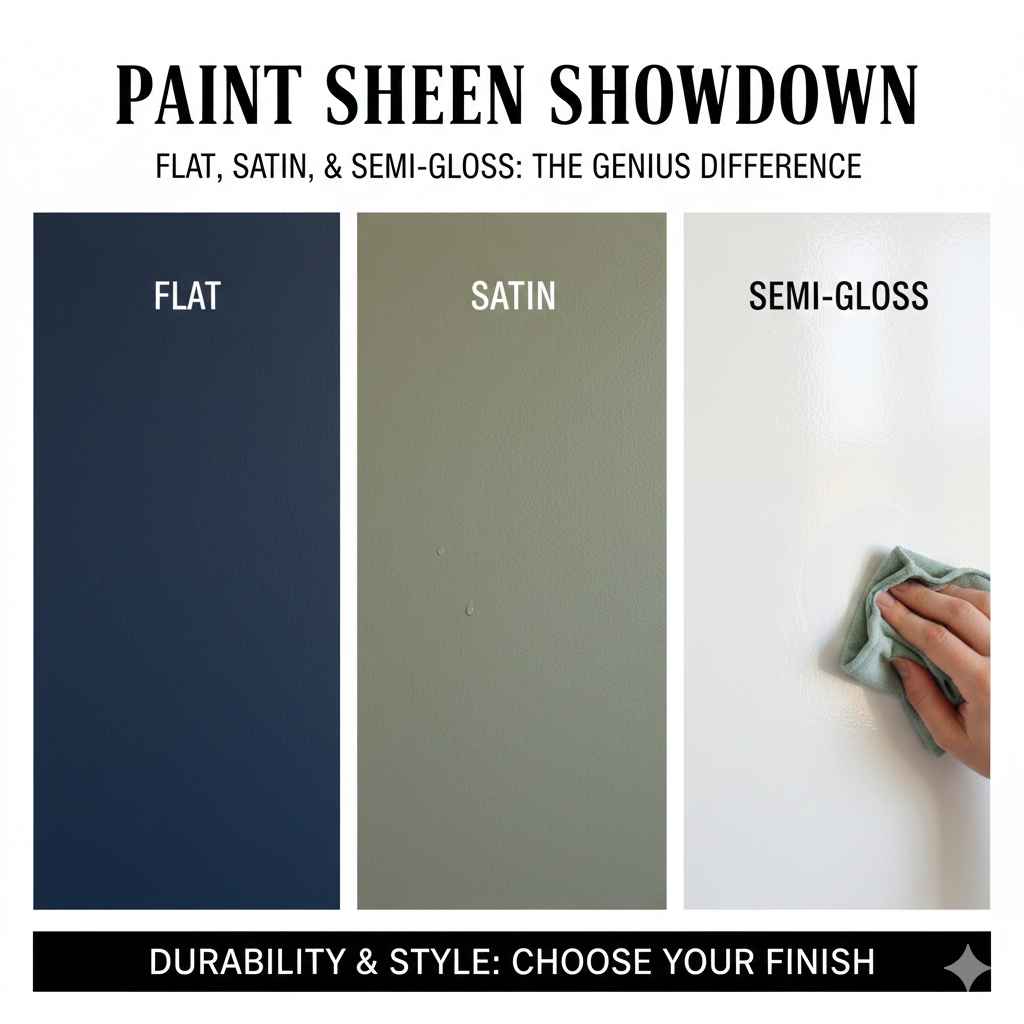
The main difference between flat, satin, and semi-gloss paint is the sheen, or how much light they reflect. Flat paint has no shine and hides imperfections well. Satin has a soft, velvety glow and is easier to clean. Semi-gloss is shiny, highly durable, and perfect for areas that need frequent washing, like kitchens and trim.
Walking into a paint store can feel overwhelming. You see rows and rows of cans, all promising the perfect look for your home. You’ve picked your color, but now you face a new question: which finish is right? Flat, satin, semi-gloss… what does it all mean? It’s a common hurdle for many homeowners, and choosing the wrong one can lead to frustration. A paint that scuffs too easily or highlights every tiny flaw in your wall is the last thing you want after a weekend of hard work.
But don’t worry, I’m here to help. My name is Md Meraj, and I’ve spent years helping folks just like you tackle home projects with confidence. We’re going to break down the difference between flat, satin, and semi-gloss paint in simple, easy-to-understand terms. By the end of this guide, you’ll know exactly which paint to choose for every room in your house. Let’s make this simple and get you painting like a pro!
What is Paint Sheen and Why Does It Matter?
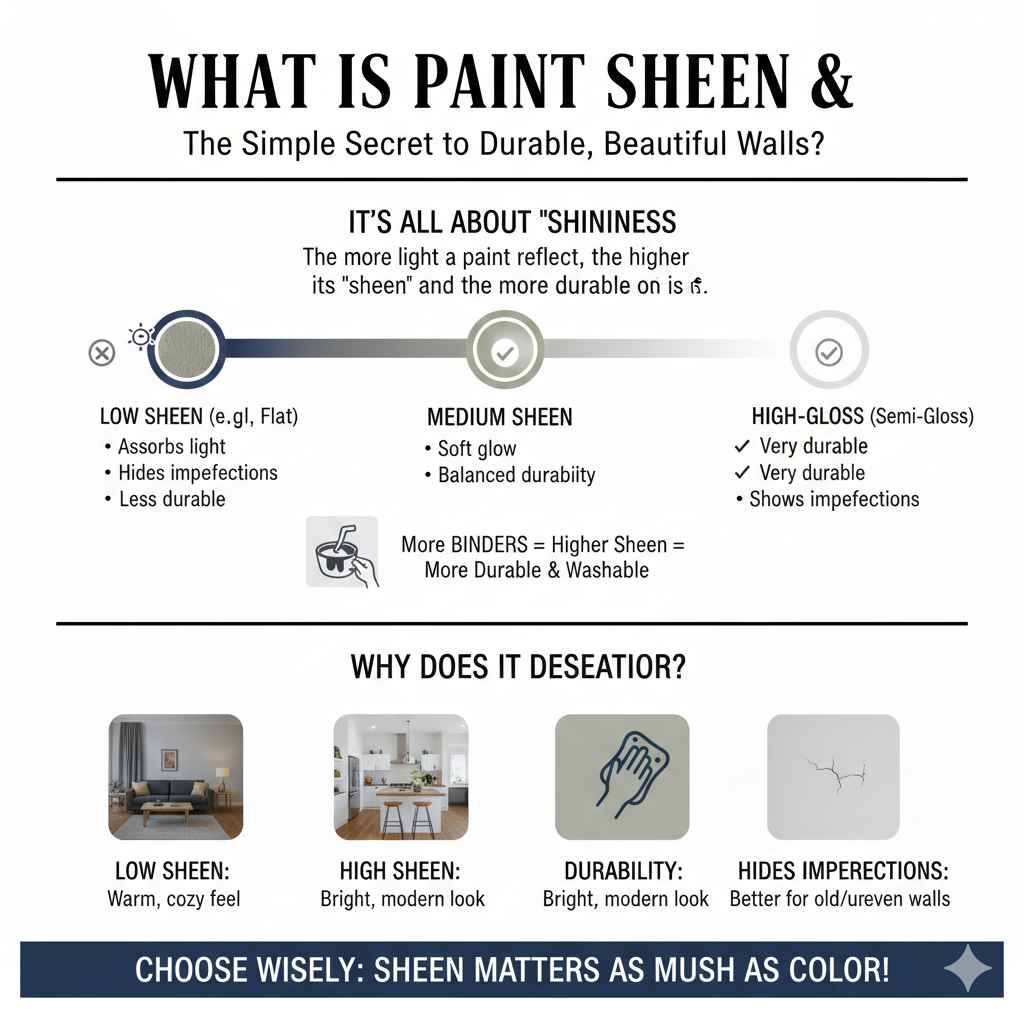
Before we dive into each paint type, let’s talk about the one thing that separates them: sheen. Think of “sheen” as a fancy word for “shininess.” It’s all about how much light the painted surface reflects.
Here’s the simple rule: The higher the sheen, the more durable and washable the paint.
Paint is made of pigments (the color), binders (what makes it stick), and solvents (what makes it liquid). The amount of binder in the paint determines its sheen. More binders create a tighter, smoother surface that reflects more light and stands up better to scrubbing.
- Low Sheen (like flat): Absorbs light, hides bumps, but is less durable.
- Medium Sheen (like satin): Has a soft glow, offers a good balance of looks and durability.
- High Sheen (like semi-gloss): Reflects a lot of light, is very durable, but shows every imperfection.
Choosing the right sheen is just as important as choosing the right color. It affects how your room looks, feels, and how easy it is to maintain. Let’s look at each one up close.
All About Flat Paint: The Forgiving Finish
Flat paint is the friendliest finish for imperfect walls. It has the lowest level of sheen, meaning it reflects almost no light. This creates a soft, non-reflective, matte look.
What is Flat Paint?
Imagine a surface that looks like chalk or velvet. That’s flat paint. Because it doesn’t reflect light, it’s amazing at hiding small dings, bumps, and other flaws on your walls. This makes it a go-to choice for older homes or walls that aren’t perfectly smooth. A close cousin to flat paint is “matte” paint, which has a tiny bit more sheen but offers similar benefits.
Pros of Flat Paint
- Hides Imperfections: Its non-reflective surface makes flaws disappear. If your drywall work isn’t perfect, flat paint is your best friend.
- Rich, Deep Color: Since there’s no glare, the color you see is pure and rich. It gives walls a very sophisticated, modern feel.
- Easy to Touch Up: Dabbing a little extra paint on a scuff mark is easy. The new paint blends right in without leaving a noticeable spot.
- Great for Ceilings: Ceilings often have imperfections and you don’t want light reflecting off them. Flat white is the standard for a reason!
Cons of Flat Paint
- Difficult to Clean: This is the biggest drawback. The porous surface of flat paint tends to grab onto dirt. Trying to scrub it can actually rub the paint off.
- Low Durability: It’s not built for high-traffic areas. It scuffs and marks easily.
Best Places to Use Flat Paint
Use flat paint in low-traffic areas where durability isn’t a top concern. It’s all about appearance over toughness.
- Adult bedrooms
- Home offices
- Formal living rooms
- Dining rooms
- And most importantly, ceilings in every room.
All About Satin Paint: The Versatile Favorite
Satin paint is the most popular finish for a good reason. It hits the sweet spot right in the middle. It has a beautiful, low-sheen luster that’s often described as velvety or pearl-like. It’s not flat, but it’s not shiny either.
What is Satin Paint?
Satin gets its name from the fabric—it has a gentle glow without being reflective. This subtle sheen gives your walls a bit of life and depth. It’s the perfect compromise, offering more durability and washability than flat paint without the high shine of semi-gloss. “Eggshell” is another finish that is very similar to satin, but with slightly less sheen. Many people use them interchangeably.
Pros of Satin Paint
- Good Durability: It can stand up to light scrubbing, making it much easier to clean than flat paint.
- Versatile: It looks great in almost any room of the house. From hallways to kids’ rooms, satin is a reliable choice.
- Elegant Appearance: The soft sheen adds a touch of elegance and warmth to a room without causing a distracting glare.
- Moisture Resistant: It holds up better to humidity than flat paint, though it’s not as robust as semi-gloss.
Cons of Satin Paint
- Shows Application Flaws: The slight sheen can reveal brush or roller marks if you’re not careful. It’s less forgiving to touch up than flat paint.
- Can Highlight Some Bumps: While better than semi-gloss, it doesn’t hide wall imperfections as well as flat paint.
Best Places to Use Satin Paint
Satin is a workhorse. It’s perfect for rooms that see daily activity but don’t need the industrial-strength protection of semi-gloss.
- Family rooms
- Kids’ bedrooms
- Hallways
- Entryways
- Living rooms
All About Semi-Gloss Paint: The Durable Protector
When you need a paint finish that can take a beating and clean up with a simple wipe, you need semi-gloss. It has a noticeable shine and is incredibly durable and moisture-resistant.
What is Semi-Gloss Paint?
Semi-gloss paint has a sleek, radiant sheen. It reflects a good amount of light, which can make a room feel brighter. Its hard, durable finish is designed to withstand moisture, stains, and scuffs. This is the paint you want for the hardworking areas of your home.
Pros of Semi-Gloss Paint
- Extremely Durable: It resists scuffs, stains, and chipping. It’s built for toughness.
- Very Easy to Clean: Spills, fingerprints, and grime wipe away easily with a damp cloth, making it a dream for messy areas.
- Moisture-Resistant: The tight, non-porous finish prevents moisture from seeping into the paint, which is why it’s a top choice for bathrooms and kitchens.
- Makes Trim Pop: The shine provides a beautiful contrast against lower-sheen walls, making trim, doors, and cabinets stand out.
Cons of Semi-Gloss Paint
- Highlights Every Flaw: The high shine acts like a spotlight on any dent, bump, or nail hole in the surface. Your prep work must be perfect.
- Shows Application Errors: Brush strokes and roller marks are very noticeable. It requires a careful hand to get a smooth, even finish.
- Touch-ups are Difficult: Touching up a spot is nearly impossible without it looking different from the rest of the wall. You often have to repaint the entire surface.
Best Places to Use Semi-Gloss Paint
Think of the busiest and wettest parts of your home. Those are the spots where semi-gloss truly shines (pun intended).
- Kitchens (walls and cabinets)
- Bathrooms
- Laundry rooms
- Trim, baseboards, and molding
- Interior doors
- Window casings
Flat vs. Satin vs. Semi-Gloss: A Side-by-Side Comparison
Sometimes, seeing everything laid out makes the choice clearer. Here’s a simple table to help you compare the key differences between flat, satin, and semi-gloss paint.
| Feature | Flat Paint | Satin Paint | Semi-Gloss Paint |
|---|---|---|---|
| Sheen Level | None (0-5% gloss) | Low (15-25% gloss) | Medium-High (35-70% gloss) |
| Appearance | Matte, non-reflective | Soft, velvety glow | Noticeably shiny and sleek |
| Durability | Low | Medium | High |
| Washability | Poor (scrubbing removes paint) | Good (wipes clean easily) | Excellent (scrubbable) |
| Hides Flaws | Excellent | Fair | Poor (highlights flaws) |
| Touch-Up Ease | Excellent (blends easily) | Fair (can be noticeable) | Poor (requires repainting) |
| Best For | Ceilings, adult bedrooms, formal living rooms | Hallways, family rooms, kids’ rooms | Kitchens, bathrooms, trim, doors, cabinets |
How to Choose the Right Paint Finish for Your Project
Still not sure which to pick? Let’s walk through a few simple questions to guide your decision. Answering these will point you straight to the perfect finish.
1. How much traffic does the room get?
This is the most important question. A busy hallway where kids run and bags get dropped needs a more durable paint than a formal dining room that’s used twice a year.
- High Traffic (Hallways, Kids’ Rooms, Kitchens): Lean towards satin or semi-gloss for their durability and washability.
- Low Traffic (Adult Bedrooms, Offices, Formal Rooms): Flat or satin will work perfectly. You can prioritize looks over toughness.
2. What is the condition of your walls?
Be honest about your walls. Are they perfectly smooth, or do they have a history of dings, patches, and uneven texture?
- Imperfect Walls: Flat paint is your best choice. It will hide those imperfections beautifully.
- Smooth Walls: You can use any finish you like! Semi-gloss will look great on a perfectly prepped surface.
3. How much light does the room get?
The amount of natural and artificial light can dramatically change how a paint finish looks.
- Lots of Direct Light: A high-sheen paint like semi-gloss might create a distracting glare. Satin or flat would be more comfortable on the eyes.
- Dark Rooms: A little sheen from satin or semi-gloss can help bounce light around, making the space feel a bit brighter and larger.
4. Are you painting walls or trim?
A classic design strategy is to use different sheens in the same room to create a subtle, sophisticated contrast.
- Walls: Flat or satin are the most common choices.
- Trim, Doors, and Cabinets: Semi-gloss is the standard. It provides a durable finish that resists fingerprints and stands out against the walls. For more details on painting different surfaces, you can check out this helpful guide from Sherwin-Williams on choosing a paint finish.
A Quick Guide to Applying Your Chosen Paint
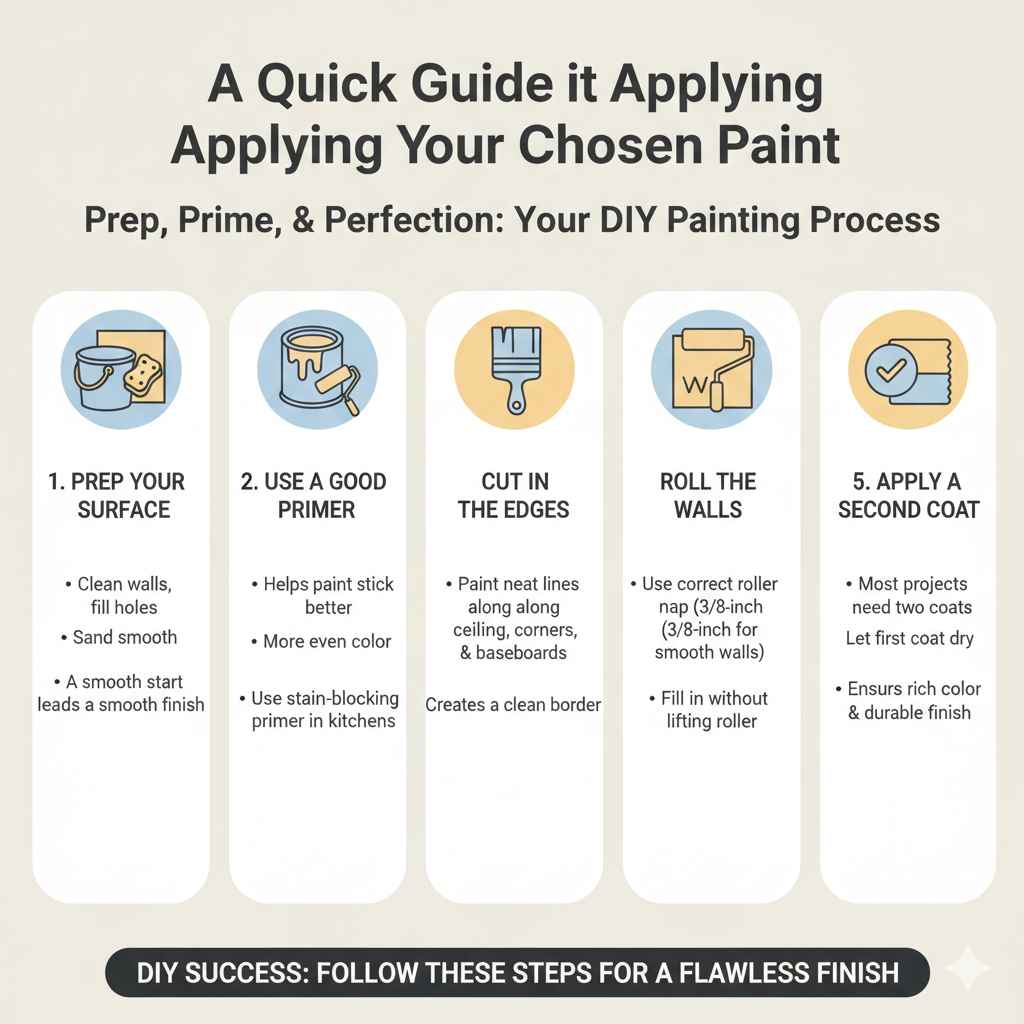
Once you’ve made your choice, a good application is key to a beautiful result. Here’s a simple process that works for any finish:
- Prep Your Surface: This is the most important step! Clean the walls with a mild detergent, rinse, and let dry. Fill any nail holes with spackle and sand them smooth. A smooth start leads to a smooth finish.
- Use a Good Primer: Primer helps the paint stick better and gives you a more even color, especially if you’re painting over a dark color or bare drywall. Use a primer suited for your paint (e.g., a stain-blocking primer in a kitchen).
- Cut In the Edges: Use a 2-inch angled brush to paint a neat line along the ceiling, corners, and baseboards. This gives you a clean border to roll up to.
- Roll the Walls: Use a roller with the right nap (thickness). A 3/8-inch nap is great for smooth walls. Work in a “W” pattern to spread the paint evenly, then fill it in without lifting the roller.
- Apply a Second Coat (If Needed): Most projects look best with two coats. Let the first coat dry completely according to the can’s instructions before starting the second. This ensures a rich, even color and a durable finish.
Frequently Asked Questions (FAQ)
What is the most popular paint finish for interior walls?
Satin is by far the most popular choice for interior walls. It offers the perfect balance of a beautiful, soft sheen with good durability and washability, making it ideal for most rooms in the house, from living rooms to bedrooms.
Can I use a different finish for my walls and trim?
Absolutely! This is a very common and recommended practice. Using a semi-gloss finish on your trim, doors, and baseboards while using a satin or flat finish on the walls creates a lovely, subtle contrast that makes the architectural details of the room stand out.
Is eggshell the same as satin?
They are very similar, but not exactly the same. Eggshell has a slightly lower sheen than satin. Think of it as being right between flat and satin. It offers good washability like satin but hides imperfections a little better. Many people use them interchangeably for similar projects.
What’s the best paint finish for a bathroom?
Semi-gloss is the best choice for a bathroom. Its high moisture resistance prevents problems like mold and mildew, and its durable, slick surface is incredibly easy to wipe down and keep clean. Some paint brands also offer a “kitchen and bath” paint, which often has a satin finish with added mildew-resistant properties.
Can I paint a higher sheen over a lower sheen (e.g., satin over flat)?
Yes, you can. You will need to properly prepare the surface first. Clean the flat-painted wall thoroughly and then lightly scuff it with fine-grit sandpaper. This gives the new satin paint a better surface to grip. Wiping the dust off before you start painting is crucial.
How do I fix mistakes made with a high-sheen paint like semi-gloss?
Fixing mistakes with semi-gloss is tricky because touch-ups are very noticeable. The best approach is to sand the entire flawed area (like a drip or brush mark) smooth, then repaint that entire section of the wall or trim, from one corner to the other. This helps the new paint blend seamlessly.
What about high-gloss paint? Where does that fit in?
High-gloss is the shiniest and most durable finish available. It’s like a mirror! It’s extremely tough and easy to clean, but it shows every single flaw. It’s typically reserved for high-end trim, front doors, or furniture where you want a dramatic, lacquer-like finish.
Conclusion: You’re Ready to Choose!
And there you have it! The difference between flat, satin, and semi-gloss paint isn’t so complicated after all. It really comes down to balancing three things: how you want your room to look, how much traffic it gets, and how easy you need it to be to clean.
Remember this simple summary:
- Flat: For hiding flaws on low-traffic walls and ceilings.
- Satin: The perfect all-rounder for most rooms in your home.
- Semi-Gloss: For hardworking areas like kitchens, bathrooms, and trim that need maximum durability.
You are now equipped with the knowledge to walk into any paint store and choose the perfect finish with total confidence. Don’t be afraid to experiment with different sheens to create the look and feel you want for your home. Grab your roller, put on some music, and transform your space. You’ve got this!