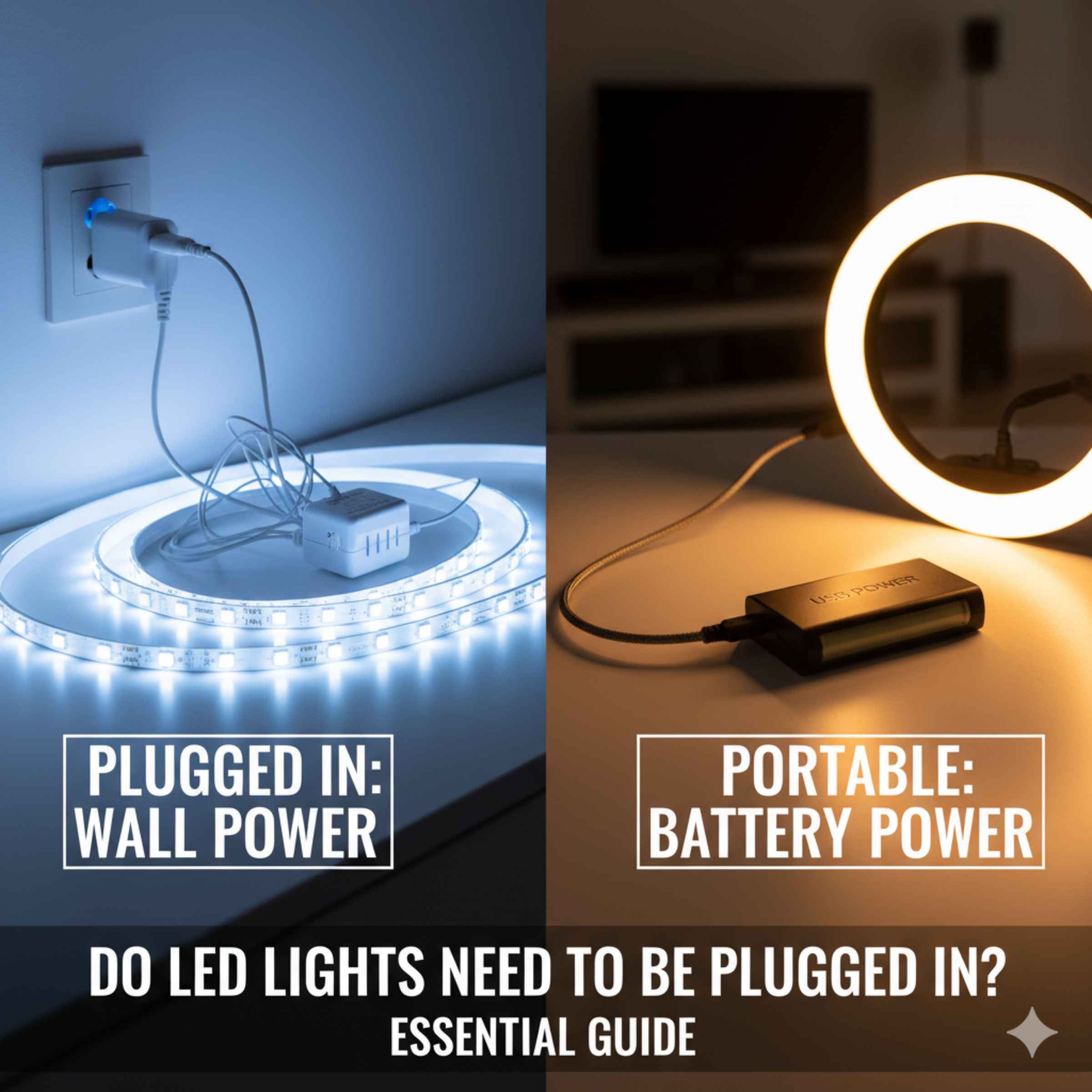
Do LED Lights Need To Be Plugged In: Essential Guide
Do LED lights need to be plugged in? Yes, most LED lights require a power source, typically by plugging into an electrical outlet. However, some LED lights, like battery-powered or solar-powered options, do not need to be plugged in. This guide will help you understand the different types of LED lights and their power requirements.
Hey there, DIY friends! Md Meraj here, ready to shine a light on a question that pops up more often than you might think: “Do LED lights need to be plugged in?” It’s a simple question, but the answer can feel a bit murky when you’re just starting out with home upgrades or trying to get that perfect lighting for your workshop. You see all these cool LED options, from sleek under-cabinet strips to fancy smart bulbs, and you wonder, “How do they get their power?” Don’t worry, it’s not as complicated as it seems! We’ll break down exactly how most LED lights get their juice, and you’ll be confidently choosing the right lighting for your next project in no time. Let’s get started and make your home brighter and better!
Understanding How LED Lights Work
Before we dive into plugging things in, let’s have a quick peek at what makes an LED light tick. LED stands for Light Emitting Diode. Unlike old-fashioned incandescent bulbs that create light by heating a tiny wire until it glows, LEDs are semiconductor devices. They produce light when an electric current passes through them. This is why they’re so energy-efficient and last a long time!
Because they need that electric current to work, most LED lights need a way to connect to a power source. For many of us, that power source is the familiar electrical outlet in your wall.
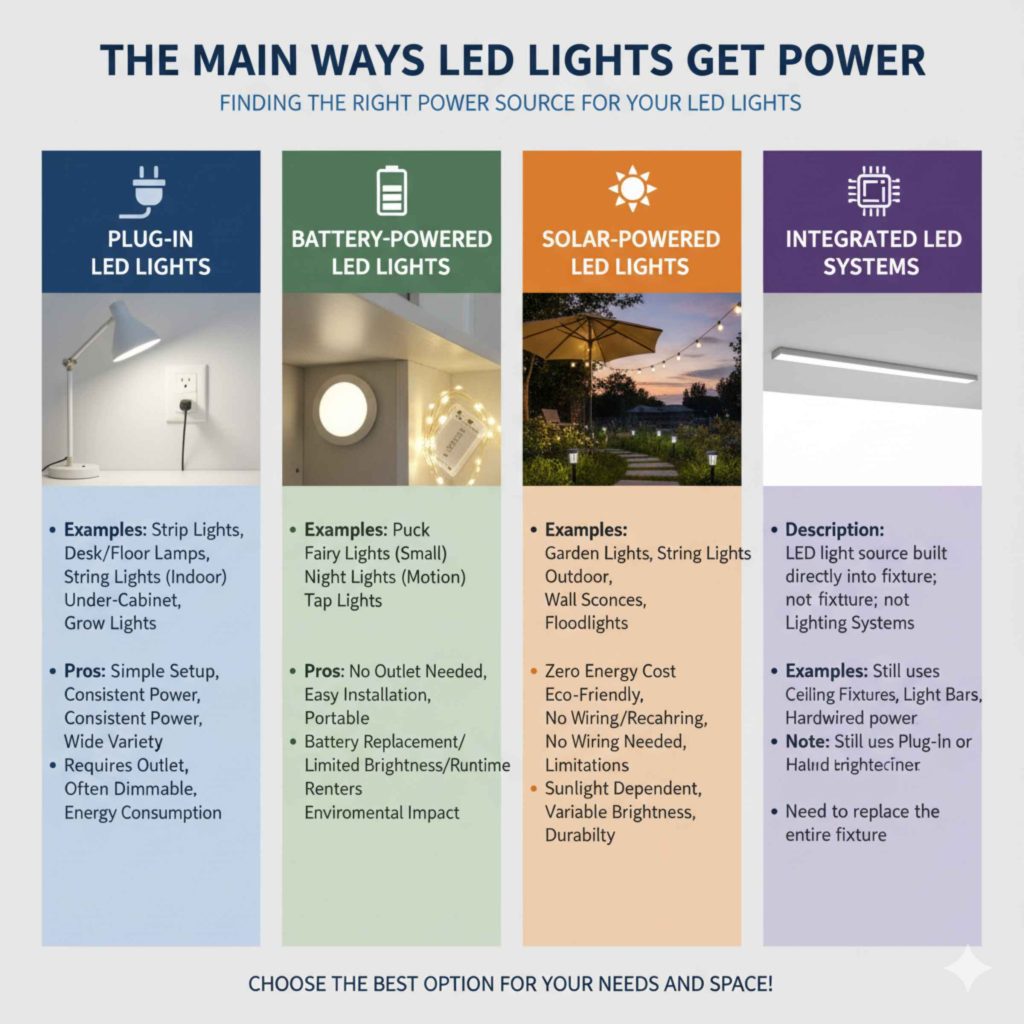
The Main Ways LED Lights Get Power
So, when you’re looking at LED lights, you’ll notice they come in a few different flavors when it comes to power. Understanding these will help you decide what’s best for your space and needs.
1. Plug-In LED Lights
This is the most common type of LED lighting you’ll encounter. These lights have a standard electrical plug attached to a cord, just like your toaster or lamp. You simply plug them into a nearby wall outlet, and voilà – light!
Examples of Plug-In LED Lights:
- LED Strip Lights: These are flexible strips with many small LEDs. They often come with a power adapter that plugs into the wall and then connects to the strip.
- LED Desk Lamps and Floor Lamps: Most modern lamps use LED bulbs that screw into a socket, and the lamp itself plugs into the wall.
- LED string lights (for indoor use): Many decorative string lights for parties or holidays have a plug for easy setup.
- LED Puck Lights and Under-Cabinet Lights: Many of these come with a plug-in transformer and a cord to power them.
- LED Grow Lights: Larger grow lights for plants typically require a standard plug to get enough power.
Pros of Plug-In LED Lights:
- Simple Setup: No complicated wiring needed, just plug and play.
- Consistent Power: They receive a steady supply of electricity, so you don’t have to worry about batteries dying.
- Wide Variety: A huge range of styles, brightness levels, and features are available.
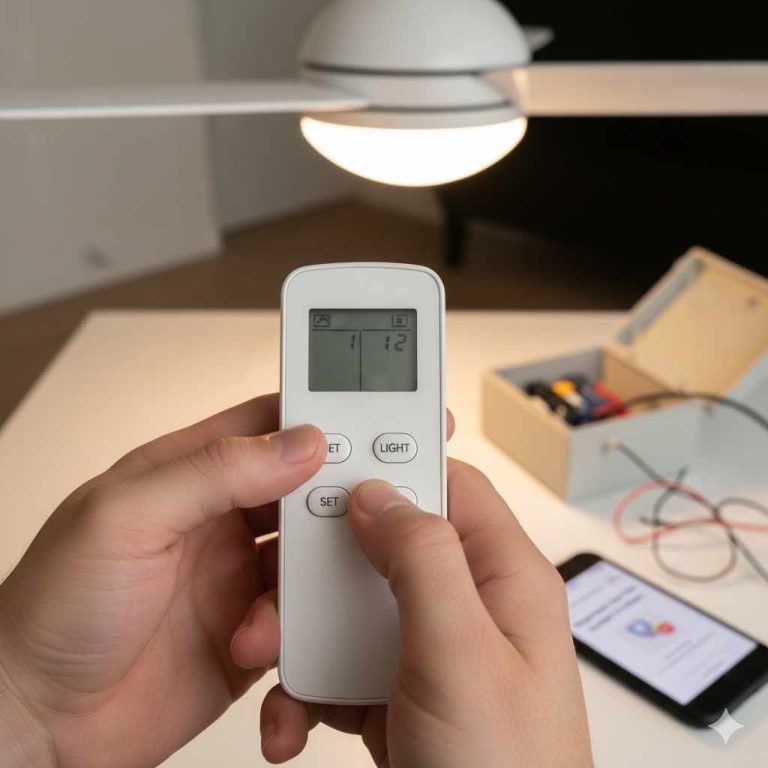
- Often Dimmable: Many plug-in models can be dimmed with compatible dimmers or remote controls.
Cons of Plug-In LED Lights:
- Requires an Outlet: You need to be near an electrical outlet, which can limit placement.
- Visible Cords: The power cord can sometimes be unsightly and may require cord management solutions.
- Energy Consumption: While efficient, they do draw power from your home’s main electrical supply.
2. Battery-Powered LED Lights
These are fantastic for areas where you can’t easily reach an outlet or for temporary lighting solutions. As the name suggests, they run on batteries (like AA, AAA, or even built-in rechargeable ones).
Examples of Battery-Powered LED Lights:
- LED Puck Lights: Many small, adhesive-backed puck lights use batteries. Perfect for inside cabinets or closets.
- LED Fairy Lights/String Lights: Small battery packs are common for decorative string lights, especially those used outdoors or in craft projects.
- LED Night Lights: Many plug directly into an outlet, but some motion-activated ones run on batteries.
- LED Tap Lights: These you press to turn on and off, and they usually run on small coin cell or AA batteries.
- LED Motion-Sensor Lights: Great for closets, pantries, or hallways where you want light only when needed.
Pros of Battery-Powered LED Lights:
- No Outlet Needed: Ultimate flexibility in placement – anywhere you want light!
- Easy Installation: Often stick-on or screw-in, with no cords to manage.
- Portable: Easy to move from one spot to another.
- Good for Renters: No need to alter existing wiring.
Cons of Battery-Powered LED Lights:
- Battery Replacement/Recharging: You’ll need to buy new batteries or recharge them, which adds ongoing cost and effort.
- Limited Brightness/Runtime: Battery life can vary, and they might not be as bright or last as long as plug-in versions.
- Environmental Impact: Disposing of old batteries can be an environmental concern.
3. Solar-Powered LED Lights
These are a super eco-friendly choice, especially for outdoor spaces. They use a small solar panel to capture sunlight during the day, store it in a battery, and then use that energy to power the LED light at night.
Examples of Solar-Powered LED Lights:
- Solar Garden Lights: The stake lights you see along pathways are classic examples.
- Solar String Lights: Great for patios, decks, and fences.
- Solar Wall Sconces: For accent lighting on exterior walls.
- Solar Floodlights: For security lighting in areas without easy access to power.
Pros of Solar-Powered LED Lights:
- Zero Energy Cost: They use free energy from the sun!
- Eco-Friendly: Reduces your carbon footprint.
- No Wiring Needed: Easy to install, often just staking them into the ground or mounting them.
- Automatic Operation: Most turn on automatically at dusk and off at dawn.
Cons of Solar-Powered LED Lights:
- Sunlight Dependent: Performance relies heavily on sunny weather. Cloudy days mean less charge.
- Placement Limitations: They need direct sunlight to charge, so placement is key.
- Variable Brightness: Brightness and runtime can fluctuate based on the charge level and weather.
- Durability: Some cheaper models might not withstand harsh weather conditions over time.
4. Integrated LED Systems
Sometimes, the LED light source is built directly into the fixture itself and isn’t meant to be replaced. These systems often still need to be plugged in or hardwired.
Examples of Integrated LED Systems:
- Some Modern Ceiling Fixtures: Where the LED panel is part of the fixture.
- LED Light Bars: Often used in kitchens or garages, these have integrated LEDs.
- Smart Lighting Systems: Many smart bulbs or fixtures have integrated LEDs and connect wirelessly, but the fixture or base still needs power.
These integrated systems will fall under the power methods described above (plug-in, hardwired, or sometimes battery for very small units). The key difference is that you can’t just swap out a burnt-out bulb; you’d need to replace the entire fixture or module.
What About Hardwired LED Lights?
You might be wondering about lights that don’t have a visible plug or battery. These are called “hardwired” lights. They are connected directly to your home’s electrical wiring, usually by an electrician.
Examples of Hardwired LED Lights:
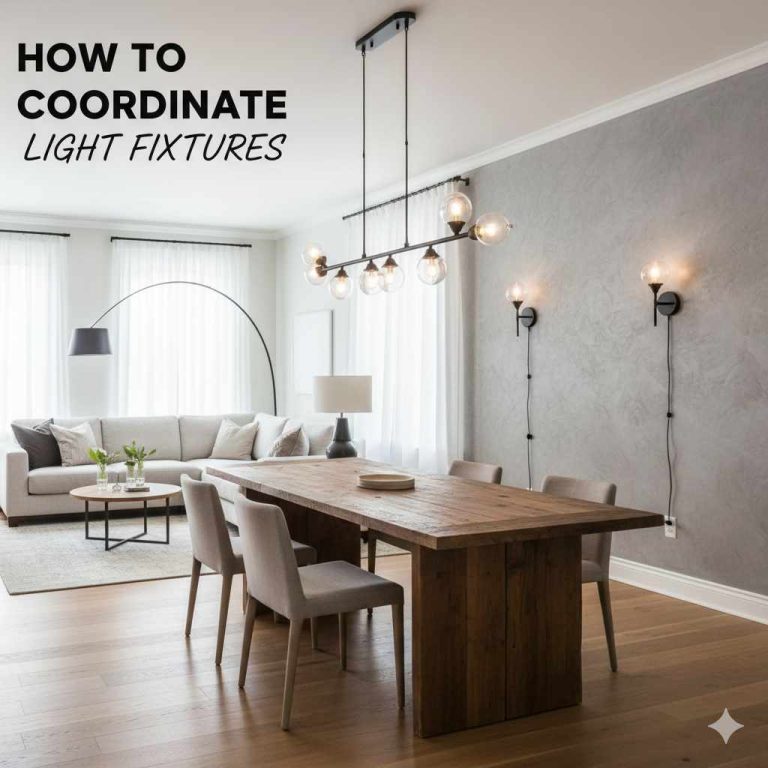
- Ceiling Lights/Chandeliers: Many permanent fixtures are hardwired.
- Wall Sconces: Often connected directly to the wall’s wiring.
- Some Recessed Lighting (Can Lights): These are installed directly into the ceiling.
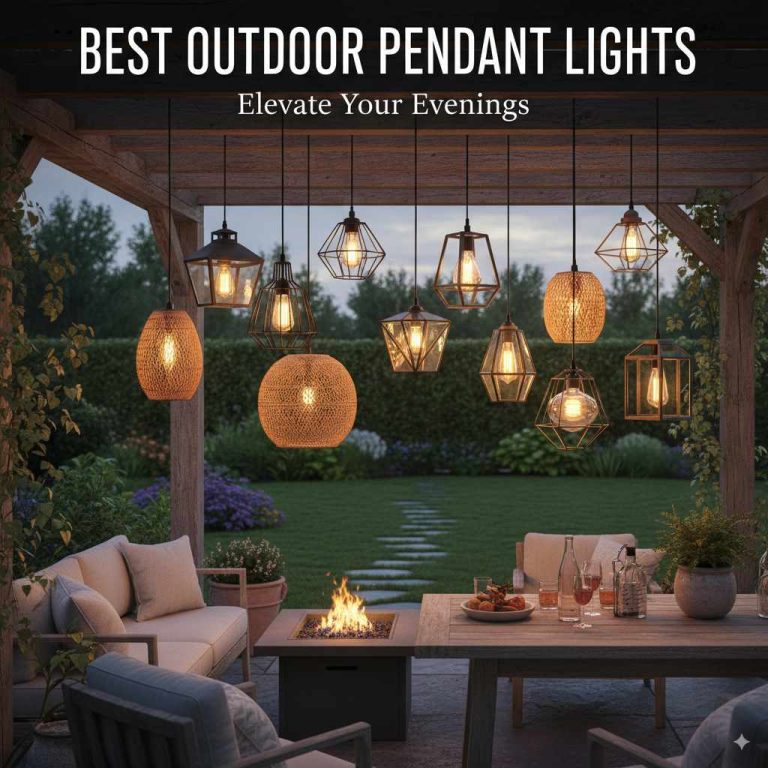
- Outdoor Lighting Fixtures: Permanent landscape or security lights.
While these don’t “plug in” in the traditional sense, they absolutely need a connection to your home’s electrical system to function. If you’re considering hardwiring anything, it’s always a good idea to consult with a qualified electrician to ensure safety and compliance with building codes. You can learn more about electrical safety from resources like the Consumer Product Safety Commission (CPSC).
Factors to Consider When Choosing LED Lights
When you’re picking out new LED lights, think about these things to make sure you get the best fit for your project:
Power Source Availability
The most crucial factor! Do you have an outlet nearby? Is it an area where you’d prefer not to have visible cords? Is it an outdoor space that gets good sun?
Installation Ease
Are you comfortable with basic DIY, or do you need something that’s truly plug-and-play? For hardwired options, professional help is usually recommended.
Portability Needs
Will you need to move the light source around? Battery-powered options offer the most flexibility here.
Brightness and Functionality
What do you need the light for? Task lighting, ambient mood lighting, or general illumination? This will influence the type and power needed.
Aesthetics
Consider the look of the fixture and any visible cords. Some LED strips come with sleek power adapters, while others might have bulkier ones.
Cost
While LEDs are energy-efficient, the initial cost can vary. Factor in the ongoing cost of batteries or electricity usage.
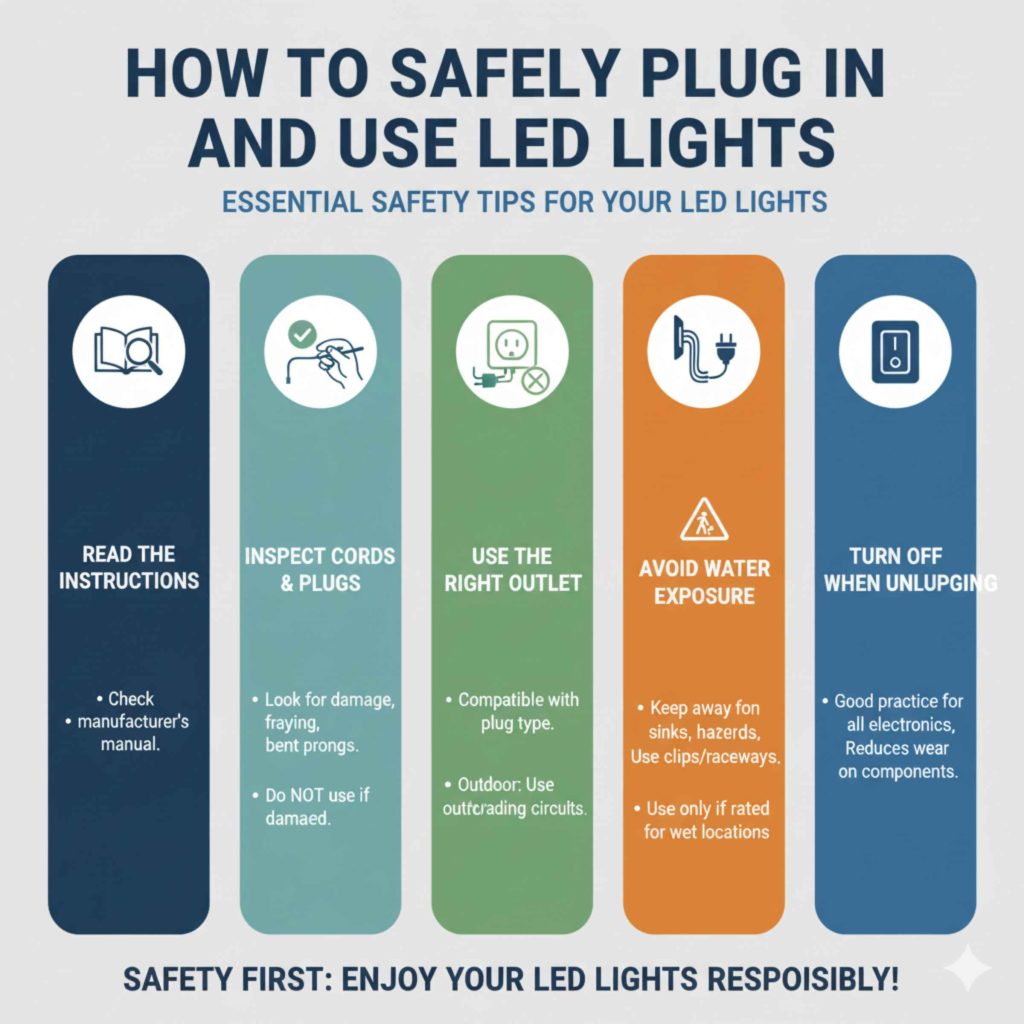
How to Safely Plug In and Use LED Lights
Safety first, always! Here are some tips for using your plug-in LED lights:
- Read the Instructions: Every light fixture is a little different. Always check the manufacturer’s manual for specific setup and usage guidelines.
- Inspect Cords and Plugs: Before plugging anything in, check the power cord and plug for any damage, fraying, or bent prongs. If you see any issues, do not use the light and contact the manufacturer or replace it.
- Use the Right Outlet: Ensure the outlet is compatible with the plug and is in good working order. Avoid overloading circuits by plugging too many high-power devices into one outlet.
- Manage Cords: Keep cords away from high-traffic areas to prevent tripping hazards. Use cord clips or raceways to keep them tidy and out of sight. For outdoor use, ensure cords are rated for outdoor use and protected from moisture and damage.
- Avoid Water Exposure: Unless specifically designed for wet locations (like outdoor-rated string lights or bathroom fixtures), keep plug-in lights away from water.
- Turn Off When Unplugging: While less critical for LEDs than some other electronics, it’s good practice to ensure the light is off before unplugging it.
Troubles-hooting Common LED Light Issues
Even with the best lights, sometimes things don’t work as expected. Here are a few common hiccups and how to fix them:
LED Light Won’t Turn On
- Check the Plug: Is it fully inserted into the outlet?
- Try Another Outlet: The outlet itself might be the issue.
- Check the Switch: Is the light’s own power switch turned on?
- For Battery Lights: Are the batteries fresh and inserted correctly?
- For Solar Lights: Is the solar panel clean and receiving direct sunlight? Is the light sensor blocked?
- Check the Power Adapter: If your LED strip has a separate power adapter, ensure it’s securely connected to both the wall and the LED strip.
LED Light is Flickering
- Loose Connection: Ensure the plug is secure in the outlet and the power adapter is firmly connected to the LED strip (if applicable).
- Failing Power Adapter: The adapter might be on its way out.
- Incompatible Dimmer: If you’re using a dimmer, make sure it’s compatible with LED lights. Not all dimmers work well with LEDs. You can find resources on LED dimming compatibility from organizations like the Illuminating Engineering Society (IES).
- Voltage Fluctuations: In rare cases, unstable power in your home can cause flickering.
LED Light is Dimmer Than Expected
- Low Battery: For battery-powered lights, this is common.
- Insufficient Sunlight: For solar lights, they might not be getting enough sun to fully charge.
- Power Supply Issue: The power adapter might not be providing enough power, or the outlet might be on a circuit that’s overloaded.
- Aging LEDs: While LEDs last a long time, their brightness can gradually decrease over many years of use.
Comparing LED Power Sources: A Quick Look
Here’s a handy table to quickly compare the main power sources for LED lights:
| Power Source | Typical Use Cases | Pros | Cons | Installation Ease |
|---|---|---|---|---|
| Plug-In | Indoor lighting, task lights, decorative strings | Consistent power, wide variety, simple setup | Requires outlet, visible cords | Very Easy |
| Battery-Powered | Closets, accent lighting, temporary needs, renters | No outlet needed, portable, easy to install | Battery replacement, limited runtime/brightness | Easy |
| Solar-Powered | Outdoor spaces, garden paths, patios | Free energy, eco-friendly, no wiring | Sunlight dependent, placement critical, variable performance | Easy |
| Hardwired | Permanent fixtures (ceiling, wall), integrated systems | Clean look, direct power, reliable | Requires professional installation, less portable | Difficult (requires electrician) |
Frequently Asked Questions About LED Lights and Power
Q1: Can I use any LED bulb in any lamp?
A1: Mostly, yes! You need to ensure the bulb’s base (like E26 for standard screw-in, or GU10 for some spotlights) matches the socket in your lamp. Also, check the wattage – while LEDs use less energy, you should still match the equivalent wattage for brightness and ensure the lamp’s maximum wattage isn’t exceeded. Always check the bulb’s packaging for compatibility notes.
Q2: Do LED strip lights need a special outlet?
A2: Typically, no. Most LED strip lights come with a power adapter that has a standard plug designed for regular household wall outlets. Just make sure the adapter is securely connected to both the wall and the LED strip.
Q3: How long do batteries last in LED lights?
A3: This varies a lot! It depends on the battery type (alkaline, lithium, rechargeable), the LED’s power consumption, and how long the light is on. Simple LED tap lights might last for weeks or months of occasional use, while brighter, continuously running battery-powered lights might only last a few hours to a day.
Q4: Can I leave solar LED lights plugged in all the time?
A4: Solar LED lights don’t “plug in” like traditional lights. They charge via their solar panel during the day. They are designed to be left outdoors to collect sunlight. The battery inside them will charge and discharge as needed. You just need to ensure the solar panel isn’t obstructed by shade.
Q5: What happens if I plug in an LED light that’s not meant for outdoor use into an outdoor outlet?
A5: This is risky and not recommended. Indoor-rated LED lights are not built to withstand moisture, temperature changes, or debris found outdoors. Doing so can damage the light, create a fire hazard, or lead to electrical shock. Always use lights that are specifically rated for outdoor use when they’ll be exposed to the elements.
Q6: Do LED lights use a lot of electricity?
A6: No, quite the opposite! LEDs are incredibly energy-efficient. They use significantly less electricity than incandescent or even fluorescent bulbs, which can save you money on your energy bills. For example, a 10-watt LED bulb can produce the same amount of light as a 60-watt incandescent bulb.
Conclusion
So, to wrap it all up, the answer to “Do LED lights need to be plugged in?” is generally yes, but with important exceptions! Most of the LED lights you’ll use for home improvement projects and general lighting will require plugging into a standard electrical outlet. This provides a reliable and consistent power source, making them super convenient.
However, the beauty of LED technology is its versatility. Battery-powered options give you freedom from outlets, perfect for those hard-to-reach spots or temporary needs. And solar-powered LEDs offer an eco-friendly, cost-saving solution for your outdoor spaces, harnessing the sun’s energy. Hardwired LEDs offer a clean, integrated look but require professional installation.
By understanding these different power sources and considering your specific needs, you can confidently choose the right LED lights for any project. Remember to always prioritize safety, read instructions, and manage your cords properly. With the right knowledge, you can easily illuminate your home and projects with efficient, long-lasting LED lighting. Happy lighting, everyone!