Do Mice Like Light At Night? Essential Guide
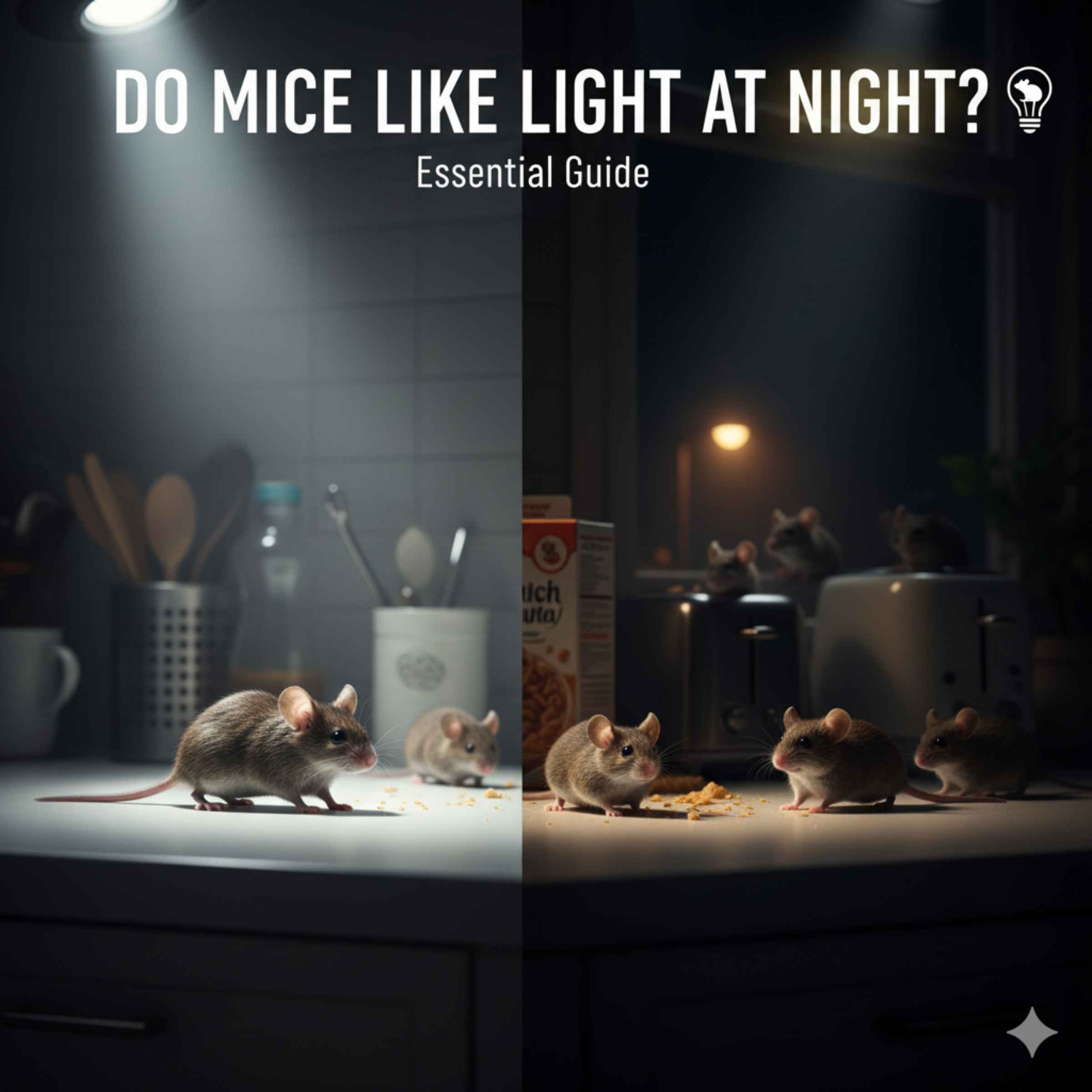
Mice generally dislike bright light at night. They are nocturnal creatures, meaning they are naturally most active in the dark. Sudden or consistent bright lighting will often deter them from venturing out to forage or explore.
When you’re trying to keep your home comfortable and mouse-free, it often feels like a guessing game. You might wonder if leaving a light on will solve the problem, or if it will just waste electricity. Dealing with tiny intruders can be frustrating, but understanding their behavior is the first step to safely encouraging them to move along. I’m here to show you exactly how light affects these little visitors, using simple, practical advice that works for any homeowner. Let’s shed some light on this topic and get your home feeling secure again!
Do Mice Like Light At Night? The Simple Answer for Homeowners
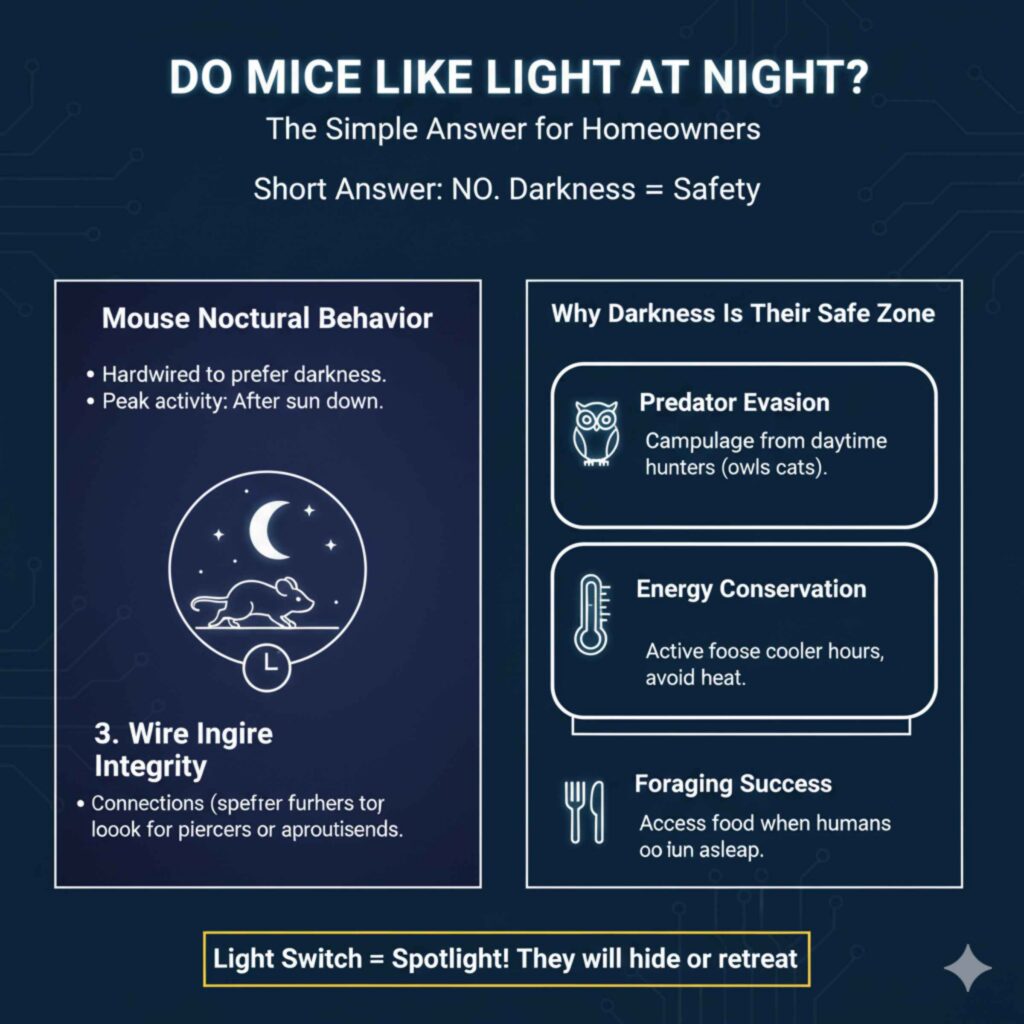
The short answer is no, mice do not like bright light at night. They are hardwired to prefer darkness. Think of it like this: darkness equals safety for them. In the wild, light signals danger—predators are often daytime hunters, and bright lights make them highly visible targets.
Because mice are nocturnal, their peak activity time is when the sun goes down. When they encounter bright light, their natural instinct is to freeze, hide, or retreat immediately to their nest or burrow. This behavior is crucial for your home management strategy.
Understanding Mouse Nocturnal Behavior
To effectively manage any pest issue, you need to know how they think. Mice have evolved specifically to thrive under the cover of darkness. This isn’t just a preference; it’s survival.
Why Darkness is Their Safe Zone
Mice have relatively poor eyesight compared to humans. While they can see shapes and movement, they rely heavily on scent and sound. In low light, their other senses are heightened, allowing them to navigate safely while looking for food scraps or nesting materials.
Predator Evasion: Most predators that hunt mice (like owls, cats, or coyotes) are active during the day or twilight hours. Nighttime darkness is their best camouflage.
Energy Conservation: Being active during the cooler, darker hours helps them manage their body temperature and avoid the heat of the day.
Foraging Success: Human activity usually ceases at night. This means kitchens are less likely to be monitored, and food sources are easier to access without being disturbed.
When you flip a light switch, you essentially turn their safe haven into a spotlight, instantly exposing them.
The Science Behind Light Aversion in Rodents
This isn’t just guesswork; there’s a solid biological reason why mice steer clear of bright areas at night. Scientists often study this aversion when testing traps or designing exclusion methods.
Photophobia: The Fear of Light
The scientific term for this light sensitivity is photophobia. While severe photophobia is often associated with medical conditions in humans, in rodents, it’s a normal, essential survival trait.
Bright light causes stress for mice. Exposure to intense light can interrupt their natural cycles and significantly increase their stress hormones. A stressed mouse is a hesitant mouse, meaning they are less likely to venture far from a secure hiding spot.
How Light Intensity Matters
Not all light is created equal when it comes to deterring mice. A dim nightlight won’t bother them much, but a floodlight certainly will.
| Light Intensity Level | Mouse Reaction (At Night) | Effectiveness for Deterrence |
|---|---|---|
| Dim/Ambient (e.g., hallway nightlight) | Generally ignored; they may navigate around it. | Low |
| Moderate (e.g., 60W bulb in a kitchen) | Causes hesitation; they may pause or choose a darker path. | Medium |
| Bright/Direct (e.g., floodlight, LED work light) | Immediate retreat to cover; strong aversion. | High |
If you are using light as part of a deterrence strategy, aim for the bright/direct category, especially near known entry points or food storage areas. For more in-depth research on rodent behavior in controlled environments, resources from university agricultural extensions often provide excellent, unbiased data.
Practical Ways to Use Light to Discourage Mice
Since we know mice dislike light at night, we can use this knowledge to make our homes less appealing to them. This is a non-toxic, easy first step in home defense, similar to how we use good workshop lighting for safety while we work.
Strategy 1: Illuminating Dark Corners
Mice love to run along walls in the darkest spots they can find. If you have dark areas like basements, crawl spaces, or under sinks, making those spots visibly lit can discourage travel.
Tools You Might Need:
1. Battery-operated LED puck lights (easy to install without wiring).
2. Motion-sensor floodlights (for outdoors or garages).
3. Plug-in utility lights with daylight bulbs.
Step-by-Step Light Placement Guide:
- Identify Hot Spots: Walk around your home at night (with the lights off) and see where it feels the darkest or where you suspect activity is happening (e.g., near the pet food bin).
- Install Permanent Fixtures: If possible, install low-wattage, permanent lighting in basements or storage rooms that stays on 24/7.
- Use Motion Sensors: Place motion-sensor lights near garage doors or exterior foundation gaps. When a mouse approaches, the sudden burst of light scares them away.
- Focus on Entry Points: Shine a light directly onto any small gaps or holes you’ve found leading into your home. A consistently lit entry point is less attractive.
Strategy 2: Nighttime Light Discipline
This strategy focuses on reducing the overall dark habitat mice rely on inside your main living spaces.
Kitchen Discipline: Never leave food out overnight. If the kitchen is brightly lit (even by streetlights shining in), and there are no crumbs, the trip isn’t worth the risk for the mouse.
Exterior Lighting: While bright exterior lights deter mice, make sure they aren’t attracting insects. Insects attract spiders, which can attract other larger pests. Balance is key here. A well-lit perimeter is safer than a dark one.
A Word on Ultrasonic Devices vs. Light
Some homeowners try ultrasonic sound emitters. While these are marketed as deterrents, studies often show mixed results for mice, who can acclimate to the sound. Light, however, is a direct, biologically rooted aversion, often making it a more reliable initial deterrent, especially when combined with good sanitation.
Limitations of Using Light as a Standalone Solution
While light is a fantastic tool, it’s important to be realistic. Light alone will rarely solve a serious infestation. If mice are starving or their nest is compromised, they will risk moving through light to find survival necessities.
When Light Fails: The Desperation Factor
If you have a large number of mice, or if they have established deep, hidden nests, a light will only keep them confined to the darkest corners of your attic or basement—it won’t make them leave entirely.
When mice become desperate, they exhibit what experts call “bolding”—they take risks they normally wouldn’t. A very hungry mouse might dart across a lit floor if the reward (food) is high enough.
Key Reasons Light Isn’t Enough
Nesting Sites: If their nest is cozy, warm, and stocked with food (like insulation or stored goods), light won’t convince them to abandon it.
Breeding Cycle: A breeding mouse needs to feed its young constantly, making it less cautious about light exposure.
Lack of Exclusion: If they have easy access points into your home, they will keep trying, regardless of temporary light scares.
Therefore, using light is best combined with sealing entry points and removing food sources. It’s one leg of a three-legged stool supporting a mouse-free home.
The Role of Color and Bulb Type in Deterrence
If you are going to use light extensively for deterrence, you should consider what kind of light bulb you are using. Not all light waves affect nocturnal animals the same way.
UV Light and Rodents
Some pest control specialists suggest that ultraviolet (UV) light can be particularly bothersome to rodents, although direct evidence is sometimes hard to isolate from general brightness. Since rodents don’t see the world exactly as we do, certain wavelengths might be more irritating.
Traditional Incandescent: Provides warm, softer light. Less effective as a pure deterrent.
Cool White/Daylight LEDs: These bulbs mimic bright daylight and are generally more effective at making an area feel exposed and unsafe for nocturnal animals.
Blue/Violet Spectrum: Some research suggests rodents show greater aversion to shorter, blue-spectrum wavelengths.
Pro Tip for the Woodworker: If you are lighting a workshop or storage area where you know mice might hide, switch your primary work lights to a high-Kelvin (cool white) bulb during the evening hours when you aren’t present. This provides practical lighting for you if you need to check something, but maximizes the deterrence effect when you leave.
Comparing LED vs. Traditional Bulbs for Pest Control
LEDs are generally superior for deterrence because they are energy-efficient, last longer, and can be easily purchased in higher color temperatures (the “bluer” light).
| Bulb Type | Energy Use | Deterrence Potential | Installation Note |
|---|---|---|---|
| Incandescent | High | Low to Moderate | Simple plug-and-play. |
| CFL (Compact Fluorescent) | Low | Moderate | Contain mercury; require special disposal. |
| LED (Cool White/Daylight) | Very Low | High | Ideal for long-term, 24/7 deterrence lighting. |
Integrating Light with Exclusion: Sealing Up Shop
The most successful long-term strategy involves combining the light aversion you’ve learned about with physical exclusion. If you can seal the pathways, the light won’t matter because they can’t get in.
Step-by-Step Exclusion Checklist
This is where we put on our home improvement hats. Sealing entry points is crucial for lasting results. According to the Centers for Disease Control and Prevention (CDC), sealing entry points is a cornerstone of effective pest management.
- Inspect the Foundation: Look for cracks in the concrete or mortar around your home’s base. Mice can fit through an opening the size of a dime (about 1/4 inch).
- Check Utility Lines: Examine where pipes (water, gas) or utility cables enter the house. Gaps around these are common entry points.
- Seal Gaps Safely: Do NOT use simple caulk or expanding foam alone for major gaps. Mice can chew right through them. Use metal mesh (hardware cloth), steel wool, or copper mesh stuffed firmly into the hole first.
- Cover with Sealant: Once the hole is stuffed with metal (which they cannot chew), seal the exterior with silicone caulk or exterior-grade cement patch.
- Secure Doors and Windows: Ensure weather stripping under doors is intact and tight against the threshold.
When you seal the entry points, the mice already inside have nowhere to go, forcing them to interact with your deterrents (like the lights you installed), or they will eventually leave through an unsealed opening to seek easier shelter elsewhere.
When Light Becomes a Habitat Problem
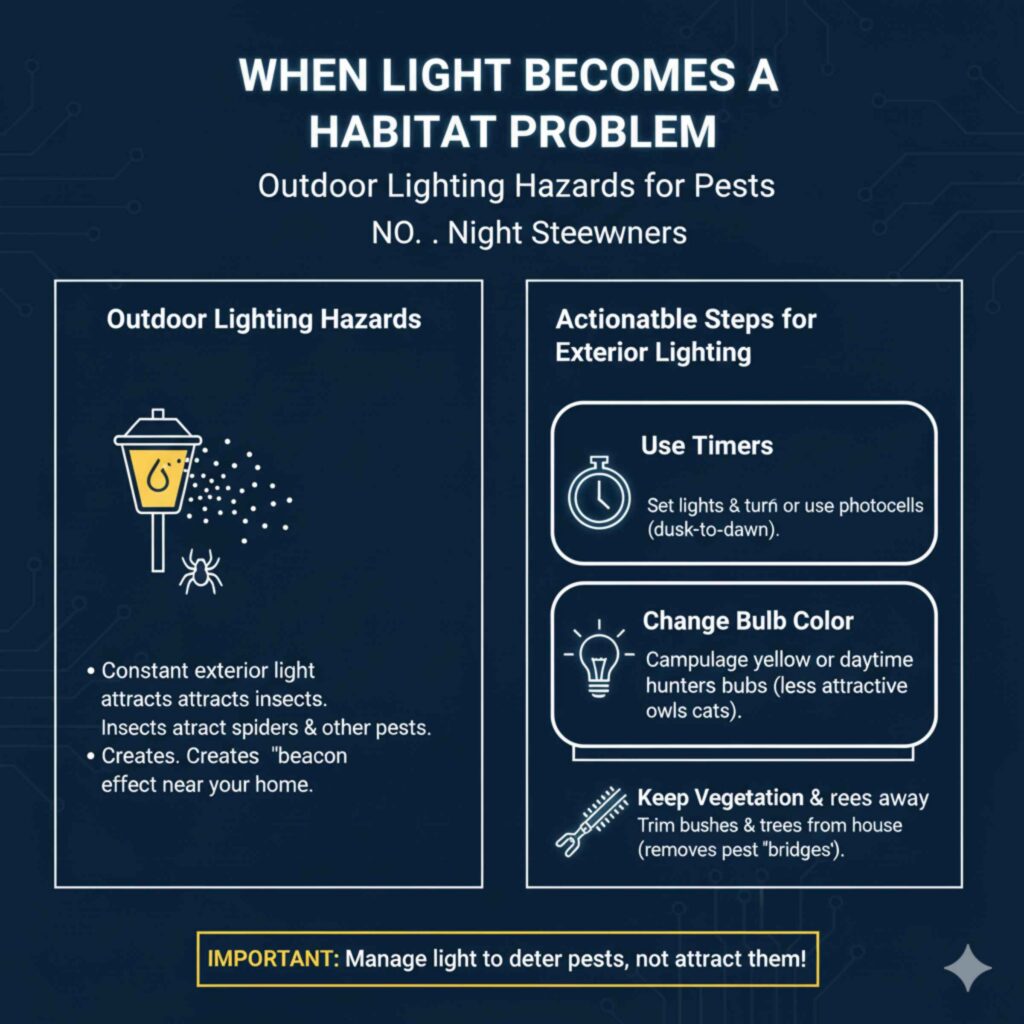
Sometimes, the light isn’t coming from you—it’s coming from outside, and it’s actually attracting pests, not deterring them. This is common near garden sheds or overgrown areas.
Outdoor Lighting Hazards
If you have a porch light or landscape lighting that stays on all night, it’s acting like a beacon for insects. Insects gather under these lights, and insects attract spiders, earwigs, and sometimes even larger rodents that prey on them.
Actionable Steps for Exterior Lighting:
Use Timers: Set exterior lights on a timer to turn off an hour or two after sunset, or use photocell sensors so they only come on when it’s truly dark.
Change Bulb Color: Switch outdoor lights to yellow or sodium vapor bulbs. These are much less attractive to flying insects than standard white or blue-spectrum bulbs.
Keep Vegetation Trimmed: Trim back bushes and trees that touch the house. These act as bridges for mice to access windows or attic vents, often moving between the dark safety of the bush and the light of the house.
Frequently Asked Questions (FAQs) for Beginner Homeowners
Q1: Will leaving the main overhead lights on all night drive mice out of the house for good?
A: No, not usually for good. While it will make them hide and keep them from using brightly lit areas, if they are desperate for food or nesting material, they will still move through shadows or wait for the lights to turn off. It works best as a temporary scare tactic or in conjunction with sealing holes.
Q2: Are specific colors of light better than others for keeping mice away?
A: Yes. Mice tend to dislike the brighter, bluer spectrum of light (cool white or daylight bulbs). These mimic harsh daytime conditions more closely than the warm, yellowish glow of traditional bulbs, increasing their feeling of exposure.
Q3: Do motion-sensor lights really work on mice at night?
A: They can be very effective! The sudden change from total darkness to bright light startles them. This startling effect often makes them retreat immediately. They are great for covering exterior entry points or the entrance to a dark garage.
Q4: How long does it take for a mouse to get used to a light being left on?
A: Mice can acclimate relatively quickly, sometimes within a few days to a week, especially if the light is moderate rather than extremely bright. If they associate the light with an area that still offers necessary resources (like a hidden food source), they will learn to tolerate it or move around it.
Q5: If I see a mouse during the day, does that mean my light strategy isn’t working?
A: Seeing a mouse during the day usually means the infestation is significant, or they are extremely desperate for resources. It often indicates that their nesting area is full, or food/water is critically scarce. It’s a strong sign you need to step up your exclusion and sanitation efforts immediately.
Q6: Should I use UV lights to repel mice, like I might for some insects?
A: While UV light is generally unpleasant for many creatures, standard home UV bulbs are not a guaranteed solution for mice. Stick to bright, cool white (high Kelvin rating) LED bulbs for the best balance of deterrence and usability in a home setting.
Conclusion: Building Confidence in Your Mouse Deterrence Plan
Taking control of your home environment is empowering. You now know that light is a powerful, non-toxic weapon in your fight against nighttime rodent activity. Remember that mice naturally shun bright light because it equals danger to them.
Don’t rely on a single dim nightlight; use focused, bright, cool-spectrum lighting in areas where you don’t want them traveling, like along basement walls or near utility access points. By making the dark corners of your home uninviting, you discourage them from exploring.
However, always pair this light strategy with the two other pillars of home defense: immaculate sanitation (no crumbs!) and robust physical exclusion (sealing every tiny gap). When you combine these steps, you are creating a home that is simply too bright, too tight, and too unwelcoming for mice to stick around. You’ve got the knowledge now—go make those dark corners a little brighter and secure your space with confidence!