Downrod for Hunter Ceiling Fan: Essential Guide
Quick Summary:
Choosing the right downrod for your Hunter ceiling fan ensures optimal airflow and a safe, professional look. This guide simplifies selecting the correct length based on your ceiling height and fan size, making installation straightforward and effective.
Hey there, DIY enthusiasts! Md Meraj here. Ever looked up at a ceiling fan and thought, “That looks a bit too close to the ceiling,” or maybe, “Is that thing going to hit me when I walk under it?” You’re not alone! Getting the right height for your ceiling fan is super important for both how well it cools your room and how safe it is. And when it comes to popular brands like Hunter, figuring out the perfect downrod can feel a little tricky at first. But don’t you worry! I’m here to walk you through it, step-by-step. We’ll make sure your Hunter ceiling fan looks great and works even better.
Why the Right Downrod Length Matters for Your Hunter Fan
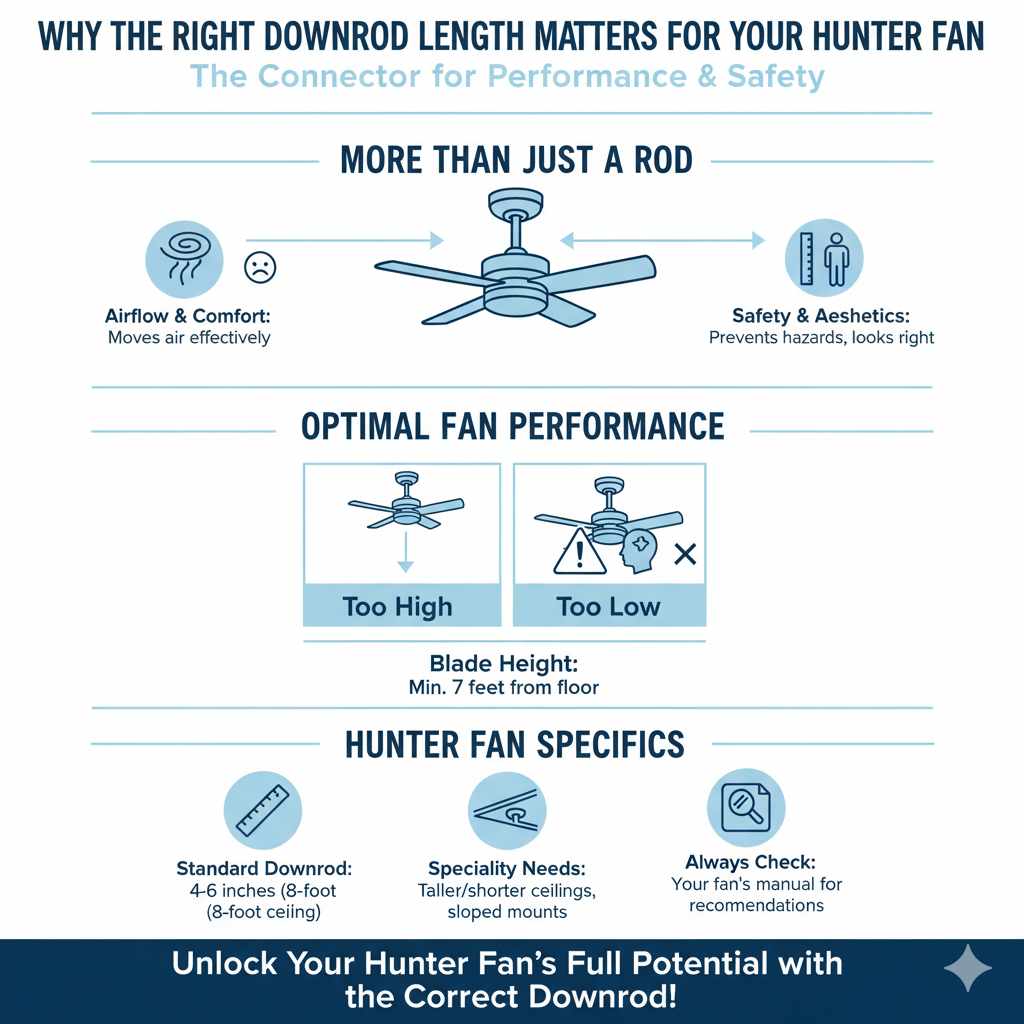
Think of the downrod as the connector between your ceiling and your Hunter fan. It’s not just about aesthetics; it’s about performance and safety. A fan that’s too close to the ceiling won’t move air effectively, leaving you feeling less cool than you should be. On the flip side, a fan that hangs too low can be a hazard, especially in rooms with standard or lower ceilings. The ideal placement allows the fan blades to circulate air throughout the entire room, creating that refreshing breeze we all love. For Hunter fans, which are known for their quality and design, getting the downrod right is key to unlocking their full potential.
Understanding Ceiling Height and Fan Performance
The height of your ceiling is the biggest factor in determining the downrod length you’ll need. Different ceiling heights require different downrod lengths to achieve the optimal blade height. This optimal height ensures the fan can create proper airflow without being a safety concern. Generally, you want the fan blades to be at least 7 feet (about 2.1 meters) from the floor for safety reasons. This is a standard guideline from organizations like the U.S. Consumer Product Safety Commission (CPSC), which highlights safety in home appliances.
When a fan is mounted too high on a very tall ceiling, the air might not reach down to where you are, making it feel like the fan isn’t working effectively. Conversely, if it’s too low on a standard ceiling, you risk bumping into it or it might just look out of place. The downrod is the adjustable piece that helps you find that sweet spot.
Hunter Ceiling Fan Specifics
Hunter fans, like many other brands, come with a standard downrod, often around 4-6 inches. This is usually suitable for ceilings that are 8 feet (about 2.4 meters) high. However, if your ceiling is taller or shorter, or if you plan to mount the fan on a sloped ceiling, you’ll likely need a different downrod length. Hunter offers a range of downrod lengths specifically designed to work with their fans, ensuring compatibility and maintaining the fan’s warranty and performance standards. Always check your specific Hunter fan model’s manual, as it will often provide recommendations.
How to Measure for Your Hunter Fan Downrod
Taking accurate measurements is the first, and arguably most crucial, step in selecting the correct downrod. Grab a tape measure, and let’s get started. It’s a simple process, but precision here saves headaches later.
Step 1: Measure Your Ceiling Height
This is the most straightforward measurement. Stand a tape measure against the wall at the point where the ceiling meets the wall. Extend the tape measure to the ceiling. Record this measurement in feet and inches (or meters, if you prefer). Make sure to measure in a few spots if your ceiling isn’t perfectly flat, and use the highest point.
Step 2: Determine the Ideal Fan Blade Height
As mentioned, the general safety rule is to have the fan blades at least 7 feet (2.1 meters) from the floor. For optimal air circulation, most experts recommend the blades be between 8 and 9 feet (2.4 to 2.7 meters) from the floor. This range allows the fan to effectively move air down into the living space without being too close to the floor.
Step 3: Calculate the Required Downrod Length
This is where we put the measurements together. The calculation is:
(Ideal Fan Blade Height) – (Height of Your Hunter Fan from Mounting Point to Blade Bottom) = Required Downrod Length
The “Height of Your Hunter Fan from Mounting Point to Blade Bottom” can usually be found in your fan’s installation manual or on the manufacturer’s website. It’s the physical dimension of the fan motor housing and blade assembly. If you can’t find this, a good estimate is often around 12-18 inches for a standard fan, but always try to find the exact measurement for accuracy. Hunter fan manuals are excellent resources for this.
Example:
- Your ceiling height is 10 feet.
- You want the fan blades to be 8 feet from the floor.
- Your Hunter fan’s motor housing to blade bottom is 15 inches (1.25 feet).
- Distance from ceiling to blades needed = 10 feet (ceiling height) – 8 feet (desired blade height) = 2 feet (24 inches).
- Required Downrod Length = 24 inches (needed distance) – 15 inches (fan height) = 9 inches.
So, in this case, you would look for a 9-inch downrod for your Hunter fan. Remember, downrods are typically sold in standard lengths like 6, 12, 18, 24, 36, 48, 60, and 72 inches.
Choosing the Right Downrod Length for Your Ceiling Height
The chart below provides a helpful starting point for selecting a downrod length based on common ceiling heights. Remember to always factor in the fan’s specific dimensions and your desired blade height for the most accurate choice.
Table 1: Downrod Length Guide by Ceiling Height
| Ceiling Height | Recommended Downrod Length (for 8-9 ft blade height) | Notes |
|---|---|---|
| 8 feet (2.4 m) | 3-6 inches | Standard downrod often included with fan is usually sufficient. Ensure blades are at least 7 ft from floor. |
| 9 feet (2.7 m) | 12-18 inches | Allows fan to hang lower for better air circulation. |
| 10 feet (3.0 m) | 18-24 inches | Crucial for bringing airflow down to living level. |
| 11 feet (3.3 m) | 24-36 inches | Longer downrods are needed for higher ceilings. |
| 12 feet (3.6 m) | 36-48 inches | Consider the fan’s visual scale; ensure it doesn’t look too small. |
| 13 feet (3.9 m) and higher | 48 inches and up | May require custom or extra-long downrods. Check fan manual for maximum recommended length. |
Standard vs. Extended Downrods
Most Hunter ceiling fans come with a short downrod, typically 3 to 6 inches, suitable for standard 8-foot ceilings. These are often referred to as “flush mount” or “close to ceiling” installations when a downrod is even shorter or the fan is designed for direct mounting. If your ceiling is higher than 8 feet, you’ll need an extended downrod. These are available in various lengths, allowing you to fine-tune the fan’s position. It’s important to use Hunter-approved downrods to ensure they are compatible with your fan’s wiring and mounting system.
Special Considerations: Sloped or Vaulted Ceilings
Mounting a ceiling fan on a sloped or vaulted ceiling requires a bit more attention. Many Hunter fans can be adapted for sloped ceilings using a special canopy and a longer downrod. The angle of the slope will influence the downrod length needed to ensure the fan hangs straight and the blades don’t hit the ceiling. Hunter offers sloped ceiling adapters for many of their models. You’ll want to ensure the downrod is long enough so that the fan canopy sits flush against the angled ceiling without gaps. A good rule of thumb is that the fan should hang vertically, perpendicular to the floor, regardless of the ceiling angle. The Department of Energy also offers great tips on maximizing ceiling fan efficiency, which includes proper placement.
Hunter Downrod Compatibility and Installation
Not all downrods are created equal, and using the correct one with your Hunter fan is vital for safety and performance. Hunter designs their fans and accessories to work together seamlessly.
What Downrods Work with Hunter Fans?
Generally, you should use downrods specifically designed and sold by Hunter for your particular fan model or series. These downrods are engineered to match the fan’s weight, motor size, and electrical connections. They typically come with pre-drilled holes for set screws and a ball joint at the top that fits into the fan’s mounting bracket. While some universal downrods might appear similar, they may not meet Hunter’s safety or quality standards. Always check your fan’s manual or Hunter’s website for recommended accessories. If you have an older Hunter fan, you might need to check their legacy parts or contact customer support.
Installing a Hunter Ceiling Fan Downrod
Installing a downrod is usually part of the overall ceiling fan installation process. Here’s a general overview:
- Prepare the Fan: Lay the fan motor assembly on a clean, flat surface.
- Attach the Downrod to the Motor: Most Hunter fans have a downrod that screws into the top of the motor housing or attaches via a clevis pin and cotter pin. Feed the fan’s wires through the downrod. Secure the downrod to the motor assembly using the provided hardware (screws, pins, etc.). Ensure it’s snug and secure.
- Attach the Canopy: Slide the decorative canopy (the piece that covers the ceiling bracket) and the canopy trim ring (if applicable) onto the downrod before attaching the downrod to the motor.
- Hang the Fan: Carefully lift the fan assembly to the ceiling mounting bracket. The ball joint at the top of the downrod should fit securely into the slot in the mounting bracket.
- Wire the Fan: Connect the fan’s wires to the house wiring according to the fan’s manual and local electrical codes.
- Secure the Canopy: Slide the canopy up to the ceiling to cover the mounting bracket and electrical connections. Secure it in place, usually with screws.
Important Safety Tip: Always turn off the power to the fan circuit at your breaker box before starting any electrical work. If you’re unsure about electrical wiring, it’s best to consult a qualified electrician.
Downrod Accessories: Canopy and Trim
When you install a longer downrod, you might need a different canopy or trim piece. The standard canopy that comes with your fan might not be designed to accommodate the longer downrod or to sit flush against a sloped ceiling. Hunter offers specific canopies and sloped ceiling adapters that are designed to work with their extended downrods. These ensure a clean, professional finish and proper fit, especially on angled ceilings. Make sure to purchase compatible accessories to avoid gaps or an unfinished look.
Troubleshooting Common Downrod Issues
Even with careful planning, you might run into a snag. Here are some common issues and how to fix them.
Fan Wobbling
Wobbling is a common ceiling fan problem, and while it’s often due to unbalanced blades, an improperly installed or too-long downrod can also contribute. Ensure the downrod is securely fastened at both the motor end and the ceiling bracket. If the downrod is excessively long for the fan’s weight, it can introduce instability. Make sure you’re using the correct length for your ceiling height and fan size. Sometimes, simply tightening all screws related to the downrod and mounting bracket can resolve wobbling.
Inadequate Airflow
If your Hunter fan isn’t moving enough air, the downrod length is a prime suspect. If the fan is too close to the ceiling, the blades can’t effectively draw air down and push it outwards. Conversely, if it’s hanging extremely low in a very large room, the airflow might not reach the occupants. Re-evaluate your measurements and the ideal blade height. You might need to switch to a different downrod length to improve circulation.
Electrical Wire Length
Longer downrods mean longer wire runs from the ceiling box to the fan motor. Most Hunter fans come with sufficient wire length for their standard downrods. However, if you’re using a very long downrod (36 inches or more), you might find that the provided wires are too short. In such cases, you may need to splice in additional lengths of appropriate gauge wire. This is an electrical task, so if you’re not comfortable with it, hire an electrician. Ensure any splices are properly insulated and secured within the downrod or canopy.
Downrod Material and Durability
Hunter ceiling fan downrods are typically made from durable metal, such as steel, to ensure they can safely support the weight of the fan. The finish of the downrod usually matches the finish of the fan (e.g., brushed nickel, bronze, white) for a cohesive look. Hunter prioritizes quality, so their downrods are built to last and withstand the constant rotation and vibrations of a ceiling fan. When purchasing a replacement or extension downrod, ensure it’s an official Hunter part or a reputable third-party accessory specifically listed as compatible with your fan model. This ensures the material strength and finish quality align with your expectations.
Hunter Downrod Finishes and Styles
Hunter offers a variety of finishes for their downrods to complement their diverse fan designs. Common finishes include:
- Brushed Nickel
- Polished Nickel
- Bronze (various shades like Venetian, Oil-Rubbed)
- Matte Black
- White
- Chrome
The finish is important for the overall aesthetic of your room. A shiny chrome downrod might look out of place on a fan with a rustic bronze finish. Always try to match the downrod finish to your fan’s hardware and the room’s decor for a polished look. Some downrods also come with a slightly different texture or sheen to perfectly match a specific fan collection.
Weight Considerations
Ceiling fan downrods are designed to handle the specific weight of Hunter ceiling fans. The weight capacity is a critical safety factor. Using a downrod that is not rated for the weight of your fan could lead to catastrophic failure, posing a serious safety risk. Hunter downrods are tested to ensure they meet the demands of their fan models. If you are replacing a downrod or using an extension, verify that the new downrod is rated for your fan’s weight. Information on fan weight and downrod compatibility can usually be found in the fan’s manual or on Hunter’s support pages.
Where to Buy Hunter Ceiling Fan Downrods
Finding the right Hunter downrod is usually straightforward. You have several reliable options:
Hunter Official Website and Retailers
The most direct way to ensure you’re getting an authentic Hunter product is to purchase from the official Hunter Fan Company website. They list all available accessories, including downrods in various lengths and finishes. Many authorized online retailers and large home improvement stores also carry Hunter fans and their accessories. These include major chains like Home Depot, Lowe’s, and Amazon, though always double-check that the seller is reputable and the product is genuine.
Online Marketplaces and Specialty Stores
Beyond the major retailers, you can find Hunter downrods on various online marketplaces. Specialty lighting and ceiling fan stores, both online and brick-and-mortar, are also excellent resources. These stores often have knowledgeable staff who can help you identify the correct part for your specific Hunter fan model. When buying from less familiar online sources, look for customer reviews and clear return policies.
Cost of Hunter Downrods
The price of a Hunter downrod can vary depending on its length, finish, and whether it’s a standard or specialized part (like for a sloped ceiling). Generally, you can expect to pay anywhere from $15 to $50 or more for a Hunter downrod. Shorter downrods and those with common finishes tend to be less expensive, while extra-long downrods (48 inches and above) or those with unique finishes can command a higher price. Remember that this is a small investment for ensuring your fan operates safely and effectively.

Frequently Asked Questions (FAQ)
Q1: How do I know if my Hunter ceiling fan needs a different downrod?
A: You likely need a different downrod if your ceiling height is significantly different from 8 feet, if the fan blades are less than 7 feet from the floor, or if you want to improve air circulation. Check your fan’s manual for its recommended height and how it measures from the mounting point to the blades.
Q2: Can I use a downrod from a different brand with my Hunter fan?
A: It’s strongly recommended to use Hunter-branded downrods with Hunter fans. They are designed for compatibility in terms of size, threading, weight support, and electrical wire routing. Using a non-Hunter downrod could compromise safety and void your fan’s warranty.
Q3: What is the standard downrod length that comes with most Hunter fans?
A: Most Hunter ceiling fans include a standard downrod that is 3 to 6 inches long. This is typically suitable for 8-foot ceilings.
Q4: My ceiling is sloped. Can I still use a downrod?
A: Yes, many Hunter fans can be used on sloped ceilings with the correct sloped ceiling adapter and a downrod of appropriate length. The downrod helps ensure the fan hangs vertically and doesn’t hit the ceiling. Check your fan model’s specifications for sloped ceiling compatibility.
Q5: How do I measure the fan’s height from the mounting point to the blade bottom?
A: This measurement is usually found in your Hunter fan’s installation manual. It’s the physical distance from where the downrod connects to the fan motor housing down to the lowest point of the fan blades.
Q6: What happens if my downrod is too short?
A: If your downrod is too short, the fan will be mounted too close to the ceiling. This significantly reduces airflow efficiency, as the blades won’t be able to circulate air effectively throughout the room. It can also look visually unbalanced.
Q7: What happens if my downrod is too long?
A: If your downrod is too long, the fan will hang too low. This can be a safety hazard, especially in rooms with standard ceiling heights, as people could hit their heads on the blades. It can also make the fan look out of proportion with the room.
Conclusion
Choosing the correct downrod for your Hunter ceiling fan is a critical step towards ensuring optimal performance, safety, and aesthetic appeal. By understanding your ceiling height, the fan’s dimensions, and the basic principles of airflow, you can confidently select the perfect downrod length. Whether you have a standard 8-foot ceiling or a grand vaulted space, Hunter offers solutions to get your fan installed just right. Remember to always prioritize safety by turning off power before installation and consulting your fan’s manual. With the right downrod, your Hunter ceiling fan will provide years of comfortable cooling and stylish illumination, making your home a more enjoyable place to be.