Engineered Wood vs Plywood: Essential Choice
Engineered wood is generally stronger, more stable, and versatile than plywood for many projects, while plywood offers a good balance of strength and affordability for general use.
Choosing the right wood panel for your project can feel like navigating a maze, especially when you’re just starting out. You’ve probably stood in the lumber aisle, eyeing those large sheets of wood, wondering which one is best for your DIY dreams. Will it hold up? Will it warp? These are common questions, and understanding the difference between engineered wood and plywood is key to building with confidence. Don’t worry, we’ll break it down simply, guiding you through the essentials so you can make the perfect choice for your next creation. Get ready to build with clarity!
Understanding Wood Panels: The Basics
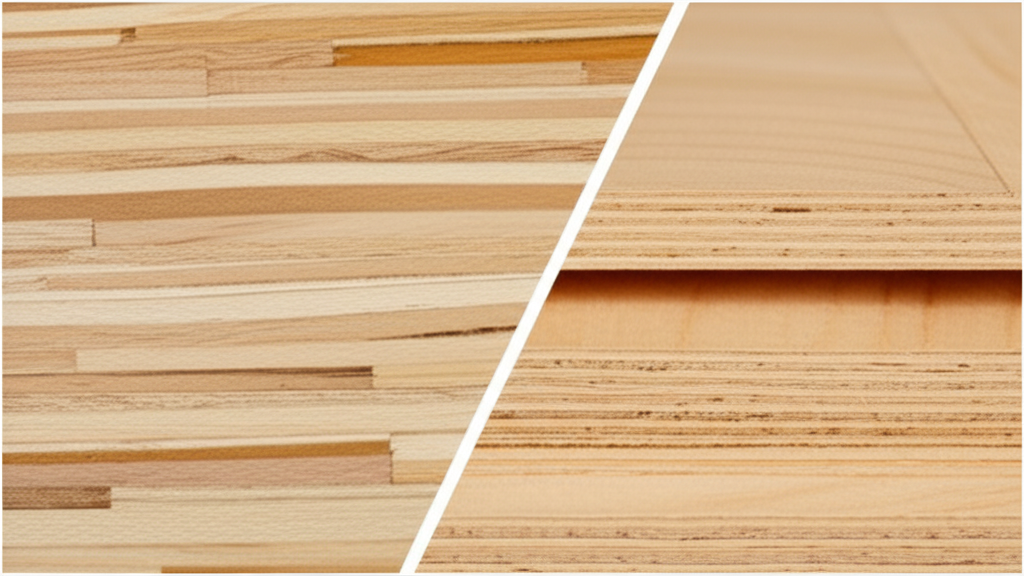
When we talk about wood panels for DIY projects, we’re usually referring to manufactured wood products. Unlike solid lumber, which comes directly from a tree trunk, these panels are made by bonding together wood fibers, veneers, or particles. This process allows manufacturers to create large, stable, and often more affordable sheets than you could get from solid wood. They’re the backbone of countless furniture pieces, cabinets, subflooring, and structural components in homes.
The primary difference between the types of engineered wood and plywood lies in how the wood is processed and bonded. This fundamental difference impacts their strength, stability, appearance, and cost. For beginners, understanding these distinctions means less guesswork and more successful projects. It’s about picking the right tool for the job, and in this case, the right wood panel is crucial.
What is Plywood?
Plywood is one of the most common wood panels you’ll encounter. It’s made by peeling thin sheets of wood veneer from a log. These thin layers, called veneers, are then glued together with the grain of each layer running in a different direction. Typically, plywood is made with an odd number of layers, with the outer layers usually being of higher quality. This cross-graining construction is what gives plywood its strength and stability.
Think of it like a sandwich where each slice of bread (veneer) is turned a different way. This alternating grain direction makes plywood less likely to shrink, swell, or crack compared to solid wood. It’s also quite strong across its surface. Plywood comes in various grades, thicknesses, and types of wood, making it suitable for a wide range of applications, from furniture making to construction.
How Plywood is Made
The process of making plywood is fascinating and relies on precise engineering.
- Log Preparation: Large logs, often from specific tree species like fir, pine, or birch, are selected. They are debarked and then softened, usually with steam or hot water, to make peeling easier.
- Peeling or Slicing: The softened logs are mounted on a lathe and rotated against a sharp knife, which peels off a continuous thin sheet of wood veneer. This is like unrolling a giant paper towel, but from wood!
- Drying: The peeled veneers are dried to a specific moisture content. This is a critical step to prevent issues like warping or delamination later on.
- Gluing: The dried veneers are coated with adhesive, typically a strong synthetic resin like urea-formaldehyde (UF) or phenol-formaldehyde (PF), depending on the intended use (e.g., indoor vs. outdoor).
- Stacking: The glued veneers are stacked in alternating directions. The grain of each layer is perpendicular to the grain of the layer below it. This cross-graining is the secret to plywood’s strength.
- Pressing: The stacked veneers are placed into a large hydraulic press. Under high heat and pressure, the glue cures, bonding the layers into a single, solid panel.
- Finishing: After pressing, the panels are trimmed to size, sanded smooth, and sometimes further processed, like adding a decorative face veneer or making specific cuts.
What is Engineered Wood?
The term “engineered wood” is actually a broader category that includes plywood. However, when people compare “engineered wood vs. plywood,” they often mean other types of engineered wood like Medium Density Fiberboard (MDF), Particleboard (Chipboard), and Oriented Strand Board (OSB). These panels are also made by bonding wood materials together, but the type of wood material and the way it’s bonded differs significantly from plywood.
These materials are engineered to have specific properties, often to overcome some limitations of solid wood or to provide cost-effective alternatives. They are created using wood fibers, particles, or strands, mixed with adhesives and pressed into sheets. The key is that they are “engineered” to perform in particular ways.
Types of Engineered Wood (Beyond Plywood)
Let’s explore some common types of engineered wood you’ll likely encounter:
Medium Density Fiberboard (MDF)
What it is: MDF is made from wood fibers that are broken down into tiny particles and then bonded together with wax and resin under high temperature and pressure. It has a very fine, uniform texture.
Pros: Extremely smooth surface, no grain pattern, easy to paint or veneer, holds edges well, consistent density.
Cons: Can be heavy, susceptible to moisture damage, can chip or break if not handled carefully, requires specialized dust collection when cutting due to fine dust.
Common Uses: Furniture (especially painted cabinets and shelves), moldings, decorative panels, speaker enclosures.
Particleboard (Chipboard)
What it is: Particleboard is made from wood chips, shavings, and sawdust that are bonded together with resin. It’s generally less dense and has a coarser texture than MDF.
Pros: Economical, lightweight compared to MDF, good for applications where strength isn’t paramount.
Cons: Low strength, easily damaged by moisture, screws don’t hold well, tends to crumble.
Common Uses: Core material for laminate flooring, subflooring in some applications, inexpensive furniture substrates, shelving where load is minimal.
Oriented Strand Board (OSB)
What it is: OSB is made from large, thin strands or wafers of wood that are arranged in cross-oriented layers, similar to plywood, and bonded with adhesives under heat and pressure.
Pros: Strong, rigid, good structural integrity, often more affordable than plywood, available in large sheets.
Cons: Rough surface can be difficult to finish smoothly, susceptible to moisture damage if not sealed, can have a “chipboard” appearance.
Common Uses: Subflooring, wall sheathing, roof decking in construction.
Engineered Wood vs. Plywood: The Key Differences
Now that we have a good grasp of what each material is, let’s directly compare engineered wood (focusing on MDF, particleboard, and OSB) against plywood. The differences are crucial for making the right choice.
Here’s a breakdown of their characteristics:
| Feature | Plywood | MDF | Particleboard | OSB |
|---|---|---|---|---|
| Composition | Thin wood veneers glued in alternating grain directions. | Wood fibers bonded with resin. Very fine and uniform. | Wood chips, shavings, and sawdust bonded with resin. Coarser. | Wood strands/wafers arranged in oriented layers, bonded with resin. |
| Strength | High, especially across the face and with proper grading. Good shear strength. | Good structural integrity, but can be brittle and chip. Less shear strength than plywood. | Low to moderate. Prone to breaking. | High strength and rigidity, comparable to plywood in structural applications. |
| Stability (Moisture/Temperature) | Good, less prone to warping than solid wood due to cross-graining. | Poor. Swells significantly with moisture and can lose integrity. Needs sealing. | Very poor. Swells and degrades easily with moisture. | Good structural stability in dry conditions, but can swell if exposed to moisture. |
| Surface Finish | Can range from rough to smooth, often shows wood grain. | Extremely smooth and uniform, ideal for painting or veneering. | Rough, often shows visible chips. Needs laminate or veneer for a good finish. | Rough and textured, not ideal for fine finishes. |
| Edge Stability | Edges are strong and can hold screws well. | Edges are dense and can be routed and shaped cleanly, but can chip. | Edges are weak and crumble easily; screws don’t hold well. | Edges are generally strong but can be rough. |
| Workability | Cuts cleanly with sharp blades. Can splinter if not careful. | Cuts very cleanly, but produces very fine dust. Requires sharp blades. | Can be difficult to cut cleanly; prone to chipping and crumbling. | Cuts well but can dull blades faster due to resins. |
| Cost | Moderate. Varies greatly by grade and wood species. | Generally more affordable than high-grade plywood. | Typically the most affordable option. | Often more affordable than comparable plywood grades for structural use. |
| Weight | Moderate. Varies by wood species and thickness. | Heavy due to its density. | Lighter than MDF, but heavier than some plywoods. | Moderate to heavy. |
| Typical Uses | Furniture, cabinetry, subflooring, wall paneling, general construction. | Cabinetry, furniture carcasses, decorative trim, shelving, painted projects. | Substrates for laminates, inexpensive shelving, core material. | Structural sheathing (walls, roofs), subflooring. |
Choosing the Right Panel for Your Project
The “best” choice between engineered wood and plywood really depends on what you’re building. As a beginner, it’s helpful to think about the demands of your project.
When to Choose Plywood
Plywood is a fantastic all-rounder, and often the go-to for many DIYers.
- Structural Applications: If you’re building something that needs to bear weight or withstand stress, like a workbench, cabinet carcasses, or subflooring, plywood is a great choice. Its layered construction gives it excellent strength and rigidity.
- Furniture Making: For cabinet doors, shelves, tabletops, and even the main structure of furniture, plywood offers a good balance of strength, stability, and a decent surface finish. Higher grades of plywood (like birch or oak plywood) can even be used for visible surfaces that you want to stain or clear-coat.
- Projects Requiring Screw Holding Power: Plywood generally holds screws better than MDF or particleboard, especially along the edges.
- When Some Wood Grain is Desired: If you like the natural look of wood grain and plan to stain or clear-coat your project, plywood provides that authentic aesthetic.
For construction applications, you can learn more about wood products from resources like the U.S. Forest Products Laboratory, which conducts extensive research on wood properties and performance.
When to Choose Other Engineered Woods (MDF, Particleboard, OSB)
These materials have specific advantages for certain applications.
- MDF for Smooth, Paintable Surfaces: If your project involves a lot of intricate routing, or if you plan to paint the final piece a smooth, flawless finish, MDF is often superior. Think of kitchen cabinet doors, decorative panels, or picture frames. Its uniform density means it won’t splinter like plywood can when routed. However, remember its susceptibility to moisture.
- Particleboard for Budget Projects (with caution): Particleboard is the most economical option. It’s best suited for projects where it won’t be subjected to much stress or moisture, and where a laminate or melamine surface will be applied. Think of the core of a laminate countertop or the back panel of a cheap bookcase. Its poor screw-holding ability and tendency to swell are significant drawbacks for many DIY projects.
- OSB for Structural Sheathing: For construction tasks like wall sheathing, subflooring, or roof decking, OSB is a cost-effective and structurally sound choice. Its large strands and cross-oriented layers provide good strength and stability for these framing applications. It’s not typically used for fine woodworking or furniture.
Working with Plywood: Tips for Beginners
Plywood is generally forgiving for beginners, but a few tips can make your experience even better.
Cutting Plywood
Use a Sharp Blade: This is crucial! A sharp blade, preferably a fine-tooth plywood blade, will prevent tear-out and splintering.
Support the Plywood: Ensure the plywood is well-supported on both sides of your cut line. Use a straight edge or clamp a guide to your workpiece for a clean, straight cut.
Cut with the Good Side Down: For cuts made with a circular saw or table saw, place the “good” or finished side of the plywood facing down. This way, any minor tear-out on the cut edge will be on the underside of your project.
Scoring the Cut Line: For an extra-clean cut, you can score the cut line with a utility knife or by making a shallow pass with your saw before making the full cut.
Drilling and Fastening
Pilot Holes: Always drill pilot holes before driving screws, especially near the edges, to prevent the plywood from splitting.
Screw Length: Use screws that are long enough to get good grip but not so long that they go through the other side of the panel.
Edge Gluing: When joining edges, use a good quality wood glue and clamps. Plywood glue lines are strong.
Working with MDF: Tips for Beginners
MDF requires a slightly different approach due to its composition.
Cutting MDF
Dust Collection is Key: MDF dust is very fine and can be harmful if inhaled. Always use a dust mask and good dust collection systems when cutting or sanding MDF.
Use Carbide-Tipped Blades: MDF is abrasive due to the glues used. Carbide-tipped blades will stay sharp longer. Fine-tooth blades are still recommended for a clean cut.
Support and Guides: Just like with plywood, support your MDF well and use guides for straight cuts.
Drilling and Fastening
Pilot Holes and Countersinking: Pilot holes are essential. Countersinking is also recommended so screw heads sit flush.
Screw Holding: While MDF holds screws reasonably well in the face, it can be weaker on the edges. Longer screws or specialized MDF screws can help. Consider using wood glue in addition to screws for stronger joints.
* Router Bits: MDF is excellent for routing, but use sharp bits and don’t push too hard to avoid chipping.
Project Ideas: Where Each Panel Shines
Let’s look at some practical project ideas to help you visualize when to use each type of panel.
Projects Perfect for Plywood
- Workshop Shelving: Sturdy, durable, and can hold significant weight.
- Simple Bookcase: Plywood provides strength for the shelves and sides.
- Workbench Top: Multiple layers of plywood glued together create a very robust work surface.
- Cabinet Carcasses: The structural integrity of plywood is ideal for the main boxes of cabinets.
- Outdoor Furniture (Exterior Grade Plywood): Certain exterior-grade plywoods are designed to withstand moisture.
Projects Perfect for MDF
- Painted Cabinet Doors: The smooth surface takes paint beautifully.
- Decorative Wall Panels: Can be routed with intricate designs.
- Picture Frames: Easy to cut, route, and paint.
- Speaker Boxes: Its density helps dampen vibrations for better sound quality.
- Office Furniture Carcasses: Where smooth, painted or laminated surfaces are desired and moisture isn’t a major concern.
Projects Perfect for Particleboard
- Substrate for Laminate Flooring: Its primary use, where it’s covered by a durable wear layer.
- Temporary Shelving: For light-duty storage where appearance and longevity aren’t critical.
- Back Panels for Cabinets/Furniture: Often used as a thin, inexpensive backing.
Projects Perfect for OSB
- Shed Construction: For walls and roofing where a smooth finish isn’t needed.
- Garage Shelving: For utilitarian storage that doesn’t require a fine finish.
- DIY Playhouses (Exterior): As structural sheathing, provided it’s sealed against the elements.
Frequently Asked Questions (FAQ)
Here are some common questions beginners have about engineered wood and plywood:
Q1: Which is stronger, plywood or MDF?
A1: Plywood is generally stronger and more resistant to bending and breaking than MDF, especially under shear stress. MDF is strong due to its density, but it can be brittle and chip more easily.
Q2: Can I paint MDF or plywood?
A2: Yes, both can be painted. MDF provides a smoother, more uniform surface for painting, often resulting in a flawless finish. Plywood can also be painted, but you might see the wood grain through the paint, and edge treatment might be needed to prevent splintering.
Q3: Which is better for kitchen cabinets?
A3: For the cabinet boxes (carcasses), plywood is often preferred for its strength and screw-holding ability. For cabinet doors, MDF is excellent if you want a smooth, paintable finish, while high-grade plywoods (like birch) are great if you plan to stain or clear-coat them.
Q4: Is engineered wood waterproof?
A4: No, most common engineered woods (MDF, particleboard, and standard plywood) are not waterproof. They can swell and degrade when exposed to moisture. There are specific types of exterior-grade plywood and specially treated engineered wood products designed for moisture resistance, but standard versions should be protected from water.
Q5: Which is better for making furniture, plywood or particleboard?
A5: Plywood is significantly better for making furniture due to its superior strength, stability, and screw-holding capability. Particleboard is generally too weak and prone to damage for most furniture applications unless it’s used as a substrate for a laminate or veneer in very light-duty items.
Q6: What kind of blade should I use to cut plywood?
A6: For the cleanest cuts with minimal tear-out, use a fine-tooth plywood blade. A blade with 60-80 teeth for a 10-inch saw is a good starting point. Ensure your blade is sharp!
Conclusion: Making Your Informed Choice
So, you’ve learned that both plywood and other types of engineered wood are valuable materials in the world of woodworking. Plywood, with its layered veneer construction and cross-grained stability, stands out for its strength and versatility, making it a reliable choice for structural components and furniture that needs to last. On the other hand, materials like MDF offer a smooth, uniform surface perfect for painting and detailed work, while particleboard and OSB serve specific economical or structural roles in construction.
As you gain more experience, you’ll develop an intuitive sense for which panel suits which job. For now, remember to consider the demands of your project: Will it need to hold a lot of weight? Does it need a smooth, paintable surface? Will it be exposed to moisture? By asking these questions and understanding the properties we’ve discussed, you can confidently select the right wood panel. This knowledge will empower you to tackle your DIY projects with greater success and build beautiful, durable creations. Happy building!