How Bright Is A Table Lamp: Essential Guide
Quick Summary:
The brightness of a table lamp is measured in lumens, not watts. Look for lumen ratings on the bulb’s packaging. For reading, aim for 450-800 lumens. For general room light, 150-400 lumens per bulb is usually sufficient, but the overall room size and other light sources matter.
Ever squinted under a table lamp, wondering why it’s just not bright enough? Or maybe you’ve been blinded by one that’s way too intense for cozy evenings. Figuring out how bright a table lamp should be can feel like a puzzle, especially with all the talk about watts and lumens. But don’t worry, it’s simpler than you think! I’m here to guide you, just like we’re working on a project together in the workshop. We’ll break down exactly what makes a lamp bright and how to choose the perfect one for any spot in your home. Get ready to shed some light on this common home improvement question!
Understanding Light Brightness: Lumens vs. Watts
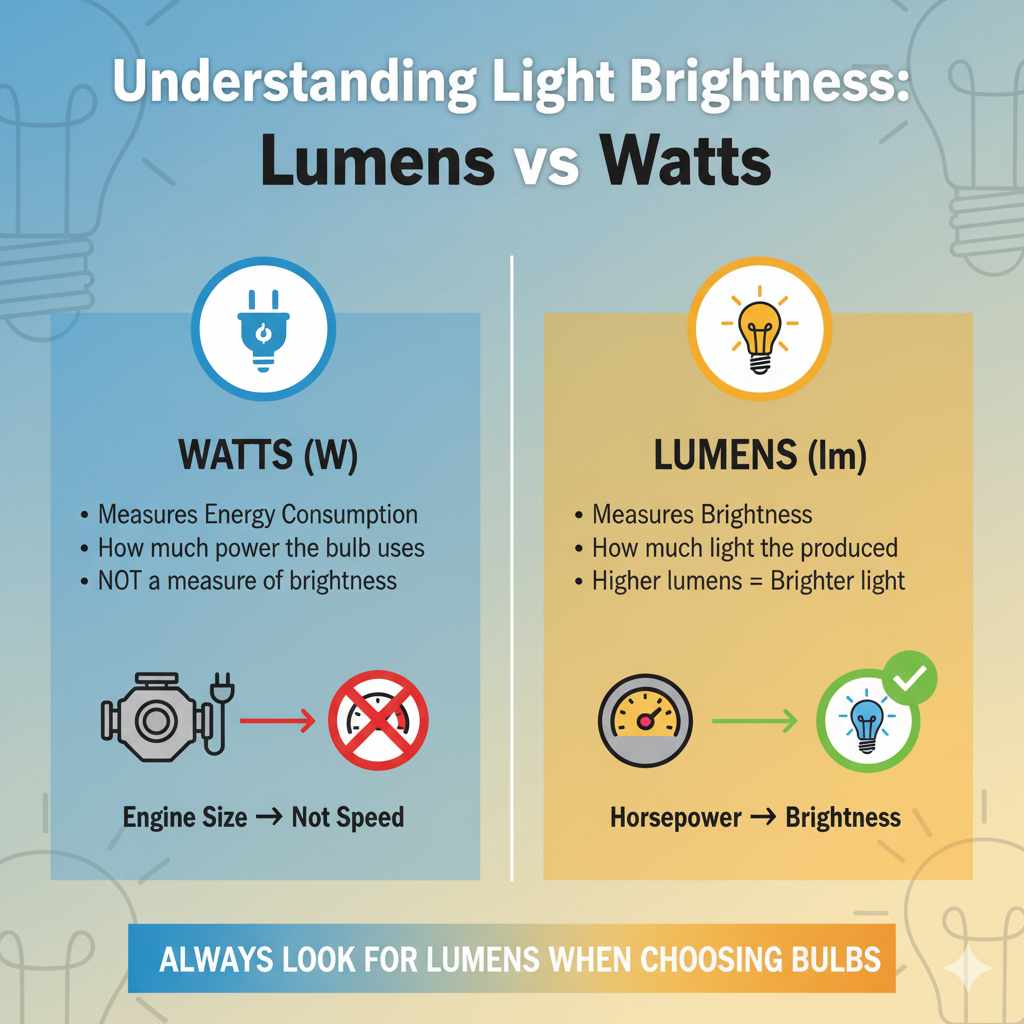
When we talk about how bright a light bulb is, we often hear the word “watts.” For a long time, watts were our go-to measure. Watts actually tell us how much energy a bulb uses, not how much light it gives off. Think of it like the engine size in a car – it uses more fuel, but doesn’t directly tell you how fast it goes. This is where lumens come in!
Lumens are the true measure of brightness. The higher the lumen count, the brighter the light. It’s like looking at the horsepower of an engine – that directly relates to how much power it has. So, when you’re shopping for bulbs or trying to understand your table lamp’s brightness, always look for the lumen (lm) number. This is the key to getting the light level you want.
Why Lamp Brightness Matters
The right amount of light from your table lamp can transform a space. Too dim, and it’s hard to read, work, or even just see clearly. This can lead to eye strain and make a room feel gloomy. Too bright, and the glare can be uncomfortable, ruining the cozy atmosphere you might be aiming for. Each spot in your home has a different purpose, and the brightness of the lamp should match that purpose.
For example, a lamp on your bedside table might be perfect for reading a book, requiring a bit more focused light. A lamp on an end table in the living room might be more for ambiance, needing a softer glow. Understanding the lumen output helps you achieve these specific lighting goals, making your home more comfortable and functional.
Factors That Influence Perceived Brightness
Even with the right lumen count, how bright a table lamp seems can be influenced by a few things. It’s not just about the bulb itself!
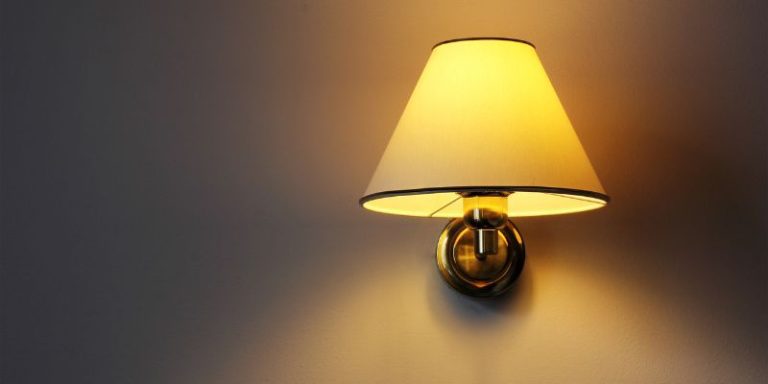
- Lampshade Material and Color: A thick, dark lampshade will absorb more light, making the lamp appear dimmer than one with a thin, white shade that allows light to pass through more easily.
- Bulb Type: Different types of bulbs (incandescent, LED, CFL) can emit light differently. LEDs, for instance, are very efficient and can provide bright light with less energy.
- Room Color and Size: Dark walls and furniture absorb light, making a room feel dimmer. Lighter colors reflect light, making the space feel brighter. A larger room will naturally require more light than a smaller one.
- Placement of the Lamp: A lamp placed in a corner might cast shadows, while one placed closer to where you need light will be more effective.
Determining the Right Lumen Level for Your Table Lamp
So, how bright should your table lamp be? It really depends on what you’ll be using it for. Here’s a general guide:
Task Lighting (e.g., Reading, Crafting, Desk Work)
When you need to focus your eyes on a specific task, you’ll want more light. This is often called task lighting.
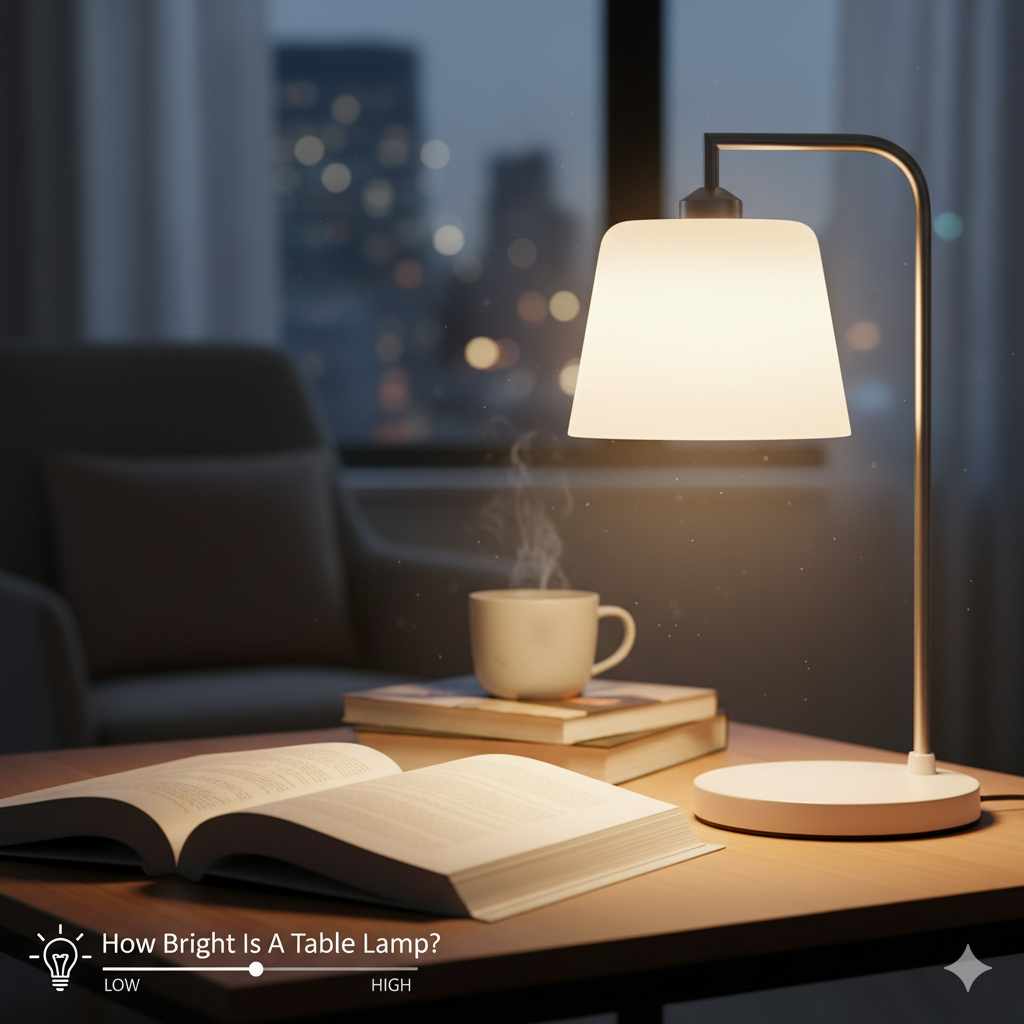
- Recommended Lumens: Aim for bulbs in the 450-800 lumen range for task lighting.
- Why: This level provides enough illumination to see details clearly without causing eye strain during prolonged activities like reading, knitting, or working on your computer.
- Consideration: For desks or craft areas, a directional lamp that can be positioned precisely over your work is ideal.
Ambient Lighting (e.g., General Room Illumination, Mood Setting)
Ambient lighting is the general, overall light in a room. Table lamps can contribute to this by providing a softer, more diffused glow.
- Recommended Lumens: For general ambient lighting, bulbs in the 150-400 lumen range are often suitable.
- Why: This range provides enough light to navigate the room comfortably and create a relaxed atmosphere. It’s less intense than task lighting, making it perfect for evenings or when you just want a gentle glow.
- Consideration: You might use multiple lamps with lower lumen bulbs scattered around a room to achieve a balanced ambient light rather than one very bright lamp.
Accent Lighting (e.g., Highlighting Decor)
Sometimes, a table lamp is used to draw attention to a specific object, like a piece of art or a plant. This is accent lighting.
- Recommended Lumens: The lumen output here can vary greatly, but often a bulb in the 50-300 lumen range is sufficient.
- Why: The goal is to highlight, not to overpower. The brightness should be enough to make the object stand out but not so bright that it distracts from the rest of the room.
- Consideration: The intensity needed will depend on the object itself and the surrounding light levels.
Table: Recommended Lumen Ranges for Table Lamps by Use Case
| Lamp Purpose | Typical Lumen Range (per bulb) | Description |
|---|---|---|
| Task Lighting (Reading, Desk Work, Crafts) | 450 – 800 lm | Provides focused, bright light for detailed activities to prevent eye strain. |
| Ambient Lighting (General Room Glow) | 150 – 400 lm | Offers soft, diffused light for overall illumination and creating a cozy atmosphere. |
| Accent Lighting (Highlighting Decor) | 50 – 300 lm | Used to draw attention to specific objects without being overpowering. |
Choosing the Right Bulb for Your Table Lamp
Once you know the lumen level you need, selecting the right bulb is the next step. The most common types you’ll find are LED, CFL, and Incandescent.
LED Bulbs
LED (Light Emitting Diode) bulbs are fantastic. They use very little energy, last a super long time, and come in a huge range of brightness and color temperatures. For home use, LEDs are almost always the best choice today.
- Pros: Energy efficient, long-lasting, durable, wide variety of options.
- Cons: Can have a higher upfront cost (though they save money over time).
- Tip: Look for the lumen (lm) rating on the packaging. You’ll also see color temperature, often measured in Kelvin (K). Lower K numbers (around 2700K) are warmer and cozier, while higher K numbers (around 5000K) are cooler and brighter, more like daylight.
CFL Bulbs (Compact Fluorescent Lamps)
CFLs were a popular energy-saving option before LEDs took over. They use less energy than incandescents but are not as efficient or long-lasting as LEDs.
- Pros: More energy-efficient than incandescent bulbs.
- Cons: Contain mercury (require careful disposal), can take a moment to reach full brightness, lifespan is shorter than LEDs.
- Note: While still available, LEDs are generally preferred for their superior performance and environmental benefits.
Incandescent Bulbs
These are the old-school bulbs that have been around forever. They are being phased out in many places because they use a lot of energy and don’t last very long. You’ll find them being replaced by LEDs.
- Pros: Low upfront cost, instant full brightness, warm light quality.
- Cons: Very inefficient, short lifespan, fragile.
- Note: If you have a very old fixture that specifically requires an incandescent bulb, you might still find them, but for most table lamps, you’ll want to use an LED.
When checking bulb packaging, you’ll usually see a comparison to traditional incandescent wattage. For example, a 60-watt equivalent LED bulb might only use 8-10 watts but produce around 800 lumens. Always prioritize the lumen number for brightness!
How to Measure and Test Your Table Lamp’s Brightness
You’ve got your table lamp and a new bulb. How do you know if it’s the right brightness? Here are a few practical ways:
- Check the Bulb Packaging: As we’ve discussed, the lumen (lm) rating is your primary guide. Compare it to the recommendations for your intended use.
- Observe the Light Pool: Turn on the lamp in the space where you plan to use it. Does the light pool on your book or desk adequately cover the area you need? Is it comfortable to look at?
- Consider the Room: Stand back and look at the lamp in context with the rest of the room. Does it provide a pleasing amount of light, or does it feel too harsh or too weak compared to other light sources?
- Use a Light Meter (Advanced): For a more precise measurement, you can use a light meter app on your smartphone or a dedicated device. Place the meter at your usual working or reading distance from the lamp and record the lux (lx) reading. Lux is the measurement of illuminance on a surface, and it’s related to lumens. A general rule of thumb is that 10.76 lux equals 1 lumen per square foot. For reading, you’d aim for around 300-500 lux. This is a more technical approach, but it can be helpful for getting things just right. The National Institute of Standards and Technology (NIST) offers resources on lighting standards and measurements.
Table Lamp Brightness by Room and Purpose
Let’s put it all together with some common scenarios:
| Room | Lamp Location | Primary Purpose | Recommended Bulb Lumens (per bulb) | Notes |
|---|---|---|---|---|
| Living Room | End Table | Ambient/Reading | 250-600 lm | Aim for a warmer color temperature (around 2700K) for a cozy feel. Use a shade that diffuses light well. |
| Bedroom | Bedside Table | Reading/Task | 450-800 lm | Adjustable brightness is a plus. Consider a lamp with a flexible neck for precise light direction. |
| Home Office/Study | Desk | Task Lighting | 600-1000 lm | A bright, focused light is crucial. A daylight color temperature (4000K-5000K) can help with alertness. Ensure it’s adjustable. |
| Hallway/Entryway | Console Table | Ambient/Accent | 150-400 lm | Provides a welcoming glow. Can also highlight artwork or a decorative item. |
| Kitchen | Countertop Spot | Task Lighting | 500-900 lm | Useful for specific prep areas if overhead lighting isn’t sufficient. Choose a cleanable shade. |
Troubleshooting Common Table Lamp Brightness Issues
Sometimes, even with the right bulb, a lamp just doesn’t seem to perform as expected. Here are a few things to check:
- The Bulb Isn’t the Right Wattage (or Lumen Equivalent): Double-check that you’re using a bulb with the lumen output you intended. Sometimes we grab the wrong bulb by mistake.
- The Lampshade is Too Opaque: A very thick or dark lampshade can significantly reduce the light output. Try a thinner or lighter-colored shade.
- The Lamp is Too Far Away: If the lamp is too far from where you need the light, it won’t be as effective. Try moving it closer.
- The Bulb is Loose: A simple fix, but ensure the bulb is screwed in tightly.
- The Lamp Fixture Itself is Dimming the Light: Some older or decorative fixtures might have internal components that slightly reduce brightness. This is less common but possible.
- You Need More Than One Lamp: For larger rooms or areas with multiple functions, a single table lamp might not be enough. Consider adding another lamp to supplement the light.
Safety First: Choosing and Using Table Lamps
As we work on our home projects, safety is always the top priority. When choosing and using table lamps, keep these points in mind:
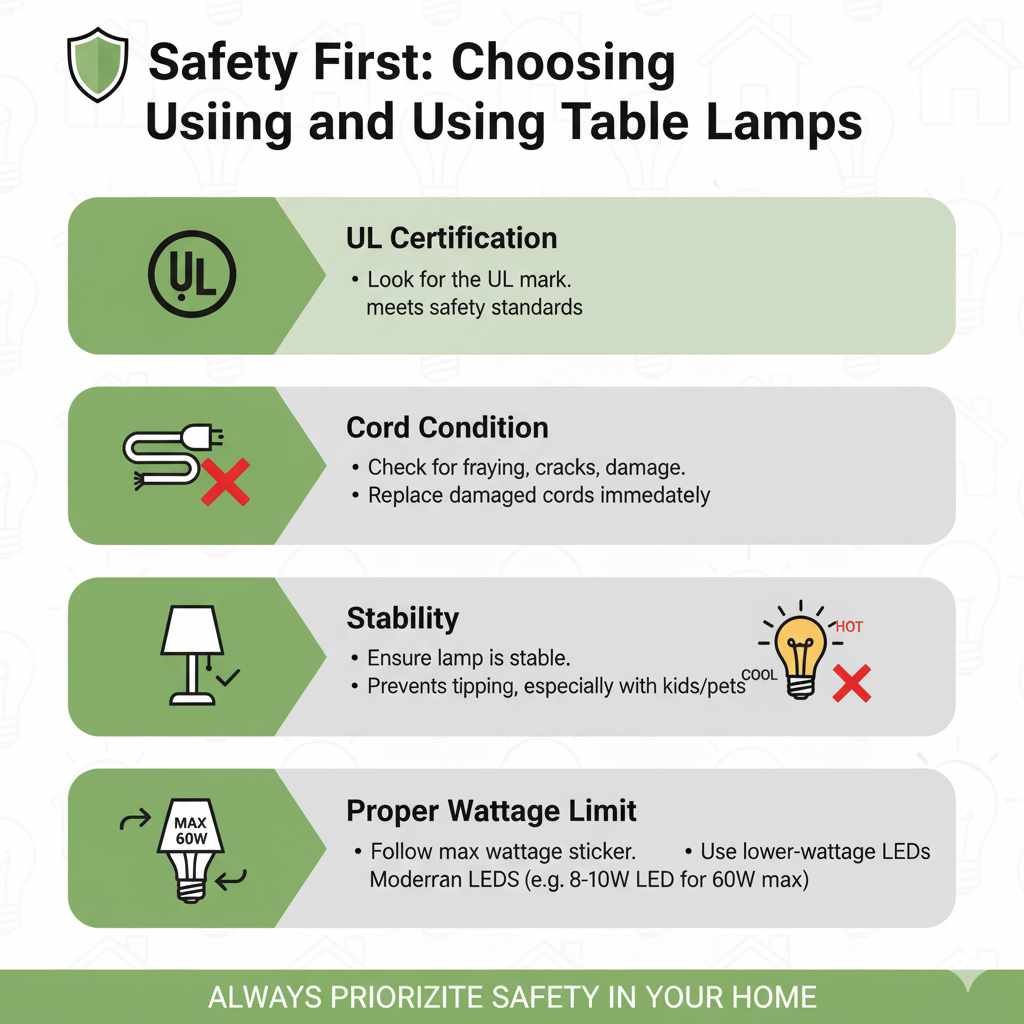
- UL Certification: Look for the UL (Underwriters Laboratories) mark on the lamp and its cord. This indicates the product has been tested and meets safety standards. You can learn more about product safety standards from organizations like UL Solutions.
- Cord Condition: Always check the lamp’s power cord for any fraying, cracking, or damage. A damaged cord is a fire hazard and should be replaced or the lamp should be discarded.
- Stability: Ensure the lamp is stable and won’t easily tip over, especially if you have children or pets.
- Heat: While modern LED bulbs produce very little heat, older incandescent bulbs can get quite hot. Keep flammable materials like curtains or paper away from the bulb.
- Proper Wattage Limit: Most lamps have a sticker indicating the maximum wattage bulb they can safely accommodate. Always adhere to this, even though you’ll be using lower-wattage LEDs with higher lumen outputs. For example, if it says “Max 60W,” you can use an LED bulb that is equivalent to a 60W incandescent (which will have a much lower actual wattage, perhaps 8-10W).
Frequently Asked Questions About Table Lamp Brightness
Here are some common questions people have about how bright a table lamp is:
Q1: What’s the difference between lumens and watts for a table lamp?
A1: Watts measure how much energy a bulb uses, while lumens measure how much light it produces. For brightness, always look at lumens (lm). Higher lumens mean a brighter light.
Q2: How many lumens do I need for a reading lamp?
A2: For reading, you’ll want a brighter light to prevent eye strain. Aim for a bulb that provides between 450 and 800 lumens.
Q3: Can I use a very bright bulb in a small table lamp?
A3: Yes, you can use a bright bulb (high lumens), but consider the lampshade and the room. A very bright bulb with a dark or thick shade will be diffused. If the shade is sheer, it might be too glaring. Also, ensure the lamp fixture itself can handle the heat if you’re not using an LED.
Q4: How do I make my table lamp brighter if it seems too dim?
A4: The easiest way is to swap the bulb for one with a higher lumen count. Also, check if the lampshade is absorbing too much light; a lighter, thinner shade will let more light through.
Q5: What lumen level is good for general room lighting with a table lamp?
A5: For general ambient light, a bulb in the 150-400 lumen range is usually sufficient. You might use multiple lamps with lower lumen bulbs to create a balanced glow throughout the room.
Q6: Do smart bulbs affect table lamp brightness?
A6: Smart bulbs function like regular bulbs in terms of their maximum lumen output. You can choose smart bulbs with different lumen ratings. Many smart bulbs also offer dimming features, allowing you to adjust the brightness as needed, which is very convenient.
Conclusion
Choosing the right brightness for your table lamp is all about understanding lumens and matching that to your needs. Whether you’re setting up a cozy reading nook, illuminating your workspace, or adding a touch of ambiance to your living room, knowing the lumen count is your secret weapon. Remember to look beyond the wattage, consider your lampshade, and always prioritize safety. With this guide, you’re well-equipped to select the perfect bulb and ensure your table lamp shines just right, making your home more comfortable, functional, and beautiful. Happy lighting!