How Do Tesla Door Handles Work: The Proven Secret Revealed for Homeowners
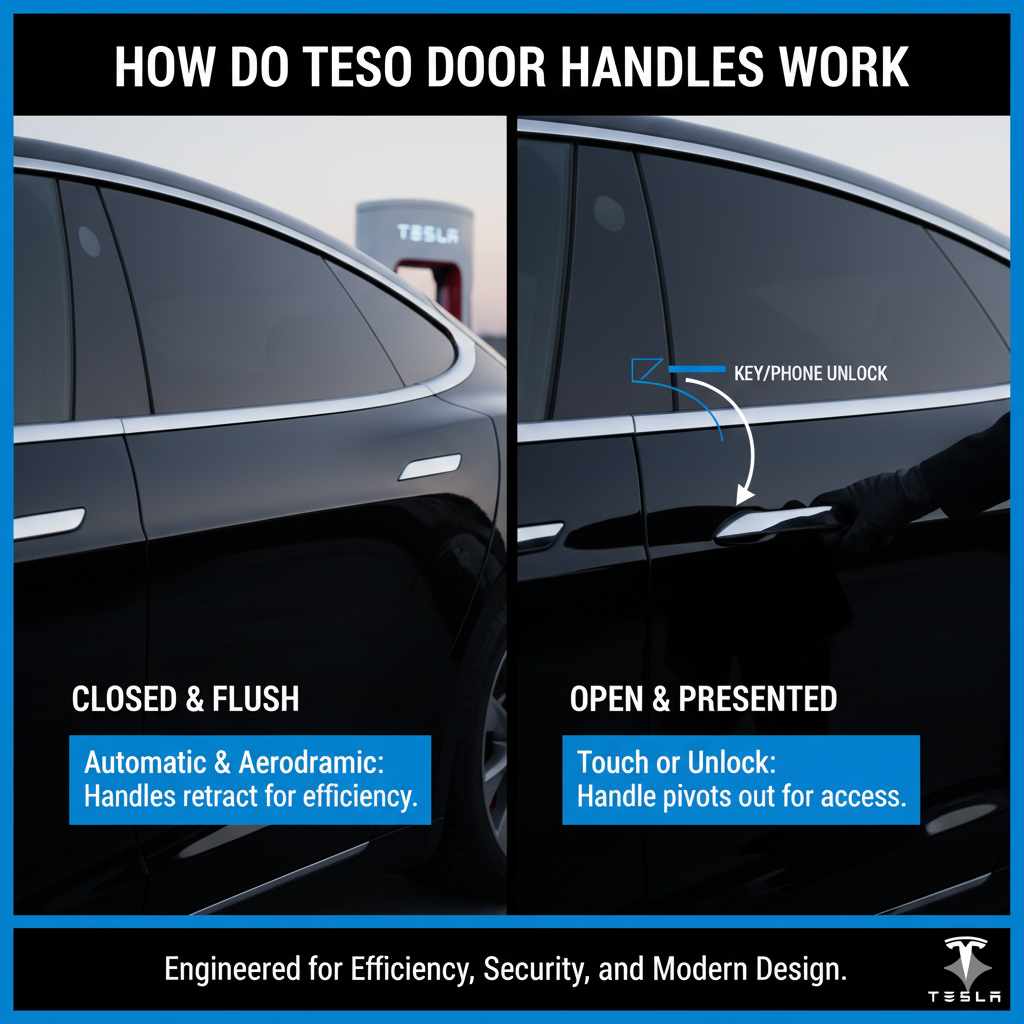
Tesla door handles work using an electrically controlled, flush-mounted mechanism. When unlocked, a small electric motor pushes the handle outward slightly, allowing you to pull it open. This patented design prioritizes aerodynamics and a sleek look when parked or locked.
Have you ever stood next to a sleek Tesla, admiring its clean lines, only to notice the door handles look like they are completely missing? It’s a common sight that makes many people wonder, “How on earth do those things open?” If you’ve ever felt a little stumped by this futuristic feature, you are not alone. It seems like magic, but I promise you, it’s just clever engineering. As someone who loves breaking down complex home mechanics into simple steps, I want to show you the straightforward technology behind this unique system. Forget complicated jargon; we are going to explore exactly what makes those handles pop out and how you can understand them without needing an engineering degree. Get ready to learn the simple secret!
The Mystery of the Flush Door Handle: Aerodynamics First
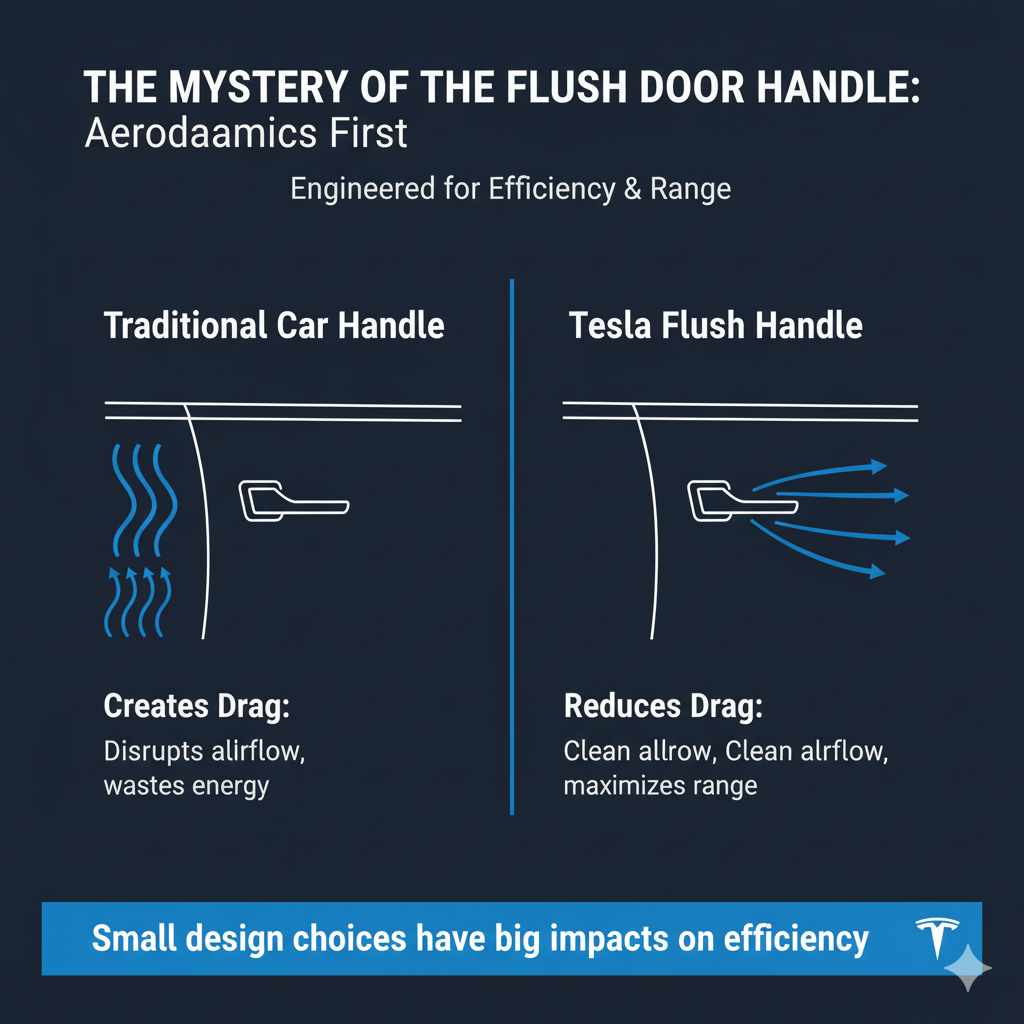
When you look at a Tesla, the first thing you notice—besides the lack of a grille—is how smooth everything is. This smoothness isn’t just for looks; it’s essential for performance. Every bump or protrusion on a car creates drag, which wastes battery power.
Why Tesla Uses Flush Handles
The main reason Tesla uses these unique handles is to improve the car’s coefficient of drag. Think of drag like air resistance slowing you down.
A smoother exterior means the air flows cleanly over the car’s surface. This small improvement adds up significantly when you are trying to maximize electric driving range. These handles stay tucked in tight against the body, virtually disappearing when the car is locked or parked.
In the world of automotive design, every tenth of a percent in drag reduction counts. For the DIY enthusiast, it’s a great lesson: small design choices have big impacts on efficiency, just like sealing a tiny gap in your window frame can save energy at home!
The Proven Secret: How the Mechanism Pops Out
So, the handle is tucked in. How does it know when to appear? This is where the “secret” lies, and it’s simpler than you might think. It relies on electrical signals and a small, dedicated actuator—essentially a tiny electric muscle.
Step 1: The Unlock Signal
The process begins long before your hand touches the handle. The car needs to know it’s safe to open the door.
- Key Detection: The Tesla key fob, or your paired smartphone (using Bluetooth Low Energy), communicates with the car.
- Authentication: The car confirms the signal is valid.
- Door Unlock Command: Once authenticated, the car’s Body Control Module (BCM) sends an electrical signal to the specific door assembly.
Step 2: The Actuator Takes Over
Once the electrical command reaches the door, the real work begins. This is the core of the mechanism.
Unlike traditional handles that are mechanically linked to a latch via cables or rods, the Tesla handle uses an electronic actuator.
An actuator is a device that converts an electrical signal into physical motion. Think of it like the small motor that moves your electric window or adjusts your electric side mirror.
- The electrical pulse triggers the actuator motor.
- This motor engages a gear or lever system directly attached to the handle assembly.
- The gear pushes the handle outwards, usually about half an inch to an inch, just enough for you to grip it securely.
Step 3: The Pull and Latch Release
Once the handle is proud of the body panel, you can pull it like a normal handle.
This physical pull (your action) completes the circuit. Pulling the now-extended handle activates a separate mechanical latch release—the same basic principle used in older cars to unhook the door from the frame.
It’s important to remember: the actuator only pushes the handle out. You still have to physically pull the handle to open the door.
Understanding the Components: What’s Inside?
To truly understand how they work, let’s look at the main parts involved. You don’t need to buy these parts (unless you are repairing one!), but knowing their names helps demystify the process.
| Component | Function | Analogy for Homeowners |
|---|---|---|
| Flush Handle Assembly | The visible exterior part that retracts. | The drawer pull that sits flush until you touch it. |
| Electric Actuator (Motor) | Receives the signal and pushes the handle out. | The tiny motor that opens an automatic garage door opener. |
| Door Latch Mechanism | The physical hook that holds the door shut. | The deadbolt or lock mechanism on your front door. |
| Body Control Module (BCM) | The car’s computer that sends the unlock command. | The smart hub that tells your smart lights when to turn on. |
What Happens When the Power Dies? The Manual Override
This is a crucial question for anyone concerned about reliability or power failures. If the battery dies completely, how do you get out of the car? Tesla, like all manufacturers, must comply with safety regulations that ensure occupants can exit in an emergency. You can find detailed safety procedures discussed by organizations like the National Highway Traffic Safety Administration (NHTSA) regarding vehicle egress in emergency situations, though specific Tesla instructions are best found in the owner’s manual.
Opening from the Outside (Manual Pull)
If the car battery is dead, the electric actuator cannot move. This is where the clever secondary mechanism comes into play.
Tesla has engineered a mechanical backup that activates when the electronic assist fails or when the driver manually unlocks the door using the internal door lock switch or a physical key card/fob.
If the car is completely shut down, you need to apply a firm, specific pull to the handle. This dedicated, stronger pull bypasses the electric assist and directly engages the mechanical latch release.
It often requires a slightly firmer tug than the normal electronic pop-out, which prevents accidental opening but ensures you can always exit.
Opening from the Inside (The Familiar Lever)
Inside the car, the process is entirely mechanical, similar to any traditional vehicle.
You simply grab the interior door handle lever and pull. This lever is directly connected to the latch mechanism via a robust cable. It works whether the car is on, off, or has zero battery life left.
This internal system is your guaranteed fail-safe. If you’re working on home projects and are fascinated by redundancy in design, this internal lever system is a perfect example of building a reliable backup.
The Electronics Behind the Pop: Wiring and Voltage
For those who enjoy tinkering with low-voltage electronics—and I know many of you reading this do—it’s helpful to know what kind of power is involved.
These systems run on the car’s standard 12-volt auxiliary battery system (even though the main battery is high-voltage). The signal sent to the actuator is a low-power command signal, telling the actuator motor when to spin.
Troubleshooting the Pop-Out (DIY Insight)
If a handle stops popping out, the problem is usually one of three things, and often, it’s related to cold weather, which affects lubrication and battery health.
- Battery Voltage: Low 12V battery power means the actuator doesn’t receive enough juice to push the handle out fully.
- Actuator Failure: The small motor or its internal gears have worn out or jammed.
- Wiring Interruption: A wire harness connecting the BCM to the actuator is damaged.
If you notice the handle only pops out sometimes, check your 12V battery health first! This is often the easiest fix. Maintaining good electrical connections is key to long-lasting DIY projects, whether it’s wiring up a new shop light or ensuring your car doors work correctly.
Comparing Tesla Handles to Traditional Car Handles
To really appreciate the Tesla design, let’s contrast it with what you are probably used to seeing on older cars or trucks.
| Feature | Tesla Flush Handle | Traditional Handle (e.g., Older Sedan) |
|---|---|---|
| Appearance (Locked) | Completely flush, near-invisible. | Stands proud of the body panel. |
| Opening Action | Electric push-out, followed by a mechanical pull. | Direct mechanical pull opens the door. |
| Primary Benefit | Aerodynamics and sleek styling. | Simplicity and low component cost. |
| Reliance on Power | High reliance on 12V power for deployment. | Low reliance; mechanical linkage works without power. |
Tips for Maintaining Your Tesla Handles (The Non-Woodworking Advice)
While I usually talk about sanding and jointing, maintaining these futuristic handles requires a different kind of care. Since they move less frequently, debris can sometimes cause sticking.
If you live in an area with heavy road salt, dust, or ice, pay special attention to the small gaps around the handle when it’s deployed.
- Cleaning: When the handle is extended, gently wipe the recessed area around the handle base to remove dirt and grit that might impede its retraction.
- Lubrication (Use Caution): If a handle seems sluggish, sometimes a very light application of a silicone-based lubricant (never heavy grease, which attracts dirt) around the moving edges can help—but always check your owner’s manual before applying any substance to moving electronic parts.
- Ice Removal: Never try to force a handle open if it’s frozen shut. Forcing it can break the actuator mechanism. Use a de-icer spray or warm air to gently thaw the area first.
The Psychology of Car Design: Why We Notice the Handles
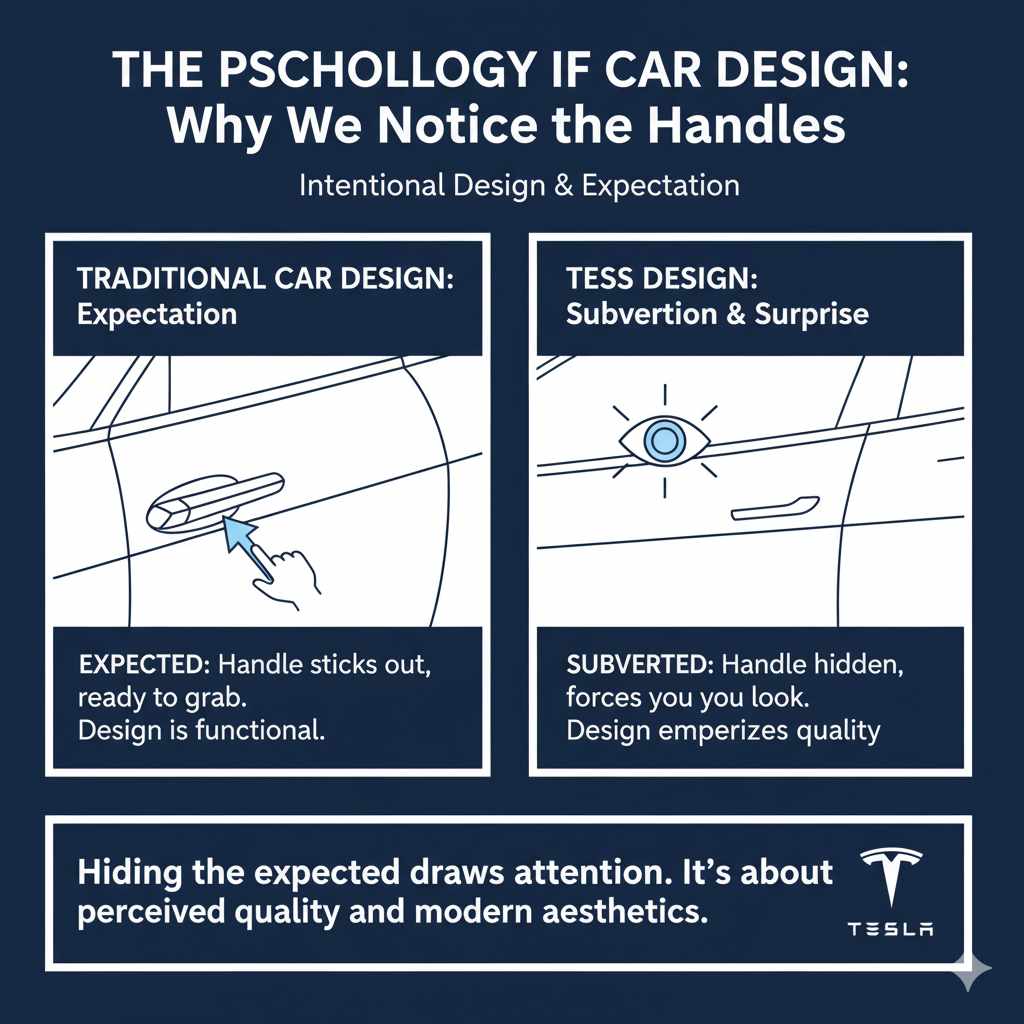
Why do these simple handles generate so much conversation? It comes down to expectation. In the world of cars, the door handle is one of the most consistent features. We expect it to be there, sticking out, ready to grab.
When Tesla removes that expectation, it forces us to look closer and engage our brains. This is intentional design psychology. By hiding a necessary component, the design draws attention to itself.
Think about it like hiding the hinges on a high-end custom cabinet door. When the door closes perfectly flush, the lack of visible hardware emphasizes the quality of the build. Tesla applies this principle to the entire exterior of the car.
If you want to bring that same level of clean design into your workshop, look at techniques like using pocket hole joinery hidden inside or opting for clean, integrated hardware—it’s the same principle of minimizing visual clutter.
Frequently Asked Questions (FAQs) About Tesla Door Handles
Q1: Can someone easily pry open a Tesla door handle?
A: No. The handle mechanism is spring-loaded and requires the electrical signal to push it out far enough to grab. If the car is locked, the handle will not deploy, making it very difficult to pry open the shallow surface.
Q2: Do Tesla door handles work in extreme cold?
A: They can become sluggish in extreme cold because the lubricating grease inside the actuator can stiffen, and the 12V battery power may drop. If this happens, they usually require a firm manual pull or need to warm up slightly.
Q3: How long do the motors in the handles typically last?
A: The electric actuators are generally robust, designed for hundreds of thousands of cycles. Failure is usually due to infrequent use (allowing dirt ingress) or electrical issues rather than simple wear and tear over a normal driving period.
Q4: If the car battery dies, can I still open the door from the inside?
A: Yes. The internal door lever uses a completely separate, purely mechanical cable system that works even if the main and auxiliary batteries are dead.
Q5: What is the difference between the handle “popping out” and the door opening?
A: Popping out is step one—the actuator moves the handle outward for grip. Opening the door is step two—your physical pull engages the mechanical latch release, unhooking the door from the frame.
Q6: Are Tesla door handles waterproof?
A: Yes, the assemblies are sealed units designed to withstand rain, car washes, and environmental exposure. They are designed to meet automotive sealing standards (like IP ratings) to protect the electronics inside.
Conclusion: Confidence in Understanding Modern Mechanics
Seeing those sleek, smooth Tesla doors can make you feel like you’re dealing with technology that’s decades ahead. But as we’ve broken down today, the “secret” to how Tesla door handles work is really just a smart combination of standard mechanical latching, electronic activation (the actuator), and a keen focus on aerodynamics.
It’s a beautiful example of form meeting function. For us DIYers and homeowners, this system offers a great takeaway: even the most futuristic-looking solutions often rely on simple, reliable principles when you look closely. Whether you are fixing a squeaky hinge on a cabinet or trying to understand how your car works, breaking down the system into its basic parts—the signal, the motor, and the physical action—is the key to demystifying it. Now, you can look at those flush handles with confidence, knowing exactly the small, electric muscle working hard to greet you when you arrive!