How Do You Remove Water Stains From Wood Furniture Genius
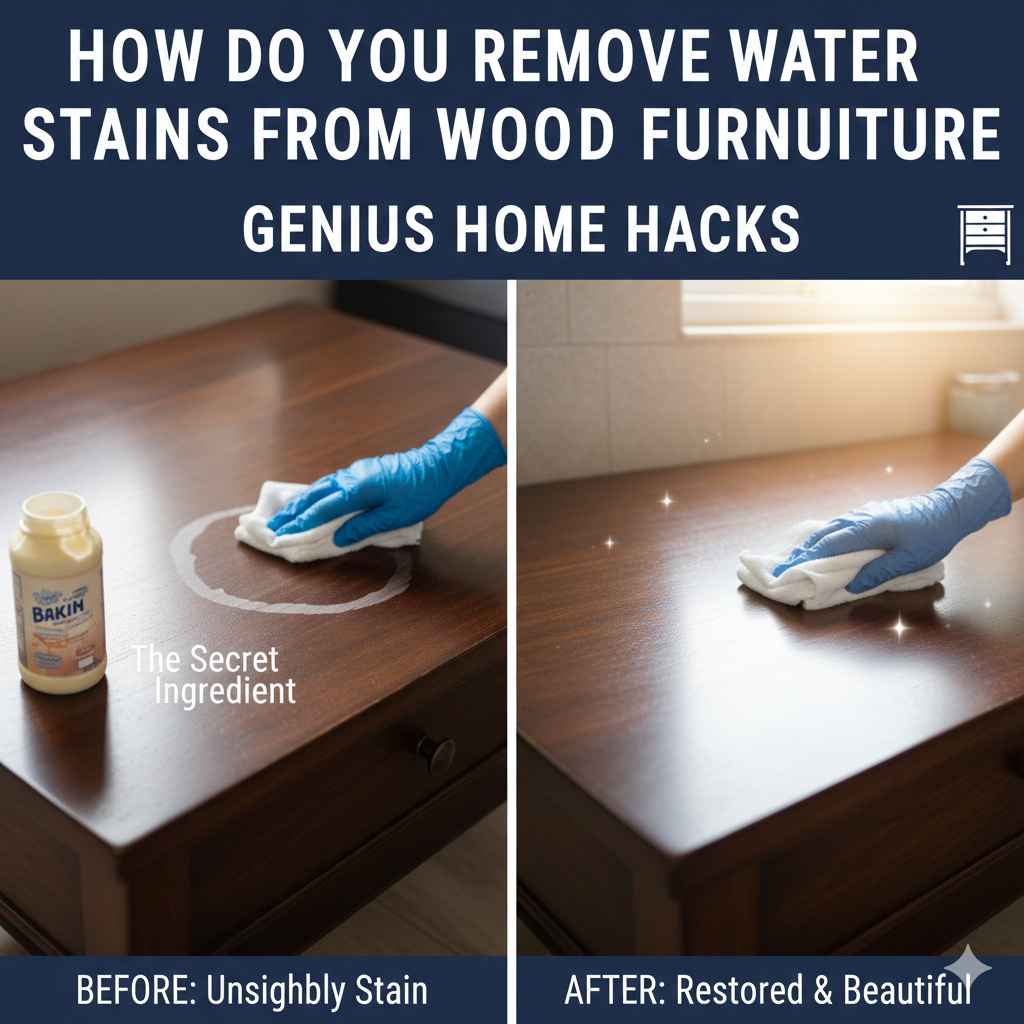
To remove light water stains (white rings) from wood, place a dry cotton cloth over the mark and iron it on a low, no-steam setting for a few seconds. For stubborn white marks, gently rub a paste of baking soda and water. Dark stains require sanding the area and treating it with wood bleach before refinishing.
It’s a moment every homeowner dreads. You pick up a glass from your beautiful wooden coffee table, only to find a cloudy white ring left behind. Your heart sinks. But don’t worry! That dreaded water stain isn’t a permanent disaster. Most of the time, it’s a simple problem you can fix yourself with items you already have at home.
Dealing with water marks on wood furniture is a very common issue. It happens to the best of us. The good news is that you don’t need to call a professional or buy expensive chemicals. I’m here to show you a few genius, easy-to-follow methods that will make those ugly rings disappear. We’ll walk through each step together, so you can feel confident and get your furniture looking new again.
First, Understand Your Enemy: White Stains vs. Dark Stains
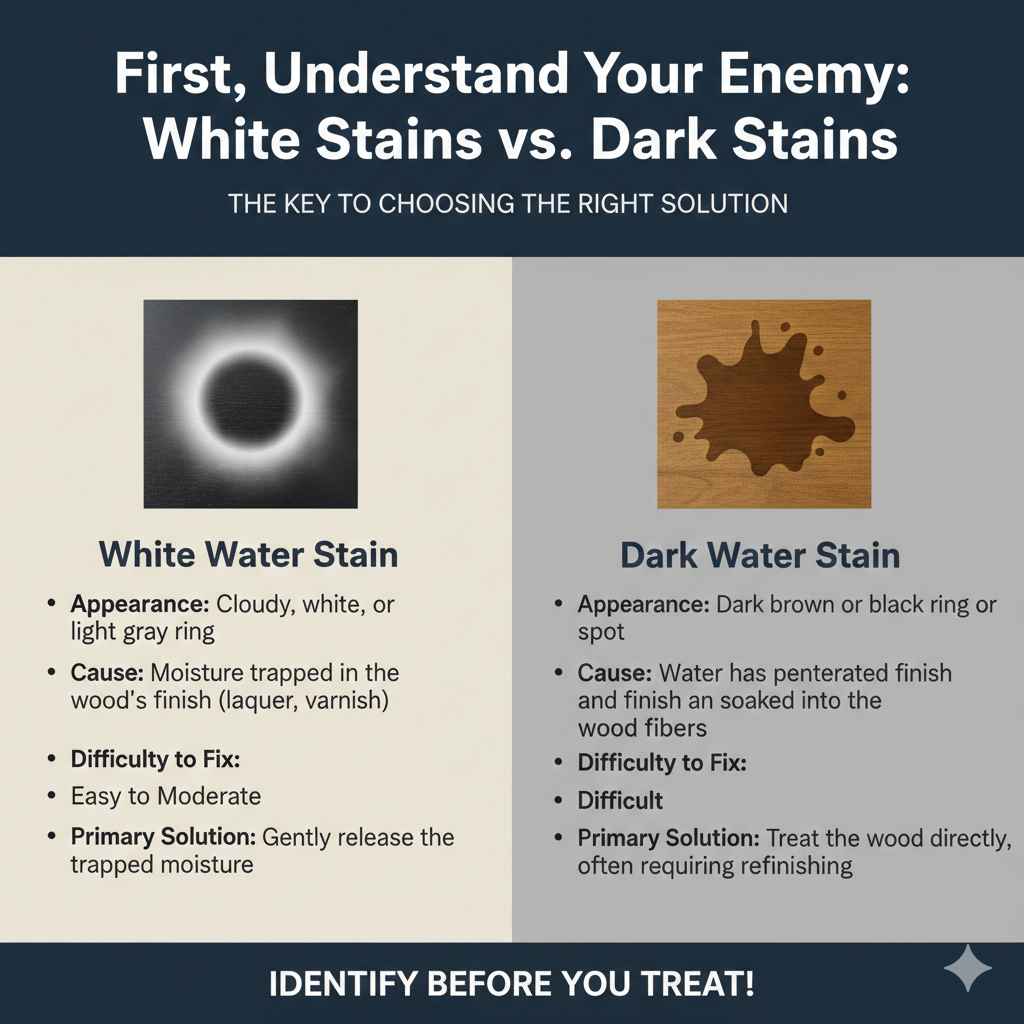
Before you grab any tools, you need to know what kind of stain you’re dealing with. Water stains on wood come in two main types: light white rings and dark black marks. Knowing the difference is the key to choosing the right solution and avoiding more damage.
White rings are the most common type. They look like cloudy, white, or foggy patches on the surface of your furniture. This is actually good news! A white stain means the moisture is trapped in the top layer of the finish (like lacquer or varnish) and hasn’t soaked into the wood itself. These are usually much easier to remove.
Dark or black stains are more serious. These marks mean water has penetrated through the finish and has gotten into the actual wood fibers. This can cause the wood tannins to react, leading to discoloration and potential rot if left untreated. Removing dark stains is a bigger job that often involves stripping the finish and treating the wood directly.
Here’s a quick breakdown to help you identify your stain:
| Feature | White Water Stain | Dark Water Stain |
|---|---|---|
| Appearance | Cloudy, white, or light gray ring or spot. | Dark brown or black ring or spot. |
| Cause | Moisture trapped in the wood’s finish (lacquer, varnish). | Water has penetrated the finish and soaked into the wood itself. |
| Difficulty to Fix | Easy to Moderate. Often fixable with household items. | Difficult. Requires more advanced steps like sanding and refinishing. |
| Primary Solution | Gently release the trapped moisture from the finish. | Treat the wood directly, often requiring wood bleach and refinishing. |
Safety First: A Quick Prep Guide
Before we jump into the methods, let’s talk safety. These are simple projects, but it’s always smart to be prepared. Your safety and your furniture’s well-being are top priorities.
- Work in a Good Spot: If you are using anything with fumes, like wood bleach, make sure you are in a well-ventilated area. Open a window or turn on a fan.
- Protect Your Hands: A simple pair of rubber gloves is a good idea, especially when working with cleaning pastes or stronger chemicals.
- Always Test First: This is the most important rule! Before you apply any solution to the stain, test it on a hidden spot on your furniture first. Try a small area on the back or underside of the piece. This ensures the method won’t discolor or damage your finish.
Method 1: Removing Light Water Stains (Those Annoying White Rings)
If you have a white, cloudy ring on your furniture, you’re in luck. These are the easiest to fix. The goal here is to gently lift the moisture trapped in the finish. Here are four proven methods using simple household items.
The Gentle Iron Method
This sounds a little strange, but it works wonders. The gentle heat from an iron helps the trapped moisture evaporate out of the wood finish. It’s my go-to first attempt for any white water ring.
- Prepare Your Iron: Empty all the water out of your steam iron. You want dry heat only—steam will make the problem worse! Set it to its lowest heat setting.
- Get a Cloth: Grab a clean, dry, lint-free cotton cloth. An old t-shirt or a tea towel works perfectly. Do not use a thick towel, as it will block too much heat.
- Apply Gentle Heat: Place the dry cloth over the white water stain. Gently press the warm iron on top of the cloth for just a few seconds at a time.
- Check Your Progress: Lift the iron and the cloth to check the stain. You should see it starting to fade. Repeat the process, moving the iron slightly, until the stain disappears. Be patient and use short bursts of heat to avoid damaging the finish.
The Mayonnaise or Petroleum Jelly Method
It might seem odd to put sandwich spread on your furniture, but the oil in mayonnaise (or petroleum jelly) is great at displacing the trapped moisture in the finish. The oil seeps in and pushes the water out, clearing up the cloudy mark.
- Apply a Small Amount: Dab a small amount of full-fat mayonnaise or petroleum jelly directly onto the white stain with a soft cloth.
- Let it Sit: Let it sit on the stain for at least an hour. For very stubborn stains, you can leave it on overnight. The longer it sits, the more time the oil has to work its magic.
- Wipe and Buff: Use a clean, dry cloth to wipe away the mayonnaise or jelly. Then, buff the area with another clean cloth to restore its shine.
The Mild Abrasive Toothpaste Method
For a slightly tougher white stain, a mild abrasive can help. White, non-gel toothpaste works as a very fine polishing compound to gently buff away the stain from the finish.
- Choose the Right Toothpaste: Make sure you use a solid white paste, not a gel or one with whitening crystals. The basic, cheap kind is best.
- Make a Paste: You can use the toothpaste on its own or, for a little extra power, mix it with an equal amount of baking soda.
- Rub Gently: Apply the paste to a soft, damp cloth. Gently rub the paste onto the stain, moving in the direction of the wood grain. Don’t scrub too hard! You just want to lightly polish the surface.
- Wipe Clean: Use a separate clean, damp cloth to wipe away all the toothpaste residue. Dry the area immediately and buff it with a dry cloth.
The Baking Soda Paste Method
Similar to the toothpaste method, baking soda is a gentle abrasive that can lift stains from the finish without being too harsh. This is a great alternative if you don’t have non-gel toothpaste handy.
- Create a Paste: Mix one tablespoon of baking soda with one teaspoon of water in a small bowl. Stir until it forms a thick paste.
- Apply the Paste: Use a soft cloth or your finger to apply the paste to the water stain.
- Gently Buff: Rub the paste gently over the stain in a circular motion for a minute or two. Don’t apply too much pressure.
- Wipe and Dry: Use a clean, damp cloth to wipe off the paste completely. Dry the area thoroughly with another soft cloth and check your results.
Method 2: Tackling Stubborn Dark Water Stains
If your stain is dark brown or black, you have a bigger challenge ahead. This means water has soaked into the wood itself, and the simple methods above won’t work. Removing a dark stain requires removing the finish, treating the wood, and then refinishing the area. It’s more work, but it’s definitely doable!
Step 1: Strip the Old Finish
You cannot treat the wood until you get the old finish out of the way. You’ll need to use a chemical stripper or sandpaper to remove the varnish or lacquer from the stained area and a bit around it.
- For smaller areas, you can often just sand the finish off. Start with a medium-grit sandpaper (like 120-grit) and then move to a finer grit (like 220-grit) to smooth it out.
- For larger areas, a chemical stripper might be easier. Always follow the product’s safety instructions carefully, wear gloves and eye protection, and work in a well-ventilated space.
Step 2: Treat the Wood with Wood Bleach
Once you have access to the bare wood, it’s time to treat the dark stain. The most effective tool for this is wood bleach, which is usually oxalic acid. It works by chemically removing the iron and tannin stains caused by the water.
- Get Oxalic Acid: You can find oxalic acid in crystal form at most hardware stores. Be sure to read the safety precautions. According to the EPA’s Safer Choice program, it’s important to use chemicals responsibly and with proper protection.
- Mix the Solution: Following the product’s instructions, mix the oxalic acid crystals with hot water to create your bleaching solution.
- Apply to the Stain: Use a small paintbrush to apply the solution only to the dark-stained area of the wood. You’ll see the stain start to lighten. You may need to apply it a few times.
- Neutralize the Acid: After the stain is gone, you must neutralize the bleach. Mix a solution of two tablespoons of baking soda in a quart of water. Wipe this over the treated area to stop the bleaching action.
- Let it Dry Completely: Let the wood dry for at least 24 hours. The area must be completely dry before you move on to the next step.
Step 3: Sand and Refinish the Area
Now that the stain is gone, you need to make the area blend in with the rest of your furniture. This involves light sanding and applying a new finish.
- Feather the Edges: Use fine-grit sandpaper (220-grit) to lightly sand the treated area. Feather the edges so it blends smoothly with the surrounding wood.
- Match the Stain: If your furniture is stained, you’ll need to find a matching wood stain. Test stains on a scrap piece of wood or a hidden area first to ensure a good match. Apply the stain according to the directions.
- Apply a Top Coat: Once the stain is dry, apply a clear protective top coat, like polyurethane or lacquer, to match the original finish. You may need a few coats to build it up to the right level. The University of Kentucky’s guide to refinishing furniture offers great tips on applying finishes for a durable result.
This table can help you quickly decide which method is best for your situation:
| Stain Type | Recommended Method | Pros | Cons |
|---|---|---|---|
| Faint White Ring | Iron Method | Very fast and requires no chemicals. | Can damage the finish if the iron is too hot. |
| Stubborn White Ring | Mayonnaise / Petroleum Jelly | Gentle, easy, and uses common household items. | Takes several hours or overnight to work. |
| Resistant White Mark | Toothpaste / Baking Soda Paste | Effective at buffing out surface-level stains. | Can dull the finish if you scrub too hard. |
| Dark or Black Stain | Wood Bleach & Refinishing | The only way to truly remove deep stains in the wood. | Time-consuming and requires careful work with chemicals. |
Prevention is Your Best Friend: How to Avoid Future Stains
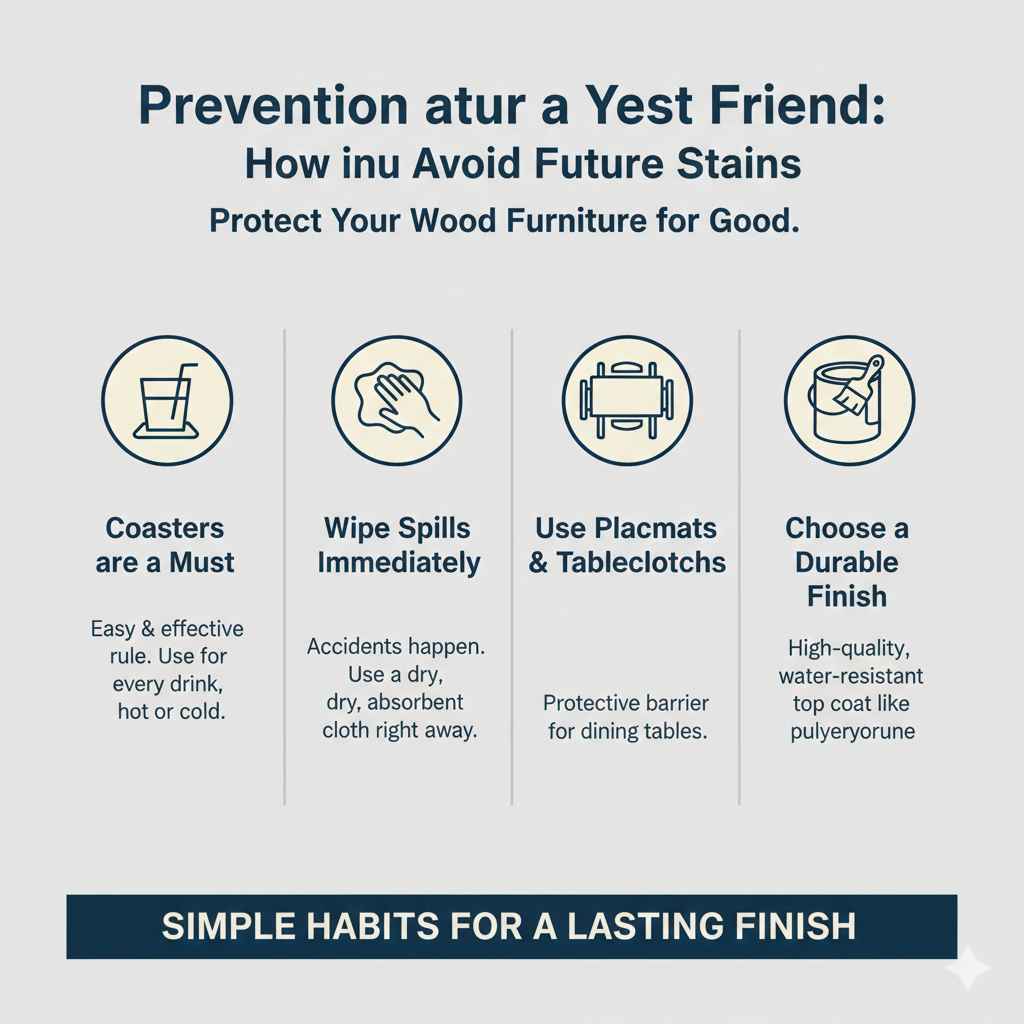
Once you’ve restored your beautiful furniture, you’ll want to keep it that way. The best way to fix a water stain is to prevent it from happening in the first place. Here are a few simple habits to adopt:
- Coasters are a Must: This is the easiest and most effective rule. Get into the habit of using coasters for every single drink, hot or cold.
- Wipe Spills Immediately: Accidents happen. When a spill occurs, wipe it up right away with a dry, absorbent cloth. The less time water sits on the wood, the lower the chance it will leave a mark.
- Use Placemats and Tablecloths: For dining tables, using placemats or a tablecloth provides a protective barrier against spills and condensation from dishes.
- Choose a Durable Finish: If you are refinishing furniture, consider using a high-quality, water-resistant top coat like polyurethane. It provides excellent protection against moisture.
Frequently Asked Questions (FAQ)
1. Why did my water stain turn white?
A white stain occurs when moisture gets trapped within the top protective layer of the wood’s finish (like lacquer or varnish). It hasn’t soaked into the wood itself. The cloudiness you see is the moisture suspended in the finish, which is why it’s often reversible with gentle heat or oil.
2. Can I use a hairdryer instead of an iron to remove white water rings?
Yes, you can! A hairdryer on a low heat setting is a great alternative to an iron. Hold it several inches away from the stain and move it back and forth continuously. Keep checking the spot to ensure you don’t overheat the finish. It works on the same principle of using gentle heat to release trapped moisture.
3. How long should I leave mayonnaise on a water stain?
For a light stain, leaving mayonnaise on for one to two hours is often enough. For more stubborn white marks, you can apply a thick layer, cover it with plastic wrap, and let it sit overnight. The oils need time to penetrate the finish and displace the water.
4. Is it safe to use these methods on antique furniture?
You should be extremely cautious with antiques. Finishes on antique furniture, especially French polish (shellac), are very delicate and can be easily damaged by heat or chemicals. Always test any method on a very hidden spot first. For valuable or sentimental pieces, it’s often best to consult a professional furniture restorer.
5. What do I do if none of the methods for white stains work?
If the gentle methods don’t remove the white stain, it might mean the mark is older or has slightly penetrated the finish more deeply. Your next step could be to try a commercial wood cleaner or a very fine abrasive like #0000 steel wool with some mineral oil. Rub very gently with the grain. If that still doesn’t work, the area may need to be lightly sanded and refinished.
6. What kind of toothpaste is best for removing water stains?
The best kind is a basic, white, non-gel toothpaste. Avoid gel toothpastes, charcoal toothpastes, or any with harsh whitening agents or colorful crystals. The mild abrasive quality of a simple paste is what gently buffs out the stain.
7. Does olive oil work for removing water stains?
Yes, olive oil can work similarly to mayonnaise. The oil can help displace the moisture trapped in the finish. You can apply a small amount with a soft cloth and let it sit for about an hour before buffing it away. However, some people find mayonnaise more effective because its thicker consistency keeps the oil in place longer.
You Can Do This!
Seeing a water stain on your beloved wood furniture can be disheartening, but it’s rarely a lost cause. As you’ve seen, most stains can be fixed with a little patience and the right technique. Whether it’s a simple white ring that needs a bit of heat or a dark mark that requires a more hands-on approach, you now have the knowledge to tackle it.
Remember to identify your stain type first, always test your method on a hidden spot, and work carefully. With these tips, you can restore your furniture’s beauty and feel the pride of a job well done. So go ahead, rescue that coffee table or dresser—you’ve got this!