How Does a LED Light Bulb Work? A Deep Dive into Modern Lighting
Hey there! If you’ve ever picked up a sleek, futuristic-looking LED bulb and wondered what makes it tick, you’re not alone. A few years back, I swapped out all the old bulbs in my home and garage for LEDs, and I was blown away by how bright and efficient they were. As a car enthusiast, I also upgraded my truck’s headlights to LEDs, and that got me curious about how these little marvels actually work. So, I dug into the science, and I’m excited to share it with you in a way that’s easy to understand.
Whether you’re lighting up your garage for a late-night wrenching session or brightening your living room, this guide will explain how LED light bulbs work and why they’re so awesome. Let’s dive in and light things up!
What Is an LED Light Bulb?
When I first held an LED bulb, it felt like something from a spaceship—small, cool to the touch, and packed with tech. LED stands for Light Emitting Diode, which sounds fancy but is pretty simple once you break it down. It’s a tiny electronic device that creates light when electricity flows through it.
Unlike the old incandescent bulbs I grew up with, which burned a filament to glow, LEDs don’t rely on heat to produce light. They use a special material called a semiconductor to do the job. I was amazed at how something so small could be so bright and last for years. LEDs are now everywhere, from home lighting to car headlights, and understanding how they work makes you appreciate them even more.
The Science Behind LED Light
Okay, let’s get to the cool stuff—how LEDs actually make light. I’m no scientist, but I found this fascinating. Inside an LED bulb is a semiconductor, a material that’s halfway between a conductor (like metal) and an insulator (like rubber). When electricity passes through this semiconductor, it gets electrons—the tiny particles that carry electric charge—moving.
Here’s where it gets wild. As the electrons move, they jump between different energy levels in the semiconductor. Each jump releases a bit of energy in the form of light. The type of semiconductor material determines the color of the light. For example, different materials can produce red, blue, or white light. I was surprised to learn that white LEDs, like the ones in my garage, often use a blue LED coated with a special layer to create that bright, white glow.
Key Components of an LED Bulb
When I took apart an old LED bulb (don’t try this at home!), I saw it’s more than just a diode. There are a few key parts that make it work:
- LED Chip: This is the heart of the bulb—the semiconductor that creates light. It’s tiny but powerful.
- Heat Sink: A metal piece that pulls heat away from the chip to keep it cool. My car’s LED headlights have big heat sinks to handle long drives.
- Driver Circuit: A small electronic board that controls the electricity flowing to the LED. It’s like the brain of the bulb.
- Housing: The outer shell, often made of plastic or glass, protects the insides and shapes the light.
- Base: The part that screws into your socket, like the standard E26 base in most home bulbs.
I noticed that automotive LEDs, like my truck’s headlights, also have tiny fans to help with cooling. Each part works together to make the bulb bright, efficient, and long-lasting.
How LEDs Differ from Other Bulbs
To really get why LEDs are special, I compared them to other bulbs I’ve used—incandescent, halogen, and CFL (compact fluorescent). Here’s a table I put together to keep it clear:
| Bulb Type | How It Works | Energy Efficiency | Lifespan (Hours) | Heat Output |
|---|---|---|---|---|
| LED | Semiconductor emits light | 80-90% | 25,000-50,000 | Low |
| Incandescent | Heats a filament to glow | 10% | 1,000-2,000 | High |
| Halogen | Heats a filament with gas | 20-30% | 2,000-4,000 | High |
| CFL | Excites gas to produce UV light | 70-80% | 8,000-15,000 | Moderate |
Incandescent bulbs, like the ones I had in my old garage, waste most of their energy as heat—about 90%! Halogens are a bit better but still get scorching hot. CFLs use gas to create light, which is more efficient but not as good as LEDs. When I switched to LEDs, my garage stayed cooler, and my energy bill dropped. LEDs are the clear winner for both home and car use.
Why LEDs Are So Energy Efficient
One thing that hooked me on LEDs was how little power they use. When I replaced my 60-watt incandescent bulbs with 10-watt LEDs, I got the same brightness for a fraction of the energy. How do they do it? It’s all about that semiconductor magic.
Unlike incandescent bulbs, which burn energy to heat a filament, LEDs convert most of their electricity directly into light. I learned that LEDs are 80-90% efficient, meaning only 10-20% of their energy becomes heat. In my garage, where I have multiple lights on for hours, this efficiency saves me serious cash. For my truck, LED headlights use less power, so my battery and alternator don’t have to work as hard.
How LEDs Produce Different Colors
I was curious why my LED headlights look crisp and white while some accent lights in my car are red or blue. It turns out, the color of an LED depends on the semiconductor material. Different materials emit different wavelengths of light. For example, gallium nitride makes blue light, while gallium phosphide can make red or green.
For white light, like in most home bulbs, manufacturers often start with a blue LED and add a phosphor coating. This coating absorbs some of the blue light and re-emits it as yellow, blending to create white light. I love the warm white LEDs in my living room—they’re cozy, like old incandescent bulbs, but way more efficient. In my garage, I use cooler white LEDs for bright, clear light when I’m working on my car.
LEDs in Automotive Lighting
As a car guy, I’m obsessed with how LEDs have changed automotive lighting. A few years ago, I upgraded my truck’s halogen headlights to LEDs, and the difference was night and day. LED headlights use less power—about 20-30 watts compared to 55-65 watts for halogens—and they produce a brighter, whiter light that makes night driving easier.
I also added LED interior lights and some underglow for style. These bulbs are perfect for cars because they’re durable, resisting vibrations from bumpy roads. They also generate less heat, so they don’t damage plastic lenses or wiring. The only tricky part was making sure the LEDs were compatible with my truck’s electrical system—some cars need special adapters to avoid flickering or error codes.
LEDs in Home Lighting
At home, LEDs have transformed every room. I swapped out all my old bulbs, from recessed lights in the kitchen to lamps in the living room. The light is bright and even, and I don’t have to change bulbs nearly as often. My garage is my favorite, though—those LED shop lights make it easy to see every bolt and screw when I’m working on my car.
One thing I love is how versatile LEDs are. You can get them in different color temperatures, like warm white for cozy spaces or cool white for workspaces. They also work in dimmable fixtures, as long as you buy dimmable LEDs. I learned to check the packaging to avoid flickering with my dimmer switches.
How Heat Is Managed in LED Bulbs
I used to think LEDs were completely heat-free, but that’s not quite true. They do produce some heat, mostly from the driver circuit and the LED chip itself. But unlike incandescent bulbs, which get too hot to touch, LEDs manage heat smartly.
The heat sink is the key. It’s a metal piece with fins that pulls heat away from the chip and spreads it into the air. In my car’s LED headlights, there’s also a tiny fan to boost cooling. I noticed the heat sink gets warm after a long drive, but it’s nothing like the scorching heat of halogens. In my home bulbs, the heat sink keeps things cool enough that I can change a bulb right after it’s been on.
Why LEDs Last So Long
One of my favorite things about LEDs is their lifespan. Most are rated for 25,000 to 50,000 hours—that’s 13-27 years if you use them 5 hours a day! I’ve had LEDs in my garage for over five years, and they’re still going strong. Compare that to incandescent bulbs, which I used to replace every few months.
The long lifespan comes from the lack of moving parts or fragile filaments. LEDs are solid-state devices, meaning they’re tough and resistant to shocks or vibrations. In my truck, the LEDs handle rough roads without a hitch. Keeping them cool with good heat sinks also helps them last longer, which is why quality matters.
Choosing the Right LED Bulb
Picking the right LED bulb can feel overwhelming with all the options out there. Here’s what I look for:
- Lumens, Not Watts: Lumens measure brightness. An 800-lumen bulb is about as bright as a 60-watt incandescent. I use 1000 lumens in my garage for extra brightness.
- Color Temperature: Warm white (2700 K- 3000 K) is cozy for homes; cool white (3500 K- 4500 K) is great for workspaces. My truck’s headlights are around 6000K for a crisp, white look.
- Dimmable or Not: If you have a dimmer switch, get dimmable LEDs. I made the mistake of buying non-dimmable ones once, and they flickered like crazy.
- Quality Brands: I stick to brands like Philips or Cree. Cheap LEDs might not last or could overheat. My bargain-bin bulbs burned out fast.
- Automotive Fit: For cars, check that the LED matches your vehicle’s socket size and electrical system. I had to get an adapter for my truck to avoid error codes.
Reading reviews and checking the packaging helps me pick bulbs that work well and last.
Environmental and Cost Benefits of LEDs
LEDs aren’t just cool tech—they’re good for your wallet and the planet. In my house, switching to LEDs cut my lighting bill by about $100 a year. A 10-watt LED costs about $2 to run for 5 hours a day for a year, compared to $12 for a 60-watt incandescent. That adds up fast!
They’re also eco-friendly. LEDs use less electricity, so power plants burn less fuel, cutting down on emissions. I calculated that my home’s LEDs reduce my carbon footprint by hundreds of pounds of CO2 a year. Plus, they don’t contain toxic stuff like mercury, unlike CFLs, so they’re easier to recycle. In my car, LEDs save a bit of fuel by reducing strain on the alternator.
Installing LEDs: Tips for Success
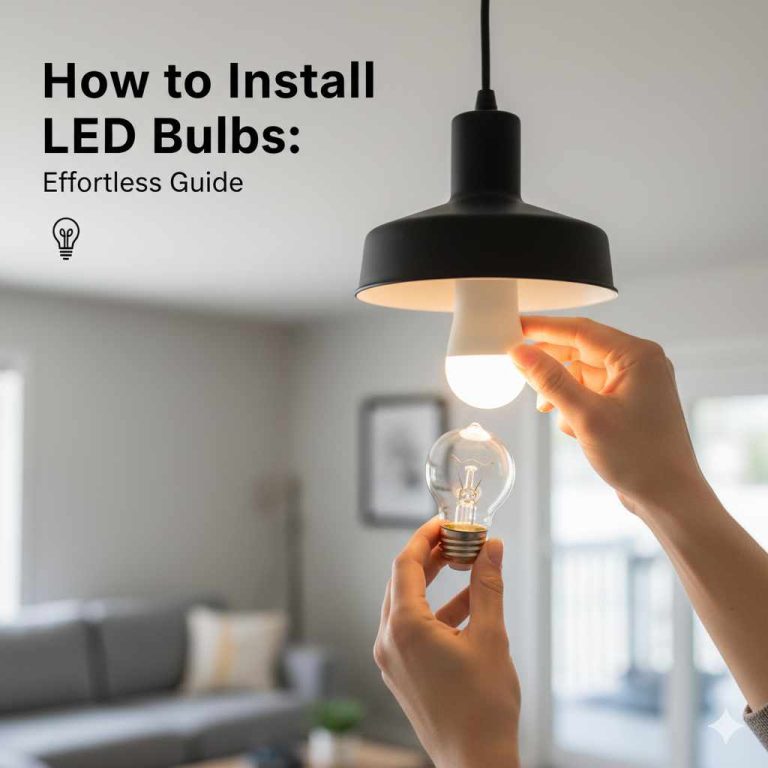
Installing LEDs is usually as simple as screwing in a bulb, but I learned a few tricks. At home, I make sure the socket is clean and the bulb is screwed in tightly to avoid flickering. For dimmable fixtures, I check that the bulb and switch are compatible.
In my truck, installing LED headlights was a bit more involved. I had to pop the hood, remove the old bulbs, and plug in the LEDs, making sure the heat sinks and fans had enough space. Some cars need resistors or adapters to work with LEDs, so I checked my manual first. If you’re not sure, a quick trip to an auto shop can save you headaches—I paid $20 for a pro to double-check my wiring.
Common Myths About LEDs
When I started using LEDs, I heard a lot of myths. Some folks said they’re too expensive, but the upfront cost (about $5-$10 per bulb) pays off in energy savings. Others thought LEDs give off harsh, blue light, but I found warm white LEDs that feel just as cozy as incandescent bulbs.
Another myth is that LEDs don’t work with dimmers. Not true—dimmable LEDs are widely available. I also heard LEDs don’t last as long as claimed, but my five-year-old garage bulbs beg to differ. Stick to quality brands, and you’ll get the full lifespan.
Why LEDs Are the Future
After using LEDs everywhere, I’m convinced they’re the way to go. They’re bright, efficient, and tough, making them perfect for homes and cars. In my garage, they light up my workspace without heating it up. In my truck, they make night driving safer and look sharp. The technology keeps getting better too, with smarter LEDs that can change colors or connect to apps.
Switching to LEDs was one of the best upgrades I made. It’s a small change that saves money, helps the planet, and makes life brighter—literally. If you’re still using old bulbs, it’s time to make the switch.
Conclusion
So, how does an LED light bulb work? It’s a clever mix of semiconductors, electrons, and smart design that turns electricity into bright, efficient light. I’ve seen the magic firsthand in my home and truck, and I’m hooked. From their energy-saving superpowers to their long lifespan, LEDs are a game-changer for anyone who loves bright spaces without the waste.
Whether you’re working on your car or cozying up at home, LEDs deliver light you can count on. Give them a try, and you’ll wonder why you didn’t switch sooner. Here’s to a brighter, cooler, and greener future!
Frequently Asked Questions
How does an LED bulb make light?
It uses a semiconductor that emits light when electricity flows through it. Electrons jump around, releasing energy as light. It’s simple but super efficient!
Are LEDs really more efficient than other bulbs?
Yes! I cut my lighting bill by $100 a year after switching. LEDs use 80-90% of their energy for light, unlike incandescent bulbs, which waste most as heat.
Can I use LEDs in my car?
Definitely! I put LED headlights in my truck, and they’re brighter and cooler than halogens. Just make sure they’re compatible with your car’s system.
Do LEDs work with dimmer switches?
Some do, but you need dimmable LEDs. I learned this the hard way when my non-dimmable bulbs flickered. Check the packaging first.
Why don’t LEDs get as hot as other bulbs?
They produce less heat and use heat sinks to manage it. My LED headlights have fans too, keeping them cool even after hours of use.
How long do LED bulbs last?
Most last 25,000 to 50,000 hours. I’ve had mine in the garage for five years, and they’re still as bright as ever.
Are LEDs worth the cost?
Totally! They’re pricier upfront, but the energy savings and long lifespan make up for it. My LEDs paid for themselves in under a year.