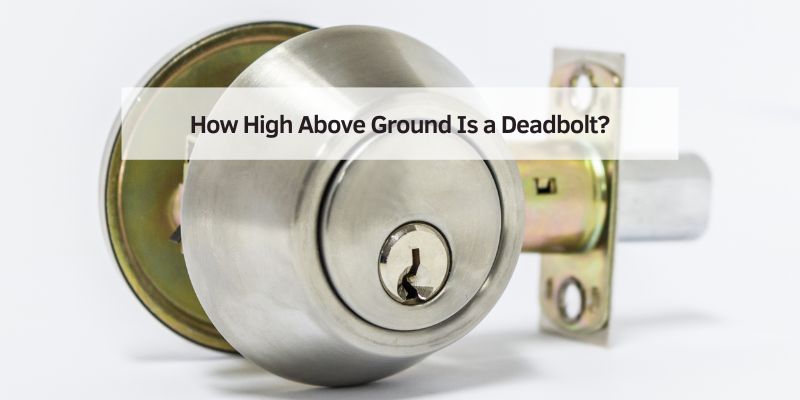
How High Above Ground Is a Deadbolt?
Hey there! If you’re wondering about the perfect height for a deadbolt on your door, you’re in the right place. As someone who’s spent years tinkering with woodworking projects and home improvements, I’ve installed my fair share of deadbolts. Getting the height just right isn’t just about security—it’s about comfort, accessibility, and making your home feel like a safe haven. So, let’s dive into this topic together and figure out how high above the ground a deadbolt should be.
I’ll walk you through everything I’ve learned, from standard measurements to special considerations, in a way that’s easy to understand.
Why Deadbolt Height Matters
When I first started installing deadbolts, I didn’t think much about their height. I figured, “As long as it locks, it’s fine, right?” But I quickly learned that the placement of a deadbolt affects more than just how secure your door is. It impacts how easy it is to use, who can reach it, and even how your door holds up over time.
A deadbolt that’s too low might be hard to reach for taller folks, while one that’s too high could be a struggle for kids or people with mobility issues. Plus, if it’s not aligned properly with the door frame, it can weaken the whole setup. I’ve seen doors where poorly placed deadbolts caused splintering or misalignment, and trust me, that’s a headache you want to avoid. So, getting the height right is key to making your home both safe and user-friendly.
Standard Deadbolt Height for Exterior Doors
Now, let’s get to the meat of the question: how high should a deadbolt be? For most exterior doors in the U.S., the standard height for a deadbolt is 36 to 48 inches above the ground. This range is what you’ll find in most homes, and it’s based on building codes and industry standards.
In my experience, 42 inches is the sweet spot for most households. It’s high enough to provide good leverage against forced entry but low enough to be reachable for most adults. I’ve installed deadbolts at this height in my own home, and it feels natural to use—no stretching or bending required. This measurement is usually taken from the floor to the center of the deadbolt’s cylinder, so keep that in mind when you’re marking your door.
Here’s a quick breakdown of typical deadbolt heights for exterior doors:
| Door Type | Standard Deadbolt Height (from floor) | Notes |
|---|---|---|
| Front Door | 42–48 inches | Higher for added security |
| Back Door | 36–42 inches | Often lower for easier access |
| Garage Side Door | 40–44 inches | Depends on door height and use |
This table gives you a starting point, but there’s more to consider. Let’s talk about those next.
Building Codes and ADA Compliance
When I was helping a friend install a deadbolt for their new home, they asked me about building codes. I had to do some digging, and here’s what I found: most local building codes in the U.S. don’t mandate a specific height for deadbolts on residential doors. However, they do emphasize that locks should be “readily operable” and that’s where things get interesting.
If you’re installing a deadbolt in a commercial space or a home designed for accessibility, the Americans with Disabilities Act (ADA) comes into play. The ADA recommends that door hardware, including deadbolts, be placed between 34 and 48 inches above the floor. This range ensures that people using wheelchairs or with limited reach can use the lock comfortably.
I once worked on a project for a family with a wheelchair user, and we placed the deadbolt at 36 inches. It was a game-changer for them—no more struggling to secure the door. If accessibility is a priority in your home, aim for the lower end of the standard range, around 36 to 40 inches.
Factors That Influence Deadbolt Height
Every home is different, and I’ve learned that a one-size-fits-all approach doesn’t work for deadbolt placement. Here are some factors I always consider when deciding on the height:
Door Height and Design
Not all doors are created equal. Standard exterior doors are usually 80 inches tall, but I’ve worked on older homes with shorter doors or custom ones that are taller. If your door is non-standard, you might need to adjust the deadbolt height to keep it proportional. For example, on a 76-inch door, I’d place the deadbolt around 38 inches to avoid it looking awkwardly high.
Household Members
Who’s using the deadbolt? If you have young kids, you might want a higher deadbolt—say, 44 to 48 inches—to keep it out of their reach. I remember installing a deadbolt at 46 inches for a family with curious toddlers, and it gave the parents peace of mind. On the other hand, if you have elderly family members or shorter adults, a lower height, like 36 to 40 inches, might be better.
Security Needs
The higher the deadbolt, the harder it is for intruders to apply leverage against it. I’ve read about cases where burglars targeted low deadbolts because they were easier to kick in. For maximum security, I’d go with 42 to 48 inches, especially for front doors. But don’t go too high—anything above 48 inches can feel impractical for daily use.
Existing Hardware
If your door already has a knob or handle, the deadbolt should be placed above it. Most door knobs are installed at 36 inches, so a deadbolt at 42 to 48 inches keeps them nicely spaced. I once tried installing a deadbolt too close to the knob, and it felt cramped and awkward to use. Aim for at least 6 to 8 inches of space between the knob and deadbolt for comfort.
Double Deadbolts: What’s the Deal?
Some homes, especially in high-crime areas, use two deadbolts for extra security. I’ve installed double deadbolts a few times, and the placement can get tricky. Typically, the primary deadbolt is at the standard 42-inch height, while the second one is either higher (around 60 inches) or lower (around 24 inches).
I prefer placing the second deadbolt higher because it’s harder for intruders to reach or force. But keep in mind that a high second deadbolt can be tough for shorter people to use. If you’re considering double deadbolts, think about your household’s needs and whether everyone can comfortably reach both locks.
Measuring and Installing a Deadbolt at the Right Height
Installing a deadbolt might sound daunting, but I promise it’s doable with the right tools and a bit of patience. Here’s how I approach it to ensure the height is perfect:
- Measure the Height: Use a tape measure to mark the desired height (42 inches is my go-to) from the floor to the center of where the deadbolt will go. I always double-check my measurement to avoid mistakes.
- Mark the Door: Use a pencil to mark the spot on the door’s edge and face. If you’re using a deadbolt template (most kits come with one), align it with your mark to ensure accuracy.
- Drill the Holes: Grab a drill with the right size hole saw (usually 2-1/8 inches for the face and 1 inch for the edge). I’ve learned the hard way to drill slowly to avoid splintering the wood. If your door is metal, use a bit designed for metal.
- Install the Deadbolt: Follow the kit’s instructions to assemble the lock. Make sure the bolt aligns with the strike plate on the door frame. I always test the lock before tightening everything to ensure it moves smoothly.
- Check the Frame: The strike plate on the door frame should be at the same height as the deadbolt. I reinforce the frame with longer screws (at least 3 inches) to make it harder to kick in.
Pro tip: If you’re replacing an old deadbolt, check if the existing holes match your new lock. I once had to patch a door because the new deadbolt didn’t fit the old holes, and it was a hassle.
Common Mistakes to Avoid
I’ve made my fair share of mistakes when installing deadbolts, and I want to save you the trouble. Here are some pitfalls to watch out for:
- Misaligning the Bolt and Strike Plate: If the bolt doesn’t line up with the hole in the frame, the lock won’t work smoothly. I’ve had to redo a job because I rushed this step.
- Placing It Too Low: A deadbolt below 36 inches is too easy for intruders to force open. Plus, it’s awkward to use.
- Ignoring the Door Material: Wood doors are forgiving, but metal or fiberglass doors require specific tools. I once dulled a drill bit trying to force it through a metal door.
- Skipping the Template: Deadbolt kits come with templates for a reason. I tried eyeballing it once, and the result was a crooked lock that looked terrible.
Special Considerations for Non-Standard Doors
Not every door follows the standard 80-inch height rule. I’ve worked on sliding glass doors, French doors, and even barn-style doors, and each one has its quirks.
- Sliding Glass Doors: These often have their own locking systems, but if you’re adding a deadbolt, aim for 40 to 44 inches. I’ve found that lower heights work better for the sliding mechanism.
- French Doors: For double doors, place the deadbolt on the active door at 42 inches. You might also need flush bolts at the top and bottom of the inactive door for extra security.
- Barn Doors: These are trickier because they slide rather than swing. I’ve installed deadbolts at 40 inches on barn doors, but you might need a surface-mounted lock depending on the design.
If you’re unsure about your door type, take measurements and consult the deadbolt manufacturer’s guidelines. I’ve learned that a quick call to customer support can save hours of frustration.
My Personal Experience with Deadbolt Heights
I’ll let you in on a little story. When I moved into my current home, the front door had a deadbolt at 48 inches—way higher than I was used to. At first, I thought it was fine, but after a few months, I noticed my kids couldn’t reach it, and even I found it a bit awkward. So, I decided to replace it and lower the deadbolt to 42 inches.
The difference was night and day. Not only was it easier to use, but it also felt more secure because the bolt aligned better with the reinforced frame. Since then, I’ve stuck to the 42-inch rule for most of my projects, and I’ve never had a complaint.
Conclusion
Figuring out how high above the ground a deadbolt should be might seem like a small detail, but it’s one that makes a big difference in your home’s security and comfort. From my years of woodworking and home improvement, I’ve found that a deadbolt at 42 inches works best for most exterior doors, but you’ve got some wiggle room between 36 and 48 inches depending on your needs. Whether you’re prioritizing accessibility, security, or ease of use, taking the time to measure and install it right will pay off in the long run.
I hope this guide has given you the confidence to tackle your deadbolt project. There’s something satisfying about installing a lock that keeps your home safe while looking great. So, grab your tools, double-check your measurements, and get to work—you’ve got this!
Frequently Asked Questions
What is the standard height for a deadbolt on a front door?
The standard height for a deadbolt on a front door is 42 to 48 inches above the ground. I usually go with 42 inches because it’s comfortable for most people and provides good security.
Can I install a deadbolt lower than 36 inches?
You can, but I wouldn’t recommend it. A deadbolt below 36 inches is easier for intruders to force open and can be awkward to use. Stick to 36 to 48 inches for best results.
How do I measure the height for a deadbolt?
Measure from the floor to the center of where the deadbolt’s cylinder will go. I always use a tape measure and mark the spot with a pencil to ensure accuracy.
Should the deadbolt height be different for a back door?
Back doors often have deadbolts at 36 to 42 inches, slightly lower than front doors. It depends on how often the door is used and who needs to access it.
Do I need a different height for a deadbolt on a sliding glass door?
Yes, sliding glass doors often need deadbolts at 40 to 44 inches due to their design. I’ve found that lower heights work better with the sliding mechanism.
What if my door is shorter than standard?
For shorter doors, adjust the deadbolt height proportionally. I’d aim for 38 to 42 inches on a 76-inch door to keep it functional and secure.