How Long Does It Take to Straighten Warped Wood
Lots of folks wonder, “How Long Does It Take to Straighten Warped Wood?” It can seem tricky, especially when you’re just starting out with woodworking. You’ve got a piece of wood that’s not flat, and you want to fix it fast. Don’t worry!
We’ll walk through this step by step. You’ll learn just what to expect and how to get your wood back in shape easily. Get ready to find out the simple answers you need.
Understanding Wood Warping Causes and Effects
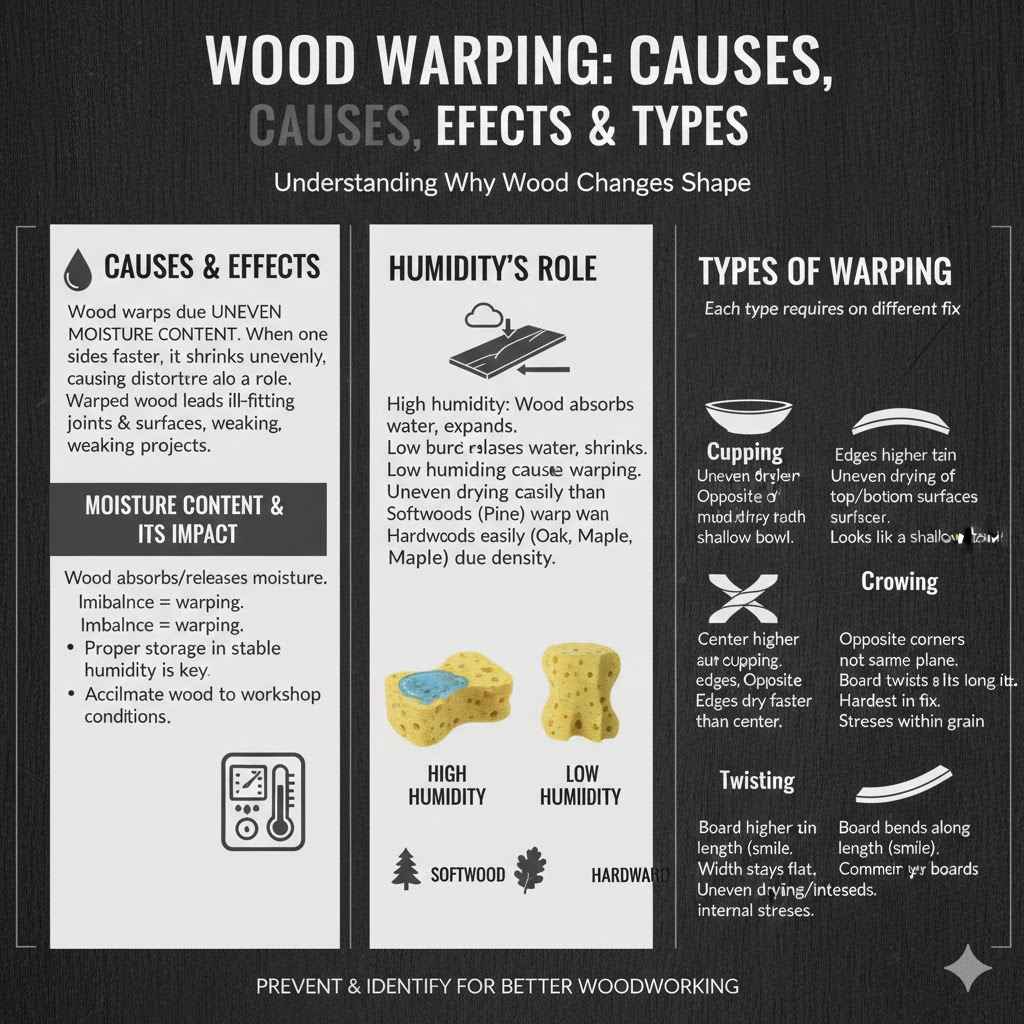
Wood warping is a common issue that many woodworkers face, from hobbyists to seasoned professionals. It happens when wood changes shape, bending or twisting. This usually occurs due to uneven moisture content.
When one side of the wood dries out faster than the other, it shrinks unevenly. This differential shrinkage puts stress on the wood, causing it to distort. Temperature changes can also play a role.
Understanding why wood warps is the first step in fixing it. It helps you choose the right straightening method. Warped wood can make building projects difficult.
Joints might not fit well, and surfaces won’t be smooth. This can ruin the look and strength of your finished piece. Knowing the root causes helps prevent it from happening again.
Moisture Content and Its Impact
Wood is a natural material that reacts to its surroundings. It absorbs and releases moisture. When this process isn’t balanced, warping happens.
For example, if you leave wood outside in the rain and then bring it into a warm, dry workshop, the edges might dry out much faster than the center. This rapid drying causes shrinkage on the outside, forcing the wood to bend.
Proper wood storage is key. Keeping wood in a stable environment with consistent humidity levels minimizes warping. Before you start any project, it’s wise to let your wood acclimate to your workshop’s conditions for a week or two.
This helps even out the moisture content.
How Humidity Affects Wood Shape
High humidity means wood has more water in it. As humidity drops, the wood releases water and shrinks. Low humidity causes wood to dry out and shrink.
If this happens unevenly across the wood’s surface or thickness, warping is almost guaranteed. Imagine a piece of wood like a sponge that’s been dried too quickly on one side. It curls up.
The type of wood also matters. Some woods are more prone to warping than others. Softwoods like pine can warp more easily than hardwoods like oak or maple.
This is because softwoods often have a less dense structure.
Types of Wood Warping
There are a few main ways wood can warp. Knowing these types helps you identify the problem and the best fix. Each type requires a slightly different approach to straighten.
Cupping
Cupping happens when the wood bows along its width. The edges of the board might be higher than the center, or vice-versa. This is often caused by uneven drying from the top and bottom surfaces.
The side that dries faster shrinks more, pulling the board into a “cup” shape. It looks like a shallow bowl.
Cupping can be tricky to fix because the entire width of the board is affected. Trying to force it flat can sometimes make it worse or cause new problems. It’s important to work with the wood’s natural tendencies.
Crowning
Crowning is the opposite of cupping. The center of the board is higher than the edges. This is also due to uneven moisture changes, but the drying pattern is different.
The center might be holding more moisture, or the edges are drying out faster and shrinking away from the center. This makes the board look like a gentle hill.
Crowning can be corrected, but it requires careful pressure application. You want to encourage the center to relax and move down without damaging the edges. Power planers can sometimes reduce crowning by shaving down the high center.
Twisting
Twisting is when a board warps along its length, so that opposite corners are not on the same plane. If you lay a twisted board on a flat surface, only two diagonal corners will touch. It looks like the board has been wrung out like a towel.
This is often caused by stresses within the wood itself, sometimes from how it was cut or dried.
Twisting is one of the hardest types of warping to fix completely. It involves stresses running through the wood’s grain. Straightening a twisted board often requires significant pressure and sometimes steaming or other methods to break these internal stresses.
Bowing
Bowing is when a board bends along its length, like a smile or a frown. The top or bottom surface curves, but the width stays relatively flat. This is common in longer boards.
It’s often a result of uneven drying or internal stresses that cause the board to lengthen or shorten unevenly.
Bowing can usually be fixed with methods like clamping or using a jointer. The goal is to gently encourage the board to lie flat again. It’s important to be patient and not force the wood too quickly.
How Long Does It Take to Straighten Warped Wood Methods
The time it takes to straighten warped wood varies a lot. It depends on the method you use, how bad the warp is, and the type of wood. Some fixes are quick, while others take days or even weeks.
Here, we explore common methods and what you can expect in terms of time.
Method 1 Using Moisture and Pressure
This method involves applying moisture to the warped side and then using weight or clamps to hold the wood flat while it dries. It’s a slow but often effective way to straighten minor to moderate warping. The idea is to rehydrate the wood fibers on the outer curve, making them more flexible.
Then, by holding it flat, you allow the wood to dry in its new, straightened shape.
Step-by-Step Process
First, identify which side of the wood is concave (the inside of the curve). You’ll want to wet this side. Use a damp cloth or a spray bottle.
Don’t soak it; just make it moist. Next, place the wood on a flat surface, with the wet side facing up.
Then, apply weight to the wood. This could be heavy objects like bricks, concrete blocks, or even stacks of other flat wood. If you have clamps, you can use them to secure the board to a flat workbench or a jig.
Make sure the pressure is evenly distributed across the width of the board.
Leave the wood like this for at least 24 to 48 hours. Check it periodically. The wood needs to dry completely in its new, flat position.
If it’s still warped, you might need to repeat the process. Some stubborn pieces might take several cycles.
Expected Timeframe
This method typically takes between 2 to 5 days. The drying time is the biggest factor. If your workshop is humid, it might take longer.
If the warp is severe, it might not fully straighten. This method is best for cupping, crowning, and minor bowing.
Method 2 Using Steam and Clamps
Steam can make wood more pliable, making it easier to bend back into shape. This method is more involved and requires some special equipment or a good steam source.
Step-by-Step Process
You’ll need a steam box or a way to direct steam onto the wood. Some people use a large plastic bag and a steam hose. Place the warped section of the wood into the steam source.
Heat it for about 30 minutes to an hour, depending on the thickness of the wood. The wood should feel warm and pliable.
While the wood is still hot and flexible, quickly remove it and place it on a flat surface. Use clamps, weights, or a jig to hold it perfectly straight. You might need to bend it slightly past straight, as it will spring back a little when it cools.
Let the wood cool completely under pressure. This can take several hours. Once cool, remove the clamps.
If it’s still not flat, you may need to repeat the process. This method is particularly useful for more stubborn bends and twists.
Expected Timeframe
The steaming process itself is quick, but the cooling and drying under pressure can take anywhere from 12 to 36 hours. If multiple steaming sessions are needed, the total time can extend to 2-3 days. This is a more aggressive approach and can work for bowing and twisting.
Method 3 Using a Planer or Jointer
For boards that are warped across their width (cupping or crowning) or bowed along their length, a jointer or planer can be very effective. These tools physically remove wood to create flat surfaces.
Step-by-Step Process
A jointer is used to flatten one face of the board and square up one edge. You pass the board over the jointer’s blades, one side at a time. You start with the concave side (for cupping) or the high side (for crowning) facing down onto the jointer’s table.
After jointing one face, you can then use a thickness planer. The planer removes material from the opposite face to make the board parallel to the first flattened face. This process removes wood and can significantly reduce warp.
For bowing, a jointer can flatten the high side.
Expected Timeframe
This is one of the fastest methods. Flattening a single board can take anywhere from 15 minutes to an hour, depending on the size of the board and how much material needs to be removed. However, it requires access to specialized tools and skills to operate them safely and effectively.
This method is best for cupping, crowning, and bowing.
Method 4 Using Heat and Clamps (More Advanced)
Sometimes, a combination of heat and clamping can work wonders, especially for stubborn warps. This method aims to soften the wood’s lignin, the natural glue holding wood fibers together, allowing it to be reshaped.
Step-by-Step Process
Place the warped wood on a very flat surface. Apply gentle heat to the concave side of the warp. A heat gun or an iron on a low setting can be used.
Be careful not to scorch the wood. You want it warm, not burnt.
While the wood is warm, apply clamps to hold it flat. You might need to use cauls (pieces of scrap wood) to distribute the clamping pressure evenly and avoid marking the wood.
Leave the clamps in place until the wood has cooled completely. This allows the wood to set in its straightened state. You may need to repeat this a few times for significant warps.
Expected Timeframe
This method requires patience. Heating and cooling cycles might take several hours each. If multiple attempts are needed, the entire process could span 1 to 3 days.
It’s most effective for bowing and moderate cupping.
Factors Influencing Straightening Time
Several things can make straightening warped wood take more or less time. Understanding these factors helps you set realistic expectations and choose the best approach.
Severity of the Warp
A slight bow or cup will straighten much faster than a severe twist or a deep cup. Minor imperfections might be fixable in a day or two with simple methods like pressure and moisture. Deeply warped or twisted pieces can take days of repeated efforts or may not be fully salvageable with all methods.
Imagine trying to flatten a gentle wave versus trying to flatten a corkscrew. The corkscrew is much harder to fix and requires more effort and time, if it’s even possible to get it perfectly straight.
Wood Species and Density
Different types of wood react differently to straightening methods. Hardwoods like oak or maple are denser and stiffer. They hold their shape well but can be harder to bend.
Softwoods like pine are less dense and more flexible, making them easier to bend but also more prone to warping in the first place.
Softer woods might straighten more quickly with methods involving moisture and pressure. Harder woods might require more aggressive techniques like steam or planing, and may take longer to fully stabilize in their new shape.
Ambient Conditions
The humidity and temperature in your workshop play a big role. If you live in a very humid area, wood will take longer to dry, and your straightening process might be extended. In a dry climate, wood dries faster, which can speed up the process.
Stable conditions are best. If the humidity swings wildly day to day, the wood might warp again even after you’ve straightened it. Trying to straighten wood in a damp basement will be much slower than in a climate-controlled workshop.
Conversely, very dry conditions can cause wood to dry out too quickly, potentially leading to new stress.
Method Chosen and Skill Level
As we’ve seen, some methods are faster than others. Using a jointer and planer can be very quick, but requires expensive tools and expertise. Methods involving moisture and pressure are slower but more accessible.
Steam bending is effective but takes time to set up and execute properly.
Your skill level also matters. If you’re new to woodworking, you might be more cautious, which can slow things down. Learning the nuances of how wood responds to different forces and moisture levels comes with practice.
Sometimes, a more experienced person can straighten a piece of wood in half the time.
Estimating Straightening Time
So, to answer “How Long Does It Take to Straighten Warped Wood?” precisely, we need to consider all these factors. Here’s a general idea based on warp severity and method:
- Minor Warping (Slight Bow, Cup, or Twist): 1-3 days. This can often be fixed with simple pressure and weight, or by carefully using a jointer or planer. Patience is key, allowing the wood to dry slowly and evenly.
- Moderate Warping (Noticeable Cup, Bow, or Twist): 3-7 days. This may require repeated applications of moisture and pressure, or a steaming process. Careful clamping and monitoring the drying process are essential.
- Severe Warping (Deep Cupping, Twisting, or Bowing): 1-2 weeks, or possibly unfixable. Severe warps might need professional tools like hydraulic presses, multiple steaming sessions, or extensive planing. Sometimes, a severely warped piece cannot be fully salvaged and might need to be cut down or used for smaller projects.
It’s important to remember that “straightening” doesn’t always mean perfectly flat. The goal is to make the wood usable for your project. Sometimes, a slight imperfection is acceptable.
For critical projects, it might be more efficient to find a new piece of wood.
Real-Life Example 1: Fixing a Cupped Tabletop
Sarah had a beautiful piece of walnut that she wanted to use for a small side table. Unfortunately, it had developed a noticeable cup. The edges were higher than the center.
She decided to use the moisture and pressure method.
She wet the concave side (the inside of the cup) generously with a sponge. Then, she placed the board on her garage floor, a very flat concrete surface. She stacked several heavy cinder blocks evenly across the width of the board.
She left it for 48 hours. When she checked, the cup was less severe, but still present. She repeated the process, wetting the inside again and adding more weight.
After another 48 hours, the board was almost perfectly flat, only showing a very slight remaining cup. The whole process took about 5 days. This was a good result for a moderate warp on a hardwood.
Real-Life Example 2: Straightening a Bowed Pine Board
Mark needed a straight piece of pine for a shelf. He had a 6-foot board that had a significant bow along its length. He decided to try using his jointer.
He set up his jointer and carefully passed the bowed side of the board over the blades. He took only a small amount of wood off with each pass. It took about 10 passes to get one side flat and smooth.
Then, he flipped the board and used the planer to make the opposite side parallel.
The entire process, from setup to finished board, took him about 45 minutes. The board was now perfectly flat and ready for his shelf. This demonstrates how quickly machine tools can fix certain types of warps.
When Straightening Isn’t Possible or Practical
Sometimes, no matter how much you try, warped wood just won’t straighten out completely. Other times, the effort might not be worth the result. It’s important to know when to cut your losses.
Severe Twisting
Extremely twisted boards are the most challenging. The stresses within the wood’s grain are very strong. While steaming can help, it’s often difficult to get a severely twisted board perfectly flat.
If the twist is extreme, it might be impossible to fix without removing so much material that the board becomes too thin or weak.
In such cases, it’s often better to use the board for smaller projects where a perfect flatness isn’t critical, or to rip the board into narrower pieces that might be straighter. Sometimes, the best use is for scrap or firewood.
Wood That Is Too Thin or Fragile
If the wood you are trying to straighten is already quite thin, aggressive methods like planing or even excessive clamping can cause it to break. Similarly, very old or brittle wood might not withstand the forces needed to straighten it.
For thin wood, gentler methods like careful clamping with even pressure and slow drying are your best bet. Avoid any method that involves forcing the wood against its will. If the wood feels like it might snap, stop immediately.
Safety is always the priority.
Time vs. Material Cost
Consider how much time you are willing to invest versus the cost of the wood. If you have a $5 board that’s warped, spending days trying to fix it might not be worth your time. You could buy a new, straight board for less than the value of your time.
However, if you have a valuable or unique piece of wood that you can’t easily replace, then investing the time to straighten it makes more sense. Always weigh the effort against the material’s value and the importance of the project.
Preventing Future Wood Warping
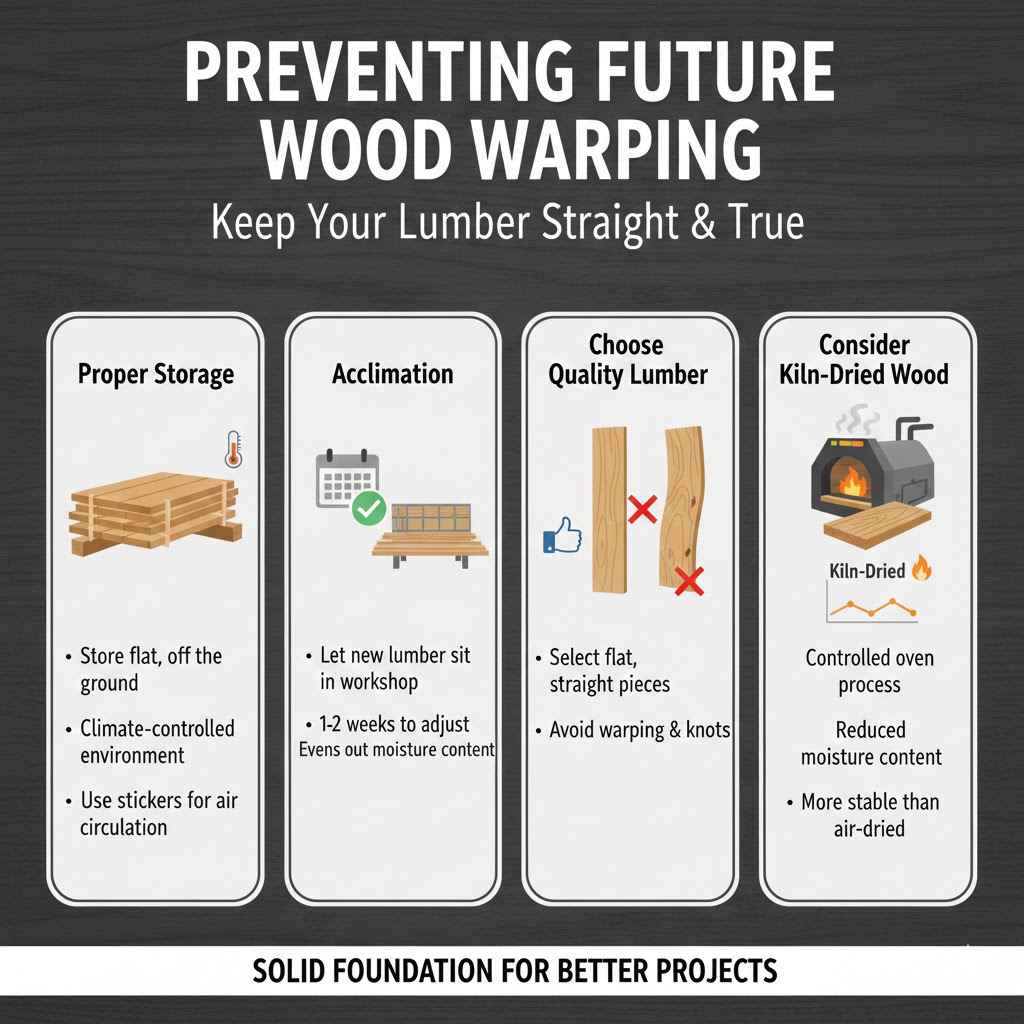
The best way to deal with warped wood is to avoid it in the first place. Here are some tips to keep your lumber straight and true.
- Proper Storage: Store lumber flat, off the ground, and ideally in a climate-controlled environment. Use stickers (thin strips of wood) between layers to allow for air circulation.
- Acclimation: Before using new lumber for a project, let it sit in your workshop for at least a week or two. This allows it to adjust to the local humidity and temperature, evening out moisture content.
- Choose Quality Lumber: Look for wood that appears flat and straight from the supplier. Avoid pieces with obvious signs of warping or significant knots that might lead to stress.
- Consider Kiln-Dried Wood: Kiln-dried lumber has had its moisture content reduced in a controlled oven. This process makes it more stable and less prone to warping than air-dried wood.
Taking these steps can save you a lot of frustration and time down the road. It ensures your projects start with a solid foundation of good, straight material.
Frequently Asked Questions
Question: How long does it take to straighten warped wood using just weights?
Answer: Straightening wood with just weights and moisture can take anywhere from 2 to 5 days. The exact time depends on how wet the wood gets, how much weight you apply, and how dry your environment is. You might need to repeat the process.
Question: Can I straighten twisted wood with a planer?
Answer: A planer is not ideal for correcting twists. It can flatten one face, but the twist will still be there in the other dimension. You might make the board thinner, but the twist will remain.
Jointer and planer are best for cupping and bowing.
Question: How much time should I allow for steaming warped wood?
Answer: Steaming the wood itself might take 30 minutes to an hour. However, the time it takes to cool and set under pressure is much longer, usually 12 to 36 hours. If multiple steaming sessions are needed, it could take 2-3 days in total.
Question: Is it better to buy new wood or straighten warped wood?
Answer: It depends on the value of the wood and how warped it is. For inexpensive wood with minor warps, straightening might be worth it. For valuable wood or severe warps, it’s often more practical to buy new lumber to save time and effort.
Question: How can I prevent my wood from warping in the first place?
Answer: Proper storage is key. Keep wood flat, off the ground, and in a stable environment. Letting wood acclimate to your workshop before use also helps significantly.
Choose kiln-dried wood when possible.
Summary
The time to straighten warped wood varies greatly, from a few days to potentially weeks for severe cases. Methods like pressure with moisture, steaming, or using machine tools like jointers and planers each have different timelines. Factors like warp severity, wood type, and your environment play a big role.
For minor issues, think 2-5 days. For moderate warps, expect 3-7 days. Severe warps might not be fixable or could take much longer.
Always consider the value of your time and the wood itself.