How Long Should Pendant Lights Hang: Essential Guide
Quick Summary:
For pendant lights, aim for 30-36 inches from the countertop or tabletop surface. This ensures comfortable head clearance and optimal task lighting. For entryways or living areas, hang them higher, about 60-72 inches from the floor, to avoid bumping into them and to allow for better general illumination.
Choosing the right height for your pendant lights can feel a bit tricky, but it’s actually quite straightforward once you know the basic rules! Getting it just right makes a big difference in how your space looks and feels, not to mention how functional it is. You don’t want to be ducking every time you reach for a plate, nor do you want lights so high they barely cast any useful glow. This guide will walk you through everything you need to know, making sure your pendant lights are perfectly positioned for both style and practicality. Let’s brighten up your home with confidence!
Understanding Pendant Light Hanging Heights: Why It Matters
Pendant lights are fantastic for adding style and focused light to any room. Whether you’re over a kitchen island, a dining table, or in a hallway, their placement is key. The height affects everything from safety (no bumping your head!) to the overall ambiance and effectiveness of the light. Getting this right means your pendants will not only look great but also serve their purpose beautifully. It’s about finding that sweet spot where form meets function.
The Golden Rules: General Guidelines for Pendant Height
Before we dive into specific areas, let’s cover some general principles. These are the foundational rules that guide most pendant light installations. Think of them as your starting point. The primary goals are to ensure comfortable clearance for people moving around and to provide the right amount of light for the task or area.
Clearance is King: Avoiding Head-Bumping Incidents
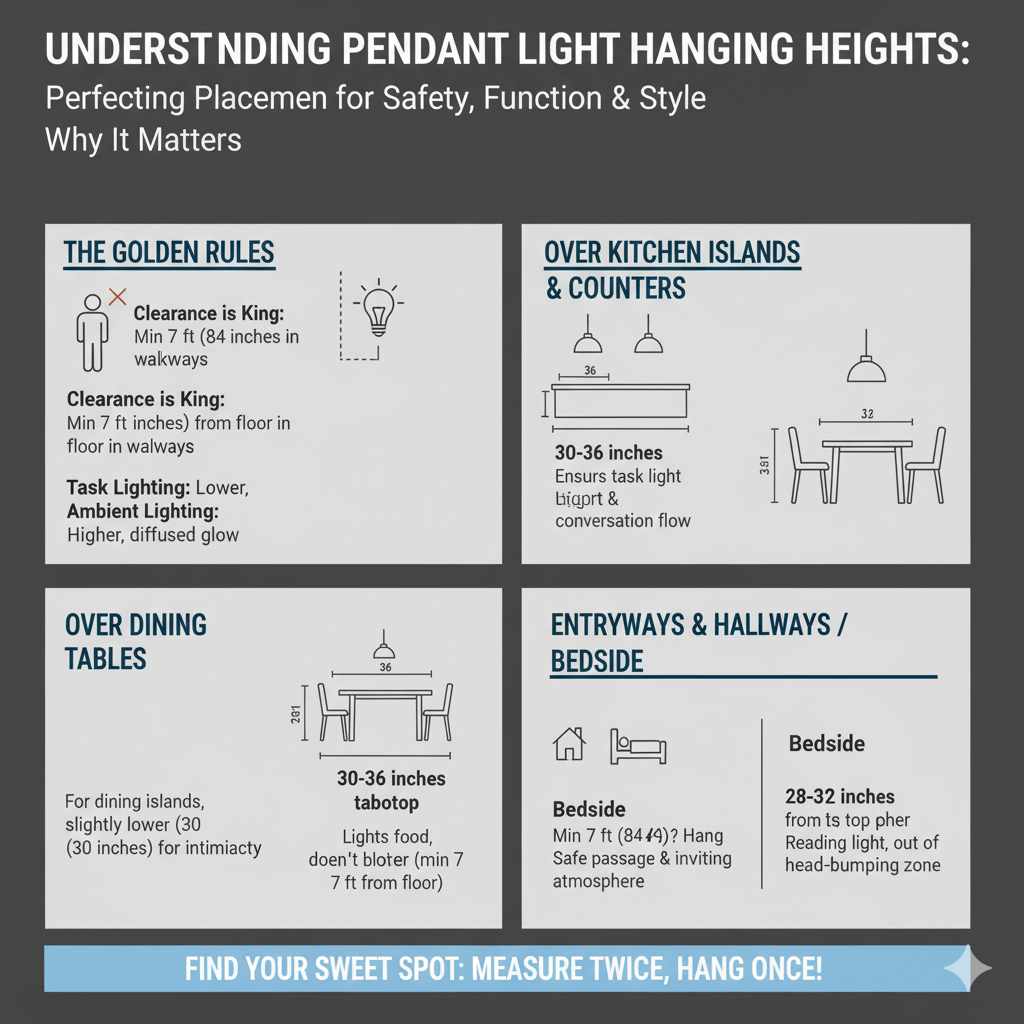
This is probably the most crucial factor, especially in high-traffic areas. You want enough space for people to walk underneath without fear of a collision. A general rule of thumb is to ensure at least 7 feet (84 inches) of clearance from the floor to the bottom of the pendant. This is a good starting point for areas where people will be standing or walking, like entryways or living rooms.
Task Lighting vs. Ambient Lighting
The purpose of the pendant light also dictates its height.
- Task Lighting: If the pendant is meant to illuminate a specific activity, like chopping vegetables on a kitchen counter or reading at a desk, it needs to be closer to the surface. This provides focused, bright light where you need it most.
- Ambient Lighting: If the pendant is more for general illumination or decorative purposes, it can be hung higher. This allows the light to spread out more, contributing to the overall mood and brightness of the room.
Pendant Lights Over Kitchen Islands and Countertops
This is one of the most popular spots for pendant lights. They add a stylish focal point and provide excellent task lighting for meal prep and casual dining. The key here is to balance clearance with effective illumination.
The Ideal Distance: Countertop to Pendant Bottom
For kitchen islands and countertops, the standard recommendation is to hang pendant lights 30 to 36 inches from the surface of the countertop. This measurement is crucial for a few reasons:
- Comfortable Head Clearance: Most people can comfortably stand or sit at an island without hitting their head.
- Effective Task Lighting: This height allows the light to shine directly onto the work surface, illuminating tasks like cooking and prepping without glare.
- Aesthetic Balance: It creates a visually pleasing proportion between the island and the fixtures.
It’s worth noting that this measurement is from the countertop itself, not the floor. If you have a particularly high or low ceiling, you might need to adjust slightly, but this 30-36 inch range is your best bet for most standard kitchens.
What If Your Island is for Dining?
If your kitchen island also doubles as a dining area, you might want to consider hanging the pendants a bit lower, closer to the 30-inch mark. This helps to create a more intimate dining experience and ensures the light is focused downwards on the eating surface. However, always ensure there’s still adequate clearance for people sitting down and getting up.
Visualizing the Height: A Simple Test
A great way to test this is to hold up a ruler or tape measure from your countertop. Imagine the pendant hanging there. Then, have someone stand next to the island. Can they stand comfortably? Can they see the countertop clearly? This hands-on test can be very revealing.
Pendant Lights Over Dining Tables
Dining room pendants are a fantastic way to create a centerpiece and set the mood for meals. The height here is crucial for both visibility and atmosphere.
The Dining Table Sweet Spot
For pendant lights hung over a dining table, the general rule is to position them 30 to 36 inches from the tabletop. This is similar to kitchen islands, but with a slightly different emphasis:
- Visibility of Food: This height ensures that the food on the table is well-lit, making it appealing and easy to see.
- Conversation Flow: The pendants are high enough not to obstruct eye contact between diners, promoting comfortable conversation.
- Aesthetic Impact: They hang at a height that makes them a prominent decorative element without overwhelming the space.
Considering Ceiling Height
If you have a very high ceiling (9 feet or more), you might need to hang the pendant slightly lower than 30 inches to maintain the correct visual proportion and ensure the light feels focused. Conversely, with lower ceilings, you might lean towards the higher end of the 30-36 inch range or even consider flush-mount fixtures instead of pendants. A common guideline for high ceilings is to ensure the bottom of the pendant is at least 7 feet (84 inches) from the floor. For example, if you have a 10-foot ceiling (120 inches), you’d have 36 inches of vertical space to work with above the 30-36 inch rule from the table.
The Rule of Thumb: A Practical Approach
A simple way to think about it is that the pendant should hang about one-third of the way down from the ceiling to the tabletop. For a standard 8-foot ceiling with a table, this often lands you in the perfect 30-36 inch range. Always measure from the tabletop!
Pendant Lights in Entryways and Hallways
Pendant lights in entryways and hallways serve a dual purpose: welcoming guests with style and providing functional light for navigation.
Ensuring Safe Passage
In areas where people are walking and standing, clearance is paramount. The most important rule here is to ensure there is at least 7 feet (84 inches) of clearance from the floor to the bottom of the pendant. This is a safety standard to prevent people from hitting their heads, especially if they are taller than average or if children are present.
Balancing Light and Space
The height can also depend on the size of the entryway or hallway and the scale of the pendant.
- Larger spaces or grand entrances: You might hang the pendant higher, perhaps closer to 72-84 inches from the floor, to make a statement without overpowering the space.
- Smaller or narrower hallways: A slightly lower hanging pendant can still be effective, but always maintain that 7-foot clearance.
Aesthetic Considerations
Consider the overall style of your home. A dramatic, large pendant might look best hung higher, while a series of smaller pendants could be hung at a consistent height to create a visual rhythm. It’s about creating an inviting atmosphere as soon as someone enters your home.
Pendant Lights Over Living Room Furniture (Coffee Tables, Sofas)
While less common than in kitchens or dining rooms, pendant lights can be a stylish addition to living areas, often used for accent lighting or to define a seating zone.
The Living Room Standard
When hanging pendants over a coffee table or near a sofa, the goal is to provide light without being intrusive. Aim for the bottom of the pendant to be approximately 60 to 72 inches from the floor. This generally ensures that it’s above eye level for someone sitting on the sofa and doesn’t interfere with conversation or viewing a television.
Clearance from Seating
Ensure there’s enough space between the pendant and the top of the sofa or chairs. You don’t want the light to feel like it’s looming over people. The 60-72 inch rule usually provides this comfortable distance.
Task vs. Accent Lighting in Living Rooms
If the pendant is intended for reading, you might hang it slightly lower, but still ensuring it’s not directly in the line of sight. If it’s purely for accent or ambient light, the higher end of the 60-72 inch range is appropriate.
Pendant Lights Over Beds (Bedroom Use)
Hanging pendant lights on either side of a bed can be a modern and chic alternative to traditional bedside lamps. This application requires careful consideration of comfort and safety.
Bedside Pendant Height: The Comfort Zone
For bedside pendants, the ideal height is typically 28 to 32 inches from the top of the mattress. This ensures that when someone is sitting up in bed, the pendant is out of their direct line of sight and won’t be bumped. It also positions the light at a good height for reading.
Considerations for Different Bed Heights
Remember that mattress heights can vary significantly depending on the frame and the mattress itself. Always measure from the top of the mattress to get the most accurate result. If you have a very high or low bed, you may need to adjust accordingly.
Visual Balance and Scale
The size of the pendant should also be in proportion to the bedside table (if used) and the overall bed size. Smaller, more delicate pendants often work best in bedrooms to avoid overwhelming the space.
Factors Influencing Pendant Light Height Decisions
While the general guidelines are helpful, several factors can influence the final decision on how high to hang your pendant lights. It’s not always a one-size-fits-all situation!
Ceiling Height: The Biggest Factor
Your ceiling height is arguably the most significant factor.
- Low Ceilings (8 feet or less): You’ll need to hang pendants higher to maintain adequate head clearance. This might mean sticking closer to the 7-foot clearance rule from the floor or using shorter pendants. In very low ceiling situations, flush-mount or semi-flush mount fixtures might be a better option.
- Standard Ceilings (8-9 feet): These ceilings offer the most flexibility and will generally work well with the standard guidelines (30-36 inches over surfaces, 84 inches from floor in walkways).
- High Ceilings (10 feet or more): You have more freedom, but you need to consider visual proportion. Hanging a pendant too high can make it feel lost. You might need to use longer chains or rods, or hang the pendant lower than the standard guideline from a surface to maintain a good visual balance. For example, if you have a 12-foot ceiling and a standard 3-foot island, hanging the pendant 30 inches above the island would mean the top of the pendant is 120 inches – 30 inches = 90 inches from the floor. This feels a bit high and might make the pendant seem disconnected. You might opt for a 36-inch drop from the island to bring it down to 84 inches from the floor.
Scale and Size of the Pendant Fixture
The physical size of the pendant itself matters.
- Large, statement pendants: These often look best hung higher to give them space to breathe and avoid dominating the room.
- Small, delicate pendants: These can be hung closer to surfaces, especially if used in a cluster, to create a more intimate feel.
A very large pendant hung too low can feel imposing and obstruct views. Conversely, a tiny pendant hung too high might get lost and not provide enough light.
Room Function and Purpose
As discussed earlier, the intended use of the space is critical.
- Task-oriented areas (kitchen prep, reading nooks): Require pendants to be closer to the surface for focused light.
- General illumination or decorative areas (entryways, living rooms): Can accommodate higher hanging pendants.
Visual Balance and Aesthetics
Sometimes, the ‘right’ height is also about how it looks.
- Proportion: The pendant should look balanced within the space. It shouldn’t seem too high or too low relative to furniture, ceiling height, or architectural features.
- Line of Sight: Ensure the pendant doesn’t obstruct important sightlines, whether it’s across a room, out a window, or between people seated at a table.
Electrical Box Location
This is a practical constraint. The existing electrical box in the ceiling dictates where the pendant can be hung. While it’s often possible to move an electrical box, it can add complexity and cost to the installation. You might need to choose a pendant that works with the existing location or consult an electrician about relocating it.
How to Measure and Install Pendant Lights Correctly
Now that you understand the ‘why,’ let’s get to the ‘how.’ Installing pendant lights is a DIY-friendly project, but precision in measuring is key.
Tools You’ll Need
Gathering the right tools before you start will make the process smoother and safer.
- Tape measure
- Pencil
- Ladder or sturdy step stool
- Screwdriver (Phillips and flathead)
- Wire strippers/cutters
- Voltage tester (non-contact is easiest for beginners)
- Safety glasses
- Work gloves (optional)
- Pendant light kit (including fixture, chain/rod, canopy)
- Wire nuts
Step-by-Step Installation Guide (Simplified)
Always turn off the power to the circuit at your breaker box before starting any electrical work. This is the most important safety step. Refer to your local building codes for specific electrical installation requirements, such as those outlined by the International Residential Code (IRC).
- Turn Off Power: Go to your electrical panel and switch off the breaker that controls the light fixture you’re replacing or installing. Use a voltage tester to confirm the power is off at the existing fixture wires.
- Remove Old Fixture (if applicable): Unscrew the canopy of the old light. Disconnect the wires (usually black to black, white to white, and ground to ground). Unscrew the mounting bracket.
- Install New Mounting Bracket: Attach the new mounting bracket that came with your pendant light to the electrical box in the ceiling, following the manufacturer’s instructions.
-
Adjust Pendant Length: This is where your measurements come in!
- Chains: If your pendant uses a chain, determine the desired length. You’ll need to remove links to shorten it.
- Rods: If it uses adjustable rods, screw them together to achieve the correct length.
- Wire: Some pendants have a cord that can be adjusted.
Ensure the total length from the ceiling to the bottom of the pendant meets your calculated height requirement. It’s often easier to have the pendant hanging slightly longer and then trim if needed, but be careful not to cut the electrical wire too short.
-
Wire the Pendant: Feed the pendant’s wire through the canopy and any rods/chain. Connect the wires according to the fixture’s instructions and standard wiring practices:
- Black wire from fixture to black wire from ceiling box (hot).
- White wire from fixture to white wire from ceiling box (neutral).
- Green or bare copper wire from fixture to ground screw/wire in ceiling box. Use wire nuts to secure the connections.
- Attach the Canopy: Carefully tuck the wires into the electrical box. Slide the canopy up to the ceiling and secure it with the provided screws.
- Install the Bulb: Screw in the appropriate light bulb, ensuring it does not exceed the maximum wattage recommended for the fixture.
- Restore Power and Test: Turn the power back on at the breaker box and test your new pendant light!
Important Safety Reminders
- Always turn off power at the breaker box. Never assume the power is off.
- Use a voltage tester to confirm power is off before touching any wires.
- If you are uncomfortable with electrical wiring, hire a qualified electrician. It’s better to be safe than sorry.
- Ensure your electrical box is securely mounted to the ceiling joist. A heavy pendant needs a strong support.
- Follow the manufacturer’s instructions for your specific pendant light.
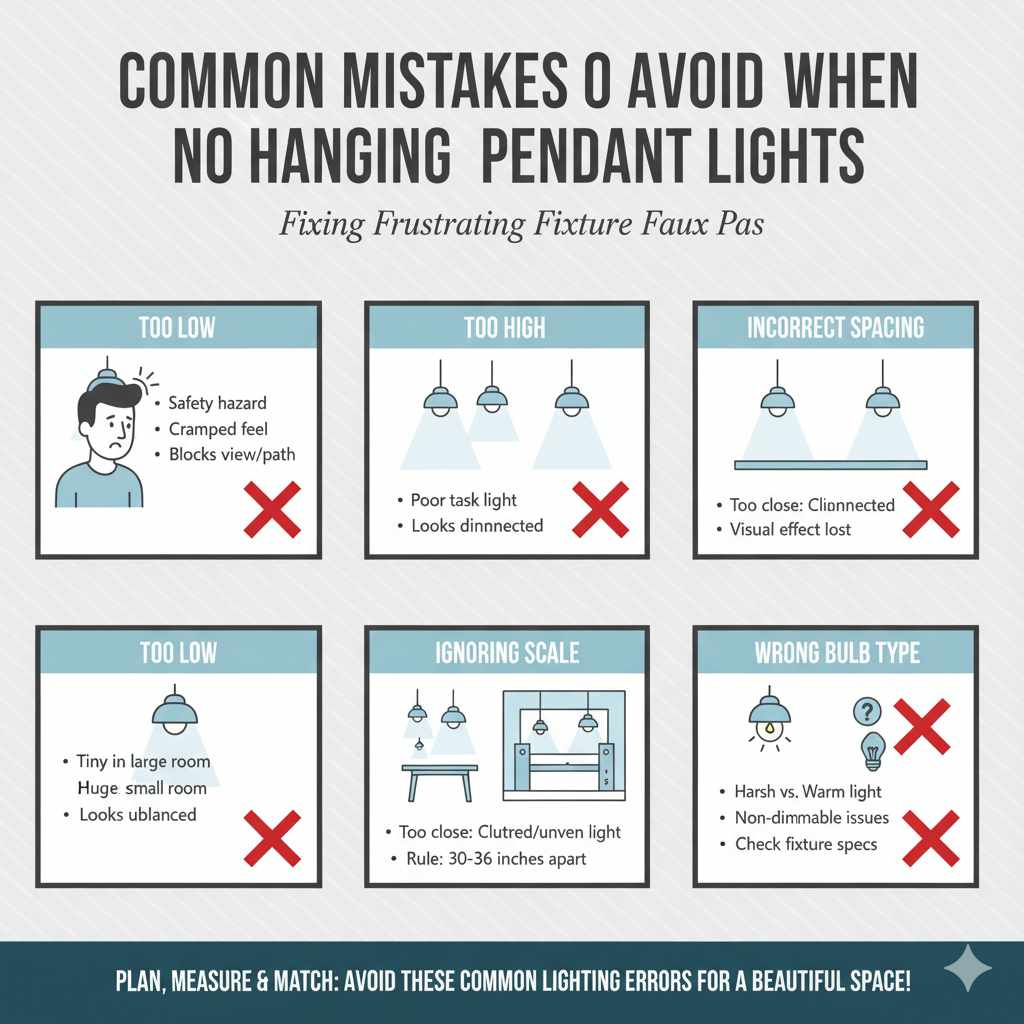
Common Mistakes to Avoid When Hanging Pendant Lights
Even with careful planning, some common pitfalls can lead to less-than-ideal results. Being aware of these can save you time and frustration.
Hanging Them Too Low
This is probably the most frequent mistake. Lights that are too low create a safety hazard and can make a space feel cramped. Always prioritize head clearance, especially in walkways and over surfaces where people will be standing.
Hanging Them Too High
Conversely, hanging pendants too high can make them feel disconnected from the space below. They might not provide adequate task lighting, and the visual effect can be diminished. This is especially common in rooms with high ceilings if the pendant isn’t scaled appropriately or hung with a long enough chain/rod.
Incorrect Spacing (for multiple pendants)
If you’re installing more than one pendant, the spacing is as important as the height.
- Too close together: They can look cluttered and may not provide even lighting.
- Too far apart: They might not effectively illuminate the intended area and can look awkward.
A good rule of thumb for pendants over an island or counter is to space them so there’s roughly 30-36 inches between each pendant, or so the outer edge of the pendant is about 6-12 inches in from the edge of the counter/island. Always measure from the center of each fixture.
Ignoring Room Scale and Proportion
A massive pendant in a tiny room or a minuscule one over a large dining table will throw off the balance of the space. Consider the overall dimensions of the room and the furniture when selecting and positioning your lights.
Not Considering the Bulb Type
The type of bulb you use affects the light quality and direction. Ensure your bulb choice complements the pendant’s design and provides the right kind of light (e.g., warm vs. cool, dimmable). Some fixtures have specific recommendations for bulb shape and wattage, often found on a sticker inside the fixture itself. Check out resources on proper bulb selection from organizations like the Energy Star program for energy-efficient options.
Failing to Account for Adjustability
Many pendant lights come with adjustable chains or rods. Don’t be afraid to use this feature! It’s there to help you achieve the perfect height. Measure twice, cut (or adjust) once.
Pendant Light Height Cheat Sheet
To make things super easy, here’s a quick reference table summarizing the key height recommendations. Remember these are guidelines, and your specific situation might require slight adjustments.
| Location | Surface/Floor to Pendant Bottom | Notes |
|---|---|---|
| Kitchen Island/Countertop | 30-36 inches from countertop surface | For task lighting and comfortable clearance. |
| Dining Table | 30-36 inches from tabletop | Ensures food is lit and conversation isn’t blocked. |
| Entryway/Hallway | Minimum 84 inches from floor (7 feet) | Prioritizes head clearance in walkways. |
| Living Room (over coffee table) | 60-72 inches from floor | Above eye level for seated individuals. |
| Bedroom (over bed/nightstand) | 28-32 inches from top of mattress | Comfortable for sitting up and reading. |
Adjusting for Different Ceiling Heights
Here’s a quick look at how ceiling height can influence your decision, assuming a standard fixture drop length.
| Ceiling Height | Recommended Pendant Height (from floor in open areas) | Considerations |
|---|---|---|
| 8 feet | 84 inches (minimum clearance) | May need shorter pendants or closer hanging to surfaces to maintain visual balance. |
| 9 feet | 84-96 inches | Standard guidelines usually work well. |
| 10 feet | 84-108 inches | Use longer chains/rods. Consider hanging slightly lower from surfaces for better visual connection. |
| 12+ feet | 84+ inches | Requires careful consideration of scale and proportion; longer drops are essential. |
Frequently Asked Questions (FAQ) About Pendant Light Height
Q1: How do I know if my pendant light is too high or too low?
A: If people are bumping their heads, it’s too low. If the light feels disconnected from the space, doesn’t illuminate the area well, or looks disproportionately small, it might be too high. Always measure from the surface (countertop, table) or the floor as per the guidelines.
Q2: Can I hang pendant lights at different heights in the same room?
A: Generally, it’s best to keep pendant lights at a consistent height within the same functional zone (e.g., all pendants over an island at the same height). However, you might use different heights in distinct areas of a large open-plan space, but do so thoughtfully to maintain visual harmony.
Q3: What if I have a very large or very small pendant? How does that affect height?
A: Larger pendants often need to be hung slightly higher to avoid overwhelming the space, while smaller pendants might hang closer to surfaces, especially when used in multiples, to make a greater impact.
Q4: How do I calculate the total drop length for my pendant?
A: The total drop length is the measurement from the ceiling to the bottom of the pendant. This includes the length of the rod/chain/cord plus the height of the fixture itself. You’ll adjust the rod/chain/cord length to achieve your desired total drop.
Q5: Do I need an electrician to hang pendant lights?
A: While many DIYers can install pendant lights, it involves working with electricity. If you are not comfortable or experienced with electrical wiring, it is always safest to hire a qualified electrician.
Q6: How far apart should multiple pendant lights be hung over a kitchen island?
A: For a standard kitchen island, aim for about 30-36 inches of space between the center of each pendant. This ensures even lighting and prevents them from looking too crowded.
Conclusion
Getting the height of your pendant lights just right is a simple yet impactful step in elevating your home’s design and functionality. By understanding the basic rules for clearance, task lighting, and visual balance, and by carefully measuring and considering your specific space—from ceiling height to the scale of your fixture—you can achieve stunning results. Remember the key guidelines: 30-36 inches above countertops and tables, and a minimum of 84 inches from the floor in walkways. Don’t be afraid to use these measurements as a starting point and make slight adjustments to suit your unique needs and aesthetic preferences. With a little planning and attention to detail, your pendant lights will not only look beautiful but also serve their purpose perfectly, adding warmth, style, and light to your home for years to come.