How Long To Wait Before Drilling Concrete
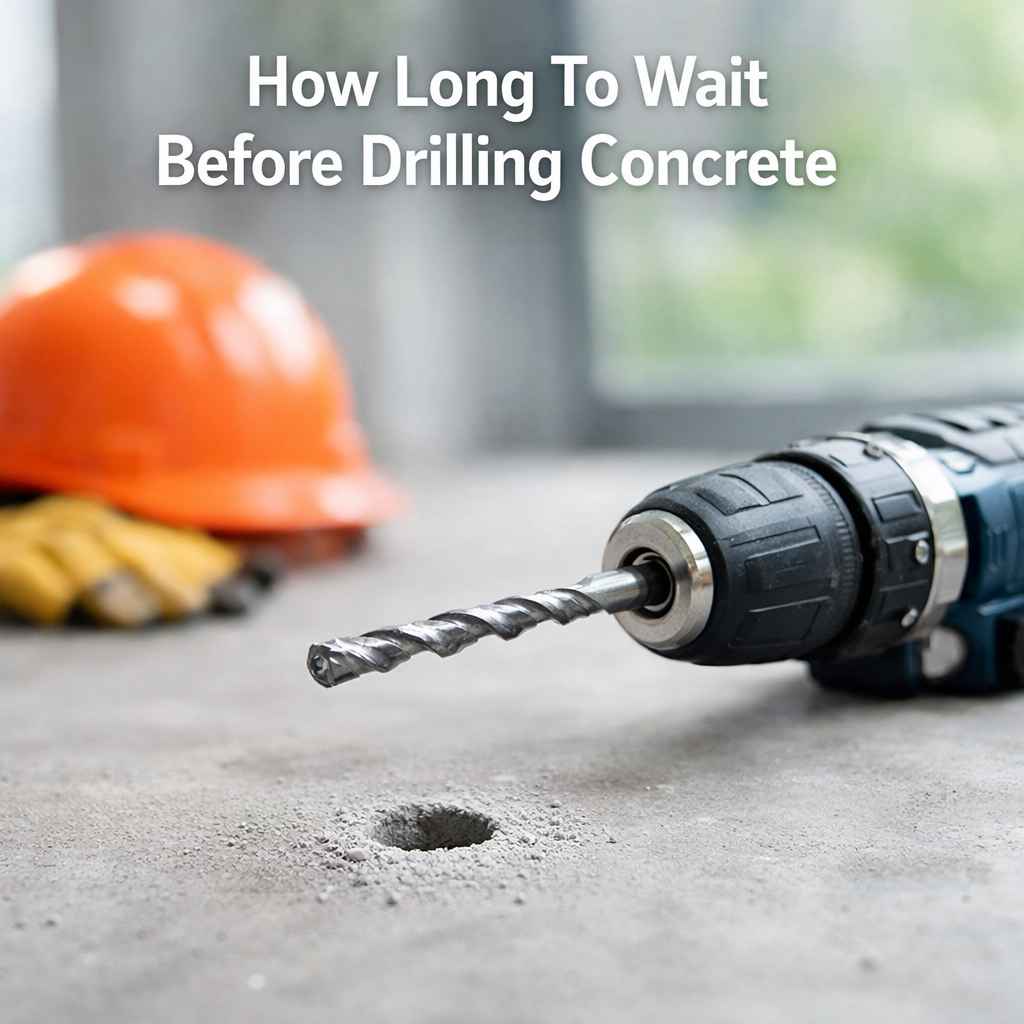
Deciding when to drill into fresh concrete can feel tricky, especially if you’re new to DIY projects. Many people wonder, How Long Should Concrete Cure Before Drilling? It’s a common question because drilling too soon can lead to cracks or weak spots, while waiting too long might delay your project. Don’t worry!
This guide breaks it down simply, step by step, so you know exactly what to do. We’ll cover everything you need to know to get it right.
Understanding Concrete Curing Times
What Is Concrete Curing?
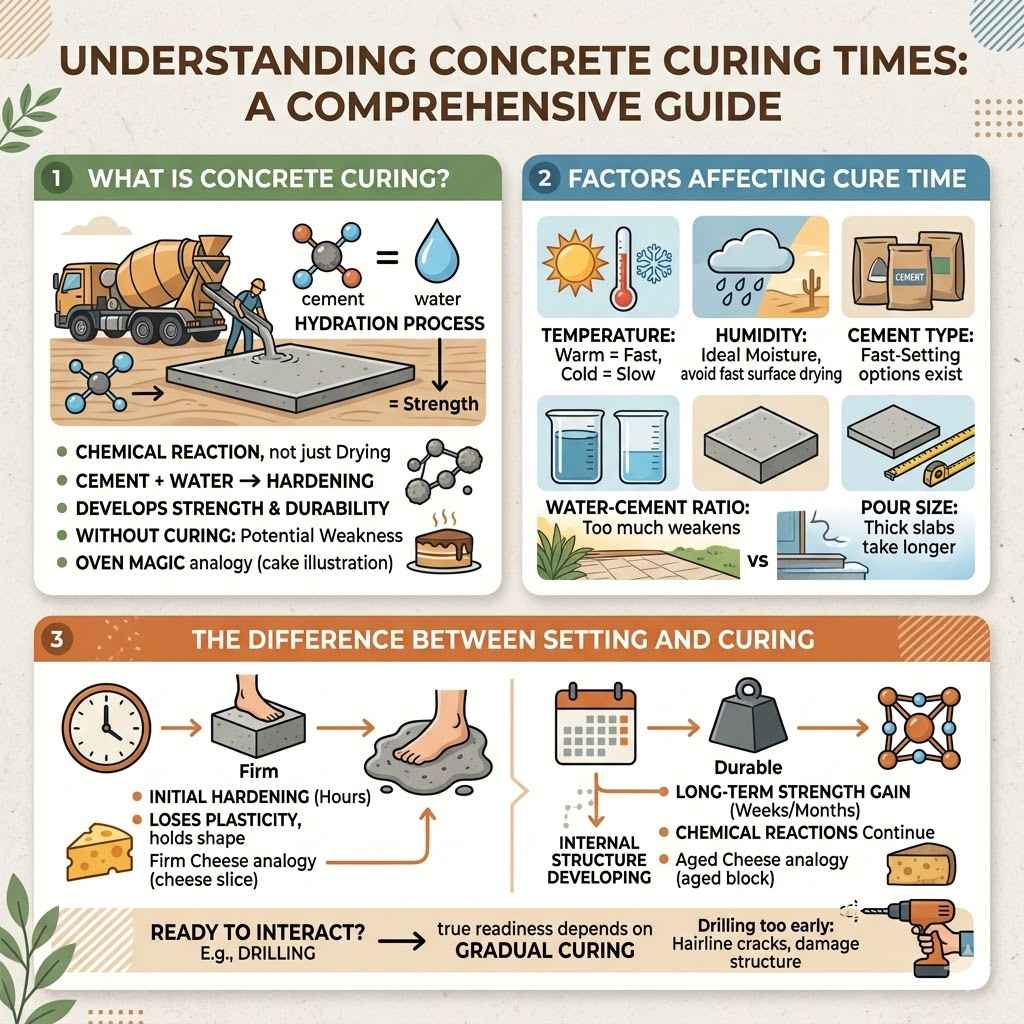
Concrete curing is the process where cement and water mix, creating a chemical reaction that hardens the concrete. This isn’t just drying; it’s a vital chemical change that gives concrete its strength and durability. Without proper curing, concrete might never reach its full potential strength.
Think of it like baking a cake. You need to mix the ingredients and then let the oven do its magic. If you take the cake out too early, it won’t be properly cooked inside.
Similarly, concrete needs time for its internal structure to develop. This development is what makes it hard and capable of holding weight and withstanding forces.
The curing process requires specific conditions, mainly moisture and a suitable temperature. When these conditions are met, the cement particles undergo a hydration process. This process links them together, forming a solid matrix.
The longer this hydration can continue, the stronger and more stable the concrete becomes. Understanding this fundamental process is key to knowing when it’s safe to interact with the concrete, like drilling into it.
Factors Affecting Cure Time
Several things can speed up or slow down how long concrete takes to become ready for drilling. The temperature of the air and the concrete itself is a big one. Warmer weather helps the chemical reaction happen faster, while cold weather slows it down considerably.
Humidity also plays a role; very dry air can cause the surface to dry out too quickly, which isn’t good for curing.
The type of cement used in the mix matters too. Some special cement types are designed to set faster. The water-cement ratio is another critical factor.
Too much water can weaken the concrete, while the right amount is essential for the hydration process. The size and shape of the concrete pour also influence curing. Large, thick slabs take longer to cure evenly than thin ones.
For example, a thick patio slab poured on a hot, sunny day might feel hard to the touch in a day or two, but it’s still gaining significant strength internally for weeks. Conversely, a thin concrete step poured on a cool, humid day might take much longer to reach the same internal strength. These variations mean there isn’t a single, one-size-fits-all answer for when to drill.
The Difference Between Setting and Curing
It’s important to know that concrete “sets” and “cures” are not the same. Setting is the initial hardening where concrete loses its plasticity and starts to become solid enough to hold its shape. This usually happens within a few hours.
Curing, however, is a much longer process where concrete gains its strength and durability through chemical reactions.
Imagine a block of cheese. When you first take it out of the fridge, it’s firm (set). But over days or weeks, it might age and develop more flavor and texture (cure).
Concrete is similar. It might be hard enough to walk on relatively quickly, but it’s still developing strength for a long time. This distinction is vital because many assume that once concrete is hard, it’s fully ready for any task.
Drilling into concrete too early, even if it has set, can damage the internal structure that is still developing. This can lead to hairline cracks or a weakening of the concrete around the drilled hole. Therefore, while setting is an observable change, true readiness for activities like drilling depends on the more gradual curing process.
How Long Should Concrete Cure Before Drilling?
General Curing Guidelines
For most typical concrete projects, like pouring a patio slab or a small foundation, a good rule of thumb is to wait at least 7 days before drilling. This allows the concrete to achieve a significant portion of its designed strength. While concrete continues to cure and gain strength for months, waiting a week is generally considered the minimum safe period for common drilling tasks.
This 7-day guideline is based on average conditions. If you are drilling small holes for light-duty anchors, you might be able to drill slightly sooner, perhaps after 3-4 days, if the concrete feels very solid. However, for larger holes or when you need to hang something heavy, waiting longer is always better.
The strength gained in those first few days is crucial for resisting the stress drilling can cause.
Consider a scenario where you need to install a clothesline pole in a concrete patio. If you drill too early, the forces from the pole could cause the concrete around the hole to crumble. Waiting a full week, or even two if conditions were cold during pouring, provides the concrete with the necessary internal structure to support the pole securely without damage.
Factors Dictating Minimum Wait Times
The specific type of drilling you plan to do greatly influences how long you should wait. If you are drilling small pilot holes for screws or very light-duty anchors, you might get away with a shorter waiting period. However, if you need to drill larger holes for heavy-duty anchors, structural bolts, or to pass pipes through the concrete, you need to allow the concrete much more time to cure and gain strength.
The intended load on the drilled area is also a key factor. Drilling into a concrete wall where you will hang a lightweight picture frame is very different from drilling into a concrete floor where you will anchor heavy machinery. The greater the stress the drilled hole will experience, the longer the concrete must cure.
A common statistic is that concrete can reach up to 70% of its designed compressive strength within 7 days under ideal curing conditions, but it continues to gain strength for weeks.
For example, if you are drilling holes to mount a TV bracket onto a concrete wall, this will put significant stress on the anchors. In such a case, waiting at least 14 days, and ideally 28 days, would be a much safer bet. This ensures the concrete has developed sufficient internal strength to reliably hold the bracket and TV without risking failure.
Can You Drill Too Early?
Yes, you can definitely drill too early, and it can cause problems. When concrete is still in its early stages of curing, its internal structure is still developing. If you drill into it before this structure is strong enough, you can damage it.
This damage can manifest as cracks radiating from the drilled hole, crumbling concrete around the edges, or a general weakening of the concrete in that area.
Imagine trying to poke a hole in a soft piece of cheese versus a hard block. If you poke the soft cheese, it will likely deform and tear. Similarly, drilling into under-cured concrete can cause it to break apart.
This is because the bonds between the cement particles are not yet fully formed and hardened. The pressure and vibration from the drill bit can easily break these weak bonds.
A common mistake beginners make is assuming that because the surface feels hard, the entire mass of the concrete is strong. However, the surface often hardens faster than the interior, especially in warmer weather. Drilling into a seemingly hard surface can still disturb the weaker interior, leading to hidden structural damage that might not be apparent immediately but can cause problems later on.
Best Practices for Drilling Concrete
Choosing the Right Drill Bit
When you’re ready to drill into concrete, selecting the right drill bit is essential. For concrete, you’ll need a masonry drill bit. These bits are designed with a hardened tip, often made of carbide, which is strong enough to cut through hard materials like concrete, brick, and stone.
Using a regular wood or metal drill bit will likely damage the bit and won’t make much progress.
Masonry bits come in various sizes, so choose the size that matches the anchor or fastener you plan to use. For most common tasks, a 1/4 inch or 3/8 inch masonry bit is sufficient. If you’re drilling for a large anchor, you’ll need a corresponding larger bit.
Some masonry bits are specifically designed for hammer drills, which provide a pounding action along with rotation, making them much more effective for drilling concrete.
For instance, if you are installing a shelf bracket that requires a 1/4 inch anchor, you would use a 1/4 inch masonry drill bit. If you are drilling a hole for a larger lag shield anchor, which might be 3/8 inch, you’d select a 3/8 inch masonry bit. Using the correct bit ensures a cleaner hole and makes the drilling process much faster and easier.
Using a Hammer Drill
A hammer drill is highly recommended for drilling into concrete. Unlike a regular drill, a hammer drill has a mechanism that provides a rapid hammering action while the drill bit rotates. This pounding action, combined with the rotation, chips away at the concrete, allowing you to make holes much more effectively and quickly than with a standard drill.
The hammering action is what breaks up the hard concrete material. For denser or thicker concrete, a hammer drill makes a significant difference in efficiency. When using a hammer drill, you typically engage the “hammer” mode.
This mode alternates between rotation and short, powerful blows. It’s important to apply steady, even pressure while drilling.
Consider drilling a hole for a bolt that needs to go through a concrete wall. With a regular drill, this could take a very long time and be quite difficult. However, with a hammer drill, the process becomes much smoother.
You simply select hammer mode, place the bit on the desired spot, and let the tool do the work. This saves time and reduces physical effort considerably.
Drilling Techniques and Safety
When drilling concrete, it’s crucial to use proper technique and safety measures. Start by marking the exact spot where you want to drill. For a clean start, you can use a center punch to create a small indentation, preventing the drill bit from wandering.
Begin drilling at a slow speed to create a pilot hole.
Once the pilot hole is established, increase the speed of your drill and engage the hammer function if you are using a hammer drill. Apply steady, firm pressure. Don’t force the drill; let the tool do the work.
Periodically pull the drill bit out of the hole while it’s still spinning to clear away dust and debris. This prevents the bit from overheating and makes drilling more efficient.
Safety is paramount. Always wear safety glasses to protect your eyes from concrete dust and debris. A dust mask is also highly recommended to avoid inhaling fine concrete particles.
If drilling for an extended period, consider ear protection, as hammer drills can be quite loud. Make sure the area around your work is clear of clutter and that you have a stable footing.
Dealing with Rebar or Mesh
Sometimes, when drilling concrete, you might encounter rebar (steel reinforcing bars) or wire mesh. These are embedded in the concrete to give it extra strength. Hitting rebar can be frustrating as it’s very difficult to drill through with standard masonry bits.
If you hit rebar, you have a few options.
If the rebar is not in a critical structural location and you are only drilling a small hole, you might be able to drill around it. However, this is not always possible or advisable. For larger holes or when structural integrity is important, you might need to stop drilling and reconsider the location of your hole or use a more powerful drill with a specialized rebar-cutting bit.
Some professionals use diamond core bits for this purpose, which can cut through both concrete and steel.
A common scenario is drilling into a concrete slab for a new anchor bolt. If the slab has reinforcing mesh, the drill bit might snag on it. If you are only drilling shallow holes for light anchors, you might be able to push through the mesh with enough force and the right drill.
However, if you hit rebar, it’s best to stop and reassess. For instance, if you are drilling into a concrete wall and hit rebar where you intended to place a heavy-duty anchor, that spot might no longer be suitable, and you’ll need to find a new location, ideally one free of rebar.
When Can You Safely Drill?
The 28-Day Rule
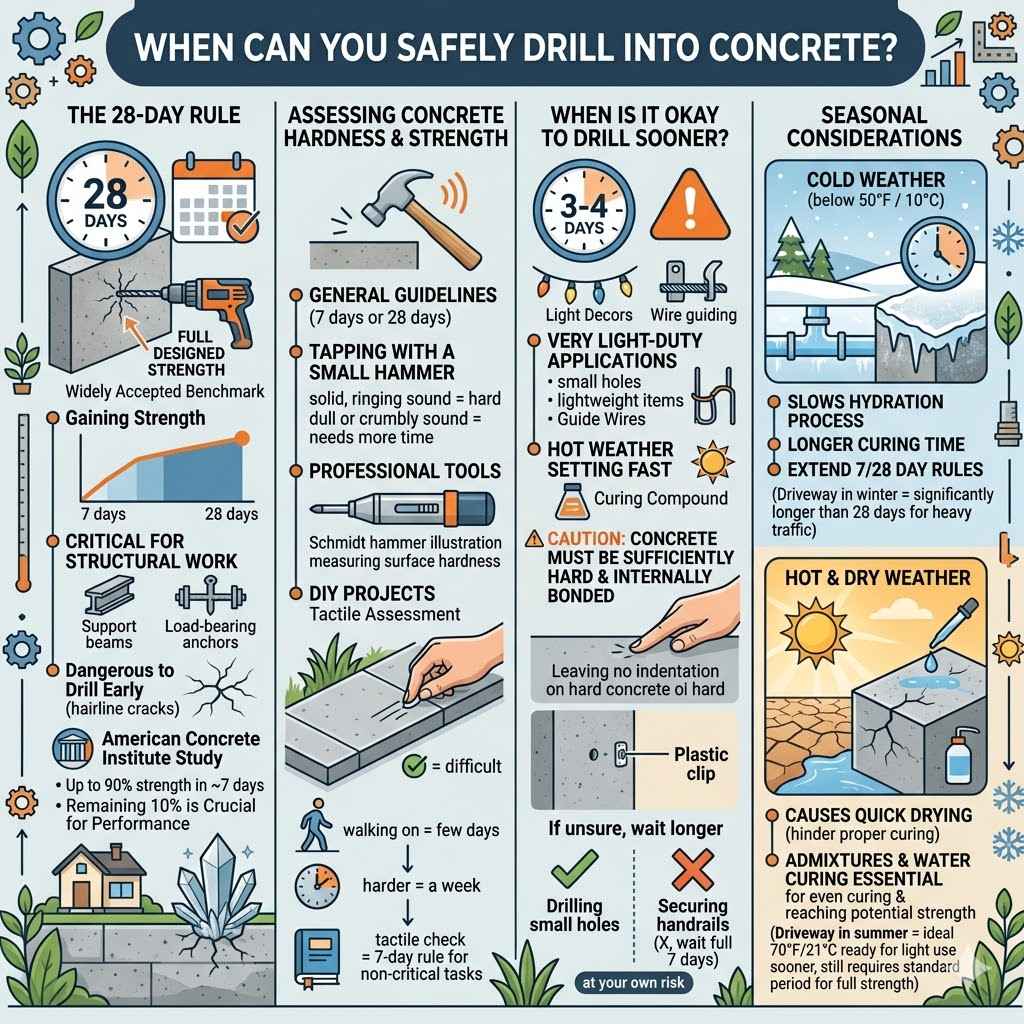
In the construction industry, a widely accepted benchmark for concrete reaching its full designed strength is 28 days. While concrete gains strength rapidly in the first week, this longer period ensures it has achieved its ultimate hardness and stability. Therefore, for critical applications or when maximum strength is required, waiting 28 days before drilling is often recommended.
This 28-day mark is especially important for structural work. It ensures that the concrete’s internal matrix is fully developed and can withstand the loads or stresses that will be applied. If you are drilling holes for heavy structural connections, load-bearing anchors, or any application where failure could be dangerous, adhering to the 28-day rule is a wise precaution.
For example, if you are drilling holes in a new concrete foundation wall to attach support beams, waiting the full 28 days provides the greatest assurance of the concrete’s strength. While it might feel solid after a week, the complete hydration and crystal formation that occurs over 28 days contribute significantly to its long-term durability and load-bearing capacity. A study by the American Concrete Institute suggests that concrete can reach up to 90% of its 28-day strength in about 7 days under favorable conditions, but the remaining 10% is crucial for ultimate performance.
Assessing Concrete Hardness and Strength
While 7 or 28 days are general guidelines, you can also use sensory cues and simple tests to assess the concrete’s readiness. After the initial 7 days, the concrete should feel very hard to the touch. You can try tapping it with a small hammer; it should produce a solid, ringing sound.
If it sounds dull or crumbly, it likely needs more time.
For more precise assessment, professional tools like a Schmidt hammer (rebound hammer) can measure the surface hardness, giving an indication of the concrete’s strength. However, for most DIY projects, relying on the time guidelines and tactile assessment is usually sufficient. Remember, it’s always better to wait a little longer than to risk damaging the concrete by drilling too soon.
Imagine you’ve poured a new concrete sidewalk. After a few days, it will be hard enough to walk on. After a week, it should feel much harder.
If you were to try to scratch it with a fingernail after a week, it should be very difficult to make any impression. This tactile assessment, combined with the general 7-day rule, is a good indicator for non-critical drilling tasks.
When is it Okay to Drill Sooner?
In some less demanding situations, you might be able to drill sooner than 7 days, but with caution. For very light-duty applications, like drilling small holes for hanging extremely lightweight decorations, or if the concrete was poured in very hot weather and appears to be setting exceptionally fast, you might consider drilling after 3-4 days. However, this is at your own risk.
The key is that the concrete must be sufficiently hard and internally bonded. If you can easily leave an indentation with your fingernail or if it feels slightly chalky, it is definitely too soon. For any application that will bear weight or experience stress, adhere to the longer curing times.
For example, if you are drilling tiny holes to mount small plastic clips for guiding wires along a new concrete wall, and the concrete feels extremely hard and dry after 4 days, it might be acceptable. However, if you are drilling to secure a handrail, you should absolutely wait the full 7 days or more. The risk of failure is much higher with the handrail, so the longer curing time is essential.
Seasonal Considerations
The weather during and after pouring concrete significantly impacts curing time. Cold temperatures (below 50°F or 10°C) slow down the hydration process considerably. If concrete is poured in cold weather, it will take much longer to reach its intended strength.
In such cases, the general 7-day or 28-day rules should be extended.
Conversely, hot and dry weather can cause concrete to dry out too quickly, which can lead to surface cracks and hinder proper internal curing. While it might feel hard sooner, it may not be as strong internally. If hot weather is expected, using admixtures to slow setting or employing curing compounds and water curing methods is essential.
This helps the concrete cure more evenly and reach its potential strength.
A practical example is a concrete driveway poured in the winter versus one poured in the summer. A driveway poured in freezing temperatures might require significantly longer than 28 days to cure sufficiently for heavy vehicle traffic. In contrast, a driveway poured in ideal 70°F (21°C) weather might be ready for light use much sooner, but still requires the standard curing period for full strength.
Frequently Asked Questions
Question: How long does concrete take to cure before I can walk on it?
Answer: You can typically walk on concrete after about 24 to 48 hours, provided the temperature is favorable. However, this is just for light foot traffic. It does not mean the concrete is ready for drilling or for bearing heavy loads.
Question: What is the fastest way to cure concrete?
Answer: The fastest way to cure concrete involves maintaining consistent moisture and temperature, ideally between 50°F and 75°F (10°C and 24°C). Using curing compounds or plastic sheeting can help retain moisture. Special admixtures can also speed up the initial setting and strength gain.
Question: Can I drill concrete after 3 days?
Answer: While concrete might feel hard after 3 days, it has not yet developed significant strength. Drilling after only 3 days is generally not recommended, especially for anything that will bear weight or stress, as it can lead to cracking and weakening.
Question: What happens if I drill into wet concrete?
Answer: Drilling into wet or uncured concrete will likely cause the material to crumble and deform around the hole. The drill bit can create a mess, and the resulting hole will be weak and potentially unstable, compromising the integrity of the structure.
Question: Should I wait longer if the concrete was poured in cold weather?
Answer: Yes, absolutely. Cold weather significantly slows down the chemical reactions that cure concrete. If concrete was poured in cold temperatures, you should extend the waiting period before drilling, potentially doubling or even tripling the normal timeframes.
Conclusion
Knowing How Long Should Concrete Cure Before Drilling? is key to successful projects. Generally, wait at least 7 days for most tasks. For critical jobs or heavy loads, aim for 28 days.
Always use the right tools like masonry bits and hammer drills. Assess the concrete’s hardness, and remember that cold weather means longer waits. Follow these simple guidelines for strong, durable results.