How Much Do Barnwood Builders Pay for Old Barns
Many people wonder, “How Much Do Barnwood Builders Pay for Old Barns?” It’s a common question, especially if you own an old barn and think it might be worth something. For beginners, figuring out the value can seem tricky. This guide breaks it down simply.
We will show you the steps to understand what your old barn might be worth to builders and what factors they consider. Get ready for a clear, easy path to finding out.
Understanding Barnwood Value
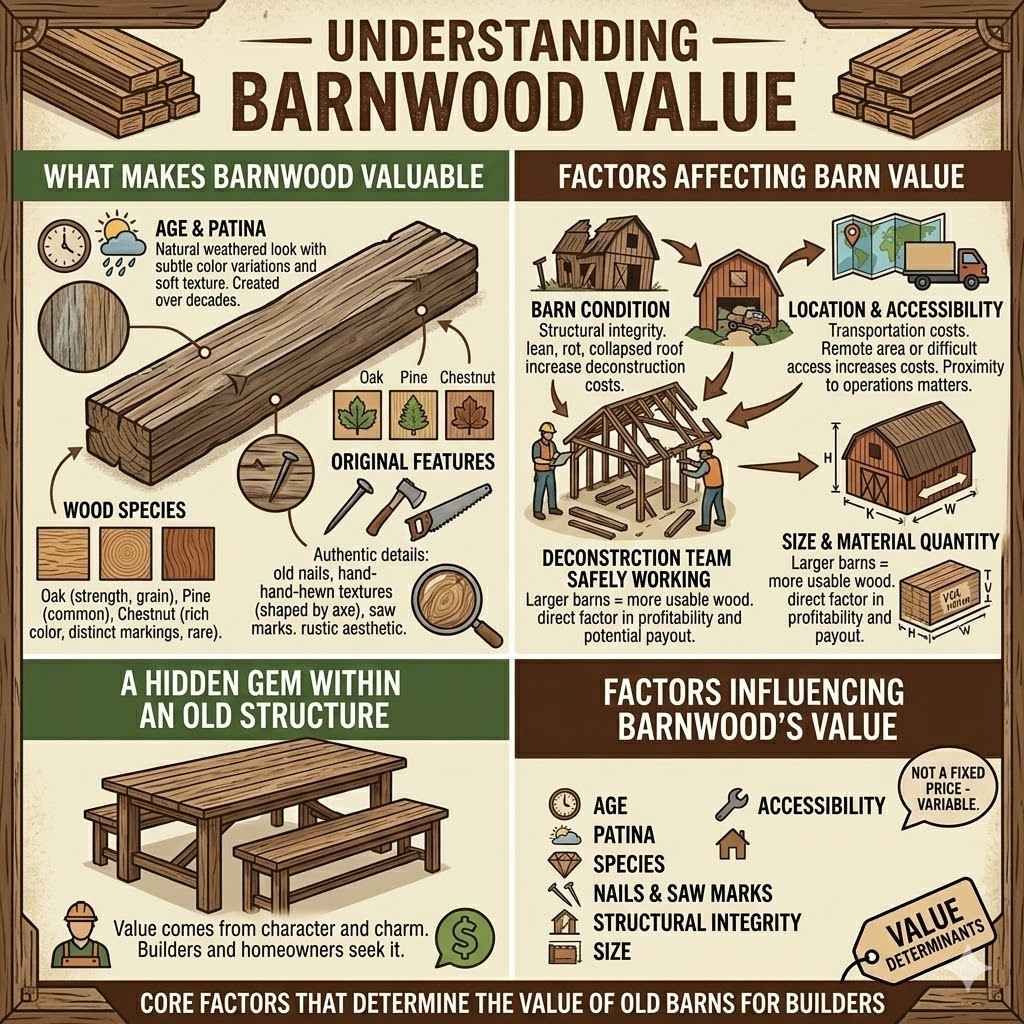
This section explores the core factors that determine the value of old barns for builders. We look at what makes barnwood desirable and why some barns are worth more than others. Think of it as getting to know the hidden gems within an old structure.
What Makes Barnwood Valuable
Barnwood isn’t just old wood; it’s wood with a story. Its value comes from several key characteristics that make it special for renovations and new projects. Builders and homeowners seek it out for its unique look and historical charm.
Age and Patina
The older a barn, the more character its wood develops. Over decades, exposure to the elements, especially sun and rain, creates a natural patina. This is the weathered look, often with subtle color variations and a soft texture.
It’s a look that new wood can’t easily replicate. The longer the wood has been exposed, the deeper this patina often becomes. This natural aging process is a primary driver of barnwood’s appeal.
Wood Species
Certain types of wood were used more often in older barns and are now highly prized. Oak, pine, and chestnut are common examples. Oak, in particular, is known for its strength and beautiful grain patterns.
Chestnut, though less common now due to disease, offers a rich color and distinct markings. The specific species of wood in a barn significantly impacts its value, with some being rarer and more sought after than others.
Original Features
Many barns still have original nails, saw marks, and even hand-hewn textures. These details tell a story of how the barn was built. Hand-hewn timbers, shaped by axes rather than modern saws, are a mark of true craftsmanship.
These original features add authenticity and a rustic aesthetic that is highly valued in interior design and furniture making. Builders look for these signs of history.
Factors Affecting Barn Value
The price builders are willing to pay for an old barn depends on more than just the wood itself. Several other elements play a big role in the overall assessment. It’s a mix of the barn’s condition and its location.
Barn Condition
The structural integrity of the barn is a major concern. A barn that is leaning, has a collapsed roof, or severe rot might be more costly to deconstruct safely. Builders prefer barns where the wood can be salvaged with minimal damage.
If a barn is in good shape, it means more usable wood can be extracted. This makes the salvage operation more profitable for them.
Location and Accessibility
Where the barn is located matters a lot. If a barn is in a remote area or difficult to access, it costs more to transport the salvaged wood. Builders often look for barns that are relatively easy to get to with their equipment.
Proximity to their operations or markets where they sell the wood also influences how much they might pay.
Size and Material Quantity
Larger barns naturally contain more wood. A bigger barn means a bigger potential payout for the builder because there’s more material to salvage and sell. The overall square footage and the height of the structure contribute to the total amount of barnwood available.
This quantity is a direct factor in the economic feasibility of the salvage project.
The Process of Barn Deconstruction
Salvaging barnwood is a job for skilled professionals. This section explains how barnwood builders actually take apart old barns. It covers the methods they use and why hiring experts is important.
Barn Salvage Methods
Builders use specific techniques to carefully take apart old barns. The goal is to get the best wood possible without damaging it. This requires skill and the right tools.
Manual Deconstruction
This involves carefully taking apart the barn piece by piece. Workers remove siding, rafters, beams, and floorboards by hand or with simple tools. It’s a slow process but helps ensure the wood remains in excellent condition.
This method is often used when the wood is particularly valuable or when preserving the integrity of each piece is paramount.
Controlled Dismantling
This is a more efficient approach than purely manual deconstruction. Builders might use cranes or other machinery to lift large sections of the barn. They still take care to separate the wood properly.
The aim is to work faster while minimizing damage to the salvaged materials. This strikes a balance between speed and preservation.
Tools of the Trade
Specialized tools are used to remove old nails and fasteners without splitting the wood. Pry bars, nail pullers, and even custom-made tools help. Workers often wear protective gear like hard hats, safety glasses, and gloves.
Safety is a top priority during any deconstruction project.
Why Hire Professionals
Taking down an old barn is not a DIY project. It’s dangerous and requires specific knowledge. Hiring experienced barnwood builders ensures the job is done safely and efficiently.
Safety Concerns
Old barns can be unstable. Ropes, pulleys, and heavy machinery might be involved. Professionals have the training and equipment to handle these risks.
They know how to assess structural weaknesses and work safely at heights. Falling debris is a significant danger that experts are trained to prevent.
Efficiency and Speed
Experienced teams can deconstruct a barn much faster than amateurs. They have a system and understand the best order to remove materials. This saves time and effort for the property owner.
Efficient deconstruction also means quicker access to potential earnings from the salvaged wood.
Maximizing Wood Yield
Professional salvagers know how to get the most usable wood from a barn. They understand which pieces are most valuable and how to extract them without damage. This skill translates directly into a higher return for both the builder and the property owner.
Their expertise ensures that valuable historical materials are not wasted.
How Much Do Barnwood Builders Pay for Old Barns
This is the core question for anyone considering selling an old barn for its wood. Here, we break down the payment structure and the reasons behind the prices.
Factors Influencing Payment
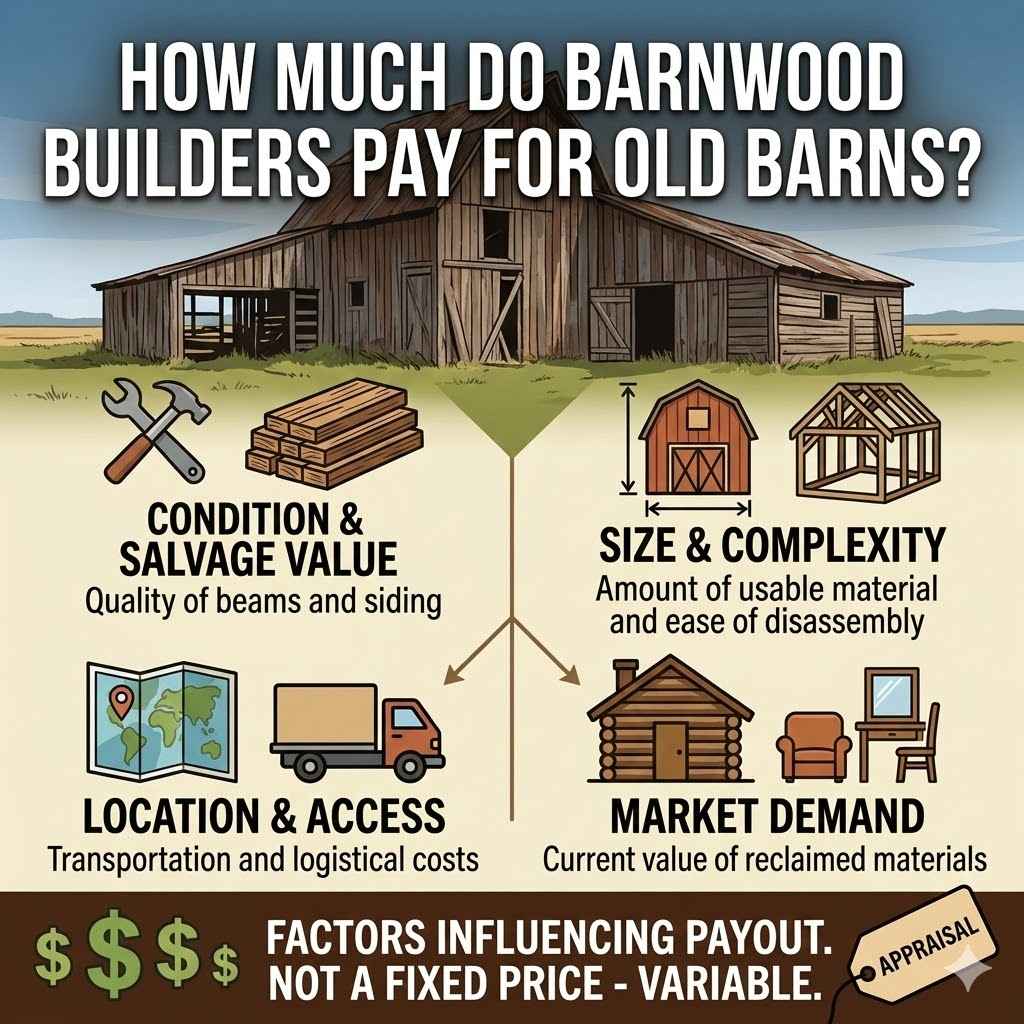
The actual amount paid for an old barn varies greatly. Several key elements influence how much a barnwood builder will offer.
Wood Quality and Quantity
As discussed before, the amount and quality of usable barnwood are primary determinants. A barn full of large, well-preserved oak beams will command a higher price than one with mostly small, damaged pine planks. Builders assess the total volume of desirable wood they can expect to recover.
Deconstruction Costs
The cost for the builder to deconstruct the barn is factored into their offer. If it’s a challenging site, requiring specialized equipment or taking longer, their offer will be lower to cover those expenses. They need to ensure the project is profitable after paying for labor and equipment.
Market Demand for Barnwood
The current market for reclaimed barnwood plays a significant role. If there is high demand from designers, builders, and homeowners for barnwood features, prices will naturally be higher. Conversely, if the market is slow, offers might be more conservative.
The value is directly tied to how much people want to buy the salvaged material.
Location of the Barn
A barn located close to a barnwood dealer or a region with a strong market for reclaimed materials will likely fetch a better price. Transportation costs are a major consideration for builders. If they have to truck materials long distances, their profit margin shrinks, affecting their offer to the seller.
Typical Pricing Structures
Barnwood builders usually compensate property owners in a few different ways. Understanding these structures helps set realistic expectations.
Cash Payment for Wood
In many cases, builders will offer a direct cash payment for the barn. This payment is based on their estimate of the salvageable wood’s value. They might offer a per-square-foot rate or a lump sum for the entire barn.
This is often the simplest and most straightforward transaction for the seller.
Free Deconstruction Services
Sometimes, if a barn has a significant amount of valuable wood, a builder might offer to deconstruct the barn for free in exchange for all the salvaged materials. This means the property owner doesn’t have to pay for the demolition. It’s a win-win situation if the barn is in good condition and the wood is highly desirable.
Percentage of Sale
Less commonly, a builder might agree to give the property owner a percentage of the profits from selling the salvaged barnwood. This arrangement requires trust and transparency from both sides. The owner might receive more money if the wood sells for a high price, but it also carries more risk if sales are slow.
Real-World Examples
To give you a better idea, let’s look at some hypothetical scenarios.
The Small, Well-Preserved Barn: Sarah owns a small 1890s dairy barn in rural Pennsylvania. It’s mostly intact with beautiful hand-hewn oak beams and original pine siding. A local barnwood dealer offers her $5,000 cash for the barn.
They estimate they can salvage enough quality wood to cover their deconstruction costs and make a profit selling it in their showroom.
The Large, Dilapidated Barn: John has a large, crumbling 1920s horse barn in a more remote part of Ohio. Much of the wood is rotted or has lost its structural integrity. The barnwood company offers to remove the barn for free, taking all the wood.
They explain that the cost and effort to salvage anything usable from this barn are high, so they can’t offer any cash payment.
The Mid-Sized Barn with High Demand: Maria has a mid-sized 1930s barn in New England. The market for barnwood is very strong in her area. A builder offers her $8,000 for the barn, knowing they can sell the reclaimed wood for a good price.
They estimate the deconstruction will cost them $3,000, leaving them a profit of $5,000.
Maximizing Your Barn’s Value
If you have an old barn, you want to get the most out of it. This section offers practical tips for preparing your barn and yourself for potential buyers.
Preparing Your Barn for Sale
Making your barn presentable can make a big difference when a builder comes to look. Simple steps can highlight its best features.
Clear Surroundings
Remove any junk, debris, or overgrown vegetation from around the barn. This makes it easier for builders to inspect the structure and access it. A clean exterior gives a better first impression.
Basic Maintenance (if possible)
If there are minor issues like a leaky gutter or a few loose siding boards, fixing them might be worthwhile. However, avoid major repairs, as the builder is primarily interested in the old wood. Focus on making it look tidy and stable.
Document History
Gather any old photos, deeds, or stories related to the barn. This historical information can add to its appeal and might even increase its perceived value for certain buyers.
What to Ask Potential Buyers
When a barnwood builder expresses interest, you should ask them questions. This helps you understand their offer and their process.
Their Experience
Ask how long they have been salvaging barns and how many they have dismantled. Experienced buyers will have references and a solid understanding of the process.
The Deconstruction Plan
Understand their method for taking the barn down. Will they use heavy machinery? How will they protect your surrounding property?
This ensures a safe and responsible operation.
What’s Included in the Offer
Clarify exactly what their offer entails. Are they paying you cash? Are they simply removing the barn for free?
Does their offer include any permits or insurance they might need?
Timeline
Ask how long the deconstruction process is expected to take. This helps you plan for any disruption to your property.
Common Barnwood Builders and Their Offers
This section names some well-known entities that deal with barnwood and gives an idea of what to expect from them. Keep in mind that these are general estimates.
Barnwood Builders and Companies
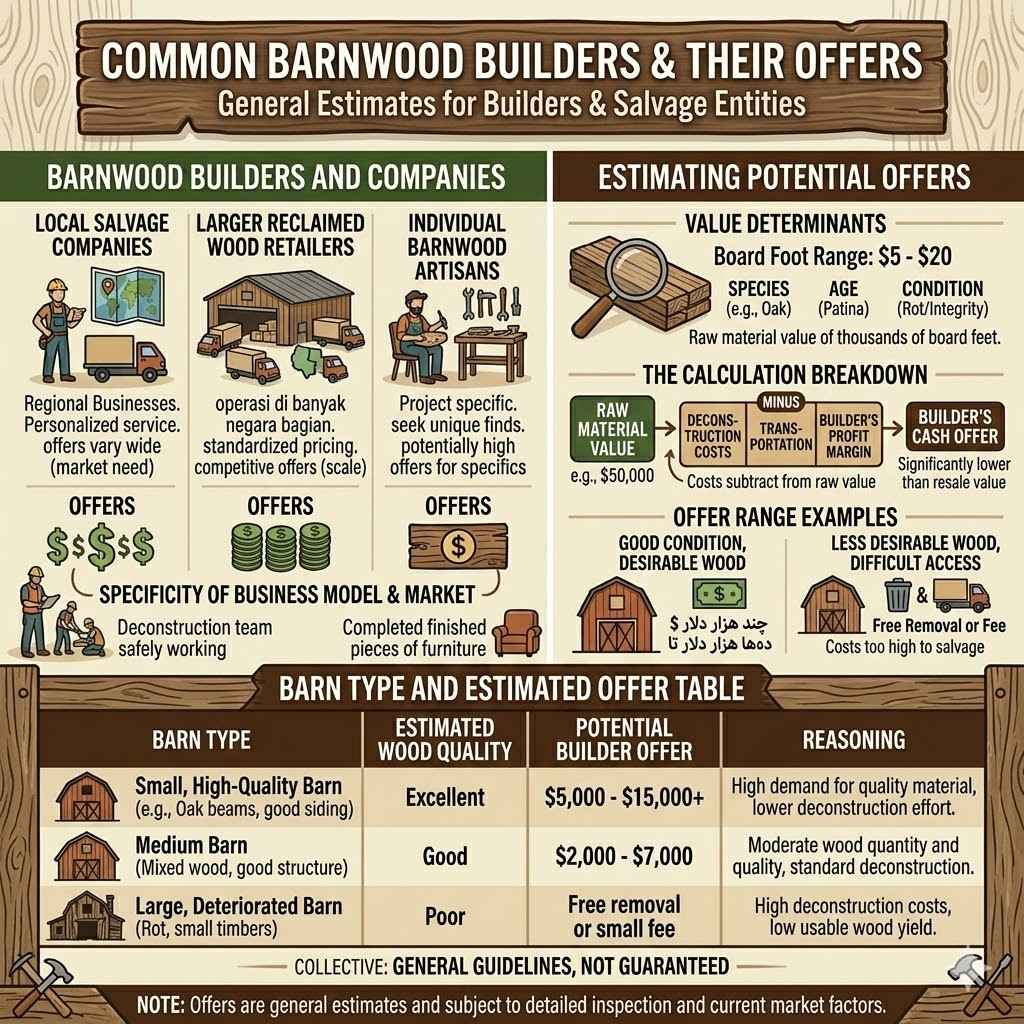
Several companies specialize in salvaging barnwood. Their offers can depend on their specific business model and the current market.
Local Salvage Companies
These are often smaller, regional businesses. They might offer more personalized service and understand local market demands. Their offers can vary widely based on their immediate need for materials.
Larger Reclaimed Wood Retailers
Bigger companies may have more consistent demand and a more standardized pricing structure. They often operate across multiple states. Their offers might be competitive due to their scale of operations.
Individual Barnwood Artisans
Some individual craftspeople also buy barns or parts of barns for their own projects. They might be looking for very specific types of wood and could offer a premium for unique finds.
Estimating Potential Offers
While an exact figure is impossible without inspecting the barn, you can estimate. The value of barnwood can range from $5 to $20 per board foot, depending on species, age, and condition. A mid-sized barn might have thousands of board feet of usable wood.
For instance, if a barn yields 5,000 board feet of oak at $10 per board foot, the raw material value is $50,000. However, the builder must subtract deconstruction costs, transportation, and their profit margin. This is why an offer might be significantly lower than the potential resale value of the wood.
A common offer structure for a barn in good condition with desirable wood might be a cash payment ranging from a few thousand dollars to tens of thousands of dollars. For barns with less desirable wood or difficult access, the offer could be simply free removal, or even a fee to remove it if it’s deemed too costly to salvage.
| Barn Type | Estimated Wood Quality | Potential Builder Offer | Reasoning |
|---|---|---|---|
| Small, High-Quality Barn (e.g., Oak beams, good siding) | Excellent | $5,000 – $15,000+ | High demand for quality material, lower deconstruction effort. |
| Medium Barn (Mixed wood, good structure) | Good | $2,000 – $7,000 | Moderate wood quantity and quality, standard deconstruction. |
| Large, Deteriorated Barn (Rot, small timbers) | Poor | Free removal or small fee | High deconstruction costs, low usable wood yield. |
Frequently Asked Questions
Question: How much does barnwood typically sell for per board foot
Answer: Barnwood prices vary widely, but you can expect to pay anywhere from $5 to $20 or more per board foot. This depends on the type of wood, its age, condition, and how it was processed.
Question: Can I sell my barn if it’s falling down
Answer: It’s possible, but less likely to fetch a good cash price. Builders may still be interested if there’s a significant amount of salvageable wood, but they will charge more for deconstruction due to safety risks.
Question: Do I need a permit to sell my barn for salvage
Answer: Regulations vary by location. It’s best to check with your local building or planning department. Sometimes permits are required for demolition or salvage operations.
Question: How long does it take to salvage a barn
Answer: Deconstructing a barn can take anywhere from a few days to several weeks, depending on its size, complexity, the method used, and the crew’s experience.
Question: What is considered ‘good quality’ barnwood
Answer: Good quality barnwood is typically old, made from hardwoods like oak or chestnut, has visible saw marks or hand-hewn textures, and is free from significant rot or insect damage.
Summary
Finding out How Much Do Barnwood Builders Pay for Old Barns? involves looking at wood quality, quantity, barn condition, and location. Builders offer cash, free deconstruction, or sometimes a profit share. Preparing your barn and asking smart questions helps you get the best deal.
Research local builders to understand their offers.