How Much Does It Cost to Restain Concrete Floors
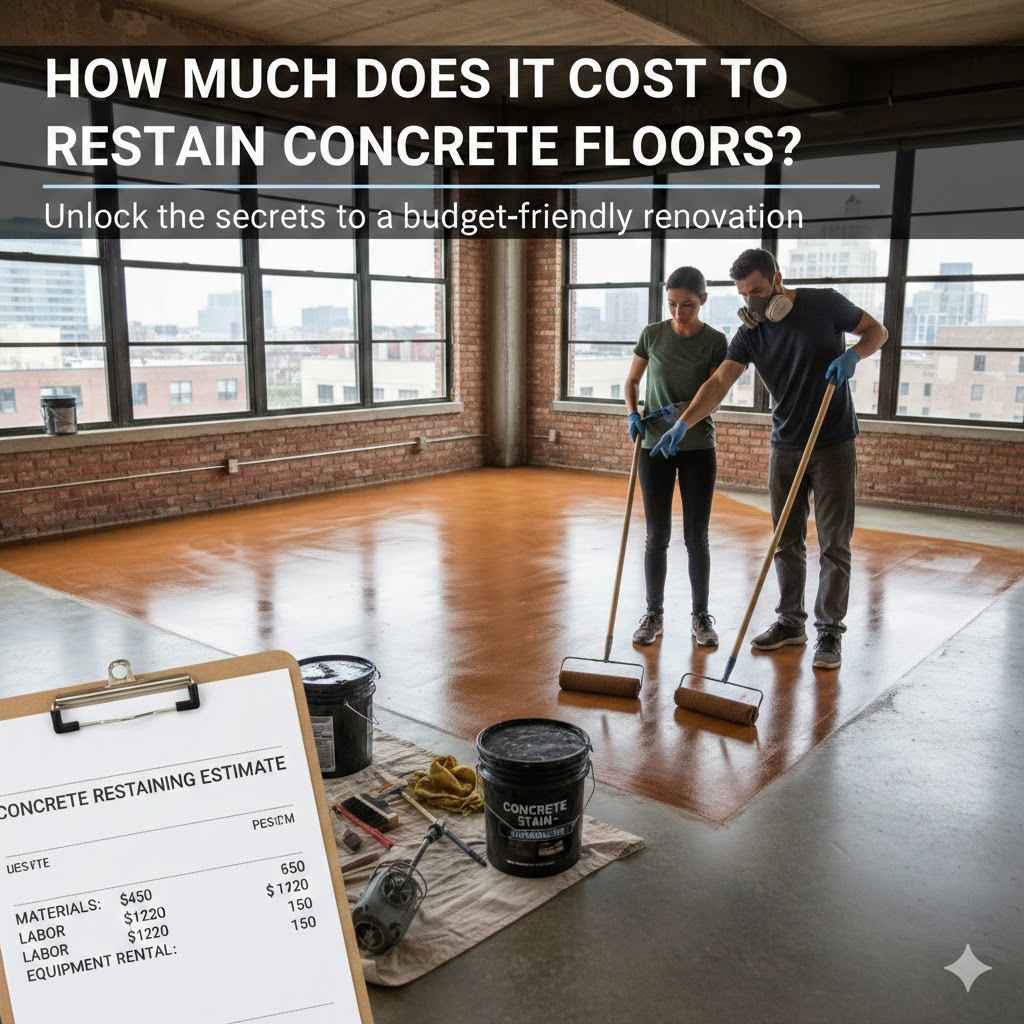
Figuring out How Much Does It Cost to Restain Concrete Floors can feel a bit tricky when you’re starting out. There are so many things that can change the price. But don’t worry, we’ll break it all down nice and simple.
You’ll get a clear idea of what to expect. We’ll walk you through everything you need to know to get a great-looking, newly stained concrete floor without any surprises.
Understanding Concrete Floor Staining Costs
When you decide to give your concrete floors a fresh look with stain, you’re probably wondering, “How Much Does It Cost to Restain Concrete Floors?” This is a common question, and the answer isn’t a single number. Several factors play a big role in the final price. Think of it like buying a car; the price changes based on the model, features, and extras.
Your concrete floor staining project works the same way.
The Many Factors Affecting Cost
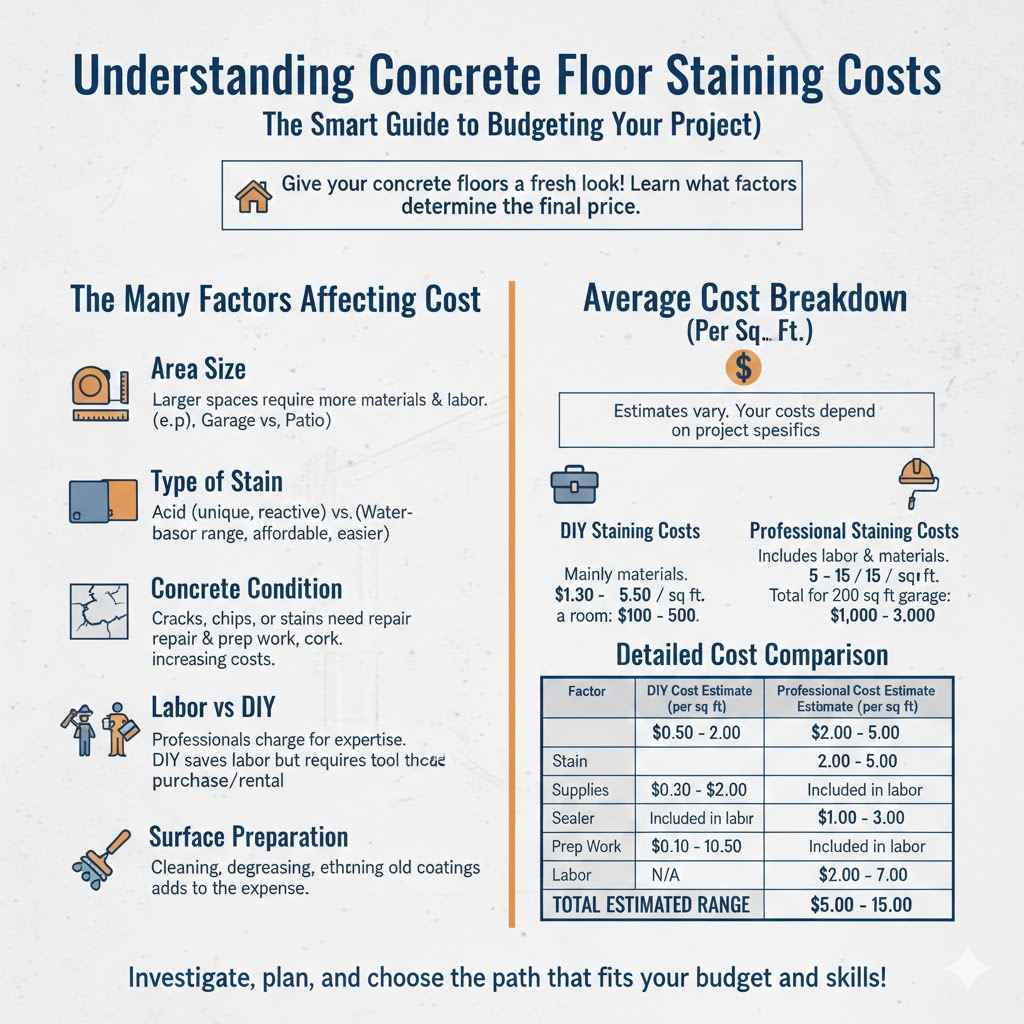
The price tag for staining concrete floors depends on a few key things. The size of the area is a major one. Bigger spaces naturally cost more because you’ll need more supplies.
The type of stain you choose also matters. Some stains are pricier than others. The condition of your current concrete is another factor.
If your floor needs a lot of work before staining, like deep cleaning or repairs, that adds to the cost.
Area Size
The square footage of your concrete floor is the most significant driver of cost. A small patio will be much cheaper to stain than a large garage or basement. It’s simple math; more surface area means more materials and more labor time.
Type of Stain
There are different kinds of concrete stains, and they come with different price tags. Acid stains react chemically with the concrete to create unique, variegated looks. They are often more expensive.
Water-based stains are generally more affordable and offer a wider range of colors. They are also easier to use.
Concrete Condition
If your concrete is in rough shape, you’ll likely spend more. Cracks, chips, or significant stains will need to be repaired and prepped before you can even think about applying new stain. This prep work can add time and material costs.
Labor vs. DIY
Deciding whether to hire a professional or do it yourself makes a huge difference in cost. Professionals charge for their expertise, tools, and time. Doing it yourself saves on labor costs but requires you to buy or rent tools and purchase all the materials.
For smaller projects, DIY can be very cost-effective. For larger or more complex jobs, professional help might be worth the investment.
Surface Preparation
Proper surface preparation is essential for a good stain job. This includes cleaning, degreasing, and sometimes etching or grinding the concrete. The more intensive the prep work needed, the higher the cost will be.
If your floor has old coatings or sealers, they will need to be removed.
Sealing and Top Coats
After staining, most people add a sealer or top coat. This protects the stain and the concrete, making it more durable and easier to clean. The type and quality of the sealer will also affect the overall expense.
Average Cost Breakdown
Let’s look at some typical cost ranges. These are estimates, and your actual costs might vary.
DIY Staining Costs
If you’re doing the work yourself, you’ll mainly pay for materials. For a typical room, you can expect to spend anywhere from $100 to $500. This includes stain, cleaning supplies, brushes, rollers, and a sealer.
Professional Staining Costs
When you hire professionals, expect to pay more. The average cost for professional concrete floor staining often ranges from $5 to $15 per square foot. So, a 200-square-foot garage could cost anywhere from $1,000 to $3,000.
| Factor | DIY Cost Estimate (per sq ft) | Professional Cost Estimate (per sq ft) |
|---|---|---|
| Stain | $0.50 – $2.00 | $2.00 – $5.00 |
| Supplies (rollers, brushes, etc.) | $0.20 – $1.00 | Included in labor |
| Sealer | $0.50 – $2.00 | $1.00 – $3.00 |
| Prep Work (cleaning, degreasing) | $0.10 – $0.50 | Included in labor |
| Labor (Professional only) | N/A | $2.00 – $7.00 |
| Total Estimated Range | $1.30 – $5.50 | $5.00 – $15.00 |
DIY Concrete Floor Staining Guide
If you’re leaning towards doing it yourself to save money, here’s a simple guide. Understanding How Much Does It Cost to Restain Concrete Floors is easier when you know the steps involved in doing it yourself.
Step 1: Clean the Concrete Thoroughly
This is the most important step. Any dirt, grease, or old coatings will prevent the stain from soaking in evenly. Use a good concrete cleaner and a stiff brush or a pressure washer.
Rinse well and let it dry completely. You might need to use a degreaser for oily spots.
Step 2: Repair Any Damage
Fill any cracks or holes with a concrete repair product. Let it cure according to the product instructions. Once dry, you might need to lightly sand down the repaired areas so they are level with the rest of the floor.
Step 3: Etch or Grind (Optional but Recommended)
For better stain adhesion, especially with acid stains, you might need to etch or lightly grind the concrete surface. Etching usually involves using a mild acid solution (follow safety instructions carefully!) or a specialized concrete etcher. Grinding uses a floor grinder with an abrasive pad.
This opens up the pores of the concrete. If you use a water-based stain and your concrete is very clean and porous, you might be able to skip this. Always test in an inconspicuous area.
Step 4: Apply the Stain
For water-based stains, you can often use a garden sprayer or a roller. For acid stains, a plastic pump sprayer is typical. Work in small sections.
Apply the stain evenly. If you want a more varied look, you can use different techniques or colors. Always follow the manufacturer’s instructions for application and drying times.
You might need multiple coats to achieve the desired depth of color.
Step 5: Neutralize and Rinse (for Acid Stains)
If you used an acid stain, you must neutralize the acid after it has had time to react. Typically, this involves applying a neutralizing solution (like ammonia and water) and then rinsing thoroughly. For water-based stains, you usually just rinse off any excess stain.
Step 6: Apply a Sealer
Once the concrete is completely dry after staining and rinsing, apply a good quality concrete sealer. This protects your beautiful new color and makes the floor easier to maintain. Rollers are commonly used for applying sealers.
You might need two coats. Choose a sealer appropriate for the traffic and use of your space (e.g., a high-traffic sealer for a garage).
Professional Concrete Floor Staining
Hiring professionals can save you a lot of time and effort. It also often leads to a more consistent and high-quality finish. When you get quotes, make sure they include all the steps from cleaning and prep to the final sealer.
What Professionals Offer
Professionals have the right tools, like industrial grinders and powerful vacuums, which can make a big difference in the preparation stage. They also have experience with different stain types and know how to achieve specific looks. They can advise you on the best stain and sealer for your needs and budget.
Getting Quotes
Always get at least three quotes from different contractors. Ask for references and check their reviews. Ensure their quotes are detailed and clearly outline what is included in the price.
Factors That Can Increase Costs
While we’ve covered the main cost drivers, some specific issues can push the price up.
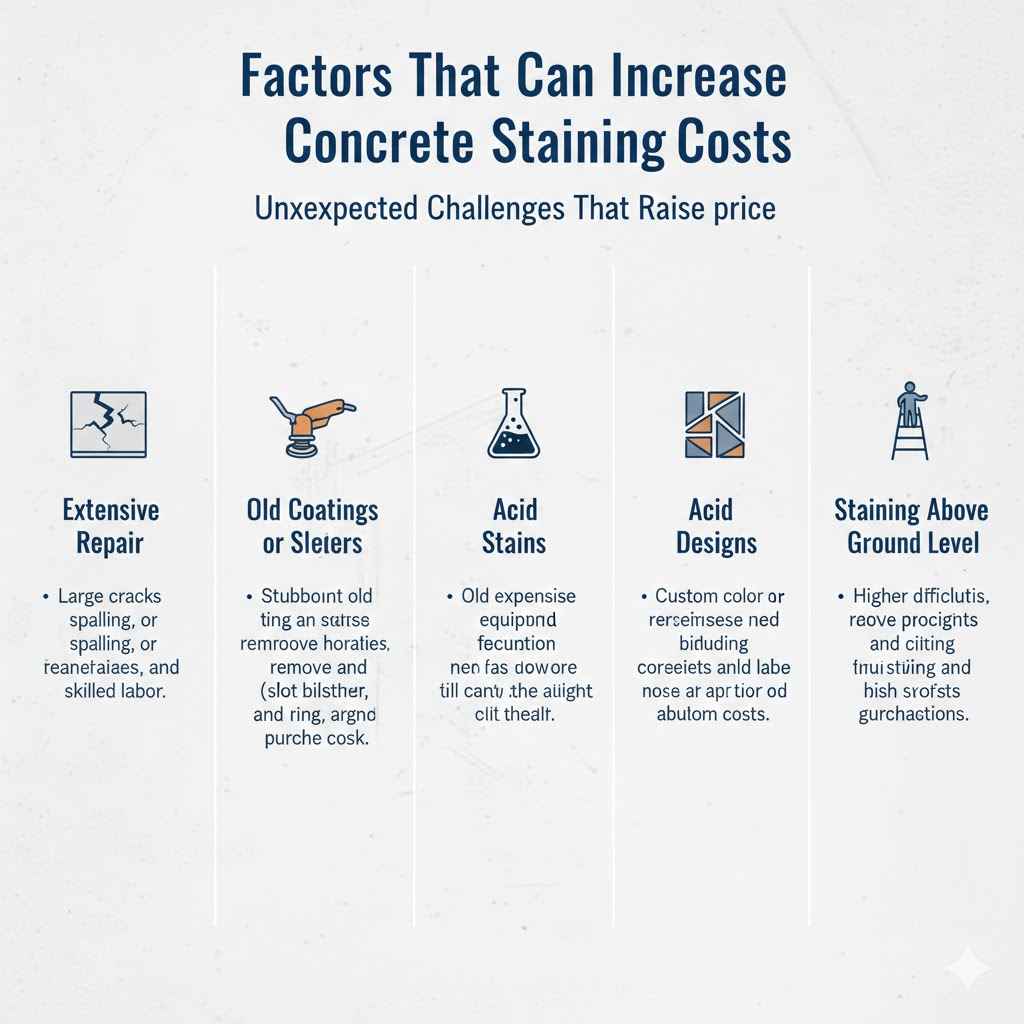
Extensive Concrete Repair
If your concrete has large cracks, spalling (surface flaking), or sinking sections, the repair work can be time-consuming and costly. This might involve professional concrete patching or even resurfacing.
Old Coatings or Sealers
Removing stubborn old coatings or sealers can be a difficult and expensive process. It often requires specialized equipment like scarifiers or shot blasters, which most DIYers don’t have access to.
Acid Stains
As mentioned, acid stains tend to be more expensive and require more careful handling and neutralization than water-based stains, adding to both material and labor costs.
Multi-Color or Complex Designs
If you want a custom design with multiple colors or intricate patterns, this will require more skilled labor and more detailed application steps, increasing the overall price.
Staining Above Ground Level
Staining a driveway or a raised patio can sometimes be more challenging due to access and the need for fall protection, potentially leading to higher labor costs.
Frequently Asked Questions
Question: What is the difference between concrete stain and paint?
Answer: Stain penetrates the concrete to color it, offering a more natural, translucent look. Paint sits on top of the concrete and forms a coating, usually providing a solid, opaque color. Stains are generally more durable and less prone to chipping or peeling than paint.
Question: How long does concrete stain last?
Answer: With proper application and maintenance, concrete stain can last for many years, often a decade or more. The durability depends on the type of stain, the quality of the sealer applied, and the amount of traffic and exposure to elements the floor experiences.
Question: Can I stain a concrete floor that has been previously sealed?
Answer: Yes, but you must remove the old sealer completely first. If the old sealer is not removed, the new stain will not penetrate the concrete and will likely peel or chip.
Question: How long does it take to stain concrete floors?
Answer: For a DIY project, staining and sealing a typical room can take 1 to 3 days, depending on the size, drying times between coats, and how much prep work is needed. Professional jobs might be faster due to their experience and equipment.
Question: Is concrete staining slippery?
Answer: Unsealed or poorly sealed stained concrete can be slippery, especially when wet. However, applying a good quality concrete sealer, especially one with an anti-slip additive, will significantly improve traction and reduce slipperiness.
Final Thoughts
Knowing How Much Does It Cost to Restain Concrete Floors involves looking at project size, stain type, and whether you DIY or hire help. Expect DIY to cost a few hundred dollars for materials, while professional jobs can range from $5 to $15 per square foot. Careful prep work and a good sealer are key to a lasting, beautiful finish for your concrete floors.