How Much Per Sq Ft To Install Hardwood Flooring
Figuring out the cost of installing hardwood floors can feel like a puzzle, especially if you’re new to home improvement projects. You want a beautiful, lasting floor, but the numbers can seem unclear. So, How Much Per Sq Ft to Install Hardwood Flooring? is a common question.
It’s not as complicated as it looks! We’ll walk through it simply, step by step, so you know exactly what to expect and can make the best choice for your home.
Understanding Hardwood Flooring Installation Costs
When you look into installing hardwood floors, the total price isn’t just for the wood itself. It’s a mix of different elements that come together to give you a finished, beautiful floor. These elements include the cost of the actual hardwood planks, the labor involved in putting them down, and any extra materials needed for a perfect finish.
Many factors can change these numbers, making it tricky to guess without knowing more.
The price per square foot is a useful way to compare different options, but it’s important to remember it’s an estimate. It gives you a ballpark figure, but the final cost can vary quite a bit. We’ll break down all the pieces that make up this number so you can get a clear picture.
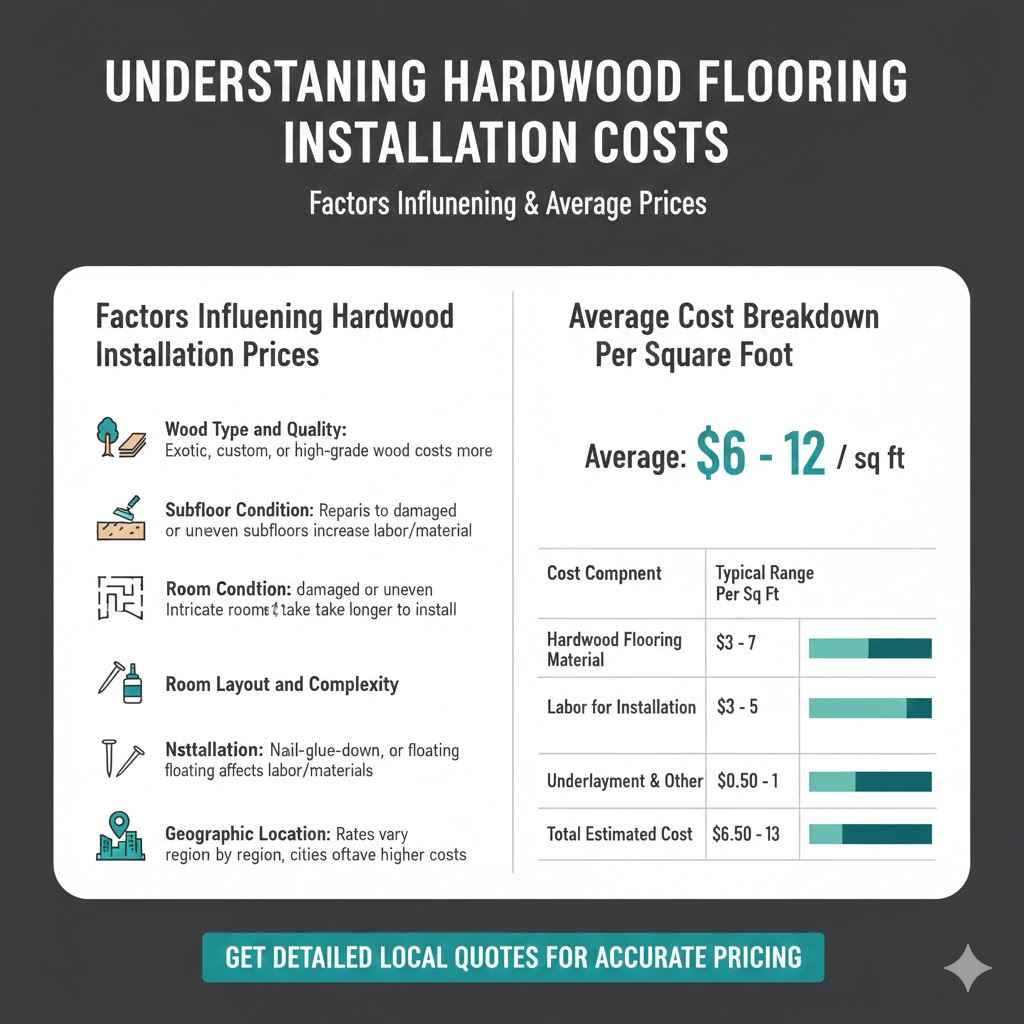
Factors Influencing Hardwood Installation Prices
Several things can make the cost of installing hardwood floors go up or down. The type of wood you choose is a big one; some hardwoods are much rarer and harder to find, which naturally makes them more expensive. For example, oak is common and less costly than exotics like Brazilian cherry or walnut.
The condition of your existing subfloor also plays a role. If it’s uneven, damaged, or needs significant repair, installers will have to spend more time and use more materials to prepare it. This adds to the overall labor and material costs.
The complexity of the room’s layout matters too. Rooms with many corners, angles, or built-in features will take longer to install than a simple rectangular space. This increased labor time translates to a higher price.
- Wood Type and Quality: Different wood species have varying price tags. Higher quality wood, with fewer knots and a more uniform grain, costs more. Exotic hardwoods are generally the priciest.
- Subfloor Condition: A damaged or uneven subfloor requires extra preparation, increasing labor and material costs.
- Room Layout and Complexity: Intricate rooms with many angles and obstacles take longer to install than simple, open spaces.
- Installation Method: The way the hardwood is installed (e.g., nail-down, glue-down, floating) can affect labor costs and the need for specific underlayments.
- Geographic Location: Labor rates and material prices can differ significantly based on where you live. Major metropolitan areas often have higher costs than rural areas.
These factors don’t just change the total bill; they affect the per-square-foot cost. A project that needs a lot of subfloor repair in a complex room with expensive wood will have a much higher per-square-foot price than a straightforward installation of a common wood species in an open room.
Average Cost Breakdown Per Square Foot
When people ask, “How Much Per Sq Ft to Install Hardwood Flooring?”, they are usually looking for an average. This average gives them a starting point for budgeting. It’s important to see this as a range, as real-world costs vary widely.
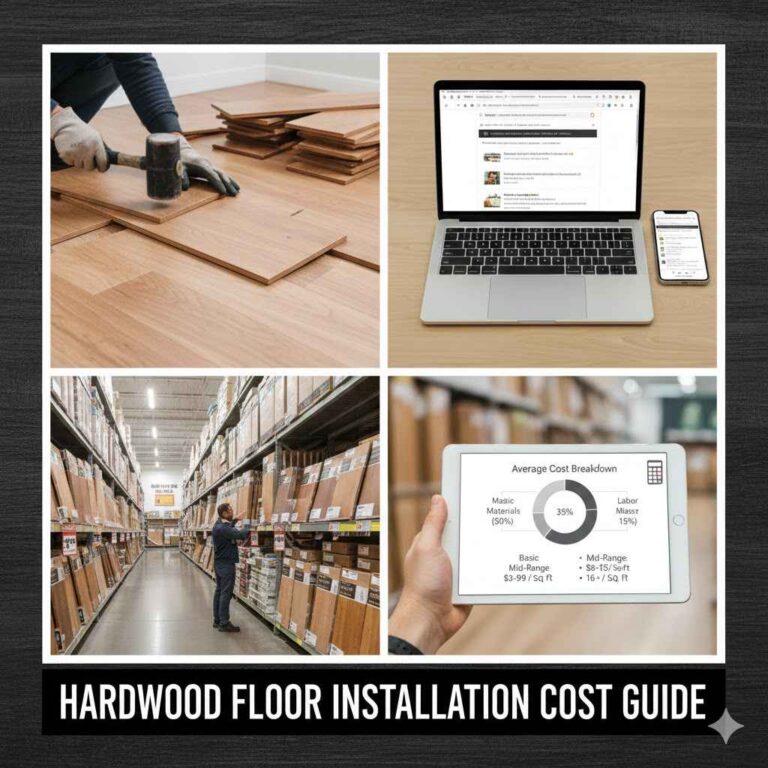
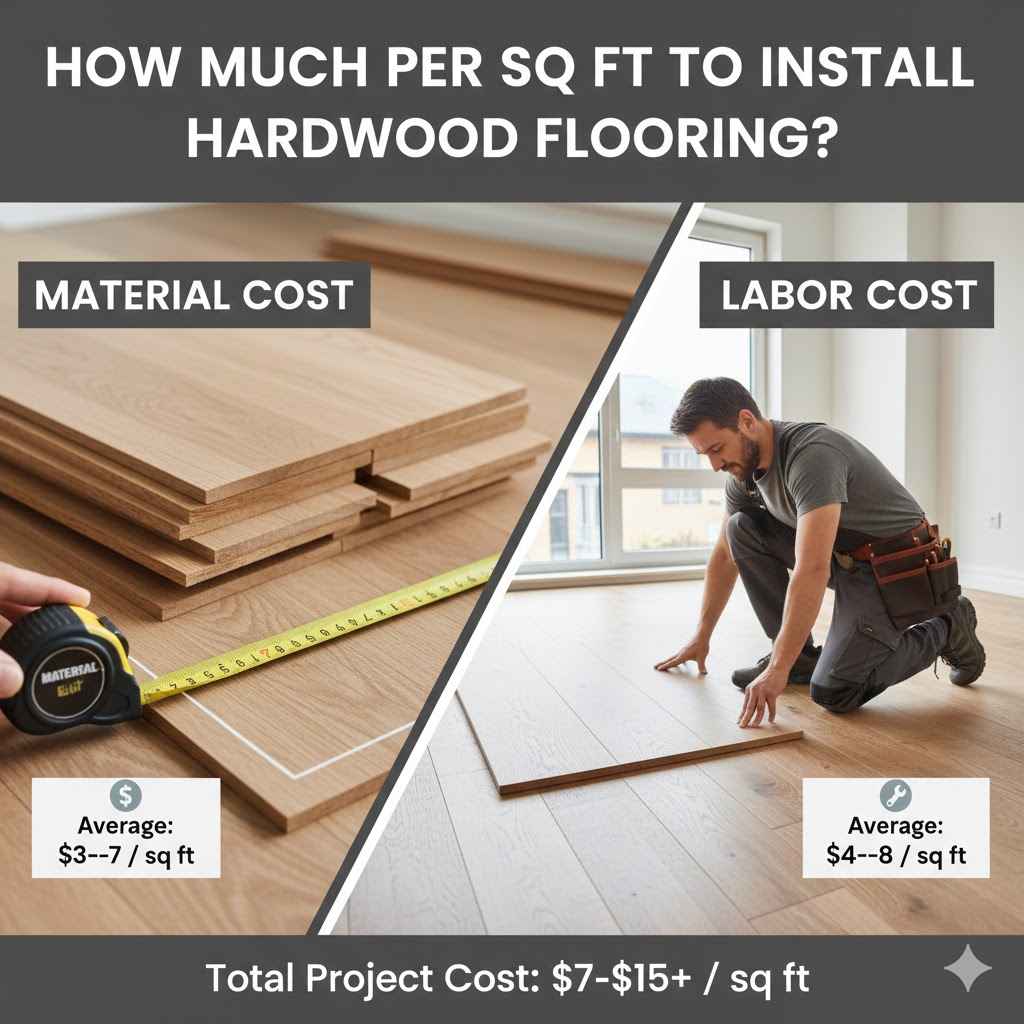
Generally, you can expect to see prices for hardwood flooring installation ranging from about $6 to $12 per square foot. This figure typically includes both the cost of the materials (the hardwood itself and necessary underlayment) and the labor for installation. However, this is a broad estimate, and specific costs can easily fall outside this range.
For instance, budget-friendly options like prefinished solid hardwood might fall at the lower end, closer to $6-$8 per square foot. On the other hand, custom finishes, premium wood species, or complex installation jobs can push the cost to $10-$12 per square foot or even higher.
Here’s a simplified breakdown you might see:
| Cost Component | Typical Range Per Sq Ft |
|---|---|
| Hardwood Flooring Material | $3 – $7 |
| Labor for Installation | $3 – $5 |
| Underlayment & Other Materials | $0.50 – $1 |
| Total Estimated Cost | $6.50 – $13 |
Remember that these numbers are averages. A very cheap option might be under $6, and a high-end custom job could easily exceed $13 per square foot. Always get detailed quotes from local contractors for accurate pricing in your area.
Materials and Their Impact on Cost
The materials used for your hardwood floor are a huge part of the overall price. It’s not just about the planks themselves; it’s also about what goes underneath them and how they are finished. These choices directly affect both the look and the durability of your floor, as well as how much you’ll spend.
The most significant material cost is, of course, the hardwood flooring itself. Different wood species have vastly different price points. Hardwoods like oak and maple are widely available and less expensive.
On the other hand, exotic woods such as mahogany, teak, or walnut are rarer, harder to source, and therefore cost more per square foot.
Beyond the wood planks, you have underlayment, which is a layer that goes between the subfloor and the hardwood. This layer helps with moisture protection, sound dampening, and cushioning. The type of underlayment needed depends on the installation method and your subfloor.
For example, a simple foam underlayment for a floating floor will be less expensive than a specialized vapor barrier for a glue-down installation in a basement.
Types of Hardwood Flooring
When you’re looking at the price per square foot, the type of hardwood is a primary driver. There are several common types, each with its own cost and characteristics. Understanding these differences helps in budgeting.
Solid hardwood flooring is made from a single piece of wood. It’s durable and can be sanded and refinished many times over its lifespan. However, it’s also more susceptible to moisture and temperature changes, making it less ideal for basements or areas with high humidity.
Engineered hardwood flooring is made of multiple layers. The top layer is real hardwood, but the core layers are typically made of plywood or high-density fiberboard. This construction makes it more stable and resistant to moisture and expansion, so it can be installed in more areas of the home, including basements.
It often costs a bit less than solid hardwood of the same species.
Prefinished hardwood flooring comes with the stain and protective finish already applied at the factory. This makes installation faster and cleaner, as there’s no on-site sanding and finishing required. It can sometimes be more expensive upfront than unfinished flooring because of the factory finishing process, but it often saves on labor costs.
- Solid Hardwood: This is wood from a single piece of timber. It’s classic and can be sanded and refinished many times. Prices vary greatly by species, from common oak to rarer exotics.
- Engineered Hardwood: Made of layers, with a real wood veneer on top. It’s more stable in changing humidity. Costs are often a little lower than solid wood of the same top layer species.
- Prefinished Hardwood: The stain and protective coating are applied at the factory. This speeds up installation and reduces dust on site, often offsetting a higher material cost with lower labor costs.
- Unfinished Hardwood: This wood is installed raw and then sanded and finished on-site. It allows for custom stain colors and finishes but requires more labor and creates dust during installation.
The cost difference between these types can be significant. For example, solid oak might cost $4-$7 per square foot, while a premium engineered walnut could be $7-$12 per square foot or more. The choice depends on your budget, the intended location of the flooring, and your aesthetic preferences.
Underlayment and Other Essential Materials
Beyond the planks, other materials are essential for a proper hardwood floor installation. These might seem like small additions, but they contribute to the floor’s longevity, performance, and the overall installation cost.
Underlayment is a crucial layer that goes beneath the hardwood. Its purpose is to provide a smooth, stable surface, absorb sound, add cushioning, and offer moisture protection. The type of underlayment required depends on the flooring type and installation method.
For instance, if you’re installing a floating engineered hardwood floor, you’ll need a foam or felt underlayment. These are generally affordable, often costing $0.25 to $0.50 per square foot.
If you’re installing solid hardwood or engineered hardwood that’s glued down, especially over a concrete subfloor, you’ll likely need a vapor barrier or a specialized adhesive underlayment. These can range from $0.50 to $1.50 per square foot, sometimes more for high-performance options.
Other necessary materials include fasteners like nails or staples for nail-down installations, or adhesive for glue-down methods. You’ll also need transition strips for doorways and where the hardwood meets other flooring types. These small items add up, but they are vital for a complete and professional finish.
- Moisture Barriers: Essential for installations over concrete or in humid areas to prevent warping and damage. Costs can range from $0.50 to $1.50 per square foot.
- Sound Dampening Underlayment: Reduces noise transfer between floors. These are often thicker and more expensive, potentially adding $0.50 to $1 per square foot.
- Adhesives: Specific glues are required for glue-down installations. The type and quantity needed will affect this cost.
- Fasteners: Nails or staples for nail-down methods. While a small cost per box, many are needed for a large area.
- Transition Strips: Used at doorways and where floors change. These come in various materials and finishes and add a small but necessary cost.
When getting quotes, always confirm what materials are included in the per-square-foot price. Sometimes, the quoted price is just for the flooring and basic labor, with underlayment and other essentials charged as extras. Understanding these material costs helps you compare quotes accurately.
Labor Costs and Installation Methods
Labor is often the largest single component of the “How Much Per Sq Ft to Install Hardwood Flooring?” equation. The skill and time required to properly lay hardwood floors can vary significantly, impacting the final price you pay. This is where experienced professionals bring significant value.
The average labor cost for hardwood floor installation typically falls between $3 and $5 per square foot. However, this can fluctuate based on the installer’s experience, the complexity of the job, and local labor rates. For example, in high-cost-of-living areas, labor rates can easily be at the higher end of this spectrum or even exceed it.
Different installation methods also affect labor costs. Some methods are quicker and less labor-intensive than others. The installer’s familiarity with a particular method and the tools required also play a part.
Common Installation Methods and Their Costs
The way hardwood floors are installed directly impacts the labor time and, therefore, the cost. Each method has its own requirements for tools, preparation, and expertise.
Nail-down installation is a traditional method, typically used for solid hardwood floors. The planks are secured to the subfloor using a special flooring nailer that drives nails at an angle through the tongue of the board. This method is secure and provides a stable floor but requires a wooden subfloor and is more labor-intensive than some other methods.
Glue-down installation involves using a strong adhesive to bond the hardwood planks directly to the subfloor. This method can be used for both solid and engineered hardwood and is often preferred for concrete subfloors. It requires careful application of the adhesive and can be more time-consuming due to the curing time of the glue, but it offers excellent stability and can help with sound dampening.
Floating installation is a quicker and often less expensive method, primarily used for engineered hardwood. In this method, the planks are connected to each other, rather than being fastened to the subfloor. They essentially “float” over a layer of underlayment.
This method is suitable for many subfloors, including some types of laminate and even existing vinyl, but it might not be as durable for very high-traffic areas as nail-down or glue-down methods.
- Nail-Down Installation: This method uses nails to attach planks to a wooden subfloor. It’s very secure and traditional. Labor costs can be moderate to high because it requires specific tools and careful execution.
- Glue-Down Installation: Planks are adhered to the subfloor with adhesive. This is good for concrete subfloors and offers good stability. Labor can be higher due to adhesive application and curing times.
- Floating Installation: Planks connect to each other and rest on underlayment. This is often the quickest and most cost-effective labor-wise, suitable for many engineered woods.
- Staple Installation: Similar to nail-down, but uses staples. Often used for engineered hardwood over plywood subfloors. Labor costs are usually comparable to nail-down.
A typical breakdown might show nail-down or glue-down costing $3-$5 per square foot for labor, while a floating installation might be closer to $2.50-$4 per square foot. However, these are just estimates, and a complex room can increase any labor quote.
Factors Affecting Labor Rates
The price you pay for labor is not arbitrary. Several factors influence how much installers will charge per square foot.
Geographic location is a major factor. In areas with a high cost of living, such as major cities, labor rates will naturally be higher due to increased overhead for contractors and higher wages expected by skilled workers. Conversely, in rural areas, labor might be more affordable.
The experience and reputation of the installer or company also play a role. Highly experienced contractors with a proven track record and excellent reviews might charge more because their skill and reliability are highly valued. Newer or less experienced installers may offer lower rates to build their client base.
The complexity of the installation job itself is another significant factor. Installing flooring in a small, rectangular room with no obstructions is much faster and simpler than installing it in a large, irregularly shaped room with many doorways, built-in cabinets, or unusual angles. Rooms with lots of cuts, such as around staircases or curved walls, require more time and precision, leading to higher labor costs.
- Geographic Location: Rates vary greatly by region. Urban areas are typically more expensive than rural ones.
- Installer Experience: Highly skilled and experienced professionals often command higher rates for their expertise and efficiency.
- Job Complexity: Rooms with many angles, cuts, or obstacles take longer and cost more in labor than simple layouts.
- Subfloor Preparation: If the subfloor needs extensive repair, leveling, or cleaning, this additional labor time will increase the overall cost.
- Removal of Old Flooring: If old flooring needs to be removed and disposed of, this adds to the labor time and cost.
For example, removing old carpet and preparing a subfloor might add $1-$3 per square foot to the labor cost. A complex room with many custom cuts could add $1-$2 per square foot to the labor charge compared to a basic room. Always clarify what’s included in the labor quote.
Additional Costs to Consider
Beyond the basic material and labor costs, several other expenses can contribute to the total price of installing hardwood flooring. Overlooking these can lead to budget surprises. Thinking about these upfront helps you plan more accurately for “How Much Per Sq Ft to Install Hardwood Flooring?”.
One of the most common additional costs is the removal and disposal of existing flooring. If you have old carpet, tile, or vinyl that needs to be taken out, this will add to the labor. The type of old flooring matters; removing glued-down tile can be much more labor-intensive and costly than pulling up carpet.
Another important consideration is subfloor preparation. Even if your subfloor looks okay, it might need leveling, repairs, or a moisture barrier installed, especially if it’s concrete or in a basement. This preparation work is critical for the longevity and stability of your new hardwood floor.
Finally, don’t forget about things like baseboards and quarter-round molding. Often, the old baseboards are removed during installation and may need to be reinstalled or replaced. New baseboards or quarter-round will add to the material and labor costs.
Removal and Disposal of Old Flooring
Before your beautiful new hardwood floors can be installed, the old flooring often needs to go. The cost of removing and disposing of this old material can add a significant amount to your project budget.
The price for removal and disposal typically ranges from $1 to $3 per square foot, depending on the type of flooring and the complexity of its removal. For example, removing carpet is usually the least expensive, as it can be rolled up and hauled away relatively quickly.
Removing vinyl flooring can be a bit more challenging, especially if it’s glued down. If there’s a lot of old adhesive residue that needs to be scraped off, this adds to the labor time and cost. Tile removal is often the most labor-intensive and expensive, as each tile must be chipped away, and the grout and adhesive underneath need to be cleaned up.
- Carpet Removal: Generally the cheapest, often around $1-$1.50 per square foot. It’s relatively easy to pull up and dispose of.
- Sheet Vinyl or Linoleum Removal: Can range from $1.50-$2.50 per square foot, especially if it’s glued down and requires scraping.
- Tile Removal (Ceramic, Porcelain, Stone): This is usually the most expensive, costing $2-$4 per square foot or more. It’s labor-intensive and can create a lot of dust and debris.
- Disposal Fees: Landfill fees can vary. Some contractors include this in their quote, while others charge it separately.
A real-life scenario: Sarah wanted to
Subfloor Preparation and Repair
A solid, level subfloor is the foundation of any beautiful and long-lasting hardwood floor. If your subfloor isn’t in good shape, you’ll need to factor in the cost of preparation and repair. This is a critical step that installers will assess early on.
The cost of subfloor preparation can vary wildly, from a few hundred dollars for minor adjustments to several thousand for major repairs or replacement. Typically, basic leveling or cleaning might add $0.50-$2 per square foot to the project cost.
If the subfloor needs significant leveling, especially with self-leveling compounds, this can cost $2-$5 per square foot. For more extensive repairs, like replacing damaged plywood sections or reinforcing joists, costs can increase substantially. For example, replacing a section of damaged subfloor might cost $50-$100 per sheet of plywood, plus labor.
A common issue is a slightly uneven subfloor. A contractor might use a self-leveling compound to fix this. This process involves mixing a special cement-like material with water and pouring it onto the floor.
It flows and levels itself out, creating a smooth surface for the hardwood. The cost for the material and labor for this can be around $3-$5 per square foot.
For a 300 sq ft living room with a slightly uneven subfloor, professional leveling could add between $900 and $1500 to the total cost of the flooring project. This is an investment that prevents future problems like creaking floors or planks pulling apart.
- Basic Cleaning and Dust Removal: Often included in standard labor, but if the subfloor is excessively dirty, it might be an extra charge.
- Leveling Compound: For minor to moderate unevenness. Costs from $2 to $5 per square foot for materials and labor.
- Plywood Subfloor Repair/Replacement: For damaged or rotted sections. Can be $100-$200 per sheet plus labor.
- Moisture Testing and Mitigation: Essential for concrete slabs or basements, can add $1-$3 per square foot for specialized membranes or coatings.
- Underlayment Installation (if not part of flooring material): Some specialized underlayments are installed separately and add to the labor cost.
Ignoring subfloor issues is a common mistake. A compromised subfloor can lead to squeaking, buckling, or premature wear of your new hardwood. It’s better to address these problems during the installation phase.
Trim, Molding, and Finishing Touches
The final touches are what truly transform a raw floor into a finished masterpiece. Trim and molding not only add aesthetic appeal but also serve functional purposes, like covering expansion gaps. These finishing touches add to the overall cost.
Baseboards are the boards that run along the bottom of the walls, covering the gap between the wall and the floor. Quarter-round molding is a smaller, curved piece of wood often installed at the base of the baseboard to conceal any small imperfections or gaps.
If your existing baseboards are removed, you might need new ones. The cost of new baseboards varies greatly depending on the material (pine, MDF, PVC) and the profile or style you choose. Raw pine baseboards might cost $1-$3 per linear foot, while more decorative profiles or pre-painted options can cost $5-$10 per linear foot or more.
The labor for installing baseboards and quarter-round is usually charged per linear foot. This can range from $2 to $5 per linear foot, depending on the complexity of the installation (e.g., cutting around corners, doorways, or curved walls).
A typical 12×15 foot room (180 linear feet of wall space) might require around 180 feet of baseboard and quarter-round. If you opt for new pine baseboards at $2 per linear foot and installation at $3 per linear foot, this would add approximately $900 to your project cost for this room alone.
- Baseboard Replacement: The cost depends on the style and material. Simple pine can be $1-$3 per linear foot for material, while custom or pre-finished options are much more.
- Quarter-Round Installation: This small molding is often installed at the base of baseboards. Material cost is low, but labor can add $1-$3 per linear foot.
- Stair Nosing: For the edge of stairs, specialized pieces are needed. These are often more expensive than standard trim and require careful installation.
- Transitions and Thresholds: Metal or wood strips needed where hardwood meets other flooring or at doorways. Costs vary by material and design.
- Painting and Finishing: If new baseboards are installed unpainted, you’ll need to factor in the cost of priming and painting.
When discussing your project with a contractor, be sure to ask about these finishing details. Clarifying whether existing trim will be reused, replaced, or if new trim needs to be purchased and installed will help you avoid unexpected expenses at the end of the project.
Getting Accurate Quotes and Saving Money
To get a clear understanding of “How Much Per Sq Ft to Install Hardwood Flooring?”, you need to get accurate quotes. This involves more than just asking for a price; it requires preparation and careful comparison. Saving money doesn’t mean sacrificing quality, but rather making smart choices.
The best way to start is by getting multiple estimates from different contractors. Aim for at least three quotes. This allows you to compare prices, services, and the overall value offered by each professional.
Ensure each quote is detailed and itemizes all costs, from materials to labor and any potential extras.
Also, consider the timing of your project. Sometimes, contractors might offer slight discounts during their slower seasons, which are typically late fall or winter in many regions. Planning ahead and booking your installation during these times could lead to savings.
How to Request Detailed Quotes
When you’re ready to ask for estimates, providing contractors with detailed information will help them give you the most accurate pricing. This saves everyone time and reduces the chance of surprises later on.
First, know the exact square footage of the area you want to floor. Measure carefully and add a little extra (about 10%) for cuts and waste. Have a clear idea of the type of hardwood you are interested in – species, width, finish, and whether you prefer solid or engineered.
Note any existing flooring that needs removal and describe the subfloor condition as best you can. Mention any specific design features, such as intricate room shapes, the need for transition strips, or if you plan to replace baseboards. The more information you provide upfront, the more precise the quote will be.
A good quote will break down the costs. It should clearly list the price per square foot for materials, the price per square foot for labor, the cost of any underlayment or special adhesives, and charges for removal and disposal of old flooring. It should also outline the timeline for the project.
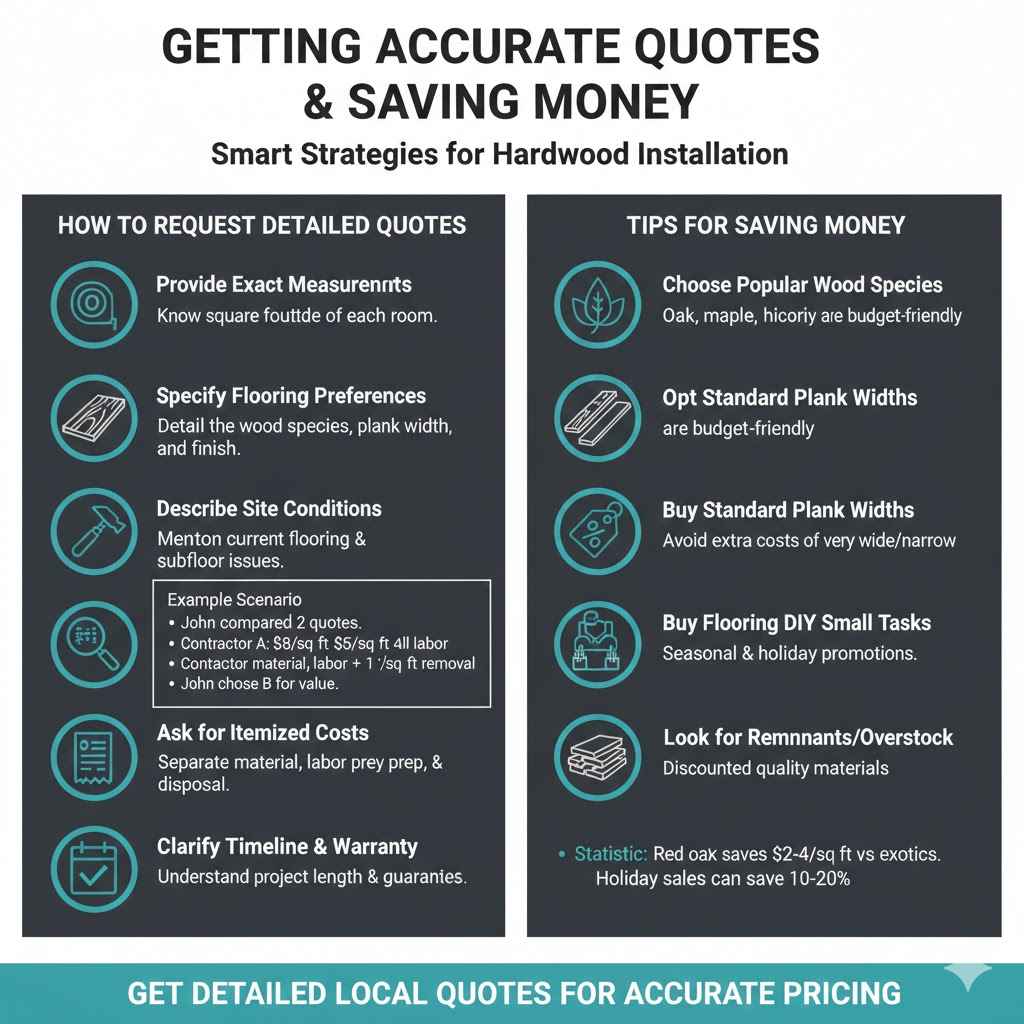
- Provide Exact Measurements: Know the square footage of each room and any specific dimensions for complex areas.
- Specify Flooring Preferences: Detail the wood species, plank width, grade, and finish you desire.
- Describe Site Conditions: Mention the current flooring, subfloor type, and any known issues like unevenness or moisture.
- Ask for Itemized Costs: Ensure the quote separates material, labor, underlayment, prep work, and disposal fees.
- Clarify Timeline and Warranty: Understand how long the project will take and what warranty is offered on labor and materials.
For example, John requested quotes for his living room. One contractor quoted $8 per square foot all-inclusive. Another quoted $5 for materials and $4 for labor, with an extra $1 per square foot for removal.
John chose the second quote because the breakdown showed he was getting better value for the materials.
Tips for Saving Money
While quality is important, there are smart ways to reduce the cost of installing hardwood floors without compromising on the final look and durability. Many of these strategies involve making informed choices before the project begins.
One of the simplest ways to save money is to choose a more common and readily available wood species. Oak, maple, and hickory are popular choices that offer excellent durability and beauty at a more accessible price point compared to exotic hardwoods.
Consider the plank width. Wider planks can sometimes be more expensive per square foot than narrower ones, though installation might be slightly faster. Stick to standard plank widths (like 3 1/4 or 5 inches) unless a specific wider look is essential.
Also, look into prefinished flooring. While the material cost might be slightly higher than unfinished wood, the savings on labor for on-site sanding and finishing can often balance it out, and it results in less dust and a faster installation.
- Choose Popular Wood Species: Oak, maple, and hickory are beautiful, durable, and more budget-friendly than exotics.
- Opt for Standard Plank Widths: Very wide or very narrow planks can sometimes increase material or labor costs.
- Buy Flooring During Sales: Many flooring stores and manufacturers have seasonal sales or promotions.
- Consider DIY for Small Tasks: If you’re handy, you might save on labor by removing old flooring yourself or prepping the subfloor (if you’re confident in your abilities).
- Look for Remnants or Overstock: Sometimes, you can find good quality flooring at a reduced price if it’s a remnant or overstock from a larger job.
A statistic from a home improvement survey indicated that homeowners who chose common hardwood species like red oak saved an average of $2-$4 per square foot compared to those who opted for exotic hardwoods. Planning your purchase during holiday sales events can also yield savings of 10-20% on materials.
Frequently Asked Questions
Question: What is the typical range for hardwood flooring installation cost per square foot?
Answer: The typical range for installing hardwood flooring, including both materials and labor, is generally between $6 and $12 per square foot. However, this can vary significantly based on the type of wood, installation complexity, and your location.
Question: Does the type of hardwood significantly affect the price?
Answer: Yes, the type of hardwood has a major impact on cost. Common domestic hardwoods like oak and maple are more affordable than exotic species such as mahogany or walnut. Engineered hardwood is often priced similarly to solid hardwood, but construction can affect its durability and suitability for different environments.
Question: Is subfloor preparation included in the per-square-foot installation cost?
Answer: Not always. While basic cleaning might be included, significant subfloor repair, leveling, or the addition of moisture barriers are often extra costs. Always clarify what subfloor preparation is included in the quote.
Question: What adds to the labor cost of hardwood floor installation?
Answer: Labor costs increase with job complexity, such as rooms with many angles or obstacles, the need for intricate cuts, removal of old flooring, and custom finishes. Installer experience and geographic location also influence labor rates.
Question: How can I save money on hardwood floor installation?
Answer: You can save money by choosing more common wood species, opting for standard plank widths, looking for sales on materials, and considering DIY for simpler tasks like removing old flooring. Getting multiple detailed quotes is also key.
Summary
Understanding “How Much Per Sq Ft to Install Hardwood Flooring?” involves looking at materials, labor, and extra steps. Costs typically range from $6 to $12 per square foot. Choosing common wood, simple layouts, and comparing multiple detailed quotes will help you stay on budget.
Plan for potential extra costs like subfloor prep and trim for a complete picture.