How Often Do You Put Wood Chips in Electric Smoker? Key
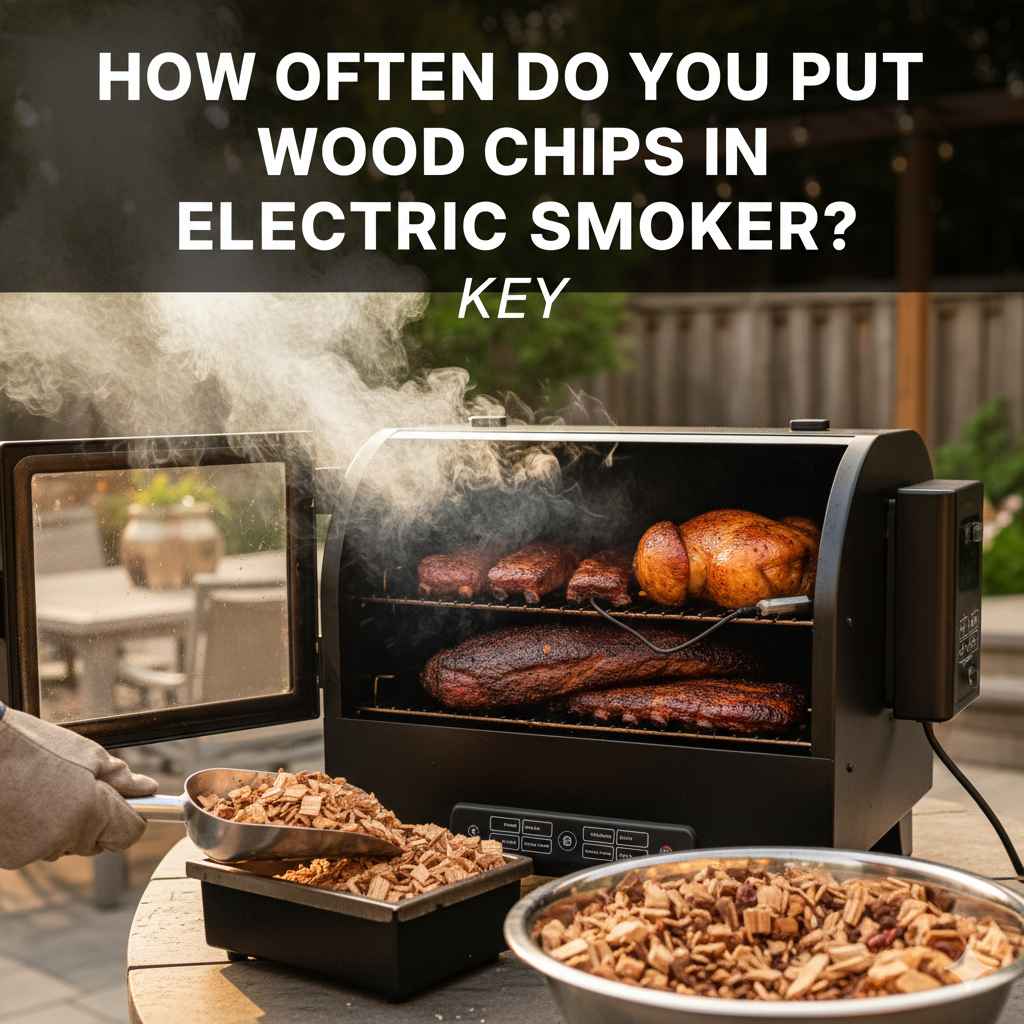
For most electric smokers, you should add about one cup of wood chips every 45 to 60 minutes for the first few hours of cooking. Meat primarily absorbs smoke flavor during the initial stage of the cooking process, so you generally don’t need to add chips for the entire duration of a long smoke.
Hello, friends! Md Meraj here. If you’ve just gotten your first electric smoker, congratulations! You’re on your way to making some of the most delicious food you’ve ever tasted. But I know there’s one question that trips up almost every beginner: how often do you need to feed it wood chips? It can feel a bit confusing. Add too few, and your food lacks that smoky magic. Add too many, and you might get a bitter, overpowering taste.
Don’t worry one bit. Getting this right is much easier than you think. Today, I’m going to walk you through everything, step by step. We’ll cover the simple rules, the key factors to watch for, and how to get that perfect, gentle smoke every single time. Let’s get you smoking with confidence!
What Do Wood Chips Actually Do in an Electric Smoker?
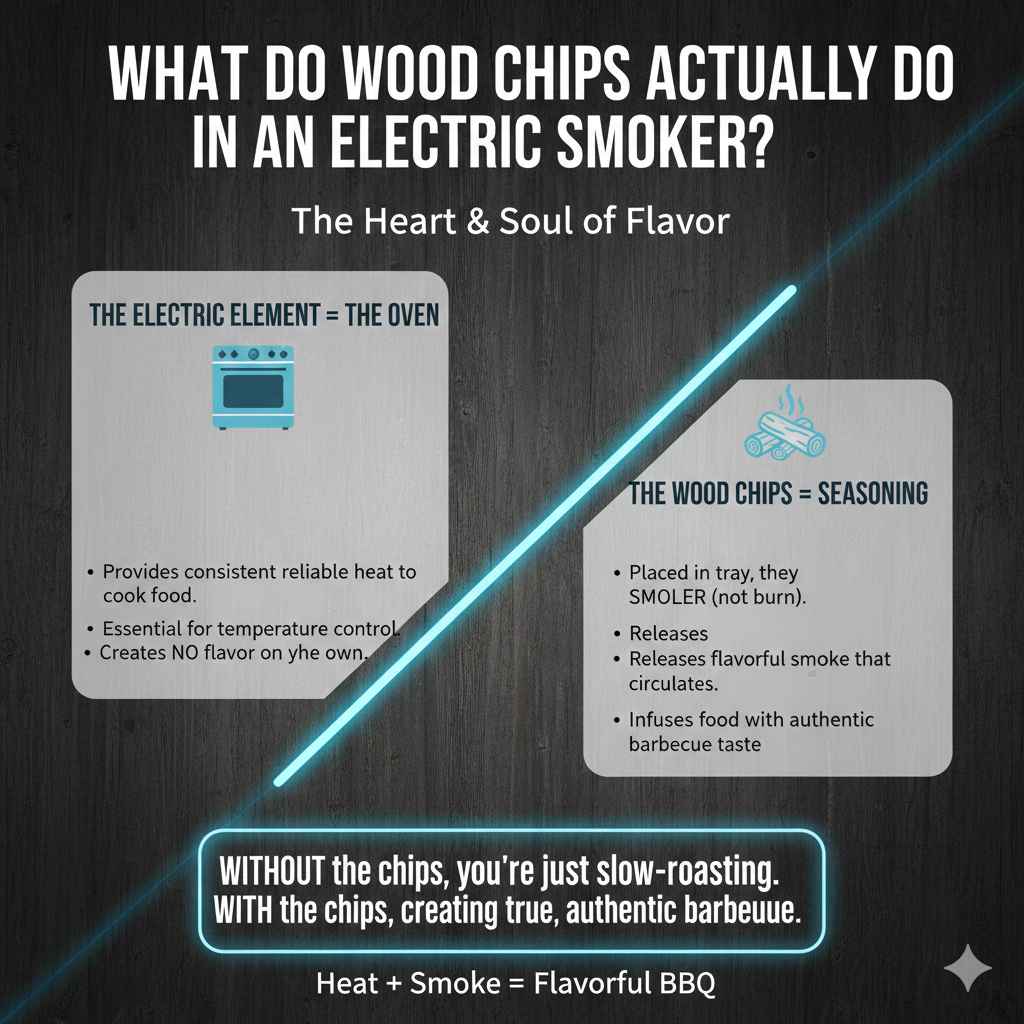
Before we talk about timing, let’s quickly cover why we even use wood chips. Your electric smoker has a heating element that provides the heat to cook your food. It’s reliable and steady, which is fantastic for temperature control. However, that heating element alone doesn’t create any flavor.
That’s where wood chips come in. They are the heart and soul of the flavor. When you place wood chips in the smoker’s tray, the heating element warms them until they begin to smolder (not burn!). This smoldering process releases flavorful smoke. This smoke then circulates inside the smoker, enveloping your food and infusing it with that classic barbecue taste we all love.
Think of it this way:
- The Electric Element = The Oven. It provides the heat.
- The Wood Chips = The Seasoning. They provide the flavor.
Without the chips, you’re just slow-roasting your meat. With the chips, you’re creating true, authentic barbecue.
The Golden Rule: Follow the “Thin Blue Smoke”
If you remember only one thing from this guide, let it be this: you are aiming for “thin blue smoke.” This is the secret to amazing barbecue. When you first add chips, you might see thick, white, puffy smoke. This is normal for a few minutes as the chips heat up. However, you don’t want your food bathing in this thick white smoke for hours.
Why? Thick white smoke contains a lot of creosote and other compounds that can make your food taste bitter or acrid. It’s the kind of smoke you get from a fire that isn’t burning cleanly.
The good stuff is the thin, wispy smoke that has a slight blueish tint. It’s sometimes so thin it’s hard to see. This is the clean-burning smoke that carries all the wonderful wood flavors without the harsh bitterness. Your goal is to maintain this gentle stream of thin blue smoke, and that’s what tells you when to add more chips.
When the thin blue smoke starts to fade away completely, it’s a sign that your chips have been spent and it’s time to add another handful.
How to Add Wood Chips to Your Electric Smoker: A Step-by-Step Guide
Adding chips is a simple process, but doing it right helps maintain a stable temperature inside your smoker. Here’s the easy way to do it, perfect for beginners.
- Check Your Smoker’s Design: Many modern electric smokers have an external loading tube or a slide-out tray. This is great because you can add chips without opening the main door and losing all your precious heat and smoke. If yours doesn’t, you’ll have to open the door, so be quick!
- Measure Your Chips: Start with about one cup of wood chips. Don’t overfill the tray. Overfilling can block airflow and cause the chips to burn poorly, creating that nasty white smoke. A single, even layer is perfect.
- Preheat Your Smoker: Always let your smoker come up to the target cooking temperature before adding your first batch of wood chips. This ensures the chips start smoldering correctly.
- Add the First Batch of Chips: Once your smoker is preheated, add your first cup of chips. If you have an external loader, simply pour them in. If not, open the door quickly, slide the chip tray out, add the chips, and close it up right away.
- Wait for the Good Smoke: Let the chips heat up for about 5-10 minutes. You’ll see that initial puff of white smoke, which should then settle into the beautiful, thin blue smoke we talked about. Now is the time to put your food in the smoker.
- Monitor the Smoke: Keep an eye on the smoke output. After about 45 minutes to an hour, you’ll notice it starting to thin out and disappear. This is your cue!
- Add More Chips: Add your next cup of chips. Repeat this process for the first few hours of your cook.
Key Factors That Influence How Often You Add Chips
Saying “add chips every hour” is a great starting point, but the exact timing can change based on a few things. Understanding these will make you a true pitmaster.
1. Your Smoker’s Temperature
This is the biggest factor. The hotter your smoker is running, the faster your wood chips will smolder and turn to ash.
- Low and Slow (225-250°F / 107-121°C): For classics like brisket, pork butt, and ribs, you’re cooking at low temperatures for a long time. At these temps, a cup of wood chips will likely last you a full 60 minutes, maybe even a little longer.
- Hot and Fast (275-325°F / 135-163°C): For poultry, fish, or if you’re just trying to speed things up, you’ll be running hotter. At these temperatures, your chips will burn through much faster. You may need to add a new batch every 30-45 minutes.
2. The “Smoke Absorption” Window
Here’s a piece of barbecue science that saves you time and chips. Meat doesn’t absorb smoke flavor evenly throughout the entire cook. The vast majority of smoke flavor is absorbed during the first few hours when the meat is cold and its surface is moist.
Once the surface of the meat dries out and forms a “bark,” its ability to absorb smoke flavor drops significantly. For most large cuts like a pork shoulder or brisket, this means you only need to add wood chips for the first 2 to 4 hours. For smaller items like chicken wings or a rack of ribs, the window is even shorter, maybe 1 to 2 hours.
Continuing to add smoke after this point doesn’t add much flavor and can sometimes contribute to a bitter crust. So, for an 8-hour pork butt smoke, you might only add chips for the first 3 hours. After that, you just let the electric heat finish the job.
3. Wood Chip Size and Type
The type of wood you use also plays a role. Denser hardwoods tend to smolder longer than lighter fruitwoods.
- Chips: These are the small, common pieces you find everywhere. They smolder relatively quickly.
- Chunks: These are fist-sized blocks of wood. They smolder for a very long time but can be too large for the small chip trays in many electric smokers. If your smoker can fit them, a single chunk might provide smoke for over an hour.
- Pellets or Discs: Some smoker brands use compressed wood pellets or pucks. These are designed to be used one at a time and typically have a set burn time, often around 20-30 minutes each. You just add one whenever the previous one is spent.
Wood Chip Timing Quick Reference Table
Here’s a simple table to help you get started. These are just estimates, so always watch your smoke!
| Food Type | Typical Cooking Temp | Total Smoking Time (Adding Chips) | Frequency of Adding Chips |
|---|---|---|---|
| Beef Brisket / Pork Butt | 225-250°F | First 3-4 hours | Every 60 minutes |
| Pork Ribs | 225-275°F | First 2 hours | Every 45-60 minutes |
| Whole Chicken / Turkey | 275-325°F | First 1.5-2 hours | Every 45 minutes |
| Fish (e.g., Salmon) | 200-225°F | First 30-60 minutes | Add chips once |
| Sausages / Hot Dogs | 250°F | First 30-45 minutes | Add chips once |
Soaked vs. Dry Wood Chips: The Great Debate
You’ll often see advice online telling you to soak your wood chips in water for at least 30 minutes before using them. The theory is that this makes them smolder longer and prevents them from catching fire.
In a charcoal or gas smoker, this can be helpful. But in an electric smoker, it’s generally not necessary and can even be counterproductive.
Here’s why: Your electric smoker operates at a low, controlled temperature. The wood chips aren’t sitting over a direct flame, so the risk of them igniting is extremely low. When you add wet wood chips to an electric smoker, the heating element first has to spend energy boiling off the water. This creates a lot of steam, not smoke. Steaming your food is fine, but it’s not smoking!
Using dry chips allows them to start smoldering and producing that clean, flavorful smoke almost immediately. It’s more efficient and gives you a better result. So, my advice for electric smokers is simple: use your wood chips dry.
Choosing the Right Wood for Your Food
The type of wood you choose has a huge impact on the final flavor. Some woods are strong and bold, while others are light and sweet. Mixing and matching is part of the fun! Here’s a handy guide to get you started. Remember that the USDA provides safe minimum internal temperatures for all cooked foods, which you should always follow regardless of the wood you use.
| Wood Type | Flavor Profile | Best For |
|---|---|---|
| Hickory | Strong, smoky, bacon-like | Pork (especially ribs and bacon), beef, large cuts |
| Mesquite | Very strong, earthy, intense | Beef (especially brisket), dark meat poultry. Use sparingly! |
| Oak | Medium, classic BBQ flavor, not overpowering | A great all-purpose wood for beef, lamb, brisket, sausages |
| Apple | Mild, sweet, fruity | Pork, poultry (chicken and turkey), ham |
| Cherry | Mild, sweet, slightly tart, gives a reddish color | Pork, poultry, beef, ham. Great for mixing. |
| Pecan | Similar to hickory but milder and sweeter | Poultry, pork, lamb. A wonderful all-around choice. |
| Alder | Delicate, slightly sweet | Fish (especially salmon), poultry, pork |
Common Beginner Mistakes to Avoid
We all make mistakes when learning something new! Here are a few common ones to watch out for so you can get great results from your very first smoke.
- Using Too Many Chips at Once: Overfilling the chip tray can choke off the air supply, leading to incomplete combustion and a bitter taste. A small handful is all you need.
- Smoking for the Entire Cook: Remember the smoke absorption window. Adding chips for an 8-hour cook will waste chips and likely make your food taste like an ashtray. Stop adding smoke after the first few hours.
- Using Softwoods: Never use wood from evergreen or coniferous trees like pine, fir, spruce, or cedar. These contain resins that produce a foul-tasting smoke that can make you sick. Stick to hardwoods from fruit or nut trees.
- Not Preheating the Smoker: Tossing chips and meat into a cold smoker is a recipe for failure. The long time it takes to heat up can create stale, sooty smoke. Always preheat.
- Opening the Door Too Often: Every time you open the smoker door, you lose heat and smoke. This drastically increases your cooking time and can lead to uneven results. Trust the process and keep the door closed as much as possible. This principle is often referred to as “If you’re lookin’, you ain’t cookin’.”
Frequently Asked Questions (FAQ)
1. Can I use wood chunks instead of chips in my electric smoker?
It depends on the size of your smoker’s chip tray. Most electric smokers have small trays designed specifically for chips. A large chunk may not fit or could block the loader mechanism. If a small chunk fits comfortably without being crammed in, it can be a great option as it will smolder for longer than chips.
2. What happens if I use too many wood chips?
Using too many wood chips, especially for the entire duration of a long cook, will create an overpowering, acrid, and bitter flavor on your food. It can completely ruin a good piece of meat. The goal of smoking is to kiss the food with a gentle flavor, not to blast it into a smoky oblivion.
3. Why is my smoke thick and white instead of thin and blue?
Thick white smoke is usually caused by a few things: the wood chips are just beginning to heat up (this is normal for the first 5-10 minutes), the wood is wet, or there isn’t enough airflow. If it persists, ensure your vents are open and you haven’t overfilled the chip tray. Using dry chips is the best way to avoid this in an electric smoker.
4. How do I know when my wood chips are all used up?
The easiest way to tell is that the smoke will stop. When you see the stream of thin blue smoke disappear, you can be sure the chips have turned to ash. If you can safely check the tray, you’ll see a small pile of grey or white ash where the chips used to be.
5. Can I mix different types of wood chips?
Absolutely! Mixing woods is a fantastic way to create your own custom flavor profiles. A popular combination is mixing a stronger wood like hickory with a sweeter one like apple or cherry. This can balance the flavors perfectly. Start with a 50/50 mix and experiment from there to find what you like best.
6. Do I have to clean out the ash after each use?
Yes, it’s very important. Always let the smoker cool down completely, then empty the ash from the chip tray before your next cook. A buildup of ash can block airflow and may become a fire hazard. It’s a quick and easy step that ensures safety and better performance next time.
Putting It All Together for the Perfect Smoke
I know we’ve covered a lot today, but I hope you see that it all comes down to a few simple ideas. Using an electric smoker is about control, and managing your wood chips is a key part of that. Start by adding about a cup of dry chips every hour for the first few hours of your cook. Pay attention to your smoker and watch for that beautiful, thin blue smoke. Let it be your guide.
Don’t be afraid to experiment with different woods and timings. Every smoker has its own personality, and learning its quirks is part of the joy of barbecue. The most important thing is to have fun with it. You’re learning a skill that will allow you to create amazing meals for your friends and family.
So, get out there, grab your favorite cut of meat, and fire up that smoker with confidence. You’ve got this!