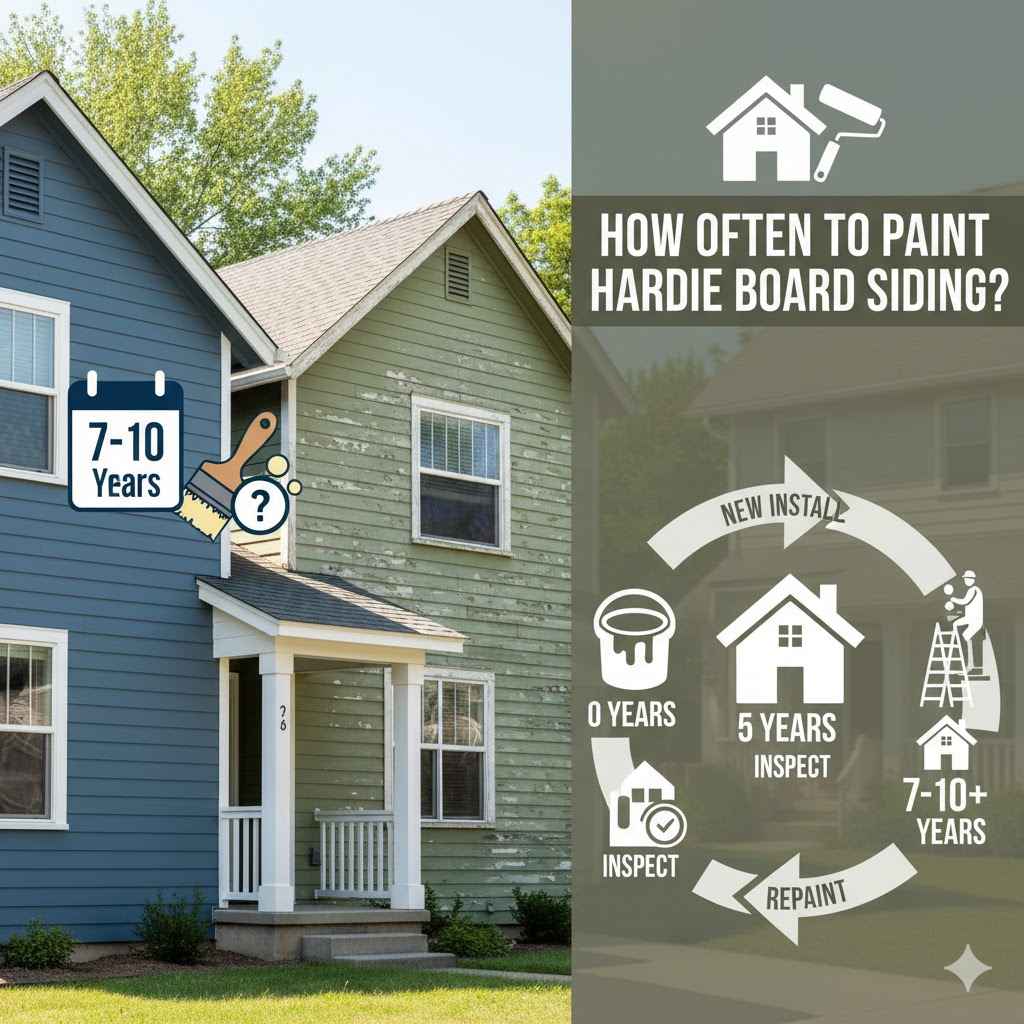
How Often To Paint Hardie Board Siding
Many homeowners wonder about the upkeep of their homes. When it comes to siding, especially James Hardie fiber cement, a common question pops up. People new to this material often ask, How Often Should Hardie Board Be Painted? It can seem a bit tricky at first.
But don’t worry, this guide will give you simple, clear steps. We will walk you through everything you need to know to keep your siding looking great for years to come.
Understanding Hardie Board Painting Needs
This section will explore why knowing the right painting schedule for Hardie Board is important for your home’s look and longevity. We’ll discuss the material’s properties and how they affect its paint. Understanding these basics helps you make smart choices for your home’s exterior.
What Is Hardie Board and Why Does It Need Paint?
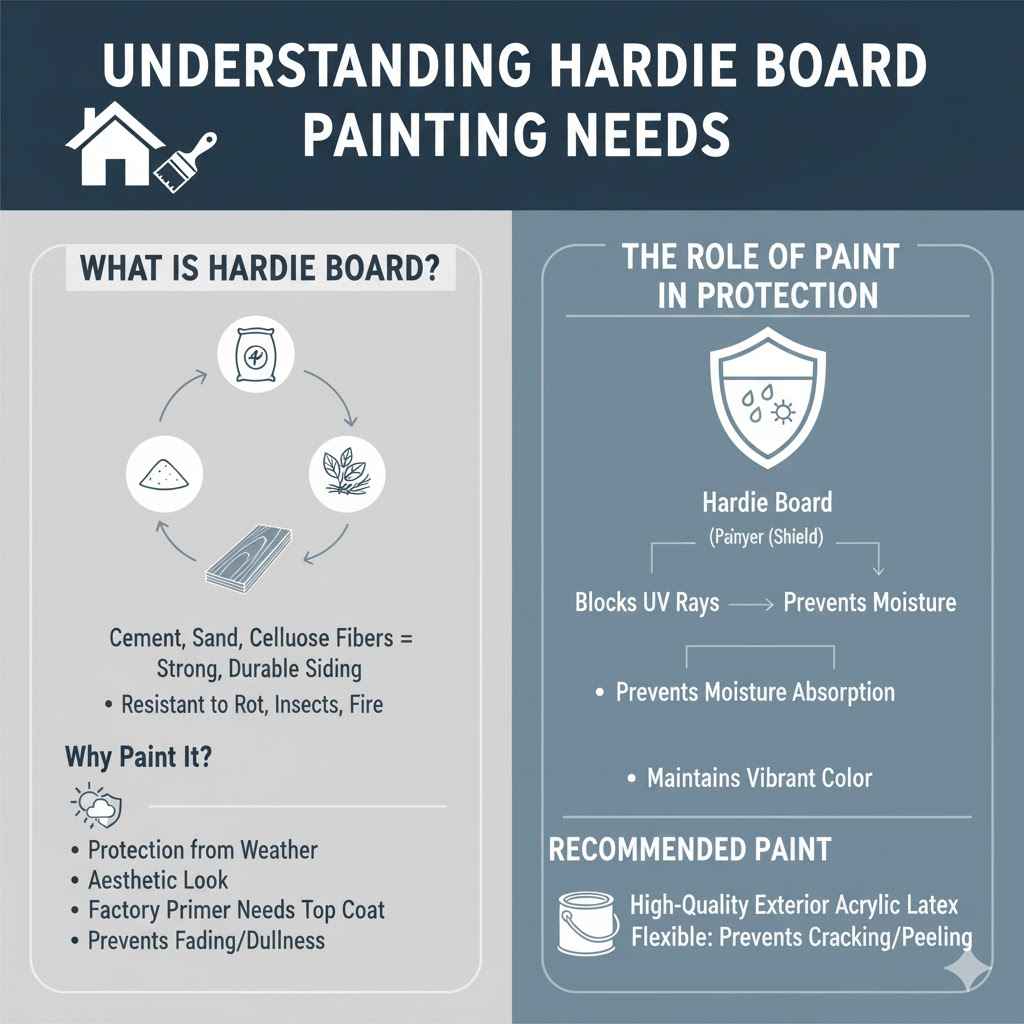
Hardie Board, also known as fiber cement siding, is a popular building material. It’s made from cement, sand, and cellulose fibers. This mix makes it very strong and resistant to things like rot, insects, and fire.
It’s a great alternative to wood siding.
Even though Hardie Board is durable, it still needs to be painted. The paint protects the material from the weather. It also gives your home the look you want.
Over time, the sun and rain can wear down the paint. This can make the siding look faded or dull.
Manufacturers usually apply a primer coat to Hardie Board. This primer helps the top coat of paint stick well. However, this factory-applied paint isn’t meant to last forever without any care.
Regular painting is key to maintaining its appearance and protective qualities.
The Role of Paint in Siding Protection
Paint on any exterior surface acts as a shield. For Hardie Board, this shield is especially important. The cement in the siding can absorb moisture if not properly sealed.
While it’s not as absorbent as wood, prolonged exposure to moisture can still cause issues over many years.
The paint layer prevents water from seeping into the siding. It also blocks UV rays from the sun. Sun exposure can cause colors to fade.
A good paint job keeps the siding looking vibrant. It also helps prevent mold or mildew growth, which can happen in damp conditions.
Choosing the right type of paint is also part of this protection. High-quality exterior acrylic latex paints are typically recommended. They are flexible enough to expand and contract with temperature changes.
This flexibility prevents the paint from cracking or peeling prematurely.
Factors Influencing Hardie Board Painting Frequency
The exact time between painting your Hardie Board siding can change. Several things affect how quickly the paint wears out. Knowing these factors will help you decide when it’s best to repaint.
It’s not a one-size-fits-all answer.
Climate and Weather Conditions
The weather where you live plays a big role. Homes in areas with harsh weather may need painting more often. Intense sun, heavy rain, snow, and strong winds all put stress on the paint.
For example, a home in a desert climate with constant, strong sun will experience more UV damage to its paint. This can lead to faster fading. Similarly, areas with frequent rain and high humidity might see paint wear down quicker due to moisture exposure.
Coastal areas with salt spray can also be tough on paint. Salt particles can degrade the paint finish over time. Extreme temperature shifts, like hot summers followed by freezing winters, cause the siding and paint to expand and contract.
This movement can lead to cracks and peeling if the paint isn’t robust.
Color of Your Siding
The color of your Hardie Board siding can also influence how often you need to repaint. Darker colors tend to absorb more heat and UV rays from the sun. This can cause them to fade faster than lighter colors.
For instance, a deep navy blue or black siding might show signs of fading sooner than a light beige or white. The pigments used in darker paints can be more susceptible to breaking down under intense sunlight.
While lighter colors might fade less dramatically, they can still show wear. It’s important to remember that any color will eventually show signs of aging. Regular checks are more important than just relying on the color.
Quality of Original Paint Application
The way the siding was first painted makes a big difference. If the original paint job was done with high-quality products and proper preparation, it will last longer. This includes using the correct primer and applying multiple thin coats of paint.
A professionally applied paint job often lasts longer than a DIY attempt, especially if the DIYer lacks experience. Proper surface preparation, like cleaning and ensuring the surface is dry and free of debris, is crucial for paint adhesion.
If the siding was painted by the manufacturer or a reputable painting company, you can likely expect a good lifespan from the paint. However, even the best paint job will eventually need touch-ups or a full repaint.
Environmental Factors and Exposure
Beyond general climate, specific environmental factors can impact your siding’s paint. Trees that overhang the house can shed leaves and debris. This organic matter can hold moisture and promote mold or mildew growth on the siding.
Areas with a lot of pollution can also affect paint. Airborne particles can settle on the siding and make it look dirty. In some cases, pollutants can even react with the paint and cause it to break down.
If your home is near a busy road, exhaust fumes and dust can contribute to premature wear. Likewise, proximity to industrial areas might expose your siding to specific chemicals. These elements can all shorten the lifespan of your paint job.
How Often Should Hardie Board Be Painted? The General Guideline
Now let’s get to the main question. While many things can influence the timing, there’s a general timeframe most experts suggest. This gives you a good starting point for planning your home maintenance.
The Recommended Painting Interval
For most homes, it’s recommended to repaint Hardie Board siding every 10 to 15 years. This is a broad guideline, and your specific situation might call for more or less frequent painting.
This interval is based on the expected lifespan of high-quality exterior paint applied over a properly prepared Hardie Board surface. It assumes average weather conditions and reasonable environmental exposure.
Think of it like getting a new roof or replacing windows. It’s a significant home maintenance task that doesn’t happen every year but is essential for protecting your investment.
Signs It’s Time To Repaint
Even if you’re within that 10-15 year window, you should inspect your siding regularly. Look for visual cues that indicate the paint needs attention. These signs will tell you if it’s time to repaint sooner.
- Fading Colors: If your siding looks significantly duller than it used to, especially on surfaces that get a lot of sun, it’s a sign the paint is breaking down. This fading might be uneven, with some areas looking worse than others.
- Chalking: Gently rub a section of your siding with your hand. If you see a powdery residue (chalk) on your hand, the paint is starting to break down. This chalking is the binder in the paint degrading, leaving the pigment exposed and less protected.
- Peeling or Cracking: While less common on Hardie Board than on wood, peeling or cracking paint indicates a loss of adhesion. This could be due to moisture issues or improper application.
- Mold or Mildew: Any visible signs of mold or mildew growth mean the protective layer of paint is compromised. These organisms thrive in moist environments and can damage the siding if left unchecked.
Catching these issues early allows for smaller repairs. You might only need to clean and touch up small areas. Waiting too long means the entire house might need a full repaint.
When to Consult the Manufacturer’s Warranty
James Hardie itself provides guidelines for maintaining their products. They also offer warranties that may cover issues related to siding integrity. It’s always a good idea to check your warranty information.
The warranty might specify paint types or colors that are covered. It could also outline conditions under which the warranty would be voided, such as using incompatible paints or neglecting maintenance.
Understanding the warranty details can guide your decisions about painting. It can also provide recourse if you believe there’s a defect with the product itself.
Preparing Hardie Board for Painting
Painting Hardie Board correctly involves more than just slapping on some paint. Proper preparation is the most critical step for a durable and attractive finish. This ensures the new paint adheres well and lasts for years.
Cleaning the Siding
Before you do anything else, the siding must be thoroughly cleaned. This removes dirt, grime, mold, mildew, and any chalking residue. A clean surface is essential for new paint to stick properly.
You can wash your Hardie Board siding by hand using a soft brush, water, and a mild detergent like TSP (trisodium phosphate) substitute. Avoid using high-pressure washers, as they can damage the siding or force water into any tiny cracks.
For stubborn mold or mildew, a solution of one part bleach to three parts water can be used. Always wear protective gear like gloves and eye protection when working with cleaning solutions. Rinse thoroughly with clean water afterward.
Inspection and Repair
Once the siding is clean and dry, inspect it closely for any damage. Look for cracks, chips, or loose boards. These issues need to be addressed before painting.
Small cracks or chips can often be repaired with an exterior-grade caulk or filler designed for fiber cement. Ensure the caulk is paintable. For larger issues, like split boards or significant damage, you might need to replace sections of siding.
Proper repairs ensure a smooth, uniform surface. This prevents water from getting behind the paint and causing future problems.
Priming the Surface
Priming is a vital step, especially if your Hardie Board is unpainted or the old paint is failing. A good quality exterior primer designed for fiber cement siding will seal the surface. It also creates an ideal base for the top coat of paint.
The primer helps the paint adhere better, improves coverage, and can even help block stains from showing through. James Hardie recommends specific types of primers and paints. Always check their guidelines for the best product compatibility.
Apply the primer evenly with a brush, roller, or sprayer. Make sure to cover all areas, especially any repaired spots. Allow the primer to dry completely according to the manufacturer’s instructions before applying the top coat.
Choosing the Right Paint for Hardie Board
The type of paint you choose is as important as the painting process itself. Using the wrong paint can lead to premature failure and costly repainting.
Recommended Paint Types
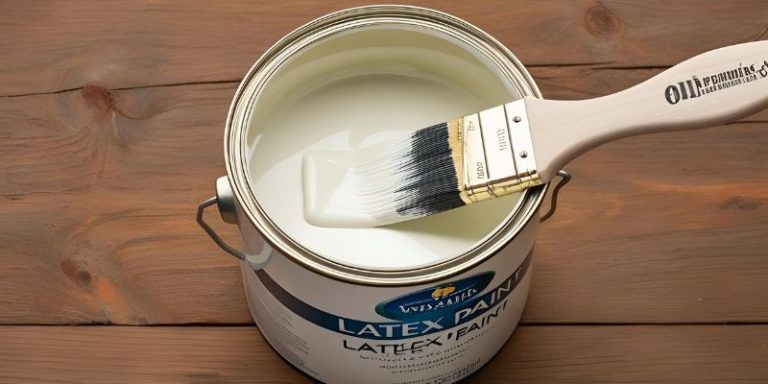
The best choice for Hardie Board siding is a high-quality 100% acrylic latex exterior paint. These paints offer excellent durability, flexibility, and adhesion. They are also formulated to withstand various weather conditions.
Look for paints that are specifically labeled for exterior use and are suitable for fiber cement siding. Many paint manufacturers offer lines that are engineered for this purpose.
Oil-based paints are generally not recommended for Hardie Board because they can be too rigid. They may crack or peel more easily as the siding expands and contracts with temperature changes.
Paint Finish and Sheen
The finish, or sheen, of your paint also affects its look and durability. Common sheens include flat, satin, eggshell, semi-gloss, and gloss.
- Flat finishes hide imperfections well but can be harder to clean and may not be as durable against dirt and mildew.
- Satin and eggshell finishes offer a good balance. They are more washable than flat paint and provide a subtle sheen that looks good on exteriors. They are often recommended for siding.
- Semi-gloss and gloss finishes are very durable and easy to clean. However, they highlight surface imperfections. They are often used for trim or accent areas rather than the entire house.
For Hardie Board siding, a satin or eggshell finish is usually a popular and practical choice. It provides good durability and a pleasant appearance without drawing too much attention to minor surface flaws.
Understanding Paint Durability Statistics
Paint durability is often measured by how long it’s expected to last under normal conditions. While specific statistics can vary between brands and formulations, a high-quality exterior acrylic latex paint should offer a lifespan of 10-15 years, aligning with the recommended repainting schedule for Hardie Board.
For example, some independent testing agencies report that premium exterior acrylic latex paints can retain over 85% of their gloss and color after 5 years in harsh climates. After 10 years, while some fading is expected, the protective barrier should still be largely intact if properly applied. This indicates the paint’s ability to perform its protective function.
Conversely, lower-quality paints or those not formulated for exterior use might show significant chalking and fading within 3-5 years. This would necessitate repainting much sooner. Always choose paints known for their longevity and resistance to the elements.
Painting Techniques for Hardie Board
Applying paint to Hardie Board siding requires attention to detail. Using the right tools and techniques ensures a professional-looking finish and extends the paint’s life.
Application Methods Brush Roller or Sprayer
You have a few options for applying paint to your Hardie Board siding:
- Brushing: Good for cutting in around trim and details. It offers precise control but can be slow for large areas.
- Rolling: Faster than brushing for large surfaces like walls. Use a quality roller with the appropriate nap length for a smooth finish.
- Spraying: The fastest method for large areas. It provides an even coat but requires careful masking of surrounding areas to prevent overspray. You’ll still need to back-brush or back-roll immediately after spraying to ensure good adhesion.
Many professionals use a combination of spraying and back-rolling for efficiency and a quality finish.
Number of Coats and Drying Times
Typically, two coats of top-coat paint are recommended over a properly primed surface. The first coat seals the primer and provides base color. The second coat ensures even coverage, enhances durability, and achieves the desired color depth.
Always adhere to the drying times recommended by the paint manufacturer. Applying a second coat too soon can trap moisture and lead to peeling. On humid or cool days, drying times may be longer.
Allow each coat to dry completely before applying the next. This ensures proper adhesion and a lasting finish.
Best Practices for Exterior Painting
Always paint on a dry, mild day. Avoid painting in direct sunlight, extreme heat, or when rain is expected. Ideal temperatures are usually between 50°F (10°C) and 80°F (27°C).
Work from top to bottom. This way, any drips will fall on unpainted surfaces and can be easily fixed.
When using a sprayer, ensure you maintain a consistent distance and speed. Overlap your passes slightly to avoid lap marks.
Properly clean your brushes, rollers, and spray equipment immediately after use. This preserves your tools for future projects.
Real-Life Examples and Scenarios
Seeing how others handle siding maintenance can provide valuable insights. Here are a few scenarios illustrating Hardie Board painting in practice.
Case Study 1 A Coastal Home’s Challenge
The Smith family lives in a beach house in Florida. Their Hardie Board siding, painted a light blue, started showing significant chalking and fading after only 8 years. The salty air and intense sun were taking their toll.
They decided to repaint and chose a premium exterior acrylic latex paint known for its UV resistance. They also opted for a slightly darker shade, hoping it would hide minor imperfections better. The house was thoroughly cleaned, any chalking was washed off, and a high-quality primer was applied.
Two coats of the new paint were applied. Seven years later, the siding still looks great with minimal fading. They plan to inspect it closely this year for any signs of wear.
This case shows that in harsh environments, repainting might be needed closer to the 10-year mark, and choosing the right paint is crucial.
Scenario 1 The Suburban House with Tree Cover
The Johnsons live in a home with many large trees surrounding it. Their Hardie Board siding, a medium green, started to show patches of mold and mildew after about 12 years. Leaves and debris from the trees often collected on the siding, trapping moisture.
They cleaned the siding thoroughly, using a mildew-specific cleaner to kill any growth. After repairs to a small chipped corner, they applied a quality exterior primer and then two coats of paint in the same color. They learned the importance of regular cleaning to remove debris and prevent mold.
Scenario 2 The New Construction Home
When the Millers bought their new home, the Hardie Board siding was factory-finished in a dark gray. The builder assured them the paint was top-notch. After 5 years, they noticed the paint was still holding up well, with no significant fading or chalking.
This example highlights the benefit of factory-applied finishes. They are often applied in controlled conditions with specialized equipment. However, the Millers know they will still need to keep an eye on it and plan for repainting around the 10-15 year mark, just like any other painted surface.
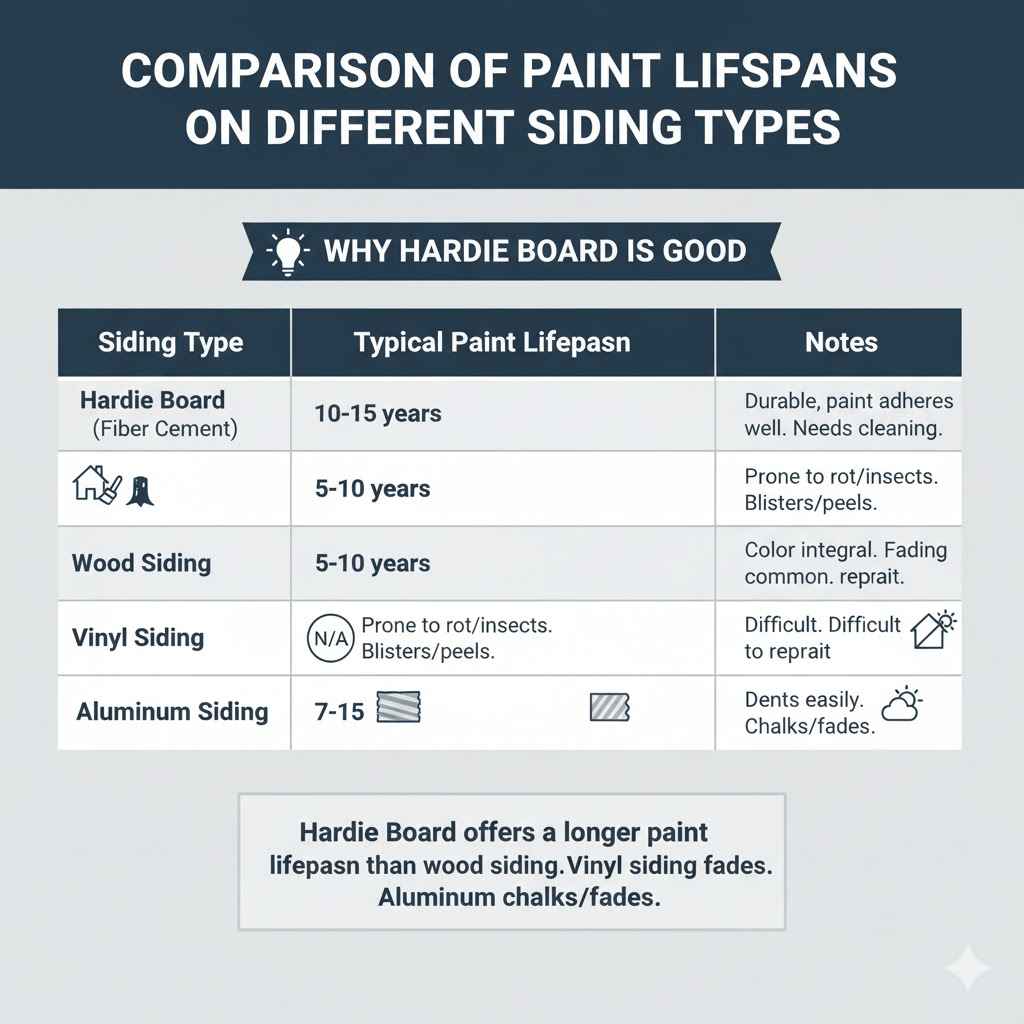
Comparison of Paint Lifespans on Different Siding Types
Understanding how Hardie Board’s paint performance compares to other common siding materials can be helpful for homeowners. This comparison shows why the 10-15 year guideline for Hardie Board is quite good.
| Siding Type | Typical Paint Lifespan | Notes |
|---|---|---|
| Hardie Board (Fiber Cement) | 10-15 years | Durable material, paint adheres well. Needs regular cleaning. |
| Wood Siding | 5-10 years | Prone to rot and insects, needs frequent upkeep. Paint can blister and peel more easily. |
| Vinyl Siding | N/A (Often fades, can’t be easily repainted) | Color is often integral to the material. Fading is common. Repainting is difficult and may void warranties. |
| Aluminum Siding | 7-15 years | Can dent easily. Paint can chalk and fade over time. |
As the table shows, Hardie Board offers a longer paint lifespan compared to wood siding. Wood siding requires more frequent maintenance because it is susceptible to moisture and pests.
Vinyl siding is designed to have color integrated into the material, so it’s not typically painted. When it does fade, repainting is often not recommended or can lead to warranty issues. Aluminum siding offers a decent lifespan but can be more prone to chalking and fading than properly maintained Hardie Board.
Frequently Asked Questions
Question: Can I paint my Hardie Board siding a darker color than it is now?
Answer: Yes, you generally can paint Hardie Board siding a darker color. However, it’s important to use high-quality exterior acrylic latex paint. Darker colors absorb more heat, which can put more stress on the siding and paint.
Ensure the paint is formulated for exterior use and is compatible with fiber cement. Also, be aware that darker colors may fade more quickly due to increased UV absorption.
Question: How do I clean Hardie Board siding before painting?
Answer: To clean Hardie Board siding before painting, use a soft brush, water, and a mild detergent like TSP substitute. For stubborn mold or mildew, a solution of one part bleach to three parts water can be used. Rinse thoroughly with clean water.
Avoid high-pressure washers, as they can damage the siding.
Question: Is it okay to use a roller to paint Hardie Board?
Answer: Yes, using a roller is a good way to paint Hardie Board siding, especially for larger areas. Use a quality roller with the appropriate nap length for a smooth finish. For best adhesion, you might consider spraying the paint and then immediately back-rolling it to ensure it’s worked into the surface.
Question: How long does Hardie Board siding last?
Answer: Hardie Board siding itself is very durable and can last 50 years or more when properly installed and maintained. The paint on Hardie Board needs repainting every 10-15 years, but the siding material itself is designed for long-term use.
Question: Should I use a special primer for Hardie Board?
Answer: Yes, it is highly recommended to use a high-quality exterior primer specifically designed for fiber cement siding. This primer helps seal the porous surface, promotes paint adhesion, and can prevent stains from bleeding through the top coat, ensuring a better and longer-lasting paint finish.
Summary
Hardie Board siding generally needs repainting every 10 to 15 years. Factors like climate, siding color, and paint quality influence this. Always clean and repair the siding before painting, and use a quality exterior acrylic latex paint.
Proper application with two coats ensures a durable finish.