How to Add Closet Shelves Without Drilling Holes
Many people want more storage in their closets but worry about making holes in walls. This is especially true if you rent your home or just prefer a damage-free solution. You might think adding shelves means you have to get out a drill, but that’s not the case at all!
It can feel a bit tricky to figure out the best way to do it yourself. Don’t worry, though. We’ll walk you through simple, step-by-step methods that make adding closet shelves easy for anyone.
You’ll see how simple it can be to boost your closet’s organization very soon.
Creative Ways to Add Closet Shelves Without Drilling
This section explores smart and easy methods to install closet shelves without causing any damage to your walls. It covers various techniques that are perfect for renters or anyone who wants a flexible storage solution. You’ll learn about different types of shelves and how they can fit into your existing closet space.
This guide aims to give you practical, doable ideas to make your closet more organized and functional. We’ll look at options that require no tools or just very basic ones, keeping it simple and accessible for everyone.
Tension Rod Shelving Solutions
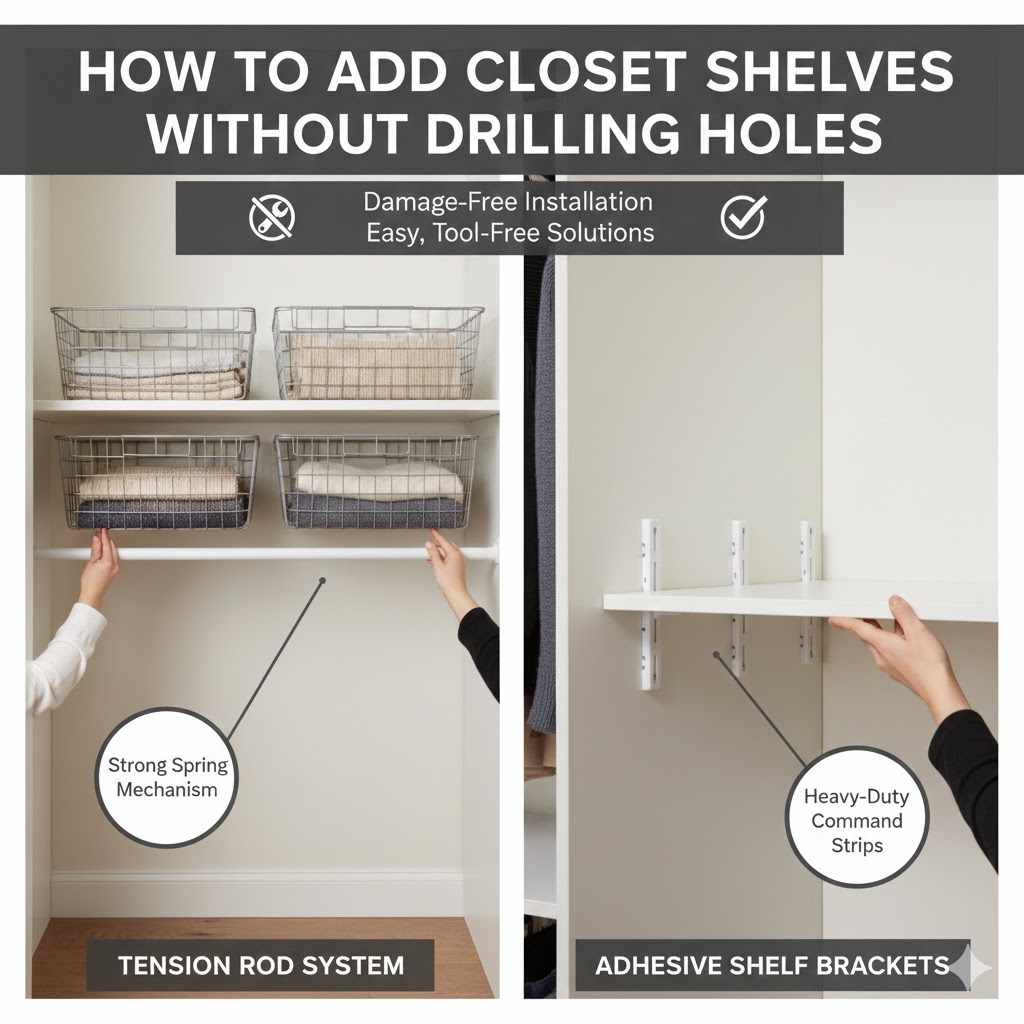
Tension rods are fantastic for creating makeshift shelves without any drilling. They work by wedging themselves between two opposing surfaces, like the walls of your closet. You can use them in a few clever ways to add storage.
One simple method is to use a long tension rod placed horizontally about halfway up your closet’s height. On top of this rod, you can lay a sturdy piece of wood, a thick cardboard, or even a pre-made shelf that fits. This creates a new shelf level.
For very light items, you can even hang baskets or fabric shelves directly from the tension rod. The key is to ensure the rod is tightened securely to bear the weight. Always test the stability before placing too many items on your new shelf.
- Adjustable Tension Rods for Shelving: These rods can be expanded or contracted to fit various closet widths. You can place one rod near the top of your closet for lightweight items or stack two or three rods to create multiple levels of storage. Make sure the rod is rated for the weight you plan to put on it. Overloading a tension rod can cause it to slip or fall, so choose wisely.
- Consider a heavy-duty tension rod, especially if you’re planning to store shoes or folded clothes. These are typically thicker and have stronger spring mechanisms. You can often find them in hardware stores or online.
- When installing, twist the rod to expand it until it’s snug between the walls. Give it a gentle pull to ensure it’s secure.
- Adding a Base for the Tension Rod Shelf: For a more stable shelf, you can use the tension rod to support a piece of material. This could be a piece of plywood cut to size, a sturdy plastic bin lid, or even a thick piece of foam board. The tension rod acts as the front support, and you might need to find a way to support the back edge. Sometimes, the closet’s natural structure can help, or you might use small, adhesive-backed brackets that don’t require drilling.
- This method offers a more solid surface than just placing items on the rod itself. It distributes weight better. If you’re using plywood, measure your closet space accurately.
- Sand down any rough edges to prevent snags on your clothes. You can even paint or cover the wood to make it look nicer.
- Hanging Fabric Shelves from Tension Rods: Many stores sell fabric closet organizers that hang from a rod. If your closet already has a hanging rod for clothes, you can often use these. However, if you lack that, a strategically placed tension rod can serve the same purpose. You hang the fabric shelves from the tension rod, creating individual cubbies for folded shirts, socks, or accessories.
- These fabric shelves are lightweight and very easy to install. They fold up neatly when not in use. Ensure the fabric is durable and the stitching is strong.
Check the weight limit for each compartment. They are ideal for smaller, lighter items and can help keep your closet tidy and prevent clutter from piling up on the floor.
Adhesive Solutions for Closet Shelving
Adhesive products offer a fantastic way to add shelves without making permanent holes. These solutions rely on strong sticky backing to hold shelves in place. They are a great choice for renters.
There are various types of adhesive shelves available. Some are small, individual shelves, while others are larger units designed to hold more weight. The key to success with adhesive shelves is proper preparation of the wall surface.
It needs to be clean, dry, and smooth. Avoid placing them on textured or wallpapered surfaces, as the adhesive might damage them. Always follow the manufacturer’s instructions for application and weight limits carefully.
Command Hooks and Shelving Systems
Command hooks are a popular brand of adhesive products that are known for holding strong without damaging walls when removed. They come in many shapes and sizes, including those designed to hold small shelves or baskets.
- Using Command Hooks to Support a Small Shelf: You can buy small, lightweight shelves designed to be mounted with adhesive. Alternatively, you can use sturdy Command hooks to create a mounting system for a custom shelf. For example, you could attach two pairs of heavy-duty Command hooks to opposite walls at the desired shelf height. Then, place a thin piece of wood or a strong plastic shelf on top.
- This is a simple yet effective method for adding a small shelf for decorative items, toiletries, or frequently used accessories. Ensure the hooks are rated for the weight of the shelf and whatever you plan to store on it. For example, Command Utility Hooks can hold up to 5 pounds, making them suitable for many light-duty shelving needs.
- Proper cleaning of the wall before applying the hooks is vital for them to stick well.
- Adhesive Shelf Brackets: Some companies make adhesive shelf brackets that look like traditional brackets but have a strong sticky backing. These are ideal for supporting a shelf made from wood or a similar material. You would stick the brackets to the wall at your desired height, ensuring they are level, and then place your shelf on top.
- These brackets offer a cleaner look than just using hooks. They can support more weight than basic Command hooks. When choosing, look for brackets specifically designed for shelving.
- Some can hold up to 10 or 15 pounds per bracket. Always check the total weight capacity your chosen setup can handle. This method is great for creating a more permanent-looking shelf without the commitment of drilling.
- Modular Adhesive Shelf Units: There are also complete modular shelving systems that use adhesive strips to connect. These can be like interlocking cubes or panels that you arrange to create a custom shelving unit. They are often made of plastic or lightweight wood and are very easy to assemble.
- These units are perfect for organizing smaller items like craft supplies, toiletries, or even spices in a pantry. They offer a clean, modern look and are highly customizable. Because they interlock, they often provide good stability.
- Just make sure the adhesive surfaces on the wall are clean and dry before applying.
A study by the Home Improvement Research Institute found that 40% of homeowners are looking for DIY solutions that require less permanent modification to their homes. Adhesive solutions align perfectly with this trend, offering convenience and flexibility for storage upgrades.
Freestanding Closet Shelving Units
Freestanding units are the easiest way to add shelving without any wall modification at all. They simply stand on your closet floor and can be moved or removed whenever needed.
These units come in many styles, from simple cube organizers to elaborate multi-shelf units. They are ideal for anyone who wants maximum flexibility. You don’t have to worry about weight limits on walls or damaging paint.
Just place them in your closet and start organizing.
- Wire Shelving Units: These are very common and come in various sizes. They are usually made of metal and have adjustable shelves. You assemble the frame, and then clip the shelves into place at your desired height.
- Wire shelving is durable and good for holding clothes, shoes, or storage bins. It allows for good air circulation, which can be helpful in damp closets. Many units are on wheels, making them easy to move around.
- Assembly is typically straightforward, often requiring no tools or just a rubber mallet.
- Cube Storage Organizers: These are popular for their versatility. They consist of interconnected panels that form cubes. You can arrange them in different configurations to fit your space.
- Cube organizers are great for storing folded clothes, books, or decorative items. You can also buy fabric bins to fit inside the cubes for extra concealment and organization. They are lightweight and easy to assemble.
- Some can even be stacked to create taller units, but ensure they are stable if you do.
- Bamboo or Wood Freestanding Shelves: For a more natural or decorative look, freestanding shelves made from bamboo or wood are a great option. They come in many designs, from simple ladder shelves to more complex cabinet-like units.
- These shelves can add a touch of style to your closet while providing ample storage. They are generally quite sturdy. Look for units with a good finish to protect them from moisture, especially if your closet can be humid.
For example, a family living in an apartment decided to use a 3-tier wire shelving unit in their small walk-in closet. They placed it along one wall, stacking shoes on the bottom shelf, folded towels on the middle shelf, and storage bins of accessories on the top shelf. This instantly added significant storage capacity without needing any tools or making holes.
The result was a much tidier and more functional closet space.
Hanging Closet Systems
Hanging closet systems use the existing clothes rod in your closet to add shelving and compartments. They are a very popular and easy way to maximize vertical space.
These systems typically hang from the top rod using sturdy hooks or straps. They often feature multiple fabric shelves or cubbies. Some also include drawers or hanging compartments for accessories like socks and underwear.
They are excellent for organizing folded clothes, shoes, and smaller items.
- Fabric Hanging Shelves: These are the most common type. They have several open shelves made of fabric, connected by straps that go over the clothes rod.
- They are perfect for storing sweaters, t-shirts, or jeans. The open design makes it easy to see and access your items. They are very lightweight and easy to install.
- Just hang them over the rod and fill them up. They can sometimes sag if overloaded, so distribute weight evenly.
- Hanging Drawer Units: Some systems include hanging drawers that provide enclosed storage. These are good for items you want to keep dust-free or for items that might fall out of open shelves.
- These drawers offer a neater appearance and help keep smaller items organized. They can be great for socks, underwear, or delicate accessories. Ensure the hanging mechanism is strong enough to support the weight of the drawers and their contents.
- Expandable Hanging Closet Organizers: Many systems are designed to be modular and expandable. You can often add more shelves or compartments to customize the system to your specific needs and closet size.
- This flexibility is a major advantage. You can start with a basic system and add to it as your storage needs grow. Some systems allow you to adjust shelf spacing, giving you more control over how you use the space.
Always measure your closet rod length to ensure the system will fit properly.
A real-life example is a student who used a hanging closet organizer in their dorm room. Before, their small closet was cluttered. After installing a 6-shelf hanging organizer, they could neatly store all their sweaters, sweatpants, and t-shirts, freeing up space in drawers and making their closet much more efficient.
The total time to set it up was less than 10 minutes.
Utilizing Over-the-Door Solutions
Don’t forget the back of your closet door! This often-unused space can become valuable storage real estate with the right solutions.
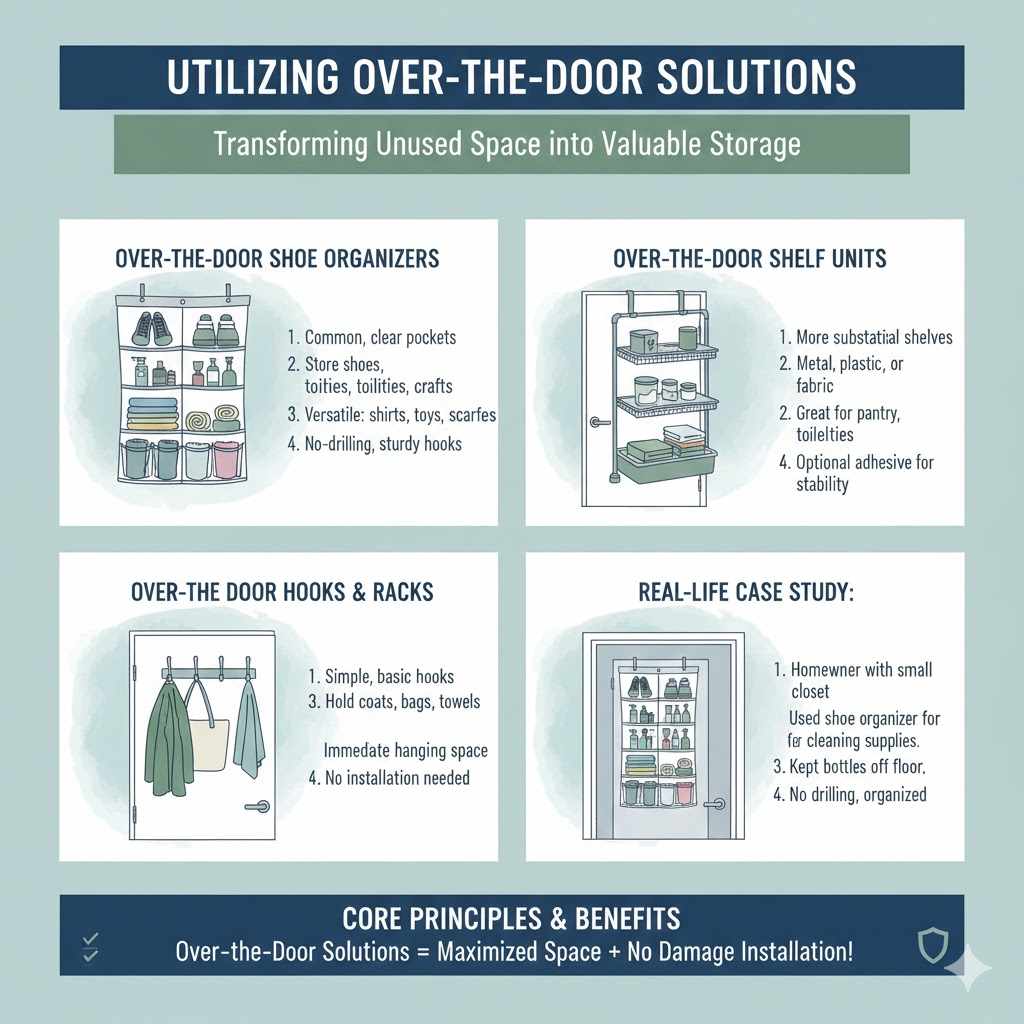
Over-the-door organizers come in many forms, from simple pockets to elaborate shelving units. They are typically hung using hooks that fit over the top of the door, so no drilling is required.
- Over-the-Door Shoe Organizers: These are perhaps the most common. They feature multiple clear pockets that are perfect for shoes, but can also hold other small items like cleaning supplies, toiletries, or craft materials.
- They are a classic no-drilling solution for shoe storage. However, their versatility extends far beyond footwear. Consider using them for rolled-up T-shirts, scarves, or even children’s toys.
- Make sure the hooks are sturdy and fit your door properly.
- Over-the-Door Shelf Units: Some systems offer more substantial shelving that hangs over the door. These can be made of metal, plastic, or fabric and provide a few shelves for storing items.
- These are great for pantry items, toiletries, or small accessories. They offer more storage than pocket organizers. Some units might require you to secure them to the door with adhesive strips to prevent swinging, but this is usually optional and non-damaging.
- Over-the-Door Hooks and Racks: Simple over-the-door hooks or racks can hold coats, bags, towels, or even hanging storage bins.
- These are very basic but highly effective for adding immediate hanging space without any installation. They are perfect for items you need quick access to, like robes, jackets, or shopping bags.
A survey found that 75% of people with small closets wish they had more storage. Utilizing the back of the door can significantly increase available space. For instance, a homeowner used an over-the-door shoe organizer to store cleaning supplies in their laundry room closet.
This kept bottles and sprays off the floor and neatly organized, a task that would have required drilling for wall shelves.
How to Add Closet Shelves Without Drilling Holes Frequently Asked Questions
Question: What is the easiest way to add shelves to a closet without drilling
Answer: The easiest way is often using freestanding shelving units or hanging closet organizers that attach to your existing clothes rod. These require no tools and minimal assembly, offering immediate storage solutions.
Question: Can I put shelves in a closet if I rent
Answer: Absolutely. Many methods, like tension rod shelves, adhesive solutions, freestanding units, and over-the-door organizers, are specifically designed for renters as they leave no permanent marks.
Question: How much weight can adhesive shelves hold
Answer: The weight capacity varies greatly depending on the brand and type of adhesive. Some light-duty shelves might hold only a few pounds, while heavy-duty adhesive brackets can support 15 pounds or more per bracket.
Question: Are tension rod shelves stable
Answer: Yes, tension rod shelves can be very stable if the rod is installed correctly and tightened firmly. It’s important to use a rod rated for the weight you intend to store and to test its stability before use.
Question: Can I use these methods for different types of closets
Answer: Yes, these methods are versatile and can be used in walk-in closets, reach-in closets, wardrobe closets, and even pantry spaces to increase organization.
Wrap Up
You can easily add closet shelves without drilling. Explore tension rods, adhesive options, freestanding units, hanging systems, and over-the-door organizers. These methods offer practical, damage-free storage solutions for any closet.
They help you get organized quickly and efficiently, making the most of your space without permanent changes.