How To Attach To Concrete Wall Without Drilling Easily
Many people think attaching things to concrete walls is super hard. They worry about making holes and needing special tools. This can make folks feel stuck when they want to hang shelves or decorations.
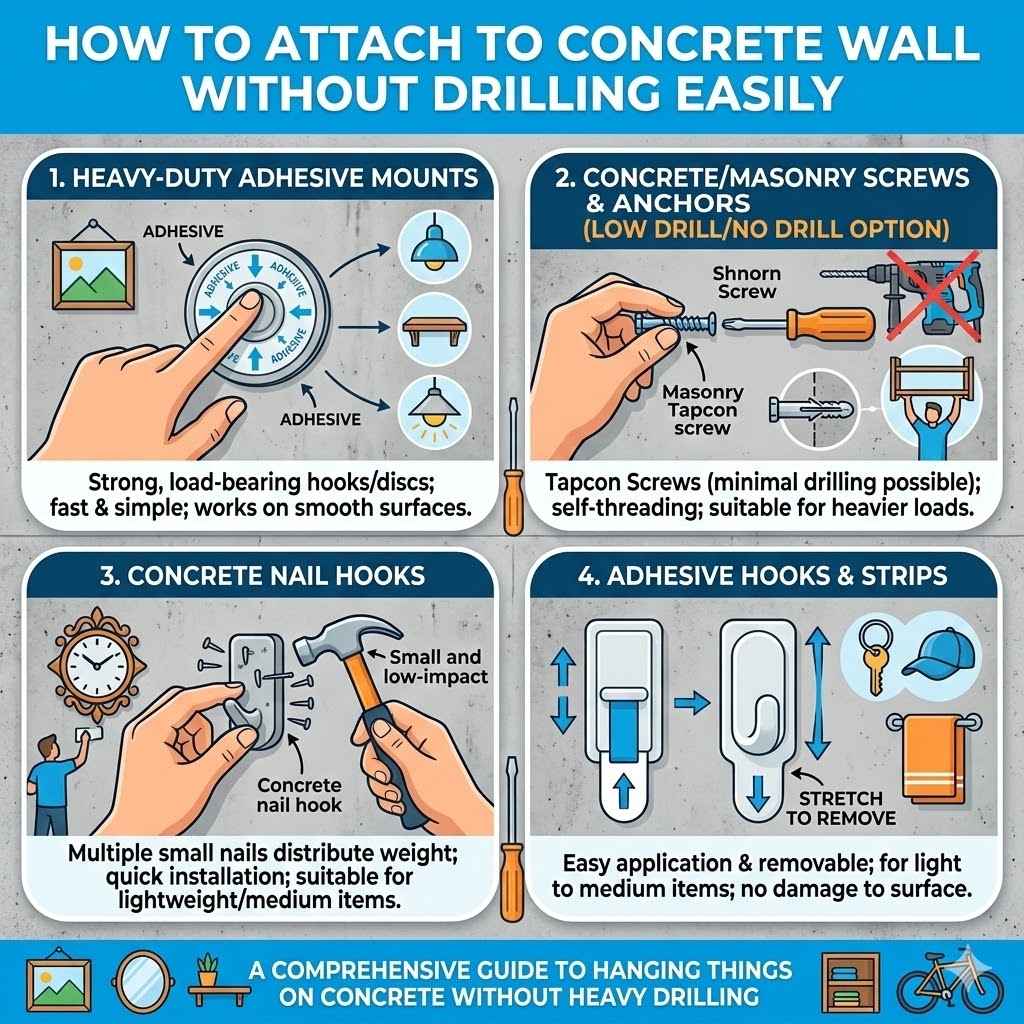
But it does not have to be tough! We will show you simple ways to attach to concrete wall without drilling easily. Get ready for a quick and easy guide that will help you get things done.
Easy Ways To Attach To Concrete Wall Without Drilling
Attaching items to concrete surfaces without making holes might seem tricky at first glance. Many people picture loud drills and clouds of dust. This is especially true for those new to DIY projects or home decorating.
They might feel overwhelmed by the thought of damaging their walls or needing expensive equipment. However, modern solutions offer simple and effective alternatives for almost any home improvement task. This section explores the most popular and straightforward methods available today.
We aim to demystify the process and show you how achievable it is for everyone.
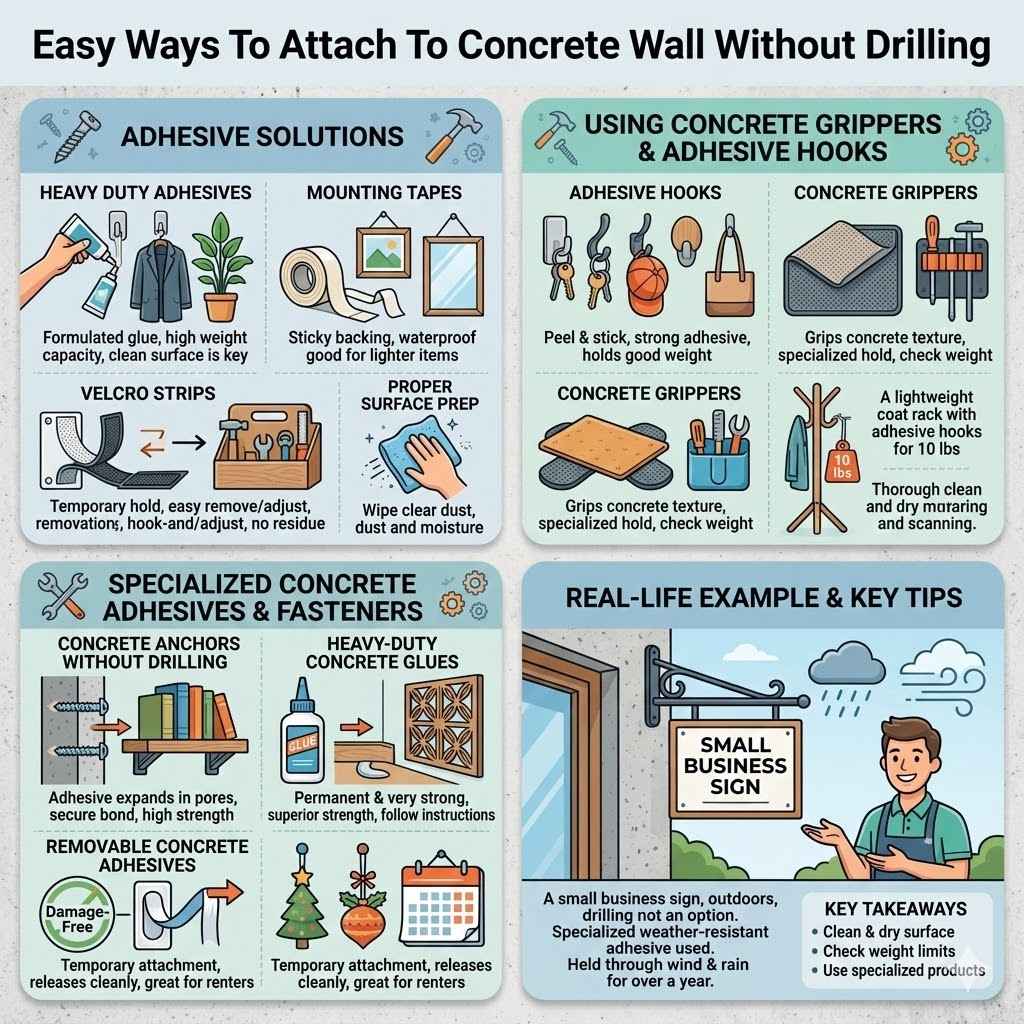
Adhesive Solutions For Concrete Walls
Adhesives have come a long way. They offer a strong hold on many surfaces, including concrete. These are great for lighter items where you do not want to make permanent marks.
Heavy Duty Adhesives
These are specially formulated glues designed to bond strongly to porous and smooth surfaces. They can hold significant weight, making them suitable for many household items. When choosing, check the packaging for concrete compatibility and the weight limit.
Proper surface preparation is key for the best bond.
Mounting Tapes
Similar to adhesives, mounting tapes use a strong sticky backing. They often come in rolls or pre-cut strips. Some are waterproof and designed for outdoor use on concrete.
They are perfect for hanging pictures, signs, or lightweight organizers. Make sure the surface is clean and dry for optimal adhesion.
Velcro Strips
For items you might want to remove and reattach, Velcro strips are excellent. They come with adhesive backing on both sides. One side sticks to your concrete wall, and the other sticks to your item.
This allows for easy adjustments or removal without residue. They are ideal for temporary displays or items that need frequent cleaning.
One common challenge is ensuring the adhesive sticks well to concrete. Concrete is porous, meaning it has tiny holes. This can sometimes prevent adhesives from getting a good grip if the surface isn’t prepared correctly.
Dust and moisture are the biggest enemies of any sticky solution.
Using Concrete Grippers And Adhesive Hooks
These are specifically designed for smooth and sometimes textured surfaces. They use a special type of adhesive that works well on concrete.
Adhesive Hooks
These are one of the most popular choices. They come with a strong adhesive strip on the back. You just peel and stick them to the wall.
Many are designed to hold a good amount of weight, like coats or towels. They are easy to find in most stores and come in many styles.
Concrete Grippers
These are less common but very effective for certain items. They often have a textured surface that grips the concrete. Some might use a combination of strong adhesive and a gripping material.
They are good for things that might slide, like mats or small tool holders. Always check their weight capacity.
A real-life example is hanging a lightweight coat rack by the back door. Instead of drilling, someone used strong adhesive hooks rated for 10 pounds. They cleaned the concrete wall spot thoroughly and let it dry.
The hooks held up perfectly, and no holes were needed.
Specialized Concrete Adhesives And Fasteners
Beyond everyday tapes and hooks, there are specialized products for concrete. These are made for more demanding situations.
Concrete Anchors Without Drilling
Some products work like anchors but use a powerful adhesive to stick into the concrete pores. They spread out slightly once in place, creating a secure bond. These are good for items that need a very strong hold but you still want to avoid traditional drilling.
Heavy-Duty Concrete Glues
For items that need a permanent and very strong bond, like securing a baseboard or a heavy decorative piece, special concrete glues are available. These often require a bit more effort to apply but offer superior strength. Always follow the manufacturer’s instructions carefully.
Removable Concrete Adhesives
If you need to attach something temporarily and remove it without damage, look for “removable” or “damage-free” adhesive products. These are designed to hold securely but release cleanly when you want them to. This is a great option for renters or for seasonal decorations.
One scenario: a small business owner wanted to hang a sign outside on a concrete wall. Drilling was not an option due to building rules. They opted for a specialized, weather-resistant adhesive designed for outdoor concrete use.
The sign has stayed put through wind and rain for over a year.
How To Prepare Your Concrete Wall For Adhesion
Getting ready is the most important step. A clean and dry surface makes sure whatever you stick stays stuck. This is true for any method, from simple tape to strong glue.
Cleaning The Concrete Surface
You need to get rid of dirt, dust, grease, and old paint. These things will stop the adhesive from sticking properly. A clean surface is like a fresh start for your glue or tape.
Wiping Down
For light dust, a dry cloth or brush works well. For more dirt, use a damp cloth with a little mild soap. Rinse well and let it dry completely.
Always check that no soap residue is left behind.
Using Alcohol
Rubbing alcohol is great for removing grease and ensuring the surface is dry and clean. It evaporates quickly, leaving no residue. This is a fantastic step before applying strong adhesives.
Scraping
If there are loose bits of paint or old glue, you might need a scraper. Gently remove anything that is not firmly attached to the concrete. This makes sure you have a smooth surface for your new adhesive.
Ensuring The Wall Is Dry
Water is the enemy of most adhesives. If the concrete is wet, the adhesive cannot make good contact. It might not stick at all, or it could fall off later.
Air Drying
After cleaning, let the wall air dry naturally. This can take a few hours, or even a full day, depending on how damp it got. You can speed this up with a fan or a hairdryer on a cool setting.
Moisture Check
You can check if it’s dry by touching it. If it feels cool or damp, it needs more time. For concrete that might hold moisture, consider using a moisture meter if you are unsure.
Dealing With Concrete Texture
Concrete can be rough or smooth. Rougher surfaces have more area for glue to grab. Smoother surfaces need a different approach.
Rough Surfaces
These are generally easier for adhesives. The tiny bumps and dips help the glue to get a better hold. Just make sure the dust is removed.
Smooth Surfaces
For very smooth concrete, like finished garage floors, some adhesives might struggle. You might need to lightly scuff the surface with sandpaper. This creates tiny scratches for the adhesive to grip.
Always test in an inconspicuous spot first.
A common mistake is not waiting long enough for the wall to dry. People get excited to hang their item and skip this step. This leads to the item falling down later.
Patience here is very important.
Popular Products For Attaching To Concrete Wall Without Drilling Easily
Many products are designed to help you attach items to concrete without drills. These range from simple tapes to strong glues.
Adhesive Strips And Tapes
These are often the first things people think of. They are easy to use and widely available.
Command Strips
These are very popular for indoor use. They come in various sizes and weight limits. They use a special adhesive that holds strong but can be removed cleanly.
For concrete, you need to use their outdoor or heavy-duty versions which are designed for more challenging surfaces.
Gorilla Mounting Tape
This is a very strong double-sided tape. It is designed for heavy-duty applications and can stick to many surfaces, including concrete. It is often waterproof, making it suitable for outdoor use as well.
It creates a very strong, permanent bond.
Adhesive Hooks And Hangers
Hooks are great for hanging things like keys, coats, or tools.
Heavy Duty Adhesive Hooks
Brands like Command and even some hardware store brands offer hooks that can hold up to 5 pounds or more. They are perfect for hanging calendars, lightweight decorations, or even small kitchen utensils. Always check the weight limit on the package.
Specialty Concrete Hooks
Some products are specifically marketed for concrete or outdoor use. These often have more robust adhesives that can withstand temperature changes and humidity better. They are ideal for garages or patios.
Adhesive Putties And Removers
These are good for lighter items or for filling small gaps.
Mounting Putty
This is a soft, sticky putty that can hold lightweight items like posters or photos. It is not suitable for heavy objects but is easy to use and remove. It works best on smooth, clean surfaces.
Adhesive Removers
When it’s time to take something down, special removers can help. These dissolve the adhesive without damaging the concrete. They make cleanup much easier.
Weight Capacity Comparison
It’s helpful to know how much weight these products can hold.
| Product Type | Typical Weight Capacity | Best For |
|---|---|---|
| Command Strips (Outdoor/Heavy Duty) | 2-5 pounds per strip | Light decorations, small signs |
| Gorilla Mounting Tape | Up to 15-20 pounds per strip (depends on size) | Mirrors, signs, moderate decor |
| Heavy Duty Adhesive Hooks | 3-5 pounds per hook | Coats, keys, towels |
| Specialty Concrete Hooks | Can vary widely, check packaging | Outdoor items, garage tools |
Statistics show that the adhesive market is growing. One report stated that the global adhesive market size was valued at over $60 billion. This shows how many people rely on these products for various needs, including home improvement.
Step-By-Step Guide To Attach To Concrete Wall Without Drilling Easily
Let’s walk through the process so you know exactly what to do. Following these steps will help ensure your item stays securely attached.
Choose Your Product
Decide what you want to hang and how much it weighs. Then, pick an adhesive product that is rated for that weight and is suitable for concrete. Read the packaging carefully.
Prepare The Wall
Clean the spot on the concrete wall where you will attach your item. Use a clean cloth with soap and water, or rubbing alcohol. Make sure it is completely dry.
Apply The Adhesive
Follow the product’s instructions. For tape, cut a piece to size and press it firmly onto the item you want to hang. For hooks or strips, peel off the backing and press it firmly onto the cleaned wall.
Press The Item Firmly
Once the adhesive is on the wall or item, press the item firmly into place. Hold it there for about 30 seconds to ensure a good bond.
Wait Before Hanging Weight
Most adhesives need time to cure and reach their full strength. This can be anywhere from an hour to 24 hours. Check the product’s instructions.
Do not hang your item until the waiting period is over.
Hang Your Item
Carefully place your item onto the hook or attached surface. Do not overload it.
A sample scenario: You want to hang a small mirror in your hallway. The mirror weighs about 3 pounds. You choose strong adhesive hooks rated for 5 pounds.
You clean the wall spot, dry it, apply the hook, press it for 30 seconds, and wait 24 hours before hanging the mirror. It stays put!
Common Mistakes To Avoid
People sometimes rush the process or do not read instructions. This can lead to the item falling down.
Not Cleaning The Wall
This is the most common mistake. Dust, grease, or moisture will prevent the adhesive from sticking properly. Always clean and dry the surface thoroughly.
Overloading The Adhesive
Using a hook or tape that is not rated for the weight of the item is a recipe for disaster. Always choose a product that can handle more weight than you need it to.
Not Waiting For Adhesive To Cure
Adhesives need time to reach their maximum strength. Hanging an item too soon can cause it to fall. Follow the recommended curing time strictly.
Applying In Wrong Conditions
Some adhesives do not work well in extreme cold, heat, or very high humidity. Always check if the product is suitable for the environment where you are applying it.
When To Consider Alternatives
While attaching to concrete wall without drilling easily is great, it’s not always the best solution for everything.
Very Heavy Items
For items weighing over 20 pounds, or anything that is safety-critical (like a heavy cabinet), drilling and using proper concrete anchors is usually the most secure method. Adhesives might not provide enough long-term stability.
Irregular Surfaces
If the concrete surface is very uneven, crumbly, or has large cracks, adhesives may not form a reliable bond. In such cases, mechanical fasteners are often necessary.
Permanent Fixtures
If you need to attach something that will never move and requires absolute maximum strength and stability, drilling into the concrete is the professional choice.
Maintaining Your Adhesively Attached Items
Once your item is up, you want it to stay there. A little care goes a long way.
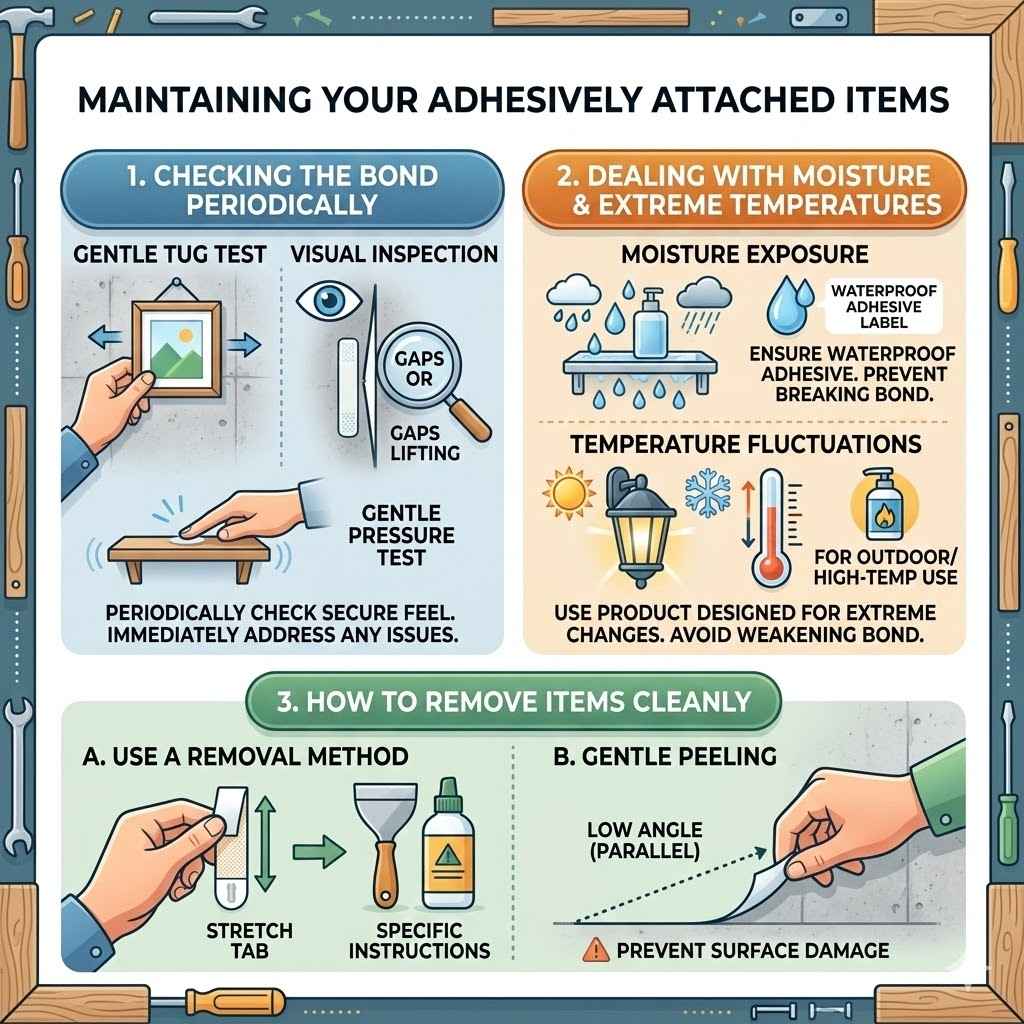
Checking The Bond Periodically
It is a good idea to check on your attached items from time to time. Just give them a gentle tug to see if they feel secure.
Visual Inspection
Look for any signs of the adhesive peeling away from the wall or the item. Any gaps or lifting should be addressed immediately.
Gentle Pressure Test
Lightly press on the item. If it moves or feels loose, it may be time to reinforce or reapply the adhesive. Do this carefully to avoid dislodging it further.
Dealing With Moisture Or Extreme Temperatures
These conditions can weaken some adhesives over time.
Water Exposure
If the area gets wet frequently, ensure you used a waterproof adhesive. If not, moisture can seep under the adhesive and break the bond. You might need to remove and reapply with a waterproof product.
Temperature Fluctuations
Adhesives can expand and contract with temperature changes. This can weaken the bond. For areas with extreme temperature swings, use products specifically designed for outdoor or high-temperature use.
How To Remove Items Cleanly
When you are ready to take something down, doing it the right way prevents damage.
Use A Removal Method
Many adhesive products, like Command Strips, have specific removal instructions. This usually involves stretching a tab to release the adhesive. For other glues, you might need a scraper or adhesive remover.
Gentle Peeling
If you are peeling off tape or a strip, do so slowly and at a low angle, almost parallel to the wall. This helps prevent pulling off paint or damaging the concrete surface itself.
Frequently Asked Questions
Question: What is the strongest way to attach to concrete without drilling?
Answer: For the strongest hold without drilling, heavy-duty mounting tapes or specialized concrete adhesives are typically the best options. Always check the product’s weight rating and ensure proper surface preparation.
Question: Can I hang a heavy picture on a concrete wall without drilling?
Answer: For heavier pictures, look for heavy-duty adhesive hooks or mounting strips designed for concrete and rated significantly higher than the picture’s weight. Allow the adhesive to cure fully before hanging.
Question: Will adhesive damage my concrete wall?
Answer: Most modern adhesives, especially those labeled “damage-free” or “removable,” are designed to be removed cleanly without harming the surface. However, always test in an inconspicuous area first.
Question: How long does adhesive usually take to set on concrete?
Answer: It varies by product, but many adhesives need between 1 hour and 24 hours to fully cure and reach their maximum holding strength. Always follow the manufacturer’s specific instructions.
Question: Can I use regular double-sided tape on concrete?
Answer: Regular double-sided tape is usually not strong enough for concrete and may not adhere well. Use tapes specifically designed for heavy-duty mounting or concrete surfaces for best results.
Conclusion
Attaching items to concrete walls without drilling is totally achievable. By preparing your wall well and choosing the right adhesive product, you can securely hang many things. Simple cleaning and drying, followed by patient application, makes all the difference.
You can confidently decorate or organize your space now.