How To Clean A Granite Composite Sink: Proven Results
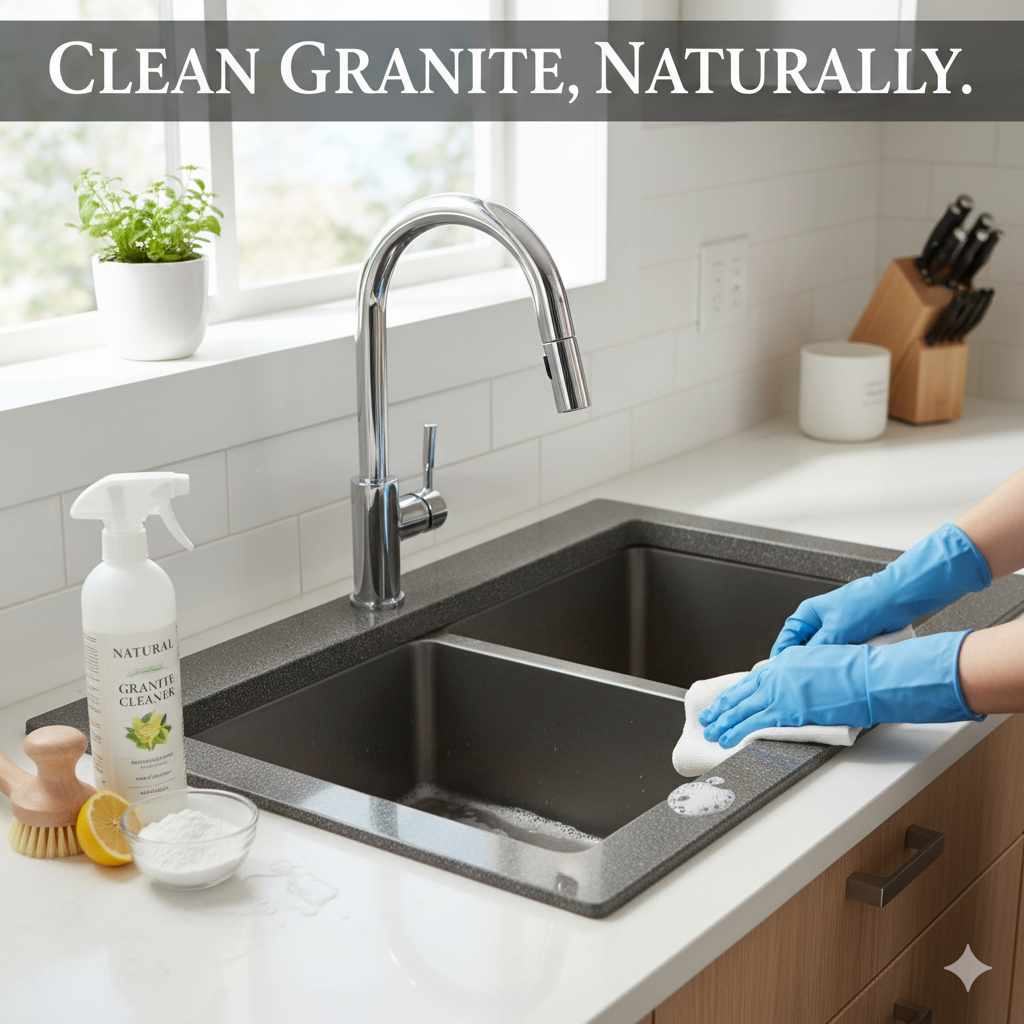
To clean a granite composite sink effectively, use mild dish soap and warm water daily. For tougher stains, apply a paste of baking soda and water, let it sit briefly, then scrub gently with a non-abrasive sponge. Rinse thoroughly to maintain that showroom shine.
Hello there! I’m Md Meraj, and if you’ve recently installed a beautiful granite composite sink, you know how great they look. But keeping that dark, sophisticated finish clean can sometimes feel tricky. White residue or dull spots can appear, making you wonder if you need harsh chemicals. Don’t worry! Granite composite sinks are incredibly tough, but they need the right gentle touch to look their best. You absolutely do not need strong acids or scouring pads that might scratch that lovely surface. I’m here to walk you through the simple, proven methods that will have your sink sparkling again, using things you probably already have in your kitchen cabinet. Let’s get that sink looking brand new!
Why Granite Composite Sinks Need Special Care (And Why It’s Easy!)
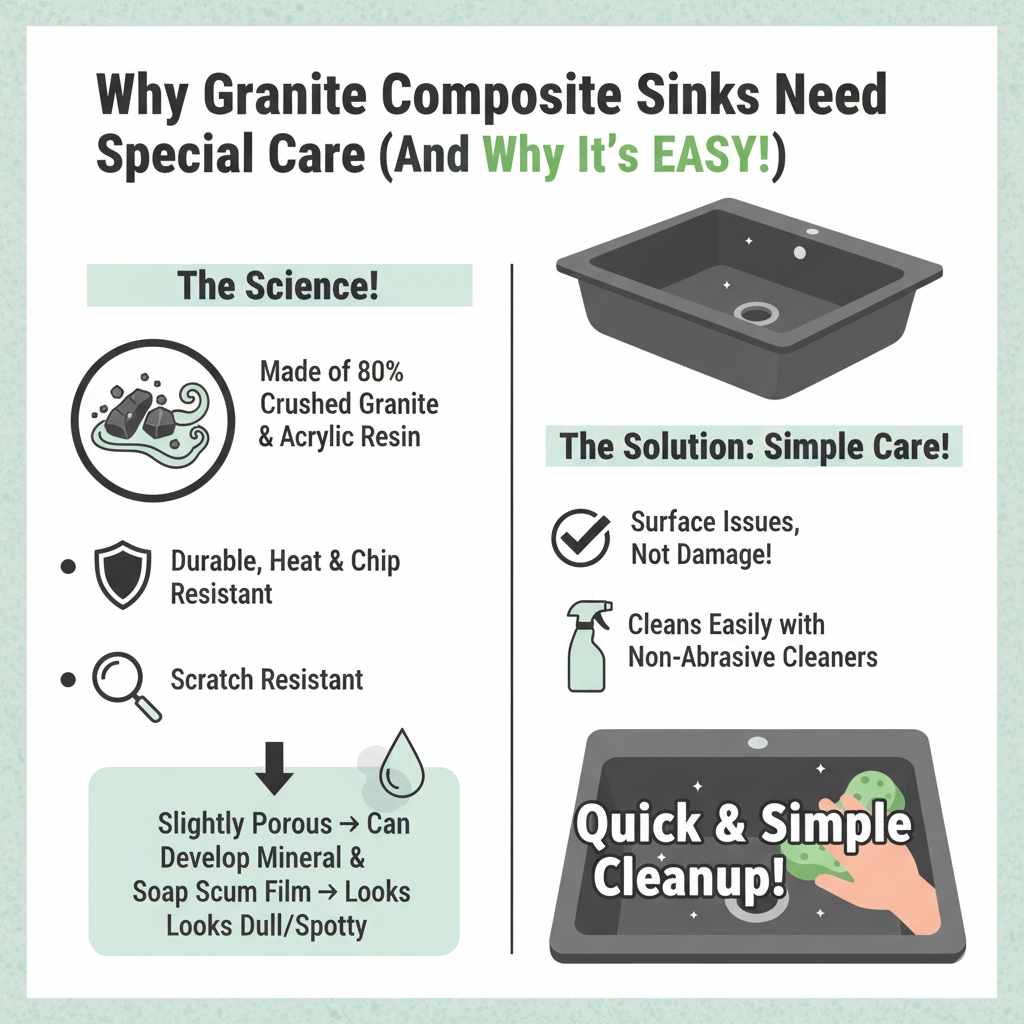
Granite composite sinks are fantastic. They are made from a mix of crushed granite stone (about 80%) and acrylic resins. This mixture makes them much more durable and resistant to chipping and heat than traditional cast iron or porcelain sinks. They resist scratches surprisingly well, too!
However, because they are slightly porous—though far less than natural stone—they can sometimes develop a thin film of mineral deposits, soap scum, or hard water stains. This is often what makes them look dull or spotty, especially if you have hard water in your area. The good news is that these are surface issues, not damage, and they clean up easily with simple, non-abrasive cleaners.
What to AVOID on Your Granite Composite Sink
Before we dive into the good stuff, let’s quickly cover the enemies of your sink’s finish. Using the wrong product can cause dulling or etching over time. Think of your sink like a durable but sophisticated piece of kitchen furniture—it needs gentle cleaning.
- Abrasive Cleaners: Powders like Comet or Bar Keepers Friend (unless specifically rated for composite sinks) can cause micro-scratches, dulling the finish over time.
- Harsh Acids: Avoid vinegar used frequently or undiluted, strong toilet bowl cleaners, or industrial drain openers. These can etch the resin binder.
- Steel Wool or Scrub Pads: Anything metal or highly abrasive will definitely scratch the surface.
- Leaving Wet Sponges: This can encourage mineral buildup, leading to those white spots you want to avoid.
The Essential Toolkit for Cleaning Your Granite Composite Sink
You don’t need a specialty cleaning kit for your granite composite sink. Most of what you need is already in your cleaning caddy. Having the right tools makes the job faster and safer for the sink’s finish.
Tools You Will Need
- Soft Cloths or Microfiber Towels: Essential for wiping and drying without scratching.
- Non-Abrasive Sponge or Scrub Brush: Look for the “safe for non-stick cookware” label.
- Dish Soap: A simple, gentle liquid dish soap is your best friend for daily cleaning.
- Baking Soda: The perfect mild abrasive for gentle scrubbing and lifting stains.
- Rubbing Alcohol or White Vinegar (Used Sparingly): Great for tackling hard water spots when needed.
- Mineral Oil or Butcher Block Oil (Optional): For conditioning the sink after deep cleaning.
Step-by-Step Guide: Daily Cleaning for a Lasting Shine
The secret to a beautiful granite composite sink is consistency. A quick wipe down every day prevents stains from setting in and mineral deposits from building up. This method takes less than two minutes!
Step 1: Rinse Away Debris
After doing the dishes or cooking, use hot water to thoroughly rinse all food particles, grease, and soap residue down the drain. Ensure the entire basin is clear.
Step 2: Wash with Mild Soap
Apply a few drops of your regular gentle dish soap onto a soft cloth or non-abrasive sponge. Scrub the entire surface of the sink basin, paying attention to the corners and around the drain flange.
Step 3: Rinse Thoroughly
Rinse away all soap suds completely with hot water. Soap residue left behind is a major culprit for dulling the finish.
Step 4: Dry the Sink (The Most Important Step!)
This step is critical, especially if you have hard water. Use a clean, dry microfiber towel to wipe down the entire sink basin until it is completely dry. Drying prevents water spots and mineral rings from forming, keeping the deep color vibrant.
How To Clean A Granite Composite Sink: Tackling Tough Stains and Hard Water
Life happens! Sometimes coffee spills, tea steeps too long, or hard water leaves its mark. When daily cleaning isn’t enough, it’s time to bring out the baking soda. This method is safe, highly effective, and incredibly affordable.
Method 1: The Baking Soda Paste Power Clean
Baking soda (sodium bicarbonate) is slightly abrasive but softer than the composite material itself, allowing it to lift stains without scratching. This is the number one recommended deep clean method by many composite sink manufacturers.
- Prepare the Paste: In a small bowl, mix baking soda with just enough water to create a thick, spreadable paste—think toothpaste consistency.
- Apply to Stains: Apply the paste directly onto any stained areas or where you see a dull film. For the whole sink, spread a thin layer over the wet basin.
- Let It Sit (Briefly!): Allow the paste to sit on the surface for about 10 to 15 minutes. Do not let it dry completely, especially if the area is heavily stained.
- Gentle Scrubbing: Using your non-abrasive sponge or a soft-bristled brush, gently scrub the area in circular motions. You should feel the paste lifting the residue.
- Rinse and Dry: Rinse the entire sink extremely well with hot water until all traces of baking soda are gone. Dry immediately with a soft cloth for maximum shine.
Method 2: Dealing with Stubborn Hard Water Marks
If you see persistent white rings or cloudy buildup that the baking soda didn’t fully remove, it’s likely calcium or magnesium deposits from hard water. While you should avoid using full-strength vinegar often, a quick, targeted application can dissolve these minerals effectively.
Safety Note: Always test any new cleaner in an inconspicuous area first. While granite composite is tough, concentrated acid can dull the finish if left too long.
- Dampen the Area: Lightly wet the stained area with water.
- Apply Vinegar: Dampen a paper towel or soft cloth with plain white vinegar (undiluted). Lay this vinegar-soaked towel directly over the hard water stain.
- Wait a Maximum of 5 Minutes: Vinegar needs time to work on mineral deposits. Set a timer for 5 minutes. If the water stains are light, 2–3 minutes may suffice. Do not leave it for longer periods.
- Scrub Lightly: Remove the towel, then gently scrub the area with a soft sponge.
- Neutralize and Rinse: Immediately rinse the entire sink thoroughly with water. It is crucial to neutralize the acid. You can quickly scrub the area again with the baking soda paste from Method 1, then rinse one final time. Dry completely.
For more detailed information on mineral buildup in household plumbing and fixtures, resources like the Environmental Protection Agency (EPA) offer guides on water quality, which can help you understand why these spots are forming.
Restoring the Deep Luster: Conditioning Your Composite Sink
After a deep clean, your sink might look clean, but sometimes the deep black or rich brown color can appear slightly faded or matte. This is often due to microscopic etching from cleaning or just needing moisture replenished in the resin binder. Conditioning brings back that showroom depth!
When and How to Condition
Conditioning is optional but highly recommended once a month or after any heavy-duty cleaning. This process seals the surface slightly, making future cleaning easier.
Recommended Conditioning Oils
| Oil Type | Pros | Cons |
|---|---|---|
| Mineral Oil (Food Grade) | Safe, inexpensive, readily available, excellent shine. | May need reapplication every 4-6 weeks. |
| Butcher Block Oil | Specifically designed for food-contact surfaces, good penetration. | Can sometimes be more expensive than pure mineral oil. |
| Olive Oil (Use Sparingly) | Readily available in the kitchen. | Can eventually go rancid if not completely wiped off or if the sink is often wet. Use sparingly! |
The Conditioning Process
- Ensure the Sink is Bone Dry: This is non-negotiable. Any moisture trapped under the oil will cause clouding.
- Apply the Oil: Pour about a teaspoon of your chosen oil (mineral oil works best) into the dry sink basin.
- Spread Evenly: Use a clean, soft cloth to rub the oil into the entire surface of the sink. Use light pressure and cover every square inch.
- Let it Soak: Allow the oil to penetrate for about 30 minutes.
- Buff Away Excess: Use a new, clean, dry cloth to vigorously buff the entire sink until no greasy residue remains. The sink should look dark, rich, and feel smooth, not oily to the touch.
Preventative Maintenance Tips for the Long Haul
As your friendly home guide, I always say prevention is easier than correction. A few simple habits will keep your granite composite sink looking pristine for years. These steps are easy and require minimal extra effort.
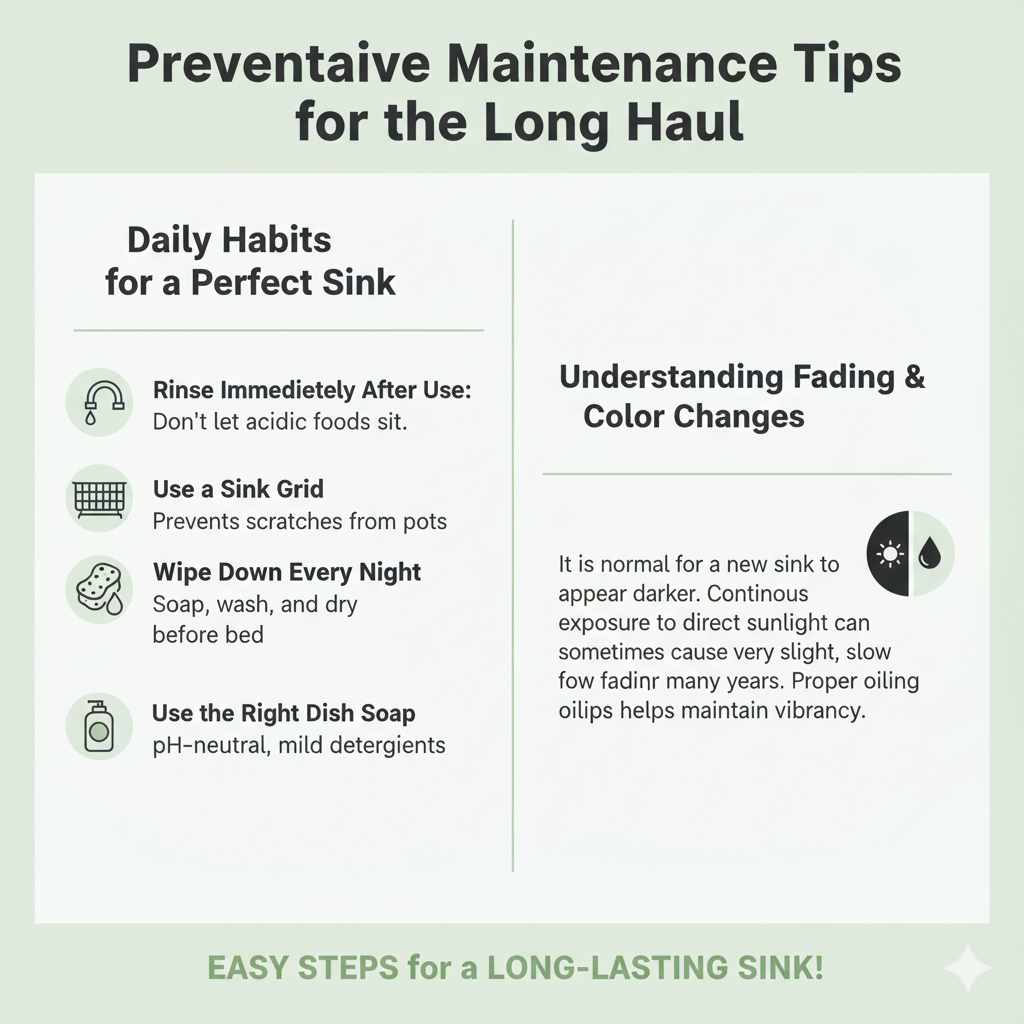
Daily Habits for a Perfect Sink
- Rinse Immediately After Use: Don’t let acidic foods (like tomato sauce, mustard, or citrus juices) sit in the sink. Give them a quick rinse right away.
- Use a Sink Grid: If you frequently place heavy pots or pans in your sink, consider purchasing a protective grid made for your sink model. This prevents scratches from dropped silverware or heavy items, protecting the base layer.
- Wipe Down Every Night: Make it part of your routine: after the last dish is done, give it a quick soap wash and dry it off before bed.
- Use the Right Dish Soap: Stick to pH-neutral, mild dish detergents. Avoid soaps that contain harsh degreasers or chlorine bleach ingredients.
Understanding Fading and Color Changes
It is normal for a new granite composite sink to appear slightly darker immediately after installation or after oil conditioning. However, continuous exposure to direct sunlight (if your sink is near a large window) can sometimes cause very slight, slow fading over many years, similar to how wood fades. This is very minor, but something to be aware of. Proper oiling helps maintain the vibrancy.
Troubleshooting Common Granite Composite Sink Issues
Even with the best care, homeowners sometimes run into specific visual problems. Here is a quick chart to help you diagnose and treat common issues you might see.
| The Problem You See | Likely Cause | Best Proven Solution |
|---|---|---|
| Dull, Cloudy Finish | Soap scum or hard water film buildup. | Baking soda paste scrub, followed by a thorough rinse and drying. |
| White Chalky Rings/Spots | Mineral deposits (calcium/magnesium) from hard water. | Quick application of diluted white vinegar (5 minutes maximum), followed by immediate neutralization with baking soda and water rinse. |
| Light Scratches or Scuffs | Using metal scouring pads or dropping sharp objects. | Deep clean with baking soda paste to smooth the surface texture, then condition with mineral oil to blend the scratch appearance. |
| Greasy Film Despite Washing | Residue from oils or lotions left on dishes/hands. | Wash with a slightly stronger (but still mild) grease-cutting dish soap, followed by a very hot water rinse and complete drying. |
If you are ever concerned about the long-term performance or chemical resistance of your sink, always check the manufacturer’s specific warranty and cleaning guidelines. Reputable companies often provide detailed maintenance guides available online, ensuring you have access to the latest, most specific advice for your exact model.
Frequently Asked Questions (FAQ) About Cleaning Composite Sinks
Q1: Can I use bleach in my granite composite sink?
A: It is generally best to avoid chlorine bleach. While a very quick rinse might not cause immediate harm, repeated use can break down the resin binders over time, potentially leading to dulling or discoloration. Stick to baking soda and mild soap.
Q2: My sink looks dark and unevenly colored. What happened?
A: This usually means the sink is dry or has mineral buildup. If it’s dry, it needs oil conditioning (Method 2). If it looks cloudy, it needs a baking soda scrub to remove surface film.
Q3: Is it safe to use the magic eraser (melamine foam) sponges?
A: Magic erasers are actually a very fine abrasive. While many people use them successfully on composite sinks, you must use them extremely gently and sparingly, as heavy scrubbing can slowly dull the sheen over time. I recommend testing in a small spot first.
Q4: How often should I condition my granite composite sink?
A: If you use the sink daily, aim to condition it with mineral oil once a month. If you live in a very dry climate or use it very heavily, you might opt for every three weeks.
Q5: What is the best way to clean the drain basket/flange area?
A: This area traps the most debris. Use an old, soft toothbrush dipped in baking soda paste to gently scrub the crevices around the metal flange and the drain basket itself. Rinse thoroughly, as these areas dry slowly.
Q6: Will coffee or red wine permanently stain my black composite sink?
A: Highly pigmented liquids like red wine, coffee, or tea rarely cause permanent staining if addressed quickly. Rinse immediately, and if a faint ring remains, follow up with the baking soda paste treatment right away. Don’t let the stain sit overnight.
Conclusion: Confidence in Your Kitchen Cleanliness
See? Cleaning your granite composite sink is not a chore reserved for professionals or expensive specialty products. It’s about consistency and using the right mild abrasives when needed. By adopting the daily rinse-and-dry habit and relying on the powerhouse combination of baking soda for deep cleaning and mineral oil for that rich, lasting luster, you’ll maintain that beautiful, high-end look effortlessly.
You now have all the straightforward, proven steps needed to care for your sink. Remember, these sinks are designed for real kitchens—they are tough! Give them a little gentle attention using the techniques we covered, and enjoy the confidence that comes from keeping your home beautiful yourself. Happy cleaning!