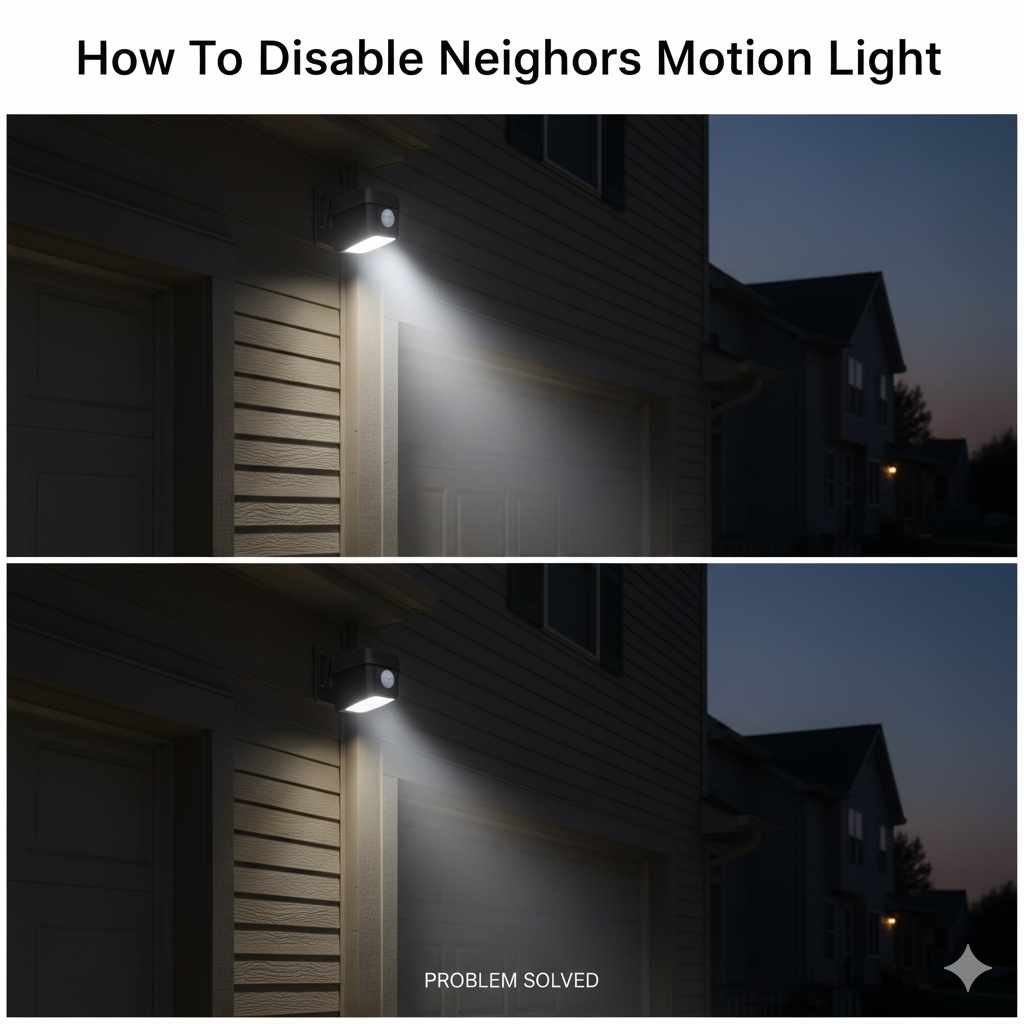
How To Disable Neighbors Motion Light: Genius Solution
Quick Summary:
Learn how to politely and effectively address a neighbor’s disruptive motion light. This guide offers practical, DIY-friendly solutions and communication strategies to restore peace and darkness to your home without causing conflict.
Hey there, fellow homeowners! Md Meraj here. We’ve all been there: a bright, flashing motion light from a neighbor’s house shining directly into your bedroom window, disrupting your sleep and peace. It can feel incredibly frustrating when a simple amenity meant for security becomes a nightly nuisance. You want to find a solution, but you also want to keep things friendly with your neighbors. Don’t worry, I’ve got you covered. We’ll walk through some clever, beginner-friendly ways to tackle this common problem, starting with the most important step: communication.
Understanding the Neighbor’s Motion Light Problem
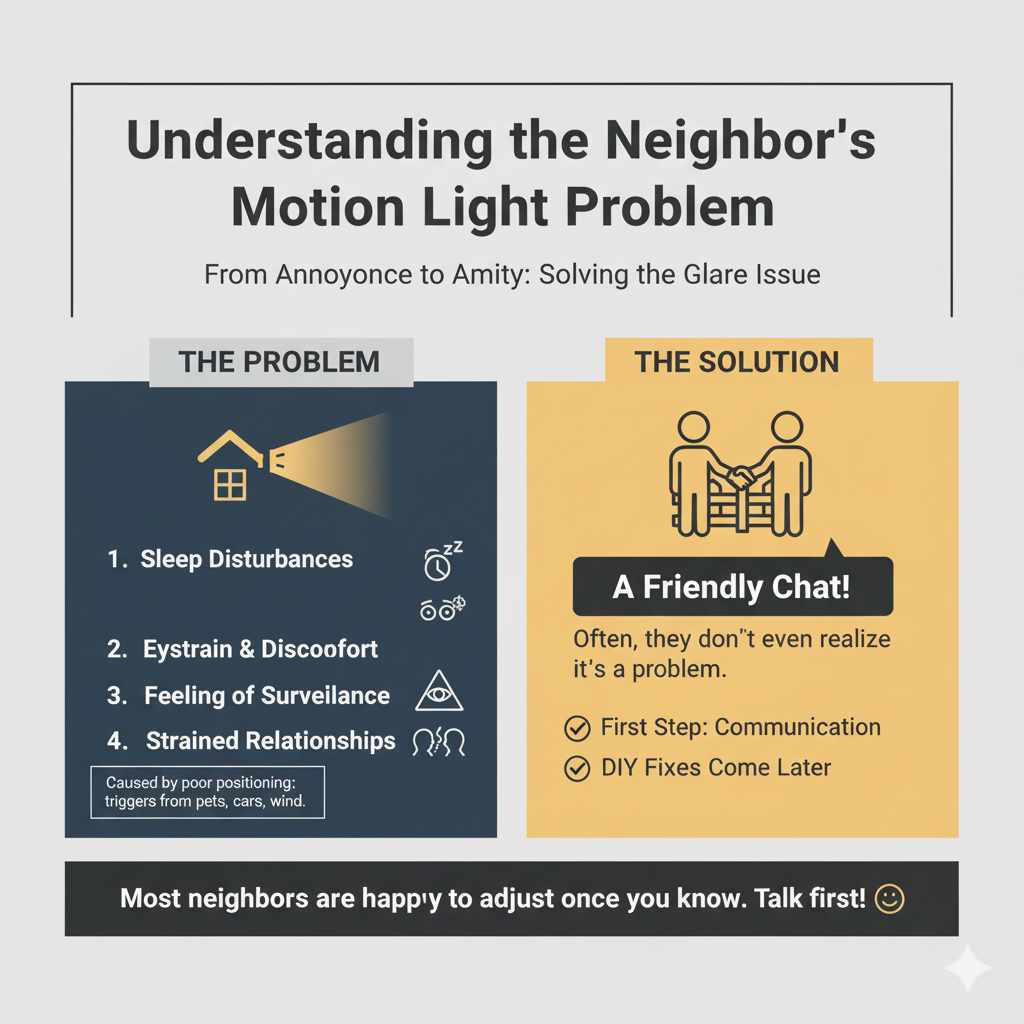
Motion-activated lights are fantastic for security. They’re designed to deter intruders and illuminate pathways. However, when positioned poorly, they can become a significant source of annoyance for nearby homes. Think about it: a sudden flash of light every time an animal, a car, or even a strong gust of wind triggers the sensor. This can lead to:
- Sleep disturbances and insomnia.
- Eyestrain and discomfort.
- A feeling of being constantly under surveillance.
- Strain on neighborly relationships if not handled properly.
The good news is, most of the time, your neighbor might not even realize their light is causing a problem. A friendly chat is often the first and most effective step. Before we dive into any “DIY fixes,” let’s talk about how to approach your neighbor.
Step 1: The Friendly Conversation – Your First and Best Tool
Before you even think about reaching for a tool, the most important step is to have a calm, polite conversation with your neighbor. Remember, they likely installed the light for a good reason, and they might be unaware of the impact it’s having on you. Approach them with a smile and a friendly demeanor. Frame the issue as a personal inconvenience, not an accusation.
Here’s a simple script you can adapt:
- “Hi [Neighbor’s Name], how are you doing? I wanted to chat with you for a moment about something that’s been a little bit of a bother for me lately. I’ve noticed your motion light comes on quite often, and unfortunately, it’s been shining directly into my bedroom window at night. It’s been making it a bit difficult for me to sleep. I was wondering if there might be a way to adjust it, or if you’d be open to exploring some options?”
Why this works:
- It’s non-confrontational.
- It focuses on your experience (“it’s been a bother for me”).
- It opens the door for collaboration (“exploring some options”).
Be prepared for a few possible responses:
- Understanding and Willing to Adjust: This is the ideal scenario! They might not have realized the light was an issue and will be happy to adjust the angle or settings.
- Unaware and Willing to Learn: They might not know how to adjust it. You can offer to help them find the instructions or suggest solutions together.
- Defensive or Unwilling: This is less common but possible. If they are unwilling to help, don’t push it immediately. Take a step back and consider other options.
Step 2: Suggesting Simple Adjustments (If They’re Open to It)
If your neighbor is agreeable but unsure how to make changes, here are some common adjustments you can suggest. Many motion lights have simple controls that don’t require any tools.
Adjusting the Motion Sensor Range and Angle
Most outdoor motion lights have a sensor head that can be swiveled and tilted. Often, the issue isn’t the light itself, but where the sensor is pointed.
How to do it (guide for your neighbor):
- Locate the sensor head on the light fixture. It’s usually a round or rectangular dome.
- Gently try to rotate or tilt the sensor. You might feel it click into different positions.
- The goal is to aim the sensor away from your property and towards areas where motion is actually a concern (like their driveway or walkway).
- Test it by having someone walk in the area it’s supposed to cover.
Tip: If the sensor is stiff, a little gentle wiggling might be needed. Avoid forcing it, as you don’t want to break it.
Adjusting the Timer Settings
Many motion lights also have a dial or setting to control how long the light stays on after it detects motion. A shorter duration can reduce the overall disturbance.
How to do it:
- Look for a dial or small buttons near the sensor or on the base of the fixture.
- These are often labeled with times (e.g., 1 min, 5 min, 15 min).
- Turn the dial to the shortest recommended setting that still provides adequate security.
Adjusting the Sensitivity
Some advanced models allow you to adjust the sensitivity of the motion detector. This can prevent the light from triggering due to small movements or environmental factors like blowing leaves or passing cars.
How to do it:
- Check the fixture for a sensitivity dial or switch, often marked with “High,” “Medium,” and “Low.”
- Set it to a lower sensitivity to reduce false triggers.
- Test it to ensure it still detects genuine motion effectively.
Step 3: When Direct Adjustments Aren’t Enough – DIY Solutions
If your neighbor isn’t available, unwilling to adjust the light, or if the light is positioned in a way that adjustments won’t help, you might need to consider solutions that affect how the light impacts your property. These are beginner-friendly DIY approaches that focus on blocking or diffusing the light from your side.
Solution A: Strategic Shading with Natural Elements
This is a subtle and often effective way to block light without any permanent modifications. Think about using plants to create a natural screen.
Tools and Materials:
- Fast-growing, tall shrubs or trees (e.g., Leyland cypress, bamboo, Arborvitae)
- Small, potted plants (for temporary solutions or smaller areas)
- Gardening tools (shovel, trowel, gloves)
Steps:
- Assess the Light Path: Identify exactly where the light is coming from and where it’s hitting your home.
- Choose Your Plants: Select plants that will grow tall enough to block the light at its source or at your window level. Consider their growth rate and mature size. Native plants are often a great choice as they thrive in local conditions and support local wildlife.
- Plant Strategically: Plant them along your property line, ensuring they are placed far enough from your neighbor’s fence or property to avoid issues and to allow for mature growth. Aim to create a dense barrier.
- Maintenance: Water regularly and prune as needed to maintain the desired height and density.
Pros:
- Aesthetically pleasing and improves curb appeal.
- Environmentally friendly.
- Provides privacy and can reduce noise.
- Long-term, effective solution.
Cons:
- Takes time for plants to grow to full effectiveness.
- Requires ongoing maintenance.
- May require an initial investment.
- Ensure you are planting on your property and not encroaching on your neighbor’s.
Solution B: Installing a Simple Barrier
If plants aren’t an option or you need a quicker fix, a physical barrier can be very effective. This could be as simple as a fence extension or a strategically placed screen.
Option B1: Privacy Screens or Fencing
If you have a fence, adding a privacy screen or extending the fence height can block light. Many privacy screens are designed for easy installation onto existing fence posts.
Tools and Materials:
- Privacy fence screening (mesh or solid)
- Zip ties or fence clips
- Heavy-duty scissors or utility knife
- Measuring tape
- Optional: Additional fence posts and concrete (for extending height)
Steps:
- Measure: Measure the length of the fence section you want to cover and the desired height.
- Cut: Cut the privacy screen to size, allowing a little extra for overlap.
- Attach: Securely attach the screening to your existing fence using zip ties or fence clips. Start from the top and work your way down, ensuring it’s taut.
- Extend Fence (if needed): For more significant light blocking, consider adding additional fence posts and attaching new fence panels to increase the height. This is a more involved DIY project but very effective. Ensure you check local fencing regulations.
Option B2: Freestanding Screens or Panels
You can also erect freestanding panels or screens in your yard. These are great if you don’t have a fence or if the light is coming from a direction not covered by your fence.
Tools and Materials:
- Outdoor-rated privacy screens or panels (e.g., bamboo, wood, composite)
- Sturdy posts (e.g., metal or treated wood)
- Post hole digger or shovel
- Gravel or concrete for stability
- Screws or bolts
- Level
- Drill
Steps:
- Plan Placement: Determine the best location to block the light. Ensure it’s on your property and doesn’t obstruct your neighbor’s access or view in an inappropriate way.
- Dig Post Holes: Dig holes deep enough to provide stability for the posts, typically about 2-3 feet deep, depending on the height of your screen.
- Set Posts: Place the posts in the holes, add gravel or concrete for stability, and use a level to ensure they are perfectly vertical. Let concrete cure if used.
- Attach Panels: Mount the privacy panels or screens to the posts using screws or bolts. Ensure they are securely fastened.
Pros:
- Provides immediate light blocking.
- Can significantly improve privacy.
- Relatively straightforward DIY.
Cons:
- Can be less aesthetically pleasing than plants.
- May require permits or adherence to property line regulations.
- Freestanding options need secure foundations to withstand wind.
Solution C: Window Treatments – The Inside Job
Sometimes, the simplest and most direct solution is to manage the light from inside your own home. This is especially true if the light is a direct beam hitting your windows.
Tools and Materials:
- Blackout curtains or blinds
- Velcro strips or strong adhesive tape
- Window film (blackout or frosted)
- Caulking or weatherstripping (for light gaps)
Steps:
- Install Blackout Curtains/Blinds: If you don’t already have them, install blackout curtains or blinds on the windows affected by the light. Ensure they fit snugly against the window frame.
- Seal Gaps: Use Velcro strips or strong tape along the edges of the curtains/blinds to seal any light gaps. This prevents light from seeping in around the sides.
- Apply Window Film: For a more permanent solution that doesn’t obstruct the view during the day (if using frosted film), apply blackout or frosted window film directly to the glass. Follow the manufacturer’s instructions carefully for application to avoid bubbles.
- Caulk Around Frames: If light is seeping in around the window frame itself, apply a bead of caulk or weatherstripping to seal those gaps.
Pros:
- Immediate and highly effective for windows.
- Relatively inexpensive and easy to implement.
- Gives you control over light entering your home.
Cons:
- Only addresses light entering through windows.
- Can make rooms feel darker during the day.
- Requires consistent use of curtains/blinds.
Step 4: Advanced (and Less Recommended) Options
These options are generally not recommended due to potential legal issues, damage to property, or significant neighborly disputes. They are included for completeness but should be approached with extreme caution, if at all.
Option D: Contacting Homeowners Association (HOA) or Local Authorities
If you live in an area with an HOA or if the light is genuinely a nuisance that violates local ordinances (e.g., excessive light pollution, safety hazard), you might consider reporting it. However, this should be a last resort after all communication attempts have failed.
Steps:
- Review HOA Rules: Check your HOA’s Covenants, Conditions & Restrictions (CC&Rs) for any rules regarding outdoor lighting.
- Check Local Ordinances: Research your city or county’s light pollution or nuisance ordinances. The U.S. Environmental Protection Agency (EPA) provides resources on light pollution that might be helpful in understanding the issue.
- Document: Keep a log of when the light is problematic, its duration, and any communication attempts with your neighbor.
- Formal Complaint: If grounds exist, file a formal complaint with the HOA or relevant local government department (e.g., code enforcement).
Pros:
- Can provide a formal resolution if rules are being broken.
- Removes you as the direct mediator.
Cons:
- Can severely damage neighborly relations.
- HOA/authority intervention may take time and may not result in the desired outcome.
- Requires proof that rules are being violated.
Option E: Modifying the Neighbor’s Light (NOT RECOMMENDED)
This is where we step firmly into the “don’t do this” territory. Tampering with a neighbor’s property, even if it’s causing a nuisance, can lead to serious legal trouble, including charges of vandalism or property damage. It will almost certainly destroy any goodwill you have with your neighbor.
Why this is a bad idea:
- Legal Ramifications: You could face criminal charges.
- Escalated Conflict: This will almost certainly lead to a major dispute.
- Damage to Property: You might break the light or wiring.
- Ethical Concerns: It’s simply not the right way to handle neighborly issues.
As your guide, Md Meraj, I strongly advise against any actions that involve directly interfering with your neighbor’s property. Stick to communication and solutions that affect your own property.
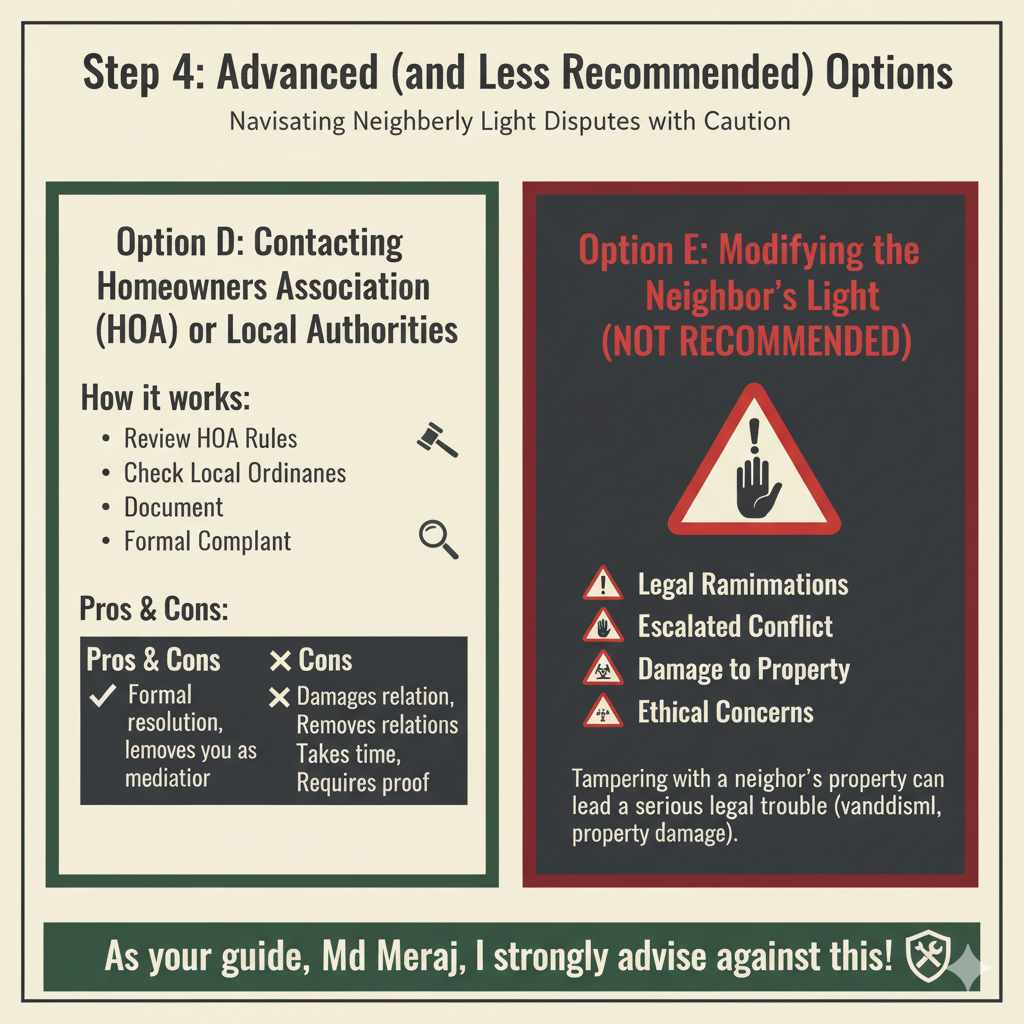
Table: Comparison of DIY Solutions
Here’s a quick look at the DIY solutions we discussed, helping you choose the best fit for your situation:
| Solution | Effectiveness (Light Blocking) | DIY Difficulty | Cost | Speed of Results | Aesthetics |
|---|---|---|---|---|---|
| Natural Shading (Plants) | High (Long-term) | Medium | Medium | Slow (Months to Years) | High |
| Privacy Screens/Fencing | High (Immediate) | Medium to High | Medium to High | Immediate | Medium |
| Window Treatments (Inside) | Very High (Immediate) | Low | Low to Medium | Immediate | N/A (Internal) |
Frequently Asked Questions (FAQ)
Q1: Can I legally disable my neighbor’s motion light?
Generally, no. Tampering with your neighbor’s property without their permission is illegal and can lead to charges of vandalism or property damage. It’s always best to seek permission or use solutions on your own property.
Q2: What if my neighbor refuses to do anything about their light?
If communication fails, your best bet is to focus on solutions you can implement on your own property, such as window treatments, privacy screens, or planting trees/shrubs. As a last resort, you can investigate HOA rules or local ordinances if the light is truly excessive or violates regulations.
Q3: How can I make sure my DIY solution doesn’t cause problems with my neighbor?
Always ensure your solutions are on your property. If you’re planting, keep plants well within your property lines. If you’re building a fence or screen, check local building codes and property line setbacks. Maintaining open, friendly communication is key to preventing disputes.
Q4: Are there any specific types of plants that are best for blocking light?
Evergreen shrubs and trees are ideal because they provide year-round coverage. Fast-growing varieties like Arborvitae, Leyland cypress, or certain types of bamboo (ensure it’s a clumping variety if you don’t want it to spread aggressively) can create a dense screen relatively quickly. Research native options for your region for best results and ecological benefits.
Q5: How can I tell if the light is violating local ordinances?
You would need to check your city or county’s municipal code. Look for sections on “nuisance,” “light pollution,” or “outdoor lighting.” Some areas have specific rules about the intensity, direction, and duration of outdoor lights, especially if they impact neighboring properties. The International Dark-Sky Association offers resources and information on light pollution issues.
Q6: What if the light is a security light that comes on very often?
Even security lights can often be adjusted. The first step is still talking to your neighbor. If they are unwilling to adjust the sensor’s range, angle, or sensitivity, then you might need to implement your own light-blocking solutions. Some security lights are designed to be very sensitive to prevent false alarms, but this sensitivity can be a nuisance to neighbors.
Conclusion
Dealing with a neighbor’s motion light can be a tricky situation, but it doesn’t have to lead to conflict. By starting with a friendly conversation and exploring simple adjustments, you can often resolve the issue amicably. If direct adjustments aren’t possible, remember that you have several effective DIY solutions you can implement on your own property, from strategic planting to installing privacy screens or using blackout window treatments. These methods empower you to reclaim your peace and quiet while maintaining good relationships with those around you. Remember, a little patience, clear communication, and some smart DIY can go a long way in making your home a more comfortable sanctuary.