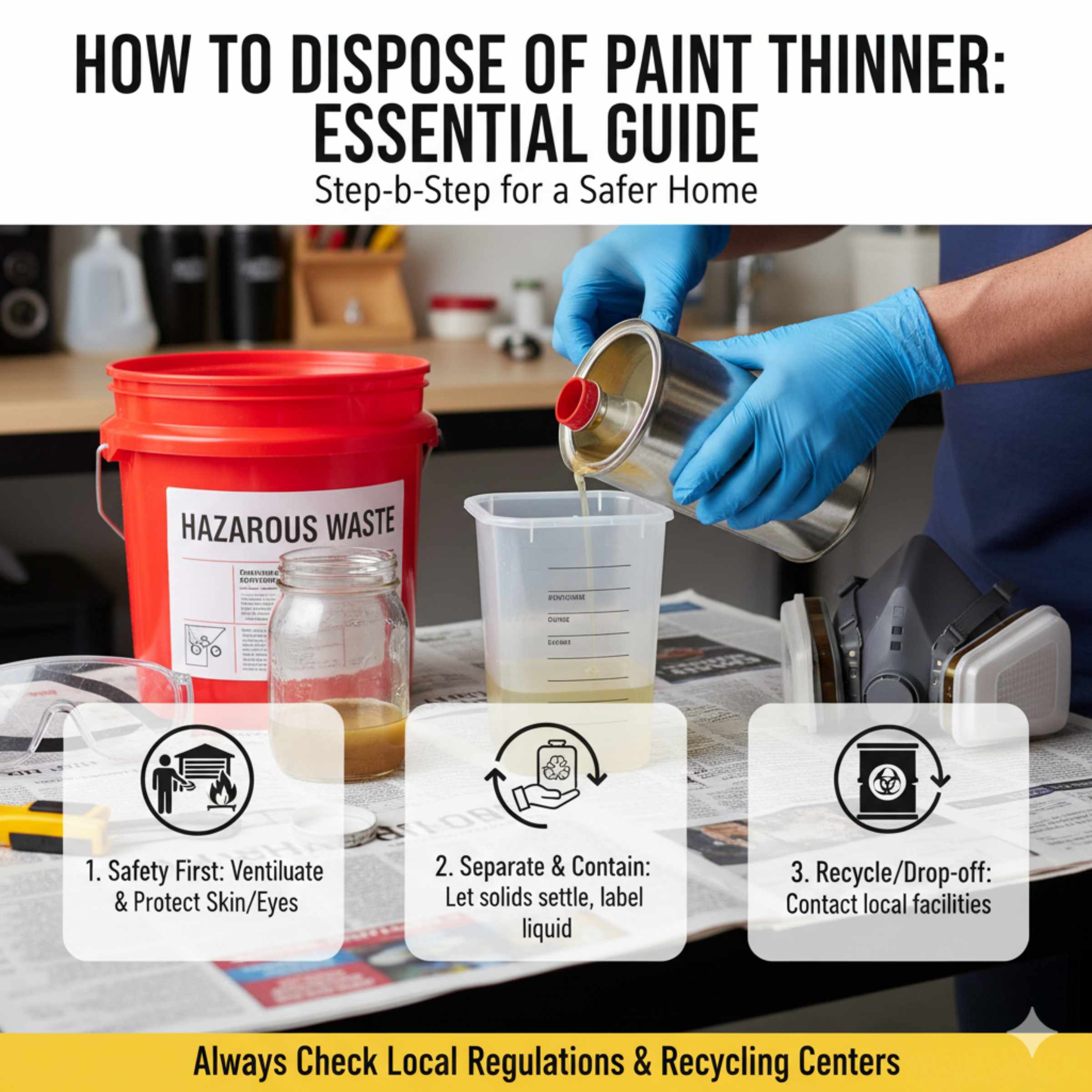
How to Dispose of Paint Thinner: Essential Guide
Don’t pour paint thinner down the drain! Properly disposing of paint thinner is crucial for protecting our environment and water sources. This guide shows you safe and simple ways to get rid of leftover paint thinner, ensuring you do it the right way.
We’ve all been there. You’ve finished a painting project, cleaned your brushes, and now you’re left with that leftover paint thinner. What do you do with it? It’s a common question, and the wrong answer can cause real harm to our planet. Pouring it down the sink or into the ground is a big no-no, as it can contaminate water and soil. But don’t worry! Disposing of paint thinner safely is easier than you might think. We’ll walk you through everything you need to know, step-by-step, so you can handle this task with confidence and keep your home and surroundings clean and safe.
Why Proper Paint Thinner Disposal Matters
Paint thinner, also known as mineral spirits or solvent, is a powerful cleaning agent. It’s fantastic for dissolving paint, grease, and other stubborn gunk. However, these same qualities make it a hazardous substance if not handled with care. When paint thinner enters our waterways, it can harm aquatic life and pollute drinking water supplies. It’s also flammable, posing a fire risk if stored or disposed of improperly. Knowing how to dispose of it correctly is a vital part of being a responsible DIYer and homeowner. It’s not just about following rules; it’s about protecting our shared environment for everyone.
Understanding Paint Thinner
Before we dive into disposal methods, let’s quickly touch on what paint thinner is and why it needs special care. Most commonly, when people refer to “paint thinner,” they mean mineral spirits. These are petroleum-distilled products. Other types of thinners exist, like acetone or lacquer thinner, which are even more volatile and hazardous. For this guide, we’ll focus primarily on the common mineral spirits used for cleaning oil-based paints and varnishes.
The key thing to remember is that paint thinner is a volatile organic compound (VOC). VOCs can evaporate into the air, contributing to air pollution. They also don’t break down easily in the environment and can persist for a long time, causing damage. This is why simple evaporation or pouring it away isn’t an option.
Safety First: Handling Paint Thinner
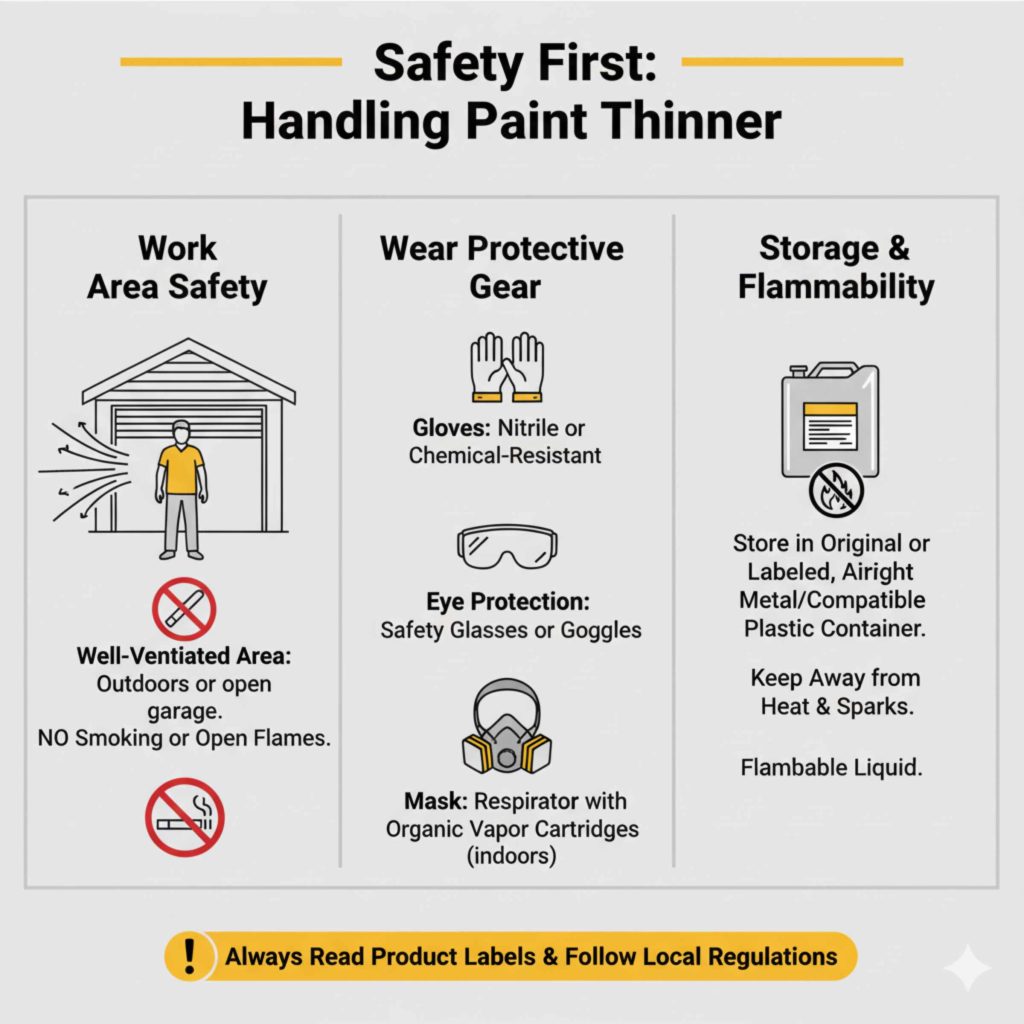
Before you even think about disposal, safety is paramount. Paint thinner is flammable and its fumes can be harmful. Always work in a well-ventilated area, ideally outdoors or in a garage with the door open. Never smoke or have open flames near paint thinner. Wear protective gear:
- Gloves: Nitrile or chemical-resistant gloves will protect your skin.
- Eye Protection: Safety glasses or goggles are essential to prevent splashes.
- Mask: If working indoors or in a poorly ventilated area, a respirator with organic vapor cartridges is recommended.
Store paint thinner in its original container or a clearly labeled, airtight container made of compatible material (usually metal or specific plastics). Keep it away from heat sources, sparks, and open flames.
Methods for Disposing of Paint Thinner
The best disposal method depends on how much leftover paint thinner you have and what local regulations are. Here are the most common and recommended approaches:
1. Use It Up (The Best Option!)
The absolute best way to “dispose” of paint thinner is to use it all up. If you have a small amount left, consider these uses:
- Cleaning More Tools: If you have other painting or staining projects coming up, save it for cleaning those tools.
- Degreasing: Paint thinner is an excellent degreaser for metal parts, tools, or even stubborn spots on concrete.
- Cleaning Paint Brushes and Rollers: The original purpose! Even if it’s a bit murky, it can often be used for a second or third round of cleaning, especially for less critical projects.
If you can use it for any of these purposes, you avoid the disposal process altogether, which is always the most environmentally friendly choice.
2. Evaporation (For Very Small Amounts Only!)
This method is only suitable for tiny amounts of paint thinner, like the residue left at the bottom of a can or a small amount clinging to rags. It requires patience and extreme caution.
Steps:
- Find a Safe, Well-Ventilated Area: This MUST be outdoors, away from any ignition sources (flames, sparks, heat), children, and pets. A concrete surface is ideal.
- Use an Approved Container: Pour the small amount of thinner into a shallow, wide-mouthed metal pan or container. This increases the surface area for evaporation.
- Cover Loosely: You can loosely cover the container with a screen or perforated material to prevent debris from falling in while still allowing fumes to escape.
- Wait and Watch: Let it sit undisturbed for several days or even weeks. The thinner will slowly evaporate.
- Dispose of Residue: Once completely dry, the container and any residue can typically be disposed of in your regular household trash. Check local regulations first, as some areas may still have specific requirements for even dried residue.
Crucial Warning: Never try to speed up evaporation by heating the thinner or placing it near a heat source. This is extremely dangerous and can lead to a fire or explosion. This method is not for anything more than a few tablespoons of liquid.
3. Letting Sediment Settle (For Moderate Amounts)
If you have a bit more paint thinner, but not a full container, you can let the paint solids settle out. This leaves you with cleaner thinner that might be reusable, and a sludge of paint residue to dispose of.
Steps:
- Transfer to a Clear Container: Pour the paint thinner into a clear glass or plastic container. This allows you to see the sediment.
- Let it Settle: Seal the container tightly and let it sit undisturbed for several weeks. The paint solids will sink to the bottom.
- Carefully Decant: Once settled, very carefully pour off the clearer liquid thinner into a new, clean container. Try not to disturb the sediment at the bottom.
- Reuse or Evaporate: The clearer liquid can sometimes be reused for less critical cleaning tasks. If you can’t reuse it, you can then attempt the evaporation method (Method 2) on this smaller, clearer amount.
- Dispose of Sediment: The hardened paint sludge at the bottom is generally considered solid waste. Dry it out completely in a safe, well-ventilated outdoor area, then dispose of it in your household trash, provided your local waste management permits.
4. Hazardous Waste Collection Sites (The Safest and Most Recommended for Larger Amounts)
This is the gold standard for disposing of leftover paint thinner, especially if you have a significant amount. Many communities have designated Household Hazardous Waste (HHW) collection sites or events.
How it Works:
- Locate Your Local HHW Facility: Search online for “Household Hazardous Waste [Your City/County]” or check your local government’s waste management website. The U.S. Environmental Protection Agency (EPA) also provides resources for finding local disposal options.
- Check Accepted Materials: Confirm that they accept paint thinners and solvents. Most HHW sites do.
- Prepare for Transport: Keep the paint thinner in its original, tightly sealed container. If the original container is damaged, transfer it to a sturdy, leak-proof container and label it clearly.
- Follow Site Instructions: When you arrive at the collection site, follow the instructions of the personnel. They will guide you on where to drop off your materials.
Benefits of HHW:
- Ensures proper treatment and disposal, preventing environmental contamination.
- Safe for you and the community.
- Often free or very low cost for residents.
You can find more information about hazardous waste disposal guidelines from your state’s environmental agency. For example, the U.S. Environmental Protection Agency (EPA) offers comprehensive information on household hazardous waste.
5. Professional Waste Disposal Services
For businesses or very large quantities of paint thinner, professional waste disposal services are the most appropriate option. These companies are equipped to handle and dispose of hazardous materials safely and legally. This is usually not necessary for typical DIY homeowners.
Disposing of Paint Thinner-Soaked Rags and Materials
Paint thinner-soaked rags, paper towels, and brushes are also considered hazardous waste because they are flammable and can spontaneously combust if not handled correctly. Do NOT simply throw them in the trash or wash them.
Safe Disposal Steps for Rags and Materials:
- Air Dry Completely: Lay rags and brushes out flat in a well-ventilated outdoor area, away from ignition sources. Ensure they are completely dry. This can take several days.
- Store in a Metal Container: Once dry, place the dried rags and materials into a metal container with a tight-fitting lid.
- Dispose as Hazardous Waste: Take this metal container to your local Household Hazardous Waste (HHW) collection site.
Why this is important: Even dried oily rags can sometimes smolder and catch fire. Proper disposal at an HHW facility ensures they are handled safely.
What NOT to Do When Disposing of Paint Thinner
To reinforce the importance of safe practices, here’s a list of absolute DON’Ts:
- DO NOT pour it down any drain (sink, toilet, storm drain).
- DO NOT pour it onto the ground or into a ditch.
- DO NOT put liquid paint thinner in your regular trash.
- DO NOT burn it.
- DO NOT mix it with other chemicals unless specifically instructed by a waste disposal expert.
- DO NOT let children or pets come into contact with it.
Alternatives to Traditional Paint Thinners
If you’re looking for more environmentally friendly options for your next project, consider:
- Water-Based Paints: For many projects, latex or acrylic (water-based) paints are a great choice. Clean-up is simply soap and water, making disposal much easier and safer.
- Low-VOC or Zero-VOC Products: Many brands now offer paints and finishes with significantly reduced or no volatile organic compounds.
- Natural Solvents: For certain applications, natural alternatives like citrus-based cleaners can work, though they may not be as potent as traditional thinners for heavy-duty tasks.
Choosing these alternatives can reduce or eliminate the need to worry about hazardous waste disposal in the future.

Table: Paint Thinner Disposal Methods at a Glance
Here’s a quick comparison to help you choose the best method:
| Method | Best For | Pros | Cons | Safety Considerations |
|---|---|---|---|---|
| Use It Up | Any amount | Most eco-friendly, no disposal needed | May not always be possible | Standard safety precautions for handling solvents |
| Evaporation (Small Amounts) | Very small residues (tablespoons) | Can be done at home for minimal waste | Slow, requires extreme caution, not for larger volumes | High risk of fire/explosion if not done outdoors and away from ignition |
| Settle Sediment | Moderate amounts (up to a quart) | Separates reusable thinner from waste | Requires time, decanting can be tricky | Handle sediment as hazardous waste, clear liquid still flammable |
| HHW Collection Site | Larger amounts, or any amount if unsure | Safest, most responsible, legally compliant | Requires finding a site, transporting the material | Follow site instructions carefully |
| Professional Disposal | Commercial/Industrial quantities | Handles large volumes legally and safely | Costly, not for homeowners | Managed by professionals |
Frequently Asked Questions (FAQ)
Q1: Can I pour a little bit of paint thinner down the toilet?
A: No, absolutely not. Even a small amount of paint thinner can harm the bacteria in septic systems or pass through wastewater treatment plants and pollute waterways. It’s considered hazardous waste.
Q2: What if my paint thinner is old and the bottom is all gunk?
A: If the paint thinner has separated significantly and has a lot of sludge at the bottom, you can try to let the sludge settle out (as described in Method 3). The clearer liquid might be reusable for less critical cleaning. The hardened sludge at the bottom is generally safe to dispose of in your regular trash after it’s completely dried out, but always check with your local waste authority first.
Q3: How do I dispose of a paint thinner spill?
A: For small spills, absorb the liquid with absorbent material like kitty litter, sawdust, or rags. Let the absorbent material dry out completely in a safe, well-ventilated outdoor area away from ignition sources. Once dry, place the material in a sealed metal container and take it to a Household Hazardous Waste (HHW) collection site. For large spills, contact your local fire department or hazardous materials team immediately.
Q4: Can I mix old paint thinner with new paint thinner for disposal?
A: It’s generally best to keep them separate unless you are combining them for reuse in cleaning. When disposing, keep them in their original containers or clearly labeled, compatible containers. If you are taking them to an HHW facility, they will likely accept them mixed, but it’s always good practice to ask the facility if they have specific guidelines.
Q5: Are there any alternatives to paint thinner for cleaning brushes?
A: Yes! For oil-based paints, besides paint thinner, you can use mineral spirits or even vegetable oil (though it can be messy and requires thorough washing afterward). For water-based paints (latex, acrylic), soap and water are usually sufficient. Always check the paint can for specific cleanup instructions.
Q6: My local HHW facility is only open once a month. What should I do with the paint thinner in the meantime?
A: Store it safely in its original, tightly sealed container in a cool, dry, well-ventilated area away from heat and ignition sources. Ensure it’s out of reach of children and pets. Do not store it in living spaces if possible. If you have only a very small amount, the evaporation method (Method 2) might be an option if done with extreme caution outdoors.
Conclusion
Taking care of leftover paint thinner might seem like a chore, but it’s a crucial step in protecting our environment and ensuring safety in your home and community. By understanding the risks and following the recommended disposal methods, you can handle this task with confidence. Remember, using up your paint thinner is always the best option. If that’s not possible, always opt for the safest route, which is usually a local Household Hazardous Waste collection site. Your efforts make a real difference in keeping our world cleaner and safer for everyone. Happy DIYing, and always remember to dispose of your materials responsibly!