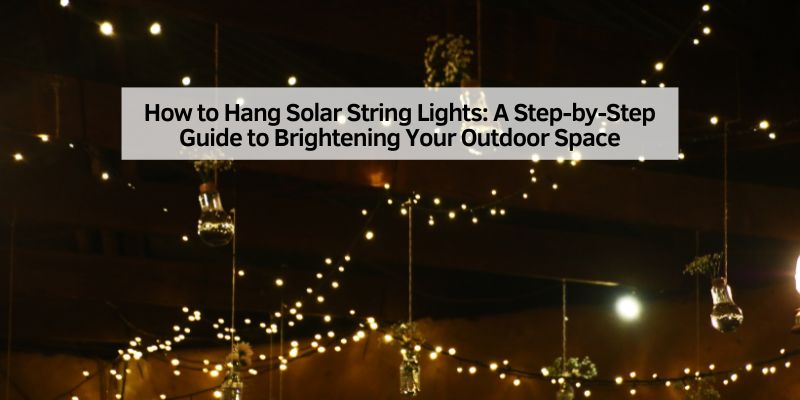
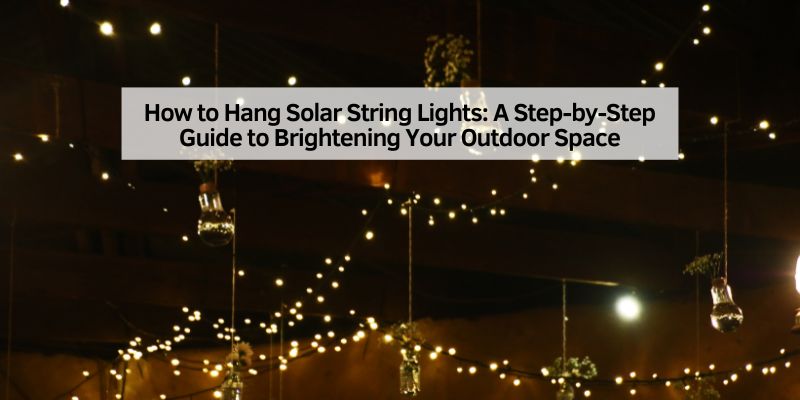
How to Hang Solar String Lights: A Step-by-Step Guide to Brightening Your Outdoor Space
Hey there! I’m so excited to share my journey of transforming my backyard with solar string lights. There’s something magical about those twinkling lights that instantly makes any outdoor space feel warm and inviting. Whether it’s a cozy patio, a sprawling garden, or a simple balcony, solar string lights are an eco-friendly, budget-friendly way to add charm and ambiance. I’ve spent countless evenings perfecting my setup, and I’m here to guide you through every step of hanging solar string lights like a pro. Let’s dive in and make your outdoor space glow!
Why Choose Solar String Lights?
I fell in love with solar string lights the moment I realized they’re both beautiful and practical. These lights run on solar energy, so you don’t need to worry about plugging them into an outlet or racking up your electricity bill. They soak up sunlight during the day and light up your space at night. Plus, they’re easy to install, low-maintenance, and kind to the environment.
I remember my first set of solar string lights. I was skeptical about how bright they’d be, but after one evening of seeing them glow, I was hooked. They’re versatile too—you can drape them over trees, wrap them around railings, or hang them across your patio. The best part? No complicated wiring or tools required. Let’s explore how to make this happen in your own backyard.
Planning Your Solar String Light Setup
Before you start hanging those lights, a little planning goes a long way. Trust me, I learned this the hard way after untangling a mess of lights that I hung without a clear plan. Here’s what you need to think about.
First, decide where you want the lights to go. Walk around your outdoor space and imagine the vibe you’re going for. Do you want a canopy of lights over your patio? Or maybe a whimsical outline around your garden fence? I sketched a rough layout of my backyard on paper, marking where I wanted the lights to start and end. This helped me avoid buying too few or too many lights.
Next, measure the area. Use a tape measure to figure out how many feet of lights you’ll need. Most solar string lights come in lengths of 20 to 100 feet, so knowing your measurements saves time. I underestimated my patio’s size the first time and ended up short by about 10 feet—don’t make my mistake!
Finally, check the solar panel’s placement. The panel needs direct sunlight to charge properly. I placed mine on a sunny corner of my patio table, but you might need a stake or wall mount depending on your setup. Make sure the panel’s cord can reach where you’re hanging the lights.
Choosing the Right Solar String Lights
Not all solar string lights are created equal. I’ve tried a few brands over the years, and the differences in quality, brightness, and durability are huge. Here’s what I look for when picking the perfect set.
Look at the bulb type. LED bulbs are the most common because they’re energy-efficient and long-lasting. I prefer warm white LEDs for a cozy glow, but you can find cool white or multicolored options for a fun vibe. Check the lumens (brightness) rating—anything above 100 lumens per bulb works well for outdoor spaces.
Consider the strand length and bulb spacing. My first set had bulbs spaced 12 inches apart, which looked great for a tight, clustered effect. For larger areas, go for wider spacing to cover more ground. Also, check the battery life. Most solar lights last 6-10 hours on a full charge, but premium models can go up to 12 hours.
Weather resistance is a must. Look for lights with an IP65 rating or higher, which means they can handle rain and dust. I live in a rainy part of the USA, and my IP65-rated lights have survived storms without a hitch. Lastly, check if the set includes mounting hardware like clips or stakes—it makes installation so much easier.
Here’s a quick comparison of popular solar string light features:
| Feature | What to Look For | Why It Matters |
|---|---|---|
| Bulb Type | LED (Warm White, Cool White, or Colored) | Affects ambiance and efficiency |
| Strand Length | 20-100 feet | Ensures you cover your space |
| Weather Resistance | IP65 or higher | Protects against rain and dust |
| Battery Life | 6-12 hours | Determines how long lights stay on |
| Mounting Hardware | Clips, stakes, or hooks | Simplifies installation |
Gathering Your Tools and Materials
You don’t need a ton of tools to hang solar string lights, which is one reason I love this project. Here’s what I keep handy:
- Solar string lights: Make sure you have enough length for your space.
- Measuring tape: For accurate measurements.
- Ladder: If you’re hanging lights high up, like on a tree or pergola.
- Mounting hardware: Clips, hooks, zip ties, or adhesive mounts, depending on your surface.
- Scissors or wire cutters: For trimming zip ties or excess cord.
- Level (optional): To ensure your lights hang evenly.
- Stakes or poles: If you’re creating a freestanding setup.
I also keep a small notebook to jot down measurements or ideas as I go. It’s not essential, but it helps keep things organized.
Step-by-Step Guide to Hanging Solar String Lights
Now, let’s get to the fun part—hanging those lights! I’ll walk you through the process I’ve perfected after decorating my patio, deck, and even a few trees.
Step 1: Test Your Lights
Before you start hanging, test the lights to make sure they work. I made the mistake of hanging a full strand only to find one bulb was faulty. Lay the lights out in a sunny spot for a few hours to charge the solar panel. Then, cover the panel (to simulate nighttime) and check if the lights turn on. If they don’t, double-check the panel’s connection or replace the battery if it’s removable.
Step 2: Mark Your Anchor Points
Decide where you’ll attach the lights. For my patio, I used the edges of my pergola as anchor points. You can use trees, fences, railings, or even poles. Mark these spots with chalk or tape. If you’re going for a straight line, use a level to keep things even. For a more whimsical look, like draping over branches, you can skip the level.
Step 3: Install Mounting Hardware
This step depends on your surface. For wooden structures like pergolas or fences, I screw in cup hooks or eye hooks. They’re sturdy and easy to install. For brick or concrete, use adhesive clips or wall anchors. If you’re using poles, drive them into the ground with a mallet and attach hooks to the top. I used zip ties to secure lights to tree branches—cheap and effective.
Pro tip: Space your anchor points about 5-10 feet apart to avoid sagging. If your lights are heavy, closer spacing (3-5 feet) works better.
Step 4: Hang the Lights
Start at the solar panel end and work your way across. Attach the first light to your starting anchor point using a clip or zip tie. Drape the strand to the next anchor, keeping it slightly loose for a natural look. I like a gentle swoop between points—it looks elegant and prevents strain on the wires. Secure each section as you go.
If you’re wrapping lights around trees or railings, wind them loosely to avoid damaging the wires. I wrapped my garden fence in a spiral pattern, and it looks stunning at night.
Step 5: Position the Solar Panel
Place the solar panel where it gets at least 6-8 hours of direct sunlight. I mounted mine on a stake in my garden, angled toward the sun. Some panels come with clips for wall mounting, which is great for balconies. Make sure the cord reaches the start of your light strand without stretching.
Step 6: Test and Adjust
Once everything’s hung, wait until dusk to test the lights. Walk around your space and check the vibe. Are the lights too tight or too loose? Adjust the tension or reposition clips if needed. I tweaked my setup a few times to get the perfect glow over my dining table.
Creative Ways to Style Your Solar String Lights
One of the best things about solar string lights is how versatile they are. Here are some ideas I’ve tried or seen that might inspire you.
- Canopy Effect: Crisscross lights over a patio or seating area for a starry-night feel. I did this over my outdoor dining table, and it’s like dining under the stars every night.
- Tree Wrapping: Wrap lights around tree trunks or branches for a whimsical, fairy-tale look. My oak tree looks magical with lights spiraling up the trunk.
- Fence or Railing Outline: Run lights along a fence or balcony railing for a clean, defined border. This worked great for my small deck.
- Mason Jar Accents: Hang mason jars with solar string lights inside for a rustic touch. I hung a few from my pergola, and they’re a conversation starter at parties.
- Zigzag Pattern: Create a zigzag pattern across a wall or between posts for a modern, geometric look. I saw this at a friend’s house, and it’s next on my list to try.
Maintaining Your Solar String Lights
To keep your lights shining bright, a little maintenance goes a long way. I check my lights every few months to keep them in top shape. Clean the solar panel regularly with a damp cloth to remove dust or dirt—it needs clear sunlight to charge efficiently. Check the bulbs for any that are dim or broken and replace them if your set allows it.
Store the lights properly if you take them down for winter. I coil mine loosely and keep them in a dry, cool place to avoid damage. Also, check the battery every year or two. Some solar panels have replaceable batteries, which can extend the life of your lights.
Troubleshooting Common Issues
Even with the best setup, you might run into hiccups. Here are some issues I’ve faced and how I fixed them.
If your lights don’t turn on, check the solar panel’s position. Is it getting enough sun? Try moving it to a sunnier spot. Also, ensure the panel’s switch is on—mine was off once, and I spent an hour troubleshooting before noticing!
If the lights are dim, the battery might not be fully charged. Give it a full day of sunlight. If that doesn’t work, the battery might need replacing. For uneven lighting, check for loose connections or damaged bulbs.
Safety Tips for Hanging Solar String Lights
Safety first! I always double-check a few things to keep my setup safe. Use outdoor-rated lights and hardware to avoid weather-related issues. Don’t overload your anchor points—make sure they’re sturdy enough to hold the lights’ weight. If you’re using a ladder, have someone spot you. I almost tipped over once, and my husband’s quick hands saved the day.
Avoid hanging lights near power lines or electrical outlets to prevent accidents. And if you’re wrapping trees, don’t wrap too tightly—it can damage the tree or the lights.
Why I Love My Solar String Lights
After years of experimenting, I can’t imagine my outdoor space without solar string lights. They’ve turned my backyard into a cozy retreat where I host barbecues, read books, or just sip coffee under the stars. The eco-friendly aspect makes me feel good about my choice, and the low maintenance means I can enjoy them without stress.
Conclusion
Hanging solar string lights is one of the easiest and most rewarding home improvement projects I’ve tackled. With a bit of planning, the right tools, and some creativity, you can transform your outdoor space into a glowing oasis. Whether you’re hosting a summer party or enjoying a quiet evening, these lights add a touch of magic that everyone will love. I’ve shared my tips, tricks, and even my mistakes so you can get it right the first time. Now, grab those lights, head outside, and let your space shine!
FAQs
How Long Do Solar String Lights Last?
Solar string lights typically last 6-12 hours on a full charge, depending on the model and sunlight exposure. My lights usually glow from dusk until midnight, sometimes longer. The lifespan of the lights themselves can be 2-5 years with proper care, though batteries may need replacing sooner.
Can Solar String Lights Work in Shady Areas?
They can, but they won’t perform as well. The solar panel needs at least 6 hours of direct sunlight to charge fully. If your space is shady, consider mounting the panel in a sunnier spot and running the cord to the lights. I did this for a shaded corner of my garden, and it worked like a charm.
Are Solar String Lights Safe for Outdoor Use?
Yes, as long as they’re outdoor-rated (look for IP65 or higher). I’ve left mine out through rain, wind, and even light snow, and they’ve held up fine. Just make sure your mounting hardware is secure and avoid placing lights near electrical hazards.
How Do I Store Solar String Lights When Not in Use?
I coil mine loosely and store them in a dry, cool place, like a plastic bin in my garage. Avoid tight coils or knots, as they can damage the wires. If the solar panel is detachable, store it separately to prevent scratches.
Can I Leave Solar String Lights Up Year-Round?
In most climates, yes, especially if they’re weather-resistant. I leave mine up all year, but I check them regularly for wear and tear. In harsh winters, you might want to take them down to extend their lifespan.