Are LED Light Bulbs Polarity Sensitive? AC vs 12V DC Explained
Standard AC-powered LED bulbs are not polarity sensitive — the driver circuit converts your home’s 60Hz current to DC first, so orientation never matters. Low-voltage 12V/24V DC strips, automotive bulbs, and many Christmas light strings are the exception: reverse the + and – leads and they simply won’t light. This guide covers why AC bulbs are immune, how to spot DC polarity markings, and what to check before wiring a strip or swapping a car bulb.
Understanding Polarity: What It Means in Electronics
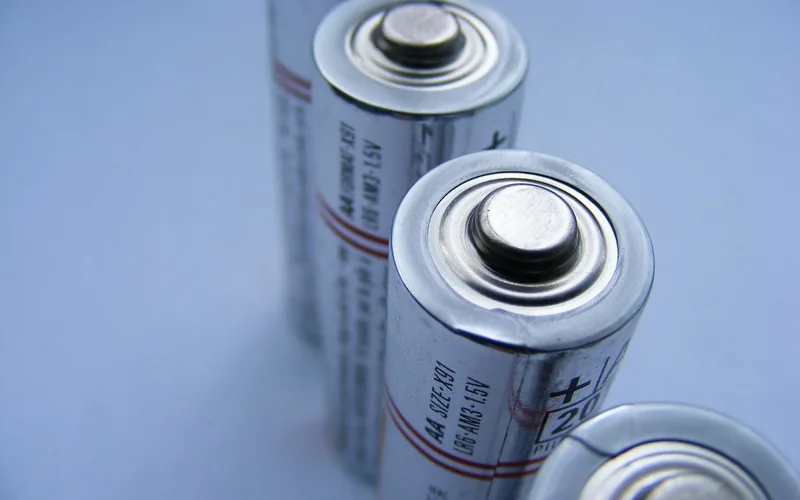
“Polarity sensitive” describes any device that only works when connected in one specific direction. Think of a battery: it has a positive (+) and negative (–) terminal, and a simple DC circuit only works when the positive terminal connects to the positive side of the device. Get it backward and the device won’t work — and in some cases, it can be damaged.
In direct current (DC) circuits, electricity flows in one direction only, from positive to negative. Devices built for DC often have dedicated positive and negative connections, and reversing them can force current the wrong way through sensitive components.
Why Most Household LED Bulbs Aren’t Polarity Sensitive
Standard LED bulbs for lamps, ceiling fixtures, and everyday use aren’t polarity sensitive because of the type of power feeding them: alternating current (AC).
AC electricity constantly reverses direction — 60 times per second (60Hz) in North America, 50 times per second (50Hz) in much of the rest of the world. Because the current direction is always switching, it doesn’t matter which way you screw in the bulb; it receives current in both directions rapidly either way.
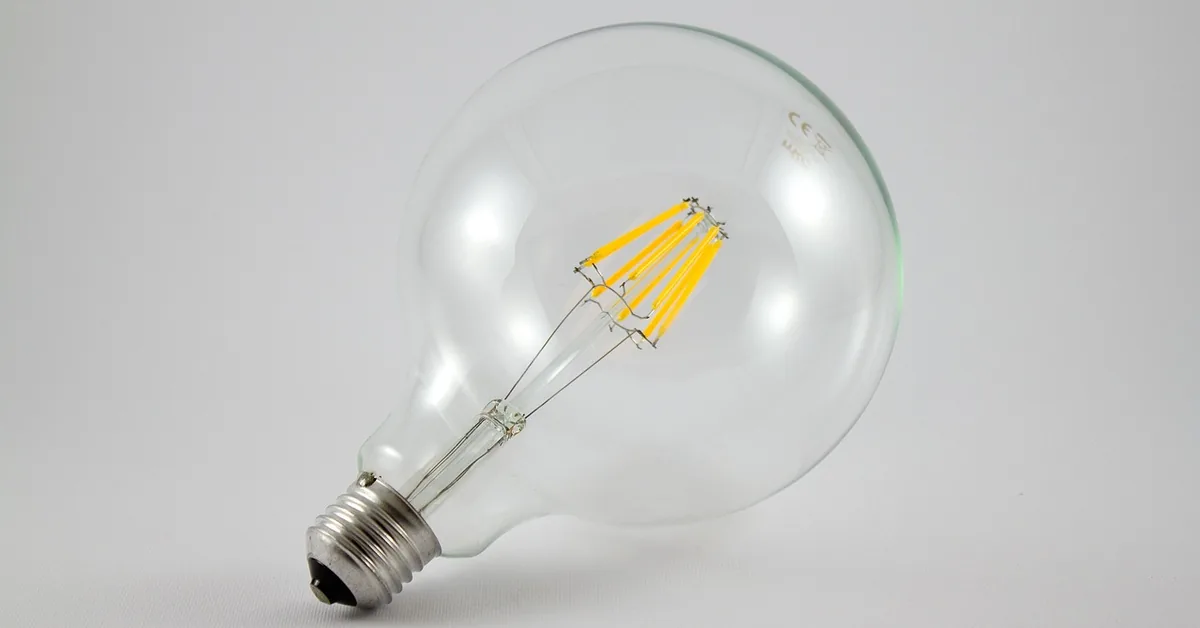
Inside a standard LED bulb, a small driver circuit takes the high-voltage AC from your wall socket and converts it to the low-voltage DC the LED chips actually need. That conversion smooths the alternating current into one consistent, unidirectional flow before it ever reaches the diode — which is why orientation in the socket is irrelevant.
How Household AC Power Works
A quick analogy helps: picture electricity as water in a pipe. In a DC system, water flows steadily in one direction. In an AC system, the water sloshes back and forth, constantly reversing. Your home’s wiring delivers that sloshing, alternating flow to every outlet.
When you screw in a light bulb, you connect it to that AC supply. For a simple device like a bulb, the alternating nature means it doesn’t matter which wire is momentarily “positive” or “negative” — those roles are constantly swapping anyway.
📊 Residential LEDs use at least 75% less energy and last up to 25 times longer than incandescent bulbs — a byproduct of the same driver circuit that also makes them polarity-immune on AC power. Source: U.S. Department of Energy, 2026.
When Polarity Might Matter: Specialized LED Applications
Your everyday screw-in LED bulbs are polarity-agnostic, but several specific situations do require correct polarity — almost always because a DC power source is involved instead of household AC.
1. Low-Voltage DC LED Strips and Modules
LED strips, accent lighting, and small LED modules typically run on low-voltage DC power, usually 12V or 24V — including the strip lights people wire under kitchen cabinets or along a deck railing. These connect to a DC power supply (a transformer or battery) with a clear positive (+) and negative (–) wire or terminal.
Connecting these backward usually just means the LEDs won’t light — most are protected by built-in resistors — but some higher-power modules can be damaged if reversed, so always check the markings first. For a deeper look at LED anode and cathode identification, SparkFun’s polarity tutorial covers it well.
2. Automotive and RV Lighting
Vehicles and RVs typically run 12V DC systems. Replacing a dome light, brake light, or interior bulb with an LED equivalent means polarity can matter — the bulb’s connector expects a specific polarity to match the vehicle’s wiring harness. Some automotive LEDs include built-in polarity protection, but it’s safest to assume they’re polarity sensitive unless the packaging says otherwise.
3. Custom Electronics Projects and DIY Circuits
Hobbyists wiring individual LEDs on a breadboard or building custom lighting circuits need to watch polarity closely. Individual LEDs are diodes — they only allow current to flow one direction, with a positive leg (anode) and negative leg (cathode). Wiring them backward in a DIY circuit prevents them from lighting and can damage them if there’s no current-limiting resistor in the circuit.
The longer leg is usually the anode (positive) and the shorter leg the cathode (negative); the flat side of the casing also marks the cathode. These markers hold up even on LEDs whose legs have been trimmed.
4. Christmas and Holiday LED Light Strings
Most LED Christmas light strings also run on low-voltage DC, typically 3V to 24V, stepped down from your 120V outlet by a built-in rectifier. Strings with a full-wave bridge rectifier tolerate reversed polarity fine, but budget strings using a simpler half-wave design don’t — plug one in backward and the whole string, or every other bulb, stays dark. If a new string won’t light and the outlet tests fine, reversing the plug orientation is worth trying before assuming the string is defective.
Identifying Polarity on DC Components
When you do need to worry about polarity, it’s usually straightforward to check. Look for markings on the component or its wiring:
- Positive (+): Often marked with a plus sign, “POS,” or a red wire.
- Negative (–): Often marked with a minus sign, “NEG,” “GND” (ground), or a black wire.
For LED strips, the circuit board usually has clear + and – markings at the connection points. For individual LEDs, leg length and casing shape are the primary indicators. When markings are worn off or missing entirely, a $10–$30 digital multimeter settles it in seconds by testing which lead is actually live.
Best Polarity/Voltage Tester Pick
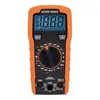
Klein Tools MM325 Digital Multimeter – $29.98
Settles exactly the plus/minus question this guide covers above — touch the leads to an unmarked DC strip or automotive connector and read which side is live.
- Best for: anyone who wants a trusted professional-grade brand
- Why we picked it: reads DC voltage and polarity reliably on strips, car bulbs, and DIY circuits
- Main drawback: costs more than the basic budget testers below
Compare more testers
 Option 1 AstroAI Digital Multimeter – $14.59
|
 Option 2 KAIWEETS Digital Multimeter – $13.99
|
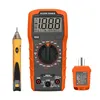 Option 3 Klein Tools Test Kit – $39.99
|
As an Amazon Associate we earn from qualifying purchases.
Can Installing a Standard LED Bulb Backward Cause Damage?
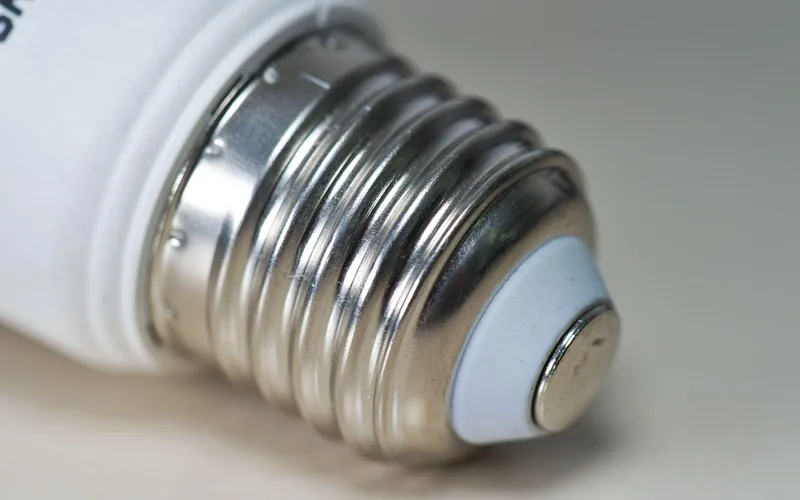
For standard, screw-in household LED bulbs on AC power, the answer is almost universally no. Because the internal driver circuitry converts AC to the DC the LED chips need, the bulb is inherently robust against orientation — there’s no fixed “positive” or “negative” terminal to get wrong on an AC socket.
The only real failure scenario is a faulty bulb or a wiring problem in the fixture itself — not the direction you screwed the bulb in.
How to Check if an LED Bulb Is Polarity Sensitive
If you’re unsure, especially with a specialized bulb, here’s how to find out:
- Read the Packaging: Manufacturers clearly state if a bulb is polarity sensitive or DC-only. Look for “DC only,” “12V,” “24V,” or explicit polarity markings.
- Check the Bulb Itself: Markings directly on the base are rare for screw-in bulbs, since almost all of them are AC-only anyway.
- Look at the Connector or Wires: If the bulb has wires or a non-screw connector, look for + and – symbols — common on LED strips and automotive bulbs.
- Check the Manufacturer’s Website: If the packaging is unclear, the product specification page will confirm the power type.
Polarity Sensitivity by LED Type
| Type of LED Bulb/Application | Power Source | Polarity Sensitive? | Consequence If Reversed |
|---|---|---|---|
| Standard household screw-in bulbs (A19, BR30) | Household AC (120V/240V) | No | None — lights up correctly either way |
| Low-voltage LED strips (12V/24V) | DC power supply | Yes | Won’t light; possible damage to sensitive modules |
| Automotive interior/exterior LEDs | Vehicle 12V DC system | Often yes (check packaging) | Won’t light; some bulbs can be damaged |
| Christmas/holiday LED strings | Low-voltage DC (3–24V) | Often yes (half-wave designs) | String or alternating bulbs stay dark |
| Individual LEDs in DIY circuits | DC with resistor | Yes | Won’t light; possible damage without a resistor |
Benefits of Using Standard LED Bulbs
Beyond the polarity question, standard LED bulbs remain a smart upgrade for the home:
- Energy Efficiency: LEDs use at least 75% less energy than incandescent bulbs, according to the U.S. Department of Energy.
- Long Lifespan: They last up to 25 times longer than traditional bulbs, meaning fewer replacements.
- Durability: No filament means better resistance to shock and vibration.
- Instant On: LEDs reach full brightness immediately, unlike some older energy-efficient bulbs.
- Lower Heat Output: Less heat means safer handling and less strain on cooling in warm months.
“We’ve swapped hundreds of household bulbs on this site and never once had to think about polarity — the failures we do see on DC strips and automotive LEDs almost always trace back to a reversed connector, not a defective bulb.”
Tips for Installing LED Bulbs Safely
Polarity usually isn’t a concern for standard bulbs, but basic electrical safety always is.
- Turn Off the Power: Switch off the fixture at the wall switch before replacing a bulb; for extra safety, turn off the breaker for that circuit.
- Let Bulbs Cool: If a bulb was recently on, let it cool completely — the base can still get warm even on LEDs.
- Use the Right Bulb: Match the base type (E26/E27 for standard screw-in, GU10 for some spotlights) and stay under the fixture’s maximum wattage rating.
- Screw In Gently: Snug is enough — overtightening can damage the bulb or the socket.
- Dispose of Old Bulbs Properly: Recycle old CFLs (they contain a small amount of mercury); check local rules for incandescent and halogen disposal.
For a full walkthrough of swapping bulbs in a fixed fixture, see our guide on changing LED lights in a ceiling fixture. For the full category of lighting guides on this site, visit our lighting and ceiling fan hub.
Frequently Asked Questions
Do I Need to Worry About Positive and Negative When Screwing In an LED Bulb?
No, not for standard LED bulbs that screw into your home’s light fixtures. They’re designed for alternating current (AC) and are not polarity sensitive, so there’s no positive or negative side to get wrong.
Can I Use a 12V LED Bulb in a Standard 120V Household Socket?
No. A 12V LED bulb needs a 12V DC power source. Plugging it into a 120V AC socket will destroy the bulb almost instantly and can be a fire hazard. Always match the bulb’s voltage and power type — AC or DC — to the fixture it’s going into.
What Happens If I Reverse the Wires on an LED Strip Light?
The LEDs simply won’t light up. In most cases this doesn’t permanently damage the strip, but correct the wiring before you power it back on rather than leaving it connected backward.
Are LED Bulbs Energy Efficient?
Yes — LED bulbs use significantly less electricity than incandescent bulbs, which lowers energy bills and reduces environmental impact. See our full guide to LED bulb energy efficiency for the numbers.
How Can I Tell If an LED Bulb Is Designed for DC Power?
Check the packaging or the bulb itself. It will typically state “DC,” a voltage like 12V or 24V, and often has wire leads or a connector instead of a standard screw base.
Is LED Bulb Flickering Related to Polarity?
Usually not, for standard AC bulbs. Flickering is more often caused by a loose connection, an incompatible dimmer switch, or a faulty bulb. See our LED flickering troubleshooting guide for the full list of causes.
Can I Mix AC and DC LEDs in the Same Fixture?
No. Never mix AC and DC LEDs or try to power a DC LED from an AC source without the correct adapter — each type needs its own matched power source and voltage.
Conclusion
The answer to “are LED light bulbs polarity sensitive” is no for the vast majority of bulbs in your home — standard screw-in LEDs run on AC power and don’t care which way you install them. The exceptions are low-voltage 12V/24V DC strips, automotive and RV bulbs, Christmas light strings, and individual LEDs in DIY circuits, where a reversed + and – connection means no light and, occasionally, a damaged component. Check the packaging before wiring anything DC-powered, and keep a cheap multimeter on hand for markings that have worn off.
Sponsored / affiliate links. As an Amazon Associate I earn from qualifying purchases. I may earn additional commission from eligible campaigns.