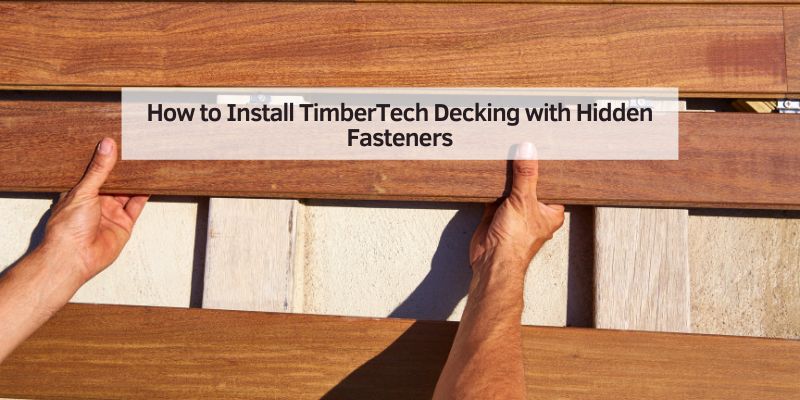
How to Install TimberTech Decking with Hidden Fasteners
Hey there! If you’re dreaming of a stunning backyard deck that’s sleek, modern, and built to last, you’re in the right place. I’ve spent countless hours researching and installing TimberTech decking with hidden fasteners, and let me tell you, it’s a game-changer. There’s something incredibly satisfying about a deck with no visible screws or nails—just smooth, pristine boards that make your outdoor space look like it belongs in a magazine. In this guide, I’ll walk you through every step of the process, share tips from my own experience, and help you avoid common pitfalls.
Whether you’re a DIY enthusiast or a seasoned contractor, this article is packed with practical advice to make your TimberTech deck installation a breeze. Let’s dive in!
Why Choose TimberTech Decking?
Before we get into the nitty-gritty of installation, let’s talk about why TimberTech is worth your time and investment. I fell in love with TimberTech because it’s not your average decking material. It’s made from composite or capped polymer materials, which means it’s incredibly durable, low-maintenance, and resistant to things like fading, staining, and mold. Unlike wood, it won’t splinter or warp, which is a huge plus if you’ve got kids or pets running around.
But the real star of the show? Hidden fasteners. These clever little systems let you secure the deck boards without a single screw head marring the surface. The result is a clean, polished look that elevates your deck from functional to fabulous. Plus, hidden fasteners make the deck safer—no exposed nails to trip over or snag your favorite lawn chair. TimberTech offers several hidden fastener options, like CONCEALoc, Cortex, and SIDELoc, each designed for specific decking lines and board profiles. Don’t worry—I’ll break down which ones to use and how to install them.
Tools and Materials You’ll Need
Installing TimberTech decking with hidden fasteners is straightforward, but you’ll need the right tools and materials to get the job done. I learned this the hard way when I started my first deck project and realized halfway through that I was missing a key tool. Save yourself the headache and gather these essentials before you begin:
| Item | Purpose |
|---|---|
| Drill/Driver | For driving screws into fasteners and joists. A cordless one works great. |
| Miter Saw | For clean, precise cuts on deck boards. Use a fine-toothed, carbide-tipped blade (12” 100-tooth or 10” 80-tooth). |
| Measuring Tape | To measure board lengths and ensure accurate cuts. |
| Level | To check that your deck frame is even and structurally sound. |
| Spacer Tool | To maintain consistent gaps (1/8” to 3/16”) between boards. |
| TimberTech Decking Boards | Choose grooved boards for CONCEALoc or square-edge boards for Cortex/SIDELoc. |
| Hidden Fasteners | CONCEALoc, Cortex, or SIDELoc, depending on your board type. |
| Stainless Steel Screws | Use TimberTech-recommended screws (like TORX® ttap®) for a secure hold. |
| Safety Gear | Safety glasses, gloves, and ear protection for safe cutting and drilling. |
| Chalk Line | To mark straight lines for cutting and alignment. |
| Deck Cleaner | For post-installation cleaning to keep your deck looking pristine. |
Pro tip: Double-check that your deck boards and fasteners are compatible. For example, CONCEALoc works only with grooved TimberTech boards, while Cortex is designed for full-profile boards. I once ordered the wrong fasteners and had to wait a week for the right ones—don’t make that mistake!
Preparing Your Deck Frame
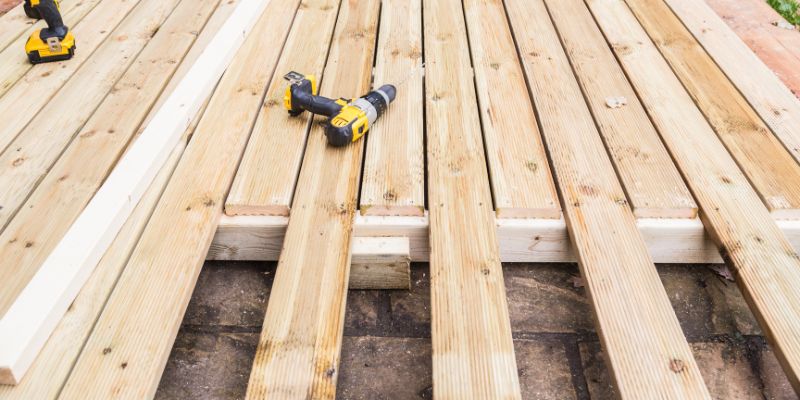
Alright, let’s get to the foundation of your project—literally. Your deck frame is the backbone of your TimberTech deck, so it needs to be rock-solid. I can’t stress this enough: a wobbly or uneven frame will cause headaches down the road, no matter how perfectly you install the boards.
Start by checking your joists. They should be spaced 16 inches on center for most TimberTech decking (12 inches for stairs or angled installations). Use a level to ensure the frame is even, and inspect for any signs of rot or damage. If you’re building a new frame, make sure it’s square by measuring diagonally from corner to corner—both measurements should be equal.
Next, install blocking between joists where boards will meet at butt joints. This gives your fasteners a solid surface to grip. I like to use treated lumber for blocking to match the durability of TimberTech boards. Finally, sweep the frame clean of debris. Dust and dirt can interfere with fastener installation, and you want a clean slate to work with.
Choosing the Right Hidden Fastener System
TimberTech offers several hidden fastener systems, and choosing the right one depends on your deck design and board type. Here’s a quick rundown of the main options, based on my experience working with them:
- CONCEALoc: These are stainless steel clips that slide into the grooves of TimberTech PRO or EDGE decking. They’re perfect for a fastener-free surface and are super easy to install with just a drill. I love CONCEALoc for its simplicity and strong hold, especially for tighter butt joints.
- Cortex: This system uses screws driven through the board’s surface, covered by color-matched plugs made from the same material as your decking. It’s ideal for full-profile boards, stairs, and perimeter boards where grooved boards aren’t an option. I found Cortex to be a lifesaver for tricky areas like stairs.
- SIDELoc: These screws are driven at a 45-degree angle through the side of square-edge boards, pulling the board tight to the joist. SIDELoc is great for a clean look without grooves, and the installation tool makes it foolproof. I used SIDELoc for a deck with a picture frame border, and it gave me a flawless finish.
- EDGELoc: Designed specifically for TimberTech EDGE grooved boards, these clips offer a three-point connection for extra stability. They’re a bit pricier, but I found them worth it for high-traffic decks.
- FUSIONLoc: This is a collated clip system that’s fast to install, especially with the FastenMaster TigerClaw Gun. It’s a bit more advanced, so I’d recommend it for pros or confident DIYers.
Each system has its strengths, so pick based on your board type and aesthetic goals. For example, if you’re using grooved TimberTech PRO boards, CONCEALoc is your go-to. If you’re working with square-edge AZEK boards, Cortex or SIDELoc will be your best bet.
Step-by-Step Installation Guide
Now, let’s get to the fun part—actually installing your TimberTech decking! I’ve broken this down into clear, manageable steps. Follow along, and you’ll have a gorgeous deck in no time.
Step 1: Lay the Starter Board
Your starter board sets the tone for the entire deck, so take your time to get it right. Start at the edge of your deck, closest to the house or another structure. Place the first board perpendicular to the joists, with its outer edge flush against the rim joist. If you’re using CONCEALoc, secure the starter board with an L-Bracket or TOPLoc Face Fasteners on the outer edge. For Cortex or SIDELoc, drive screws at a 45-degree angle through the board’s side or top, depending on the system.
I like to use a chalk line to ensure the starter board is perfectly straight. Double-check with a level, and make sure the board is secure before moving on. A wonky starter board will throw off the whole deck, and trust me, you don’t want to redo this step.
Step 2: Install Hidden Fasteners
Once your starter board is in place, it’s time to install the hidden fasteners. Here’s how to do it for each system:
- CONCEALoc: Slide a CONCEALoc clip into the groove of the starter board at each joist. Press the clip down so its teeth grip the groove’s top edge. Drive a stainless steel screw through the clip into the joist at a 45-degree angle. The clip’s spacer tab will ensure a consistent 1/8” to 3/16” gap between boards. Place the next board against the clips, slightly raising its outer edge to slide it into place. Repeat for each board.
- Cortex: Drill a Cortex screw through the board’s surface into the joist, using the provided TORX® ttap® driver. The screw should be flush with the board. Then, insert a color-matched plug into the hole, tapping it gently with a hammer until it’s secure. I found that practicing on a scrap board helps get the depth just right.
- SIDELoc: Use the SIDELoc installation tool to drive screws at a 45-degree angle through the side of a square-edge board into the joist. The tool ensures the screw catches enough of the board without piercing the top. I love how quick this system is once you get the hang of it.
For butt joints, use two clips or screws per board end, one on each side of the joint, secured to a 1-1/2” joist or block. This ensures a tight, stable connection.
Step 3: Install Main Deck Boards
With your fasteners in place, continue installing the main deck boards. Measure and cut each board to the required length, keeping the grain facing upward to avoid chipping. Use a miter saw with a fine-toothed blade for clean cuts. Slide each board’s grooved edge (if using CONCEALoc) into the previously installed fasteners, then secure the other side with new fasteners. For Cortex or SIDELoc, follow the same screwing and plugging process.
Maintain consistent spacing between boards—1/8” to 3/16” for side-to-side gaps and 3/16” where boards meet structures or posts. I use a spacer tool to keep things uniform. If you’re working with a large deck, consider starting away from the house and working inward, so any cut or “off-sized” boards are less visible.
Step 4: Picture Frame Your Deck
To give your deck a polished look, add picture frame boards around the perimeter. These boards hide the ends of the main deck boards and create a clean border. Cut the picture frame boards to size, and secure them with TOPLoc Face Fasteners or Cortex screws, depending on your board type. For angled cuts (like 45-degree miters), offset the fastener ½” toward the long point of the joist to avoid exiting the side.
I added a picture frame to my deck, and it made a huge difference in the overall aesthetic. It’s like putting a frame on a piece of art—it just elevates the whole thing.
Step 5: Finishing Touches
Once all boards are installed, give your deck a thorough inspection. Check for loose fasteners, uneven gaps, or any boards that need trimming. Clean the deck with a composite deck cleaner to remove dust and debris. I recommend sweeping and cleaning twice a year to keep your TimberTech deck looking brand-new.
If you’re adding stairs or railings, follow TimberTech’s specific installation guides for those components. Cortex is especially handy for stairs, as it’s the only hidden fastener system that works for the entire deck surface, including steps.
Common Mistakes to Avoid
I’ve made my fair share of mistakes, so let me save you some trouble. Here are some common pitfalls and how to steer clear:
- Using the Wrong Fasteners: Always match your fasteners to your board type. Grooved boards need CONCEALoc or EDGELoc, while square-edge boards work with Cortex or SIDELoc. Check TimberTech’s installation guide to confirm compatibility.
- Skipping the Frame Check: A weak or uneven frame will cause boards to shift or creak. Take the time to inspect and reinforce your frame before starting.
- Ignoring Gapping Rules: Proper spacing (1/8” to 3/16” side-to-side, 3/16” at structures) allows for expansion and contraction. Too-tight gaps can lead to buckling, especially in hot climates.
- Rushing Cuts: Use a sharp, fine-toothed blade and cut slowly to avoid chipping. I ruined a few boards early on by rushing this step.
- Not Testing Fasteners: Practice on a scrap board to get the feel of your fastener system, especially with Cortex plugs. It’s better to mess up on a spare piece than on your deck.
Maintenance Tips for Your TimberTech Deck
One of the best things about TimberTech decking is how little maintenance it requires. I’ve had my deck for a few years now, and it still looks as good as the day I installed it. Here are my go-to tips for keeping it in top shape:
- Sweep regularly to remove leaves, dirt, and debris.
- Clean with a composite deck cleaner twice a year. Avoid harsh chemicals like bleach, which can damage the protective capping.
- For tough stains, use a soft-bristle brush and warm, soapy water.
- Check fasteners annually to ensure they’re secure, especially after extreme weather.
- Avoid dragging heavy furniture across the deck to prevent scratches.
With these simple steps, your TimberTech deck will stay beautiful and functional for decades. Mine’s been through scorching summers and snowy winters, and it still looks amazing.
Why Hidden Fasteners Are Worth It
You might be wondering if hidden fasteners are worth the extra effort compared to traditional face screws. In my opinion, absolutely! The clean, seamless look is unbeatable, and it makes your deck feel like a premium outdoor space. Plus, hidden fasteners protect the board’s capping, which extends the life of your deck. They’re also safer—no exposed screws to catch your foot or damage furniture.
Yes, hidden fasteners can take a bit longer to install, and they’re slightly more expensive than standard screws. But the aesthetic and safety benefits far outweigh the cost. Every time I step onto my deck and see that smooth, fastener-free surface, I’m reminded why I made the choice.
Conclusion
Building a TimberTech deck with hidden fasteners is one of the most rewarding projects I’ve tackled. From the moment I laid the first board to the final sweep of the finished deck, the process was a mix of precision, creativity, and pure satisfaction. By following the steps I’ve shared—prepping your frame, choosing the right fasteners, and installing with care—you’ll create an outdoor space that’s not only beautiful but built to last.
Whether you’re hosting summer barbecues or just sipping coffee on a quiet morning, your TimberTech deck will be the perfect backdrop. So grab your tools, pick your favorite TimberTech boards, and get ready to transform your backyard. You’ve got this!
Frequently Asked Questions
What Are Hidden Fasteners, and Why Should I Use Them?
Hidden fasteners are clips or screws that secure deck boards from the sides or below, leaving no visible screw heads on the surface. I love them because they give your deck a clean, professional look and make it safer by eliminating tripping hazards. They also protect the board’s capping, which boosts durability.
Can I Use Hidden Fasteners with Any TimberTech Decking?
Not quite. CONCEALoc and EDGELoc work with grooved TimberTech PRO or EDGE boards, while Cortex and SIDELoc are for square-edge boards. Always check TimberTech’s installation guide to match your boards with the right fasteners. I learned this the hard way when I ordered the wrong clips!
Do I Need Special Tools for Installing Hidden Fasteners?
You don’t need anything fancy—just a drill/driver, a miter saw, and a spacer tool for consistent gaps. TimberTech provides a #1 square drive bit with CONCEALoc clips, and Cortex uses a TORX® ttap® driver. For SIDELoc, the installation tool makes screwing a breeze. I found a cordless drill to be a lifesaver for speed.
How Much Spacing Should I Leave Between Deck Boards?
For side-to-side gaps, aim for 1/8” to 3/16”. Where boards meet structures or posts, leave a 3/16” gap. These spaces allow for expansion and contraction, especially in changing weather. I use a spacer tool to keep things consistent—it’s a small investment for a big payoff.
How Long Does It Take to Install a TimberTech Deck?
It depends on your deck size and experience level. For a standard 12×16-foot deck, I spent about two weekends as a DIYer, including prep and finishing. Hidden fasteners take a bit longer than face screws, but the polished look is worth it. If you’re hiring a pro, they can often finish in a few days.
Can I Install Hidden Fasteners in Coastal Areas?
Yes, but use 316 stainless steel screws for salt water coastal applications to prevent corrosion. TimberTech recommends avoiding flathead fasteners and testing any fastener on a sample board first. I’ve seen coastal decks hold up beautifully with the right materials.
How Do I Clean My TimberTech Deck After Installation?
Sweep away debris and use a composite deck cleaner twice a year. I’ve found that warm, soapy water and a soft-bristle brush work great for stubborn stains. Avoid harsh chemicals like bleach, which can harm the deck’s protective layer. A quick clean keeps my deck looking brand-new.