How To Lock A Bi Fold Door: Proven Effortless Guide
Quick Summary
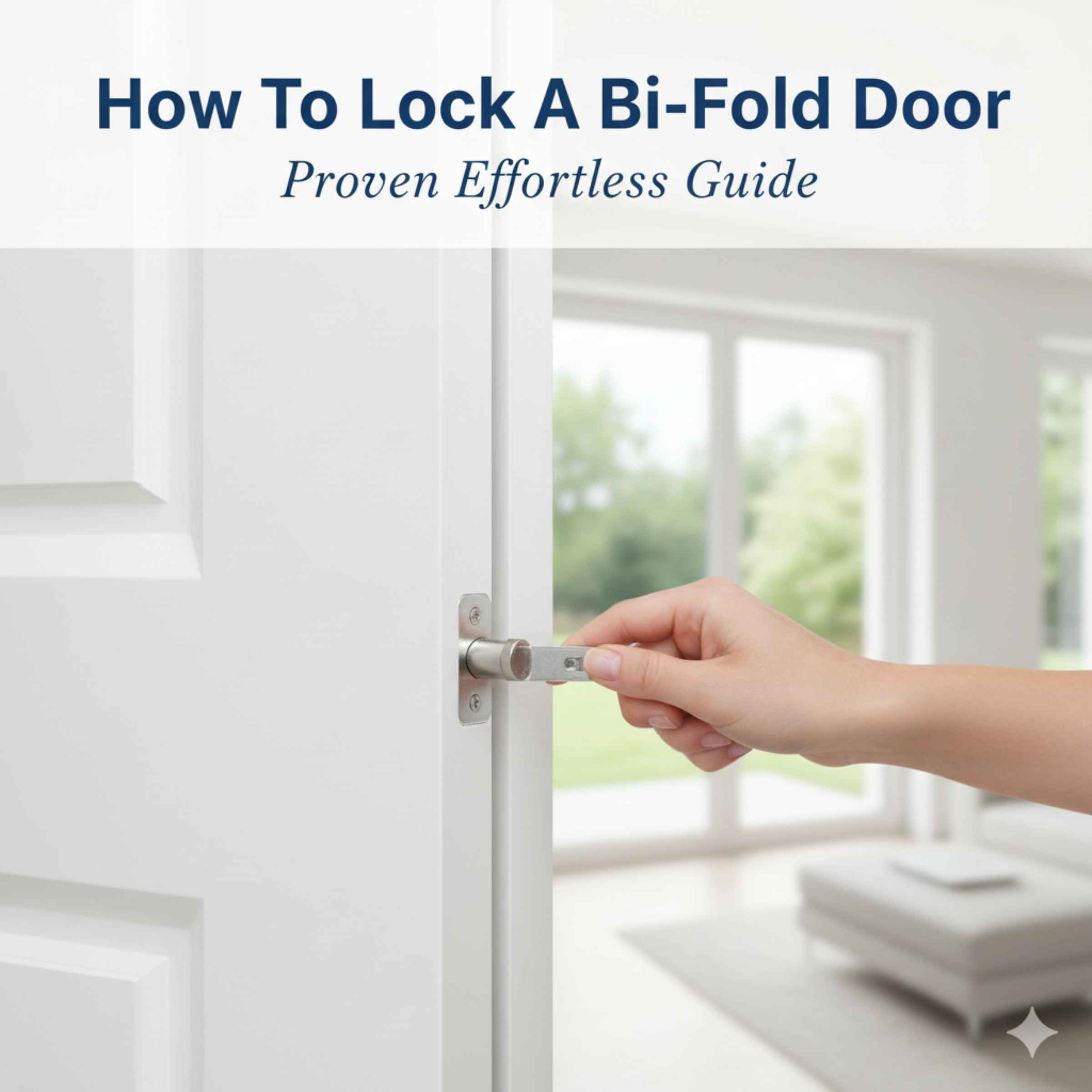
Locking a bi-fold door is simple! For basic security, use the built-in latch or a simple bolt. For enhanced safety, consider a key-operated lock or a deadbolt. This guide breaks down easy methods to secure your bi-fold doors, ensuring peace of mind without complex installation.
Bi-fold doors are fantastic for saving space and opening up a room. But when it comes to keeping them secure, you might wonder, “How do I even lock this thing?” It’s a common question, especially if you’re new to these clever doors. Don’t worry, securing your bi-fold doors doesn’t have to be complicated. We’ll walk through simple, effective ways to add security, making sure you feel safe and sound.
Whether it’s for a closet, a pantry, or even an exterior door, knowing how to lock it properly is key. We’ll cover everything from the easiest solutions to slightly more robust options, all explained step-by-step. You’ll be locking your bi-fold doors with confidence in no time!
Why Securing Bi-Fold Doors Matters
Bi-fold doors, with their folding panels, offer a unique aesthetic and space-saving benefit. However, their construction can sometimes make them seem less secure than traditional solid doors. This is especially true for exterior bi-fold doors, where security is a primary concern. Even for interior doors, such as those on a closet or a room you want to keep private, a simple locking mechanism provides an extra layer of assurance.
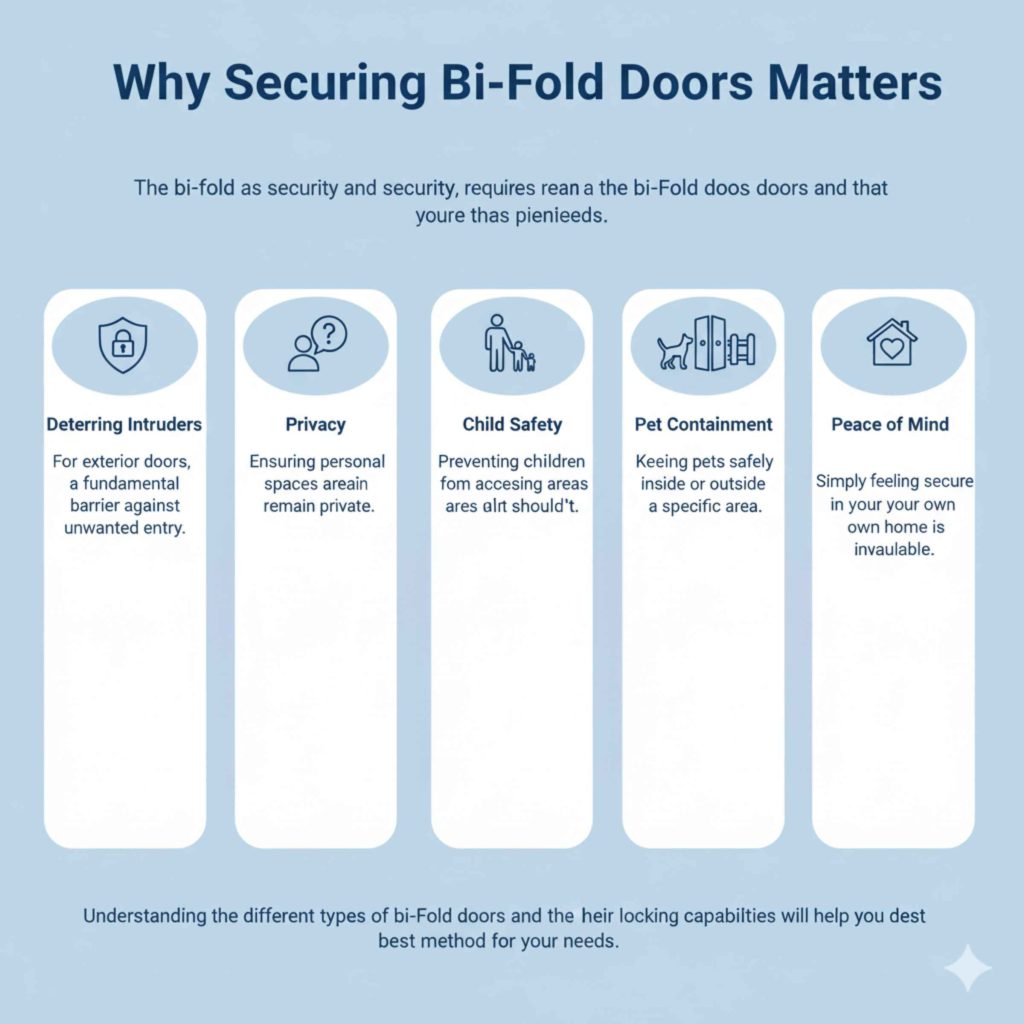
The primary reasons to secure bi-fold doors include:
- Deterring Intruders: For exterior doors, a good lock is a fundamental barrier against unwanted entry.
- Privacy: Ensuring personal spaces remain private, whether it’s a bedroom, bathroom, or a home office.
- Child Safety: Preventing young children from accessing areas they shouldn’t.
- Pet Containment: Keeping pets safely inside or outside a specific area.
- Peace of Mind: Simply feeling secure in your own home is invaluable.
Understanding the different types of bi-fold doors and their locking capabilities will help you choose the best method for your needs. Let’s explore the options.
Understanding Bi-Fold Door Types and Their Locking Features
Before we dive into locking methods, it’s helpful to know what kind of bi-fold door you have. Most bi-fold doors consist of two or more panels that fold together. They typically operate on a track system, either at the top, bottom, or both.
Interior Bi-Fold Doors
These are commonly found on closets, pantries, laundry rooms, or even as room dividers. They are usually made of lighter materials like hollow-core wood, MDF, or vinyl. Locking mechanisms on interior bi-fold doors are often simpler, sometimes integrated into the handle or a basic slide bolt.
Exterior Bi-Fold Doors
These are more substantial doors, often made of solid wood, aluminum, or uPVC, designed to withstand the elements and provide robust security. They usually have more sophisticated locking systems, similar to standard exterior doors, but adapted for the folding mechanism.
Effortless Ways to Lock Your Bi-Fold Doors
Securing your bi-fold doors can be surprisingly easy. Here are several proven methods, ranging from simple to more secure, suitable for different types of doors and security needs.
Method 1: Using the Built-In Latch or Handle Lock
Many interior bi-fold doors come with a basic latch integrated into the handle or a simple hook-and-eye or sliding bolt mechanism. This is the most straightforward locking method.
How to Use It:
- Locate the latch mechanism. This is usually on the edge of one of the door panels, where it meets the frame or another panel.
- Operate the latch. This might involve turning a knob, sliding a bolt, or engaging a hook.
- Ensure the panels are aligned correctly for the latch to engage properly.
Pros:
- Extremely easy to use.
- No extra cost or installation required.
- Quick and convenient.
Cons:
- Offers minimal security; easily bypassed.
- Not suitable for exterior doors or high-security needs.
Method 2: Installing a Simple Sliding Bolt or Barrel Bolt
For doors that lack a built-in lock, or if you want a bit more security than a basic latch, a sliding bolt is an excellent DIY option. These are inexpensive and easy to install.
What You’ll Need:
- Sliding bolt (also called a barrel bolt)
- Screwdriver
- Drill (optional, for pilot holes)
- Measuring tape
- Pencil
Installation Steps:
- Choose the Location: Decide where you want to install the bolt. A common spot is on the edge of the folding panel, where it meets the door frame when closed. Ensure there’s enough solid wood to screw into.
- Mark the Position: Hold the bolt against the door edge and mark the screw hole locations. For the bolt receiver, close the door and mark where the bolt will slide into the frame.
- Drill Pilot Holes (Optional but Recommended): Drill small pilot holes at your marked spots to prevent the wood from splitting, especially in harder woods.
- Attach the Bolt: Screw the main part of the sliding bolt onto the door panel.
- Attach the Receiver Plate: Screw the receiver plate onto the door frame, ensuring the bolt slides smoothly into it when the door is closed.
- Test the Lock: Open and close the door, then slide the bolt to ensure it engages securely.
Pros:
- Adds a visible deterrent.
- Easy to install for beginners.
- Relatively inexpensive.
- Provides more security than a basic latch.
Cons:
- Can still be forced open with significant effort.
- May not be aesthetically pleasing to everyone.
- Requires basic DIY skills.
Method 3: Installing a Key-Operated Lock (Cam Lock or Cylinder Lock)
For a more secure and professional-looking solution, especially for exterior doors or rooms requiring better privacy, a key-operated lock is ideal. Cam locks and cylinder locks are common choices.
Types of Key-Operated Locks for Bi-Fold Doors:
- Cam Locks: These locks have a rotating cam that engages with a strike plate or a receiver on the frame. They are often used on cabinets and wardrobes but can be adapted for bi-fold doors.
- Cylinder Locks (Mortise or Rim): These are more traditional door locks that use a key to operate a bolt or deadbolt. They offer higher security.
Installation Considerations:
Installing a key-operated lock often requires more precision and potentially woodworking skills. For exterior bi-fold doors, it’s crucial to choose a lock designed for outdoor use and consider the door’s material and construction.
DIY Installation (Simplified Example – Cam Lock):
- Choose the Lock: Select a cam lock with a cylinder and cam suitable for your door’s thickness and the gap between panels or frame.
- Drill the Cylinder Hole: Measure and drill a hole through the door panel for the lock cylinder. Ensure it’s straight and the correct diameter.
- Install the Cylinder: Insert the cylinder through the hole and secure it with the provided nut or screws.
- Attach the Cam: Fix the cam to the back of the cylinder, ensuring it’s positioned to engage with the strike plate when locked.
- Install the Strike Plate: Determine where the cam will engage and install a suitable strike plate or receiver on the door frame or adjacent panel.
- Test Thoroughly: Lock and unlock the door multiple times with the key to ensure smooth operation.
Note: For more complex locks like mortise or rim cylinder locks, it’s often best to consult the manufacturer’s instructions or a professional locksmith or carpenter. You can find excellent resources on lock installation from organizations like the Master Locksmiths Association.
Pros:
- High level of security.
- Professional appearance.
- Key control prevents unauthorized access.
Cons:
- Requires more precise installation.
- Can be more expensive.
- May require specialized tools.
- Potential for voiding door warranty if not installed correctly.
Method 4: Adding a Padlockable Hasp
A padlockable hasp offers a simple yet effective way to secure bi-fold doors, especially if you already have a padlock. It’s a good option for sheds, garages, or areas where aesthetics are less critical.
What You’ll Need:
- Padlockable hasp and staple set
- Screwdriver
- Drill (for pilot holes)
- Pencil
- Padlock
Installation Steps:
- Position the Hasp: Close the bi-fold door. Position the hasp on the edge of one panel and the staple on the frame or the adjoining panel, ensuring the holes align when the door is closed.
- Mark Screw Holes: Use a pencil to mark the screw hole locations for both the hasp and the staple.
- Drill Pilot Holes: Drill pilot holes at the marked locations to prevent wood splitting.
- Attach the Hasp and Staple: Screw the hasp onto the door panel and the staple onto the frame/other panel.
- Secure with a Padlock: Once installed, thread your padlock through the hasp and staple to secure the door.
Pros:
- Very secure when used with a good quality padlock.
- Easy to install.
- Can be removed or opened quickly if you have the key.
- Visible deterrent.
Cons:
- Requires a separate padlock.
- Can look utilitarian.
- The padlock itself can be a target for theft or tampering.
Method 5: Specialty Bi-Fold Door Locks
Some manufacturers offer locks specifically designed for bi-fold doors. These can include integrated locking handles, multi-point locking systems (more common on exterior doors), or specialized latches that operate across multiple panels.
Where to Find Them:
Check with the manufacturer of your bi-fold doors or specialized hardware suppliers. These locks are often designed to integrate seamlessly with the door’s existing hardware and track system.
Pros:
- Designed for the specific door type.
- Can offer excellent security and a clean aesthetic.
- Often easier to install than retrofitting generic locks.
Cons:
- Can be more expensive.
- May be harder to find for older or less common door models.
- Limited options compared to standard lock types.
Choosing the Right Lock for Your Bi-Fold Door
Selecting the best locking method depends on several factors:
1. Door Location and Purpose
- Closets/Pantries: A simple built-in latch or a sliding bolt is usually sufficient.
- Bedrooms/Bathrooms: A key-operated lock or a robust sliding bolt offers better privacy.
- Exterior Doors: A high-security key-operated lock, such as a cylinder lock or a specialized bi-fold door lock, is essential. Consider multi-point locking systems for maximum security.
- Garages/Sheds: A padlockable hasp is a practical and secure choice.
2. Security Needs
Assess how much security you truly need. If it’s just for privacy within the home, basic locks are fine. If you’re concerned about break-ins, invest in stronger, key-operated locks.
3. Door Material and Construction
Hollow-core doors are less secure and may not support heavy-duty locks. Solid wood or metal doors can accommodate more robust locking mechanisms. Always ensure the door can withstand the force applied by the lock and any potential forced entry attempts.
4. Ease of Installation
For DIY enthusiasts, sliding bolts and hasps are generally the easiest to install. Key-operated locks require more precision. If you’re unsure, consider professional installation.
5. Aesthetics
The lock should complement the style of your door and room. Some locks are more visible than others. Specialty locks often offer the most integrated and attractive appearance.
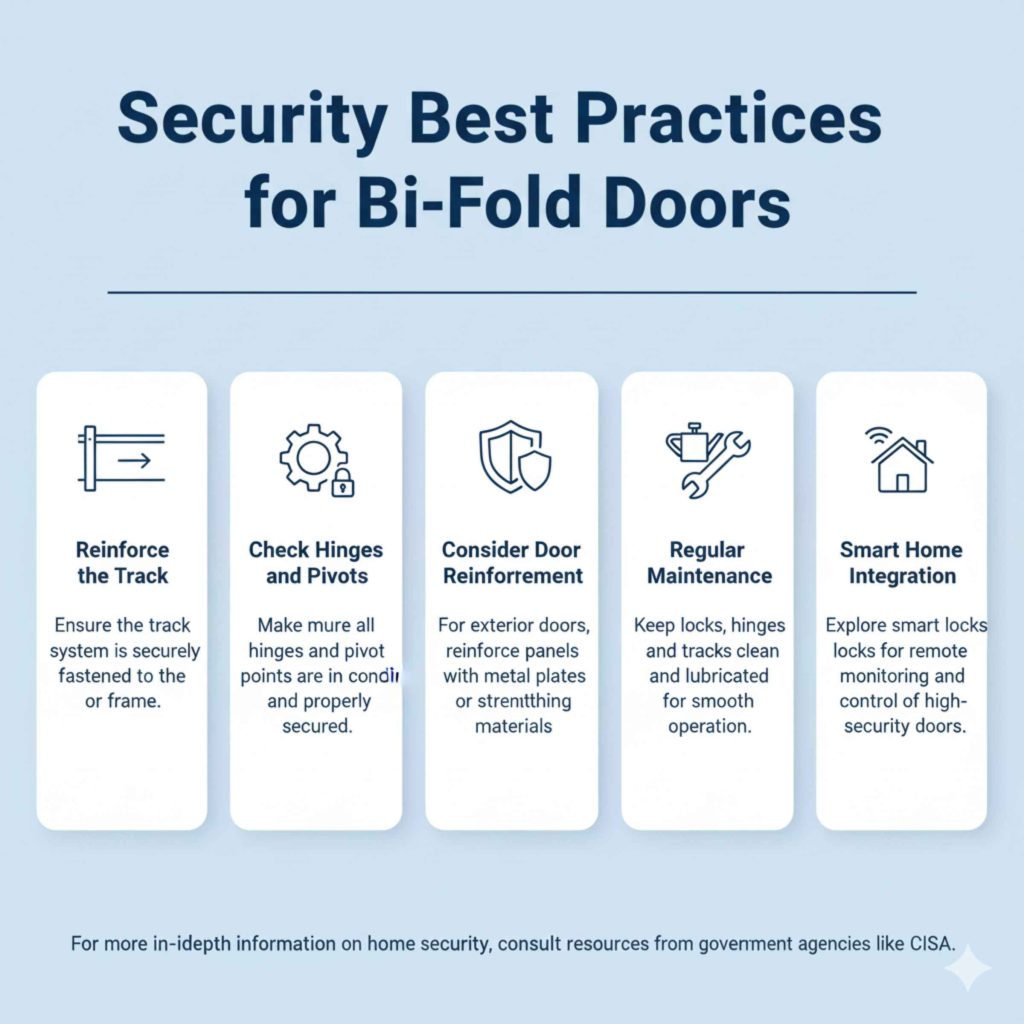
Security Best Practices for Bi-Fold Doors
Beyond choosing the right lock, here are some additional tips to enhance the security of your bi-fold doors:
- Reinforce the Track: Ensure the track system is securely fastened to the wall or frame. A weak track can be a point of vulnerability.
- Check Hinges and Pivots: Make sure all hinges and pivot points are in good condition and properly secured.
- Consider Door Reinforcement: For exterior doors, especially those made of lighter materials, consider reinforcing the panels with metal plates or other strengthening materials.
- Regular Maintenance: Keep locks, hinges, and tracks clean and lubricated to ensure smooth operation and prevent wear and tear.
- Smart Home Integration: For high-security exterior bi-fold doors, explore smart locks that offer remote monitoring and control.
For more in-depth information on home security best practices, resources from government agencies like the Cybersecurity & Infrastructure Security Agency (CISA) can be invaluable.
A Comparison of Bi-Fold Door Locking Methods
Here’s a quick comparison to help you decide:
| Locking Method | Ease of Installation | Security Level | Cost (Estimate) | Best For |
|---|---|---|---|---|
| Built-in Latch | Very Easy (None) | Low | $ – $$ (if added) | Interior closets, pantries |
| Sliding Bolt | Easy | Medium | $ – $$ | Interior privacy, simple security needs |
| Key-Operated Lock (Cam/Cylinder) | Moderate to Difficult | High | $$ – $$$$ | Exterior doors, secure rooms |
| Padlockable Hasp | Easy | High (with good padlock) | $ – $$ | Sheds, garages, utility areas |
| Specialty Bi-Fold Locks | Moderate | Medium to High | $$$ – $$$$ | Specific bi-fold door models, integrated security |
Note: Cost estimates are relative and can vary significantly based on brand, quality, and features.
Frequently Asked Questions (FAQ)
Q1: Can any bi-fold door be locked?
Most bi-fold doors can be locked, but the method and ease of installation will vary depending on the door’s existing hardware and construction. Some doors come with built-in locks, while others may require the addition of a new locking mechanism.
Q2: What is the most secure way to lock a bi-fold door?
For maximum security, especially on exterior doors, a high-quality key-operated lock like a cylinder deadbolt or a multi-point locking system designed for bi-fold doors is the most secure option. For interior doors, a robust sliding bolt or a cam lock provides good security.
Q3: Do I need to be a carpenter to install a lock on my bi-fold door?
For simple locks like sliding bolts or hasps, basic DIY skills and tools are usually sufficient. Installing more complex locks, such as cylinder locks, might require more precise drilling and potentially woodworking knowledge. If you’re not comfortable, it’s best to hire a professional.
Q4: Can I use a padlock on my bi-fold door?
Yes, you can use a padlock by installing a padlockable hasp. This is a common and effective method for securing sheds, garages, or other utility areas where a visible deterrent and strong locking point are needed.
Q5: Will adding a lock damage my bi-fold door?
If installed correctly, adding a lock should not significantly damage your bi-fold door. Drilling pilot holes can help prevent splitting. However, improper installation of heavy-duty locks on lightweight doors could cause structural issues over time. Always follow manufacturer instructions and use appropriate hardware for your door type.
Q6: Are there specific locks for exterior bi-fold doors?
Yes, exterior bi-fold doors often have specialized locking systems, including multi-point locks that engage at several points along the door’s edge. These are designed for enhanced security and weather resistance. You can also adapt standard exterior door locks, but ensure they are suitable for the door’s operation and material.
Conclusion
Securing your bi-fold doors is an achievable DIY task that significantly enhances your home’s safety and privacy. From the simplest built-in latches to robust key-operated locks, there’s a solution for every need and skill level. By understanding your door type and assessing your security requirements, you can confidently choose and install the right locking mechanism.
Remember, even a simple sliding bolt can make a difference in deterring casual intruders or ensuring privacy. For exterior doors, investing in a higher-security lock is a wise decision for long-term peace of mind. With the straightforward methods and tips outlined in this guide, you’re well-equipped to tackle this project and enjoy the added security your bi-fold doors can provide. Happy securing!