How to Open a Bedroom Door Lock Safely
Sometimes you might find yourself on the wrong side of a bedroom door, and it’s locked. It happens to everyone! Maybe you accidentally shut it, or perhaps a child locked it from the inside.
Figuring out How to Open a Bedroom Door Lock Safely can seem tricky, especially if you’ve never done it before. Don’t worry, it’s usually simpler than you think. We’ll walk you through easy steps that won’t damage your door or lock.
Understanding Basic Bedroom Door Locks
Bedroom doors often have simple locks that are easy to open with the right knowledge. These locks are designed for privacy, not high security. They usually have a small hole or slot on the outside.
This is where you’ll insert a tool to unlock it. Knowing this basic design helps make the process much less intimidating for beginners.
Common Lock Types and Their Mechanisms
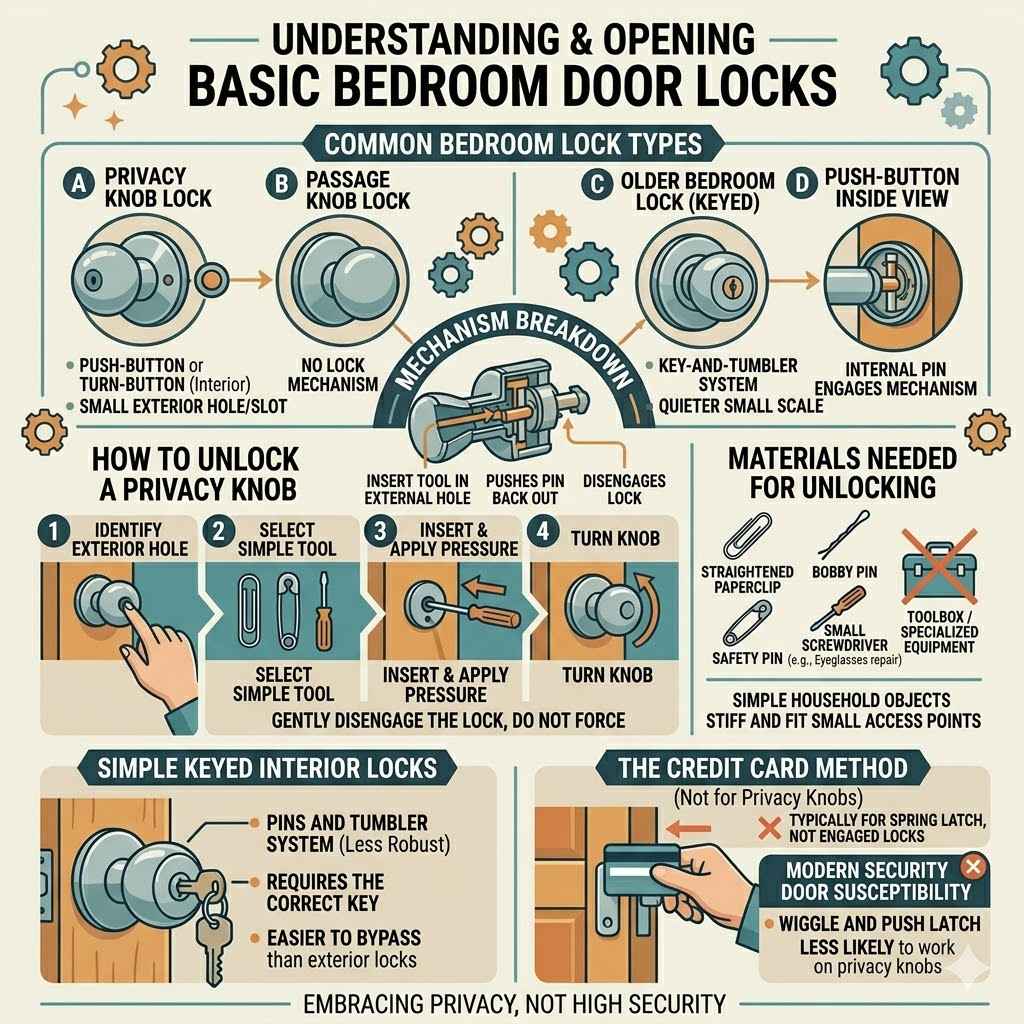
Most interior bedroom doors use one of a few common lock types. The most frequent are the privacy knob lock and the passage knob lock. Privacy knobs have a push-button or a turn-button on the inside for locking.
On the outside, there’s a small hole. This hole is the key to unlocking it from the outside. Passage knobs don’t lock from the inside; they are just for opening and closing.
However, some older bedroom doors might have a simple keyed lock.
The mechanism behind these locks is quite straightforward. When you push the button on the inside of a privacy knob, a small pin engages inside the knob’s mechanism, preventing it from turning. The hole on the outside is designed to push this pin back out.
This disengages the lock, allowing the knob to turn and open the door. For keyed locks, it’s a standard key-and-tumbler system, just on a smaller scale.
The Privacy Knob Lock
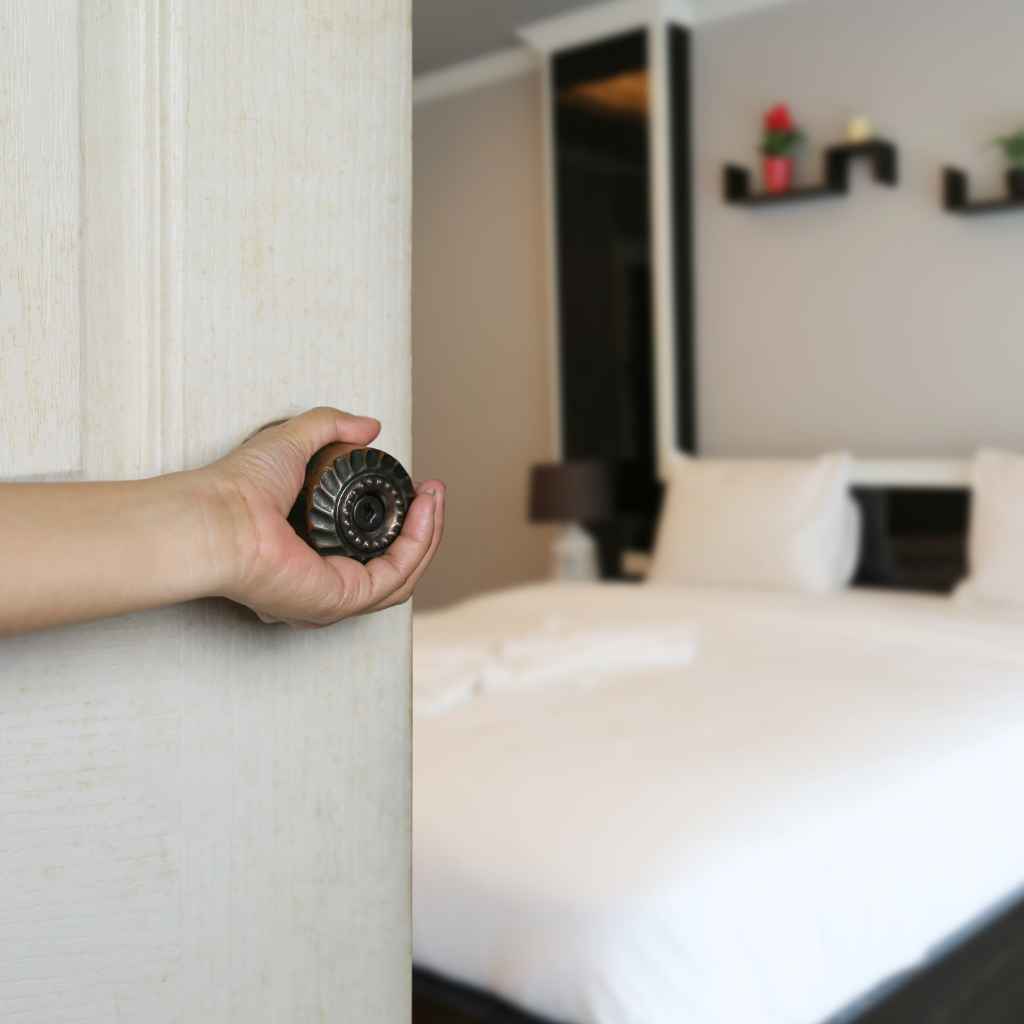
The privacy knob lock is the most common type found on bedroom doors. It’s easy to spot because of the small, often circular, hole or slot on the exterior of the doorknob. This hole is not a keyhole; it serves a different purpose.
When the knob is locked from the inside, a mechanism prevents the knob from turning.
The purpose of the external hole is to allow manual override of the locking mechanism. By inserting a thin, stiff object into this hole and pushing, you can disengage the lock. This is a safety feature, allowing someone from the outside to open the door in emergencies or if a person inside becomes incapacitated.
It’s designed to be accessible without special tools, making it user-friendly.
Simple Keyed Interior Locks
Less common but still found on some bedroom doors, especially older homes, are simple keyed interior locks. These look more like typical exterior door locks, complete with a standard keyhole. They use a pin tumbler system, similar to many padlocks, but are usually less robust.
Opening these requires a key that fits the lock. If you don’t have the key, you might need to consider other methods, but they are generally easier to bypass than exterior door locks. The key difference from exterior locks is their build; they are not designed for significant security threats.
Materials Needed for Unlocking
You usually don’t need a toolbox or specialized equipment to open a locked bedroom door. The most common items you’ll need are simple household objects. These are items most people have lying around their homes.
They are chosen for their size and stiffness, allowing them to fit into the small access points on the lock.
The key is to use something that can fit into the small hole and apply pressure or manipulation to the internal locking mechanism. Avoid anything too large, as it might damage the hole or the lock. Also, avoid anything too flimsy, as it might bend or break.
The goal is to gently disengage the lock, not to force it.
The Credit Card Method
While the credit card method is often discussed for opening doors, it’s typically more effective on doors with a spring latch rather than a deadbolt or a privacy knob lock that’s truly engaged. For a standard privacy knob, this method is less likely to work. However, if you are dealing with a door that only has a latch and no strong locking mechanism engaged, it might offer a slim chance.
The idea is to slip the card between the door and the frame, right where the latch is. By wiggling the card and pushing it in at an angle, you aim to push the angled part of the latch back into the door. This releases the door from the frame.
This technique requires a bit of practice and a flexible, yet sturdy, card. It’s important to note that modern security doors are usually not susceptible to this method.
Small Tools and Household Items
For privacy knob locks, the most effective tools are usually simple and readily available. A straightened paperclip is a classic choice. Its thinness allows it to fit into the tiny hole on the doorknob.
A safety pin, a bobby pin, or even the small screwdriver that comes with some eyeglasses repair kits can also work.
The key is to find something that is stiff enough to push or twist the locking mechanism within the hole. For keyed locks, of course, you will need the correct key. If the lock is a simple push-button type on the inside, the external hole is your target.
The goal is to push a small button or lever inside that hole to disengage the lock.
Step-by-Step Guide to Opening the Door
Learning how to open a bedroom door lock safely involves a few simple steps. The process focuses on using the right tool for the right lock. We will cover the most common scenarios to ensure you can handle them with confidence.
Remember to be gentle; forcing things can lead to damage.
Method 1 Opening Privacy Knob Locks
This is the most frequent situation for a locked bedroom door. Privacy knob locks are designed with a simple override mechanism for situations just like this. The key is to find the small hole on the outside of the knob.
This hole is the access point to the internal locking pin.
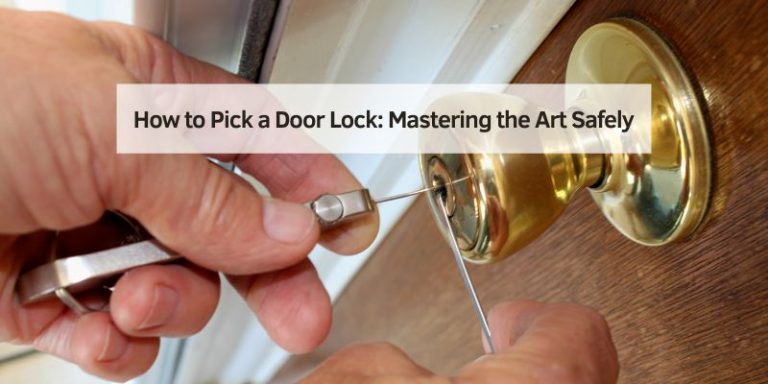
Once you locate the hole, you need a tool that fits. A straightened paperclip is often the perfect size. Push the paperclip straight into the hole.
You should feel some resistance. Keep pushing until you feel a click or the knob unlocks. If you don’t feel a click immediately, try wiggling the paperclip slightly while applying pressure.
Locating the Override Hole
The first and most critical step is to find the small hole on the exterior of the doorknob. It’s usually located in the center of the knob or near the edge. On some older knobs, it might be a small slot instead of a round hole.
It’s designed to be discreet but accessible.
Take a close look at the doorknob. Gently run your finger over its surface if you can’t see it clearly. It’s usually no larger than a pinhead.
Once you’ve found it, ensure the tool you plan to use can fit comfortably inside without being too loose or too tight.
Inserting the Tool and Unlocking
With your chosen tool, such as a straightened paperclip or a bobby pin, insert it directly into the override hole. Push firmly and straight into the knob. You are trying to press a small button or lever inside the lock mechanism.
You might feel a slight click when the lock disengages. If you don’t feel a click, try applying a little bit of turning pressure to the doorknob while still pushing the tool in. Sometimes, the knob needs to be turned simultaneously for the lock to release.
If it doesn’t work, try a slightly different angle or a different tool. The goal is to disengage the locking pin.
Method 2 Opening Simple Keyed Interior Locks
If your bedroom door has a traditional keyhole, you’ll need a key. These locks are designed to be opened only with the correct key. If you’ve lost the key, or if it’s locked from the inside and you don’t have access to the key on that side, you might need a locksmith for more complex situations.
However, for very basic interior keyed locks, there are sometimes simple bypass methods.
But the most straightforward and safest way is to find the key. Check all possible places where the key might be. If it’s locked from the inside and you can’t get the key, the priority shifts to non-destructive entry if possible.
Finding the Correct Key
The most obvious and safest way to open a keyed bedroom door lock is to use the correct key. If the door is locked from the outside, you will need the key to turn in the keyhole. If the door is locked from the inside, and you need to get in, the key would typically be inside the room with the person who locked it.
Before attempting any bypass methods, exhaust all options for finding the key. Check key hooks, drawers, or any place keys are usually kept. If someone is inside, they might be able to pass the key through the mail slot or under the door, depending on the door’s design.
When to Call a Locksmith
There are times when you simply cannot open the door yourself. If you’ve tried the common methods for privacy knob locks and they haven’t worked, or if you have a more complex lock and no key, it’s time to call a professional. A locksmith has the tools and expertise to open almost any lock without causing damage.
This is especially true if the lock is old, stuck, or if you are concerned about damaging the door or the lock itself. A locksmith can assess the situation and choose the least invasive method to gain entry. It’s a reliable solution when DIY attempts fail or are not advisable.
Tips for Safe and Effective Unlocking
When dealing with a locked door, safety and effectiveness are paramount. The goal is to get the door open without causing any harm to yourself, others, or the property. These tips focus on preventative measures and careful execution.
Avoiding Damage to the Lock and Door
The most important aspect of learning how to open a bedroom door lock safely is to avoid causing damage. Forcing tools into the lock, using excessive strength, or trying to pry the door open can lead to costly repairs. Always start with the gentlest method that seems appropriate for the lock type.
If you are using a paperclip or bobby pin, ensure it is inserted straight into the hole. Wiggling it gently is okay, but avoid aggressive twisting or bending. If the lock doesn’t budge with light pressure, it might be a sign that this method isn’t suitable, or that the lock is more complex than it appears.
Gentle Pressure is Key
When you insert a tool into the override hole of a privacy knob, apply steady, gentle pressure. You are not trying to break anything; you are simply trying to engage a small internal mechanism. Too much force can bend the tool, damage the hole, or even jam the lock further.
Think of it like trying to turn a very stiff screw. You need firm, consistent pressure rather than a sudden, forceful twist. If you feel significant resistance, stop and reassess.
It might be that the tool is not quite aligned, or that the lock mechanism is stuck for another reason.
When to Stop and Reassess
If after a few attempts with appropriate tools, the lock does not yield, it is time to stop. Pushing harder or trying different, inappropriate tools can often lead to damaging the lock or the door. It is better to pause and consider the situation.
Ask yourself if you have the right tool for the job. Is the hole you are be an obstruction?
If you are unsure, or if you are worried about causing damage, it is always the right time to consider calling a professional locksmith. They have specialized tools and experience.
Alternative Solutions if Unlocking Fails
Sometimes, despite best efforts, a door just won’t open with simple bypass methods. This can happen if the lock is broken, jammed, or if it’s a type of lock that requires more advanced techniques. In these cases, there are still viable solutions.
The focus remains on gaining access without unnecessary destruction.
If you’re dealing with a genuinely stuck or broken lock, a locksmith is often the most efficient and least destructive option. They can often pick the lock or use specialized tools to open it. If immediate access is crucial, they can often do this quite quickly.
Using a Mail Slot
Some bedroom doors have a mail slot. If the door is locked from the inside and the person inside cannot unlock it or pass the key, a mail slot can sometimes be used to manipulate the lock. You can try to use a stiff wire or a slim tool passed through the mail slot to push the privacy button on the inside of the knob or to try and turn the knob.
This method requires patience and dexterity. The angle can be awkward, and you might not be able to see exactly what you are doing. It’s often more successful if you can use a mirror to see the lock mechanism through the slot.
However, not all doors have mail slots, limiting this approach.
Consider Other Entry Points
If the bedroom door is proving impossible to open safely, and immediate access is required, consider other potential entry points. This might include other doors in the house or even windows, assuming they are not locked or can be safely opened.
For example, if the bedroom has an adjoining bathroom with another access door, you could try entering through there. If it’s a ground-floor room, a window might be an option, but exercise extreme caution. Always prioritize safety when considering alternative entry points.
If you have to force entry, assess the risk of injury.
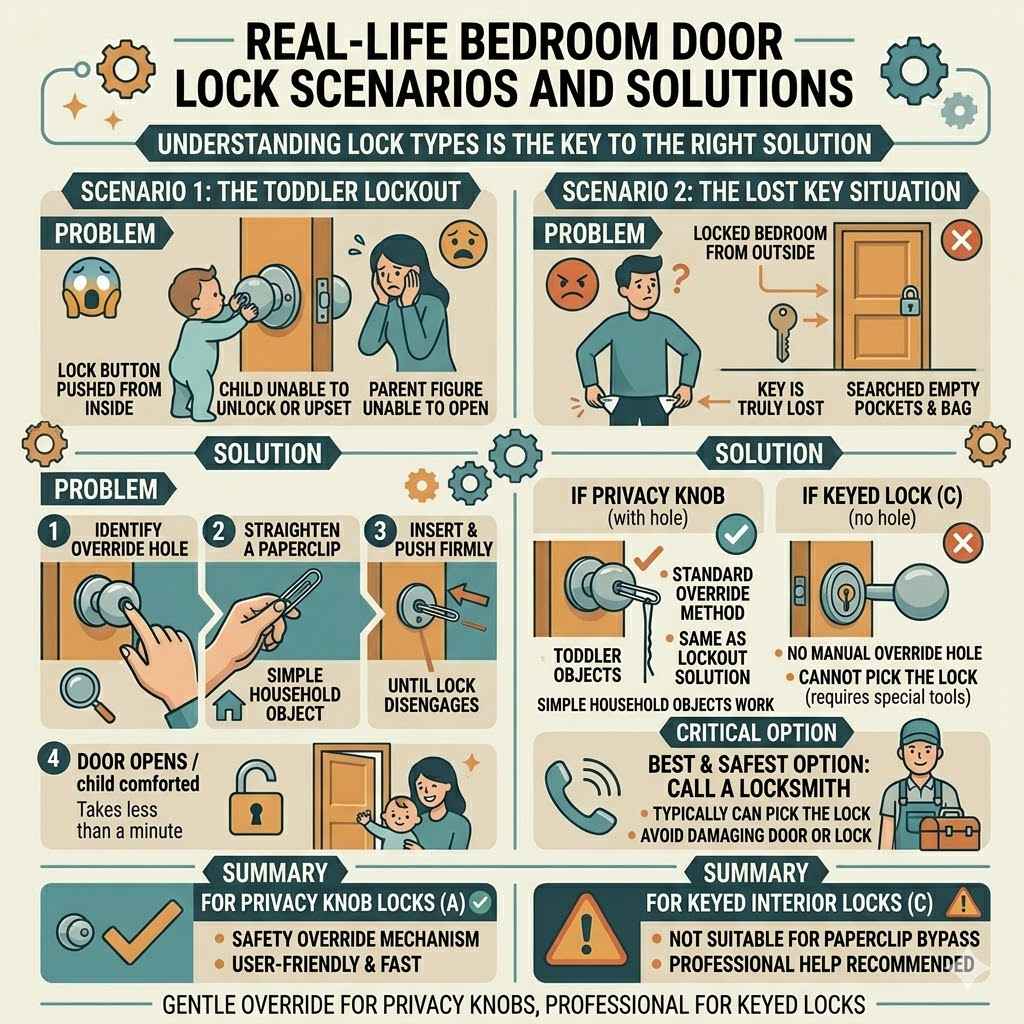
Real-Life Scenarios and Solutions
Let’s look at a couple of common situations where you might need to know how to open a bedroom door lock safely. These scenarios highlight how understanding the lock type leads to the right solution.
Scenario 1 The Toddler Lockout
A young child has wandered into the bedroom and, thinking it’s a game, has pushed the lock button on the inside of the privacy knob. Now the door is locked from the inside, and the child is unable to unlock it, or perhaps is upset. Parents often panic in this situation.
The solution here is straightforward. Go to the exterior of the doorknob and locate the small override hole. Straighten a paperclip and insert it into the hole, pushing firmly until the lock disengages.
The door will then open, and the child can be comforted. This takes less than a minute.
Scenario 2 The Lost Key Situation
You’ve locked your bedroom door from the outside for privacy, but now you can’t find your key anywhere. You’ve searched your pockets, your bag, and around the house, but no luck. You need to get into your room.
If the lock is a standard privacy knob with an override hole, you can use a paperclip or bobby pin to unlock it from the outside. If it is a keyed lock and you truly cannot find the key, then calling a locksmith is the safest option to avoid damaging your door or lock. They can typically pick the lock or provide a temporary solution.
Frequently Asked Questions
Question: What is the easiest way to open a locked bedroom door?
Answer: For most bedroom privacy knobs, the easiest way is to use a straightened paperclip or bobby pin to push the override button through the small hole on the outside of the knob. This is quick and usually works without damage.
Question: Can I break a bedroom door lock if I need to get in quickly?
Answer: It’s best to avoid breaking the lock if possible, as it will be costly to repair. Try the paperclip method first. If that fails, and you absolutely must get in, consider calling a locksmith who can often open it without damage.
Question: What if the small hole on my doorknob is blocked?
Answer: If the override hole is blocked with debris, you can try to carefully clear it with a thin needle or the tip of a small screwdriver. Ensure you do not push the debris further in. Once clear, use your paperclip or bobby pin.
Question: My bedroom door lock seems stuck even with the right tool. What should I do?
Answer: If the lock feels stuck or the tool doesn’t seem to work, the lock mechanism might be jammed or broken. It’s best to stop trying to force it and call a locksmith. They have specialized tools to handle stuck locks safely.
Question: Are there any specific tools I should buy to open a bedroom door lock?
Answer: For standard privacy knobs, you typically don’t need to buy special tools. Household items like straightened paperclips, bobby pins, or safety pins are usually sufficient. If you have persistent issues, a locksmith is the better route.
Summary
Learning how to open a bedroom door lock safely is a useful skill. For most common privacy knobs, a simple tool like a paperclip can unlock it. Locate the small hole, insert the tool, and push gently.
If your door has a keyed lock and you’ve lost the key, a locksmith is the best option. Always prioritize avoiding damage and use the gentlest methods first.