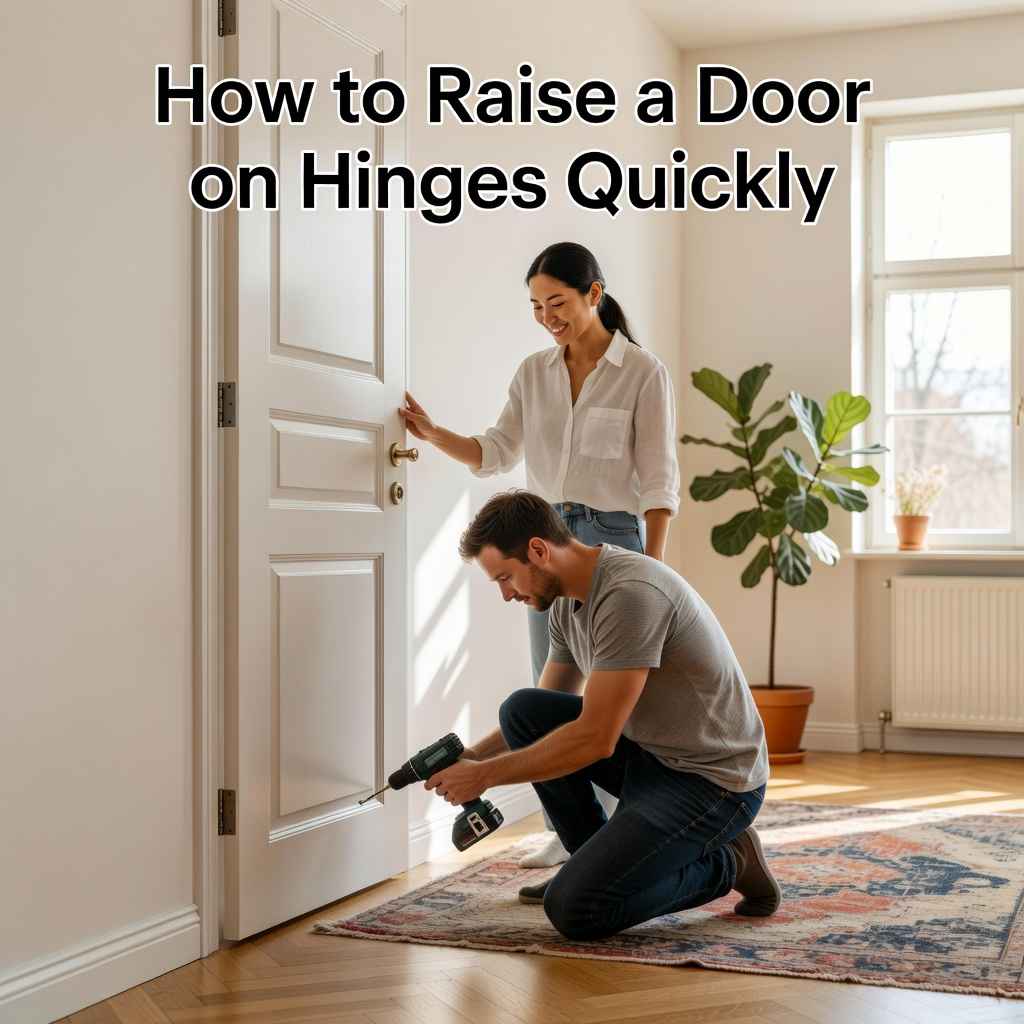
How to Raise a Door on Hinges Quickly
Many people find it a bit tricky to adjust a door that’s sticking or rubbing. This is especially true when you’re not sure about the best way to go about it. Learning how to raise a door on hinges quickly can save you a lot of frustration.
You don’t need to be a pro to get this done. We’ll walk you through a simple, step-by-step method that’s easy to follow. Get ready to make that door work just right.
Understanding Door Hinge Problems
Doors often get out of alignment for a few common reasons. Sometimes, houses settle over time, and this movement can cause the door frame to shift. This shift puts pressure on the door and its hinges, making it hard to close or causing it to scrape the floor or frame.
Humidity can also play a role; wood expands and contracts with changes in moisture, leading to sticking doors. For beginners, figuring out which hinge is causing the issue and how to fix it without damaging the door or frame can feel overwhelming. This section will help you spot the signs of a misaligned door and understand the basic anatomy of door hinges.
Common Signs of a Misaligned Door
A door that needs adjustment often shows clear signs. You might hear a scraping sound when you open or close it. The door might not close all the way, or it might feel loose on its hinges.
Sometimes, you’ll see that the door isn’t level, or there’s an uneven gap between the door and the frame. These are all indicators that your door’s hinges need a little attention.
- Scraping Noise: This is the most obvious sign. When the door edge rubs against the frame or the floor, it creates an audible scrape. This usually means the door is too low or too wide for its opening at that point.
- Difficulty Closing or Opening: If a door sticks, it becomes hard to move. You might need to push or pull with extra force. This can happen if the door is binding against the frame or if the hinges are stiff.
- Uneven Gaps: Look at the spaces around the door. If the gap between the door and the frame is wider at the top than at the bottom, or vice versa, the door is likely out of plumb.
- Visible Sagging: A door that sags might appear to be hanging lower on one side. This is often due to worn hinges or loose hinge screws, allowing the door to droop.
Types of Door Hinges
Most interior doors use standard butt hinges. These consist of two flat plates joined by a pin. One plate attaches to the door edge, and the other attaches to the door frame.
Knowing this helps you understand where to apply pressure or make adjustments. There are other types, like ball-bearing hinges, but for most home doors, butt hinges are standard.
- Butt Hinges: These are the most common. They have two leaves (or plates) joined by a barrel that contains a removable pin. One leaf screws into the door edge, and the other into the door frame. The pin can be removed to take the door off its frame.
- Mortise Hinges: These are a type of butt hinge where a portion of the hinge leaf is set into a mortise (a cut-out) in the door and frame. This allows the hinge to sit flush with the surface, creating a cleaner look.
- Surface-Mounted Hinges: These hinges are attached directly to the surface of the door and frame without requiring mortises. They are often used for lighter doors or cabinets and are simpler to install but might not look as neat.
Preparing to Adjust Your Door
Before you start making changes, it’s smart to gather a few things and assess the situation. You’ll want to have the right tools ready. Also, it’s a good idea to know exactly where the door is rubbing or sticking.
This preparation makes the actual adjustment process much smoother and quicker. Safety first, too; make sure the door is stable if you’re working with it.
Gathering Your Tools
Having the right tools makes the job easier. You likely have most of these in your home already. A few simple items can make a big difference in how quickly and effectively you can fix your door.
- Screwdriver Set: You’ll need screwdrivers that fit the screws on your hinges. A Phillips head and a flathead screwdriver are usually sufficient. Make sure they are the right size so you don’t strip the screw heads.
- Hammer: A hammer is useful for gently tapping things into place or for persuading hinge pins.
- Pliers: Pliers can help grip and pull out stubborn hinge pins.
- Shims: Small pieces of wood or cardboard can be used to add support or create space where needed.
- Work Gloves: Protect your hands while working with tools and metal.
- Safety Glasses: It’s always wise to protect your eyes from dust or flying debris.
Identifying the Problem Hinge
The next step is to figure out which hinge is causing the door to sag or stick. Most of the time, it’s just one or two hinges. You can often see this by watching the door as you open and close it.
Look for any hinge that seems loose, bent, or not flush with the door or frame. Sometimes, the problem is simply loose screws, while other times the hinge itself might be worn out.
- Visual Inspection: Open and close the door slowly. Watch each hinge carefully. Do any of them look misaligned? Are the screws tight?
- Door Sag Test: With the door open, try to lift the outer edge of the door. If it moves up easily on one side more than the other, that indicates sagging.
- Check Screw Tightness: Gently try to tighten all the screws on each hinge. If a screw spins without tightening, the hole might be stripped, which requires a different fix.
- Pin Movement: Try to wiggle the pin in each hinge. If a pin is very loose or easily moves, that hinge might be the culprit.
How to Raise a Door on Hinges Quickly
Now for the actual fix. There are a few ways to raise a door on its hinges. The simplest methods involve adjusting the hinge screws or using common household items to create a bit more space or support.
We’ll cover the most common and effective techniques. These are designed for speed and ease of use, so you can get your door working perfectly in no time.
Method 1 Tightening Loose Screws
This is the easiest fix and often all that’s needed. If the screws holding the hinges to the door frame or the door itself are loose, tightening them can pull the door back into alignment. Make sure you use the correct screwdriver size to avoid stripping the screw head.
This method is quick and can solve many door problems.
- Locate Loose Screws: Open the door to expose the hinges. Visually inspect all screws on all hinges.
- Tighten With Screwdriver: Use the appropriate screwdriver to tighten each screw. Turn clockwise until snug.
- Test Door Movement: Close and open the door to see if the problem is resolved. If the screws are stripped, this method won’t work, and you’ll need to move to another solution.
For stripped screw holes, you can try inserting a wooden matchstick or toothpick into the hole before reinserting the screw. The wood fills the gap and gives the screw something to grip.
Method 2 Shimming the Hinges
If tightening screws doesn’t work, or if the hinges are still not aligned correctly, you can try shimming. Shims are thin pieces of material, like cardboard or wood, placed behind the hinge leaf. This pushes the hinge out slightly, effectively raising that side of the door.
This is a very effective way to fix doors that sag significantly.
- Remove Hinge Pin: Gently tap the bottom of the hinge pin with a hammer and pliers to pull it out. Work on one hinge at a time.
- Insert Shim: Cut a small piece of cardboard or a thin wood shim to fit behind the hinge leaf. Place it between the hinge leaf and the door frame or door.
- Reinsert Pin and Test: Slide the hinge pin back into place. Close and open the door to check if the alignment has improved. You might need to add or remove shims to get it just right.
For example, if your door scrapes on the top corner of the latch side, you might need to shim the top hinge on the frame side. This pulls the top of the door away from the frame. If it scrapes on the bottom, you might need to shim the bottom hinge on the frame side.
Method 3 Bending a Hinge Leaf
In some cases, a hinge leaf might be slightly bent. You can sometimes correct this by carefully bending the hinge leaf. This is a more advanced technique and requires caution.
You can use pliers or a wrench to gently bend the leaf. Be careful not to overdo it, as you could break the hinge.
- Identify Bent Leaf: With the door open, examine each hinge. Look for any leaf that isn’t lying flat against the surface.
- Gently Bend Leaf: Use adjustable pliers or a wrench to carefully grip the bent portion of the hinge leaf. Apply steady, gentle pressure to bend it back into alignment.
- Check Fit and Test: Reassess the hinge’s fit. If it looks better, reassemble if needed and test the door. This method is best for minor bends.
One real-life scenario: A homeowner noticed their solid oak door was very heavy and started to sag. The hinges looked okay, but the door was scraping the floor. After checking, one hinge leaf on the frame side was slightly bowed inward.
Using a large adjustable wrench, they carefully bent the leaf outward. This took just a few minutes and resolved the scraping problem without needing new hardware.
Advanced Adjustments and Tips
Sometimes, the simple fixes aren’t enough, or you might be dealing with a particularly stubborn door. In these situations, you might need to explore slightly more involved methods. These can include dealing with stripped screw holes or understanding how the weight of the door affects its position.
Paying attention to these details ensures a lasting repair.
Dealing with Stripped Screw Holes
If a screw just spins and doesn’t tighten, the wood around the hole is probably stripped. This is a common problem, especially in older homes. Fortunately, there are several ways to fix it without replacing the entire door frame.
- Wooden Dowels or Golf Tees: Drill out the stripped hole slightly larger. Then, glue a wooden dowel or a golf tee into the hole. Once the glue dries, cut it flush and redrill a pilot hole for the screw.
- Wood Filler or Epoxy Putty: Clean out the stripped hole. Fill it with wood filler or epoxy putty. Let it cure completely according to the product instructions, then drill a new pilot hole and reinsert the screw.
- Longer Screws: If the stripped hole is in the door frame, sometimes using a longer screw that reaches into the stud behind the frame can provide a secure hold. Ensure the screw is long enough to bite into solid wood.
Understanding Door Weight and Sag
The weight of a door plays a significant role in how it behaves on its hinges. Heavier doors are more prone to sagging over time, especially if the hinges are not robust enough or if the frame wood is soft. If you have a very heavy door, you might need to consider using heavier-duty hinges or ensuring that the screws are well-anchored into solid wood studs.
- Heavy-Duty Hinges: For solid wood or metal doors, consider installing hinges designed for heavier loads. These often have more leaves or thicker metal.
- Reinforce the Frame: If the wood of the door frame is weak or crumbling, it won’t hold screws securely. You might need to reinforce the frame itself with wood patches or even metal plates before reattaching hinges.
- Check Hinge Pin Alignment: Ensure the hinge pins are properly seated. A slightly raised pin can prevent the door from closing fully, while a deeply seated pin might cause binding.
When to Call a Professional
While many door adjustments are DIY-friendly, there are times when it’s best to get help from a professional. If you’ve tried the common fixes and the door still isn’t right, or if you’re dealing with a very old or damaged door frame, a carpenter can quickly diagnose and fix the issue without causing further damage. Sometimes, the frame itself might be warped or rotten, requiring more extensive repair than a simple hinge adjustment.
- Persistent Problems: If the door continues to sag or stick after multiple attempts to adjust the hinges, it might indicate a more significant structural issue.
- Rotten or Damaged Frame: If the door frame wood is soft, crumbly, or visibly damaged, it’s not safe to keep attaching hinges to it. A professional can assess the damage and recommend repairs.
- Complex Door Types: Custom, antique, or very heavy doors might require specialized knowledge and tools for adjustment or repair.
Frequently Asked Questions
Question: How do I know if my door needs to be raised?
Answer: You’ll notice if your door is scraping the floor or the frame when you open or close it. It might also not close properly, leaving a gap at the top or side. An uneven gap around the door is another sign.
Question: Can I adjust a door without removing it from its hinges?
Answer: Yes, many adjustments can be made with the door in place. Tightening screws and shimming hinges are common methods that don’t require removing the door. Only when dealing with severely bent hinges or replacing them might you need to remove the door.
Question: What if my hinge screws are stripped?
Answer: If hinge screws are stripped, you can fix the hole by inserting a wooden matchstick or toothpick with glue before reinserting the screw. Alternatively, use wood filler or longer screws that reach into the wall stud for better grip.
Question: How much can I realistically raise a door on its hinges?
Answer: You can usually raise a door by about 1/8 to 1/4 inch with typical hinge adjustments. Significant adjustments beyond this might indicate a more serious issue with the frame or door itself.
Question: Is it safe to use a hammer on my door hinges?
Answer: Yes, it is generally safe to use a hammer lightly to tap a hinge pin up or down. However, always use gentle force and protect the hinge and surrounding surfaces from damage.
Summary
Learning how to raise a door on hinges quickly is a practical skill. You can fix doors that scrape or stick by tightening screws or shimming hinges. Always check your tools and identify the problem first.
Simple adjustments can make a big difference. Try these steps to get your door working smoothly again.