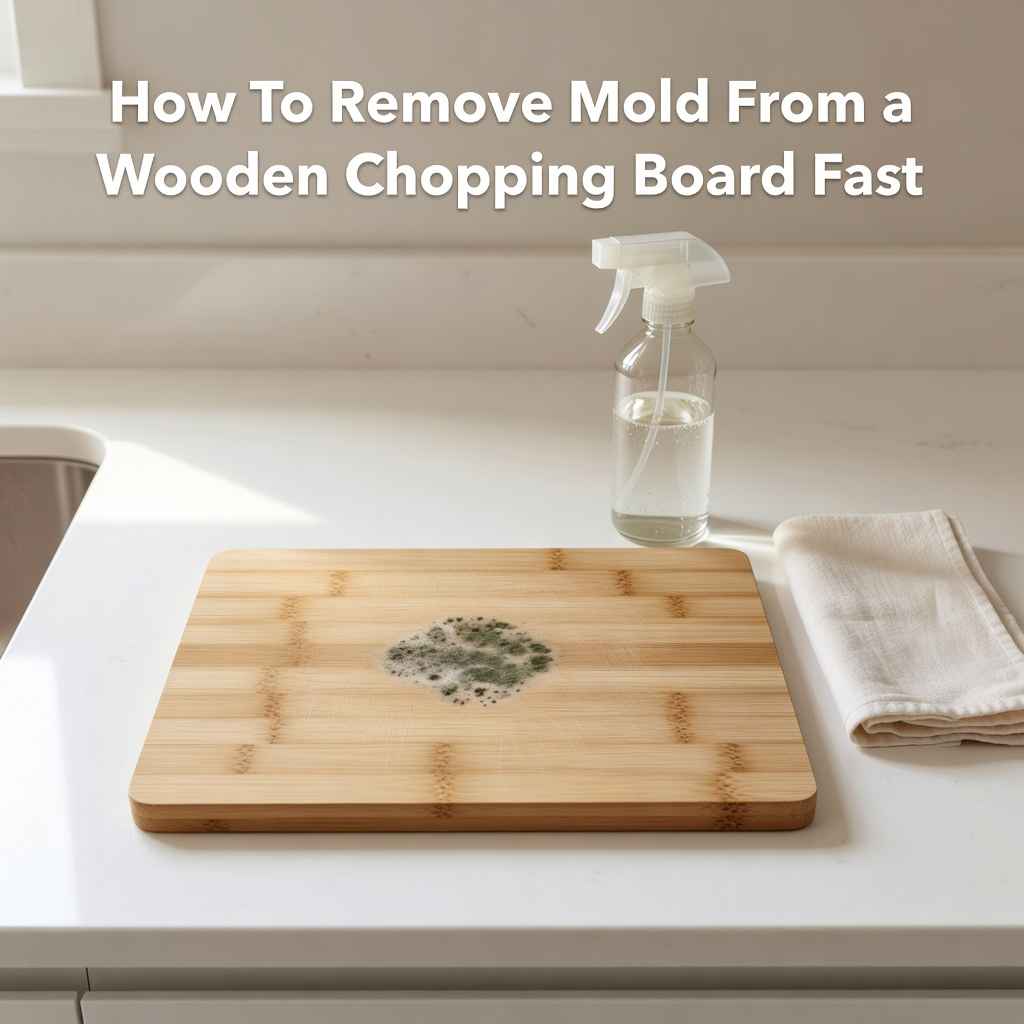
How To Remove Mold From a Wooden Chopping Board Fast
Dealing with mold on your wooden chopping board can seem a bit tricky, especially if you’re new to kitchen care. You might worry about damaging the wood or not getting rid of all the mold properly. But don’t fret!
It’s a common issue, and we have a super simple plan to help you Remove Mold From a Wooden Chopping Board Fast. We’ll walk through each step so your board is clean and safe to use again in no time.
Why Mold Appears On Wooden Chopping Boards
Mold loves damp, organic material, and a wooden chopping board fits that description perfectly. When you cut juicy foods like fruits, vegetables, or raw meats, juices and tiny food particles can get trapped in the wood’s grain. If the board isn’t dried completely after washing, or if it’s stored in a humid spot, mold can start to grow. These little spots can look unappealing and, more importantly, can spread bacteria and affect the safety of your food.
Common Causes Of Mold Growth
Several everyday habits can lead to mold forming on your favorite cutting surfaces. Understanding these can help you prevent future problems before they even start.
Insufficient Drying
Leaving your wooden chopping board to air dry in a damp environment or not drying it thoroughly after washing is a primary culprit. Wood absorbs moisture, and stagnant water creates the ideal breeding ground for mold spores.
Think about it like this: if you leave a wet sponge in a dark corner, mold will quickly appear. The same principle applies to your cutting board. Moisture trapped in the wood cells provides the perfect meal for mold.
This is why ensuring the board is bone dry is so important after every use.
Improper Cleaning Techniques
Simply rinsing your board might not be enough. Food particles can remain embedded in the wood, acting as food for mold. Using harsh chemicals that aren’t food-safe can also strip away the wood’s natural oils, making it more porous and susceptible to moisture absorption and mold.
It’s not just about washing; it’s about washing effectively. Many beginners think a quick scrub is sufficient. However, the microscopic pores of wood can hide remnants of food that require a bit more attention to dislodge.
This is why using the right cleaning agents and tools is key to a truly clean board.
Storage Conditions
Storing your wooden chopping board flat against a counter or leaning it in a damp cabinet without airflow can trap moisture. This lack of ventilation is a perfect invitation for mold.
Imagine storing your board in a steamy bathroom after a shower. That’s essentially what happens when you put a damp board in a closed cabinet. Good airflow is the silent protector against unwanted guests like mold.
It helps the wood dry out completely.
How To Remove Mold From a Wooden Chopping Board Fast
Ready to tackle that mold? Here’s a straightforward method to get your wooden chopping board looking clean and smelling fresh again. We’ll focus on simple, effective steps that are easy for anyone to follow.
Step 1 Gathering Your Supplies
Before you start, make sure you have everything you need. Having your supplies ready means you can move through the cleaning process without interruption, making it quicker and more efficient.
Essential Cleaning Agents
You’ll need a few common household items. White vinegar is fantastic for killing mold due to its acidity. Baking soda is a gentle abrasive that helps scrub away the mold and neutralizes odors.
White vinegar is a superhero in the cleaning world because it’s acidic enough to kill mold spores. Many studies show its effectiveness against common household molds. Baking soda, on the other hand, is a mild alkali that can lift stains and absorb smells.
Together, they make a powerful, yet safe, cleaning duo.
Tools for Scrubbing
A stiff-bristled brush or an old toothbrush is perfect for getting into the wood grain. A soft cloth or sponge will be useful for wiping down the board.
The right tools make a big difference. A stiff brush can reach deep into the wood’s pores to loosen mold. Think of it as a tiny excavator for your board.
The cloth or sponge is for the follow-up, to wipe away the loosened mold and cleaning solutions.
Step 2 The Cleaning Process
This is where the magic happens. We’ll use vinegar and baking soda to create a paste that lifts the mold right out.
Applying the Vinegar and Baking Soda
First, generously sprinkle baking soda over the molded areas of the board. Then, pour or spray white vinegar over the baking soda. It will fizz and bubble. This reaction helps to lift the mold and kill the spores.
The fizzing you see is a chemical reaction between the vinegar (acetic acid) and baking soda (sodium bicarbonate). This reaction produces carbon dioxide gas, which helps to loosen the mold and grime. It’s a natural cleaning process that works wonders.
Scrubbing Away The Mold
Use your stiff-bristled brush to scrub the paste vigorously into the affected areas. Pay close attention to the wood grain. Work the paste into all the nooks and crannies.
When scrubbing, imagine you are gently but firmly removing a stubborn stain. The goal is to agitate the mold without damaging the wood. The brush’s bristles should reach into the wood’s pores where the mold is hiding.
This deep scrubbing is crucial for effective mold removal.
Step 3 Rinsing and Drying
After scrubbing, it’s time to rinse away the mess and ensure your board is completely dry.
Thorough Rinsing
Rinse the chopping board thoroughly under warm running water. Make sure to wash away all the baking soda and vinegar residue.
Rinsing is not just about removing the cleaning agents. It’s also about flushing out any remaining mold spores that have been loosened by the scrubbing. Warm water is generally more effective at breaking down any oily residues left from food preparation.
Complete Drying
This is the most critical step for preventing mold from returning. Pat the board dry with a clean towel. Then, stand the board up on its edge in a well-ventilated area. Allow it to air dry completely, which may take several hours. Avoid storing it until you are certain it is dry all the way through.
Standing the board on its edge ensures that air can circulate around all surfaces, promoting even and thorough drying. This prevents moisture from getting trapped, which is the main reason mold starts in the first place. Patience here saves you trouble later.
Preventing Mold From Returning To Your Chopping Board
Once you’ve successfully removed the mold, you’ll want to keep it from coming back. A few simple habits can make all the difference in keeping your wooden chopping board in great condition for years to come.
Regular Cleaning Habits
Clean your chopping board immediately after each use. Don’t let food scraps or juices sit on the surface for too long.
The longer food residue sits on the board, the more it can soak into the wood and provide a food source for mold. Quick cleaning after each use prevents this problem from ever starting. It’s the easiest defense.
Deep Cleaning Schedule
In addition to daily cleaning, aim for a deeper clean at least once a week, or more often if you notice any signs of moisture or potential mold. This might involve a light scrub with diluted vinegar.
A weekly deep clean acts as a preventative maintenance step. It helps to remove any lingering bacteria and keeps the wood in good condition. This proactive approach is far better than dealing with an active mold infestation.
Proper Storage Strategies
Always store your wooden chopping board in a dry, well-ventilated area. Avoid placing it in damp cupboards or directly next to the sink where it can easily get wet.
Good storage is key to longevity. Imagine storing your clothes in a damp basement; they’d get musty. Your chopping board needs a similar dry, airy environment.
This simple step prevents moisture buildup that leads to mold.
Oiling Your Chopping Board
Regularly oiling your wooden chopping board with food-grade mineral oil helps to seal the wood. This creates a barrier that prevents moisture and food particles from penetrating deeply into the grain. Apply oil every month or so, or whenever the board starts to look dry.
Mineral oil is a food-safe lubricant that doesn’t go rancid. When you apply it, it soaks into the wood, filling the pores. This makes the surface less absorbent, so liquids like juice or water will bead up and can be wiped away easily.
It also keeps the wood from drying out and cracking.
When To Consider Replacing Your Chopping Board
While most mold issues can be resolved with simple cleaning, there are times when it’s best to let go of your chopping board.
Signs Of Deep Damage
If the mold seems to have penetrated very deeply into the wood, or if the wood itself appears to be rotting or crumbling, it might be time for a new board.
Deep-seated mold can be very difficult to remove completely, and rotting wood can harbor bacteria. The structural integrity of the board might also be compromised, making it unsafe for food preparation. Trust your instincts if the board looks or feels beyond repair.
Persistent Mold Issues
If you’ve tried all the cleaning methods and the mold keeps coming back, it might indicate an underlying issue with the board or your cleaning routine that you can’t easily fix.
Sometimes, even with the best efforts, mold can be persistent. This could be due to the board’s age, the type of wood, or how it’s been cared for over time. If you’re consistently battling mold, a fresh start with a new board might be the most practical solution.
Frequently Asked Questions
Question: Can I use bleach to remove mold from a wooden chopping board?
Answer: It’s generally not recommended to use bleach on wooden chopping boards. While bleach is a strong disinfectant, it can be harsh on wood, potentially damaging its fibers and leaving behind fumes that are not safe for food contact surfaces. White vinegar is a safer and effective alternative.
Question: How often should I oil my wooden chopping board?
Answer: You should oil your wooden chopping board about once a month, or more often if it starts to look dry. If water or juice beads up on the surface, it doesn’t need oiling as often. Oiling helps keep the wood from drying out, cracking, and absorbing moisture and odors.
Question: Is it safe to use a cutting board with light mold if I clean it well?
Answer: If the mold is very light and hasn’t deeply penetrated the wood, a thorough cleaning with vinegar and baking soda should make it safe again. However, if the mold looks dark, covers a large area, or if the wood feels soft or crumbly, it’s better to replace the board to ensure food safety.
Question: Can mold on a chopping board make me sick?
Answer: Yes, consuming food prepared on a moldy chopping board can pose health risks. Mold can produce mycotoxins, which are harmful substances. Additionally, mold can harbor bacteria that cause foodborne illnesses.
It’s important to remove mold completely and ensure the board is clean and sanitary.
Question: My chopping board smells musty even after cleaning. What should I do?
Answer: A musty smell often means moisture is trapped or some residue remains. Try a paste of baking soda and water, let it sit for a few hours, then scrub and rinse. Ensure the board is completely dry by standing it on its edge in a sunny, breezy spot.
Oiling it afterward can also help seal in freshness.
Wrap Up
You now know how to easily Remove Mold From a Wooden Chopping Board Fast using common items. Keep your board clean by drying it well after washing, storing it in a dry place, and oiling it regularly. These simple steps will keep your board hygienic and ready for all your culinary creations.