How to Remove Rust Stains from Composite Decking
Rust stains on your beautiful composite deck can be a real eyesore, right? Many homeowners find themselves asking How to Remove Rust Stains from Composite Decking because these marks seem to appear out of nowhere. Don’t worry if you’re new to this; it’s a common problem, and we’ve got a simple plan to fix it.
We’ll walk you through easy steps to get your deck looking clean and new again. Get ready to say goodbye to those rust spots!
Tackling Rust on Composite Decking
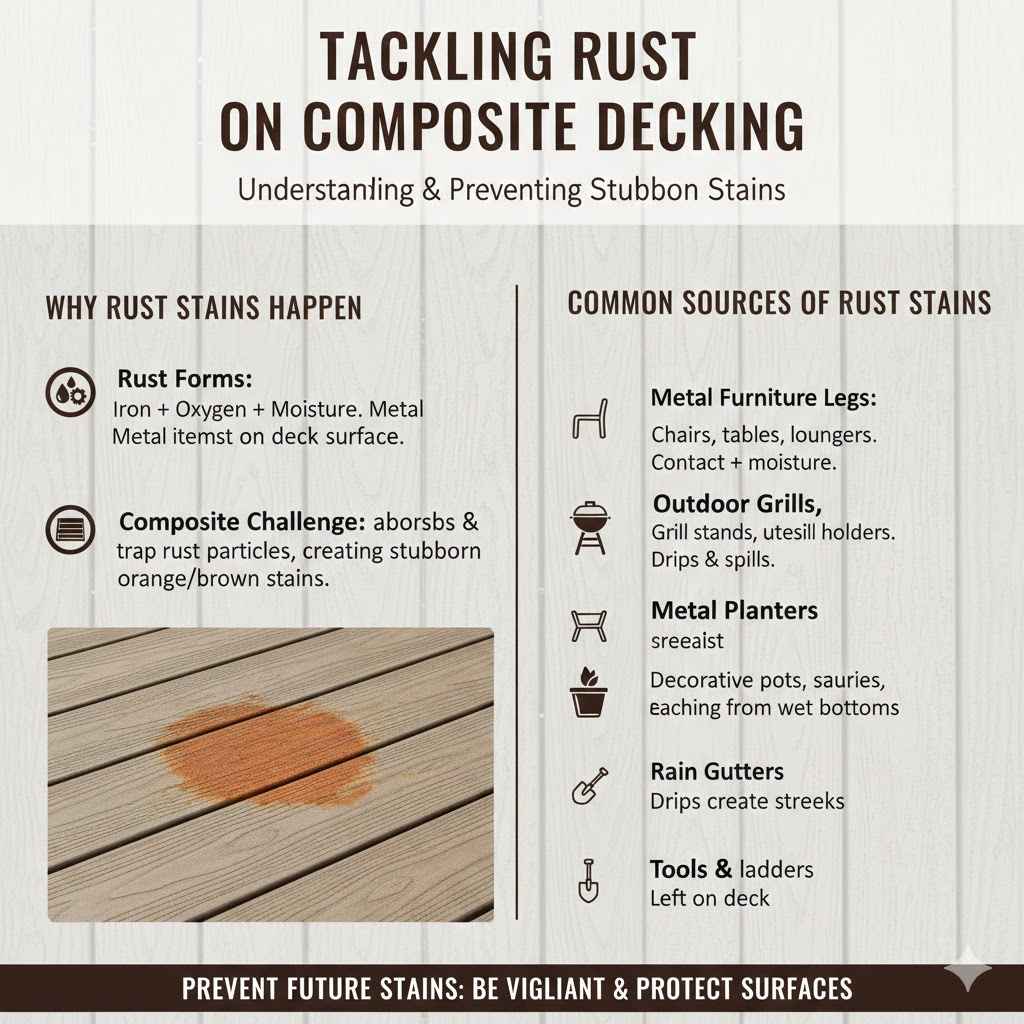
Composite decking is popular for its looks and low upkeep, but rust stains can be a tricky issue. These marks often come from metal furniture, railings, or even tools left on the deck. Unlike wood, composite materials can react with certain metals, leading to those stubborn orange or brown spots.
This section will explore why these stains happen and what makes them a challenge for beginners.
Understanding Rust Formation on Composite Decks
Rust forms when iron or steel is exposed to oxygen and moisture. On a composite deck, this process can be a bit different than on bare metal. The composite material itself doesn’t rust, but the metal items in contact with it do.
The rust then transfers onto the deck’s surface. This is why protective measures are important, even with a material known for durability.
The plastic and wood fibers that make up composite decking can absorb or trap the rust particles. Over time, this creates a stain that looks like it’s part of the deck itself. The color can vary from light orange to a deep reddish-brown, depending on the intensity of the rust and how long it’s been there.
This is often what makes beginners think it’s a difficult problem to solve.
Common Sources of Rust Stains
Several everyday items can be the culprits behind rust spots on your composite deck. Knowing these sources helps you prevent future staining. It’s all about being aware of what comes into contact with your deck’s surface and for how long.
Even small amounts of rust can spread and create noticeable marks.
Metal Furniture Legs
Chairs, tables, and loungers made of metal are frequent offenders. When their metal feet sit directly on the deck, especially when wet, they can leave rust marks. The constant contact, coupled with rain or dew, accelerates the rusting process.
Even furniture with rubber caps can sometimes wear them down, exposing the metal.
Outdoor Grills and Accessories
Barbecues, their stands, and even metal utensil holders can drip rust. Spills from the grill or water used to clean it can carry rust particles onto the deck. Leaving a rusty grill brush or scraper on the deck after use is another common mistake that leads to stains.
Metal Planters and Pots
Decorative metal planters, especially those with a distressed or antique finish, can leach rust. If the bottom of the pot is wet or sitting directly on the deck, the rust can transfer. This is particularly true for terracotta pots with metal saucers or those made entirely of iron or treated steel.
Rain Gutters and Downspouts
If your rain gutters or downspouts are made of metal and are rusting, they can drip rusty water onto the deck. This is especially common after a rainstorm. The water runs down, carrying the rust particles with it, creating long streaks or spots.
Tools and Equipment
Garden tools like shovels, rakes, and even metal wheelbarrows can leave rust marks if left on the deck. Metal ladders or other construction materials brought onto the deck for a project can also contribute to staining.
Why Rust Stains Are Tricky
Composite decking is designed to be low-maintenance, but rust stains can be more stubborn than dirt or mold. The porous nature of some composite materials means the rust can soak in a bit, making it harder to wipe away. Beginners often try just water and soap, which might not be enough for these specific marks.
The visual impact of these stains can also be quite jarring on an otherwise clean deck.
The challenge lies in the fact that you’re dealing with a chemical reaction rather than just surface grime. Simply scrubbing might spread the stain or even damage the deck’s surface if done too aggressively. Finding the right cleaning solution that lifts the rust without harming the composite material is key.
This requires a bit of knowledge about what works best.
The Role of Moisture and Time
Moisture is a crucial factor in rust formation. When metal surfaces get wet and then dry, a little bit of rust can form. If this happens repeatedly on your composite deck, the rust particles build up.
The longer a rust stain sits on the deck, the deeper it can penetrate the surface, making it harder to remove.
Think of it like a tea stain on a tablecloth. If you wipe it up right away, it might come out easily. But if you let it dry, it becomes much more difficult to lift.
The same principle applies to rust on composite decking. Prompt attention is often the easiest way to deal with it, but even older stains can be treated with the right methods.
Effective Methods for Rust Stain Removal
Now that we know where rust comes from and why it’s tricky, let’s look at how to get rid of it. There are several effective ways to tackle these stains, ranging from simple household items to specialized cleaners. The key is to choose a method that is safe for your composite deck and strong enough to break down the rust.
Using Common Household Cleaners
Many effective rust removers can be found right in your home. These options are often gentle on the wallet and readily available, making them a great starting point for beginners. The secret is often in the mild acidity of some common items that can break down the rust.
Lemon Juice and Salt Paste
Lemon juice contains citric acid, which is a mild acid that can help dissolve rust. Mix fresh lemon juice with a bit of salt to create a paste. Apply this paste directly to the rust stain.
Let it sit for about 10-15 minutes, then scrub gently with a soft brush. Rinse thoroughly with water. The salt acts as a mild abrasive to help lift the dissolved rust.
White Vinegar
Similar to lemon juice, white vinegar is acidic and can break down rust. Soak a cloth or sponge in white vinegar and place it over the rust stain. Let it sit for about 10-20 minutes.
Then, gently scrub the area with a soft brush and rinse well with water. For tougher stains, you might need to repeat the process or let the vinegar sit longer.
Baking Soda Paste
While not acidic, baking soda is a gentle abrasive and can help lift stains. Mix baking soda with a little water to form a paste. Apply it to the rust stain and let it sit for a few minutes.
Then, scrub gently with a soft brush and rinse. This method is best for very light surface rust or as a follow-up to a more acidic treatment.
Commercial Rust Removers for Composite Decks
When household remedies aren’t quite cutting it, or you want a more targeted approach, commercial rust removers are a great option. These products are specifically formulated to break down rust on various surfaces, including composite materials. Always read the product label carefully to ensure it is safe for use on your type of decking.
Many of these removers contain oxalic acid or other mild acids that are very effective at dissolving iron oxide, which is rust. They often work faster than home remedies. When using these products, it’s important to follow the manufacturer’s instructions precisely to avoid damaging your deck or compromising its color.
Important Considerations for Commercial Cleaners
Always Test a Small Area First
Before applying any commercial rust remover to the entire stain, test it on an inconspicuous spot of your composite deck. This allows you to see how the material reacts to the cleaner. You want to ensure it doesn’t cause discoloration or damage to the composite itself.
Wait for the test area to dry completely before proceeding.
Wear Protective Gear
Many rust removers contain strong chemicals. It’s essential to wear gloves and eye protection while using them. Ensure good ventilation in the area where you are working to avoid inhaling fumes.
This is a safety precaution to protect yourself.
Follow Instructions Exactly
The instructions on the product label are there for a reason. They will tell you how long to leave the cleaner on, how to apply it, and how to rinse it off. Deviating from these instructions can lead to poor results or damage to your deck.
Natural Alternatives and Specialized Products
Beyond common household items, there are other natural solutions and specialized products available. Some people prefer to stick with entirely natural options due to environmental concerns or allergies. Others find that a product designed for a specific purpose works best.
The Power of Oxalic Acid
Oxalic acid is a naturally occurring compound found in many plants. It’s a key ingredient in many commercial rust removers and is also available as a standalone powder that you can mix with water. It’s highly effective at breaking down rust stains on various surfaces, including composite decking.
When using oxalic acid, it’s crucial to follow dilution and application instructions carefully. It’s a mild acid, but prolonged exposure or high concentrations can still affect the composite material. Always ensure the area is well-ventilated and wear protective gear.
After application, thorough rinsing is essential to remove all traces of the acid.
| Cleaning Agent | Pros | Cons | Best For |
|---|---|---|---|
| Lemon Juice & Salt | Natural, readily available, mild | May require multiple applications for tough stains | Light to moderate rust stains |
| White Vinegar | Natural, effective, accessible | Can have a strong smell, may need time to work | Light to moderate rust stains |
| Commercial Rust Remover | Fast-acting, specifically formulated | Can be harsher chemicals, requires careful handling | Tough or stubborn rust stains |
| Oxalic Acid | Very effective, powerful | Requires careful handling, can be more aggressive | Deep-set or very stubborn rust stains |
Step-by-Step Guide to Rust Stain Removal
To make things as clear as possible, here is a step-by-step guide. Following these steps will help you remove rust stains from your composite deck effectively and safely. Remember, patience is key, and sometimes a second application is needed for stubborn marks.
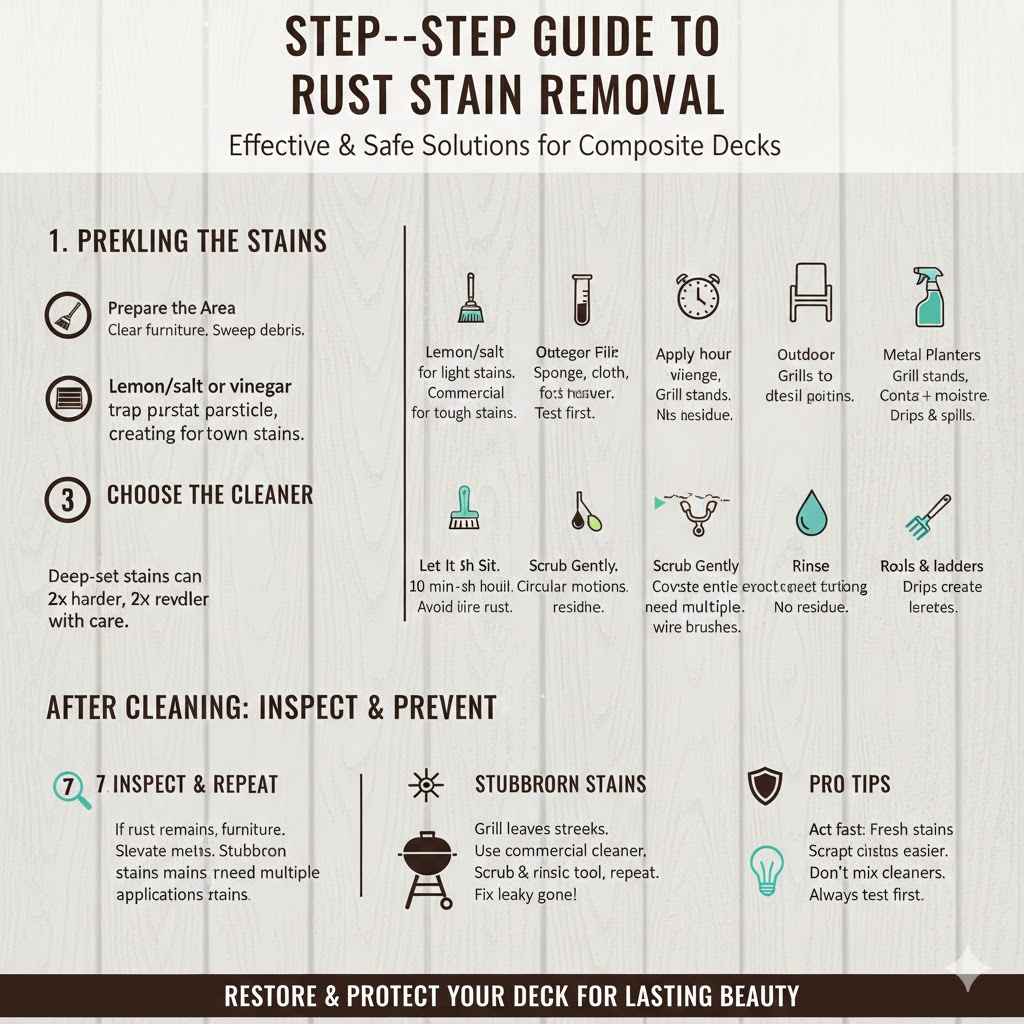
Prepare the Area
Clear the deck of all furniture, plants, and debris. Sweep the deck thoroughly to remove any loose dirt or leaves. This ensures you are working on a clean surface and can see the full extent of the rust stain.
Choose Your Cleaning Solution
Select the cleaning solution you want to use based on the severity of the stain. For light stains, start with lemon juice and salt or white vinegar. For tougher stains, consider a commercial rust remover or oxalic acid solution.
Always test your chosen cleaner on a small, hidden area first.
Apply the Cleaner
Apply your chosen cleaner directly to the rust stain. For pastes like lemon juice and salt, spread it evenly. For liquids like vinegar or commercial removers, use a sponge, cloth, or a sprayer.
Ensure the entire stain is covered.
Let It Sit
Allow the cleaner to work on the rust for the recommended time. This could be anywhere from 10 minutes to an hour, depending on the product and the stain’s intensity. The acid needs time to break down the rust particles.
Scrub Gently
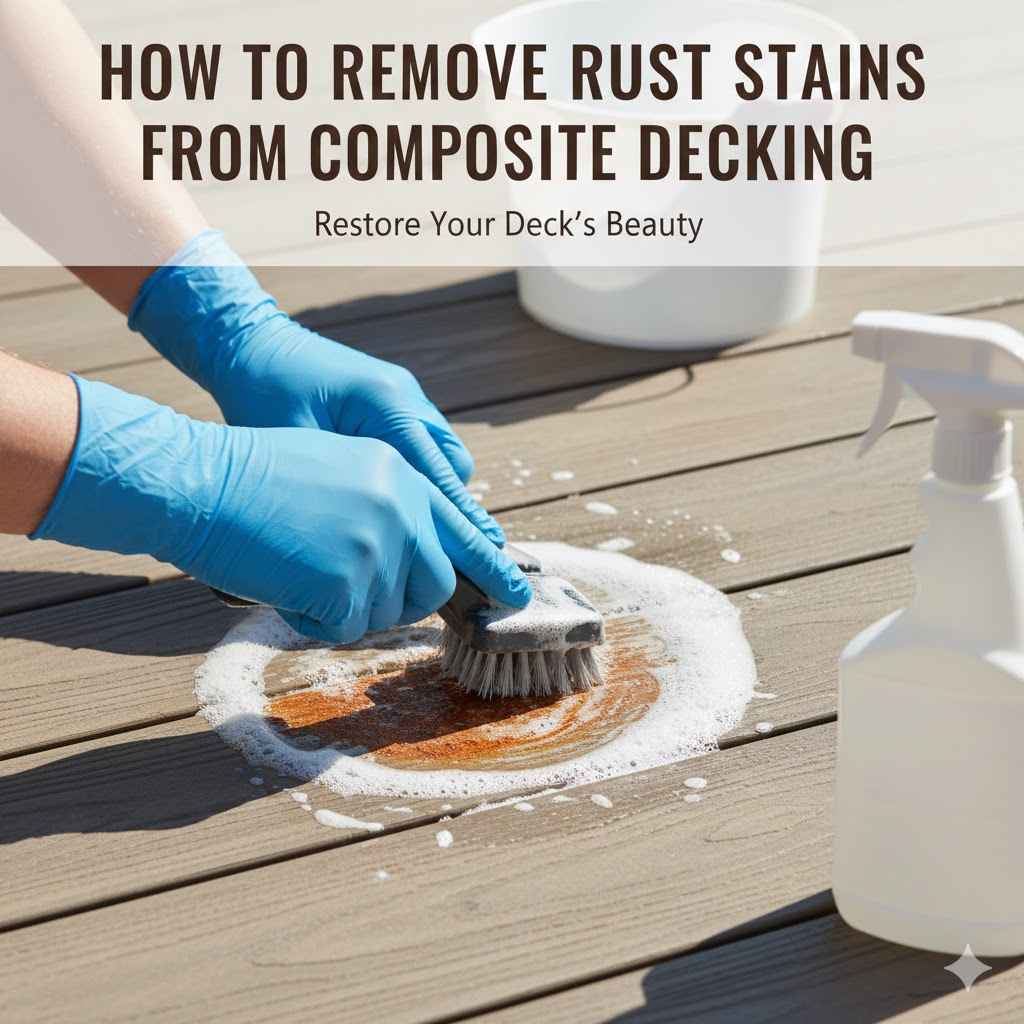
Use a soft-bristle brush or a non-abrasive scrub pad to gently scrub the stained area. Avoid using wire brushes or harsh scrubbers, as these can scratch or damage the composite material. Work the cleaner into the stain with gentle circular motions.
Rinse Thoroughly
Rinse the area completely with fresh water. Use a garden hose to wash away all the cleaner and dissolved rust. Make sure no residue is left behind, as this could cause further discoloration or damage to the deck.
Inspect and Repeat if Necessary
Once the deck is dry, inspect the stained area. If any rust remains, repeat the process. For very stubborn stains, you might need to try a stronger cleaner or allow the cleaner to sit for a longer period.
Sometimes, multiple applications are needed to fully remove deep-set stains.
Prevent Future Stains
After cleaning, take steps to prevent future rust stains. Use coasters under metal furniture legs, move planters periodically, and store metal items away from the deck when not in use. Regular cleaning and maintenance can also help.
Dealing with Stubborn Stains
If a stain is particularly deep or old, you might need to try a few different approaches. Sometimes, combining methods can be effective. For instance, you might use a commercial rust remover and then follow up with a baking soda paste to ensure all residue is gone.
Another trick for stubborn stains is to apply the cleaner, let it sit, and then gently scrape the surface with a plastic scraper before scrubbing. This can help lift the loosened rust from the deck’s surface. Always be gentle, and never force anything that feels like it’s scratching the material.
Sample Scenario: The Outdoor Grill Rust Mark
Imagine you’ve just finished a barbecue, and you notice a few orange streaks where your grill was sitting. The grill is heavy, and you didn’t realize it was sitting directly on the composite decking. The streaks look quite dark and are a bit spread out.
- First, clear the area around the grill and sweep away any ash or debris.
- You decide to try a commercial rust remover specifically labeled for decks.
- You apply it carefully along the streaks, making sure to cover them completely.
- You let the cleaner sit for about 15 minutes, as the label suggests.
- Using a soft brush, you gently scrub the affected areas.
- You rinse the entire section with your garden hose.
- Upon inspection, most of the rust is gone, but a faint shadow remains. You decide to repeat the process for a second application. After the second rinse, the streaks are completely gone, leaving your deck looking clean.
Protective Measures and Prevention
The best way to deal with rust stains is to prevent them from happening in the first place. A little bit of proactive care can save you a lot of cleaning time later on. Think about what’s touching your deck and how often it’s there.
Use Furniture Coasters and Pads
Place protective pads or coasters under the legs of all metal furniture. These can be made of rubber, plastic, or felt. This creates a barrier between the metal and the composite material, preventing direct contact and rust transfer.
Regularly check these pads to ensure they are still in good condition and haven’t worn down.
Elevate Metal Items
If you have metal planters, grills, or other items that tend to rust, try to elevate them slightly. Placing them on a small platform or using risers can help keep them from sitting directly on the deck surface, especially when wet. This allows for better airflow and prevents moisture buildup.
Regular Deck Cleaning
Sweep your deck regularly to remove dirt, leaves, and debris that can trap moisture and contribute to rust formation. Occasionally washing your deck with a mild soap and water solution can also help remove any surface rust particles before they become ingrained stains.
Address Leaking Gutters Promptly
If your rain gutters or downspouts are showing signs of rust, repair or replace them as soon as possible. Rusty runoff is a significant cause of streaks and stains on decks. Ensure downspouts direct water away from your deck and foundation.
Store Metal Items Properly
When not in use, store metal furniture, grills, and tools in a dry place, like a shed or garage. This prevents them from being exposed to the elements and potentially rusting on your deck.
Frequently Asked Questions
Question: Can I use bleach to remove rust stains from composite decking?
Answer: It is generally not recommended to use bleach to remove rust stains from composite decking. Bleach is a strong chemical that can potentially discolor or damage the surface of composite materials. It’s also not very effective at breaking down rust itself.
It’s better to use cleaners specifically designed for rust removal.
Question: How long should I leave a rust remover on my composite deck?
Answer: The amount of time you should leave a rust remover on your deck depends on the specific product and the severity of the stain. Always follow the manufacturer’s instructions on the product label. For most commercial removers, it’s typically between 10 to 30 minutes.
For natural solutions like lemon juice or vinegar, you might let them sit a bit longer, perhaps 30 minutes to an hour.
Question: Will scrubbing too hard damage my composite deck?
Answer: Yes, scrubbing too hard with abrasive materials can damage your composite deck. It can scratch the surface, dull the finish, or even remove some of the protective wear layer. Always use a soft-bristle brush or a non-abrasive scrub pad when cleaning rust stains.
Gentle scrubbing is key to preventing damage.
Question: What if the rust stain is still visible after cleaning?
Answer: If a rust stain is still visible after your first attempt, don’t despair. It’s common for stubborn or old stains to require multiple treatments. You can try applying the same cleaner again, letting it sit for a bit longer, or gently increasing the scrubbing action.
If that doesn’t work, you might consider trying a different type of rust remover, always testing it on a small area first.
Question: Can I use a pressure washer to remove rust stains?
Answer: While pressure washers are great for general deck cleaning, they can be too harsh for targeted rust stain removal on composite decking. High pressure can damage the surface of the composite material. If you use a pressure washer, use the lowest setting and a wide fan tip, and keep it moving.
It’s often better to rely on chemical cleaners and gentle scrubbing for rust.
Wrap Up
Removing rust stains from composite decking is manageable. By understanding the causes and using the right methods, you can restore your deck’s appearance. Start with simple solutions like lemon juice or vinegar.
For tougher marks, a commercial rust remover or oxalic acid works well. Always test first and be gentle. Prevent future stains by using coasters and elevating metal items.
Your clean deck awaits!