How To Remove Urine Stains From Hardwood Fast
Accidents happen, and when they involve pets or little ones on your beautiful hardwood floors, it can be a sticky situation. Many people wonder How to Remove Urine Stains from Hardwood Floors Fast because these stains can be stubborn and leave unpleasant odors. It might seem tricky at first, especially if you’re not sure where to start.
But don’t worry, we’ve got a simple, step-by-step guide that will help you tackle these messes quickly and easily. Get ready to restore your floors to their former glory!
Understanding Urine Stains On Hardwood Floors
Urine on hardwood floors presents a unique challenge. The liquid can seep into the wood’s pores, leaving behind not just a visible stain but also a lingering odor. The longer urine stays on the wood, the deeper it penetrates, making removal more difficult.
This section explains why these stains are tough and what makes them different from other spills.
Why Urine Stains Are Tricky
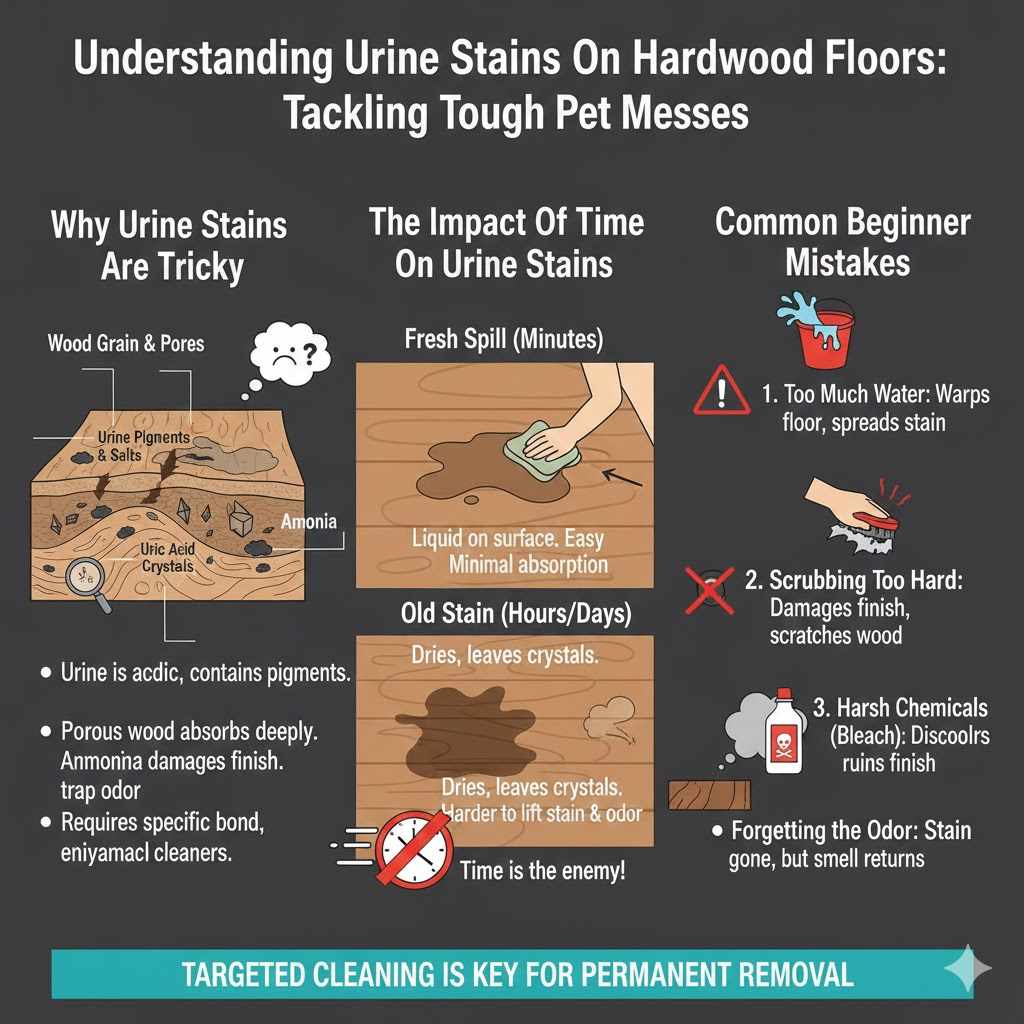
Urine is acidic and contains pigments that can discolor wood. When it dries, the salts and crystals left behind can become permanently bonded to the wood fibers. This is especially true for unfinished or lightly sealed hardwood.
The porous nature of wood means liquids can soak in quickly, causing both surface discoloration and deeper structural damage if not addressed promptly.
The ammonia content in urine can also react with the wood finish. This can cause the finish to lift or become cloudy, creating a secondary problem on top of the stain itself. For beginners, identifying the best cleaning agents and techniques without damaging the wood finish is often the biggest hurdle.
Many common household cleaners might seem like a good idea, but they can actually worsen the stain or the finish.
Pet urine, in particular, has a higher concentration of uric acid. Uric acid crystals are difficult to dissolve with regular cleaners. They need specific enzymatic cleaners to break them down effectively.
If these crystals are left untreated, they can reactivate with moisture, causing the odor to return even after the visible stain is gone. This is why a targeted approach is essential for successful urine stain removal.
The Impact Of Time On Urine Stains
Time is the enemy when it comes to urine stains on hardwood. Fresh spills are much easier to clean than old, dried-in ones. When urine is fresh, it’s still liquid.
This means you can often wipe it up before it has a chance to soak deeply into the wood. You might just need a damp cloth and some mild soap to deal with it.
As urine dries, it leaves behind solid residue. These are the uric acid crystals we mentioned. They are like tiny magnets for moisture and odors.
Even if you can’t see the stain anymore, those crystals are likely still there, waiting for humidity to bring the smell back. This is why acting fast is so important.
The wood itself starts to absorb the liquids and pigments. This causes a color change, which is the visible stain. The longer the urine sits, the more the wood fibers absorb the color.
This makes it much harder for any cleaning solution to lift the stain completely. It’s like trying to remove ink from a sponge that’s been left to dry.
Common Beginner Mistakes
One common mistake is using too much water. While you need moisture to clean, excess water can warp hardwood floors. It can also spread the urine further into the wood.
Another mistake is scrubbing too hard. This can damage the wood’s finish or even scratch the surface.
People also often reach for harsh chemicals like bleach. While bleach might lighten stains on other surfaces, it can severely damage and discolor hardwood floors. It can also break down the wood’s natural oils and its protective finish, making future stains even harder to deal with.
It’s crucial to use products specifically designed for wood or that are known to be gentle.
Forgetting about the odor is another common oversight. You might get rid of the visible stain, but if the uric acid crystals remain, the smell will eventually return. This can be frustrating and make you feel like you haven’t truly solved the problem.
Choosing the right cleaner that targets both the stain and the odor is key to a complete solution.
Essential Tools And Supplies
To effectively tackle urine stains, having the right supplies makes a big difference. You don’t need a lot of fancy equipment, just some common household items and a few specialized cleaners. This section will list everything you’ll need to get started, ensuring you’re prepared for the job.
Gathering Your Cleaning Arsenal
First, you’ll need absorbent materials. Paper towels or clean, soft cloths are perfect for blotting up any fresh liquid. Have a good supply ready, as you’ll want to soak up as much as possible immediately.
For cleaning solutions, you’ll want a pH-neutral wood floor cleaner. This is designed to clean wood without stripping its finish or causing damage. You’ll also need an enzymatic cleaner.
These cleaners are specifically formulated to break down organic matter like urine, effectively eliminating both stains and odors.
Other helpful items include a spray bottle for applying solutions, a soft-bristled brush or an old toothbrush for working cleaner into stubborn spots, and a bucket for rinsing cloths. Gloves are also a good idea to protect your hands. A mild dish soap can also be useful for pre-treating and general cleaning, but always use it sparingly and diluted.
Choosing The Right Cleaners
The most important cleaner to have is an enzymatic cleaner. These cleaners contain beneficial bacteria and enzymes that “eat” away at the organic molecules in urine. This process breaks down the uric acid crystals, which are the source of both stains and odors.
When choosing an enzymatic cleaner, look for one that is specifically labeled for pet stains or urine on hardwood floors.
A pH-neutral wood floor cleaner is your second line of defense. This type of cleaner is safe for most hardwood finishes. It helps to remove surface dirt and any residue left behind by the urine or the initial cleaning.
Always check the label to ensure it is suitable for finished hardwood floors. Never use ammonia-based cleaners, as ammonia is a component of urine and can encourage pets to re-mark the spot.
For lighter, fresh stains, you might be able to get away with a diluted solution of white vinegar and water. Vinegar is acidic and can help neutralize odors. However, it should be used cautiously and well-diluted, as too much can damage some wood finishes.
Always test any cleaner in an inconspicuous area first.
Protecting Your Wood Finish
Your hardwood floor’s finish is its first line of defense against stains and damage. When cleaning urine, it’s vital to use methods and products that won’t strip or damage this protective layer. Harsh chemicals, excessive scrubbing, and too much water can all compromise the finish.
Using a pH-neutral cleaner is key. These cleaners are designed to clean without altering the pH balance of your floor’s finish. They are gentle enough to use regularly for general cleaning.
When dealing with a stain, you might need to use a more targeted approach, but always consider the finish.
Enzymatic cleaners are generally safe for most finishes because they work by breaking down organic matter, not by chemically altering the wood or its coating. However, it’s still a good practice to test them in a hidden spot first. After cleaning, always allow the area to dry thoroughly.
You might even want to apply a wood floor polish or wax occasionally to keep the finish in good condition and better prepared for future accidents.
Step By Step Urine Stain Removal
Now that you have your supplies, let’s walk through the process of cleaning up urine stains. This step-by-step approach is designed to be effective and gentle on your hardwood floors. Following these steps will help you achieve the best results.
Immediate Action For Fresh Spills
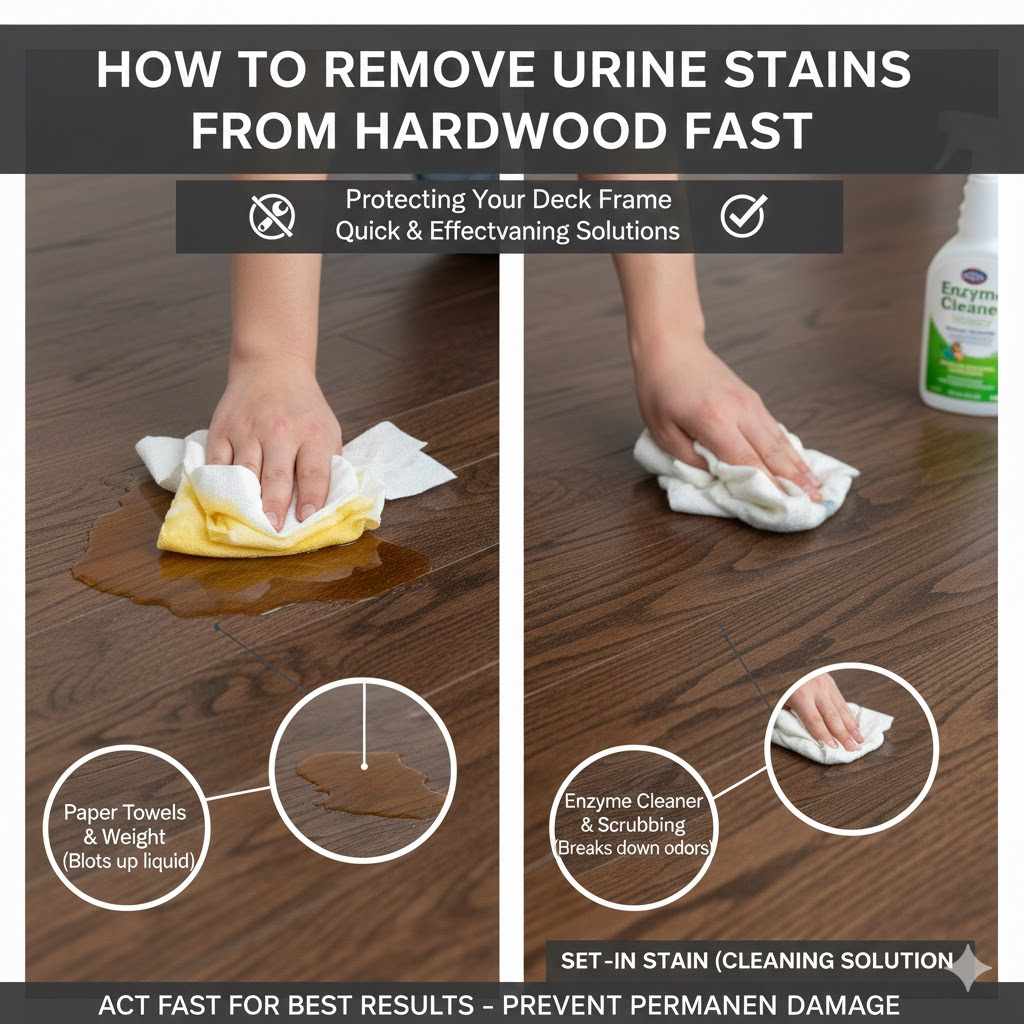
The moment you discover a fresh urine spot, act fast. Grab your paper towels or clean cloths. Gently blot the area to absorb as much liquid as possible.
Do not rub, as this can spread the urine and push it deeper into the wood. Keep blotting until no more liquid is being absorbed.
Once you’ve blotted up the excess liquid, you can use a slightly damp cloth with a little bit of pH-neutral wood floor cleaner. Wipe the area gently. Again, avoid over-wetting the wood.
The goal here is to remove any remaining surface liquid before it has a chance to soak in.
After cleaning with the damp cloth, dry the area thoroughly with a clean, dry cloth. Ensure the wood is completely dry to the touch. This immediate action can often prevent a stain from forming at all and makes subsequent cleaning much easier.
It’s the most effective way to deal with accidents as they happen.
Deep Cleaning Stubborn Stains
For stains that have already set in, or if immediate action wasn’t possible, you’ll need to move to a deeper cleaning method. This is where the enzymatic cleaner comes into play.
First, ensure the area is free of any loose debris. Then, spray the enzymatic cleaner generously onto the stained area. Make sure the cleaner covers the entire stained spot and a little beyond.
You want it to penetrate the wood fibers where the urine has soaked in.
Let the enzymatic cleaner sit and work for the time recommended on the product label. This is crucial. The enzymes need time to break down the uric acid.
For older or very stubborn stains, you might need to leave it on for several hours, or even overnight. You can cover the area loosely with plastic wrap to keep the cleaner moist and active, but ensure there’s still some air circulation.
After the recommended dwell time, blot up any excess cleaner with a clean cloth. You can then use a slightly damp cloth with a pH-neutral cleaner to wipe down the area. Finally, dry the floor thoroughly with a clean, dry cloth.
Repeat the enzymatic treatment if the stain or odor persists.
Dealing With Lingering Odors
Sometimes, even after the stain is gone, a faint odor can remain. This is usually due to residual uric acid crystals that weren’t fully neutralized. The key to removing lingering odors is to ensure the enzymatic cleaner has done its job thoroughly.
If you still detect an odor, reapply the enzymatic cleaner to the affected area. This time, consider leaving it on for an extended period, perhaps even 24 hours, to allow the enzymes to fully break down any remaining odor-causing compounds. Ensure the area stays slightly moist by covering it loosely.
After the extended treatment, blot up the cleaner and wipe the area with a damp cloth. Dry it completely. For very persistent odors, you might need to repeat this process several times.
Baking soda is also a good odor absorber. You can sprinkle a thin layer of baking soda over the dried area, let it sit for a few hours, and then vacuum it up.
Another effective method for odor neutralization is using a solution of one part white vinegar to two parts water. Lightly mist this solution over the area and allow it to air dry. The vinegar helps to neutralize alkaline odors.
However, be cautious with vinegar on certain wood finishes and always test first.
Restoring The Wood’s Finish
Once the stain and odor are completely gone and the wood is dry, you may notice that the finish in the cleaned area looks a little duller. This is normal, as cleaning can sometimes affect the shine.
To restore the shine, you can use a wood floor polish or a renewing product. Choose a product that is compatible with your floor’s finish type (e.g., polyurethane, wax). Apply it according to the product’s instructions.
This will help bring back the luster and protect the wood.
For minor dullness, sometimes just buffing the area with a clean, soft cloth is enough to bring back some shine. If the finish was significantly damaged by the urine, you might consider a professional refinishing of that specific area or the entire floor.
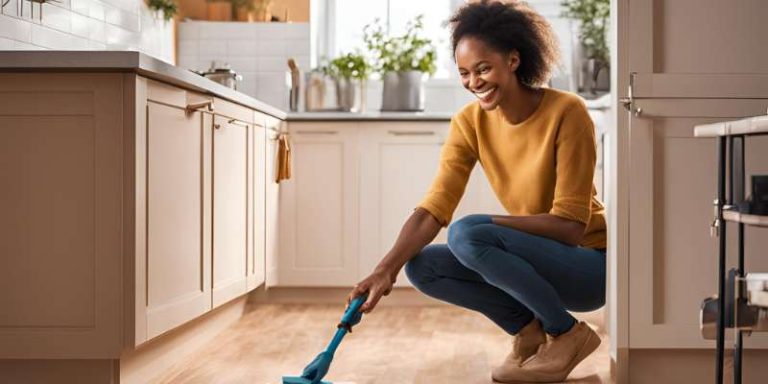
Regular maintenance, like sweeping or vacuuming and occasional cleaning with a pH-neutral wood floor cleaner, will help keep your floors looking their best. Protecting your finish with regular polishing or waxing will also make it more resilient to future spills and stains.
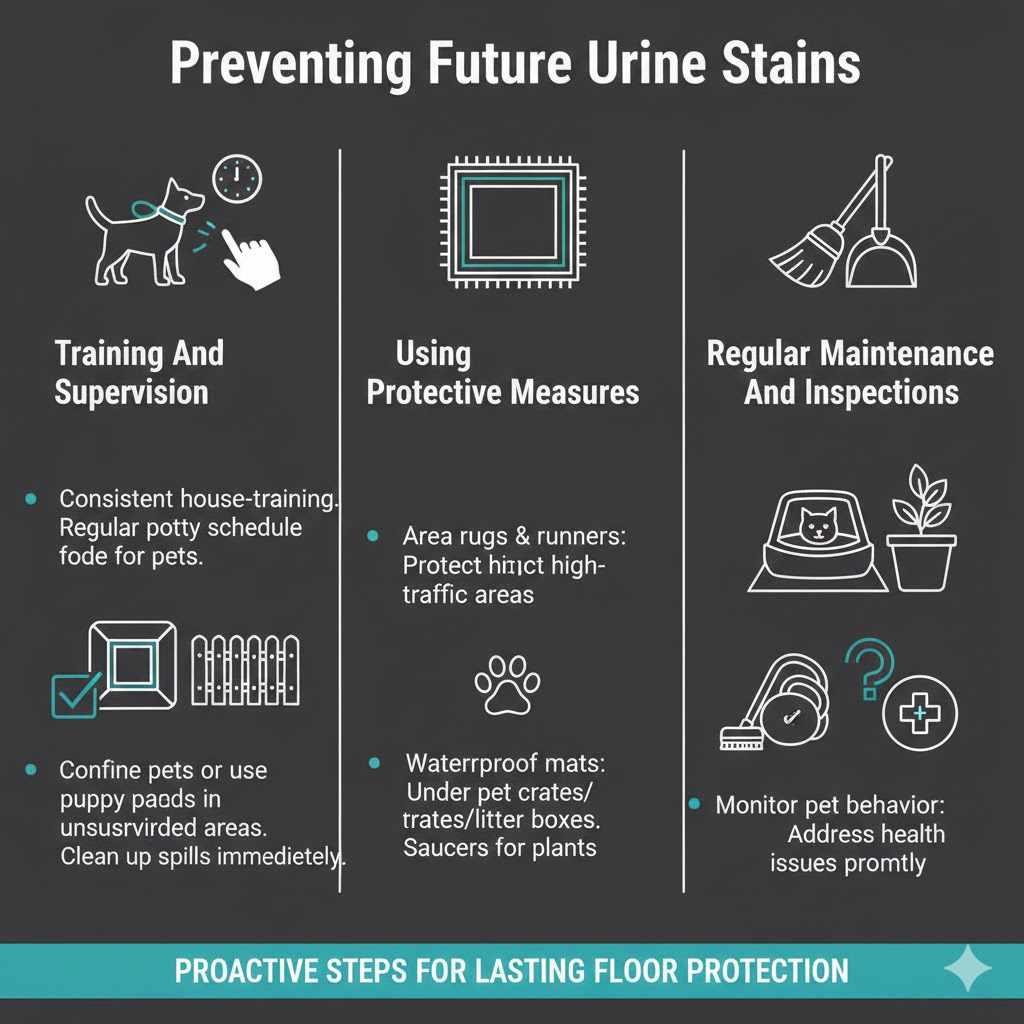
Preventing Future Urine Stains
Prevention is always better than cure. While accidents can happen, there are several steps you can take to minimize the chances of urine stains on your hardwood floors in the future. This section covers practical tips to keep your floors clean and odor-free.
Training And Supervision
For pets, consistent house-training is paramount. Establish a regular potty schedule for puppies and senior dogs. Take them outside frequently, especially after waking up, after meals, and before bedtime.
Praise and reward them immediately when they eliminate in the appropriate outdoor spot.
When you can’t supervise your pet directly, consider using puppy pads or confining them to a pet-friendly area with easily cleanable flooring. If an accident does occur indoors, clean it up immediately using the methods described above. This helps to prevent them from returning to the same spot.
For households with young children, potty training requires patience and consistency. Accidents are a normal part of the process. Having absorbent mats or rugs in areas where accidents are more likely can help protect the wood floors.
Keep cleaning supplies handy for quick clean-ups.
Using Protective Measures
Area rugs and runners are excellent for protecting high-traffic areas and places where accidents might happen more often. They add comfort and style to your home while providing a barrier against spills. Choose rugs with non-slip backing to prevent them from bunching up.
For pet crates or kennels, consider placing a waterproof mat or a piece of linoleum underneath. This creates an extra layer of protection. If you have a cat litter box, place it on a large, easy-to-clean mat that extends beyond the box.
This will catch any stray litter or potential dribbles.
When dealing with potted plants, always use saucers to catch excess water. Water can seep through the pot and onto the floor, potentially causing damage or stains over time, especially if the plant is on a wooden surface directly. Ensure these saucers are checked regularly and emptied.
Regular Maintenance And Inspections
Regularly sweeping or vacuuming your hardwood floors removes dust and debris that can scratch the finish. Vacuum cleaners with soft brush attachments are best for this purpose.
Periodically inspect your floors for any signs of wear and tear on the finish. If you notice any dull spots or areas where the finish seems to be lifting, address them promptly. Applying a wood floor polish or refresher can help maintain the protective layer and prevent minor issues from becoming major problems.
Keep an eye out for any pet behavior that might indicate a problem, such as sudden changes in house-training habits. These could signal a health issue that needs veterinary attention, and addressing the underlying cause can prevent future accidents on your floors.
Common Questions About Removing Urine Stains
Frequently Asked Questions
Question: Can I use bleach to clean urine stains from hardwood floors
Answer: No, you should never use bleach on hardwood floors. Bleach is a harsh chemical that can damage the wood finish, cause discoloration, and even weaken the wood itself. It is not designed for use on this type of surface.
Question: How do I know if I’ve removed the entire urine stain and odor
Answer: The best way to tell is by smell. If you can no longer detect any urine odor, especially after the floor has dried completely, it’s likely that the uric acid crystals have been neutralized. Visual inspection is also important, but odor is the main indicator.
Question: Are enzymatic cleaners safe for all hardwood floor finishes
Answer: Enzymatic cleaners are generally safe for most finished hardwood floors. However, it’s always a good practice to test the cleaner in an inconspicuous area first to ensure it doesn’t affect your specific finish. Always follow the product instructions.
Question: How often should I clean my hardwood floors
Answer: For general cleaning, sweep or vacuum your hardwood floors daily or as needed to remove dust and debris. A damp mop with a pH-neutral wood floor cleaner can be used weekly or bi-weekly, depending on traffic and how dirty the floors get.
Question: Can I use a steam cleaner on urine stains on hardwood floors
Answer: It is generally not recommended to use a steam cleaner on hardwood floors, especially for stain removal. The heat and moisture from steam can damage the wood and its finish, leading to warping or discoloration.
Summary
Dealing with urine stains on hardwood floors is manageable with the right approach. You’ve learned why these stains are tricky, what tools you’ll need, and a clear, step-by-step process to remove them effectively. Remember to act fast for fresh spills and use specialized enzymatic cleaners for older stains and odors.
By following these tips, you can restore your beautiful hardwood floors and prevent future accidents.