
How to Remove Urine Stains From Tile Floors
Dealing with pet accidents or other unfortunate spills on your tile floors can be a common household challenge. For newcomers, figuring out How to Remove Human Urine Stains From Tile Floors might seem tricky, especially if you’re not sure where to start or what products are safe for your tile. The good news is, it doesn’t have to be complicated.
You can tackle these tough stains with simple, everyday items and a clear, easy-to-follow plan. Get ready to discover how to get your tile looking fresh and clean again in no time.
Cleaning Urine Stains From Tile Floors
Tile floors are popular for their durability and ease of cleaning, but accidents happen. Human urine can leave behind not only visible stains but also lingering odors, especially if it’s not cleaned up promptly. The porous nature of grout can also absorb liquids, making the problem a bit harder to solve if left untreated for too long.
This guide is here to make the process straightforward, even for beginners. We’ll walk you through the best methods and products to effectively remove urine stains and odors, ensuring your tile floors are spotless and smell fresh.
Why Urine Stains Are Tricky
Urine contains compounds that can set into tile and grout if not addressed quickly. These compounds can cause discoloration and, more importantly, create an odor that can persist. For those new to cleaning, the confusion might stem from not knowing which cleaning agents are safe for their specific type of tile (like ceramic or porcelain) or how to effectively break down the odor-causing elements without just masking them.
The goal is not just to remove the stain you see but also to neutralize the source of the smell.
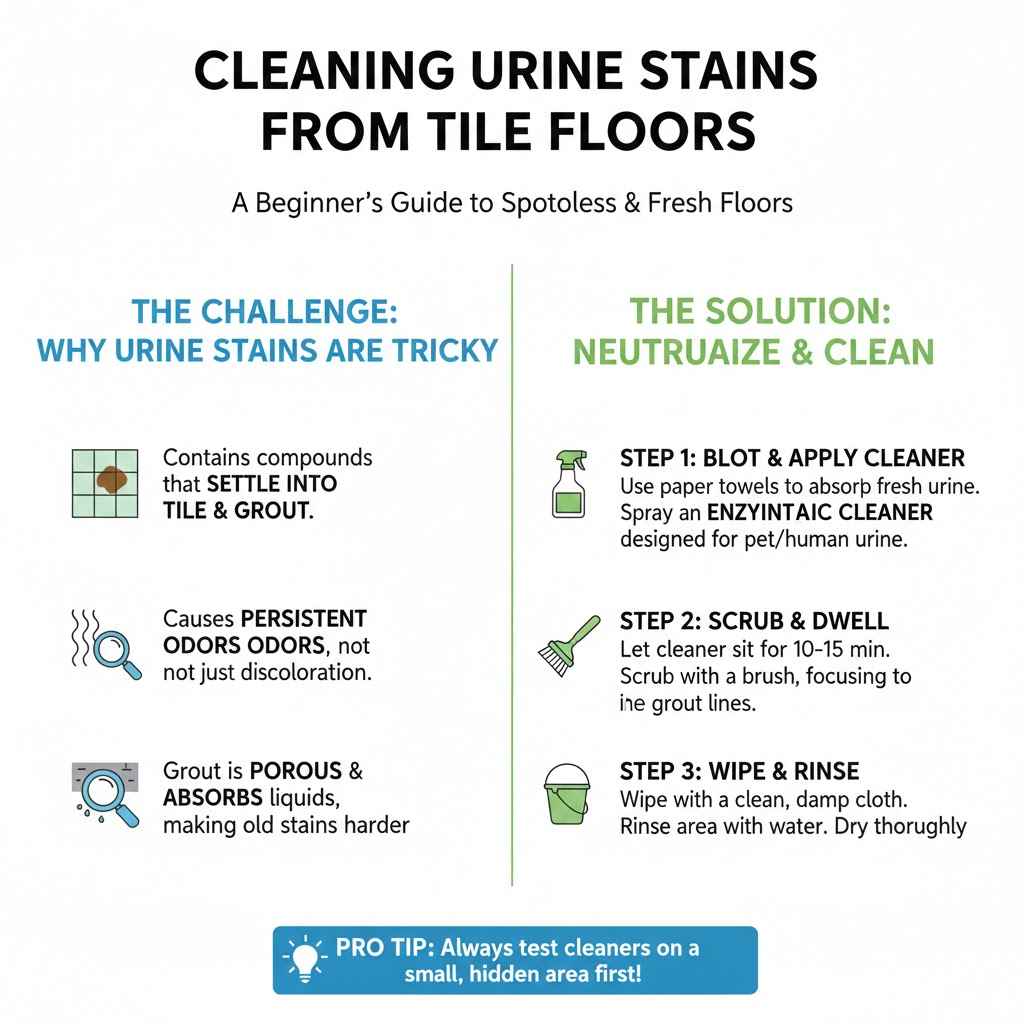
Effective Methods for Stain Removal
There are several effective ways to tackle urine stains on tile floors. The key is to act fast and use the right cleaning solutions. For fresh stains, immediate blotting and cleaning are most effective.
For older, set-in stains, you might need a bit more patience and a stronger approach.
Immediate Action for Fresh Stains
When an accident happens, your first step is crucial. Don’t rub the stain, as this can spread it and push it deeper into the grout. Instead, reach for paper towels or a clean, absorbent cloth.
- Blot up as much of the liquid as possible. Press down firmly to soak up the moisture.
- Repeat this blotting process with fresh towels until no more liquid can be absorbed.
- Once the area is as dry as possible, prepare your cleaning solution.
Simple Homemade Cleaning Solutions
You don’t always need harsh chemicals. Many effective cleaners can be made with common household ingredients. These are often safer for your tile and grout, as well as for your family and pets.
Vinegar Solution
White vinegar is a natural disinfectant and deodorizer. Its acidity helps break down the urine components.
- Mix one part white vinegar with one part water in a spray bottle.
- Spray the solution generously over the stained area and onto the grout.
- Let it sit for about 10-15 minutes to allow it to work.
- Wipe the area clean with a damp cloth.
- Rinse the cloth and wipe again to remove any vinegar residue.
- Dry the area thoroughly with a clean towel or allow it to air dry.
Baking Soda Paste
Baking soda is excellent at absorbing odors and can help lift stains.
- Mix baking soda with a little water to form a thick paste.
- Apply the paste directly onto the urine stain.
- Let the paste dry completely on the stain. This might take several hours or overnight for stubborn spots.
- Once dry, gently scrub the area with a soft brush or sponge.
- Wipe up the residue with a damp cloth and rinse the area.
- Dry the floor.
Commercial Cleaning Products
Sometimes, a more powerful solution is needed, especially for older or very stubborn stains. Look for enzymatic cleaners specifically designed for pet stains or urine. These cleaners use enzymes to break down the organic matter that causes stains and odors.
- Always read and follow the product instructions carefully.
- Ensure the cleaner is safe for your specific type of tile and grout.
- Apply the cleaner as directed, usually by spraying or pouring it onto the stain.
- Allow the product to sit for the recommended time, which can vary from a few minutes to several hours.
- Scrub gently if needed, then rinse the area thoroughly with water.
- Dry the floor completely.
Dealing with Grout Stains
Grout is more porous than tile, making it a prime spot for urine to soak into. This is often where stubborn stains and odors hide.
- For grout, a paste of baking soda and water is often very effective. Apply it to the grout lines and let it sit for several hours.
- A diluted bleach solution can be used on unsealed, white grout if other methods fail, but always test in an inconspicuous area first. Use it with extreme caution and good ventilation.
- For colored or sealed grout, avoid bleach as it can cause discoloration.
- A stiff-bristled brush or an old toothbrush can be helpful for scrubbing stains out of grout lines.
Removing Urine Odors
Even after the stain is gone, a lingering odor can be a problem. Urine contains ammonia, which can create a strong smell, especially in warm or humid conditions. Effective odor removal targets the source of the smell.
Natural Deodorizers
Vinegar and baking soda are excellent for neutralizing odors.
- After cleaning with a vinegar solution, the vinegar smell itself will dissipate as it dries, taking the urine odor with it.
- Baking soda’s ability to absorb smells is remarkable. Leaving a dry paste on the stain helps draw out the odor. You can also sprinkle dry baking soda over the cleaned and dried area and let it sit overnight before vacuuming it up.
Enzymatic Cleaners
These are the most effective solutions for persistent urine odors. The enzymes in these cleaners break down the uric acid crystals in urine, which are the source of the odor. Without these crystals, the smell cannot return.
- Apply generously to the affected area, ensuring it saturates any underlying grout.
- Allow the product to air dry completely, as this is when the enzymes are most active. This can take 24-48 hours.
- You may need to repeat the process for deeply set odors.
Preventing Future Stains and Odors
The best approach is always prevention. Regular cleaning and maintenance of your tile floors can help prevent stains from becoming a problem.
- Clean up spills immediately. The sooner you blot up any liquid, the less likely it is to stain or create an odor.
- Consider sealing your grout. Sealing grout makes it less porous and more resistant to stains and moisture. Reapply sealant periodically according to product recommendations.
- Maintain good ventilation in areas prone to accidents.
- Address any underlying issues if accidents are frequent (e.g., pet training, health concerns).</li

Frequently Asked Questions
Question: What is the best way to remove a fresh urine stain from tile?
Answer: Blot up as much liquid as possible with paper towels or a cloth. Then, clean the area with a solution of equal parts white vinegar and water, or use an enzymatic cleaner. Rinse and dry the area thoroughly.
Question: How long should I let a cleaning solution sit on a urine stain?
Answer: For fresh stains with vinegar, about 10-15 minutes is usually enough. For older stains or with enzymatic cleaners, you may need to let them sit for several hours or even overnight as per product instructions.
Question: Can I use bleach to clean urine stains from tile?
Answer: Bleach can be effective on some unsealed white grout, but it can discolor colored grout or porous tile. Always test in an inconspicuous area first and use with extreme caution and good ventilation. Enzymatic cleaners are generally a safer and more effective option for both stains and odors.
Question: How do I get rid of the urine smell from my tile floor?
Answer: For lingering odors, enzymatic cleaners are the most effective as they break down odor-causing compounds. Baking soda is also excellent for absorbing smells; you can sprinkle it on the cleaned area and let it sit overnight before vacuuming.
Question: How often should I seal my tile grout?
Answer: The frequency of resealing grout depends on the type of sealant used and the amount of traffic the floor receives. Generally, it’s recommended every 1-3 years. Check the sealant manufacturer’s guidelines for specific advice.
Final Thoughts
You have learned effective ways to clean your tile floors. You know how to remove human urine stains from tile floors using simple home remedies and specialized cleaners. Quick action and the right products are key.
Addressing both the stain and the odor ensures a truly clean floor. With these steps, you can easily keep your tile looking its best.