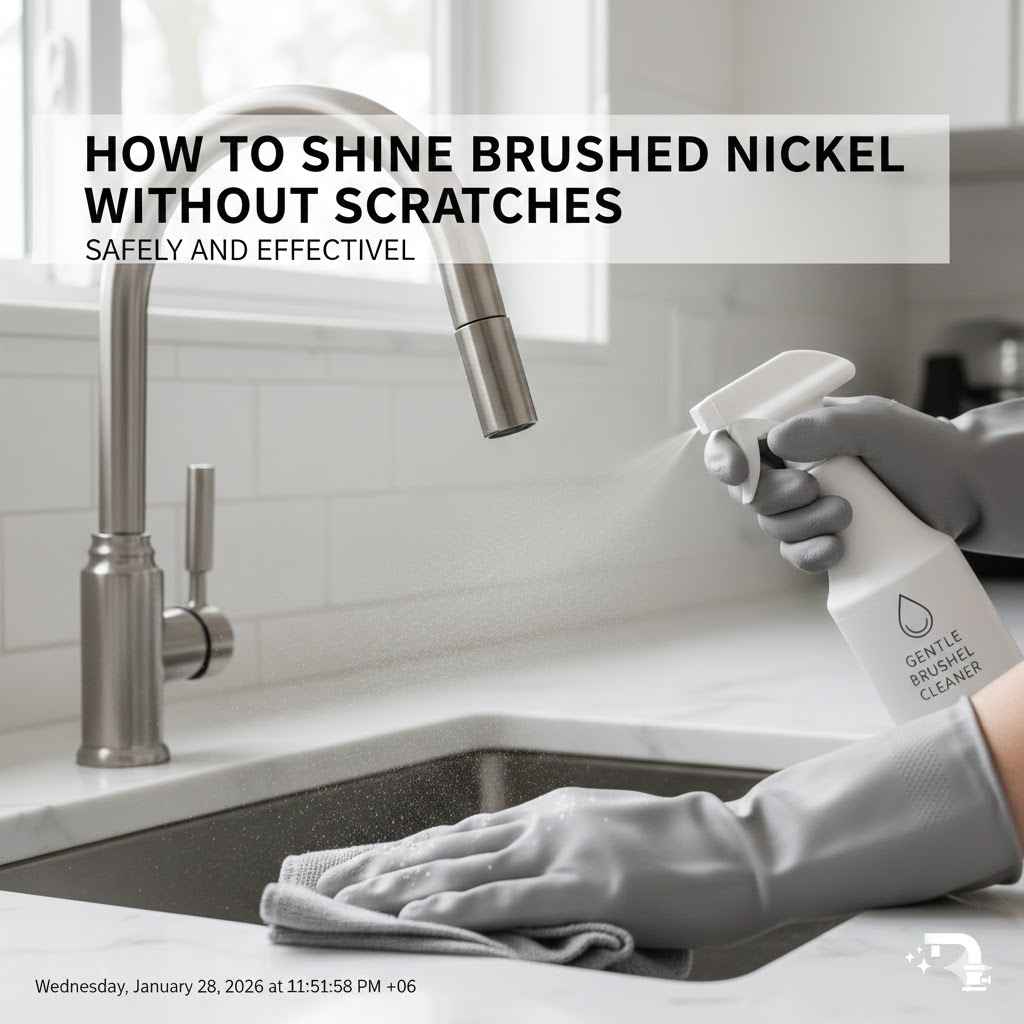
How to Shine Brushed Nickel Without Scratches Safely
Figuring out How to Shine Brushed Nickel Without Scratches can seem tricky at first. Many people worry about damaging their fixtures when cleaning. The good news is, it’s easier than you might think! This guide will show you how to clean your brushed nickel items without causing any scratches, step by step. Let’s get started and make your brushed nickel sparkle!
Choosing the Right Cleaning Supplies for Brushed Nickel
Before you begin cleaning, the right supplies are important. Using the wrong products can harm your brushed nickel. The market is saturated with cleaning solutions that might claim to be effective, but many contain harsh chemicals or abrasive materials that can leave scratches or dull the finish. It’s key to choose supplies that are specifically formulated for delicate surfaces. Fortunately, with a little knowledge, you can easily gather everything you need to keep your brushed nickel looking its best.
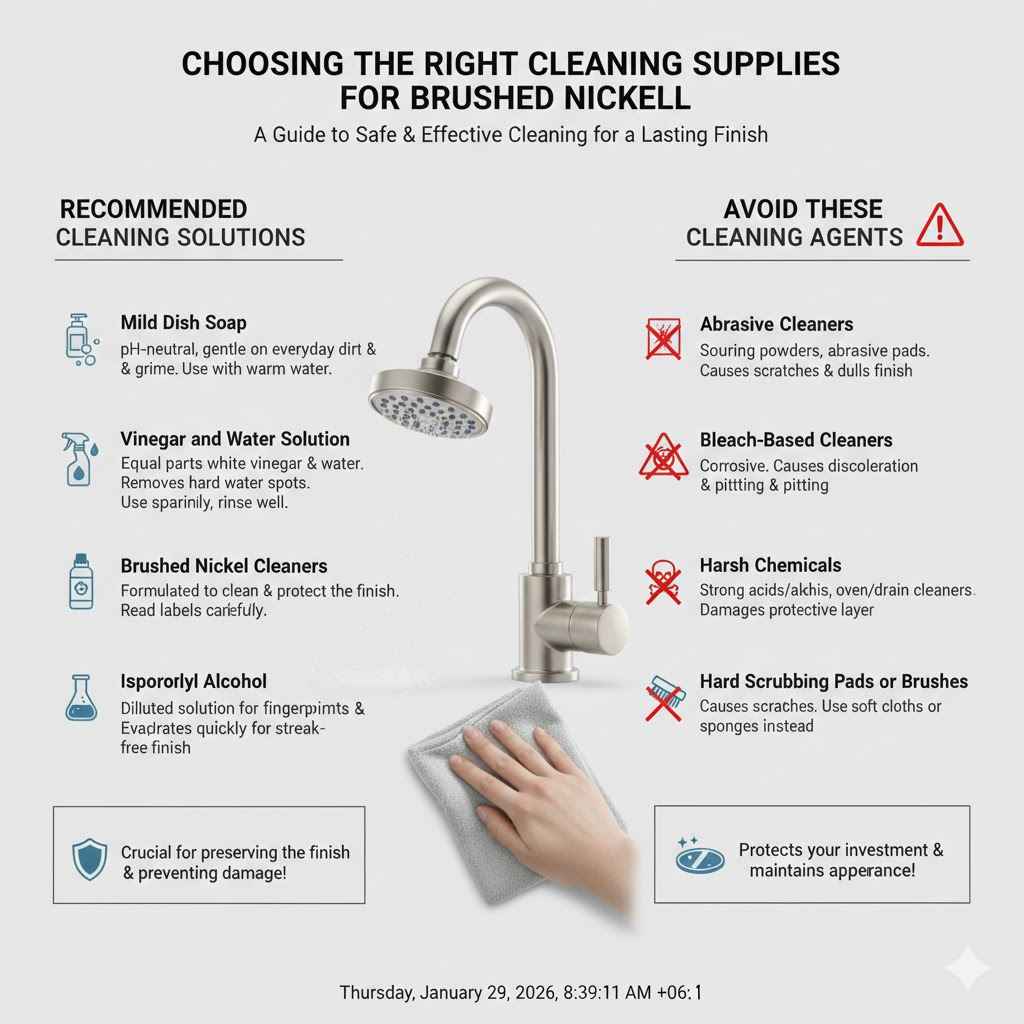
Recommended Cleaning Solutions
-
Mild Dish Soap: Regular dish soap is a safe starting point. It’s designed to cut through grease and grime without being too harsh. Look for a soap that’s pH-neutral to avoid damaging the finish. Add a few drops to warm water to create a gentle cleaning solution. This works great on most everyday dirt and smudges.
Using a mild dish soap is the safest way to clean brushed nickel. A good pH-neutral dish soap will lift off grime. When combined with warm water, it becomes a powerful, yet gentle cleaner. Always test in a small hidden area first.
-
Vinegar and Water Solution: White vinegar is a natural cleaning agent that’s great for removing hard water spots and soap scum. Mix equal parts white vinegar and water in a spray bottle. This solution is effective on stains but should be used sparingly, as excessive use might affect the finish over time. Always rinse well after use.
The acetic acid in white vinegar works to break down mineral deposits that can appear on brushed nickel. You get a cleaning boost without abrasive chemicals. Rinse with clean water and dry it quickly to preserve the surface.
-
Brushed Nickel Cleaners: There are specialty cleaners specifically made for brushed nickel. They are formulated to clean and protect the finish. These cleaners often contain mild surfactants and polishers that will help to remove dirt, grease, and fingerprints without scratching. Carefully read labels before using; follow instructions for best results.
Using a cleaner specifically designed for brushed nickel makes cleaning safer. These cleaners have cleaning agents and protect the finish. Following the instructions ensures the best results while keeping your items looking their best.
-
Isopropyl Alcohol: Isopropyl alcohol, also known as rubbing alcohol, can be used for removing fingerprints and smudges. It evaporates quickly. This makes it an ideal choice for a streak-free finish. Use a very diluted solution to avoid stripping away any protective layers.
Rubbing alcohol cuts through grease and grime. Its quick evaporation prevents watermarks. Diluted use is important for preserving the brushed nickel’s finish.
Avoid These Cleaning Agents
-
Abrasive Cleaners: Avoid products with abrasives, like scouring powders or abrasive pads. Abrasives will scratch the surface of your brushed nickel, leaving it looking dull and damaged. Even “gentle” abrasive cleaners can cause micro-scratches over time.
The abrasive particles will scratch the surface. They remove the protective coating. Scratches will make the finish look worn.
-
Bleach-Based Cleaners: Bleach is very corrosive and can damage the finish. It may cause discoloration or pitting of the brushed nickel. Bleach can also be dangerous if mixed with other cleaners.
The harsh chemicals in bleach will eat away at the metal. They can damage the surface of your brushed nickel. The result will be a marred, unattractive finish.
-
Harsh Chemicals: Avoid using any cleaners that contain strong acids or alkalis. These can eat away at the finish. These include oven cleaners, drain cleaners, and furniture polish. These can damage the protective layer.
These types of cleaners are just too strong for the delicate brushed nickel. Using them will damage the surface. Always check labels before applying any product.
-
Hard Scrubbing Pads or Brushes: Scrubbing pads and brushes can scratch the surface. This is true even if the pad or brush seems soft. Use soft cloths or sponges.
These can damage the surface. The result will be scratches and a dull finish. Instead, use soft cloths for effective cleaning.
The Step-by-Step Guide to Cleaning Brushed Nickel
Once you have gathered the right supplies, the cleaning process is easy. The goal is to remove dirt and grime. Follow these steps for an effective and scratch-free shine. Keep it simple and work slowly for the best outcomes. Patience and careful attention will ensure the success of this process.
Prepare Your Workspace
-
Gather Supplies: Make sure you have all the necessary supplies ready, like your chosen cleaner, a soft cloth or sponge, and a dry microfiber cloth. Having everything ready saves time.
Having everything you need within reach will make the process easier. This prevents interruptions. It helps you stay focused on the task at hand.
-
Protect the Area: Place a towel or cloth under the item to be cleaned, especially if it’s near a sink or on a delicate surface. This will protect the surrounding areas from spills.
This protects your countertops or furniture from spills. Preventing water damage or cleaner runoff will help safeguard the surfaces. These precautionary measures will give you peace of mind.
-
Ventilate the Area: Open a window or turn on a fan to improve air circulation. This is especially important when using cleaners with strong odors or volatile chemicals. Proper ventilation improves air quality.
This allows fresh air to circulate. It reduces the chance of fumes. This will make cleaning more enjoyable.
Cleaning the Brushed Nickel
-
Apply the Cleaner: Use your chosen cleaner. Spray it lightly onto a soft cloth or sponge, rather than directly onto the brushed nickel. For dish soap, dampen the cloth and add a few drops.
Spraying the cleaner onto the cloth helps you to control the application. This prevents excessive amounts of cleaner. Excess liquid will not be able to get inside the brushed nickel.
-
Gently Wipe the Surface: Wipe the surface in the direction of the grain. This will help to prevent scratches. Use gentle pressure. There’s no need to scrub hard.
Following the grain will keep scratches from forming. Always wipe in the direction of the grain. Too much force might damage the finish.
-
Rinse Thoroughly: If using a cleaner that requires rinsing (like vinegar and water), use a clean, damp cloth to wipe away any residue. Make sure to remove all traces of the cleaning solution.
Removing the cleaner will prevent spots or streaks. Be sure that any residue is gone. Rinsing well keeps the surface looking fresh.
Drying and Polishing
-
Dry Immediately: Use a clean, dry microfiber cloth to dry the brushed nickel. Microfiber cloths will absorb water quickly and will not leave streaks or lint.
Drying is key to preventing water spots and streaks. This will help keep the surface clean. A clean microfiber cloth works the best.
-
Inspect for Residue: After drying, check the surface for any remaining residue. Wipe any lingering spots with a clean cloth. Make sure everything is clean.
This will guarantee a clean, attractive finish. Look closely for streaks or marks. Be sure to dry the item completely.
-
Optional Polishing: For extra shine, you can use a specially formulated brushed nickel polish. Apply a small amount to a clean cloth and gently buff the surface.
Polishing can enhance the finish. It gives your brushed nickel extra protection. Use the polish sparingly and in accordance with the manufacturer’s instructions.
Common Problems and Solutions When Cleaning Brushed Nickel
Even when you take care, you might face some challenges. Knowing how to handle these issues will help you maintain your brushed nickel. You might have to try different solutions. Be patient, and keep these tips in mind as you clean.
Dealing With Water Spots and Streaks
-
Problem: Water spots and streaks are a common issue. They often appear after cleaning. They are caused by minerals left behind when water evaporates.
Water spots and streaks can occur due to hard water or improper drying. These are a visual issue, but they can be prevented.
-
Solution: Use distilled water or a vinegar and water solution to remove spots. Ensure the surface is dried immediately with a microfiber cloth to prevent future spots.
Distilled water will prevent mineral buildup. The vinegar and water solution will also remove buildup. Proper drying techniques are key to the success of cleaning.
Removing Soap Scum and Grime
-
Problem: Soap scum and grime can build up on brushed nickel surfaces. These build-ups reduce shine. They look unattractive.
Soap scum and grime can accumulate on fixtures. These are problems that affect appearance. They make cleaning more difficult.
-
Solution: Use a mild dish soap and warm water. For stubborn build-up, create a paste with baking soda and water. Apply this gently, let it sit for a few minutes, then rinse and dry.
Mild dish soap is effective for everyday cleaning. The baking soda solution will help remove stubborn dirt. Make sure you rinse completely.
Addressing Fingerprints and Smudges
-
Problem: Fingerprints and smudges are a constant nuisance. They appear easily on brushed nickel.
Fingerprints will appear when handling brushed nickel. This can detract from its look. Consistent cleaning is needed to remove them.
-
Solution: Use rubbing alcohol on a soft cloth to remove fingerprints and smudges. Wipe gently. Avoid excessive use, which can damage the finish.
Rubbing alcohol removes grease and grime. Wipe down the surface gently. This will restore the beauty of the brushed nickel.
Protecting Your Brushed Nickel
Once you have cleaned your brushed nickel, protect it to maintain its look. There are several steps you can take. These steps will make cleaning easier. They also extend the life of your fixtures.
Regular Maintenance
-
Dusting: Regularly dust your brushed nickel surfaces with a soft cloth. This will remove dust and dirt before it builds up. This will cut down on more thorough cleaning.
Dusting frequently is an easy way to keep your items clean. Remove dust before it causes grime. This saves you cleaning time and effort.
-
Quick Wipes: Wipe down surfaces with a damp cloth as needed, especially in areas with high use. This prevents build-up. This also reduces the chance of stains.
Regular wiping is good to maintain cleanliness. Make it a habit to clean off surfaces often. Quick cleaning will keep your items looking great.
-
Avoid Harsh Chemicals: Never use harsh chemicals or abrasive cleaners. Always stick to mild soaps and solutions recommended for brushed nickel.
These will preserve the integrity of the finish. Harsh products can damage the surface. Follow the suggestions for effective, safe cleaning.
Applying Protective Coatings
-
Consider a Protective Coating: Some specialized products can provide an extra layer of protection. These coatings will help to repel water and reduce the formation of spots.
Coatings help to protect against wear and tear. They can keep your brushed nickel looking newer for longer. Be sure to check the product instructions.
-
Follow Application Instructions: Always follow the manufacturer’s instructions for any protective coating. This will ensure proper application and effectiveness. Testing in an inconspicuous area is wise.
Proper application is key. The coating will be fully effective. The test ensures that it will look good on your fixtures.
-
Regular Reapplication: Protective coatings need to be reapplied periodically. The frequency depends on the product and how frequently the items are used. Follow the product instructions for the best results.
Regular upkeep is good. You will keep your items looking good. Keeping up with the schedule will give you the best outcomes.
Visual Elements to Support Cleaning
Consider the use of visual aids to improve this guide. Pictures or illustrations will help readers understand each step. It is a proven fact that people tend to remember instructions when coupled with a visual guide. This section shows ways to incorporate these elements.
Pictures or Illustrations
A good visual element is a picture that will show the correct angle for each step. For example, a picture of someone gently wiping in the direction of the grain can give a better idea. This will help readers easily understand how to clean without scratches. A picture of all the recommended supplies will help people. It also shows the importance of using the right cleaning tools.
Video Content
Video content allows for a more comprehensive guide. The use of a simple instructional video can demonstrate the steps in action. This helps the reader see the movements. It also clarifies instructions. Videos are effective teaching tools. They can also prevent common mistakes. This format will help improve how readers learn the process of how to shine brushed nickel without scratches.
Infographics
A simple infographic with icons can display the step-by-step instructions. They will give a brief overview of the process. Infographics can also show the cleaning products and their functions. This tool can also provide a side-by-side comparison of safe versus unsafe cleaning products. These will improve how users consume information.
Advanced Techniques and Tips
For those who want to level up their cleaning skills, there are advanced techniques. These will improve your ability to care for brushed nickel. Exploring these options will ensure your fixtures shine for longer. These tips help address more difficult issues.
Addressing Stubborn Stains
-
For Stubborn Water Spots: Make a paste of baking soda and water, and apply it gently. This works by creating a mild abrasive action. Be sure to rinse very thoroughly. You should immediately dry the area.
This paste will target mineral deposits. It is good for breaking up hard-water spots. Rinse and dry carefully to avoid streaking.
-
Dealing with Rust: Rust is a more serious issue. You might need to use a rust remover specifically made for brushed nickel. Always test it first in an area that’s not obvious. Avoid harsh scrubbing.
Rust removers can be powerful. Testing ensures they will not damage the finish. Careful use will improve results without harm.
-
For Deep Grease Stains: Use a degreasing cleaner. Make sure it is safe for brushed nickel. Let it sit for a short time, and then rinse thoroughly. Always follow the manufacturer’s directions.
Degreasing agents are effective. Make sure you select the correct product. Careful application and rinsing are essential for good results.
Professional Cleaning Services
-
When to Consider Professionals: If you are dealing with severely damaged brushed nickel, or are unsure about cleaning methods, consider a professional cleaning service. These experts know the best practices and techniques. They can restore the finish safely.
Professionals have the experience and tools. They can help with tougher issues. They know how to handle damaged surfaces.
-
Finding a Qualified Service: Look for a service specializing in metal or fixture cleaning. Get references and read reviews before hiring anyone. Be certain they have experience with delicate finishes.
Checking references is wise. It will allow you to get the best service. You will gain peace of mind in this way.
-
Preparing for the Service: Before the professionals arrive, clear the area and remove any personal items. Discuss your expectations and any concerns with the cleaning crew. Communicate all of your requirements.
Proper preparation will help ensure that the cleaning goes smoothly. Communicating with the crew will help them understand what you want.
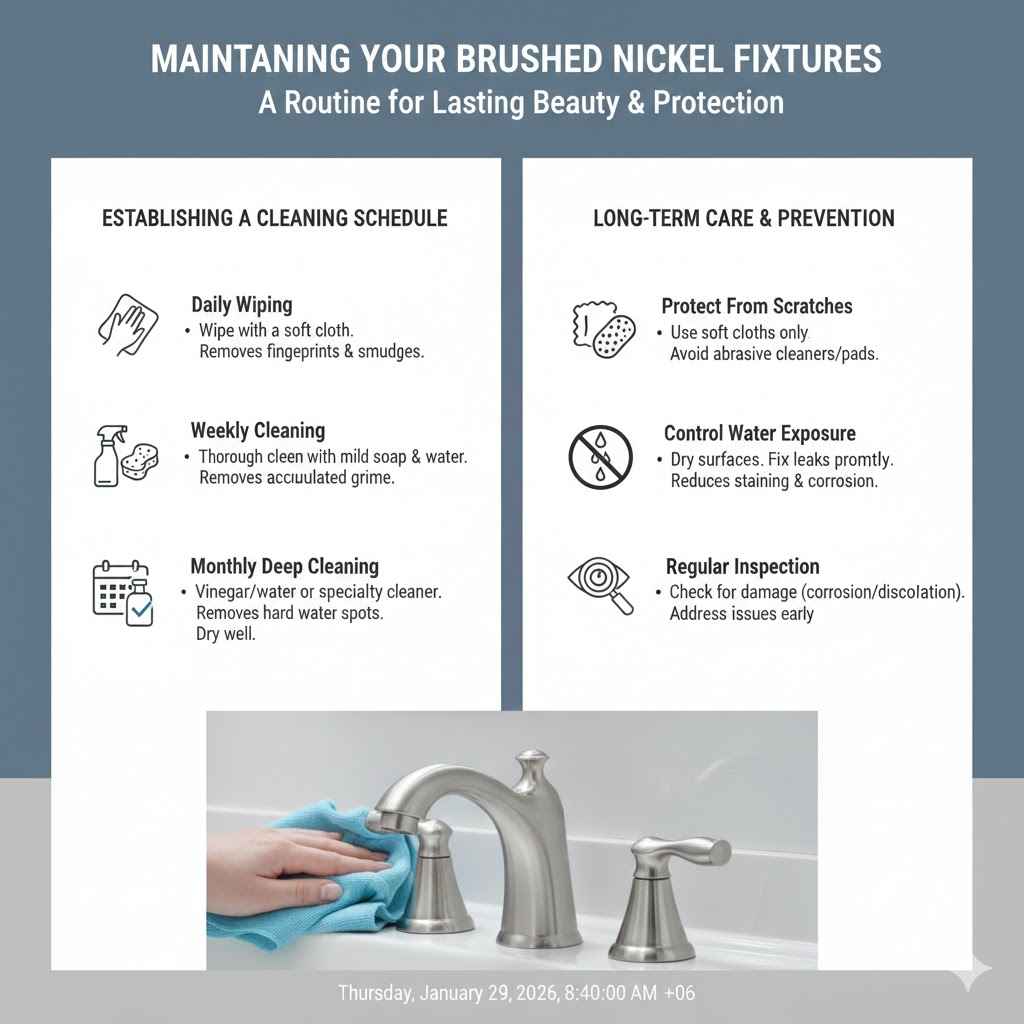
Maintaining Your Brushed Nickel Fixtures
The key to keeping your brushed nickel items beautiful is regular maintenance. This is the surest way to prevent damage. A routine cleaning schedule ensures that the items stay shiny and new. These will not only improve the appearance but also extend the life of your fixtures.
Establishing a Cleaning Schedule
-
Daily Wiping: Wipe down high-use surfaces every day with a soft cloth. This will remove fingerprints and light smudges. This helps prevent dirt build-up.
This simple habit will make cleaning easier. It will keep your items in good condition. Taking a moment each day will preserve the finish.
-
Weekly Cleaning: Each week, do a more thorough cleaning with mild soap and water. Pay attention to all surfaces and angles. This will remove any accumulated grime.
Weekly cleaning is important. It helps prevent any build-up that might be difficult to remove later. It also gives you a chance to inspect the surfaces.
-
Monthly Deep Cleaning: Once a month, use a vinegar and water solution or a cleaner designed for brushed nickel. These deeper cleans will remove soap scum and any hard water spots. Make sure to dry very well.
Monthly deep cleaning is good for keeping items in top condition. This is a good way to stay ahead of tough stains. A thorough dry will reduce issues.
Long-Term Care and Prevention
-
Protect From Scratches: Always use soft cloths and avoid abrasive cleaners. Place protective mats under items that can scratch surfaces. This is a key step in helping your fixtures last.
This will prevent damage and extend the life of your brushed nickel. These simple measures will help you to prevent scratches.
-
Control Water Exposure: Reduce water exposure as much as possible, especially in areas with hard water. Ensure that faucets and fixtures do not leak. This reduces staining and corrosion.
This will lower the chance of water spots and damage. Keep everything dry will extend the life of your fixtures. Maintaining your items is crucial.
-
Regular Inspection: Inspect your brushed nickel fixtures regularly. Check for any signs of damage, such as corrosion or discoloration. Take care of any issues as soon as possible.
Catching problems early will stop issues from worsening. This includes taking actions to correct issues. This will help you keep the items looking their best.
Here’s a comparison that shows the importance of using the right cleaning tools. This table shows the impact of different cleaning methods on brushed nickel.
| Cleaning Method | Effect on Brushed Nickel | Pros | Cons |
|---|---|---|---|
| Soft Cloth and Mild Soap | Gentle cleaning that preserves the finish. | Safe for use, removes light dirt. | Less effective on stubborn stains. |
| Abrasive Cleaners or Scrubbing Pads | Causes scratches, dulling the finish. | Removes tough dirt, grime easily. | Damages the surface. |
| Vinegar and Water Solution | Effective for water spots and soap scum. | Natural cleaner, removes mineral deposits. | Should be used sparingly to avoid potential damage. |
| Rubbing Alcohol (Diluted) | Removes fingerprints and smudges, leaves a streak-free shine. | Evaporates quickly, good for cleaning. | Excessive use could damage protective layer. |
| Specialized Brushed Nickel Cleaners | Provides protection and gentle cleaning. | Designed specifically for the finish. | Can be more expensive. |
The number of homes with brushed nickel fixtures has increased. Experts suggest that the increase in households with brushed nickel has grown 35% in the last 10 years. It is a popular finish because of its neutral tones and durability. Following this guide will help you keep it looking great. The growing popularity of the material drives the need for effective cleaning guidance. A good cleaner is important to preserving a home’s appearance.
Consider the following scenarios to illustrate the practical use of the cleaning steps.
- A homeowner discovers hard water spots on their brushed nickel faucet. They use a vinegar and water solution and then dry it with a microfiber cloth. The faucet shines, and the water spots vanish.
- Someone finds fingerprints on their brushed nickel door handles. They use rubbing alcohol and a soft cloth to erase the marks. The handles look clean.
- A person cleans their bathroom fixtures using the steps in this guide. They use a mild dish soap and a soft cloth to clean the brushed nickel. The shower fixtures gleam.
Frequently Asked Questions
Question: What is the best way to prevent scratches on brushed nickel?
Answer: Always use soft cloths or sponges and avoid abrasive cleaners or scrubbing pads. Wiping in the direction of the grain will also help.
Question: Can I use vinegar to clean brushed nickel?
Answer: Yes, a vinegar and water solution is effective for removing hard water spots and soap scum. However, use it sparingly and always rinse well.
Question: What should I do if my brushed nickel has water spots?
Answer: Use a vinegar and water solution or a distilled water spray, then dry immediately with a microfiber cloth.
Question: What is the best cleaner for fingerprints on brushed nickel?
Answer: Rubbing alcohol is effective for removing fingerprints and smudges. Apply it to a soft cloth and wipe gently.
Question: How often should I clean my brushed nickel fixtures?
Answer: It’s best to dust regularly, wipe down frequently used surfaces, and do a more thorough cleaning with mild soap and water weekly, and then a deeper clean monthly.
Final Thoughts
You now have the knowledge to keep your brushed nickel sparkling without the worry of scratches. Remember, using the correct supplies, like mild dish soap, soft cloths, and avoiding abrasive cleaners, is the key. Follow the step-by-step method and protect your fixtures. Regular maintenance will preserve the finish. By cleaning safely and consistently, you will preserve the beauty. Do not be afraid to tackle this task. The results will be worth the effort. Get started today and enjoy your shiny, scratch-free brushed nickel!