How to Size a Water Softener: A Comprehensive Guide for Homeowners
Hello, friends! I’m so excited to sit down with you today and dive into a topic that’s been a game-changer for me and so many others: how to size a water softener. If you’re a homeowner in the USA, you’ve probably noticed the effects of hard water—those annoying white spots on your dishes, the rough feel of your clothes, or even the way your skin feels after a shower.
I’ve been there, and I know how frustrating it can be! But don’t worry, I’ve spent time exploring this topic, and I’m here to guide you through the process of sizing a water softener step by step. By the end of this, you’ll feel confident in choosing the perfect system for your home. Let’s get started!
What Is a Water Softener and Why Does Size Matter?
Let me start by explaining what a water softener does. Hard water has high levels of minerals like calcium and magnesium. These minerals build up in your pipes, appliances, and even on your skin and hair. A water softener removes these minerals through a process called ion exchange, leaving you with softer, gentler water.
Now, here’s the thing: size matters a lot! If your water softener is too small, it won’t handle your household’s water needs. You’ll still deal with hard water issues. On the other hand, if it’s too big, you’ll spend more money than necessary and waste resources. I learned this the hard way when I first tried to pick one without doing my homework. Sizing it correctly ensures your system works efficiently, saves you money, and protects your home. Ready to learn how? Let’s move on!
Understanding Water Hardness in Your Area
First, we need to know how hard your water is. Water hardness is measured in grains per gallon (GPG). In the USA, water hardness varies a lot. Some areas have soft water, while others, like parts of Texas or Arizona, have very hard water.
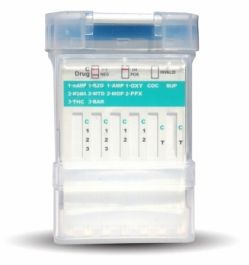
I remember when I first tested my water. I bought a simple test kit from a hardware store. You can also send a sample to a lab for a more detailed report. Most kits will tell you the GPG level. For example, 1-3 GPG is soft, 3-7 GPG is moderate, 7-10 GPG is hard, and anything over 10 GPG is very hard. My water was 8 GPG—hard! Knowing this number is the foundation for sizing your water softener. Without it, you’re just guessing. So, grab a test kit and find out your water hardness. It’s easy and worth it!
Calculating Your Household Water Usage
Next, let’s figure out how much water your household uses. This step is key because the size of your water softener depends on how much water needs softening. I started by looking at my water bill. It usually shows your monthly usage in gallons. If not, a good estimate for the average American household is about 80-100 gallons per person per day.
Think about your family. How many people live in your home? I have a family of four, so I estimated 100 gallons per person. That’s 400 gallons a day. Don’t forget to consider guests or extra water use, like if you have a big garden or fill a hot tub. For me, I added a little extra for weekends when my kids have friends over. Multiply your daily usage by the number of people in your house. This gives you a rough idea of your daily water needs. We’ll use this number soon, so keep it handy!
Determining Your Water Softener Capacity
Now, let’s get to the heart of sizing: capacity. Water softener capacity is measured in grains. This tells you how many grains of hardness the system can remove before it needs to regenerate, or clean itself. Here’s how I figured it out for my home.
Take your water hardness (in GPG) and multiply it by your daily water usage (in gallons). For me, it was 8 GPG x 400 gallons = 3,200 grains per day. That’s how many grains my system needs to remove daily. But here’s a tip I learned: water softeners don’t regenerate every day. Most regenerate every 6-10 days. So, I multiplied my daily need (3,200 grains) by 7 days. That’s 22,400 grains. This means I need a water softener with at least a 22,400-grain capacity.
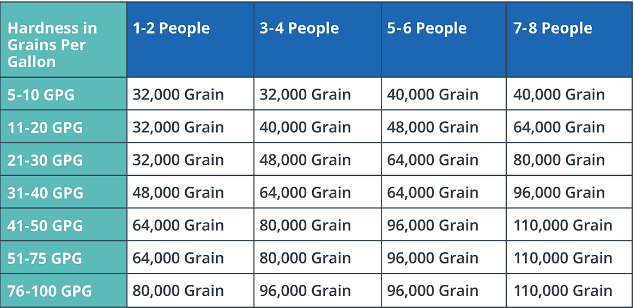
Here’s a simple table to help you visualize common capacities:
| Household Size | Water Hardness (GPG) | Daily Water Usage (Gallons) | Grains Needed Per Day | Suggested Capacity (Grains) |
|---|---|---|---|---|
| 1-2 people | 5 (Moderate) | 200 | 1,000 | 10,000-20,000 |
| 3-4 people | 8 (Hard) | 400 | 3,200 | 20,000-32,000 |
| 5-6 people | 10 (Very Hard) | 600 | 6,000 | 32,000-48,000 |
| 7+ people | 12 (Very Hard) | 800 | 9,600 | 48,000-64,000 |
This table helped me a lot! For my family of four with hard water, a 32,000-grain unit was perfect. It gave me a little extra capacity for peace of mind. Use this as a guide, but adjust based on your exact numbers.
Types of Water Softeners and Their Sizes
Not all water softeners are the same! I discovered there are a few types, and each impacts sizing. Let me break it down for you.
Single-tank water softeners are common and great for smaller homes. They have one tank for the resin beads that remove hardness. I almost chose this, but I learned they regenerate more often, which can interrupt your water supply. Dual-tank systems have two tanks,laborate on this later, so one is always working. They’re ideal for bigger families or constant water use. I went with a dual-tank model because my family uses a lot of water in the mornings.
Then there are salt-free softeners, which don’t remove minerals but prevent scale buildup. They’re smaller and low-maintenance, but less effective for very hard water. I stuck with a traditional salt-based system because my water was pretty hard. Size-wise, single-tank units are compact, while dual-tank ones are larger but handle more capacity. Pick the type that fits your needs and space!
Considering Regeneration and Efficiency
Regeneration is how a water softener cleans itself. I was surprised to learn this affects sizing. There are two main types: time-initiated and demand-initiated. Time-initiated systems regenerate on a schedule, like every few days. Demand-initiated ones regenerate based on water use, which is more efficient.
I chose a demand-initiated model. It saves salt and water because it only regenerates when needed. For sizing, think about this: a smaller unit regenerates more often, using more salt and water. A slightly larger unit, like my 32,000-grain one, regenerates less often, saving resources. It’s a balance between upfront cost and long-term efficiency. I found this choice cut my maintenance costs over time!
Space and Installation Considerations
Don’t forget about space! I almost made this mistake. Water softeners need room, and the size varies by model. A single-tank unit might be 18-24 inches wide and 4-5 feet tall. Dual-tank models are bigger, so measure your space—maybe in your basement, garage, or utility room.
I installed mine in the basement. It needed a drain nearby for regeneration and a power outlet. Plumbing matters too. If your pipes are old, you might need a plumber. I hired one to be safe, and it was worth it. Make sure your unit fits your space and plumbing setup. A little planning goes a long way!
Budget and Long-Term Costs
Let’s talk money. Water softeners vary in price. Smaller units (10,000-20,000 grains) might cost $500-$1,000. Larger ones (32,000 grains and up) can run $1,000-$2,000 or more. I spent about $1,200 on my dual-tank unit, and I’m happy with it.
But don’t forget long-term costs! Salt, water, and maintenance add up. Salt costs me $10-$20 a month, and I check the brine tank regularly. Bigger units use more salt but regenerate less often. I found a balance with my 32,000-grain unit. It’s efficient and keeps costs down. Think about your budget and how much you’re willing to spend upfront and over time.
Additional Features to Look For
I love extra features! Some water softeners come with digital controls to monitor salt and water use. Mine has a low-salt alarm, which is a lifesaver. Look for a bypass valve—it lets you use unsoftened water for tasks like watering plants. Efficiency ratings matter too. My unit is energy-efficient, saving me money.
Some models have filters for iron or sediment, which is great if your water has extra impurities. I didn’t need this, but I checked my water test results to be sure. Pick features that match your needs. They can make your life easier and your water better!
My Personal Tips for Success
After exploring this topic, I’ve got some tips for you. First, test your water every year. Hardness can change. I did this and adjusted my settings. Second, don’t undersize! A too-small unit won’t keep up. I almost bought a 20,000-grain unit, but I’m glad I went bigger. Third, maintain your system. Clean the brine tank and check the resin bed yearly. I learned this keeps my unit running smoothly.
Finally, shop around. I compared brands like Culligan, Fleck, and Aquasana. Read reviews, check warranties, and ask about installation. I found a great deal online and saved a bundle. You can do the same!
Conclusion
Well, friend, we’ve covered a lot! Sizing a water softener is all about understanding your water hardness, calculating your usage, and picking the right capacity. I’ve walked this path, and I can tell you it’s worth it. Soft water transformed my home—no more scale on my faucets, no more dry skin, and my appliances last longer. Use my guide to test your water, crunch the numbers, and choose a system that fits your family, budget, and space. You’ll love the results! Let’s make your home a softer, happier place together. You’ve got this!
FAQ
What does water hardness mean?
Water hardness refers to the amount of calcium and magnesium in your water. It’s measured in grains per gallon (GPG). Higher GPG means harder water, which can cause scale and other issues.
How do I test my water hardness?
You can buy a test kit from a hardware store or online. Just follow the instructions—usually, you dip a strip or add drops to a sample. Or, send a sample to a lab for a detailed report.
How much water does a family use daily?
On average, each person uses 80-100 gallons a day in the USA. Multiply that by the number of people in your home. Add extra for guests, gardening, or big water tasks.
What size water softener do I need?
Multiply your water hardness (GPG) by your daily water usage (gallons). Then, multiply that by 6-10 days for regeneration. For example, 8 GPG x 400 gallons x 7 days = 22,400 grains.
What’s the difference between single-tank and dual-tank softeners?
Single-tank units have one resin tank and regenerate often, pausing water softening. Dual-tank units have two tanks, so one always works. I like a dual-tank for my busy family!
How often does a water softener regenerate?
It depends. Time-initiated ones regenerate every few days. Demand-initiated ones regenerate based on use—more efficient! Mine regenerates every 7-10 days.
How much does a water softener cost?
Small units (10,000-20,000 grains) cost $500-$1,000. Larger ones (32,000+ grains) cost $1,000-$2,000 or more. Salt and maintenance add $10-$20 a month.
Where should I install my water softener?
You’ll need space, a drain, and a power outlet. Basements, garages, or utility rooms work well. I put mine in the basement—perfect fit!
Do I need a professional to install it?
It depends. If your plumbing is simple, you might DIY. I hired a plumber for safety. It cost extra but saved me stress.
How do I maintain my water softener?
Check the brine tank monthly and add salt. Clean it yearly. Check the resin bed and settings too. I do this, and my unit runs great!