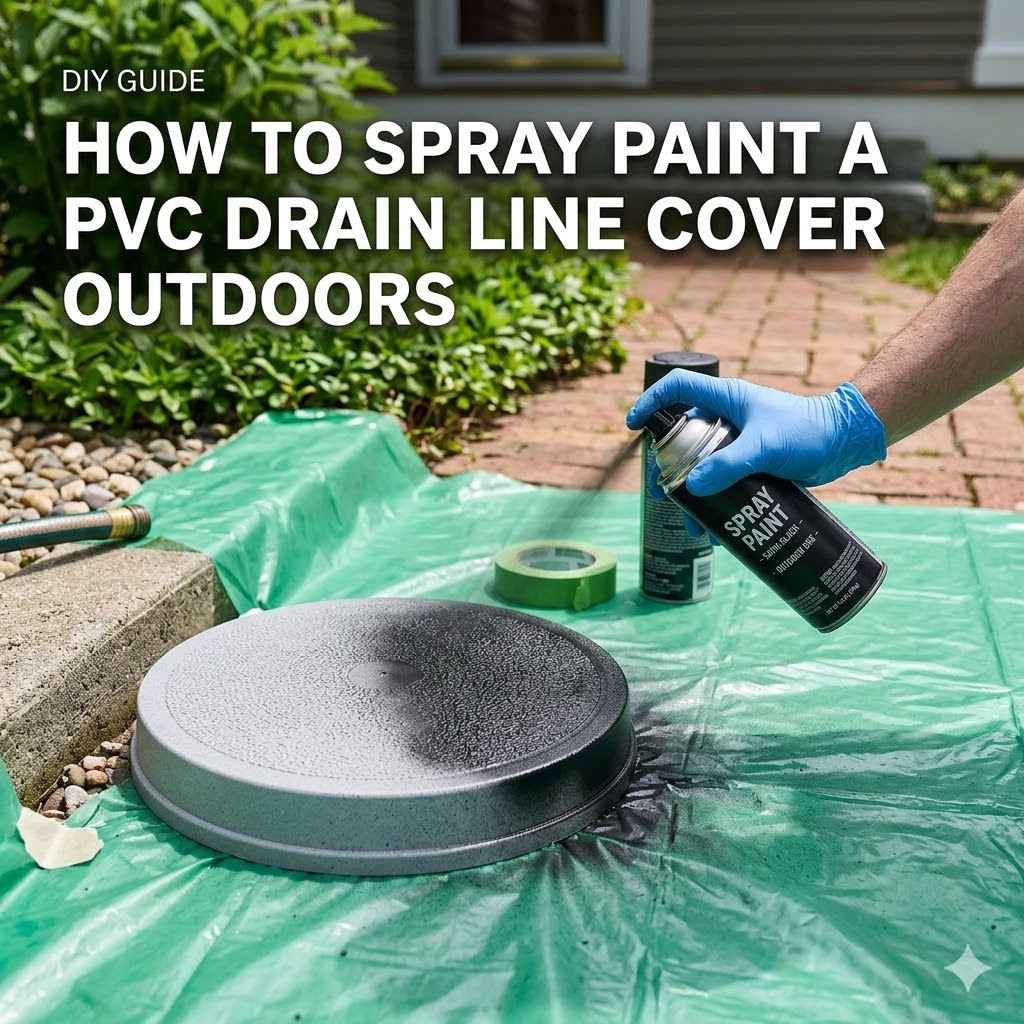
How to Spray Paint a PVC Drain Line Cover Outdoors
Painting outdoor PVC drain line covers might seem tricky, especially if you’re new to DIY projects. You want it to look good and last, but sometimes the paint doesn’t stick or the finish isn’t smooth. Don’t worry, it’s actually a pretty simple process when you know the right steps.
We’ll walk you through exactly how to get a great result every time. Get ready to make those covers blend in perfectly.
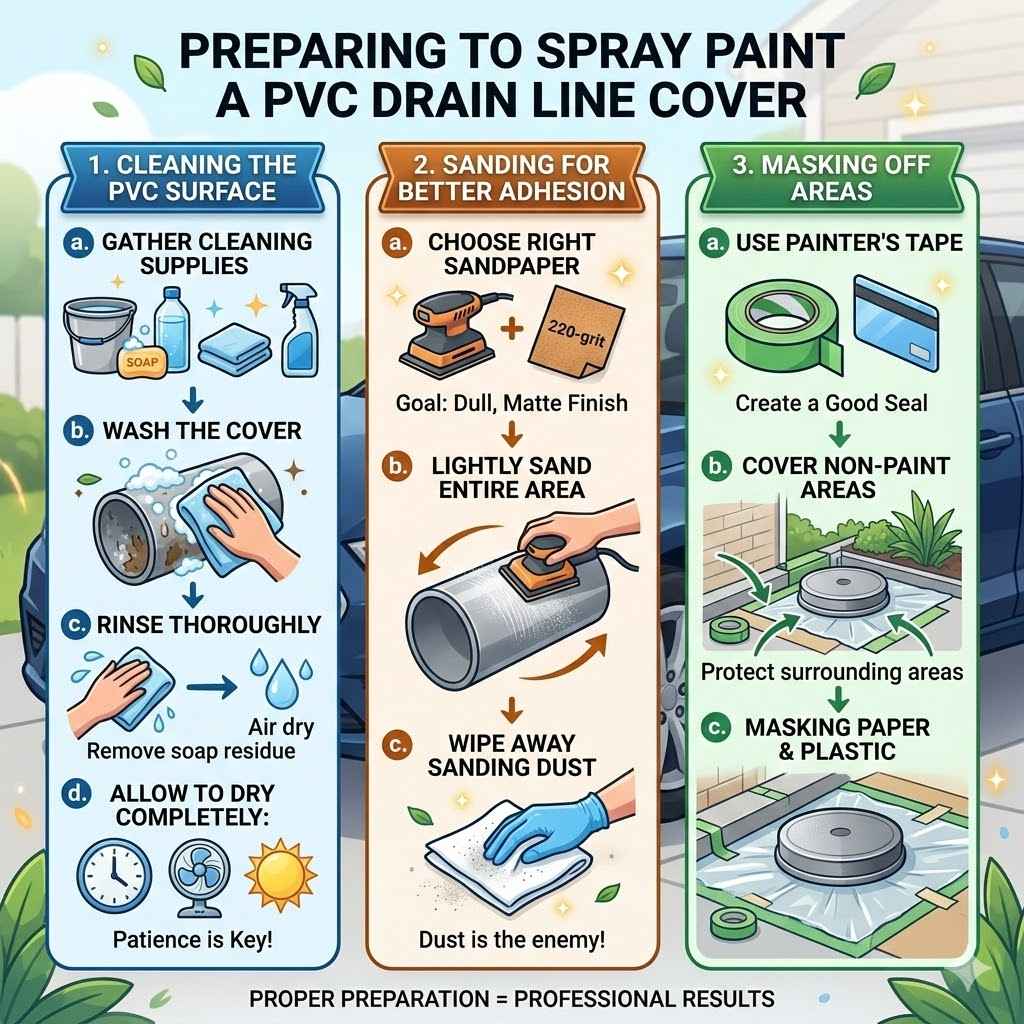
Preparing To Spray Paint A PVC Drain Line Cover
Getting ready is the most important part of spray painting any surface, and your PVC drain line cover is no exception. Proper preparation ensures the paint will stick well and the finished job will look neat and professional. This section will cover all the steps you need to take before you even pick up a spray can.
We will discuss cleaning, sanding, and masking to make sure your painting project is a success.
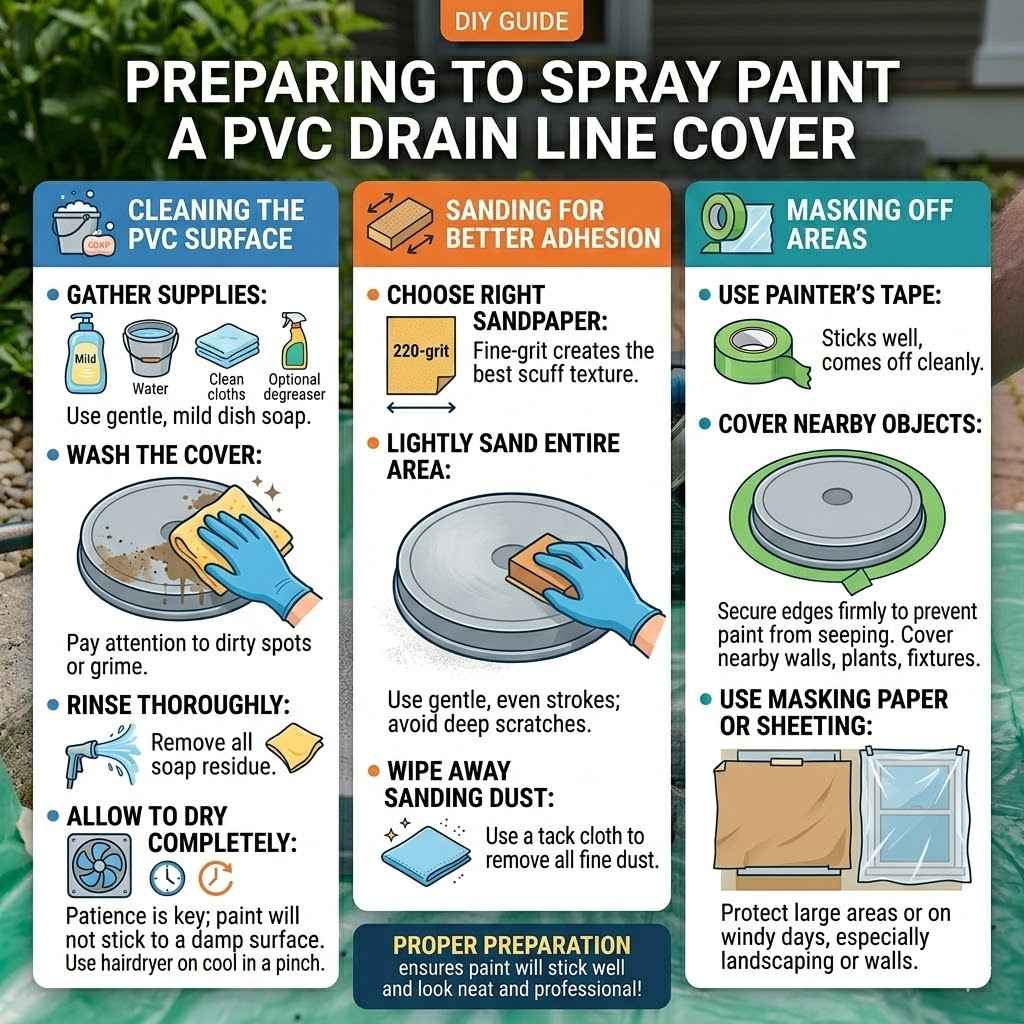
Cleaning The PVC Surface
Before you can paint, the PVC needs to be really clean. Any dirt, dust, or grease will stop the paint from sticking properly. This can lead to peeling or a patchy finish later on.
Gather your cleaning supplies. You will need a mild soap, water, and clean cloths. For tougher grease, a degreaser might be helpful.
It’s important to use something gentle so you don’t damage the PVC itself. A simple kitchen dish soap mixed with water works well for most situations. Make sure you have enough clean water to rinse the surface thoroughly after washing.
Wash the drain line cover. Use a cloth dipped in soapy water to wipe down the entire surface. Pay attention to any dirty spots or grime.
Don’t scrub too hard, as you don’t want to scratch the plastic. Just a good wipe down is usually enough. If there are any oily marks, you might need to apply a little degreaser.
Follow the product instructions carefully if you use a degreaser.
Rinse the cover thoroughly. Use a clean cloth and plain water to remove all soap residue. Leftover soap can also affect how the paint adheres.
It’s crucial to rinse until there are no suds or streaks visible. You can use a hose on a gentle setting if the cover is easy to access, but be careful not to spray water into any openings. Let it air dry completely.
Allow the PVC to dry completely. Paint will not stick well to a damp surface. You can let it air dry for a few hours, or use a clean, lint-free cloth to speed things up.
Patience is key here. Even a little bit of moisture can cause problems with adhesion. If you’re painting on a humid day, it might take longer to dry.
You can also use a hairdryer on a cool setting to help it dry faster in a pinch.
Sanding For Better Adhesion
Even though PVC is a plastic, painting directly onto it without some surface roughening might not give the best results. Sanding creates a slightly textured surface that the spray paint can grip onto. This is a vital step for paint longevity.
Choose the right sandpaper. A fine-grit sandpaper, like 220-grit, is usually best for this job. You don’t want anything too coarse, as that could scratch the PVC too deeply.
The goal is to scuff up the surface just enough for paint to stick. Think of it like preparing a wall for paint; you need a smooth but slightly textured surface. Too rough and you’ll see the marks; too smooth and the paint might slide off.
Lightly sand the entire area you plan to paint. Use gentle, even strokes. You’re not trying to remove material, just create a dull, matte finish.
Focus on the visible parts of the drain cover. Work in one direction if you can, or in small circular motions. The surface should look uniformly scuffed, not shiny.
Wipe away sanding dust. After sanding, there will be a fine layer of PVC dust. Use a dry, clean cloth or a tack cloth to remove all of it.
Dust left behind will ruin your paint job.
A tack cloth is specially designed to pick up fine dust particles. If you don’t have one, a slightly damp (but not wet) cloth can also work, but make sure it dries completely afterward. Dust is the enemy of a smooth paint finish.
Masking Off Areas
When spray painting, overspray is a common issue. You want the paint to go only where you intend it to. Masking protects surrounding areas from getting accidentally painted.
Use painter’s tape. This type of tape is designed to stick well but also come off cleanly without damaging surfaces.
Choose a good quality painter’s tape. The width of the tape can be helpful depending on how much you need to cover. You can find it in rolls of various widths.
Cover any parts you do not want to paint. This includes nearby walls, plants, or other fixtures. Press the tape down firmly along the edges to prevent paint from seeping underneath.
Be precise with your taping. Any gaps can let paint through. If you are taping along an edge, make sure the tape is stuck down really well.
Sometimes, pressing down with your fingernail or a plastic card helps create a good seal.
Consider using masking paper or plastic sheeting for larger areas. If the drain line cover is near a wall or a significant portion of landscaping, cover those areas too.
This is especially important if you are painting a large area or if it’s a windy day. Masking paper is good for walls, while plastic is good for protecting plants or ground. Secure the edges of the paper or plastic with more painter’s tape.
Choosing The Right Spray Paint For PVC
Not all spray paints are created equal, and selecting the right type for PVC is crucial for a durable and attractive finish. Using a paint not designed for plastic can lead to flaking, peeling, or a dull appearance. This section will guide you through the types of paints that work best for PVC and what to look for on the can.
Types Of Spray Paint For Plastic
When you’re looking to paint PVC outdoors, you need a paint that can handle the elements and adhere well to plastic. The good news is there are specific spray paints formulated for this very purpose.
Paints labeled “for plastic” or “multi-surface” are your best bet. These paints often contain special bonding agents that help them stick to slick surfaces like PVC.
These paints are formulated to be flexible, which is important because PVC can expand and contract slightly with temperature changes. A rigid paint might crack over time. Look for cans that explicitly mention plastic compatibility.
Acrylic-based spray paints are generally a good choice for outdoor applications. They are known for their durability, weather resistance, and ability to dry to a hard finish.
Acrylics are also relatively easy to work with and clean up. Many outdoor-rated acrylic spray paints offer UV protection, which is a major plus for items exposed to sunlight. This helps prevent fading and degradation.
Enamel spray paints can also work, but ensure they are specifically designed for plastic. Some enamels are very hard and can be brittle, which might not be ideal for a flexible material like PVC.
If you choose an enamel, make sure it’s rated for outdoor use and plastic. Enamels often provide a very tough finish, which can be good for high-traffic areas. However, check the manufacturer’s recommendations carefully.
Understanding Paint Can Labels
The spray paint can itself holds a wealth of information. Reading the label carefully can save you a lot of hassle and ensure you pick the right product for your project.
Look for keywords like “adheres to plastic,” “for outdoor use,” or “multi-surface.” These phrases indicate the paint is suitable for your needs.
Don’t just assume. The label will often have icons or text that clearly state what materials the paint is designed for. If it doesn’t mention plastic, it’s probably best to look for another option.
Check the finish type. Spray paints come in various finishes like matte, satin, semi-gloss, and gloss. Choose a finish that suits your aesthetic preference and the look you want to achieve.
A matte finish might hide imperfections better, while a gloss finish offers a more reflective and potentially easier-to-clean surface. Satin or semi-gloss are good middle grounds for many outdoor applications.
Consider weather resistance. For outdoor projects, it’s important that the paint can withstand rain, sun, and temperature changes. Many labels will mention features like “weather-resistant” or “UV-resistant.”
Paint that isn’t weather-resistant can fade quickly, chalk, or peel when exposed to the elements. This is especially important for something like a drain line cover that is constantly exposed to the weather.
Primer For Enhanced Adhesion
While some spray paints are designed to adhere to plastic without a primer, using one can significantly improve the longevity and smoothness of your paint job. A good primer acts as a bridge between the PVC and your topcoat.
Use a spray primer specifically made for plastics. These primers are formulated to bond to slick surfaces and provide an excellent base for your chosen color.
Many hardware stores carry primers labeled “plastic primer” or “bonding primer.” Applying this first is often more important than the topcoat itself for achieving a lasting finish.
Apply thin, even coats of primer. Just like with the paint, multiple thin coats are better than one thick one. This will prevent drips and ensure full coverage.
Allow each coat of primer to dry according to the manufacturer’s instructions before applying the next. Proper drying time ensures optimal adhesion.
Let the primer cure fully. Once you’ve applied all the coats of primer, let it cure for the time recommended by the manufacturer. This might be 24 hours or more.
Curing is different from drying; it’s when the paint reaches its full hardness and durability.
Skipping the full cure time can lead to the primer being soft when you apply the topcoat, and the paint might not adhere as well as it should. This is a critical step for a long-lasting finish, especially outdoors.
How To Spray Paint A PVC Drain Line Cover Outdoors Step By Step
Now that you’ve prepared the surface and chosen your paint, it’s time to get painting. This step-by-step guide will walk you through the actual spray painting process. We’ll cover technique, application, and drying to ensure you get a professional-looking finish on your PVC drain line cover.
Applying The Spray Paint
Applying spray paint requires a steady hand and a good technique to achieve a smooth, even coat. Rushing this process often leads to drips, runs, or an uneven appearance.
Shake the spray can well. Before you start, shake the can vigorously for at least one to two minutes. This ensures the paint pigments are thoroughly mixed.
You should hear the mixing ball rattling inside the can. This is essential for consistent color and flow. If you don’t shake it enough, the paint might come out splotchy or the color might be off.
Hold the can upright and about 8-12 inches away from the surface. Maintain a consistent distance to avoid drips and ensure even coverage.
Too close and you risk getting drips; too far and the paint can become a fine mist that doesn’t cover well. Practice on a piece of cardboard first to get a feel for the right distance and pressure.
Apply paint in light, even strokes. Move the can from side to side or up and down in a continuous motion. Overlap each stroke by about half.
Avoid stopping the spray mid-stroke, as this can create heavy spots and drips. Keep the can moving at a constant speed. Think of it like painting a wall with a roller – steady and even passes.
Apply multiple thin coats. It’s much better to apply two or three light coats than one heavy, thick coat. This helps prevent runs and ensures better adhesion and a smoother finish.
Allow each coat to dry to a “tacky” state before applying the next. This usually takes about 10-15 minutes, but check the paint can for specific drying times. A tacky surface helps the next coat bond effectively.
Rotate the can as needed. As you spray, the can might need to be rotated to ensure the propellant and paint mix correctly. If the spray starts to sputter, stop and shake the can again.
Some cans have a nozzle that can be adjusted for spray pattern. If yours does, make sure you’re using the setting that works best for the area you’re covering.
Drying And Curing Times
Understanding the difference between drying and curing is essential for a durable paint job, especially for an outdoor item like a drain line cover.
Drying is when the surface feels dry to the touch. This typically happens within a few hours for most spray paints.
Even if the surface feels dry, the paint underneath might still be wet or developing its hardness. This is why touching the paint too soon can cause smudges or damage.
Curing is the process where the paint hardens and reaches its maximum durability. This can take anywhere from 24 hours to several days, depending on the paint type and environmental conditions.
For outdoor items that will be exposed to weather, it’s best to let the paint cure as long as possible. This ensures it can withstand rain, sun, and temperature fluctuations without damage.
Follow the manufacturer’s recommendations. Always check the spray paint can for specific drying and curing times. These can vary significantly between brands and paint types.
If the weather is humid or cold, drying and curing times can be extended. Try to paint on a mild, dry day for the best results and fastest drying.
Reapplying Paint If Needed
Sometimes, even with careful application, you might find a spot that needs a little touch-up. It’s usually best to do this while the paint is still relatively fresh, but it can also be done later.
If you notice a drip or an uneven spot shortly after painting, you might be able to carefully smooth it out with a brush dipped in a suitable solvent (check paint can for recommendations) before it fully dries.
However, this can be tricky and might leave a visible mark. Sometimes, it’s easier to let it dry and then sand it down and reapply that small section.
For touch-ups after the paint has dried, you can lightly sand the problem area, clean it, and then apply a very light mist of paint. Aim to blend the new paint into the surrounding area as seamlessly as possible.
Use short, light sprays for touch-ups. This will help avoid creating a noticeable patch. Feather the edges of the touch-up area to blend it in.
If a larger section needs repainting due to damage or an unsatisfactory finish, it’s often best to lightly sand the entire area, clean it, and reapply a full coat or two.
This ensures a consistent look. Trying to patch large areas can sometimes result in a patchy appearance if not done very carefully.
Maintaining Your Painted PVC Drain Line Cover
Once your PVC drain line cover is painted and looks great, you’ll want to keep it that way. Regular maintenance will help preserve the paint job and protect the PVC from damage. This section covers simple tips for keeping your painted cover looking fresh and new for a long time.
Cleaning Your Painted Cover
Just like any painted surface, your PVC drain line cover will benefit from regular cleaning. This removes dirt, grime, and anything else that might dull its finish.
Use mild soap and water. For routine cleaning, a soft cloth or sponge with a bit of mild dish soap and water is usually all you need.
Gently wipe down the surface. Avoid abrasive scrubbers or harsh chemicals that could scratch or strip the paint.
Rinse thoroughly. After washing, make sure to rinse off all soap residue with clean water. Leftover soap can leave streaks or dull the shine.
A soft cloth or sponge can be used for rinsing too. Ensure all soap is gone before letting it air dry or wiping it down with a clean cloth.
Dry the surface. After rinsing, gently pat or wipe the cover dry with a clean, soft cloth. This prevents water spots and leaves a nice sheen.
If you have hard water, drying can be especially important to prevent mineral deposits from forming on the paint.
Protecting From Harsh Weather
Outdoor items are constantly exposed to the elements. Taking a few extra steps can help your painted PVC drain line cover withstand harsh weather conditions.
Ensure you used a weather-resistant paint. This was covered in the paint selection section, but it bears repeating. Paints designed for outdoor use have additives that protect against UV rays and moisture.
If you didn’t use an outdoor-specific paint, you might notice fading or peeling sooner than expected, especially if the cover is in direct sunlight for long periods.
Consider a clear topcoat for added protection. After your paint has fully cured, you can apply a clear spray-on sealant or varnish designed for outdoor use. This adds an extra layer of protection against UV damage, moisture, and abrasions.
Make sure the clear coat is compatible with the type of paint you used. Many clear coats are acrylic-based, which works well over acrylic or enamel paints.
Inspect for damage after severe weather. After heavy rain, strong winds, or hail, it’s a good idea to quickly inspect your painted cover. Look for any chips, cracks, or areas where the paint might be lifting.
Addressing small issues promptly can prevent them from becoming larger problems. Small touch-ups are much easier than repainting an entire section.
Addressing Minor Scratches Or Chips
Even with the best care, minor scratches or chips can happen over time. Fortunately, these are usually easy to fix.
Clean the damaged area. Before any repair, make sure the scratched or chipped area is clean and dry.
Use mild soap and water, then dry thoroughly. This ensures the touch-up paint will adhere properly.
Lightly sand the area. If the chip is rough or the paint is peeling, you might need to gently sand the edges of the damage smooth with fine-grit sandpaper.
This helps create a smooth transition for the new paint. Wipe away all dust after sanding.
Apply a small amount of touch-up paint. Use a small brush or a very light mist from a spray can to carefully fill in the chipped or scratched area. Aim to match the surrounding finish as closely as possible.
For spray paint touch-ups, use very short bursts and hold the can at a consistent distance. You may need to build up the paint in multiple thin layers.
Allow to dry and cure. Let the touch-up paint dry and cure completely, just as you did with the initial paint job. This will ensure the repair is durable and blends in well.
Be patient. Rushing the drying and curing process can compromise the repair and make it more noticeable.
Tips for Spray Painting PVC Drain Line Covers
To ensure the best possible results when spray painting a PVC drain line cover outdoors, a few extra tips can make all the difference. These practical pieces of advice come from experience and address common pitfalls that DIYers might encounter. By incorporating these into your process, you can achieve a professional and long-lasting finish.
Consider painting in a well-ventilated area, preferably outdoors. While it’s an outdoor project, fumes can still be strong. Open garage doors or work on a breezy day.
Safety first is always a good motto. Wear a respirator mask to avoid inhaling paint fumes and spray, and consider wearing gloves to keep your hands clean.
Test spray a small, inconspicuous area first. Before painting your actual drain line cover, test the spray pattern, coverage, and color on a scrap piece of PVC or cardboard. This helps you gauge the spray distance and pressure.
This simple step allows you to catch any issues with the paint itself or your technique before they ruin the main project. You can also confirm the color looks as expected in natural light.
Work in consistent weather conditions. Avoid painting in direct sunlight, extremely high humidity, or windy conditions. These factors can affect how the paint dries and adheres.
Mild temperatures (between 50 and 80°F or 10-27°C) and low humidity are ideal. Wind can blow dust and debris onto your wet paint, and direct sun can cause the paint to dry too quickly, leading to an uneven finish.
Clean your spray nozzle after each use. If you’re taking a break or finished for the day, turn the can upside down and spray for a few seconds to clear the nozzle. This prevents paint from drying inside and clogging it for your next use.
If the nozzle does get clogged, you can often soak the nozzle cap in a solvent recommended by the paint manufacturer (like acetone or mineral spirits) to clear it. Be sure to read the paint can’s instructions for cleaning advice.
Layer colors strategically. If you’re using multiple colors or adding a design, let each layer dry completely before applying the next. This prevents colors from bleeding into one another.
For more complex designs, consider using stencils. Stencils can help you create clean lines and patterns, and they are readily available at most craft or hardware stores.
Frequently Asked Questions
Question: Can I paint PVC pipe that is underground?
Answer: It’s generally not recommended to paint PVC pipe that is buried underground. The paint might not adhere well long-term due to moisture and soil contact, and it serves no practical purpose visually. Painting exposed PVC is for aesthetics and protection.
Question: What kind of paint should I use on outdoor PVC?
Answer: For outdoor PVC, you should use a spray paint specifically designed for plastic or a multi-surface spray paint. Acrylic-based paints labeled for outdoor use are also a good choice because they offer durability and weather resistance.
Question: Do I need to prime PVC before painting?
Answer: While some paints claim to adhere without a primer, it’s highly recommended to use a primer specifically formulated for plastics. A good primer provides a better bonding surface, ensuring the paint adheres more securely and lasts longer, especially in outdoor conditions.
Question: How many coats of spray paint should I apply?
Answer: It’s best to apply multiple thin coats of spray paint rather than one or two thick ones. Aim for two to three light coats, allowing each coat to dry to a tacky state before applying the next. This prevents drips and creates a smoother, more durable finish.
Question: Can I paint PVC in cold weather?
Answer: It is not advisable to spray paint PVC in cold weather. Most spray paints require temperatures between 50-80°F (10-27°C) to dry and cure properly. Painting in cold temperatures can lead to poor adhesion, a dull finish, and a paint job that peels prematurely.
Wrap Up
Learning how to spray paint a PVC drain line cover outdoors is straightforward. By following simple steps for cleaning, preparing, choosing the right paint, and applying it carefully, you can achieve a professional look. Remember to let it dry completely.
Enjoy your improved outdoor appearance.