How to Use a Paint Sprayer With Air Compressor
Getting started with a paint sprayer and air compressor can feel tricky at first. Many people wonder about the right settings and how to get a smooth finish. But don’t worry, it’s not as hard as it looks!
This guide will walk you through everything step-by-step. You’ll learn How to Use a Paint Sprayer with Air Compressor easily and get great results.
Getting Ready for Spray Painting
This section covers all the important prep work before you even think about spraying. Getting your workspace and materials ready is key to a successful painting project. We’ll talk about choosing the right paint, setting up your spray gun, and making sure your air compressor is good to go.
Choosing the Right Paint
Not all paints work the same with sprayers. Some are too thick and will clog your gun. Others might not stick well if not mixed right.
You need to pick paints that are made for spraying or can be thinned down properly.
- Paint Viscosity is Key
Viscosity is how thick or thin a liquid is. For paint sprayers, you want paint that flows easily. If it’s too thick, it won’t atomize properly, meaning it won’t break into fine droplets.
This can lead to splatters, runs, and an uneven finish. Many paint manufacturers will tell you the ideal viscosity for spraying their products. You can often test this with a viscosity cup.
This is a special funnel that measures how long it takes for a set amount of paint to drain. If it drains too slowly, you need to thin the paint.
- Thinning Your Paint
Thinning paint is crucial for most spray painting jobs. You usually add a solvent like water or mineral spirits. Always follow the paint manufacturer’s instructions for thinning ratios.
Adding too much thinner can weaken the paint and affect its durability. Too little, and you’ll have issues with spraying. It’s better to add thinner a little at a time and test the consistency.
This ensures you get the right flow without compromising the paint’s quality. A common mistake is to skip thinning or add too much, which can ruin the paint job.
- Types of Paint for Sprayers
Latex and acrylic paints are common for home projects and usually need thinning. Oil-based paints can also be sprayed but require specific thinners. Lacquers and enamels are often thinner already and spray well.
Some paints are specifically labeled as ‘spray ready’, meaning they might not need thinning or require very little. Always check the paint can for specific instructions on spraying. This saves you from potential problems and ensures a better outcome for your project.
Preparing Your Workspace
Painting can be messy. You need to protect everything that shouldn’t get paint on it. This includes floors, furniture, and walls.
Good ventilation is also very important for your health and helps the paint dry faster.
- Ventilation is a Must
Good airflow is super important when painting. It helps remove paint fumes, which can be harmful to breathe. It also helps the paint dry faster and more evenly.
Open doors and windows if you can. If you’re painting indoors and can’t open windows, use fans to move the air. Make sure the fans don’t blow dust into your wet paint.
Proper ventilation makes the whole process safer and gives you a better finish on your project. It also reduces the smell in your home.
- Protecting Surfaces
Use drop cloths or old newspapers to cover floors and furniture. Mask off areas you don’t want to paint using painter’s tape. This tape sticks well but comes off cleanly.
For trim or hardware, use plastic sheeting and tape. This prevents accidental paint drips or overspray from landing on unintended spots. Taking the time to mask everything properly will save you a lot of cleanup later.
It ensures a clean, professional look for your finished project.
- Cleaning the Area
Before you start, make sure the area is clean and free of dust. Dust can get into your wet paint and make the finish look rough. Sweep or vacuum the floor.
Wipe down surfaces you plan to paint. A clean surface helps the paint stick better and gives a smoother, more attractive final coat. This step is often overlooked but makes a big difference in the final appearance of your painted item.
Setting Up Your Spray Gun and Compressor
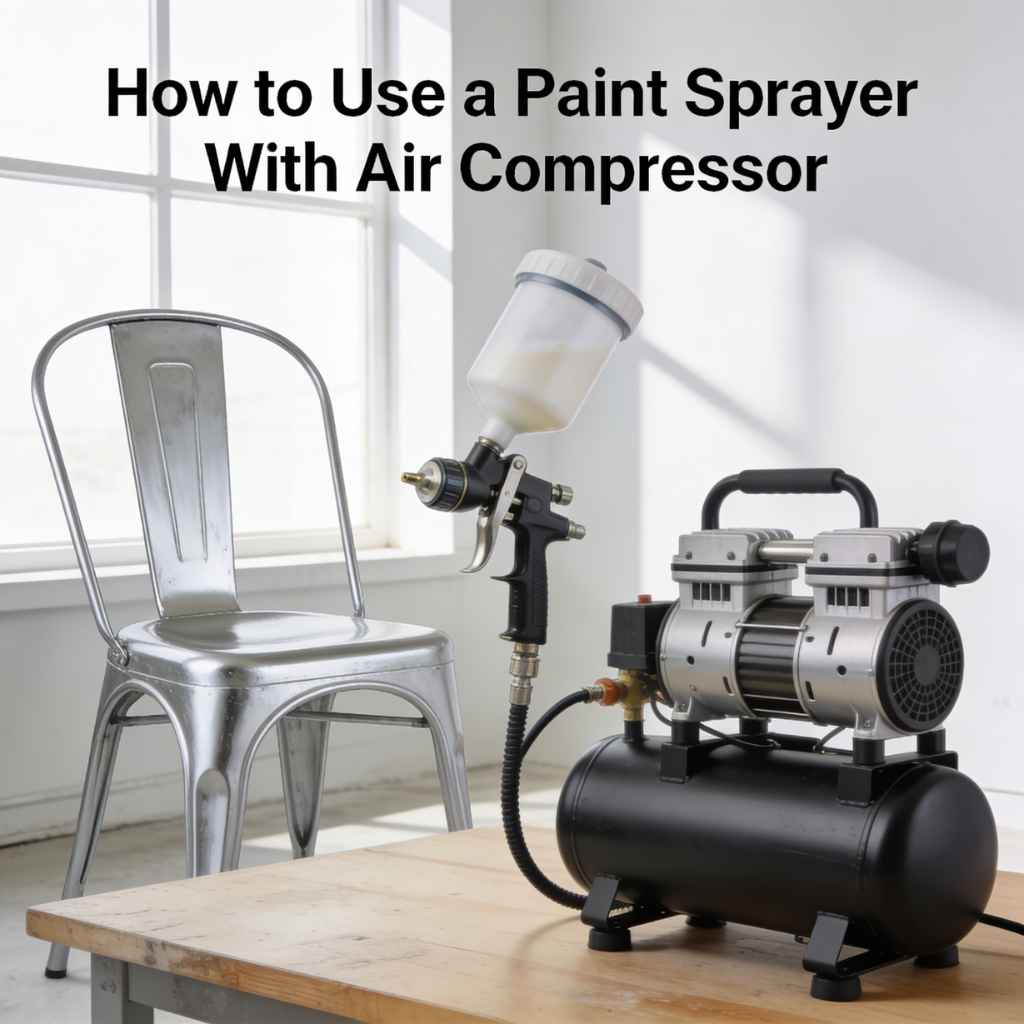
Your spray gun and air compressor work together. You need to connect them correctly. The compressor provides the air, and the gun sprays the paint.
Getting the air pressure just right is a key skill to learn.
- Connecting the Air Hose
You’ll need an air hose that fits both your air compressor and your spray gun. Most air compressors have a standard fitting for hoses. Spray guns also have a fitting where the air hose connects.
Make sure the connections are tight to prevent air leaks. Leaks mean less air pressure for your sprayer, which can lead to poor performance. Check all connections before you turn on the compressor.
- Understanding Air Pressure
Air pressure is measured in PSI (pounds per square inch). Your spray gun manual will tell you the recommended PSI range. Too much pressure can cause paint to spray too fast, leading to runs and uneven coverage.
Too little pressure means the paint won’t atomize well, resulting in a rough, grainy finish. You’ll adjust the pressure on your air compressor’s regulator. It’s a dial that controls how much air flows out.
- Setting Up the Paint Cup
Most spray guns have a cup that holds the paint. This cup attaches to the bottom or top of the gun. Make sure it’s screwed on tightly.
Some spray guns use hoses that draw paint from a larger bucket. If you’re using a cup, fill it with your thinned paint. Don’t fill it all the way to the top; leave some space.
This prevents spills when you move the gun.
How to Use a Paint Sprayer with Air Compressor Explained
This section covers the actual spraying process. We’ll go over how to hold the gun, how to move it, and how to get that perfect coat of paint. Mastering these techniques is what separates a pro job from a hobbyist one.
Priming Your Spray Gun
Before you spray the actual project, you need to prime the gun. This means running some paint or thinner through it to make sure everything is working right. It also helps you get a feel for the spray pattern.
- Test Spraying
Find a piece of scrap wood or cardboard. Hold your spray gun about 8-12 inches away from the surface. Try spraying in smooth, even strokes.
This is called the “trigger and release” method. Pull the trigger to start spraying, move the gun across the surface, and then release the trigger after you’ve moved past the edge. This creates clean starts and stops for your spray passes.
Practice this several times to get a feel for the distance and speed.
- Adjusting the Spray Pattern
Most spray guns have controls to adjust the spray pattern. You can often change it from a round pattern to a flat, wide fan. For larger areas, a wide fan is best.
For smaller or detailed work, a round pattern might be better. Experiment with these settings on your test piece. Look for a consistent, even spray with no heavy edges or gaps in the middle.
This adjustment is usually done with a collar or knob on the front of the spray gun.
- Checking for Clogs
During your test spray, watch for any signs of clogging. If paint comes out in clumps or in an uneven stream, your gun might be clogged. This can happen if paint is too thick or if there’s dried paint inside the gun.
Clean the tip and nozzle if you see this. It’s better to discover a clog during testing than when you’re halfway through painting your project.
The Spraying Technique
This is where the magic happens. Holding the gun correctly and moving it smoothly is key to a professional finish. It takes practice, but the results are worth it.
- Trigger Control
Always start and stop your spray stroke off the actual object you are painting. This technique, called “trigger and release,” is vital. Press the trigger when the gun is already moving, and release it after it has moved past the edge of your target.
This prevents splatters at the start and end of each pass. It ensures a clean, unbroken line of paint from edge to edge. Consistent trigger control leads to a uniform paint film.
- Consistent Motion
Move the spray gun at a steady pace. Keep the gun perpendicular to the surface you are painting. Imagine you’re painting stripes that slightly overlap.
Each new stripe should overlap the previous one by about 50%. This ensures you don’t miss any spots and avoids thick or thin areas. Varying your speed will create uneven coverage.
A consistent, smooth motion is more important than how fast you move.
- Distance from Surface
Hold the spray gun about 8 to 12 inches away from the surface. If you hold it too close, you’ll get drips and runs. If you hold it too far away, the paint will start to dry before it hits the surface, creating a rough, sandy texture.
This is called “overspray.” Finding that sweet spot of 8-12 inches is critical for a smooth, even finish. It might take some practice to find the perfect distance for your specific paint and gun.
Layering Paint for Best Results
You rarely get perfect coverage with just one coat. Applying thin, even coats is better than one thick coat.
- Applying Multiple Thin Coats
It’s almost always better to apply two or three thin coats of paint rather than one thick one. Thin coats dry faster and reduce the risk of drips, runs, and sags. Each coat should be applied evenly, with each pass overlapping the previous one by about half.
This ensures complete coverage without excessive paint build-up. Allow each coat to dry for the time recommended by the paint manufacturer before applying the next. Patience here leads to a superior finish.
- Drying Times Between Coats
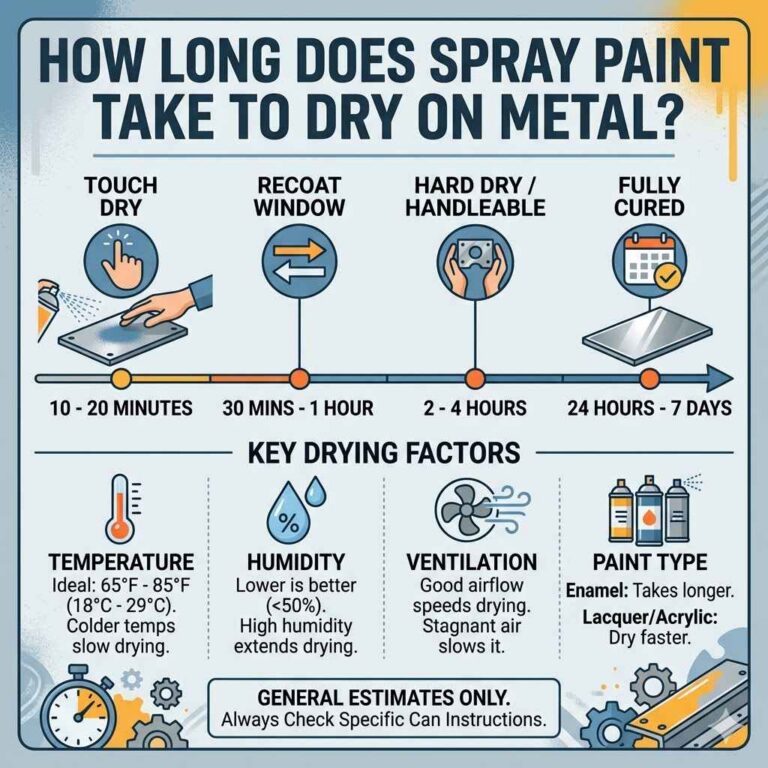
Always follow the manufacturer’s recommendations for drying times between coats. This is usually found on the paint can. Rushing this step can cause problems.
If a coat isn’t dry enough, the new paint can lift or damage the previous layer. This can lead to peeling, wrinkling, or an uneven surface. Properly dried layers create a strong, cohesive paint film.
- Checking for Coverage
After each coat, step back and look at your work. Check for any thin spots or missed areas. If you see any, you know you need to apply another coat.
The goal is to build up the paint slowly. Don’t try to achieve perfect coverage in the first pass. This patient approach will give you a much better final result and a smoother, more professional-looking paint job.
Troubleshooting Common Paint Sprayer Issues
Even with the best preparation, you might run into problems. This section helps you fix the most common issues so you can get back to painting.
Uneven Spray Pattern
This is when the spray coming out of the gun isn’t smooth and even. It might have heavy spots or be too thin in places.
- Check Air Cap Alignment
The air cap on your spray gun controls the shape of the spray. It has holes that direct the airflow. If it’s not aligned correctly, or if it’s damaged, it can cause an uneven spray pattern.
Make sure the air cap is securely fastened and that all holes are clean and open. Sometimes, just reseating the air cap can fix the problem. Check the gun’s manual for diagrams on how it should be positioned.
- Paint Viscosity Problems
As discussed before, paint that is too thick or too thin will cause spray pattern issues. If the paint is too thick, it won’t atomize properly. If it’s too thin, it might run off the surface too quickly.
Re-check your paint’s viscosity and thin it if necessary. Always use the recommended thinning ratio and test the flow from your gun.
- Incorrect Air Pressure
The air pressure from your compressor is critical. If it’s too high, the paint might atomize too aggressively, leading to dry spray. If it’s too low, the paint won’t break into fine droplets, creating a coarse finish.
Adjust your compressor’s regulator to the recommended PSI for your spray gun and paint. Small adjustments can make a big difference in the spray pattern.
Sputtering or Pulsing Spray
This happens when the paint doesn’t come out in a steady stream but in bursts.
- Clogged Nozzle or Tip
A clogged nozzle or spray tip is a very common cause of sputtering. Dried paint particles can block the small openings. Try cleaning the tip and nozzle thoroughly.
Sometimes soaking them in a solvent recommended for your paint can help loosen dried paint. Ensure all passages are clear before reassembling the spray gun. A small brush or cleaning needle can be useful.
- Air Leaks
Air leaks anywhere in the system can cause sputtering. This includes leaks at the air compressor connection, the hose couplings, or even loose parts on the spray gun itself. Check all connections for tightness and listen for any hissing sounds.
A faulty gasket or seal can also cause leaks. Fixing these leaks ensures consistent airflow to the gun.
- Insufficient Air Supply
If your air compressor is too small for the job or if it’s running out of air, you might get a pulsing spray. The compressor needs to keep up with the demand of the spray gun. Ensure your compressor has a high enough CFM (cubic feet per minute) rating to handle your spray gun.
Also, make sure the compressor tank has enough air in it before you start spraying.
Runs and Drips
These are those annoying lines of excess paint that form when paint flows down a vertical surface.
- Too Much Paint Applied
The most common reason for runs and drips is applying too much paint at once. This can happen if you spray too close to the surface, move too slowly, or apply overly thick coats. Remember to use multiple thin coats instead of one heavy one.
If you see a run starting, stop spraying and try to gently level it out with a brush while the paint is still wet. Sometimes, you might need to let it dry and then sand it down.
- Incorrect Gun Angle
If you hold the spray gun at an angle instead of perpendicular to the surface, paint can build up on one side, leading to drips. Always keep the gun moving in a straight line, parallel to the surface you’re painting. This ensures even paint deposition.
Maintain that 90-degree angle for consistent results.
- Paint is Too Thin
If your paint has been thinned too much, it can become runny and prone to dripping. Double-check your thinning ratio. The paint should have a good body to it, not be watery.
A viscosity cup can help ensure you have the right consistency. If it’s too thin, let it sit for a bit to allow some of the solvent to evaporate, or add a bit more paint.
Maintenance and Cleaning Your Paint Sprayer
Taking care of your equipment after you’re done painting is just as important as getting ready. Good maintenance means your sprayer will last longer and work better.
Cleaning the Spray Gun
This is the most important part of maintenance. If you don’t clean your gun properly, it will clog up and stop working.
- Immediate Cleaning is Best
Clean your spray gun as soon as you finish spraying. Don’t let paint dry in the gun. The longer paint sits, the harder it is to remove.
Disassemble the gun according to the manufacturer’s instructions. Use the recommended cleaning solvent for the type of paint you used.
- Disassembly and Washing
Take apart the parts that came into contact with paint, like the needle, nozzle, and cup. Wash them thoroughly with your cleaning solvent and a brush. Make sure to get into all the nooks and crannies.
Many spray guns come with a small cleaning kit that includes brushes and tools for this purpose. Rinse all parts well after washing.
- Reassembly and Storage
Once all parts are clean and dry, reassemble the spray gun. Store it in a clean, dry place. Some people apply a light coat of oil to metal parts to prevent rust.
Proper storage keeps your gun in good working order for your next project. Check the manual for specific storage recommendations.
Cleaning the Air Compressor and Hoses
Your air compressor also needs some attention to keep it running smoothly.
- Draining the Air Tank
Water can build up in the air compressor tank from condensation. You need to drain this water regularly. There’s usually a valve at the bottom of the tank.
Open it and let all the water drain out. This prevents rust and corrosion inside the tank. Do this after every few uses, or more often if you’re painting in humid conditions.
- Cleaning Air Filters
Air compressors have filters to keep dust and debris out of the air. These filters can get clogged over time. Check your air filter regularly and clean or replace it as needed.
A dirty filter can restrict airflow, which affects your spray gun’s performance. A clean filter ensures the compressor delivers clean, dry air.
- Checking Hoses
Inspect your air hoses for any signs of wear or damage. Cracks or leaks can reduce air pressure and cause problems. Make sure all connections are secure.
If a hose is damaged, replace it immediately to avoid unexpected failures.
Storing Your Equipment
Proper storage protects your equipment from damage and ensures it’s ready when you need it.
- Protect from Dust and Moisture
Store your spray gun and compressor in a clean, dry environment. Dust can clog up air inlets and paint passages. Moisture can cause rust on metal parts.
A dedicated tool chest or a clean storage cabinet works well. Covering the equipment with a light cloth can also help keep dust off.
- Keep Manuals Handy
Keep the user manuals for your spray gun and air compressor somewhere accessible. They contain important information about operation, maintenance, and troubleshooting. Referring to the manual can save you a lot of time and frustration when you encounter an issue or need to perform maintenance.
- Store with Care
Avoid storing heavy items on top of your spray gun. Sensitive parts like the needle and tip can be bent or damaged. Store the air compressor in a well-ventilated area, away from extreme temperatures.
Proper storage ensures your tools are reliable for years to come.
Real-Life Examples and Scenarios
Seeing how others use paint sprayers can be very helpful. Here are a few examples.
Example 1: Painting Kitchen Cabinets
Sarah wanted to update her old kitchen cabinets. She decided to use a paint sprayer to get a smooth, factory-like finish. She chose a water-based enamel paint and thinned it according to the instructions.
She set up her air compressor to 35 PSI and used a fan-shaped spray pattern. Sarah applied three thin coats, letting each coat dry for the recommended time. The cabinets looked amazing, like they were professionally refinished.
She said the sprayer saved her hours of brushing and gave a much better result.
Example 2: Refinishing an Old Chair
Mark found a beautiful antique chair but it needed a fresh coat of paint. He used an HVLP (High Volume Low Pressure) spray gun, which is great for furniture. He used an oil-based paint for durability.
He made sure to mask off the upholstery carefully. After cleaning and prepping the wood, he sprayed two light coats. The chair looked brand new, with a smooth finish that he couldn’t have achieved with a brush.
Scenario: DIY Furniture Painting Project
You want to paint a wooden dresser. You have a siphon-feed spray gun and a small air compressor.
- First, clean the dresser thoroughly and sand it down smooth.
- Mask off any hardware or areas you don’t want painted.
- Mix your paint, thinning it until it flows easily from your gun.
- Set your air compressor to about 30 PSI and adjust your spray gun’s pattern.
- Spray the dresser in thin, even coats, overlapping each pass.
- Let each coat dry completely before applying the next.
- Clean your spray gun immediately after you finish.
This step-by-step approach ensures a professional-looking finish.
Statistics on Paint Sprayer Usage
Paint sprayers are becoming more popular for DIY projects and professional use. Here are some interesting numbers.
| Benefit | Percentage of Users Reporting |
|---|---|
| Faster Application Time | 85% |
| Smoother Finish | 78% |
| Reduced Labor Costs | 70% |
| Ability to Paint Intricate Surfaces | 65% |
These figures show why many people choose sprayers for their painting needs. They offer significant advantages over traditional methods like brushing and rolling. The efficiency and quality of finish are major draws for both professionals and hobbyists.
A study by the National Association of Home Builders found that using sprayers can reduce painting time by up to 50% on larger projects.
Frequently Asked Questions
Question: How much air pressure do I need for a paint sprayer?
Answer: The amount of air pressure needed varies depending on the type of spray gun and the paint you are using. Typically, you will need between 20 to 50 PSI. Always check your spray gun’s manual for the recommended pressure range.
Question: Can I use any paint with a paint sprayer and air compressor?
Answer: Not all paints are suitable for spraying without modification. Most paints, especially latex and acrylics, need to be thinned to the correct viscosity. Oil-based paints, lacquers, and enamels often spray better but still may require thinning.
Always check the paint can for specific instructions.
Question: How do I prevent runs and drips when spray painting?
Answer: To prevent runs and drips, apply paint in thin, even coats. Maintain a consistent distance of 8-12 inches from the surface and move the spray gun at a steady pace. Avoid spraying too much paint in one area.
If you notice a drip starting, stop spraying and gently try to smooth it out while the paint is wet.
Question: How often should I clean my paint sprayer?
Answer: You should clean your paint sprayer immediately after each use. Leaving paint in the gun can cause it to clog and become damaged. Regular cleaning and maintenance will ensure your sprayer functions properly and lasts longer.
Question: What is overspray?
Answer: Overspray is the fine mist of paint that drifts away from your target surface when you are spray painting. It happens when the paint particles are too dry by the time they reach the surface, often due to holding the gun too far away or using too much air pressure. Proper technique and air pressure adjustments help minimize overspray.
Conclusion
Using a paint sprayer with an air compressor is a great way to achieve smooth, professional finishes. By following these steps for preparation, spraying, and cleaning, you can tackle any project with confidence. Remember to practice your technique and always keep your equipment clean for the best results.
Happy painting!