Is Flashing Your Lights to Warn of Cops Illegal: Essential Guide
Quick Summary: In most places, flashing your headlights to warn other drivers about police presence is not explicitly illegal, but it can be a legal gray area and may lead to traffic stops or citations depending on local laws and officer discretion. Always prioritize safe driving and be aware of your specific state’s regulations.
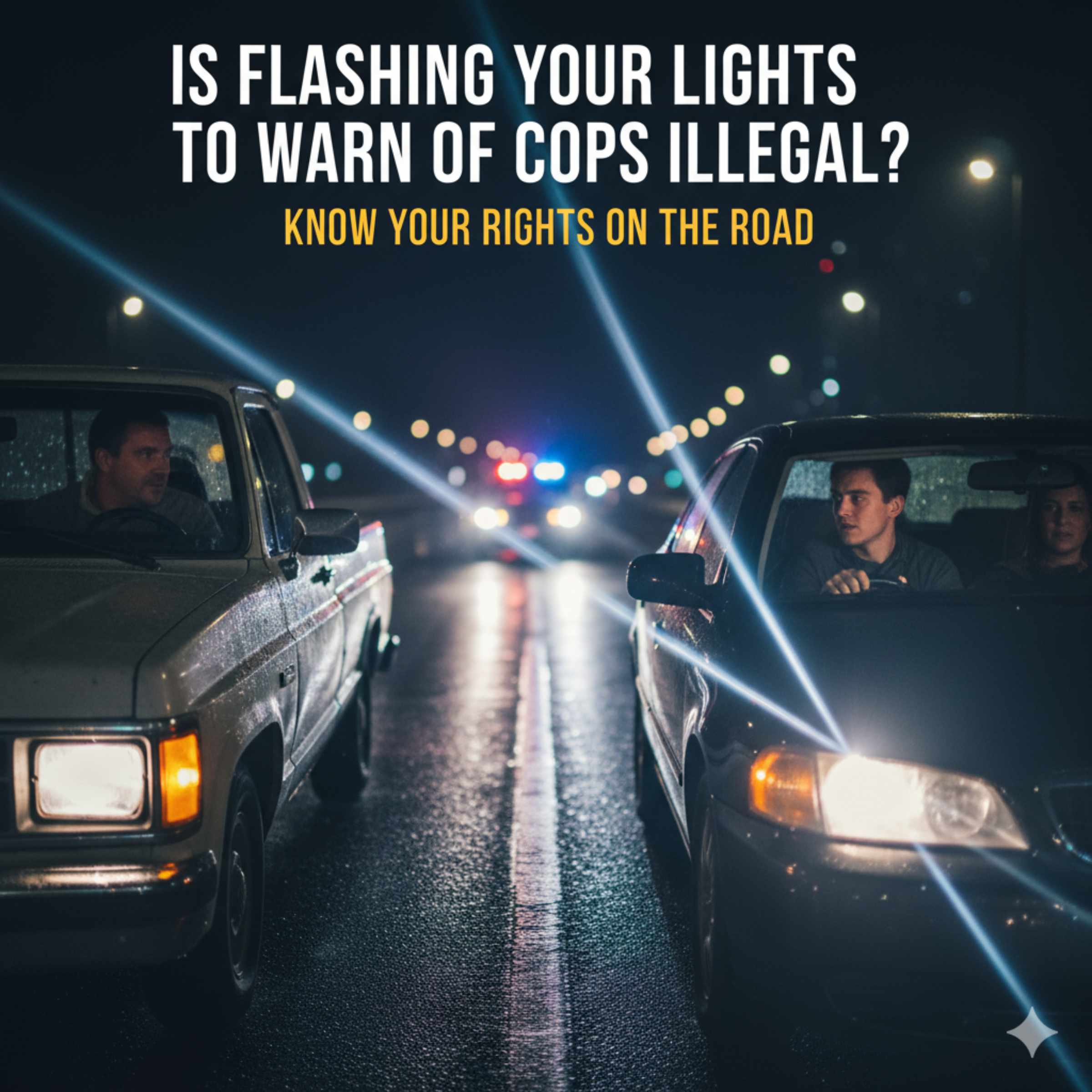
Have you ever been driving and seen another car flash its headlights at you? Maybe you’ve wondered what that signal means, or perhaps you’ve even done it yourself to let another driver know about something up ahead. It’s a common sight on roads, but one of the most frequent reasons drivers flash their lights is to warn others about police officers. This can leave you wondering, “Is flashing your lights to warn of cops illegal?” It’s a question many of us have pondered, especially when we’re trying to be helpful or just avoid a ticket. Let’s clear up this common driving mystery with a straightforward guide.
Understanding traffic laws can feel like navigating a maze. Sometimes, actions that seem harmless can have unexpected consequences. This guide is here to break down the legality of flashing your lights to warn about police, explain why it’s such a common practice, and help you make informed decisions on the road. We’ll explore the nuances of this driving etiquette and what you need to know to stay on the right side of the law.
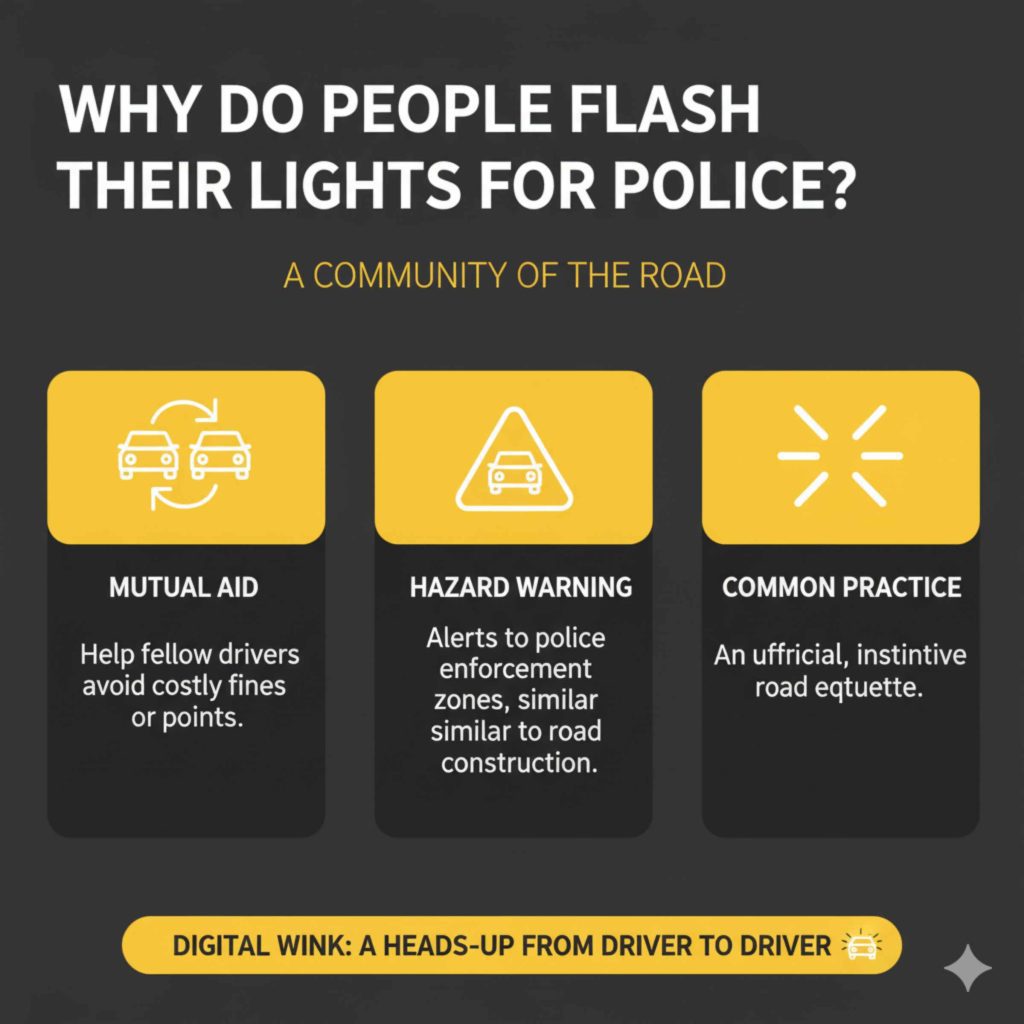
Why Do People Flash Their Lights for Police?
The practice of flashing headlights to warn other drivers about law enforcement is deeply rooted in a sense of community and mutual assistance on the road. It’s a gesture that stems from a desire to help fellow drivers avoid potential trouble, like speeding tickets or other traffic violations. Think of it as a digital wink or a quick heads-up passed from one driver to another.
This informal communication system has evolved over time. Before instant communication was as widespread as it is today, flashing lights were one of the quickest ways to relay information about hazards or police activity ahead. It’s a form of social signaling that many drivers feel is a helpful, albeit unofficial, part of road etiquette.
- Mutual Aid: Drivers often feel a sense of solidarity and want to help others avoid costly fines or points on their license.
- Hazard Warning: It’s seen as a way to alert drivers to a potential danger or enforcement zone, similar to warning about road construction or debris.
- Common Practice: It has become so common that many drivers understand the gesture instinctively.
Is Flashing Your Lights to Warn of Cops Illegal? The Legal Landscape
This is the big question, and the answer isn’t a simple yes or no. The legality of flashing your headlights to warn other drivers about police presence is complex and varies significantly by state and even by the specific circumstances. There isn’t a universal federal law against it, but many jurisdictions have laws that could potentially be applied.
In many places, there isn’t a specific statute that says, “Thou shalt not flash thy lights to warn of police.” However, police officers and courts might interpret this action under broader traffic regulations. This is where the gray area comes in, and it’s crucial to understand the potential legal interpretations.
The core of the issue often revolves around whether the flashing light is considered a distraction, a form of obstruction, or if it impedes law enforcement’s ability to do their job. Some states have laws against using high beams in a way that could blind other drivers, and while flashing headlights for a warning isn’t usually done with high beams, the intent behind the flashing could be scrutinized.
Potential Legal Interpretations and Charges
While not always explicitly illegal, flashing your lights to warn others about police can sometimes lead to legal trouble. Here’s how:
- Disturbing the Peace or Creating a Public Nuisance: In some rare cases, authorities might argue that such actions create a disturbance or nuisance by interfering with law enforcement operations.
- Impeding Law Enforcement: The argument could be made that by warning drivers, you are hindering the police’s ability to enforce traffic laws.
- Improper Use of Lights: Some states have general laws about the proper use of vehicle lights. While not specific to warning about police, an officer could potentially use these broader statutes. For example, the National Highway Traffic Safety Administration (NHTSA) provides resources on state lighting laws, highlighting the variations across the country.
- Obstruction of Justice (Rare): In extreme scenarios, if it’s proven that the flashing lights directly prevented an officer from making a lawful stop or performing their duties, it could potentially lead to more serious charges, though this is highly unlikely for a simple headlight flash.
State-Specific Laws and Cases
The most important factor is your local jurisdiction. What might be overlooked in one state could be a ticketable offense in another. Here’s a look at how different states approach this:
States Where It’s Generally Tolerated (but still a gray area):
Many states do not have specific laws prohibiting this practice. Drivers often engage in it without issue. However, this doesn’t mean it’s entirely risk-free. An officer can still pull you over and issue a warning or a citation if they believe your actions violate a broader traffic law.
States Where It Might Be Questionable or Illegal:
- Texas: There have been instances where drivers were cited under a statute that prohibits “using a vehicle’s lights in a manner that interferes with traffic or impedes the use of the roadway.” While not explicitly mentioning police warnings, the interpretation can lean that way.
- Illinois: Some interpretations suggest that flashing headlights to warn others could be seen as a violation of laws related to the improper use of lights or creating a hazard, though specific enforcement is rare.
- California: While there isn’t a direct law against flashing headlights to warn of police, officers can issue tickets for violations like “impeding traffic” or “unsafe lane change” if they feel the driver’s actions are disruptive.
It’s always best to check your specific state’s vehicle code. A good starting point for understanding traffic laws is often your state’s Department of Motor Vehicles (DMV) website or a legal resource like FindLaw, which offers summaries of state laws.
When Flashing Your Lights COULD Be Problematic
Beyond the direct legality, there are situations where flashing your lights might be seen as more problematic or could increase your risk of being stopped.
1. Excessive or Misleading Flashing
Simply flashing your headlights once or twice as you pass a police car is usually what people mean. However, if you’re doing it repeatedly, aggressively, or in a way that seems intended to taunt or distract law enforcement, it could be viewed more negatively.
2. Using High Beams Improperly
While most people use their regular headlights, if you were to use your high beams specifically to blind or disorient an officer or other drivers, that would almost certainly be illegal. Many states have laws against the improper use of high beams that can be enforced to prevent blinding other drivers.
3. Interfering with an Active Stop or Investigation
If you were to flash your lights in a way that clearly interfered with an officer conducting a traffic stop, making an arrest, or investigating an incident, this could be seen as obstruction. This is a more serious scenario than a simple warning to passing traffic.
4. Creating a Hazard
Any driving behavior that creates a hazard for yourself or others can be grounds for a ticket. If your flashing lights cause another driver to brake suddenly, swerve, or become distracted, you could be cited for a related offense, regardless of your intent to warn.
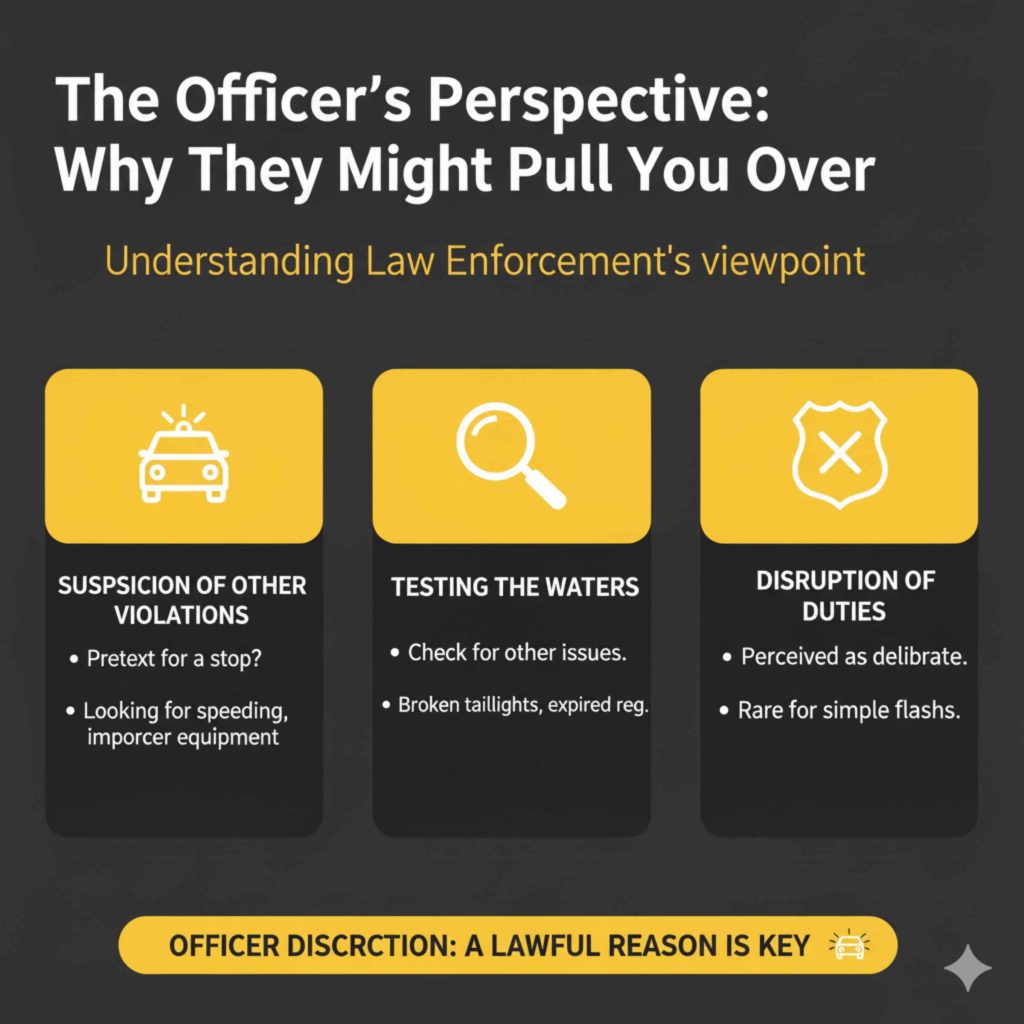
The Officer’s Perspective: Why They Might Pull You Over
From an officer’s point of view, a driver flashing their lights can be interpreted in several ways. While they might understand the common gesture, they also have a job to do, which includes enforcing traffic laws fairly and safely.
- Suspicion of Other Violations: An officer might see you flashing your lights and assume you’re trying to warn someone about their presence because you are engaged in some other traffic violation, like speeding or improper equipment.
- Testing the Waters: Some officers might see it as an opportunity to check your vehicle for other potential violations (like broken taillights or expired registration) if they have a reason to stop you anyway.
- Disruption of Duties: While rare for simple flashes, if the action is perceived as deliberately disruptive, an officer might feel justified in stopping the vehicle.
It’s important to remember that police officers have discretion. If they have a lawful reason to stop you, they can do so. The act of flashing lights might be the pretext for a stop where they then investigate other potential violations.
Alternatives and Safer Driving Practices
Given the potential for confusion and legal gray areas, it’s worth considering alternatives or simply focusing on your own safe driving habits.
Focus on Your Own Driving
The safest and most straightforward approach is to focus on obeying all traffic laws yourself. Drive at or below the posted speed limits, use your turn signals, and maintain a safe following distance. This ensures you’re not the one who needs warning.
Observe, Don’t Interfere
If you see police activity, the best course of action is usually to simply observe it and adjust your speed accordingly if you are exceeding the limit. Let the officers do their jobs without attempting to influence the situation.
Use Your Turn Signals
This might sound basic, but properly signaling lane changes and turns is crucial for road safety. It communicates your intentions clearly to other drivers and can prevent accidents, which is the ultimate goal of road safety initiatives promoted by organizations like the Governors Highway Safety Association (GHSA).
If You’re Pulled Over
If you are stopped by law enforcement, remain calm and polite. Understand that the officer may have observed something they deemed a violation. Do not argue. If you believe you were unjustly cited, you have the right to contest it in court.
A Table: Flashing Lights – Potential Risks vs. Common Practice
To help visualize the situation, here’s a table outlining the common perception versus the potential legal realities:
| Common Practice/Perception | Potential Legal Risks/Officer’s View |
|---|---|
| Helpful gesture: Warning others of police to prevent tickets. | Illegal interference: Potentially obstructing law enforcement or violating light usage laws. |
| Community spirit: Looking out for fellow drivers. | Distraction/Nuisance: Causing drivers to focus on signals rather than the road. |
| Harmless action: No direct harm caused. | Pretext for stop: Used to initiate a traffic stop to check for other violations. |
| Common and accepted: Many drivers do it without consequence. | State-specific laws: Varies by jurisdiction; some states have statutes that can be applied. |
Frequently Asked Questions (FAQ)
Q1: Is it illegal to flash my headlights at other drivers in general?
A: Flashing your headlights at other drivers in general is usually not illegal. It’s often used to signal hazards, thank someone, or, as discussed, warn about police. However, using your high beams improperly to blind other drivers is illegal in most places.
Q2: Can I get a ticket for flashing my lights to warn about a police officer?
A: It depends on your state and the specific circumstances. While there isn’t a universal law against it, you could potentially be cited under broader traffic statutes like “improper use of lights,” “creating a hazard,” or “impeding traffic,” depending on the officer’s interpretation and your state’s laws.
Q3: What if I see a police car and want to warn others? Should I do it?
A: It’s a personal decision. Many people do it without issue. However, to be absolutely safe and avoid any potential legal entanglements or the risk of being pulled over, it’s best to focus on your own safe driving and refrain from flashing your lights for this purpose.
Q4: What if an officer pulls me over for flashing my lights? What should I do?
A: Stay calm and polite. Do not admit to anything. You can state that you were simply driving and were unaware of any violations. If the officer issues a ticket, you have the right to accept it or contest it in court.
Q5: Are there any states where flashing lights to warn of police is definitely illegal?
A: While “definitely illegal” is strong wording as enforcement can vary, states like Texas have statutes that have been interpreted to cover this action. It’s always best to be aware of your specific state’s traffic codes, which are often available on the state’s DMV website.
Q6: Does the intent matter if I flash my lights?
A: Intent can matter in legal situations, but in the context of traffic stops, officers often focus on the action itself and whether it violates a specific statute or creates a safety concern. While your intent might be helpful, an officer might still issue a citation if they believe a law was broken.
Conclusion: Drive Smart, Drive Safe
Navigating the rules of the road involves more than just knowing speed limits and traffic signals. It’s also about understanding the unwritten rules and the potential legal nuances of common driving practices. The question of whether flashing your lights to warn of police is illegal doesn’t have a simple answer because it’s a legal gray area that varies by location and circumstance.
While the intent behind flashing your lights is often to be helpful and part of a driver’s informal communication network, it’s essential to be aware of the potential risks. In some states, this action could lead to a traffic stop or a citation under broader traffic laws. The best approach for any DIY homeowner or driver is to prioritize safety and compliance.
By focusing on your own safe driving, obeying all traffic laws, and avoiding actions that could be misinterpreted or used as a pretext for a traffic stop, you can ensure you stay on the right side of the law. Remember, clear communication on the road comes from proper signaling and predictable driving, not necessarily from flashing your lights. Stay informed, drive responsibly, and keep yourself and others safe on the journey.