Is It Haram To Light Candles: Essential Guide
Is it Haram to Light Candles? An Essential Guide for Muslims: Yes, generally, lighting candles is permissible (halal) in Islam, provided the intention and use are for lawful purposes and do not involve any forbidden practices.
Lighting candles can add a beautiful ambiance to your home or be used for practical reasons. Many of us wonder if this common practice is okay according to our faith. If you’ve ever paused before lighting a candle, wondering if it aligns with Islamic teachings, you’re not alone. This guide will walk you through what Islamic scholars generally say about lighting candles, helping you feel confident in your choices. We’ll explore the permissibility, common uses, and any potential concerns, all in simple terms. Let’s shed some light on this topic together!
Understanding Permissibility in Islam
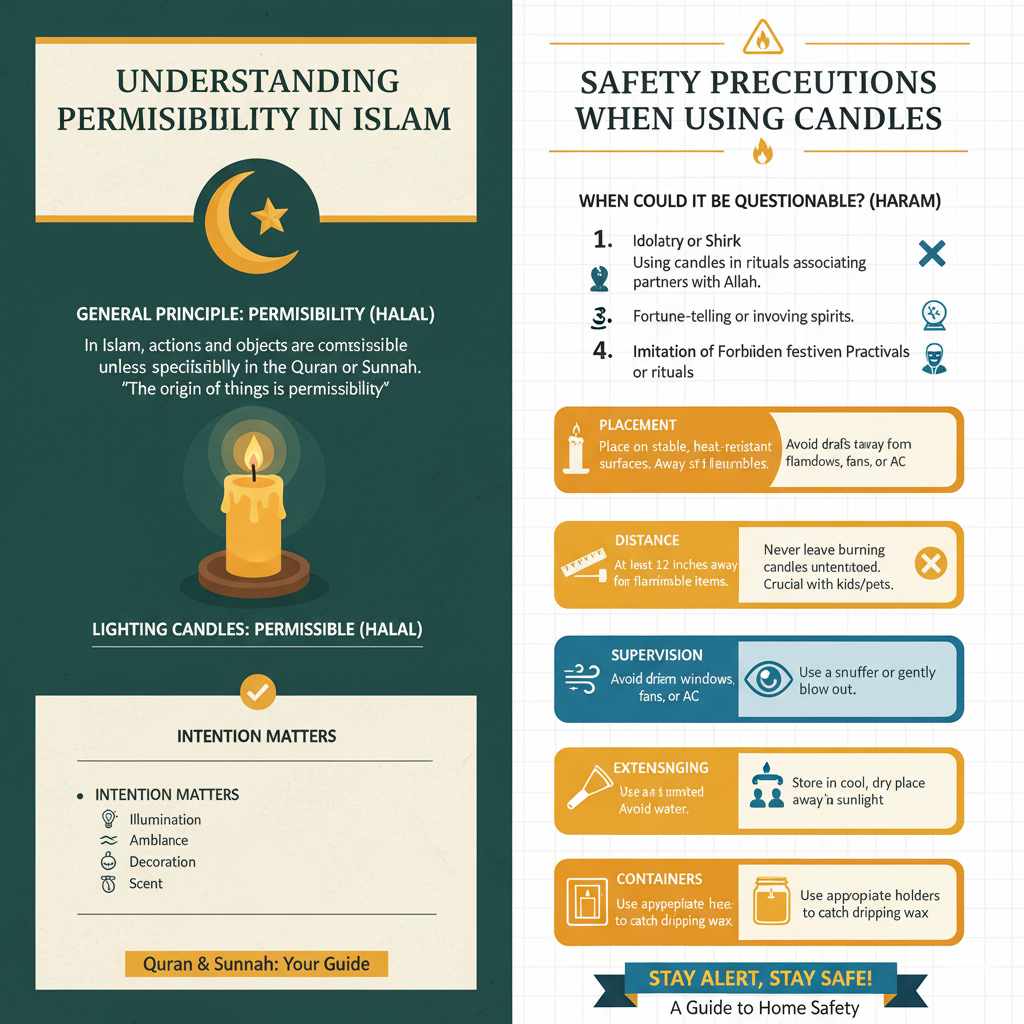
In Islam, the general principle regarding actions and objects is permissibility (halal) unless there is a specific prohibition (haram) found in the Quran or Sunnah (the teachings and practices of Prophet Muhammad, peace be upon him). This principle is often summarized by the phrase, “The origin of things is permissibility.”
When it comes to something as simple as lighting a candle, there isn’t a direct prohibition in the religious texts. Therefore, the act of lighting a candle itself is considered permissible. The key lies in the intention behind the action and how the candle is used.
Intention Matters
The intention (niyyah) behind an action is crucial in Islam. If you light a candle for a permissible reason, such as:
Illumination: To light up a dark room when electricity is out.
Ambiance: To create a peaceful and calming atmosphere for relaxation or reading.
Decoration: To enhance the aesthetic appeal of your home for a gathering or special occasion.
Scent: To enjoy the fragrance of a scented candle for personal enjoyment or to freshen a space.
Then, the act is considered halal.
When Could It Be Questionable?
While lighting candles is generally permissible, certain contexts or intentions could make it questionable or even impermissible (haram). These might include:
Idolatry or Shirk: If candles are used in rituals that associate partners with Allah (shirk) or in practices resembling idol worship, this would be strictly forbidden. Islam strongly condemns associating anything with Allah’s divinity.
Superstition: Using candles for superstitious purposes, such as fortune-telling or invoking spirits, is not permitted.
Wastefulness: While not strictly haram, excessive or wasteful use of resources without a valid purpose might be discouraged.
Imitation of Forbidden Practices: If lighting candles is part of a ritual or celebration that is specifically forbidden in Islam (e.g., certain pagan festivals or practices of other religions that are incompatible with Islamic beliefs), then it would be impermissible.
Common Uses of Candles and Their Islamic Viewpoint
Let’s break down some common ways people use candles and see how they fit within Islamic guidelines.
Candles for Light and Ambiance
Historically, candles were a primary source of light before electricity. Using them for illumination during power outages or in areas without electricity is perfectly fine. Similarly, creating a cozy or romantic atmosphere with candles for personal enjoyment or with family is also permissible. The Prophet Muhammad (peace be upon him) and his companions lived in times when candles and lamps were common, and their use for practical purposes was a norm.
Scented Candles
Scented candles are popular for their pleasant fragrances. Enjoying a nice smell is generally encouraged in Islam, as cleanliness and pleasant aromas are valued. The Prophet Muhammad (peace be upon him) himself appreciated good scents. So, using scented candles for personal enjoyment or to make your living space more pleasant is permissible, as long as the scent itself is not offensive or associated with something haram.
Decorative Candles
Candles are often used as decorative items to enhance the beauty of a home. This is generally acceptable. However, if the candle’s design or the way it’s displayed mimics forbidden imagery or symbols, or if it’s used in a way that promotes impermissible activities, then it would be problematic.
Candles in Religious or Spiritual Practices
This is where careful consideration is needed.
Islamic Practices: Candles are not traditionally used in Islamic worship or rituals. The primary sources of light in mosques are usually electric or oil lamps, and there’s no prescribed use of candles in prayer (Salah), Quran recitation, or other acts of worship.
Other Religions/Belief Systems: If candles are used in the practices of other religions or spiritual beliefs that contradict Islamic monotheism (Tawhid) or involve associating partners with Allah, then Muslims should refrain from participating in or imitating such practices. This includes using candles in ways that are part of ancestor worship, pagan rituals, or other non-Islamic spiritual ceremonies.
It’s important to distinguish between using a candle as a mere object (like a source of light or fragrance) and using it as a symbol or tool within a religious practice that is not Islamic.
Candles and Islamic Etiquette (Adab)
While the act of lighting candles is generally halal, Islamic etiquette encourages mindful and responsible living.
Safety First: Fire safety is paramount. Candles should be placed on stable surfaces, away from flammable materials, and never left unattended, especially around children or pets. This aligns with the Islamic principle of avoiding harm to oneself and others.
Moderation and Avoiding Waste: While not a strict prohibition, Islam encourages avoiding extravagance and wastefulness. Using candles excessively when not needed might be seen as going against this principle.
Awareness of Surroundings: If you are in a mixed environment, be mindful of how your actions might be perceived. However, this should not lead to abandoning permissible practices out of undue concern.
What About Specific Types of Candles?
Let’s look at some specific types of candles and their potential implications.
Birthday Candles
Birthday celebrations, while a cultural practice, can sometimes involve elements that are not aligned with Islamic teachings, such as imitating non-Islamic traditions or focusing excessively on worldly celebrations.
The Act of Lighting: The act of lighting candles on a cake and blowing them out is often seen as a cultural practice rather than a religious one. Many scholars permit it if the intention is simply to celebrate a milestone with family and friends, without any imitation of forbidden religious rituals or beliefs.
Focus on Gratitude: It’s often advised to use such occasions to reflect on blessings and express gratitude to Allah for the year passed and the life granted.
Avoiding Excess: As with any celebration, moderation and avoiding extravagance are encouraged.
Religious-Themed Candles (Non-Islamic)
If a candle is specifically designed or marketed as part of a non-Islamic religious ritual (e.g., a candle meant to be lit for a specific deity or prayer in another faith), then it would be impermissible for a Muslim to purchase or use it for that intended religious purpose.
Scented Candles and Their Ingredients
Most scented candles use paraffin wax or soy wax with added fragrance oils and dyes. As long as the fragrance and dyes themselves are not derived from or associated with forbidden substances (like alcohol used as a solvent in some perfumes, though its presence in a burnt candle is generally considered negligible and permissible), their use is fine. The focus remains on the permissible use of the candle itself.
Expert Opinions and Islamic Scholarly Views
Islamic scholars generally agree that the act of lighting candles is permissible in principle. The permissibility hinges on the intention and application.
Classical Scholarly Consensus: There is no historical prohibition against the use of candles for light or decoration. The focus in Islamic jurisprudence is always on the purpose and manner of use.
Contemporary Fatwas: Modern fatwas from reputable Islamic scholarly bodies typically affirm the permissibility of candles for everyday uses like illumination, ambiance, and scent, provided they are not used in ways that contradict Islamic teachings. For example, the use of candles on birthdays is often debated, with many permitting it if it’s a cultural practice devoid of imitation of non-Islamic religious rites and without extravagance.
A Simple Table: Candle Use and Permissibility
To make it even clearer, here’s a quick look at different uses:
| Use of Candle | Permissibility (Halal/Haram/Makruh) | Notes |
|---|---|---|
| Illumination (e.g., power outage) | Halal | Practical necessity. |
| Creating ambiance for relaxation/reading | Halal | Personal enjoyment, if intention is good. |
| Decoration for a permissible gathering | Halal | Enhancing aesthetics. |
| Enjoying pleasant fragrance | Halal | Subject to fragrance itself being permissible. |
| Rituals of other religions/superstitions | Haram | Involves prohibited beliefs or practices. |
| Birthday celebrations (cultural) | Permissible (with conditions) | If no imitation of forbidden religious practices and no extravagance. |
| Wasteful or excessive use | Makruh (discouraged) | Against principles of moderation. |
Safety Precautions When Using Candles
As your guide to home projects and safety, I always emphasize caution. Using candles requires awareness, just like any tool in your workshop.
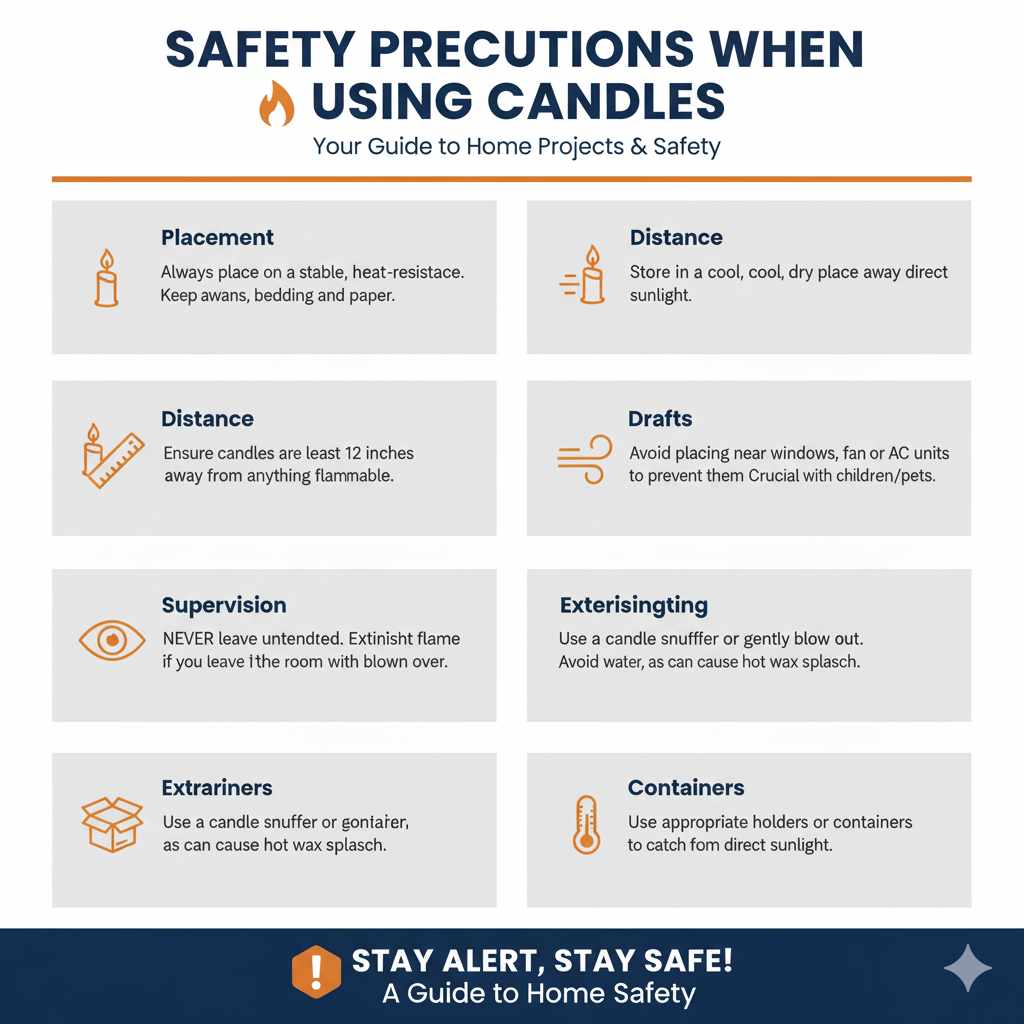
Placement: Always place candles on a stable, heat-resistant surface. Keep them away from curtains, bedding, paper, and anything else that can easily catch fire.
Distance: Ensure candles are at least 12 inches away from anything flammable.
Drafts: Avoid placing candles where they can be easily blown over by drafts from windows, fans, or air conditioning units.
Supervision: Never leave a burning candle unattended. If you leave the room, even for a moment, extinguish the flame. This is crucial when children or pets are around.
Extinguishing: Use a candle snuffer or gently blow out the flame. Avoid using water, as it can cause hot wax to splash.
Storage: Store candles in a cool, dry place away from direct sunlight to prevent them from melting or warping.
* Containers: Use candles in appropriate holders or containers that can catch dripping wax and prevent it from spreading.
Following these safety tips ensures you can enjoy the benefits of candles without unnecessary risk.
Frequently Asked Questions (FAQ)
Here are some common questions beginners might have about lighting candles in Islam.
Q1: Is it okay to light candles for decoration in my home?
Yes, it is generally permissible (halal) to light candles for decoration in your home. Islam encourages creating a pleasant living environment. The key is that the decoration itself and the act of lighting the candle should not be associated with any prohibited practices or beliefs.
Q2: Can I use scented candles?
Certainly! Using scented candles for their fragrance is permissible, provided the scent itself is pleasant and not derived from or associated with forbidden substances. Enjoying good smells is encouraged in Islam.
Q3: Is it haram to light candles on a birthday cake?
This is a common question. The act of lighting candles on a birthday cake is often considered a cultural practice rather than a religious one. Many scholars permit it if the intention is simply to celebrate a milestone with loved ones, without imitating non-Islamic religious rituals or engaging in extravagance. It’s best to focus on gratitude and permissible forms of celebration.
Q4: Are candles used in Islamic worship?
No, candles are not traditionally used in Islamic worship (like prayer or reading the Quran). Islamic rituals have their own established practices for illumination and adornment, which do not typically involve candles.
Q5: What if a candle is part of a non-Islamic religious ritual?
If a candle is intended for use in a religious ritual of another faith that contradicts Islamic beliefs (e.g., involving worship of other deities or associating partners with Allah), then it is impermissible (haram) for a Muslim to use it for that purpose.
Q6: Is it permissible to light candles for good luck or fortune-telling?
No, using candles for superstitious purposes like seeking good luck, fortune-telling, or communicating with spirits is not permissible (haram) in Islam. Such practices are considered forms of shirk (associating partners with Allah) or relying on falsehood.
Q7: Are there any specific types of candles that are haram?
The candle itself is usually not haram. However, if a candle is designed with symbols that are offensive or associated with forbidden practices, or if it’s specifically marketed for use in a haram ritual, then its use for that purpose would be impermissible. The primary concern is the intent and context of use.
Conclusion
As we’ve explored, the simple act of lighting a candle is generally permissible in Islam. The guiding principles revolve around intention and application. If you light a candle for light, a pleasant atmosphere, or a nice scent, and do so safely, you are well within the bounds of Islamic teachings. Remember, Islam encourages us to live a good life, which includes making our surroundings pleasant and using resources wisely and safely.
The core message is that the object itself—a candle—is neutral. It’s how we use it that matters. As long as your use of candles doesn’t involve imitation of forbidden religious practices, superstition, or associating partners with Allah, you can enjoy their light and ambiance with peace of mind. Keep safety in mind, as you would with any household item, and continue to make your home a place of comfort and serenity. May your homes be filled with peace and the permissible blessings of Allah.