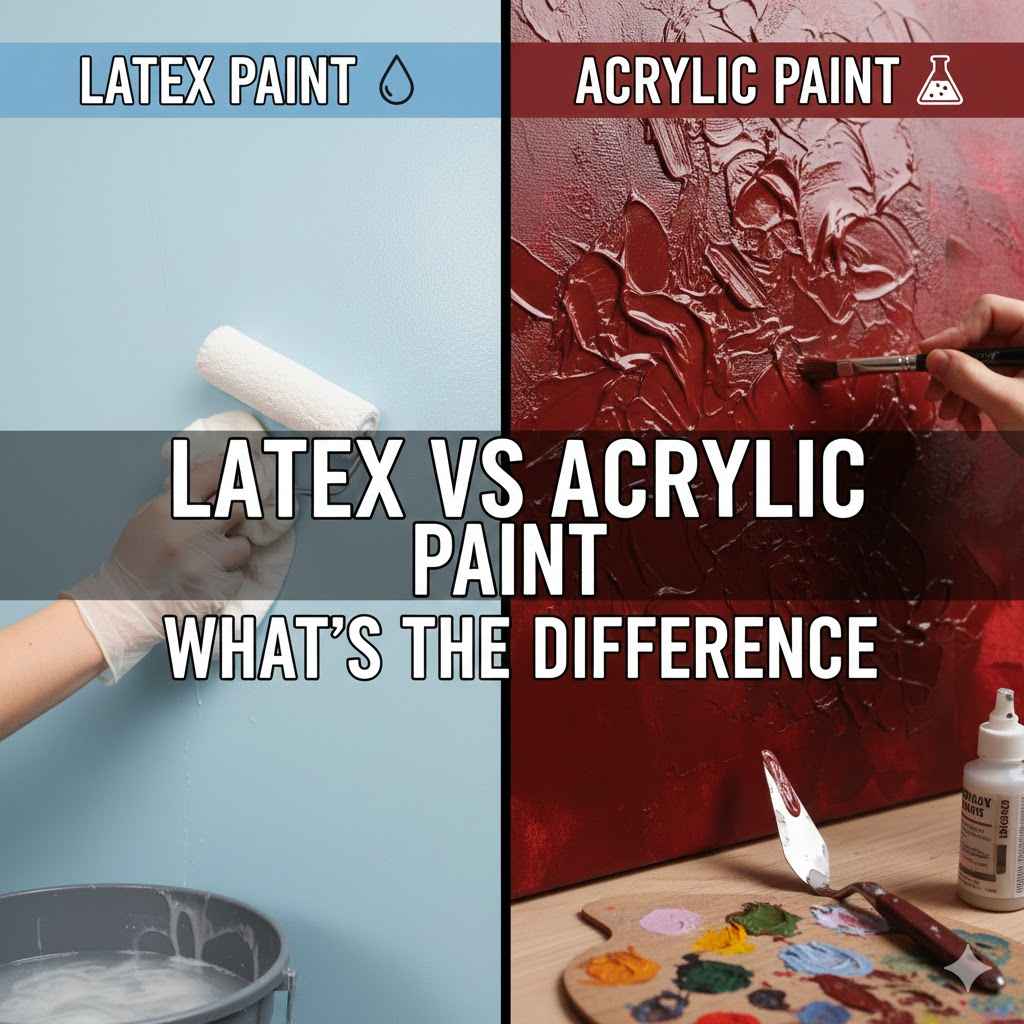
Latex vs Acrylic Paint What’s the Difference
Many folks get a bit confused when picking out paint for a project. They see “latex” and “acrylic” and wonder, “Is there really a big difference?” It’s a super common question, and for someone new to painting, it can seem a little tricky to figure out. But don’t worry!
We’re going to make it super simple. We’ll break down exactly what you need to know so you can pick the right paint for your job, every time. Let’s explore the Latex vs Acrylic Paint: What’s the Real Difference? and get you painting with confidence.
Latex Paint Explained
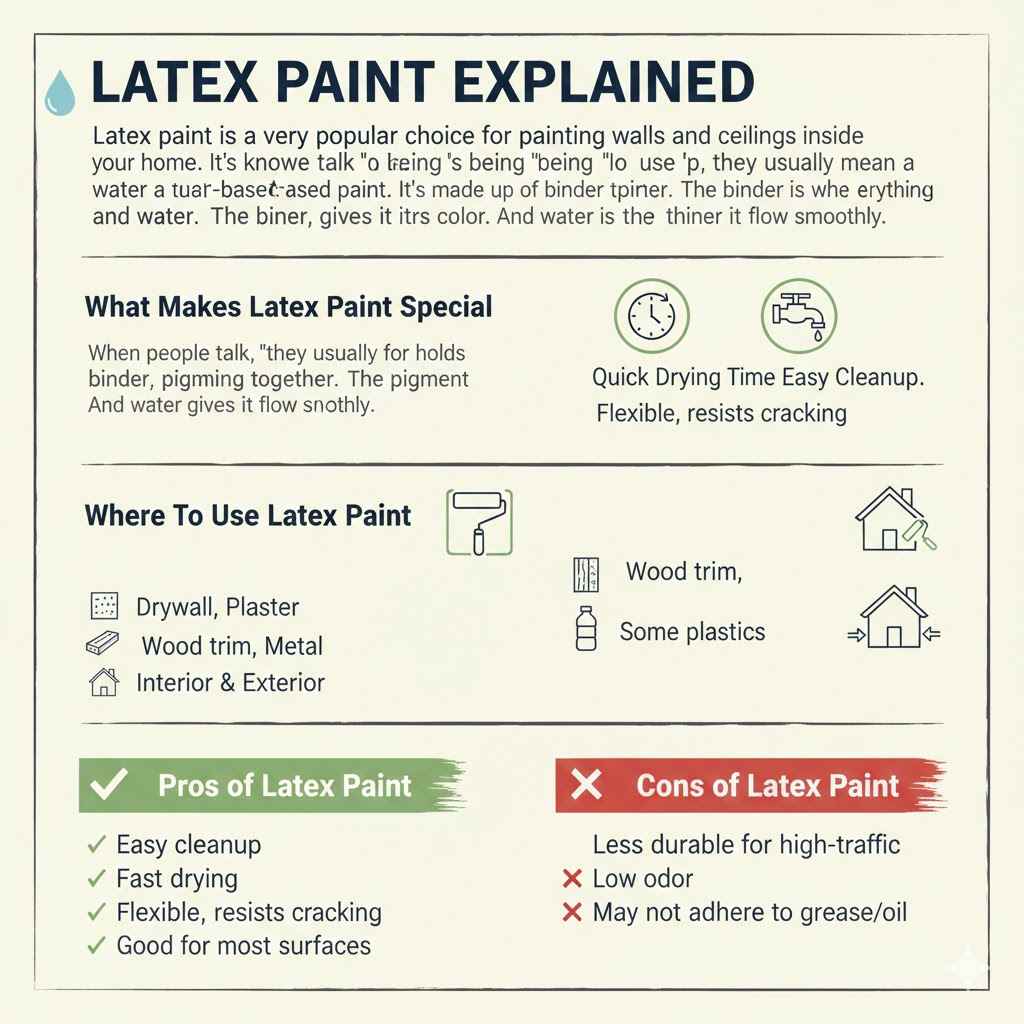
Latex paint is a very popular choice for painting walls and ceilings inside your home. It’s known for being easy to use and clean up. When people talk about “latex paint,” they usually mean a water-based paint.
It’s made up of a binder, pigment, and water. The binder is what holds everything together. The pigment gives it its color.
And water is the thinner that makes it flow smoothly.
What Makes Latex Paint Special
One of the biggest pluses of latex paint is its quick drying time. This means you can often put a second coat on much sooner than with other types of paint. Cleanup is also a breeze.
Just use soap and water. This makes it great for DIYers who want a fast and simple process.
Latex paints are also flexible. They can expand and contract a little with temperature changes. This helps prevent cracking and peeling over time.
This flexibility is a big reason why it’s a top pick for interior walls. It can handle the normal movement of a house without looking damaged.
Where To Use Latex Paint
Latex paint is perfect for most interior surfaces. This includes:
- Drywall
- Plaster
- Wood trim
- Metal
- Some plastics
It’s also a common choice for the exterior of homes. Its water-based nature and quick drying make it practical for large areas. It holds up well to weather when formulated for outdoor use.
Pros of Latex Paint
- Easy cleanup with soap and water
- Fast drying time
- Low odor
- Flexible and resists cracking
- Good for most interior and exterior surfaces
Cons of Latex Paint
- Can sometimes be less durable than oil-based paints for high-traffic areas
- May not adhere as well to surfaces with grease or oil without proper preparation
Acrylic Paint Explained
Acrylic paint is also a water-based paint, much like latex. However, acrylics have a stronger, more durable binder. This binder is made from a plastic-like material called acrylic polymer emulsion.
This difference in binder is key to why acrylic paint performs differently.
Acrylic paints are known for their vibrant colors and lasting finish. They are often used by artists for canvases, but also for furniture, crafts, and even some home projects where a tougher finish is needed. The acrylic binder is tough and can resist water once it’s fully dry.
What Makes Acrylic Paint Special
The defining feature of acrylic paint is its incredible durability and water resistance once cured. This makes it ideal for surfaces that need to withstand more wear and tear. It forms a hard, plastic-like film that is resistant to moisture, scratching, and fading.
Acrylic paints also offer a wide range of finishes, from matte to high gloss. Artists love them for their ability to hold sharp lines and blend smoothly. They also dry to a consistent color, meaning the color you see when wet is usually the color you get when dry.
This predictability is very helpful.
Where To Use Acrylic Paint
Acrylic paint is versatile and can be used on many surfaces. It’s a favorite for:
- Canvas
- Wood
- Metal
- Fabric
- Ceramics
- Plastic
- Glass
- Paper
For home improvement, acrylic-latex blends are common for trim and doors because they offer the ease of latex with some added toughness.
Pros of Acrylic Paint
- Very durable and long-lasting
- Water-resistant once dry
- Flexible and resistant to cracking
- Vibrant colors that resist fading
- Good adhesion to many surfaces
Cons of Acrylic Paint
- Can be more expensive than latex paint
- May require more preparation for certain surfaces
- Can be harder to clean up if not done immediately
The Main Differences: Latex vs Acrylic Paint
So, let’s get straight to the heart of Latex vs Acrylic Paint: What’s the Real Difference?. The biggest distinction lies in the binder used. Latex paint uses a synthetic latex binder, while acrylic paint uses a pure acrylic polymer binder.
Binder Composition
Think of the binder as the glue that holds the paint together. In latex paint, this glue is a mix that includes synthetic rubber particles. In acrylic paint, it’s a purer, more robust plastic.
This might sound technical, but it means acrylic paint creates a tougher, more flexible, and more water-resistant film on the surface.
Durability and Finish
Because of its stronger binder, acrylic paint is generally more durable and resistant to damage. It’s less likely to chip or scratch. Latex paint is durable enough for most walls, but for high-traffic areas or items that get a lot of use, acrylic often performs better.
Acrylics can also offer a wider range of finishes and are known for their color retention. They tend to stay brighter and resist yellowing more than some latex paints, especially over time.
Flexibility
Both types of paint are water-based and flexible, which is a good thing. This flexibility means they can expand and contract with changes in temperature and humidity without cracking. This is why both are good choices for surfaces that might move slightly.
However, the pure acrylic binder in acrylic paint can offer slightly superior flexibility and crack resistance, especially in extreme conditions.
Cleanup
This is where they are very similar. Since both are water-based, cleanup for both latex and acrylic paint is usually straightforward. You can typically clean brushes, rollers, and spills with just soap and water, as long as the paint hasn’t fully dried and cured.
Cost
Generally, acrylic paints tend to be more expensive than latex paints. This is because the pure acrylic binders are more costly to produce. Latex paints are often more budget-friendly, making them a practical choice for large painting jobs like entire rooms.
Adhesion
Both types of paint stick well to properly prepared surfaces. However, acrylic paints often have a reputation for superior adhesion, meaning they grab onto the surface more strongly. This can be particularly important on tricky surfaces or when painting over older finishes.
VOCs (Volatile Organic Compounds)
Both latex and acrylic paints are available in low-VOC or zero-VOC formulations. This means they release fewer harmful fumes into the air. This is a significant improvement over older oil-based paints.
Always check the label for VOC content if this is important to you.
When To Choose Which Paint
Understanding the differences helps you choose the right paint for your project. Here’s a simple guide:
Choose Latex Paint For
- Painting large interior wall and ceiling areas.
- When budget is a major concern.
- Projects where ease of cleanup is a top priority.
- Quick touch-ups or repainting common areas.
- Exterior siding and trim (specifically formulated exterior latex).
Choose Acrylic Paint For
- Art projects, canvases, and fine art.
- Furniture refinishing, especially for high-use items.
- Doors, trim, and cabinets that need extra durability.
- Surfaces that will be exposed to moisture or wear.
- When you want a very smooth, hard finish.
- Painting on a variety of surfaces like plastic, metal, or fabric.
Acrylic-Latex Blends
You’ll often see paints advertised as “acrylic latex” or “premium latex” that contain a significant amount of acrylic resin. These paints aim to offer the best of both worlds: the ease of use and cleanup of latex with some of the added durability and performance of acrylics. For many home painting tasks, these blends are excellent choices, providing good value and performance.
These blends are frequently used for trim, doors, and even furniture because they offer a nice balance. They are usually more durable and smoother than basic latex paints but still clean up with water and are more affordable than pure acrylics.
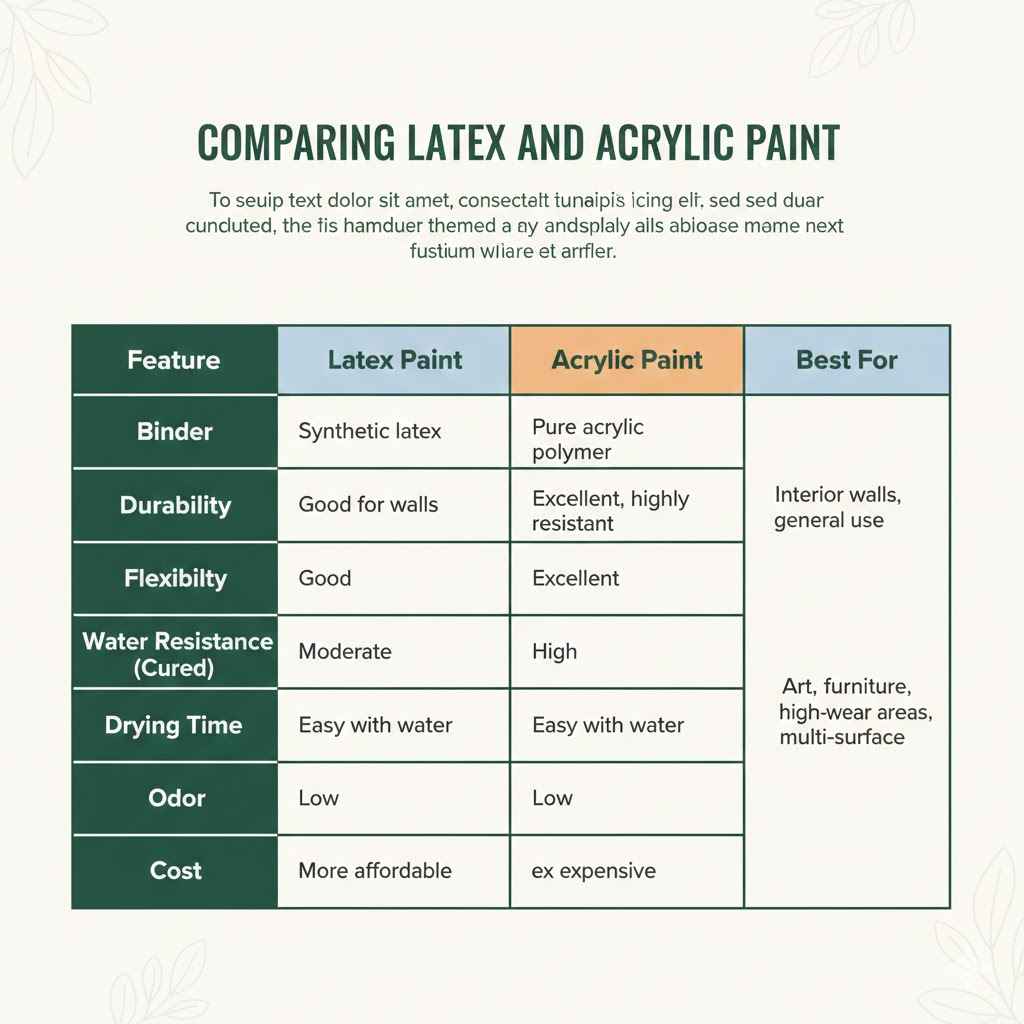
Comparing Latex and Acrylic Paint
Here’s a quick look at how they stack up:
| Feature | Latex Paint | Acrylic Paint |
|---|---|---|
| Binder | Synthetic latex | Pure acrylic polymer |
| Durability | Good for walls | Excellent, highly resistant |
| Flexibility | Good | Excellent |
| Water Resistance (Cured) | Moderate | High |
| Cleanup | Easy with water | Easy with water (if fresh) |
| Drying Time | Fast | Fast |
| Odor | Low | Low |
| Cost | More affordable | More expensive |
| Best For | Interior walls, ceilings, general use | Art, furniture, high-wear areas, multi-surface |
Frequently Asked Questions
Question: Is latex paint the same as water-based paint?
Answer: Often, yes. When people say “latex paint” for home interiors, they almost always mean a water-based paint. True latex is a type of binder, but the term is commonly used for any water-based paint on walls.
Question: Can I paint over latex paint with acrylic paint?
Answer: Yes, you generally can paint acrylic over latex paint, provided the latex surface is clean, dry, and in good condition. You might want to lightly sand it for better adhesion.
Question: Does acrylic paint dry clear?
Answer: No, acrylic paint dries to the color of the pigment used. While the binder itself is clear, it is mixed with pigments to create opaque or transparent colors.
Question: Which paint is better for cabinets, latex or acrylic?
Answer: For cabinets that get a lot of use, acrylic paint or an acrylic-latex blend is usually a better choice. It offers more durability and resistance to scratches and chips than standard latex paint.
Question: Is latex paint bad for the environment?
Answer: Modern latex paints are much better for the environment than older oil-based paints. Many are available in low-VOC or zero-VOC formulas, which release fewer harmful chemicals into the air.
Final Thoughts
Choosing between latex and acrylic paint boils down to your project’s needs. Latex is your go-to for large interior walls and general painting. It’s easy to use, cleans up fast, and is budget-friendly.
Acrylic offers superior toughness and durability, making it ideal for furniture, high-traffic spots, and art. Many paints are also acrylic-latex blends, giving you great performance for everyday tasks.