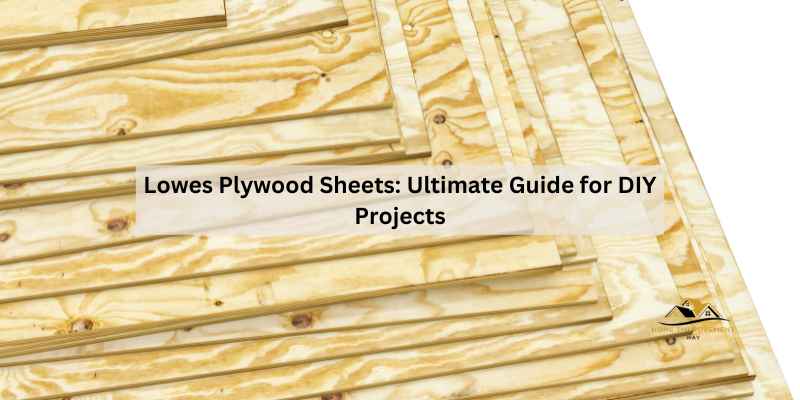
Lowe’s Plywood Sheets: 4×8 Sizes, Prices & Free-Cut Rules
Lowe’s plywood sheets run roughly $18 to $90+ for a standard 4×8 sheet, depending on type – OSB and CDX sheathing are cheapest, birch and hardwood plywood cost the most. Buying the wrong grade for the job wastes money either way – sanded hardwood on a hidden subfloor, or thin sheathing under a load-bearing panel. This guide covers real price ranges by type, the full size/thickness chart, and how Lowe’s in-store cutting actually works (less standardized than most articles claim).
Types of Plywood Available at Lowe’s
Lowe’s stocks several plywood categories, each suited to different jobs and budgets. The table below covers the main types along with the price range you can expect for a standard 4×8 sheet.
| Type | Features | Typical Price (4×8 sheet) | Best For |
|---|---|---|---|
| OSB sheathing | Engineered wood strands, most affordable | ~$10-$25 | Subfloors, wall sheathing, roof decking |
| CDX sheathing (softwood) | Unsanded, C/D-grade faces, rated for temporary weather exposure only | ~$25-$55 | Framing, sheathing, rough construction |
| Sanded pine/fir plywood | Smooth face, paintable | ~$40-$90 | Furniture, shelving, general woodworking |
| Birch plywood | Dense, attractive grain, tight veneer | ~$80-$120+ | Cabinetry, fine furniture, visible edges |
| Marine-grade (Douglas Fir A-B) | Void-free core, water-resistant glue | Call store to confirm – pricing not consistently listed online | Boat building, boat trailers, wet environments |
Prices above are directional ranges pulled from recent store-verified spot checks and Lowe’s own product listings, not a live price feed – Lowe’s pricing varies by region and changes often, so confirm the exact price for your local store before making the trip.
OSB looks similar to plywood but isn’t actually plywood – it’s made of compressed wood strands rather than glued veneer layers, which is why OSB and plywood perform differently even at the same thickness. See our full plywood buying guide library for type-specific comparisons.
📊 A phone survey of stores across six states found standard 1/2″ plywood ran $17.98 at Lowe’s versus $17.55 at Home Depot – a roughly 2% difference, not the wide gap shoppers often assume. Source: First Quarter Finance, Dec. 2023 store survey
Understanding Plywood Grades And Sizes
Plywood face veneers are graded A, B, C, or D under the industry standard (Voluntary Product Standard PS 1) maintained by APA – The Engineered Wood Association. Grade A is smooth and paintable with no open defects. Grade B allows tight knots and minor repairs. Grade C is unsanded with knots up to 1.5 inches. Grade D is the roughest, with knots up to 2.5 inches – fine for structural uses no one will see.
Lowe’s carries full 4×8 and 4×10 sheets plus smaller 2×4 and 2×2 project panels for people who don’t need (or can’t fit) a full sheet. Thickness is labeled by a “nominal” size that’s slightly larger than the actual sanded dimension – the table below shows both, since the gap trips up a lot of first-time buyers.
| Nominal Thickness | Actual Thickness | Common Use |
|---|---|---|
| 1/8″ | 1/8″ | Door skins, curved panels, drawer bottoms |
| 1/4″ | ~7/32″-1/4″ | Crafts, cabinet backs, paneling |
| 3/8″ | 11/32″ | Drawer bottoms, light furniture |
| 1/2″ | 15/32″ | Cabinet boxes, furniture frames, underlayment |
| 5/8″ | 19/32″ | Subfloors, roofing, structural work |
| 3/4″ | 23/32″ | Workbenches, tables, load-bearing shelves |
“CDX is sometimes mistaken as an Exterior panel and erroneously used in applications for which it does not possess the required resistance to weather.” CDX sheathing is rated Exposure 1 – built to handle construction-phase weather exposure temporarily, not permanent outdoor use.
Selecting The Right Plywood For Your Project
Choosing the right plywood starts with understanding your project needs. Consider the size, thickness, and type of plywood. Structural plywood is great for heavy-duty tasks. Interior plywood works well for furniture and decor.
Comparing price and quality helps in making the best choice. Look for local suppliers to get the best deals. Check the grade of plywood. Higher grades offer better quality but may cost more. Always balance cost with durability and appearance.
Cutting And Shaping Plywood
To cut plywood effectively, certain tools are essential. A circular saw is great for straight cuts. A jigsaw helps with curves and intricate designs. For precision, use a table saw. A router can shape edges smoothly.
For smooth cuts and edges, follow these tips:
- Always use a sharp blade for cleaner cuts.
- Clamp the plywood securely to avoid movement.
- Measure twice and cut once for accuracy.
- Use a saw guide or straight edge to ensure straight lines.
- Sand edges after cutting for a smooth finish.
Does Lowe’s Cut Plywood Sheets In-Store?
Yes, but there’s no single company-wide policy – the free-cut allowance is set store by store, and reports range anywhere from 1-2 free cuts per board up to 5 or 10 depending on location. What’s consistent everywhere: cuts are 90-degree straight cuts only (no bevels or angles), accuracy runs about ±½ inch (not cabinet-grade precision), pieces smaller than roughly 12 inches usually won’t be cut, and cut wood can’t be returned. Call your local store before you go – it’s the one piece of advice that holds true everywhere.
Best Straight-Cut Guide Pick
BORA NGX 100″ Clamp Edge Saw Guide
A full 4×8 sheet is too long to cut freehand with a straight edge – this clamps directly to the sheet and guides a circular saw dead straight across the whole length.
- Best for: ripping full 4×8 sheets down to size at home
- Why we picked it: clamps directly to the material, no separate straightedge to hold in place
- Main drawback: 100″ length is bulky to store between projects
Compare more plywood cutting essentials
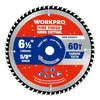 Option 1 Fine-Finish Plywood Blade
|
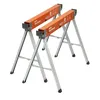 Option 2 Folding Sawhorse 2-Pack
|
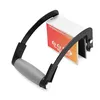 Option 3 Panel Carrier Tool
|
As an Amazon Associate we earn from qualifying purchases.
Finishing And Protecting Plywood
Sanding is key for a smooth plywood surface. Start with a coarse sandpaper to remove rough spots. Gradually move to finer sandpaper for a polished finish. Use circular motions to avoid scratches.
Choosing the right finish enhances the beauty of plywood. Oil-based finishes provide a rich color and durability. Water-based finishes dry fast and have low odor. Varnish offers protection against moisture.
Test finishes on a small area first. This ensures satisfaction with the final look. Always follow the manufacturer’s instructions for the best results.
Common Diy Projects Using Plywood Sheets
Furniture making is a fun project. Plywood sheets are strong and versatile. They can be used for tables, chairs, and shelves. Cutting plywood is easy with the right tools. Use a saw for straight cuts. Sand the edges for a smooth finish.
For unique designs, try combining different wood types. Staining or painting plywood adds a nice touch. Use a water-based finish for safety. Always wear a mask while sanding or painting.
Home improvement projects also benefit from plywood. Use it for wall panels or cabinets. Plywood sheets are lightweight and easy to handle. They can help create extra storage space. Measure your area carefully before cutting the sheets.
Maintenance And Upkeep
Clean plywood with a soft cloth or sponge and mild soap and water, then dry it fully – trapped moisture is what actually damages plywood over time, not dirt. Fill small cracks or gouges with wood filler, sand smooth once dry, and replace the section if the damage goes deeper than the top veneer. A quality sealant reapplied every year or two protects against moisture in humid areas or outdoor use.
Environmental Considerations
Lowe’s plywood sheets are sourced from managed forests under industry sustainability programs. Leftover cutoffs and unused sheets don’t have to go to a landfill – they’re commonly reused for smaller furniture, crafts, or shop projects, and many schools and community woodshops will take usable donated sheets off your hands.
Shopping Smart At Lowes
Lowe’s weekly ad and the Lowe’s app both surface clearance and seasonal discounts on lumber, and lumber prices in general have been volatile enough in recent years that it’s worth comparing the same sheet’s price against Home Depot before buying in bulk – one dated but methodical phone survey found Lowe’s and Home Depot within about 30 cents of each other on standard 1/2″ plywood, but pricing shifts by region and season.
Frequently Asked Questions
What Sizes Do Lowes Plywood Sheets Come In?
Lowe’s stocks full 4×8 and 4×10 sheets plus smaller 2×4 and 2×2 project panels for projects that don’t need a full sheet. Thickness runs from 1/8″ up to 3/4″, labeled by a nominal size that’s slightly larger than the actual sanded dimension – see the size chart above, or our full breakdown of standard plywood dimensions, for exact figures.
What Types Of Plywood Does Lowes Offer?
Lowes offers several types of plywood, including softwood, hardwood, and engineered varieties. You can find pressure-treated plywood for outdoor projects and marine-grade plywood for moisture resistance. Each type serves different purposes, so consider your project’s requirements before making a selection.
How Much Do Lowes Plywood Sheets Cost?
A standard 4×8 sheet runs roughly $18-$25 for OSB or CDX sheathing, $40-$90 for sanded pine or fir, and $80-$120+ for birch or hardwood plywood. Marine-grade pricing isn’t consistently listed online – call ahead. These are directional ranges, not a live price feed, since Lowe’s pricing shifts by region and season.
Can Lowes Cut Plywood Sheets For Me?
Yes, but the free-cut allowance isn’t standardized – it varies from 1-2 cuts per board up to 5 or 10 depending on the store. Every location sticks to 90-degree straight cuts only, roughly ±½ inch accuracy, and won’t cut pieces smaller than about 12 inches. Call your local store first to confirm its policy.
Is Lowe’s or Home Depot Cheaper for Plywood?
They’re close. A phone survey of stores across six states in late 2023 found standard 1/2″ plywood at $17.98 at Lowe’s versus $17.55 at Home Depot – about a 2% difference. Pricing varies by region, season, and specific plywood type, so it’s worth comparing both stores for a given project rather than assuming one is always cheaper.
Conclusion
Matching the plywood grade and thickness to what a project actually needs – not the cheapest or the fanciest option by default – is what keeps both cost and quality in line. Check the size and thickness chart above, confirm current pricing with your local store, and call ahead if you’re counting on their in-store cutting service.
Sponsored / affiliate links. As an Amazon Associate I earn from qualifying purchases. I may earn additional commission from eligible campaigns.
 Lizvie Phone Charger Hidden Camear with 120° Wide-Angle View Motion Detection/Night Vision/256GB SD Storage/Wireless APP Live View Spy Cam for Home Indoor/Outdoor Safe.
 IModeur 60 Sheets of Permanent Vinyl for Machines - 56 Permanent Adhesive Vinyl Sheets, 43 Colors, 4 Transfer Sheets Permanent Vinyl Set for Signs, Scrapbooking, and More