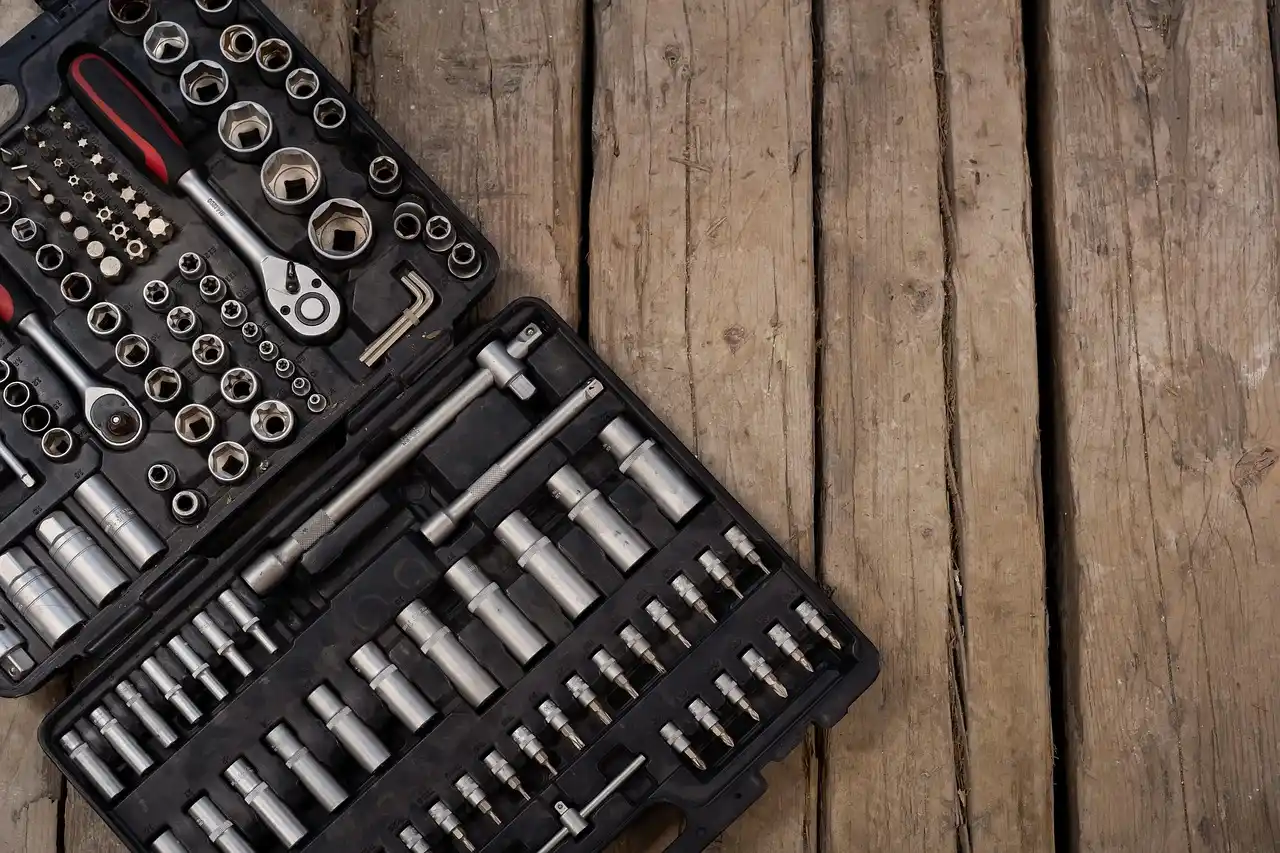
Ratchet wrench vs socket wrench: when each makes sense
Use a ratcheting wrench for fast turn speed in tight side access, and a socket wrench for higher breakaway force or deep, recessed fasteners; if the fastener is buried, pick the socket first. Pick the wrong tool and you can round heads, waste time, or snap a stubborn bolt. This guide compares access, breakaway torque, and repeat-turn speed so you match the tool to the failure risk.
This guide is part of our Ratchet tools: A complete guide series.
Ratchet wrench vs socket wrench: the core trade-off
The core difference is that a socket wrench uses interchangeable sockets on a square drive, while a ratcheting wrench has an integrated ratcheting head. A ratchet moves in one direction and locks in the other, so you can reset without taking it off the fastener. (en.wikipedia.org)
That ratchet mechanism uses a gear and pawl. The gear turns one way, the pawl holds in the other, and backlash is the small amount of free play before the teeth engage again; Wikipedia notes backlash can be limited to the spacing between ratchet teeth. Ratchets are widely used in socket wrenches and tie down straps.
Fastener condition matters as much as size. A clean 10 mm bolt may call for different tool behavior than a rusty, rounded, or partly seized fastener. The right choice is the tool that fits access, breakaway force, and repeat-turn speed without raising the chance of slip or breakage.
Side-by-side comparison: how the tools differ
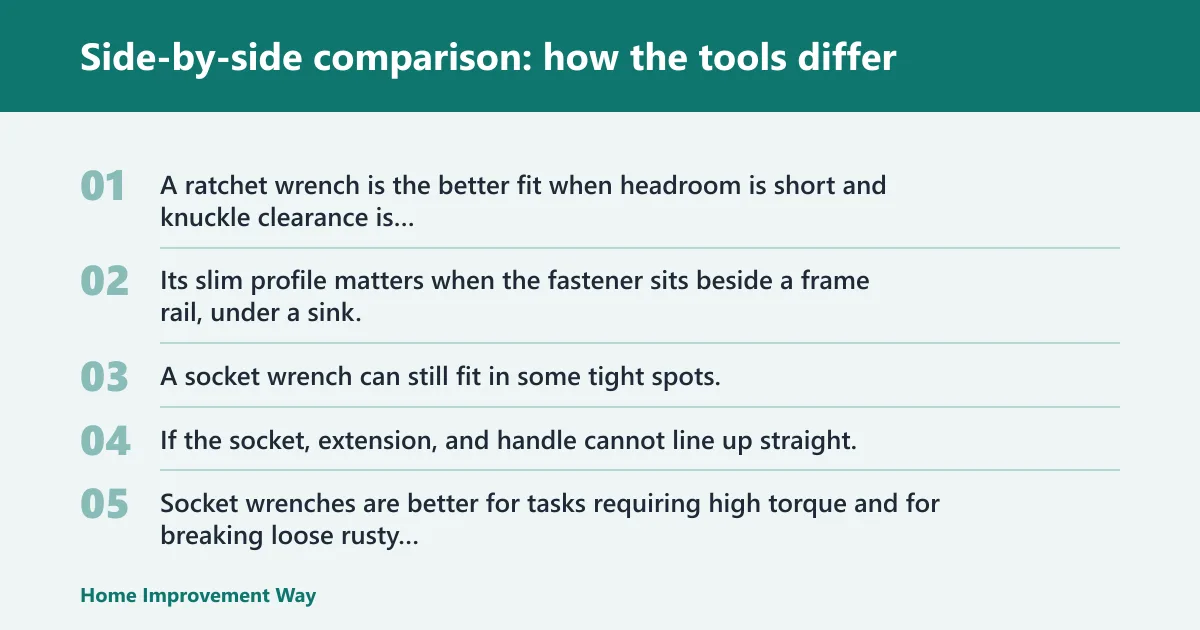
| Decision factor | Ratchet wrench | Socket wrench | Winner |
|---|---|---|---|
| Access | Thin profile, good in small gaps | Bulkier because of the socket and drive stack | Ratchet wrench |
| Breakaway force | Less tolerant of heavy pulling on the ratchet head | Better for high torque and stubborn fasteners | Socket wrench |
| Repeat-turn speed | Fast on the same size bolt or nut | Slower if you must keep swapping sockets or re-seating | Ratchet wrench |
| Fastener size range | Fixed size tool | Interchangeable sockets of different sizes | Socket wrench |
| Durability under abuse | Internal gears and pawls can wear or break if pulled too hard | Fewer moving parts; more durable under hard use | Socket wrench |
Access favors the ratcheting wrench
A ratchet wrench is the better fit when headroom is short and knuckle clearance is limited. Its slim profile matters when the fastener sits beside a frame rail, under a sink, or near a hose clamp where tool stack height becomes the real limit.
A socket wrench can still fit in some tight spots, especially with the right extension bar, but the full setup can sometimes become too tall or too wide. If the socket, extension, and handle cannot line up straight, the added bulk can matter more than drive size.
Force and durability favor the socket wrench
Socket wrenches are better for tasks requiring high torque and for breaking loose rusty bolts. ToolsEngineers says socket wrenches are used to break loose rusty bolts, and Woodsmith says socket wrenches are more durable because they have fewer moving parts.
The weak point in many ratchets is the ratchet head and pawl assembly. Under heavy load, those internal parts can slip, wear, or break, especially if you use the tool as a breaker. That is why a socket wrench, or a breaker bar, is the safer first choice for stuck hardware.
Speed favors the ratcheting wrench
Ratchet wrenches are best for repetitive tasks involving the same size bolts and nuts. Once the tool is on the fastener, you can move it back and forth in short strokes without removing it after every partial turn.
That speed matters on clamps, brackets, and panels where the bolt is already loose enough to spin. If the job becomes mostly turning rather than breaking loose, the ratcheting wrench saves motion even when the torque demand is modest.
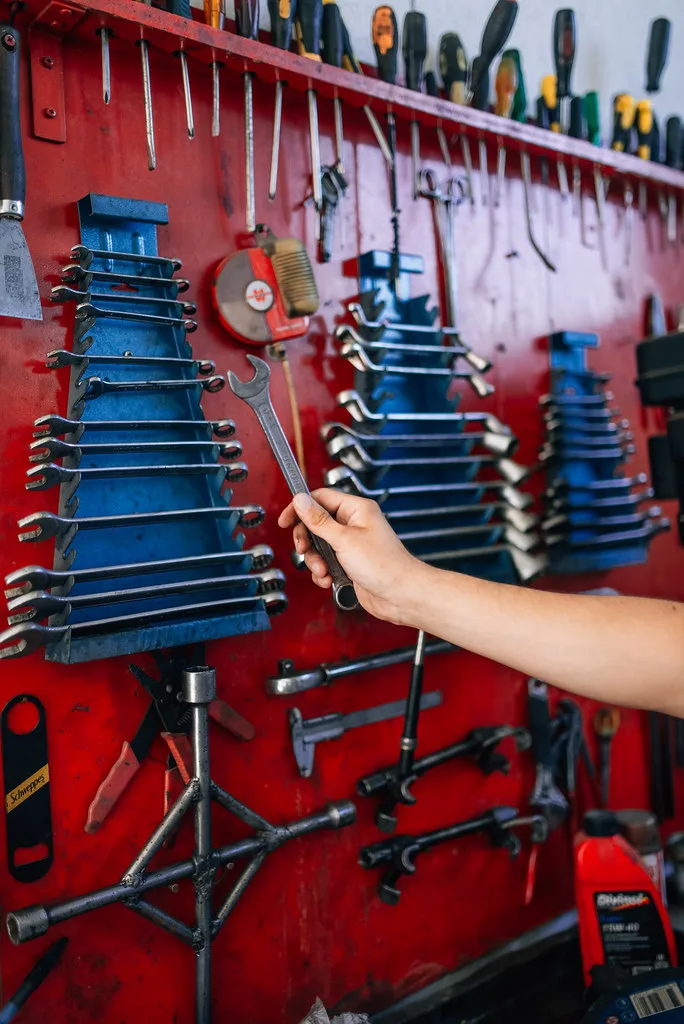
Which tool is better in tight spaces?
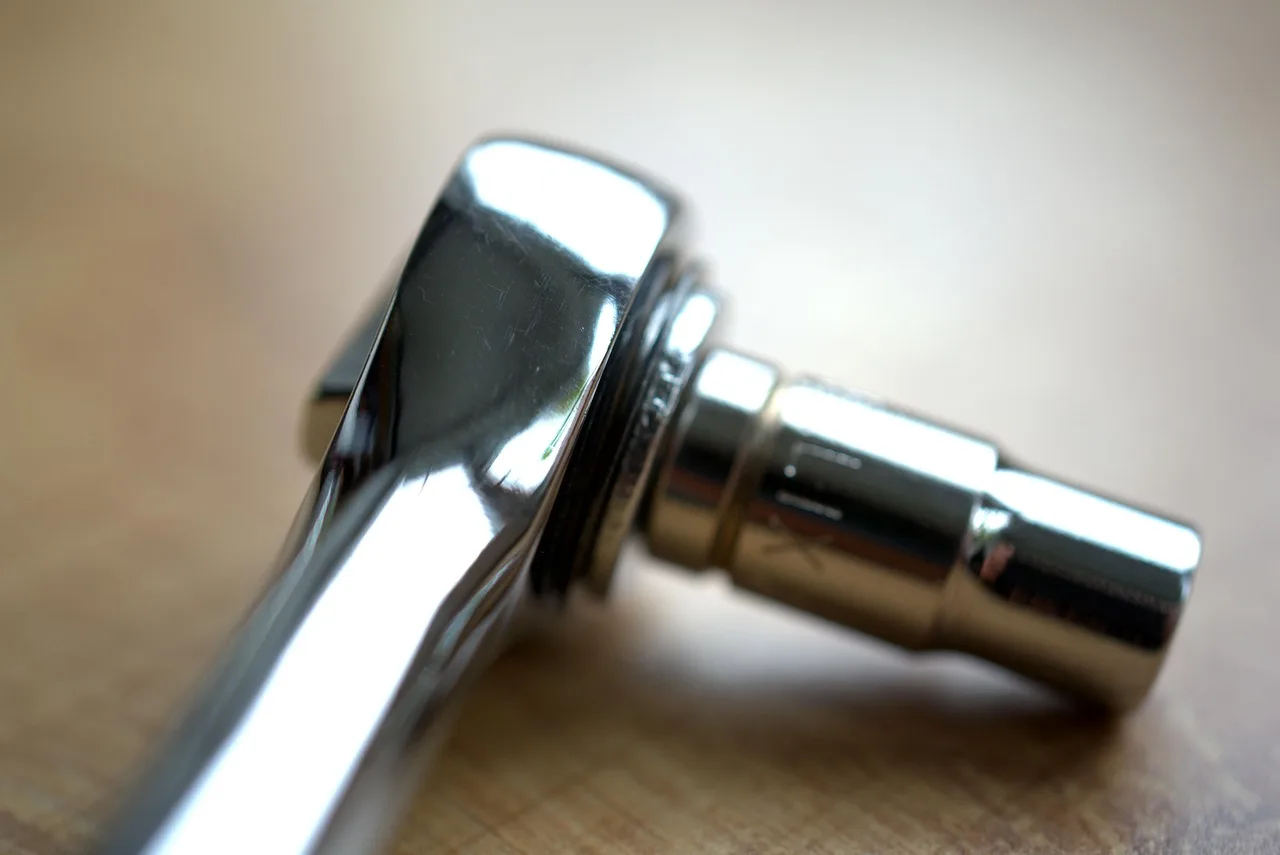
A ratcheting wrench is usually better in tight spaces because its slim profile needs less side clearance and less tool stack height. If the fastener is near a wall, tucked under trim, or blocked by nearby parts, the thin head and short swing arc can make the difference between working and not working.
That said, a socket wrench can still win in a deep but straight shot if you have enough room for the socket and extension bar. The real question is not only width, it is whether you have room for headroom, knuckle clearance, and the full drive setup.
Suppose a 13 mm nut sits under a sink bracket with only a narrow side gap. A slim ratcheting wrench can turn it in small increments without removing the tool, while a socket setup may hit the cabinet floor before the handle can move.
Confined space clearance and tool stack height
Confined space clearance is about more than the fastener size. The head of the tool, the thickness of the socket, the length of any extension, and the angle of your hand all add up.
In a recess or pocket, a socket wrench may need a shorter drive setup to fit at all. Smaller drive sizes usually save space, while larger drives handle more torque; that trade-off is why drive size matters before you pick the handle.
Can a ratchet wrench work in a deep or recessed fastener?
Yes, but only when the recess still leaves room for the wrench head and for your hand to move the handle. A ratcheting wrench can work on a deep or recessed fastener if the opening allows side access, but it is usually not the best choice when the fastener sits straight down in a narrow hole.
For a buried fastener, a socket wrench with the right extension is often a good first try. If the bolt head is deep and the walls are close, the socket can reach where a fixed ratcheting wrench cannot seat fully.
Which tool is better for breaking loose rusty bolts?
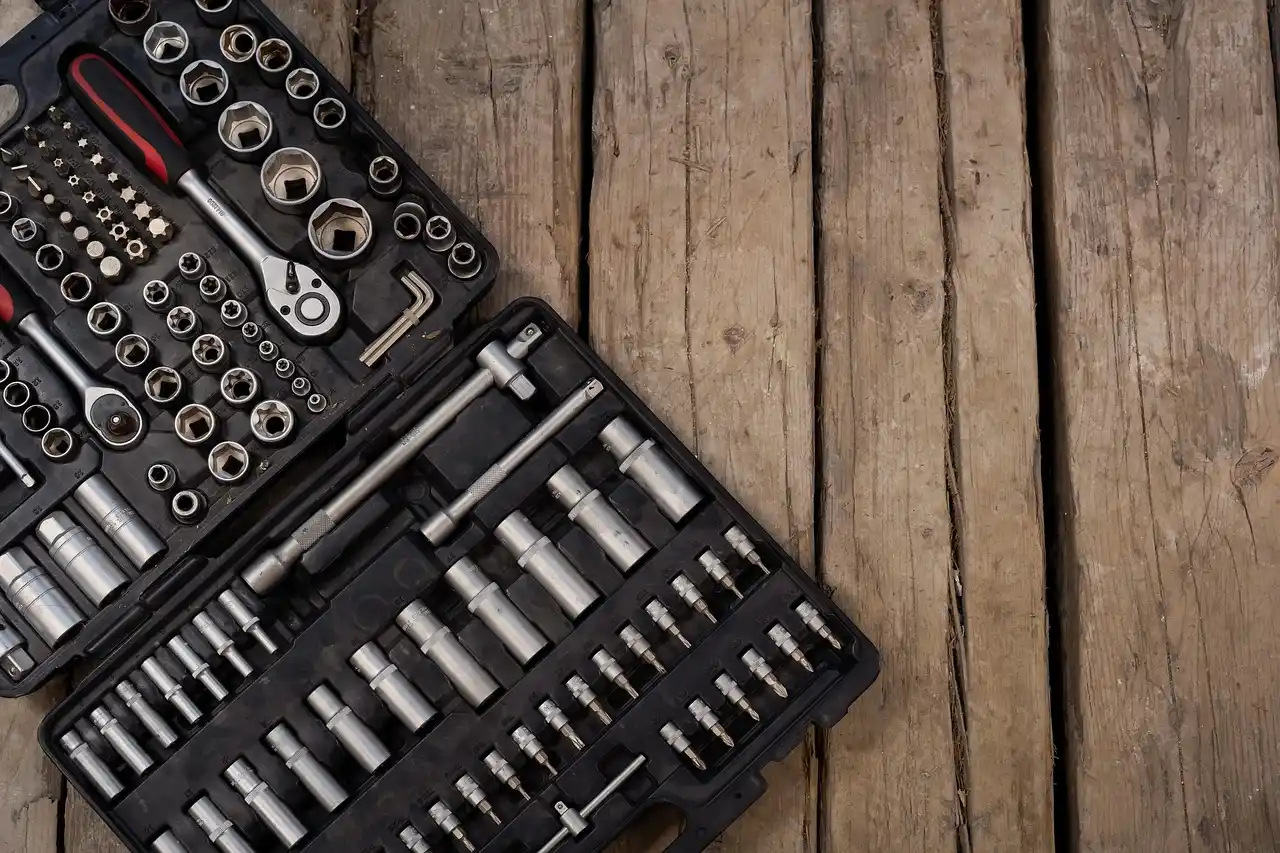
A socket wrench is the better choice for breaking loose rusty bolts because it handles higher breakaway force and heavier abuse better than a ratcheting wrench. When the fastener resists motion, the tool needs strength first and speed second.
If the bolt is seized, rounded, or badly corroded, a breaker bar may be the better third option. A breaker bar gives you long force without putting the ratchet mechanism under load, which protects the pawl and gear from damage.
A common first-timer mistake is reaching for the fastest tool on the bench when the nut is clearly seized. That can strip the head or break the ratchet before the fastener moves.
Where the ratchet head is the weak point
The ratchet head is the wear point. The internal gear and pawl take the load, and heavy pulling can damage them if the fastener does not move.
ToolsEngineers says ratchet wrench gears can break if pulled too hard. That is why a ratcheting wrench is for moderate torque and fast cycling, not for forceful loosening of stuck hardware.
When is a ratcheting wrench faster than a socket wrench?
A ratcheting wrench is faster whenever the fastener is already loose and you need many repeated turns on the same size. It cuts the stop-and-reset rhythm, so the work moves quicker even though each stroke is short.
It is also faster when socket changes would slow you down. If you are moving between a cluster of same-size nuts in a confined area, the fixed-size wrench keeps the pace up better than a socket set plus handle plus extension.
Working speed vs socket changes
Socket wrenches are versatile because the sockets swap quickly across sizes, but the workflow can still slow down if the job keeps changing from 8 mm to 10 mm to 13 mm. Ratcheting wrenches avoid that pause when the hardware stays one size.
That is why ratcheting wrenches are common on repetitive assembly and disassembly tasks. The speed benefit is real, but it only matters after the fastener is already moving freely.
Task-based decision table: choose by access, torque, and fastener condition
| Task | Access | Torque required | Fastener condition | Socket wrench | Ratchet wrench | Breaker bar | Combination wrench |
|---|---|---|---|---|---|---|---|
| Loose clamp in open space | Easy | Low | Clean | No | Yes | No | No |
| Rusty suspension fastener | Moderate | High | Rusty or stuck | Yes | No | Yes | Maybe |
| Nut behind a bracket with side access only | Tight | Moderate | Clean | Maybe | Yes | No | Maybe |
| Rounded fastener in a recess | Tight | High | Damaged | Yes | No | Yes | Yes |
| Same-size bolts in a bracket run | Moderate | Low to moderate | Clean | Yes | Yes | No | No |
Use the table as a severity check. If access is poor but torque is low, ratchet wrench tends to win. If torque is high or the fastener is rusty, socket wrench or breaker bar becomes the safer path.
Choose socket wrench if… / choose ratchet wrench if…
Choose a socket wrench if the fastener is stuck, rusty, damaged, or buried deep enough that you need extensions to reach it. Choose it when higher breakaway force matters more than speed, and when you want the stronger grip and better durability of fewer moving parts.
Choose a ratchet wrench if the fastener is in a tight side-access space and the torque is moderate. Choose it for repetitive same-size fasteners, quick spin-down after loosening, and jobs where a slim profile matters more than brute force.
Choose both if the job starts with loosening and ends with lots of spinning. That mix is common, and it is the main reason many DIYers benefit from owning both a socket set and a set of ratcheting wrenches.
Do I need both a socket set and ratcheting wrenches?
Many DIYers do, because the two tools solve different problems. A socket set gives you size coverage, higher torque, and better reach with extensions, while ratcheting wrenches give you speed and access in tighter side gaps.
If you only buy one first, start with a socket set if you expect stuck hardware, deeper fasteners, or many different bolt sizes. Start with ratcheting wrenches if most of your work is repeated turning in cramped spaces and the fasteners are usually clean.
How do I choose the right wrench for a bolt size?
Match the tool to both the bolt size and the job severity. A correct size is only the starting point; the better choice depends on whether the fastener is clean, rusty, recessed, or likely to need breakaway force.
For a bolt that is easy to reach and not tight, choose the tool that gives the best control. For a recessed or seized bolt, choose the tool that gives the best grip and force, even if it is slower.
Practical selection checklist
- Check whether the fastener is clean, rusty, rounded, or damaged.
- Look at clearance for your hand, the wrench head, and any socket stack.
- Estimate whether you need breakaway force or just repeat turns.
- Use a socket wrench for high torque, a ratcheting wrench for tight access, and a breaker bar for stubborn fasteners.
- If the fastener is both tight and hidden, start with the socket first.
Frequently asked questions
What is the difference between a ratchet wrench and a socket wrench?
A ratchet wrench is a fixed-size wrench with an integrated ratcheting head, while a socket wrench uses interchangeable sockets on a square drive. The ratchet lets the tool move one way and reset on the return stroke, while the socket wrench is the broader system used for different fastener sizes.
When should I use a socket wrench instead of a ratchet wrench?
Use a socket wrench when the job needs higher torque, when the fastener is rusty or stuck, or when the fastener sits deep enough to benefit from extensions. A socket wrench is also the better pick when you need one tool setup to cover several fastener sizes.
When is a ratcheting wrench better than a socket wrench?
A ratcheting wrench is better when the fastener is in a tight side-access area and the torque demand is moderate. It is also faster for repetitive same-size fasteners because you can keep turning without removing the tool after each stroke.
Which tool is better for tight spaces and confined access?
A ratcheting wrench is usually better for tight spaces because its thin profile and small swing arc reduce clearance problems. If the fastener is deep but straight, a socket wrench with the right extension may still fit better than a fixed wrench.
Sponsored / affiliate links. As an Amazon Associate I earn from qualifying purchases. I may earn additional commission from eligible campaigns.